By Kelsey Munro
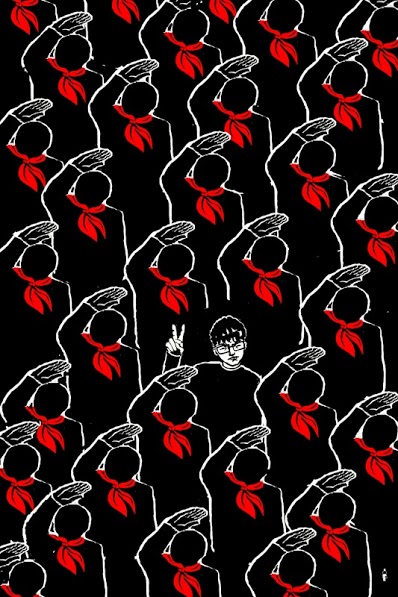
China’s social credit system, a big-data system for monitoring and shaping business and citizens’ behaviour, is reaching beyond China’s borders to impact foreign companies, according to new research.
The system, which has been compared to an Orwellian tool of mass surveillance, is an ambitious work in progress: a series of big data and AI-enabled processes that effectively grant subjects a social credit score based on their social, political and economic behaviour.
People with low scores can be banned or blacklisted from accessing services including flights and train travel; while those with high scores can access privileges.
The system, which has been compared to an Orwellian tool of mass surveillance, is an ambitious work in progress: a series of big data and AI-enabled processes that effectively grant subjects a social credit score based on their social, political and economic behaviour.
People with low scores can be banned or blacklisted from accessing services including flights and train travel; while those with high scores can access privileges.
The Chinese government aims to have all 1.35 billion of its citizens subject to the system by 2020.
But a new report by US China scholar Samantha Hoffman for the ASPI International Cyber Policy Institute in Canberra claims the system’s impact beyond China’s borders has not been well understood, and is in fact already shaping the behaviour of foreign businesses in line with Chinese Communist party preferences.
But a new report by US China scholar Samantha Hoffman for the ASPI International Cyber Policy Institute in Canberra claims the system’s impact beyond China’s borders has not been well understood, and is in fact already shaping the behaviour of foreign businesses in line with Chinese Communist party preferences.
It has the “potential to interfere directly in the sovereignty of other nations”, she said.
She said recent incidents where Chinese authorities pressured international airlines in the US and Australia to use Beijing’s preferred terminology to refer to Taiwan and Hong Kong were high-profile examples of this new extension of the social credit system rules to foreign companies.
“The civil aviation industry credit management measures that the airlines are accused of violating were written to implement two key policy guidelines on establishing China’s social credit system,” she explains.
She said recent incidents where Chinese authorities pressured international airlines in the US and Australia to use Beijing’s preferred terminology to refer to Taiwan and Hong Kong were high-profile examples of this new extension of the social credit system rules to foreign companies.
“The civil aviation industry credit management measures that the airlines are accused of violating were written to implement two key policy guidelines on establishing China’s social credit system,” she explains.
“Social credit was used specifically in these cases to compel international airlines to acknowledge and adopt the CCP’s version of the truth, and so repress alternative perspectives on Taiwan.”
As of 1 January 2018, all companies with a Chinese business licence – a necessity for operating in the country – were brought into the social credit system through the new licence requirement to have an 18-digit “unified social credit code”.
As of 1 January 2018, all companies with a Chinese business licence – a necessity for operating in the country – were brought into the social credit system through the new licence requirement to have an 18-digit “unified social credit code”.
Through this business ID number, the Chinese government keeps track of all businesses, reporting transgressions on its National Enterprise Credit Information Publicity System, Hoffman said.
The system extends to non-profits, NGOs, trade unions and social organisations after 30 June.
“Companies don’t have a choice but to comply if they want to continue doing business in China,” Hoffman told the Guardian Australia.
Sanctions for companies so far have come in the form of fines, she said, citing the example of the Japanese retailer Muji, which was fined 200,000 yuan in May for labelling on products sold in China that listed Taiwan as a country.
“Companies don’t have a choice but to comply if they want to continue doing business in China,” Hoffman told the Guardian Australia.
Sanctions for companies so far have come in the form of fines, she said, citing the example of the Japanese retailer Muji, which was fined 200,000 yuan in May for labelling on products sold in China that listed Taiwan as a country.
The fine cited a violation of PRC advertising law banning activity which damages “the dignity or interests of the state”, but the violation was also recorded on the social credit system’s National Enterprise Credit Information Publicity System.
This listing can trigger further fines from other state agencies, Hoffman said.
It is not clear whether foreign companies have access to the information kept on their social credit record, nor if foreign citizens could find out if their nation’s companies have made concessions or changed their behavior as a result.
Guardian Australia unsuccessfully sought comment from Qantas, which announced earlier this month it would change the language used on its global websites in accordance with the Chinese government’s preferred terminology for Taiwan.
Hoffman is a visiting academic fellow at the Mercator Institute for China Studies in Berlin.
It is not clear whether foreign companies have access to the information kept on their social credit record, nor if foreign citizens could find out if their nation’s companies have made concessions or changed their behavior as a result.
Guardian Australia unsuccessfully sought comment from Qantas, which announced earlier this month it would change the language used on its global websites in accordance with the Chinese government’s preferred terminology for Taiwan.
Hoffman is a visiting academic fellow at the Mercator Institute for China Studies in Berlin.
Her report, Social Credit: Technology-enhanced Authoritarian Control with Global Consequences, was published on Thursday by the Australian Strategic Policy Institute, a security-focused thinktank which has urged the Australian government take a harder line on Chinese government interference in its democracy.
The report comes amid a difficult period in Australia-China relations; in the same week Australia’s parliamentary committee released a bipartisan report paving the way for the passage of new draft laws against covert, coercive or corrupt foreign interference.
The report comes amid a difficult period in Australia-China relations; in the same week Australia’s parliamentary committee released a bipartisan report paving the way for the passage of new draft laws against covert, coercive or corrupt foreign interference.
What is the social credit system?
China’s social credit system is an Orwellian tool of social monitoring and political repression.
People can be blacklisted for transgressions such as smoking on trains, using expired tickets or failing to pay fines, as well as spreading false information or causing trouble on flights, according to statements released by China’s National Development and Reform Commission in March.
Citizens with high credit scores can access better hotels, rental homes and even schools; while those with low credit scores can be temporarily or permanently banned from taking planes or trains, as happened to 6.15 million people in 2017, on the government’s own figures.
A pilot version of the scheme run this year in Hangzhou City reportedly saw citizens with high social credit ratings get free access to gym facilities and shorter public hospital waiting times.
On the business side, the Brookings Institute has reported that businesses that pay tax on time and “abide by government demands” will get better loan conditions and easier access to public tenders; noncompliant businesses will face more difficult business conditions.
But researchers believe its power and reach may be overstated.
Queensland University of Technology researcher Meg Jing Zeng has said that while the social credit system can be used to punish political dissenters such as journalist Liu Hu, it may have positive benefits because government officials can be blacklisted for corrupt behaviour.
On the business side, the Brookings Institute has reported that businesses that pay tax on time and “abide by government demands” will get better loan conditions and easier access to public tenders; noncompliant businesses will face more difficult business conditions.
But researchers believe its power and reach may be overstated.
Queensland University of Technology researcher Meg Jing Zeng has said that while the social credit system can be used to punish political dissenters such as journalist Liu Hu, it may have positive benefits because government officials can be blacklisted for corrupt behaviour.
Over 1,100 officials were on restricted lists at December 2017, according to the state media organisation People’s Daily.
An academic study of the social credit system released last month by Belgian researcher Rogier Creemers said that while the Chinese government had high ambitions for the system, at present it remained a relatively crude tool.
An academic study of the social credit system released last month by Belgian researcher Rogier Creemers said that while the Chinese government had high ambitions for the system, at present it remained a relatively crude tool.