Affichage des articles dont le libellé est Guo Wengui. Afficher tous les articles

vendredi 11 janvier 2019

Twitter Users in China Face Detention and Threats in New Beijing Crackdown

By Paul Mozur
An online data processing center in Nangong, China. Twitter is blocked in China, but users in a small but active community in the country gain access with special software.

SHANGHAI — One man spent 15 days in a detention center. 
The police threatened another’s family. 
A third was chained to a chair for eight hours of interrogation.
Their offense: posting on Twitter.
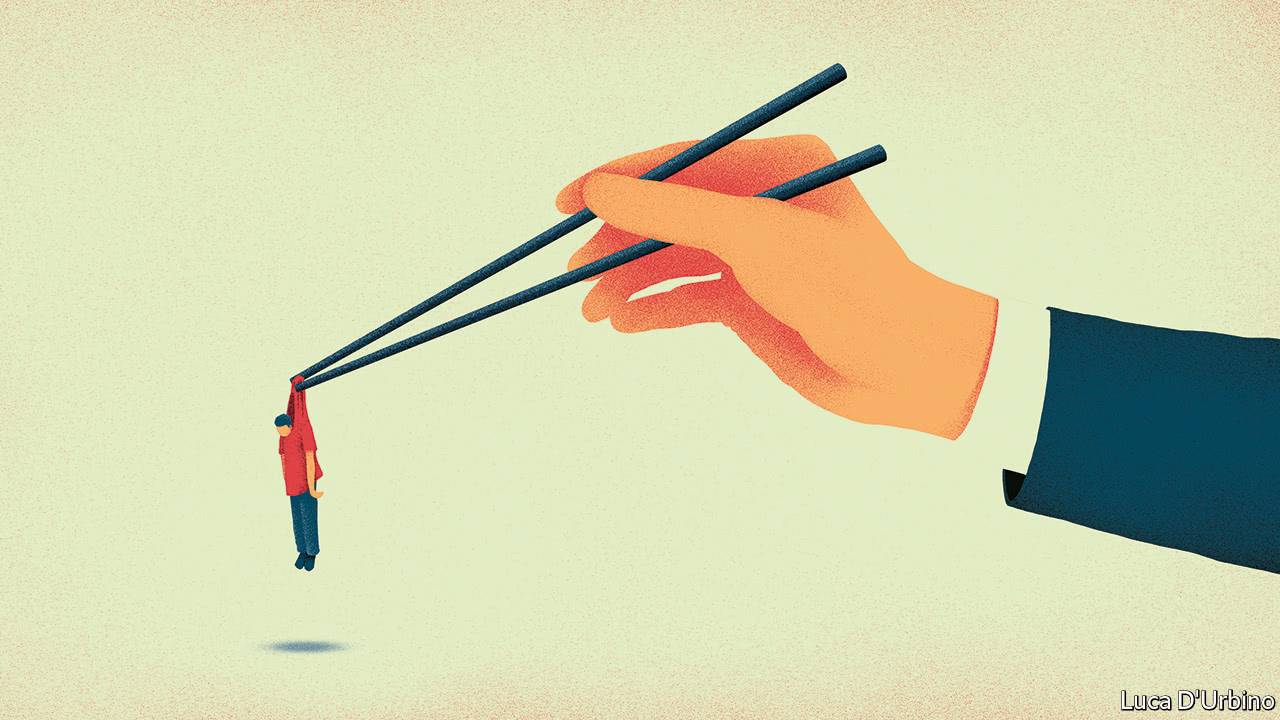
The Chinese police, in a sharp escalation of the country’s online censorship efforts, are questioning and detaining a growing number of Twitter users even though the social media platform is blocked in China and the vast majority of people in the country cannot see it.
The crackdown is the latest front in Xi Jinping’s campaign to suppress internet activity. 
In effect, the authorities are extending their control over Chinese citizens’ online lives, even if what they post is unlikely to be seen in the country.
“If we give up Twitter, we are losing one of our last places to speak,” said Wang Aizhong, a human-rights activist who said the police had told him to delete messages criticizing the Chinese government.
When Beijing is unable to get activists to delete tweets, others will sometimes do the job. 
Mr. Wang refused to take down his tweets. 
Then, one night last month while he was reading a book, his phone buzzed with text messages from Twitter that contained backup codes to his account.
An hour later, he said, 3,000 of his tweets had been deleted. 
He blamed government-affiliated hackers, although those who were responsible and the methods they used could not be independently confirmed.
A Twitter spokeswoman declined to comment on the government campaign.
China has long policed what its citizens can see and say, including online, but the recent push shows that Beijing’s vision of internet control encompasses social media around the world. 
Messages on WhatsApp, which is blocked in China, have begun to appear as evidence in Chinese trials.
The Chinese government has increasingly demanded that Google and Facebook take down content that officials object to even though both companies’ sites are inaccessible in China. 
After the exiled Chinese billionaire Guo Wengui used the platforms to lob graft accusations at top Chinese leaders, Facebook and Twitter suspended his accounts temporarily, citing user complaints and the disclosure of personal information.
Twitter may be banned in China, but the platform plays an important role in political debate and the discussion of issues in the country. 
To access the service, a small but active community uses software to circumvent the government’s controls over what people can see online. 
According to an estimate based on a survey of 1,627 Chinese internet users last year by Daniela Stockmann, a professor at the Hertie School of Governance in Germany, only 0.4 percent of China’s internet users, roughly 3.2 million people, use Twitter.
While it remains off limits for people in China, official media outlets like the Communist Party-controlled People’s Daily newspaper and the Xinhua news agency have used Twitter to shape perceptions of the country in the rest of the world.
“On the one hand, state media takes advantage of the full features of these platforms to reach millions of people,” said Sarah Cook, a senior analyst for East Asia at Freedom House, a pro-democracy research group based in the United States. 
“On the other hand, ordinary Chinese are risking interrogation and jail for using these same platforms to communicate with each other and the outside world.”
LinkedIn, the business networking service and one of the few American social media outlets allowed in China, has always bowed to the country’s censors. 
It took down the Chinese accounts of Peter Humphrey, a British private investigator who was once imprisoned in China, last month and Zhou Fengsuo, a human-rights activist, this month. 
The company sent emails to both containing language similar to the messages it sends users when it removes posts that violate censorship rules.
“What we’ve seen in recent weeks is the authorities desperately escalating the censorship of social media,” Mr. Humphrey said. 
“I think it’s quite astonishing that on this cloak-and-dagger basis, LinkedIn has been gagging people and preventing their comments from being seen in China.”
Both accounts have been restored. 
In a statement, LinkedIn apologized for taking the accounts down and said it had done so by "accident". 
“Our Trust and Safety team is updating our internal processes to help prevent an error like this from happening again,” the statement said.
Peter Humphrey, a private investigator who was once jailed in China. LinkedIn, the business networking site, took down his Chinese account last month.

With Twitter, Chinese officials are targeting a vibrant platform for Chinese activists.
Interviews with nine Twitter users questioned by the police and a review of a recording of a four-hour interrogation found a similar pattern: The police would produce printouts of tweets and advise users to delete either the specific messages or their entire accounts. 
Officers would often complain about posts that were critical of the Chinese government or that specifically mentioned Xi Jinping.
The police have used threats and, sometimes, physical restraints, according to Twitter users who were questioned. 
Huang Chengcheng, an activist with more than 8,000 Twitter followers, said his hands and feet were manacled to a chair while he was interrogated for eight hours in Chongqing. 
When the inquiry was over, he signed a promise to stay off Twitter.
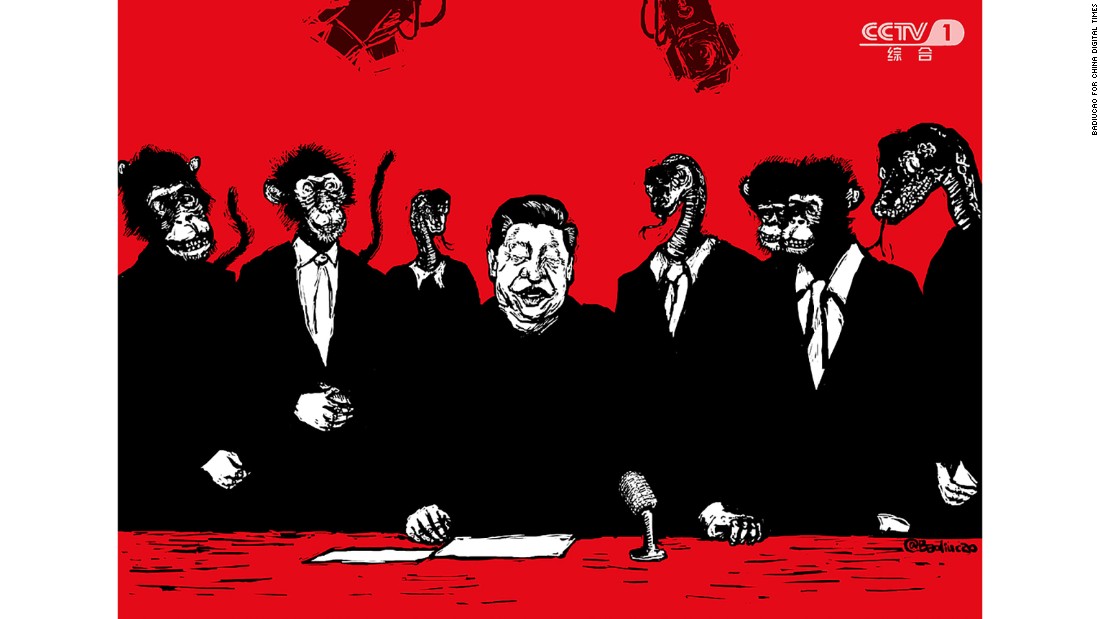
Those pulled in for questioning do not necessarily have the biggest presence on the social network. Pan Xidian, a 47-year-old construction company employee in Xiamen with about 4,000 followers, posted a comic by a dissident cartoonist known as Rebel Pepper, along with criticism of human-rights crackdowns. 
In November, the police called him in for 20 hours of questioning. 
After being forced to delete several tweets, he was allowed to go, and he thought his ordeal was over.
But officers showed up at his workplace a short time later and threw him into a car. 
They asked him to sign a document that said he had disturbed the social order. 
He complied. 
Then they showed him a second document, which said he would be detained. 
He spent the next two weeks in a cell with 10 other people, watching propaganda videos.
“In this era, we certainly know fear, but I can’t control myself,” Mr. Pan said while crying during a phone interview after he was released. 
“We’ve been living a very suppressed life.”
“We’re like lambs,” he added. 
“They’re taking us one after another. We have no ability to fight back.”
The crackdown is unusually broad and punitive. 
When censoring domestic social media in the past, officials have targeted prominent users. 
People were questioned or detained less frequently and more haphazardly.
The current push appears to be well coordinated between local and national law enforcement authorities, said Xiao Qiang, a professor at the School of Information at the University of California, Berkeley.
“Actually taking nationwide action, physically calling in all of these people, we’ve never seen that before,” he said.
The new approach involves broad action by China’s powerful Ministry of Public Security, which oversees law enforcement and political security. 
Several Twitter users said local authorities had specifically cited the internet police, a branch of the security ministry that monitors online activity. 
The agency, which refers to such local enforcement as “touching the ground,” was taken over last summer by a hard-liner known for a crackdown on telecom fraud in Xiamen, a city on the southeast coast.
The security ministry and the Cyberspace Administration of China, which regulates the internet, did not respond to faxed requests for comment.
The police have impressed upon activists that they can see posts outside China’s wall of censorship. After a four-hour grilling of a Twitter user with a small following who had complained in a post about the environment, a police officer offered him some advice. 
The user, who spoke on the condition of anonymity for fear of further reprisal, recorded the interrogation and provided a copy of the audio.
“Delete all your tweets, and shut down your account,” the officer said. 
“Everything on the internet can be monitored, even the inappropriate comments in WeChat groups,” a reference to a popular Chinese messaging app.
“This is truly wholehearted advice for you,” the officer added. 
“If this happens a second time, it will be handled differently. It will affect your parents. You are still so young. If you get married and have kids, it will affect them.”
The efforts have dampened debate on Chinese-language Twitter, said Yaqiu Wang, a China researcher with Human Rights Watch, who chronicled the crackdown in November. 
Still, not all users have gone quietly.
“Many activists want free speech,” Ms. Wang said in an interview. 
“Even when they’re harassed and intimidated, they’re very brave and continue to tweet. This is an act of defiance to censorship and oppression.”

mercredi 5 décembre 2018

Friendship of the Willing

Steve Bannon and Guo Wengui Target a Common Enemy: China
By David Barboza
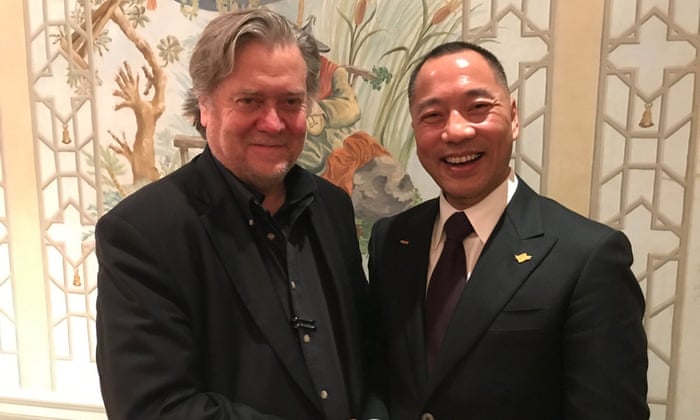
Stephen K. Bannon, the former strategist to President Trump, and Guo Wengui, who is wanted in China, have teamed up.
   
Just months after being pushed out of the White House, Stephen K. Bannon, President Trump’s former chief strategist, met with a Chinese billionaire at a suite in the luxurious Hays-Adams Hotel in Washington.
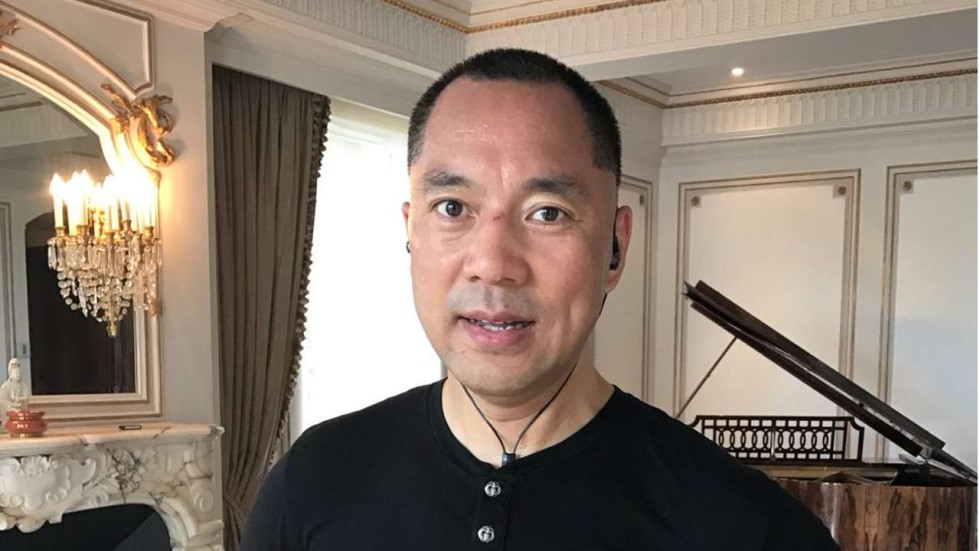
The billionaire, Guo Wengui, who is also known as Miles Kwok, was living in New York City and had landed on China’s most-wanted list, accused of bribery, fraud and money laundering. 
He was also a dissident and fierce critic of Beijing, seeking political asylum in the United States. And Mr. Bannon — increasingly obsessed with the China threat — was eager to talk about the Communist Party, corruption and American naval operations in the South China Sea.
Since their first discussion in October 2017, they have met dozens of times — in Dallas, on Mr. Guo’s yacht and, more often, at the billionaire’s $67.5 million apartment in the Sherry-Netherland Hotel, overlooking New York’s Central Park. 
The two shared a stage two weeks ago in Manhattan, at a news conference they organized to announce plans to set up a $100 million fund to investigate corruption and aid victims of Chinese government persecution.
“We both naturally despise the Chinese Communist Party,” Mr. Guo said in an interview last week, referring to Mr. Bannon. 
“That’s why we’ve become partners.”
It’s an unusual partnership between two political gadflies with a common, if overly grand, objective: bringing about the demise of the Chinese Communist Party.
One is an exiled businessman who has evidence of corruption at the highest levels of government in China. 
The other is a former Goldman Sachs banker who delights in lobbing political grenades at the “party of Davos,” a band of global "elites" that has undermined America’s interests at home and abroad.
As tensions between the United States and China grow, the two men are hoping to stoke them even further, by effectively calling for the overthrow of Beijing’s leadership. 
Mr. Guo is dipping into his fortune, while Mr. Bannon provides a strategy.
Mr. Bannon is, in effect, reprising the role of political provocateur he played before joining the Trump campaign in the summer of 2016. 
Back then, he was running the news site Breitbart, and helping promote books like “Clinton Cash,” which aimed to destroy Hillary Clinton’s White House bid.
In an interview in his hotel room two weeks ago, Mr. Bannon, 65, said the new China-related fund he will head, without pay, will gather evidence, share it with authorities — in the United States and elsewhere — and publish it in the media. 
The fund also targets Wall Street banks and law firms, which are complicit in China’s misdeeds.
The project, he says, is consistent with his populist and nationalist agenda. 
China’s reckless behavior is endangering the global economy, and sapping America’s strength.
“As a populist, this is outrageous,” Mr. Bannon said, noting that American financial institutions have helped back the worrisome global buying sprees of Chinese companies, with cash raised from ordinary people, including government pension funds. 
“The elites in this country have to be held accountable. We have to get the facts on the table.”
Mr. Guo, 50, insists that the fund offers a way to strike back at Beijing. 
China has pressed the Trump administration to extradite him so that he can face a raft of charges in China — allegations he strongly denies. 
Billions of dollars in assets he controlled have been frozen by Beijing. 
And Interpol, the pro-China police organization, has issued a warrant seeking his arrest. 
He now travels with a phalanx of security guards, saying he fears for his life.
The Chinese Embassy could not be reached for comment. 
But the Guo-Bannon alliance has alarmed Chinese "analysts", who view the two men as purveyors of conspiracy theories fueling anti-China sentiment.
For Mr. Bannon, the new effort plays to a longstanding and complicated interest in China. 
As a young naval officer in the 1970s, he patrolled the South China Sea. 
He also lived for a time in Shanghai, where he ran a small online gaming company. 
In recent years, he has come to view China as a military threat to the United States, and a fierce economic rival that refuses to play by the rules.
In helping elect Donald J. Trump, Mr. Bannon counseled him to take a tough line on China and step up trade pressure on Beijing. 
Mr. Trump obliged by tapping the Harvard-trained economist Peter Navarro, a longtime China critic known for his book “Death by China,” and Michael Pillsbury, a China expert at the Hudson Institute, as top trade advisers.
The effort has bristled Beijing’s stooges like Milos Zeman of the Czech Republic, right, who met with Xi Jinping in Prague in 2016.

It was during his time at the White House, Mr. Bannon says, that he first heard about Mr. Guo. 
The Chinese billionaire was living in New York, broadcasting accusations of high-level government corruption in China on Twitter and YouTube. 
By then, he had also applied for political asylum.
Alarmed by his social media campaign and his public denunciations of the Communist Party, Beijing began pressing the Trump administration to extradite Mr. Guo. 
Chinese investigators said he has ties to Ma Jian, a former spy chief now imprisoned in China on charges of bribery and abuse of power.
Inside the White House, there were disagreements over how to deal with Mr. Guo. 
Western businessmen, eager to cozy up to Beijing, lobbied President Trump to accede to China’s demands.
Mr. Bannon said he sided with those in the administration who opposed any handover, viewing Mr. Guo as a potentially valuable “intelligence asset.”
They met only after Mr. Bannon was forced out of the White House. 
Mr. Bannon says he received a call from Bill Gertz, a Washington journalist who has long been critical of China. 
Mr. Gertz told him that Mr. Guo was scheduled to give a talk in Washington at the Hudson Institute, a conservative think tank. 
The talk was canceled at the last minute.
Over lunch, Mr. Guo and Mr. Bannon discussed China’s military capabilities, as well as the financial implications of Beijing’s rule, including what impact the country’s mounting corporate debt might have on its economy. 
A friendship emerged.
“It was fantastic. He really impressed me,” Mr. Bannon said of his first meeting with Mr. Guo. 
“We talked about President Trump’s approach to China, and he went into corruption in the Chinese Communist Party.”
Mr. Bannon later introduced Mr. Guo to people in the hedge fund community, including J. Kyle Bass, who has soured on China and sought to profit by short-selling the Chinese currency.
As Mr. Bannon sharpened his critique of China’s rise, he also began meeting privately with some of America’s leading experts on China, to seek their counsel and outline his agenda. 
Few welcomed his remarks, according to people who attended some of the sessions. 
But more recently, his positions have gotten a warmer reception.
“The tectonic plates are shifting,” says Orville H. Schell, the director of the Center on U.S.-China Relations at the Asia Society. 
“Many analysts would have totally rejected him two years ago. But people are more sympathetic now that engagement with China has been defrocked.”
Mr. Schell adds, “On the China question, he’s no longer the skunk at the party.”
But Mr. Bannon is getting blowback from many Beijing’s stooges. 
On a trip abroad this year to drum up support for nationalist and populist leaders in Eastern and Central Europe, Mr. Bannon says, he was scolded for his positions on China by Milos Zeman, president of the Czech Republic and one of Beijing’s most zealous stooges in the region.
“He threw down on me hard,” Mr. Bannon says. 
“He said: ‘Tell Trump you didn’t learn from Hitler. You can’t fight on two fronts. You can’t take on radical Islam and China. You will end up in the bunker, like Hitler.”
A spokesman for Zeman said that he had challenged Mr. Bannon on American tariffs against China, and that the two men had parted ways in a very “cold atmosphere.”
Mr. Bannon is unbowed. 
He has agreed to serve as chairman of the Rule of Law Fund, the $100 million effort that Mr. Guo is financing. 
The fund plans to publicize its findings and offer financial support to businessmen, government officials and others who run afoul of the Chinese authorities — including those who flee overseas, like Mr. Guo himself.
Mr. Bannon has also joined Mr. Guo in targeting the HNA Group, the huge Chinese conglomerate that borrowed heavily and spent billions around the world, before debt and regulatory pressures forced the company to curb its global ambitions.
Until Twitter suspended his account late last year, Mr. Guo was waging an online war against HNA and its top executives. 
He claimed that the company was engaged in bribing top officials and their relatives, and has even spun theories about the death of the company’s co-chairman Wang Jian in an "accident" in France last summer. 
At their joint news conference last week, Mr. Bannon took the stage at the Pierre Hotel on Fifth Avenue in Manhattan to say, “Literally thousands of the best and brightest” in China have disappeared, been imprisoned or committed suicide under unusual circumstances and without due process.
“Today is about recklessness and accountability,” he added, noting that American financial institutions have close ties to political elites in Beijing. 
“Who profited off this? Who looked the other way?”

vendredi 12 octobre 2018

The Chinese Can Not Be Trusted to Lead Global Institutions

The abduction of Interpol’s president shows that Beijing’s officials will be subordinate to the orders of the Communist Party.
By BETHANY ALLEN-EBRAHIMIAN
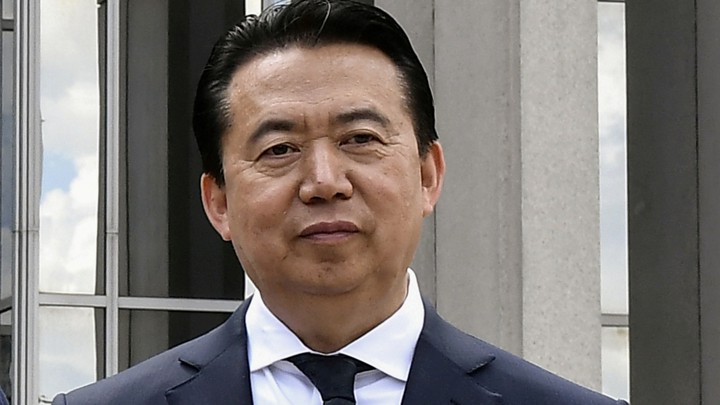
Meng Hongwei

China has spent years trying to gain an equal footing in international institutions originally set up by the West. 
Those efforts have seen gradual success, as Chinese nationals have come to occupy leading positions on United Nations committees, multilateral development banks, international courts, and many other organizations.
So when Meng Hongwei, a high-ranking Chinese Communist Party member who was chosen to serve as the president of Interpol in 2016, disappeared last month while visiting China, and was revealed two weeks later to have been detained by Chinese authorities, it seemed like an unforced error. 
Interpol is an important international organization tasked with facilitating cooperation between police forces in countries around the world. 
But even so, party disciplinary authorities were treating Meng first and foremost as a party member who had strayed from the straight and narrow, rather than as the internationally recognized top official of a major multilateral organization who deserves due process.
Meng’s detention shows that under Beijing’s increasingly confident global authoritarianism, China’s participation in and even its leadership of international institutions will be openly subordinate to the diktat of the Communist Party. 
This stands in stark contrast to the preceding eras under previous Presidents Hu Jintao and Jiang Zemin, when China paid lip service to following international law and to becoming a conforming member of the current international system.
The circumstances under which Meng disappeared highlight the authority the party still wields over Meng, even while he served as the head of a supposedly politically neutral institution. 
His disappearance first became known when his wife reported his absence to police in France, where the couple lives, and the French police launched an investigation. 
His wife had begun to worry for his safety when she received a knife emoji in a text message from her husband, taking it as a coded warning that all was not well on his trip home.
On October 7, almost two weeks after Meng went missing, Chinese authorities announced that they were charging Meng with bribery. 
After coming to power in 2012, Chinese dictator Xi Jinping launched a sweeping anti-corruption crackdown that has felled thousands of mid-level party cadres and numerous high-ranking officials.
But experts say the anti-corruption campaign is used as cover for political purges intended to strengthen Xi’s grip on power. 
There are hints of a political element in Meng’s detention; when announcing the charges against Meng, Chinese authorities also stressed the need for “absolute loyal political character.” 
Meng is now being held in a custody system notorious for torture, abuse, and denial of access to lawyers or a fair trial. 
It is certainly normal for any country to prosecute government officials for corruption; it is not normal to detain them without notice or charge, then thrust them into a system without fair representation or transparency.
That raises serious questions about the fitness of any member of the Chinese Communist Party to serve in a leadership position in international organizations. 
Meng’s detention is a clear sign that any party members abroad, no matter how high their profile or how important political neutrality is to their position, are still subject to the will and demands of the party—a party that’s willing to punish them at any cost if they stray. 
This is far truer under Xi than under his recent predecessors because one of Xi’s top goals has been to revitalize the once-moribund party, reestablish it as the main guiding force in China, and double down on party discipline.
It’s clear that Meng was the party’s man at Interpol. 
During his tenure as Interpol president, Meng simultaneously served as a vice minister in China’s public-security bureau, the country’s chief law-enforcement institution. 
It’s unlikely he could have risen to such a high position without demonstrating years of loyalty to the party. 
And the public-security bureau is behind illegal detentions and numerous other injustices visited upon a populace with few civil-rights protections. 
That means Meng spent his career climbing the ladder within a ruthless organization.
Thus, Meng’s election in 2017 to the position of Interpol president, though a largely ceremonial post, raised concerns that China would use Meng’s position to pursue political dissidents through the issuance of Interpol red notices. 
A red notice is roughly equivalent to an international arrest warrant requested by an individual government, and Interpol approves requests based not on an assessment of the target’s guilt but rather on whether the requesting government followed the appropriate laws and regulations in making the request. 
This makes the red-notice system notoriously easy to abuse; Russia, China, Turkey, Venezuela, and some Central Asian nations are known to request politically motivated red notices targeting political foes and journalists. 
Interpol member nations are not required to detain or extradite those with a red notice against them, though many do.
And indeed, shortly after Meng became president, Interpol issued a red notice for Guo Wengui, an exiled Chinese billionaire who had recently threatened to release compromising information on leading members of the Communist Party.
But not everything went so smoothly for China, or for Meng. 
In February, Interpol rescinded a red notice, originally issued at China’s request, for Dolkun Isa, the Europe-based president of World Uyghur Congress, a group that advocates for a beleaguered Chinese ethnic minority. 
Beijing claims that Isa is a terrorist, and China has frequently requested that European governments arrest and deport him.
Some observers noted that about six weeks after Isa’s red notice was revoked, Meng was removed from his post as a member of the public-security bureau’s party committee, the party organ embedded inside the bureau to provide leadership and ideological guidance, leading to speculation that the party was unhappy with Meng for allowing Interpol to remove the notice.
“Look at East Turkestan,” wrote Bill Bishop, the author of the influential Sinocism newsletter, referring to the Chinese region where an estimated 1 million Muslims are being held without due process. 
“Does Beijing care if there is fleeting concern over the fate of their Interpol appointee?”
These days, Beijing seems far less concerned about the opinion of the liberal West than it once was. Rather than continuing to try to hide the existence of its concentration camps in East Turkestan, Chinese officials are declaring them to be a true societal good. 
In the contested South China Sea, China now rarely claims that it aims to uphold international law—instead, it emphasizes that no one has the right to criticize its island building and militarization there. 
Might makes right, as it were.
At the same time, Beijing wields greater sway over international institutions than ever before. 
That means stakeholders in the international system would do well to ask themselves what price they might pay if they offer leadership positions to Chinese Communist Party members. 
It’s likely that as China promotes its authoritarian system around the world, one will increasingly see the party justify and even tout its realpolitik approach to international power. 
A liberal world order built on human rights and rule of law will need to find an effective response—and soon.

vendredi 5 octobre 2018

Chinese Saga

The Chinese head of Interpol has disappeared — in China
By James McAuley and Gerry Shih

An image from Interpol shows Meng Hongwei, Chinese president of Interpol, speaking in Bali, Nov. 10, 2016. 

PARIS — French authorities launched an investigation into the disappearance of Interpol president Meng Hongwei, whose wife informed French police that he went missing after returning to his native China last week, local media reported Friday.
Meng, a former government minister, was last seen Sept. 29, his wife said, according to unnamed French police officials cited by France’s Europe 1 radio station. 
Other police officials also confirmed the investigation to the Reuters news agency.
Interpol — headquartered in Lyon, France — is an international organization facilitating police cooperation across borders. 
Meng’s wife reported her husband’s disappearance to French authorities because she has been living in France with their children, Europe 1 reported.
A spokeswoman for France’s Interior Ministry, which oversees the national police force, did not immediately respond to a request for independent confirmation. 
Neither did a spokeswoman for the Lyon prosecutor, which oversees investigations in the region.
In a statement, Interpol said only that the disappearance is a “matter for the relevant authorities in both France and China” and declined to elaborate further.
Meng, 64, was named president of Interpol in November 2016, and his term is slated to end in 2020. He is the first Chinese citizen to head the body and was previously China’s vice minister of public security.
The circumstances of his disappearance have raised the possibility that he may have fallen into the dragnet of China’s multiyear anti-corruption campaign, which has seen thousands of officials and business executives suddenly vanish before reemerging to face government charges months later.
That would be a stunning reversal for Meng, who was elected to head Interpol two years ago at the precise moment China was seeking international help to arrest corrupt officials. 
In recent years, China has submitted to Interpol extensive lists of repatriation targets and “red notices” — an international alert for a wanted person ­— for what it says are corrupt fugitives.
At the time of his appointment, human rights groups expressed concern about the opacity of China’s legal system and warned that Beijing could use its clout in Interpol to arrest political dissidents.
During Meng’s tenure, China has submitted “red notices” for dissident business executives and figures such as the German national Dolkun Isa, the head of the Munich-based World Uighur Congress that represents the Uighur minority in far western China. 
China has labeled Isa a terrorist but has not provided public proof.
China last year also requested multiple Interpol red notices seeking the arrest of Guo Wengui, a dissident billionaire who had fled to New York while claiming he possessed explosive secrets about the Communist Party leadership.

mardi 10 avril 2018

Rogue Nation

China’s Oppression Reaches Beyond Its Borders
By Lauren Hilgers
The first threatening phone call that Zhuang Liehong got in New York was in the fall of 2016, on a gloriously warm September morning. 
The call came from a jail where his father was being held following a protest in Mr. Zhuang’s home village in Southern China. 
“Is this Zhuang Liehong?” asked an unfamiliar voice. 
When Mr. Zhuang said yes, there was a pause and his father’s voice came on the line. 
“Son,” he said, “stop doing what you’re doing. It will be bad for your family.”
What Mr. Zhuang had been doing, for the most part, was posting on Facebook. 
He was putting up photos that had been sent by friends and family, which recorded a police crackdown that had swept his home village, Wukan. 
Five years earlier, during the fall of 2011, Mr. Zhuang had been a ringleader in a series of protests that overtook the little seaside village. 
He had helped alert his fellow villagers to land grabs that were chipping away at village boundaries and filling the pockets of local officials. 
When those protests ended, it seemed the villagers had emerged victorious. 
Villagers had been granted the right to hold local elections, and Mr. Zhuang was one of seven new village committee members tasked with administrating the village and returning stolen land.
Back then, Wukan was held up among democracy activists as a symbol of liberalization, a hopeful sign that China was open to political change. 
But the elections were misleading, the hope misplaced. 
Mr. Zhuang fled to New York in 2014. 
Two years later, he found himself answering that phone call in New York City, swept up in new political currents. 
The Communist Party of China was taking a recent crackdown on dissent and moving it over borders. Mr. Zhuang had moved to the United States to speak freely about his village. 
In his father’s voice he heard the ventriloquism of the corrupt officials who had sold off his village land. 
Mr. Zhuang guessed that his father was surrounded by security personnel. 
He felt the phone call suggested a trade — his father’s freedom for Mr. Zhuang’s silence.
Since 2015, a sweeping crackdown on internal dissent has ensnared hundreds of human rights lawyers, feminists, journalists and democracy activists. 
China now spends more on internal security than it does on its military. 
And as the crackdown continues at home, the Chinese Communist Party has started to expand its reach, looking to enforce censorship, increase surveillance and silence dissent across borders. 
Their targets have included academics, exiled business elites, former judges and activists like Mr. Zhuang.
In a twist, as states across the globe retrench and solidify their hold, the quest for centralized rule and the quashing of dissent have caused borders to become porous. 
Russia stands accused of poisoning a former spy living in Britain. 
Turkish thugs attacked a crowd of protesters in Washington, D.C., during a visit by Turkey’s authoritarian-leaning president, Recep Tayyip Erdogan. 
Some of these tactics are old. 
Autocratic regimes have long sought to eliminate former spies living abroad. 
Detaining family members as a proxy for a high-profile dissident in exile is an old practice. Technology, however, has decreased the price of harassment. 
The same tools that enabled the uprisings in the Arab Spring, the same ones that help Mr. Zhuang promote his cause, make surveillance and intimidation easier. 
Now anonymous teenagers can harass on Twitter and so can agents of state.
The warning call that Mr. Zhuang got from his father would not be the last. 
Over the next few months, they kept coming. 
Mr. Zhuang had several phones, and if he stopped answering one, the calls would appear on another. Security officers tracked the phones of his friends and interrogated them if they accepted calls from Mr. Zhuang. 
A CCTV camera mysteriously appeared outside the door of the home that Mr. Zhuang’s mother shared with his handicapped older brother. 
Friends and family no longer visited. 
His father was sentenced to three years in prison and kept sending warnings. 
His mother called him from her ramshackle home in Wukan. 
When she called, she warned her son that, even in the United States, he was not safe.
The extended reach of the Chinese government has affected exiles and immigrants across the world. In Canada, a former Supreme People’s Court judge, Xie Wendong, reported that his sister and son had both been detained by security forces. 
Chinese government agents sent a lawyer to Canada to try to persuade him to return to China. Authorities also ordered Xie’s ex-wife to bring him back to China, threatening her with detention if she failed. 
In France, Zheng Ning, a former businessman, was successfully pursued by Chinese agents and ended up returning to China. 
In a report released in January, the Citizen Lab, a research group based at the University of Toronto, recorded a phishing operation that ran for 19 months, targeting Tibetans, the Falun Gong-related publication The Epoch Times and groups of ethnic Uyghurs.
In the United States, scholars studying China have also reported that phishing scams and targeted malware have become a matter of routine — with repeated attempts to access research and identify sources. 
An outspoken Chinese student at the University of Georgia recently told Radio Free Asia that he had received a call from a Chinese security officer, asking him to inform on other Chinese students and activists. 
Ethnic Uyghur journalists now living in the United States have reported the disappearance of multiple family members still in China.
Chen Xiaoping, a journalist at the Long Island-based, Mandarin-language media company Mirror Media Group, issued an open letter on Twitter in January asking the Chinese government to release his wife, who had been missing in China for 90 days. 
She had disappeared shortly after Mr. Chen began interviewing the exiled Chinese billionaire Guo Wengui. 
Soon after Mr. Chen released the letter, a video was anonymously posted on YouTube — a tape of his wife denouncing his work in the United States.
The threats that Mr. Zhuang has received have not dissuaded him from continuing to protest China’s government. 
They have, however, stolen his peace of mind. 
The political problems that Mr. Zhuang had were, he felt, with the local government in Guangdong Province. 
He assumed those officials would not be able to reach him in New York. 
And then, when the phone calls started coming, he began to doubt himself.
Mr. Zhuang, like so many other exiled Chinese citizens, is finding that he is still subject to Beijing’s demands. 
Worldwide, China’s government is sending a chilling message: no matter where you are, speaking freely comes at a steep price.

jeudi 29 mars 2018

Rogue Nation

China’s law-enforcers are going global but their methods are far from orthodox
The Economist

LAST year’s big blockbuster in China, “Wolf Warrior 2”, assured citizens not to fear running into trouble abroad: “Remember, the strength of China always has your back!” 
That is doubtless a comfort to patriots. 
But for those who seek to escape the government’s clutches, its growing willingness to project its authority beyond its borders is a source of alarm. 
In pursuit of fugitives, the Chinese authorities are increasingly willing to challenge the sovereignty of foreign governments and to seek the help of international agencies, even on spurious grounds.
Fugitives from China used to be mainly dissidents. 
The government was happy to have them out of the country, assuming they could do less harm there. But since Xi Jinping came to office in 2012 and launched a sweeping campaign against corruption, another type of fugitive has increased in number: those wanted for graft. 
Though they do not preach democracy, they pose a greater threat to the regime. 
Most are officials or well-connected business folk, insiders familiar with the workings of government. And in the internet age it is far easier for exiles to maintain ties with people back home.
So China has changed its stance, and started to hunt fugitives down. 
It has managed to repatriate nearly 4,000 suspects from some 90 countries. 
It has also recovered about 9.6bn yuan ($1.5bn). 
Still, nearly 1,000 remain on the run, according to the Central Commission for Discipline Inspection, China’s anti-graft watchdog
The problem is that only 36 countries have ratified extradition treaties with China. 
France, Italy, Spain and South Korea are among them, but few other rich democracies. 
It is easy for Chinese suspects seeking refuge abroad to argue that they will not get a fair trial if returned home, since the government does not believe that courts should be independent. 
Last year the country’s top judge denounced the very idea as a “false Western ideal”. 
What is more, China has thousands of political prisoners. 
Torture is endemic.

The hard way

These failings have forced the Chinese authorities to resort to less-straightforward methods to bring suspects home. 
Typically, they send agents, often travelling unofficially, to press exiles to return. 
The tactics involved are similar to ones used at home to induce people to do the Communist Party’s bidding. 
Many are subjected to persistent surveillance, intimidation and violence. 
Occasionally, Chinese agents attempt to kidnap suspects abroad and bring them home by force.
If runaways have family in China, those left behind are often subject to threats and harassment. 
In an interview in 2014 a member of Shanghai’s Public Security Bureau said that “a fugitive is like a flying kite: even though he is abroad, the string is in China.” 
Exiles are told that their adult relatives will lose their jobs and that their children will be kicked out of school if they do not return. 
Police pressed Guo Xin, one of China’s 100 most-wanted officials, to return from America by preventing her elderly mother and her sister from leaving China, and barring a brother living in Canada from entering the country, among other restrictions. 
In the end she gave in and went home.
In countries with closer ties to China, agents have occasionally dispensed with such pressures in favour of more resolute action. 
Wang Dan, a leader of the Tiananmen Square protests of 1989, says that he and other exiled dissidents have long avoided Cambodia, Thailand and other countries seen as friendly to China for fear of being detained by Chinese agents. 
The case of Gui Minhai, a Swede who had renounced his Chinese citizenship, suggests they are right to do so. 
He was kidnapped by Chinese officials in Thailand in 2015 and taken to the mainland. 
In a seemingly forced confession broadcast on Chinese television, he admitted to a driving offence over a decade earlier.
Many countries, naturally, are upset about covert actions by Chinese operatives on their soil. 
In 2015 the New York Times reported that the American authorities had complained to the Chinese government about agents working illegally in America, often entering the country on tourist or trade visas. 
Foreign diplomats note that officials from China’s Ministry of Public Security travel as delegates of trade and tourism missions from individual provinces. 
Chinese police were caught in Australia in 2015 pursuing a tour-bus driver accused of bribery. Though France has an extradition treaty with China, French officials found out about the repatriation of Zheng Ning, a businessman seeking refuge there, only when China’s own anti-graft website put a notice up saying police had successfully “persuaded” him to return to China. 
The French authorities had not received a request for his extradition.
This pattern is especially disturbing since the anti-corruption campaign is used as an excuse to pursue people for actions that would not be considered crimes in the countries where they have taken refuge—including political dissent. 
It beggars belief that the Chinese authorities would have worked so hard to capture Mr Gui, the kidnapped Swede, just to answer for a driving offence. 
His real crime was to have published books in Hong Kong about the Chinese leadership. 
By the same token, last year the Chinese embassy in Bangkok reportedly asked the Thai government to detain the wife of a civil-rights lawyer after she escaped over China’s south-western border. 
Her only known offence was to have married a man who had the cheek to defend Chinese citizens against the state.
Increasingly, China is trying to use Interpol, an international body for police co-operation, to give its cross-border forays a veneer of respectability. 
Interpol has no power to order countries to arrest individuals, but many democratic states frequently respond to the agency’s “red notices” requesting a detention as a precursor to extradition. 
In 2015 China’s government asked Interpol to issue red notices for 100 of its most-wanted officials. To date, the government says half of those on the list have returned, one way or another. 
Small wonder that Xi Jinping has said he wants the agency to “play an even more important role in global security governance”.
Since 2016 Interpol has been headed by Meng Hongwei, who is also China’s vice-minister of public security. 
That year alone China issued 612 red notices. 
The worry is that China may have misrepresented its reasons for seeking arrests abroad. 
Miles Kwok, also known as Guo Wengui, a businessman who fled China in 2015, stands accused of bribery. 
But it was only when he was poised to give an interview last summer in which he had threatened to expose the misdeeds of the ruling elite that China asked Interpol to help secure his arrest. 
When America refused to send him home, the Chinese government requested a second red notice, accusing Mr Kwok of rape.
China’s covert extraterritorial activity suggests that foreign governments are right to be cautious about deepening ties in law-enforcement. 
If nothing else, the fate of those who do return provides grounds for concern. 
Although few would shed any tears for corrupt tycoons or crooked officials, the chances of any of them getting a genuine opportunity to prove their innocence are all but zero. 
Nearly half of the repatriated officials who were subject to red notices have been sentenced to life in prison; the other half have not yet been tried. 
Chinese courts have an astonishingly high conviction rate. 
In 2016, the latest year for which figures are available, it was 99.9%.

mercredi 17 janvier 2018

State Terrorism

Chinese-American journalist's wife kidnapped by China
AP

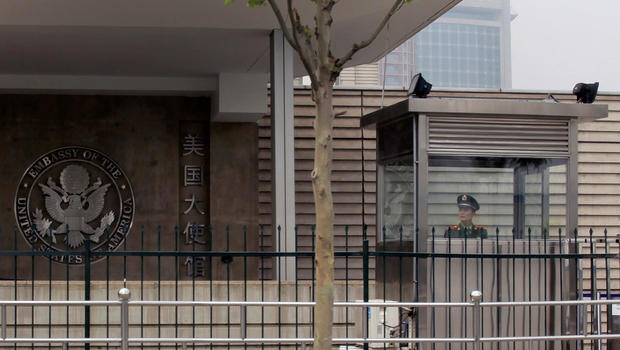
Paramilitary police officer guards entrance to U.S. embassy in Beijing on April 30, 2012.

BEIJING -- A Chinese-American journalist who extensively interviewed an exiled businessman says his wife has been kidnapped and held for months by Chinese security forces, adding a subplot to the high-stakes drama that has transfixed followers of Chinese politics.
Chen Xiaoping, a New York-based editor at Chinese-language Mirror Media Group, told The Associated Press that a new video that surfaced this week of his wife denouncing his work was filmed under duress and proves that she is being held by the government in an effort to pressure him.
Over the past year, Chen has been at the centre of a political firestorm surrounding Guo Wengui, a fugitive real estate billionaire who repeatedly appeared on his live-streamed broadcast to air allegations of corruption within the upper echelons of China's ruling Communist Party.
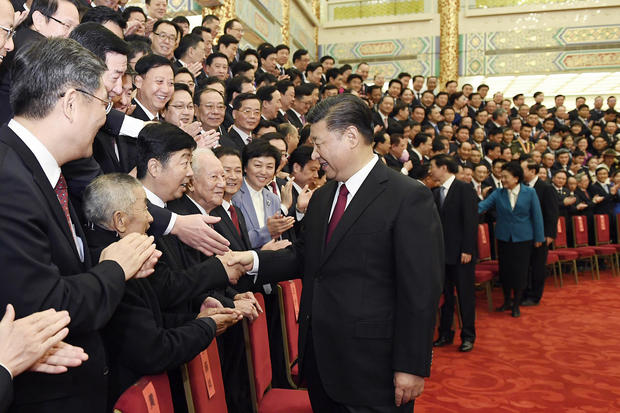
In this photo released by Xinhua News Agency, Xi Jinping, front right, meets representatives attending the award ceremony on ethical role models and pioneers in Beijing, China on Nov. 17, 2017.

In September, shortly before one of Chen's broadcasts, his wife Li Huaiping, who remained in China, sent him a terse message saying she was "in trouble," Chen said.
Li was not heard from until Sunday, when an anonymous YouTube account believed to be linked to Chinese security agencies uploaded a video in which she explained she had cut all contact with Chen due to "emotional issues" -- as well as his "overseas work." 
The video is the first sign of Li since she disappeared from her home in Guangdong province, and it was uploaded a day after Chen published an open letter on Twitter to Xi Jinping pleading for his wife's freedom.
"I didn't think a video would be released so quickly after I wrote my letter," Chen said from Long Island, New York. 
"It's clear that my wife's kidnapping and my work have been totally related."
Li, who appears to be reading from a prepared text in the video, also asked Chen to stop searching for her and speaking out publicly on her behalf.
"They forced her to make this video," Chen said.
Chen has spoken to State Department and congressional officials about the disappearance of his wife, who is a U.S. permanent resident, he said. 
Chen became a naturalized U.S. citizen in 2012 and married Li that same year.
Spokesmen for the Ministry of Public Security in Beijing referred inquiries to police headquarters in the southern province of Guangdong, where calls rang unanswered Wednesday.
Li's disappearance carries echoes of 2015, when several Hong Kong publishers who sold politically sensitive books vanished in quick succession -- believed to be abducted by Chinese agents -- in cases that sent chills through Chinese-language political media around the world.
But until the recent disappearance of Chen's wife, Mirror Media Group, under the direction of its publisher Ho Pin, managed to avoid the pitfalls of the business while cultivating its reputation as one of the top clearinghouses for Chinese political gossip.
The outlet's following and profile skyrocketed in 2017 when Chen conducted half-dozen interviews with Guo, who is seeking asylum in the U.S. 
Chinese authorities have accused Guo, who lives in Manhattan, of a long litany of "crimes", including bribery, extortion, kidnapping, genocide and rape.

jeudi 2 novembre 2017

U.S. Tech Quisling

Facebook blocked dissident Guo Wengui after the Chinese government complained
By Heather Timmons
Facebook, Twitter, and Google were grilled this morning about their efforts to combat propaganda in the run up the 2016 US election by the Senate’s intelligence committee. 
Most of the questions focused, naturally, on Russia’s influence, because the Kremlin was specifically identified by US intelligence as trying to sway the vote.
Florida senator Marco Rubio, who takes a particular interest in Beijing’s attempts to curtail Chinese citizens’ free speech, focused for a moment on dissident Guo Wengui. 
Facebook said Oct. 1 it had taken down a page associated with Guo and stopped him from posting to his own account after he had posted someone else’s “personal identifier information.”
Did Facebook do so at the behest of Beijing, Rubio asked the company’s attorney Colin Stretch. Kind of, Stretch admitted.
“We did receive a report from a representative of the Chinese government about that account,” Stretch said. 
“We analyzed that report as we would any other, and took action based on our policies,” he said.
Guo Wengui

The Chinese government has been trying to silence Guo, and to bring him back from the US to China, because he has been using social media to disseminate claims that elite government officials are corrupt. 
The wealthy businessman lives in a Manhattan penthouse surround by bodyguards.
Guo’s account was blocked because he published information about Wang Qishan, a member of the elite Politburo in charge of Beijing’s anti-corruption push, and Fan Bingbing, a movie star on his Facebook page, people briefed on his case say. 
He has alleged that Wang’s family amassed a fortune from dealings with Chinese conglomerate HNA, and that Fan was his mistress.
The company’s Community Standards only specify it will take action for “credible threats to public figures and hate speech directed at them.” 
A Facebook spokesman said when his account was blocked that “we don’t allow people to publish the personal information of others without their consent” and the company had no update today after the hearing.
Although Facebook is officially blocked in China, the Chinese government has a robust presence on the platform, mostly through state-owned media accounts, which claim to have tens of millions of Facebook fans. 
The Chinese government employs a veritable army of paid social media users to spread its message on Chinese networks that are jokingly called the “50 Cent party”.
The 50 Cent party is also colonizing foreign social media. 
Searching for Guo’s name on Twitter turns up a string of poorly-worded tweets disparaging him.

mardi 24 octobre 2017

Donald Trump is a moron

Trump called for Guo Wengui’s deportation after casino owner Steve Wynn brought letter from Beijing government
By Julian Borger in Washington

Billionaire Guo Wengui, whom Chinese security agents have tried to restrain from publishing accusatory tweets against the Beijing government. 

Donald Trump called for the deportation of a Chinese dissident living in the US, after receiving a request from Beijing hand-delivered by a casino owner with business interests in China, according to a US report.
The Wall Street Journal described a Chinese government attempt to put pressure on Guo Wengui, a real estate tycoon living in exile in New York, to halt his allegations of corruption in high places in China.

Guo Wengui tweeted this picture of himself with former senior Trump aide Steve Bannon.

A group of officials from China’s ministry of state security, who entered the US on visas that did not allow them to conduct official business, visited Guo in his New York apartment in May, and used veiled threats in an attempt to persuade Guo to stop his accusatory tweets, which have a wide following in China, and return home. 
Guo shrugged off the pressure and made a recording of his conversation with the officials, part of which he posted online.
After that visit, FBI agents confronted the Chinese officials at New York’s Pennsylvania Station. 
The Chinese visitors first claimed to be cultural diplomats and then admitted they were security officials. 
The agents warned them they were violating the terms of their visa and told them to leave the country.
However, two days later, just before leaving the country, the Chinese officials paid a second visit to Guo, triggering a debate within the administration over whether they should be arrested. 
FBI agents were posted at John F Kennedy airport ready to carry out the arrests before the officials boarded their flight, but they were not made, after the state department argued it could trigger a diplomatic crisis.
Guo has filed an application for political asylum in the US, which is pending. 
But according to the Journal’s account, Trump called for Guo’s deportation in a discussion on policy towards China, describing him as a “criminal” at an Oval Office policy meeting in June, on the basis of a letter from Beijing accusing him of serious crimes.
The report said the letter had been hand-delivered to him at a private dinner by Steve Wynn, a Las Vegas casino magnate and Republican National Committee finance chairman with interests in the Chinese gambling enclave of Macau, for which Wynn relies on Beijing for licensing.
The marketing director for Wynn Resorts Ltd, Michael Weaver, told the Journal in a written statement: “[T]hat report regarding Mr Wynn is false. Beyond that, he doesn’t have any comment.”
Weaver did not respond to a request for comment from the Guardian on what part of the story was false and whether Wynn had ever delivered a letter from the Chinese government to Trump.
The Journal report said that aides tried to persuade Trump out of going ahead with Guo’s deportation, noting he was a member of the president’s Mar-a-Lago club in Florida. 
The aides later ensured that the deportation would not go ahead.
There was no immediate response from the White House or the state department to a request to comment on the report. 
A state department representative told the Journal: “Decisions on these kinds of matters are based on interagency consensus.”
A justice department representative said: “It is a criminal offense for an individual, other than a diplomatic or consular officer or attache, to act in the United States as an agent of a foreign power without prior notification to the attorney general.”

lundi 9 octobre 2017

Chinese Fifth Column: VOA or VOC?

CHINESE DISSIDENT SILENCED BY VOICE OF AMERICA
Decision praised to investigate U.S. broadcaster bowing to Beijing pressure

By BOB UNRUH

A coalition of American organizations promoting freedom inside China is praising a decision that there will be formal investigation of those managers at Voice of America who cut off, mid-sentence more or less, a long-planned on-air interview with Chinese dissident Guo Wengui.
Five journalists there also were investigated over the interview.
According to a statement posted on the website for Women’s Rights Without Frontiers, which has spent years fighting China’s one-child, now two-child, limits that trigger mandatory abortions, the office of Inspector General at the U.S. State Department will investigate the “management decisions” of the situation.
Besides Reggie Littlejohn of WWRF, the statement was signed by “The Barefoot Lawyer” author Chen Guangcheng, China Aid Assoication chief Bob Fu, Jianli Yang of Initiatives for China, Yaxue Cao of China Change, Lianchao Han of the Hudson Institute and Fengsuo Zhou of China Human Rights Accountability Center.

Littlejohn’s posting explained, “For those unfamiliar with the Guo Wengui interview incident, on April 19 of this year, Voice of America China Branch was set to broadcast a three-hour live interview of Guo Wengui, a Chinese billionaire with close ties to the Chinese State Security apparatus, who claimed to have information about high-level official corruption in the Chinese regime.
“Specifically, Guo stated his intent publicly to expose how China’s State Security apparatus pressured the Chinese business community into financing its infiltration into organizations globally, as well as its monitoring of Chinese citizens.
“VOA’s upper-level management abruptly cut short the interview mid-broadcast, to the consternation of the Chinese audience, many of whom believe that VOA was kowtowing to the Chinese Communist Party.”
The letter noted that five journalists then were “put on administrative leave.”
But the letter questions what happened to those journalists, and what triggered the abrupt shutdown of the interview.
It continued, “According to reports and information provided to us, the Chinese Communist regime took several extraordinary actions during the days leading up to the interview. For example, two days before the scheduled interview, officials from the Chinese Ministry of Foreign Affairs summoned VOA’s Beijing correspondent to pressure VOA to cancel the interview. Officials then issued a warrant for the arrest of Guo. After this, the Chinese Communist Party issued a notice alerting Interpol of the Chinese regime’s arrest warrant for Guo. Having done this, they then accused Guo of being a fugitive criminal.
“The day before the interview, the Chinese Embassy in Washington, D.C. called the VOA Mandarin Service and demanded cancellation of the Guo interview,” the letter cited.
“Could it be that VOA management did indeed cave to pressure from the Chinese government? If so, why would VOA management be vulnerable to such pressure? Could reports be true that members of VOA management and the Broadcasting Board of Governors (BBG, VOA’s parent federal agency) have significant business interests in China?”
The letter expressed suspicions of conflicts of interest.
“We applaud the OIG’s decision to conduct an investigation. We look forward to the results of this investigation, which we believe will include a complete vindication of the VOA Mandarin Five,” the statement said.

The Free Beacon reported just this week that the Hudson Institute, a Washington think tank, abruptly canceled a scheduled public appearance by Guo Wengui just before it was to be held.
Spokesman David Tell admitted there had been pressure from China, citing a cyber attack, a denial of service, that targeted the institute and had been traced to Shanghai.
The report said Shanghai is home of the Chinese military’s Unit 61398, a military cyber espionage unit.
Guo, who now is in exile in New York, recently applied for political asylum.
“I am shocked at Hudson’s cancelation, but at the same time I am also pleased the issue has proven to the American people and people of the world my repeated warning of the virulence and harmfulness of the Chinese kleptocrats’ long reach,” Guo told the Beacon in a statement.
“The significance and value of this incident has surpassed my talk at Hudson.”
The report said the Chinese government intimidation is the latest incident “in what appears to be a Chinese government influence campaign in the United States targeting Guo.”

Deep Chinese infiltration: Guo Wengui blames Chinese moles in US broadcaster Voice of America for pulling plug on interview.

“China also has been linked to another cyber attack against the Washington law firm Clark Hill that until recently had been representing Guo in his bid for political asylum in the United States,” the report said.
Guo is thought to be worth about $28 billion from real estate and other business operations, although China has frozen much of that.
He has revealed some details about China’s intel operations and he could be an intelligence “bonanza” for the U.S., the report said.
A Today report this week also said Facebook blocked a profile under Guo’s name.
Facebook claimed in the report the pages included someone else’s personal identifiable information.

vendredi 6 octobre 2017

Exiled Chinese billionaire blasts kleptocracy running China, warns of spy infiltration in US

  • China is being controlled by a small clique of crooked high-level officials.
  • Chinese security officials earlier this year authorized an escalation of espionage efforts in the United States.
  • Guo's earlier scheduled appearance at a Washington think tank was postponed due to heavy pressure by China.
By Dan Mangan

Billionaire businessman Guo Wengui speaks during an interview in New York City, April 30, 2017.
A Chinese billionaire in self-imposed exile blasted on Thursday a small clique of corrupt "kleptocrats" running China — as he also warned of a wave of Chinese spies being dispatched to the United States in recent months.
"What they're doing is against humanity," said Guo Wengui, during an appearance at the National Press Club in Washington, two days after a previously scheduled appearance at a think tank in the same city was postponed due to heavy pressure from the Chinese government.
"What the U.S. ought to do is take action, instead of just talking to the Chinese kleptocracy," Guo said through a translator.
"They are just a tiny group of Mafia, pure and simple," said Guo, a real-estate magnate also known as Miles Kwok, who lives in a $68 million apartment in New York City.
"I would like all the members of the Chinese Communist Party to wake up and say no to this ruling clique."
Guo said he was aware of multiple initiatives by that clique in China to increase the number of spies in the U.S. and "to weaken the United States, to bring about turmoil in the United States and to ... decimate the United States."
"These plans pose great threats to the American people and their property," Guo said.
Those efforts are "100 times, or even 1,000 times" as potentially damaging as the Sept. 11, 2001, terror attacks.
Guo's appearance in Washington was just the latest in a recent flurry of controversies surrounding the real estate magnate, who fled to the United States in 2015 after learning a security official he had ties with was being targeted by an anticorruption campaign.
Guo has unloaded a barrage of allegations of corruption by people in the highest levels of China's ruling Communist Party, which include claims that the party's own head of anticorruption activities, Wang Qishan, has unclean hands. 
Wang's family secretly controls one of the largest conglomerates in China, the New York Times has reported.
In September, Guo applied for political asylum in the U.S. 
But he has kept on making scathing and salacious attacks on social media against his targets.
Last Saturday, Facebook reportedly blocked a profile with Guo's name and removed another page linked to him. 
Facebook said it took that action after confirming the pages included another person's identifiable personal information, in violation of the platform's terms of service.
Guo's targets haven't taken his claims lying down.
In April, the Voice of America, which is operated by the U.S. government, abruptly cut short an interview with Guo, and later put five of its own journalists on administrative leave in connection with the interview. 
The chief of VOA's Mandarin service told CNBC that Chinese authorities met with VOA's Beijing correspondent and asked that the interview with Guo be canceled.
Earlier this year, the Chinese government asked Interpol to issue an international arrest warrant for Guo.

The Associated Press has reported that Chinese prosecutors are investigating Guo "for at least 19 major criminal cases," which included allegedly bribing intelligence officials, kidnapping, fraud and money laundering. 
In August, AP revealed that Chinese authorities have asked for another Interpol warrant for Guo, on a claim that he "raped" a 28-year-old former personal assistant.
This week representatives of a pro-China corporate investigative firm provided CNBC with a 12-page dossier on Guo detailing his use of social media to make "allegations against women and his perceived enemies," and the fact that he "has been subject to accusations of questionable business dealings and the defrauding of business partners."
The dossier from the firm, which has been retained by a number of clients around the world that have been targets of Guo, also noted "a series of defamation suits" filed in New York City against the billionaire since April.
The suits were filed by Caixin Media; Soho China, a real estate company; an affiliate of the major Chinese conglomerate HNA Group, and China's vice minister of housing and urban rural development.
Guo told The Wall Street Journal for a story published Tuesday that he has set up a $150 million legal war chest to fight the lawsuits.
"Nothing can stop me," Guo told the Journal.
But Guo was stopped hours later Tuesday by the Hudson Institute think tank in Washington.
The Hudson Institute told Guo around noon that day that it was postponing his planned appearance there on Wednesday, the Journal reported. 
Guo told the paper that the think tank told him his appearance was "poorly timed." 
CNBC has reached out for comment from the Hudson Institute.
So instead, Guo spoke to reporters Thursday at the National Press Club.
"You have caused quite a stir, not only in the United States but also in China," said Bill Gertz, senior editor of the Washington Free Beacon, who moderated the event.
Guo told reporters that he was jailed in China for 22 months after the government's 1989 crackdown on pro-democracy students in Tiananmen Square, whose efforts he supported with donations.
At around the same time, Guo said, "due to some kind of a trade dispute" that his brother became involved with, police shot and killed his younger brother, as his brother tried to shield Guo's wife from their bullets.
"The crime they gave me was so-called anti-revolutionary, and then they change it to obstruction of justice and fraud. They said I engaged in fraud and stole somebody's money," Guo said.
Years before, during the Cultural Revolution, Guo said his father was beaten badly after being sent into internal exile, "my brothers were injured physically ... and my mother had a nervous breakdown."
After his own release from jail, Guo returned to business, and began building luxury hotels, he said.
"From then on, I set myself a goal, which I had in my heart, that was to engage in revenge, not only for myself but for the whole of the Chinese people," Guo said. 
"For the injustices and the injuries and the deaths they have rendered to my younger brother, to my family members, to my brothers, and to my cousins, and to promote and bring about justice and equality to the whole country by overthrowing the existing system."
He said that after making $17 billion, his goal was "to engage in some kind of revolutionary activities."
That $17 billion, he said, is now "all frozen by the Chinese government."
"Since I came abroad, I have also made a lot of money," Guo said. 
"I have the best house, private aircraft, yacht, so as far as my personal welfare and personal needs are concerned, I have no other needs that I really desire."
"My only single goal is to change China," he said.

mardi 26 septembre 2017

Gestapol

China hosts Interpol meeting amid concerns Beijing is using the police network to pursue political foes overseas.
By CHRISTOPHER BODEEN

Interpol opened its main international annual meeting in China on Tuesday amid concerns that Beijing is using its growing influence over the police network to pursue political foes overseas.
Xi Jinping said in a speech to the Interpol General Assembly that China wants to work with other countries and organizations to achieve "global security governance."
However, New York-based Human Rights Watch said Interpol needs to address China's misuse of the organization's "red notice" system to seek the arrest and extradition of wanted people.
The election of Chinese Vice Public Security Minister Meng Hongwei as Interpol's president last year alarmed rights advocates who cite abuses, opacity and political manipulation within China's legal system.
China has used red notices to flag cases bearing a decided political taint, making the individuals involved vulnerable to law enforcement action by foreign government bodies.
Human Rights Watch raised the case of Dolkun Isa, an activist in Germany for the Turkic-Muslim Uighur ethnic group native to China's far-western Xinjiang region. 
It said Isa has had trouble traveling internationally since a red notice was issued against him more than a decade ago. 
China routinely accuses overseas Uighur advocates of supporting terrorism while providing little evidence to back up their claims.
The group also mentioned U.S.-based activist Wang Zaigang, whom it said appeared to have been targeted with a red notice in response to his activities promoting Chinese democracy.
Those served with red notices risk torture and other forms of ill-treatment given China's record of abuse, Human Rights Watch said.
"Interpol claims to operate according to international human rights standards, but China has already shown a willingness to manipulate the system," Sophie Richardson, the group's China director, was quoted as saying in a news release. 
"And with China's vice-minister of public security ... as president, Interpol's credibility is on the line," Richardson said.
The Ministry of Public Security is China's main police agency, charged with silencing and detaining critics of the ruling Communist Party, often outside the letter of the law.
Chinese politics expert Willy Lam said China has been using its economic heft to influence groups such as Interpol to further the party's foreign and domestic policy aims.
Lam pointed to cases where the line has blurred between accusations of corruption and apparent attempts to retaliate against those who make allegations against members of the communist leadership, such as outspoken businessman Guo Wengui.
Pressure on Guo has been building since April when a red notice was issued seeking his arrest on corruption-related charges. 
Chinese authorities sentenced several of his employees for fraud in June and have also opened an investigation into rape charges against Guo brought by a former assistant.
In recent months, Guo has become a widely followed social media presence by serving up sensational tales of corruption and scandal within the Communist Party's innermost sanctum, including among Xi's closest allies.
"China has turned Interpol into another venue for projecting its power," Lam said. 
"They've put a lot of investment into pursuing fugitives abroad, those wanted for political reasons."

jeudi 21 septembre 2017

Rogue Nation

China Wields Its "Laws" to Silence Critics From Abroad
By STEVEN LEE MYERS and CHRIS HORTON

Lee Ming-cheh, second from left, an activist from Taiwan, in court in the Chinese city of Yueyang, Hunan Province, last week. The case against Mr. Lee punctuates what critics warn are China’s efforts to stifle what it perceives as threats from overseas. 

BEIJING — On the morning he disappeared, the activist Lee Ming-cheh crossed from Macau into mainland China to meet with democracy advocates.
It was 177 days later when he reappeared in public, standing in the dock of a courtroom in central China last week, confessing to a conspiracy to subvert the Communist Party by circulating criticism on social media.
The circumstances surrounding Mr. Lee’s detainment remain murky, but what has made the case stand out from the many that the Chinese government brings against its critics is that Mr. Lee is not a citizen of China, but rather of Taiwan, the self-governing island over which Beijing claims sovereignty.
The proceedings against Mr. Lee, who is expected to be sentenced as soon as this week, punctuated what critics have warned are China’s brazen efforts to extend the reach of its security forces to stifle what it perceives as threats to its power emanating from overseas.
In recent months alone, China has sought the extradition of ethnic Uighur students studying overseas in Egypt and carried out the cinematic seizure of a billionaire from a Hong Kong hotel in violation of an agreement that allows the former British colony to run its own affairs. 
The billionaire, Xiao Jianhua, now appears to be a material witness in another politically tinged investigation against the Chinese conglomerate Dalian Wanda.
China abruptly surfaced charges of "rape" against yet another billionaire, Guo Wengui, after he sought political asylum in the United States, where he has been making sensational accusations about the Communist Party’s leadership. 
Mr. Guo’s case could become a major test for the Trump administration’s relations with Beijing at a time of tensions over North Korea and trade.
The Chinese billionaire Guo Wengui has sought political asylum in the United States.

“China has been extending its clampdown — its choking of civil society — throughout the world, and often it is attempting this through official channels such as the U.N. or Interpol,” said Michael Caster, a rights campaigner who was a co-founder of the Chinese Urgent Action Working Group. “Unfortunately, they’re very adept at doing it.”
The Chinese Urgent Action Working Group, which provided seminars for lawyers and legal aid for defendants in China, folded last year after the country’s powerful Ministry of State Security arrested and held Mr. Caster’s colleague, Peter Dahlin, a Swedish citizen, for 23 days.
Mr. Caster noted that Interpol’s president, Meng Hongwei, is a veteran of China’s state security apparatus. 
Human Rights Watch recently reported that China was blocking the work of United Nations agencies investigating rights issues and preventing critics from testifying at hearings, including in one case the leader of the World Uyghur Congress, Dolkun Isa.
China’s economic clout has meant that few countries are willing to do much to challenge its extraterritorial legal maneuvers. 
Some have even gone along.
And countries as varied as Armenia, Cambodia, Indonesia, Kenya, Spain and Vietnam have all extradited to China scores of people accused in a spate of telephone swindles targeting Chinese citizens, even though the suspects are, like Mr. Lee, citizens of Taiwan.
“Treating Lee Ming-cheh as a mainland Chinese marks a major watershed,” said Hsiao I-Min, a lawyer at the Judicial Reform Foundation in Taiwan, who accompanied Mr. Lee’s wife from Taiwan to attend the trial.
Peter Dahlin, a Swedish citizen, was arrested in China and held for 23 days last year.

Mr. Lee’s case has added new strain in relations with Taiwan, which have soured since the election last year of a new president, Tsai Ing-wen. 
China has cut off official communications with Ms. Tsai’s government over her refusal to voice support for what Beijing calls the “1992 consensus,” which holds that the mainland and Taiwan are both part of the same China but leaves each side to interpret what that means.
In response to Mr. Lee’s legal odyssey, Ms. Tsai’s government has been relatively muted. 
“Our consistent position on this case is that we will do everything in our power to ensure his safe return while protecting the dignity of the nation,” said a spokesman for the presidential administration, Alex Huang.
China and Taiwan had in recent years cooperated on criminal investigations under a protocol that required each to notify the other in cases involving the arrests of its citizens. 
The Chinese government has recently abandoned such diplomatic niceties, officials in Taiwan say.
Taiwan’s government was notified of Mr. Lee’s arrest only when the public was — 10 days after his detainment in March near Macau, the former Portuguese colony that, like Hong Kong, is a special administrative region of China with its own legal system.
Mr. Lee, 42, assumed enormous risk to make contact with rights campaigners inside China. 
A manager at Wenshan Community College in Taiwan’s capital, Taipei, Mr. Lee volunteered for a rights organization called Covenants Watch and often traveled to the mainland.
Mr. Lee’s wife, Lee Ching-yu, learned his case had come to a head when a state-appointed lawyer contacted her this month. 
She only found out about his court appearance last week in Yueyang, in the southern province of Hunan, from news reports that circulated two days later, according to Patrick Poon, a researcher at Amnesty International.

Lee Ching-yu, the wife of Mr. Lee, departing for her husband’s trial in China from an airport in Taipei, Taiwan, this month. 

According to excerpts released by the Yueyang Intermediate People’s Court, Mr. Lee entered a guilty plea. 
He appeared with a Chinese co-defendant, Peng Yuhua, and together they were accused of trying to organize protests using the social media platforms WeChat and QQ, as well as Facebook, which is banned here.
Mr. Lee told the court that watching Chinese state television during his prolonged detention convinced him that he had been deceived by Taiwan’s free news media and was wrong about China’s political system. 
“These incorrect thoughts led me to criminal behavior,” he said.
Mr. Hsiao, the lawyer from Taiwan, said none of Mr. Lee’s acquaintances had heard of the co-defendant. 
Mr. Peng testified that together they had established chat groups online and formed a front organization, the Plum Blossom Company, with the aim of fomenting change. 
Mr. Hsiao said that no such company existed.
“He was a fake,” Mr. Hsiao said of Mr. Peng. 
“This guy does not really exist. He was playing a role.”
Ms. Lee, too, denounced her husband’s trial as a farce. 
“Today the world and I together witnessed political theater, as well as the differences between the core beliefs of Taiwan and China,” she said at her hotel in Yueyang, adding that the “norms of expression in Taiwan are tantamount to armed rebellion in China.”
Mr. Lee’s case has echoes of the fate of five booksellers in Hong Kong, four of whom who were spirited out of the semiautonomous city in the fall of 2015 after publishing gossipy material about Chinese political intrigues, which, while legal in Hong Kong, is not in China.
One bookseller, Lee Bo, is a British citizen. 
Another, Gui Minhai, is a naturalized Swedish citizen; he vanished from his seaside apartment in Pattaya, Thailand, in October 2015 and returned to China in a manner that has not been fully explained. 
He appeared on state television in January 2016 and said he had voluntarily returned to face punishment for a fatal car accident in 2003. 
He remains in prison.
“What happened to my father is a much larger issue,” Mr. Gui’s daughter, Angela Gui, who has been campaigning for his release, wrote in an email. 
“It shows that foreign citizens aren’t safe from Chinese state security, even when they are outside China’s borders. I find it strange that governments aren’t more worried about China’s new self-proclaimed role as world police.”