Affichage des articles dont le libellé est Eric Roozendaal. Afficher tous les articles

mardi 20 juin 2017

Australia's New Masters

Sino-Australian MP filed documents for Huang Xiangmo's Chinese business association
By Nick McKenzie and Sean Nicholls

Billionaire Huang Xiangmo's political influence has extended directly into the NSW parliament with revelations that a serving NSW MP filed documents for an organisation headed by the Chinese Communist party-aligned businessman while acting as its adviser.
Labor MP Ernest Wong filed and signed off on financial documents for the Australian Guangdong Chamber of Commerce (AGCC) headed by two major Labor donors, including Huang.
Wong also listed his parliamentary email on the NSW Department of Fair Trading documents he lodged on behalf of the AGCC in November 2014.
Wong filed the documents even though the organisation is directed by several wealthy businessmen, including at least two multimillionaires, with ready access to lawyers and translators.
Australia's new masters: Huang Xiangmo (far left) and NSW MLC Ernest Wong at the 2014 unveiling of an Australian Guangdong Chamber of Commerce plaque at NSW Parliament. 

The revelations come after Fairfax Media and Four Corners exposed an ASIO warning to Australia's major political parties in 2015 about accepting donations from Huang, who has donated generously to Labor and the coalition since arriving in 2011.
Wong's role assisting the Huang-chaired AGCC provides further evidence of the close ties Huang has struck with local politicians amid growing concerns about China's attempts to influence Australian politics.
ASIO confidentially warned the major parties and their leaders in 2015 and 2016 that Huang's close ties to the Chinese Communist Party mean his donations serve as a vehicle to further Beijing's aims.
However, on Sunday Wong defended filing the AGCC's paperwork and providing parliamentary contact details because he was approached by the group "in my capacity as an elected representative".
Beijing stooges: Paul Han, Bill Shorten, Simon Shuo Zhou and Ernest Wong (far right) at a 2016 election press conference. 

He said his role as an MP involves "engaging with, and assisting members of the community."
"As you can appreciate, it can be particularly helpful to members of the Chinese community who do not have English as a first language," he said.
Labor MP Ernest Wong's contact details are listed as the person lodging a summary of financial affairs for the Australian Guangdong Chamber of Commerce.

Wong said was simply "assisting a linguistic and cultural deficient ethnic group in liaising with NSW Government and Community Departments, for the purpose of reporting their annual activity right" and did not provide day-to-day advice.
Wong said he resigned as an honorary adviser after lodging the documents and has not lodged further paperwork for the chamber of commerce.
In November 2012, prior to Wong's May 2013 placement into the NSW upper house by the state ALP to fill a vacancy left by the resignation of Eric Roozendaal, Huang and a second Chinese businessman Luo Chuangxiong, donated $300,000 to the NSW ALP. 
In August 2013, the two businessmen donated a total of $250,000 to the NSW ALP.
Luo is the AGCC's director while both Luo and Huang are on the Australian Council for the Promotion of the Peaceful Reunification of China, a communist party-aligned lobby group. 
Wong is an adviser to the council.
The AGCC's most recently appointed public officer Leo Yang took on the role in October 2016. 
In November Yang declared a $35,000 donation to NSW Labor made the previous May.
Yang has been implicated in a multimillion tax scam involving gold dealing.
In March 2013, Wong wrote a letter of support to help Huang secure a work visa for a Chinese employee with his property company, Yuhu.
The Migration Review Tribunal later rejected the application because the proposed job referred to was not genuine.
Documents released to Fairfax media by the NSW Department of Fair Trading show Wong lodged paperwork for the Australian Guangdong Chamber of Commerce in November 2014, just weeks after it was registered as an association in September.
Wong listed his NSW parliament email address as his contact point in the documents.
The previous month, in the presence of Huang, Wong helped unveil an AGCC plaque at a ceremony in NSW Parliament House in light of the state's longstanding sister city relationship with Guangdong.
Among those attending the ceremony was then trade minister and Deputy Premier Andrew Stoner, who it emerged a year later had accepted a part-time paid advisory role with Huang's property firm, Yuhu, shortly after leaving politics.
Wong's involvement with the AGCC came a year after he was parachuted into the state upper house to replace Mr Roozendaal.
In early 2014 it emerged that Roozendaal, who is also a former general secretary of the NSW Labor party, had been appointed vice-president of Yuhu after he quit parliament in May 2013.
Two months earlier, in March 2013, Roozendaal had travelled to China at the invitation of Huang to tour some of Yuhu's projects.

mercredi 7 juin 2017

Australia: For Sale

  • Sam Dastyari contradicted South China Sea policy a day after Chinese donor's threat
  • Billionaire Huang Xiangmo took exception to Labor’s stance on disputed territory and threatened to withdraw a $400,000 donation.
By Gabrielle Chan

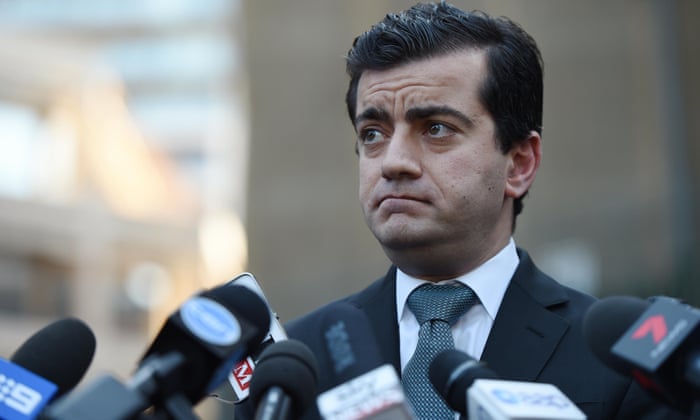
Australia's Quisling: Labor senator Sam Dastyari told the Chinese media in September 2016 that Australia shouldn’t interfere with China’s activities in the South China Sea, contradicting his own party’s policy.

The Labor senator Sam Dastyari contradicted Labor party policy on the South China Sea a day after influential Chinese billionaire Huang Xiangmo threatened to withdraw a promised $400,000 donation to the party, Four Corners has alleged.
The program, by Faifax’s Nick McKenzie, reports that Huang took exception to comments made by then Labor defence shadow Stephen Conroy that Australia’s defence force should be able to conduct freedom of navigation operations in the disputed area.
After Huang threatened to cancel the donation, Dastyari told the Chinese media that Australia shouldn’t interfere with China’s activities in the South China Sea. 
When the comments were reported, Dastyari denied he had split with the party on the policy, saying he wasn’t responsible for the way it was reported.
Four Corners also reported that Dastyari’s office asked the immigration department of the progress of Huang’s stalled citizenship application four times in the lead-up to the last election with the senator personally making two of the calls.
Huang is chairman of the Yuhu Group and had previously donated $5,000 to cover “legal bills” before Dastyari was a senator as well as larger amounts to both sides of politics and a number of universities as well as charities.
In a statement to Four Corners, Huang said he took “strong objection” to any suggestion he had linked his donations to any foreign policy outcome.
The report comes less than a year after Dastyari resigned from the Labor shadow ministry after it was revealed that he asked for and accepted a payment of $1,670.82 from Australian Chinese businessman Minshen Zhu.
At the time Dastyari said he had “fallen short” in his duty as a member of parliament but he was reinstated to the shadow minister in February this year as Senate deputy opposition whip.
The government is currently considering a report in March this year by the Joint Parliamentary Standing Committee on Electoral Matters which recommended a ban on foreign donations but split on donations from activist groups.
The government has yet to formulate a response to the report but it is understood it is very close. Malcolm Turnbull has previously said he favours a ban on foreign donations and it is also Labor party policy.
Huang gave $770,000 to the Liberals before the 2013 election and donated $100,000 to the then trade minister Andrew Robb’s campaign fundraising vehicle, as Robb signed off on the China Australia Free Trade deal.
Robb developed a close relationship with the billionaire and was quoted in a speech on Four Corners as a “thoughtful cerebral fellow” and a “visionary”.
Another Chinese based company, Landbridge, controversially won the 99-year lease on the port of Darwin in 2015 when Robb was still trade minister.
Four Corners revealed that Robb had been appointed as a consultant to Landbridge on 1 July, the day before he retired from politics. 

According to Four Corners, from 1 July 2016 Robb was paid $73,000 a month, or $880,000 a year, plus expenses. 
He told Four Corners he acted in line with his obligations as former trade minister.
The statement of ministerial standards states ministers should not lobby or advocate with the government for 18 months after their political retirement.
Prof John Fitzgerald of the Ford Foundation, Beijing, told the program “Mr Huang is very generous to all parties”.
“He could hardly be called partisan; he contributes to the Liberal party as well as to the Labor party,” Fitzgerald says. 
“He’s also a very generous employer of former party operatives.”
Huang has also employed former New South Wales Labor treasurer Eric Roozendaal.

The program also investigated the donations of an Australian Chinese citizen Chau Chak Wing who was a member of a Communist party advisory group known as a people’s political consultative conference (CPPCC).
The group carries out the work of a party lobbying arm called the United Front Work Department.

Chau has donated more than $4m to the major parties over the past decade, according to Four Corners.
Four Corners revealed that the Asio chief, Duncan Lewis, has become so worried about the influence of foreign donations that he organised meetings with the senior party officers from the federal Liberal, National parties and Labor parties to warn them that the donors could compromise the major parties.
The executive director of the Australian Strategic Policy Institute, Peter Jennings, described such donations as naked influence buying.
“I think that this type of, frankly, naked influence buying, is something which is damaging to Australia’s political system.
“I would far rather have a regime in place whereby we, the taxpayer, pay for the cost of our elections than relying on parties to get donations from foreign sources, wherever they may come from.
“But you know, notably those foreign sources are primarily linked to Chinese business.”