Affichage des articles dont le libellé est ZTE. Afficher tous les articles

vendredi 6 décembre 2019

American Quislings: Stop Investing in China’s Crimes Against Humanity,

It’s time for pension funds and others to stop supporting companies that abet Beijing’s crackdowns on China’s Uighurs and Hong Kong’s protesters.
By Danielle Pletka and Derek Scissors


Last month, the United States government issued sanctions against eight Chinese companies for complicity in the crackdown on Chinese Muslims in East Turkestan.
As many as a million Uighurs, Kazakhs and other ethnic minorities have been “interned” — wrenched away from families and dumped into harsh concentration camps.
In light of those sanctions, why haven’t the California State Teachers’ Retirement System and other American funds announced that they would stop investing in companies under sanctions?
And why is the federal employee retirement fund poised to move retirement assets to an index fund that includes Chinese companies in 2020?
By any standard, China is led by an amoral dictatorship.
In addition to the continuing horrors in East Turkestan, young people in Hong Kong fighting for freedom fear being brutalized by Chinese security forces. 
In the South China Sea, the People’s Liberation Navy has all but annexed a vast swath of other nations’ territory and international waters.
Chinese companies, answerable to the Communist Party, have built surveillance into drones that Americans buy and telephones that are bought the world over. 
Beijing trolls your children’s apps and Chinese hackers have already breached the private financial and personal information of millions of Americans, not to mention the possibility of forays into America’s most advanced defense plans.
American financial heavyweights and pension funds have in recent years shunned fossil fuels, guns and other investments on ethical grounds.
Yet when it comes to providing capital to Chinese companies — including those directly engaged in surveillance or supporting the People’s Liberation Army — many haven’t resisted investment.
Both state-owned and nominally private Chinese companies enjoy almost unfettered access to American capital markets, including listing on American exchanges and heavy investment from some of the nation’s largest pension funds. 
In mid-2019, China was among the top 10 countries in which the California State Teachers’ Retirement System (CalSTRS) invested. 
According to the most recent data, from June 2019, CalSTRS owned 4.1 million shares of Hangzhou Hikvision Digital Technology Co., which has faced sanctions from the Trump administration for manufacturing surveillance equipment that is being used in the East Turkestan concentration camps. 
The New York State Teachers’ Retirement System and the Florida state pension fund have owned shares of the same company (the New York State Common Fund liquidated its shares in Hikvision in May).
These and other pension funds including New York State’s, and the enormous California Public Employees’ Retirement System (CalPERS) have indirectly owned shares in iFlytek Co Ltd., another of the Chinese firms blacklisted by the U.S. government.
We reached out to the funds, seeking the current status of their investments in Chinese companies, but got little information.
“We have been tracking the situation,” CalSTRS told us, and a representative for the New York State Teachers’ Retirement System said: “Our holdings in public international equities are primarily held according to their weights in passive portfolios benchmarked to the MSCI ACWI ex-U. S. index, our policy benchmark.”
A company representative at CalPERS just pointed us to its Governance & Sustainability Principles. A representative for the Florida state pension fund confirmed that it still owns shares in Hikvision.
There are sound political and financial reasons to question the wisdom of exposure to Chinese public and “private” companies. 
It’s almost impossible to know at what moment the United States may levy sanctions against a company for complicity in the Chinese government’s malign agenda.
Hikvision, Huawei, ZTE (telecommunications conglomerates that also spy for their Beijing bosses), and some others, are good examples.
There is also pure fiscal prudence: Chinese corporate data is notoriously sketchy. 
China’s own National Audit Office has found a number of cases of falsified accounts among listed companies, even among top state-owned enterprises.
In an amusing example from earlier this year, the pharmaceutical manufacturer Kangmei discovered it didn’t have $4.4 billion in cash as its records indicated, with the explanation that it had experienced an “accounting error.”
Lack of accounting and management transparency also plague Chinese stocks listed on the NASDAQ, the New York Stock Exchange and other markets. 
Megacompanies like Alibaba Group, Baidu, PetroChina, China Life Insurance Company and JD.com officially have a combined market capitalization of over half a trillion dollars.
Despite that, Chinese firms have repeatedly failed to comply with American financial regulations, including required inspections of their accounting records — a requirement that runs counter to the goals of China’s National Administration for the Protection of State Secrets.
The Trump administration has considered blocking Chinese access to American capital markets for regulatory noncompliance.
A more straightforward option would be to demand compliance from Chinese firms.
After all, the notion that select foreign firms would be exempt from, say, environmental or labor regulations is absurd. 
Why are financial regulations different?
As far as indexed funds are concerned, a mild response may be in order.
Why tell individual or institutional investors they cannot invest, when simply informing them — cigarette warning style — could suffice: “This fund includes companies that help suppress human rights, support the Chinese Army and may be spying on the United States.” 
Who could argue against the government providing basic facts?
Ultimately, many of these problems fall into the category of known unknowns.
The main challenge is the risk posed to the uninformed: the millions of Americans who depend on their state or employee pension funds, and may have no clue where their hard-earned pennies are being invested. 
For example, the federal employees (including the military) whose 401(k)-like plan — known as the Thrift Savings Plan or TSP — has confirmed it will move its retirement assets to a new index made up of about 8 percent Chinese companies in 2020. 
As a result, federal employees could soon be supporting Chinese rights abusers, the People’s Liberation Army and spies.
Despite those facts, congressional efforts to derail TSP’s investment in Chinese firms have been met with horror.
Legislators can’t tell anyone where to invest — until they do, as the Islamic Republic of Iran and its supporters in corporate and financial America learned some years ago.
Divestment from companies and funds that treat money and morality as separate matters has been gaining speed at both the state and federal level. 
Perhaps it’s time for the same ideals to apply to China — one way to protect American investors, American ideals, and American security all at once.


vendredi 11 octobre 2019

In the Spirit of Václav Havel

Prague city council moves to axe partnership with Beijing
By Jan Lopatka

Prague mayor Zdenek Hrib tweeted this image of himself on March 9, 2019, raising the Tibetan flag at the Czech capital’s town hall.

PRAGUE -- Prague city council voted on Monday to cancel a partnership agreement with Beijing after it failed to remove an article requiring it commit to the “one China” principle, which refers to China’s stance that Taiwan and it both belong to one China.
The city’s leadership, elected last year, says it is non-standard for city-to-city partnerships such as the one signed by the previous administration in 2016, to include diplomatic matters that are up to national governments.
“Unfortunately, the Chinese side did not respect our opinion that we do not want the political article, so the negotiations did not lead anywhere,” council member Hana Kordova Marvanova.
“For us this is also a gesture that we do not want to declare subservient attitude to the authoritarian regime in China.”
The decision must still be approved by the city assembly, where parties backing the executive council have a majority.
The spat between Prague and Beijing, which has been rumbling throughout the year, has soured ties between the two countries, which have in recent years tried to build a stronger political and business relationship.
Chinese authorities have already canceled tours of several Czech musical groups to China that had some link to Prague.
The Czech ties to China have been pushed mainly by Milos Zeman, who has frequently visited China and backed investments by Czech lender Home Credit there, as well as Chinese telecoms firm Huawei’s business in the Czech Republic.
New agency CTK reported Czech Foreign Minister Tomas Petricek said foreign policy was determined by the government and it maintained its position on China, although it respected the council’s decision. 
The Czech government adheres to the one China principle.
The Chinese Embassy in Prague said last month that the cause of the clashes was on the Czech side. It said Prague city hall had “very negative” effects in affairs related to China’s "sovereignty", and this undermined the atmosphere in bilateral relations.
The embassy did not immediately answer a request for comment on Monday.
Czech-Chinese relations have already been dented by a warning last year by the Czech cyber-security watchdog against risks of using equipment made by China’s Huawei and ZTE in critical infrastructure.
Expectations of billions of dollars worth of Chinese investments in the country have also not materialized.

jeudi 26 septembre 2019

Rogue Company

Buying Huawei Technology is Like Buying Chinese Fighter Planes
By Zak Doffman


On the same day the U.S. pledged up to $1 billion of public funds for the country’s rural mobile networks to rip and replace legacy Huawei (and ZTE) equipment, a shock new report in Europe has claimed major networks can do the same for considerably less than had been previously claimed.
The U.S. has been essentially written off, and so the news from Europe that an industry researcher has trashed previous estimates of the costs involved in doing the same there will be of more concern. Beyond the financial estimates, Strand Consult pushes hard for Europe to follow the U.S. lead.
That the U.S. House Energy and Commerce Committee is mulling over a last and final sweep up of Huawei networking equipment will not come as a surprise. 
The battle between Washington and Huawei has been raging for months, and the impact of U.S. sanctions on the Shenzhen tech giant’s has made almost daily headlines.
The operators in question are represented by the Rural Wireless Association, which has suggested that 25% of its members will need to replace Chinese technology in their ecosystems—mostly from either Huawei or ZTE. 
The bill proposes funding to be made available in the fiscal year beginning in October, and to remain available until 2029.
And so to Battlefield Europe, where Huawei is desperate to shore up its longstanding relationships and install base. 


John Strand: Buying Huawei Technology is Like Buying Chinese Fighter Planes

“Those skeptical of the claims that Chinese-made telecom equipment poses a threat to security should ask themselves whether they would be okay with NATO buying a fighter plane made in China,” John Strand says. 
“Why is there universal agreement that military equipment from China be restricted but not telecom networks where vital information is transported?”
Strand’s analysis focuses on European networks needing to upgrade to 5G regardless of whose equipment they select, and suggests that previous estimates of the costs involved in a Chinese-cleanse have overlooked this fact. 
“There is a sunk cost to network upgrades which must be subtracted from the total cost of using Huawei. Most of Europe’s networks are already 3-5 years old and are ready to be replaced.”
Central to this replacement program is 70-80% of existing radio access network equipment, on which Strand estimates some $2.9 billion has been spent in Europe annually over the last three years, and of which some 40% has been acquired from Huawei or ZTE. 
And so, assuming that 40% of acquired kit needs to be ripped and replaced, Strand gets to the cost of $3.5 billion, “equal to a one-time cost of $7 or €6.5 per mobile subscriber.”
Strand told me that there has been tremendous interest across the industry in his report, “with hundreds of enquiries,” it’s available on a request basis and so he has visibility of the companies, regulators, industry bodies and governments that have asked to see the research. 
“To date,” he said, “the calculations and assertions in our report have not been challenged.” 
Strand has also been engaged in discussions with U.S. regulators, sharing his perspective on the need to make changes to networks on both sides of the Atlantic.
Earlier this year, Huawei-funded analysis had calculated a significantly higher cost for such a move, as high as $62 billion
It should be emphasised that the $62 billion figure comprised a range of costs that included the 5G equipment but much more besides. 
And other industry players claimed this heavily overstated the need to replace legacy technology to deploy new 5G equipment. 
Even so, it was number that grabbed the headlines, especially as it also suggested delays of up to 18-months.
“Restricting Huawei and ZTE from networks,” Strand says, “does not harm the economy for Europe’s mobile operators nor does it meaningfully reduce competition nor does it delay rollout. However, removing Huawei and ZTE equipment from the network can greatly improve security.”
And it is this security point that Strand focuses on when we speak.
For him, there is simply no question that a rip and replace is the right move. 
He tells me he simply cannot understand why national communication networks would not be afforded the same security considerations as military equipment, given their importance.
All that said, the telecoms industry in Europe has shown little interest in a wholesale Huawei swap-out.
Despite other claims the industry speak highly of the technology, its quality, pricing and innovation. And there is a concern that removing the number-one market player would put too much pressure on competitors Ericsson and Nokia, delaying almost everything. 
Even the U.K., which (just about) still enjoys Europe’s closest relationship with Washington has not yet decided to effect a national ban on its technology. 
Most of Europe has elected to enhance security assessments, relying on that to maintain security and integrity in its networks.
What this new report will do will raise questions as to the true cost of various options, and anti-Huawei politicians and security analysts will be delighted to be able to counter previous, much higher estimates.
I’ve approached Huawei for any comments on the report and its findings.

mardi 11 juin 2019

China’s growing influence in Latin America is a threat to our way of life

  • In countries just a few hundred miles away China is taking every opportunity it can to gain influence and exert control.
  • Latin America is the new battleground in the greatest geopolitical conflict of our time.
By Rick Scott

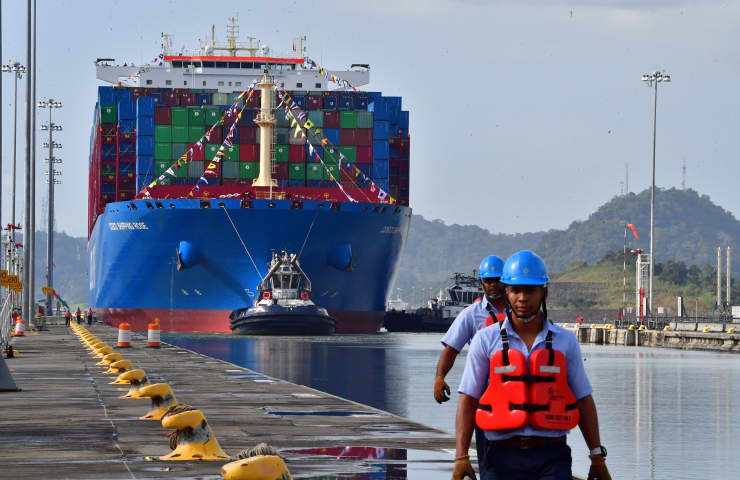
Chinese Cosco Shipping Rose container ship sails the newly inaugurated Cocoli locks, during the visit of Chinese dictator Xi Jinping, in the Panama Canal, on December 3, 2018.

Last month I traveled to Panama, Colombia and Argentina. 
The purpose of my trip was to get an update on the fight for freedom and liberty in Venezuela, to highlight the important economic relationships between Latin America and my state of Florida and to continue building on the progress made to stop narco-trafficking.
On all of those fronts we made important progress and had great conversations about the future.
I came away with another impression that I, quite honestly, hadn’t expected. 
But it’s one that is stark and unmistakable. 
All across Latin America, we’re seeing the creeping influence of China in our hemisphere.
We know that China is a bad actor. 
China is not our friend. 
China sees the United States as its global adversary and is taking the steps necessary to win the great power conflict of the 21st Century.
We know they’ve been stealing our technology and our intellectual property. 
We know they manipulate their currency. 
We know they’ve been developing bases in the South China Sea. 
We know they’ve flooded the United States with dangerous fentanyl. 
We know their state sponsored technology companies like ZTE and Huawei have been accused of fraud, violating the Iran sanctions and stealing intellectual property. 
We know China consistently violates human rights. 
We know that China suppresses freedom of speech.
We know what China is. 
And yet, how many Americans realize that in countries just a few thousand miles (and in some cases a few hundred miles) away, China is taking every opportunity it can to gain influence and exert control. 
Latin America is the new battleground in the greatest geopolitical conflict of our time.
In Panama, the Chinese government is building its own port in Colon to exert more control over international trade between the Eastern and Western Hemispheres and drive out competition. 
Street restaurants in Panama have menus in English, Spanish and – you guessed it – Chinese.
Meanwhile, Colombia is experiencing a mass-influx of refugees from Venezuela. 
Venezuela’s president Nicolás Maduro’s policies are not only causing the deaths of thousands of his own people, he’s also created a refugee crisis with millions of Venezuelans fleeing his brutal regime. Most have gone to Colombia, which is struggling to keep up with the migration.
Chinese dictator Xi Jinping knows what Maduro is doing to his own people. 
He knows that he’s intentionally starving them, that he’s using Cuban security forces to harass dissidents and beat children in the streets. 
Xi doesn’t care. 
China is a willing participant in Maduro’s genocide.
China continues to prop up the Maduro regime, along with Cuba, Russia and Iran. 
Why? 
It’s pretty simple. 
Venezuela, before the tyranny of Hugo Chavez and Maduro, was an economic hub with huge reserves of oil and other natural resources. 
It can become that again and China wants in on the ground floor.
Even after the revelations of their dubious dealings, Maduro announced that Venezuela would make major investments in Huawei and ZTE despite not being able to even feed his own people. 
China’s support for Maduro is already paying off for them.
Almost 3,000 miles due south of Bogota, in Argentina, China is set to build a nuclear facility after signing an agreement with President Mauricio Macri
The deal includes a $10 billion loan from China.
Make no mistake. 
This is not by accident. 
Everything China does is on purpose. 
And right now, under our very noses, its purpose is to gain a foothold in Latin America by any means necessary, even if it means propping up ruthless dictators.
Politicians too rarely look at anything besides what’s directly in front of them. 
It’s hard for them to look beyond next week, let alone beyond the next election. 
So, I’ll say something that very few people are willing to say. 
The so-called trade war with China is causing some pain in our country right now.
I believe some short-term pain is worth it if we’re taking real steps to combat the greatest geopolitical foe we have. 
If we take a stand against China now, American businesses and American consumers will come out on top. 
Our manufacturing sector will be stronger. 
America will export more products. 
Our trade secrets will be protected. 
The average American consumer will benefit.
If we don’t face this threat head-on right now, we will still face it eventually. 
But if we wait, we’ll be in a much weaker position than we are now. 
China will just continue to walk all over us.
I think President Donald Trump is doing the right thing by standing up to China now. 
But there’s another step that we can all take to stem the tide of China’s growing influence in Latin America and around the world – support American businesses.
American taxpayers are funding China’s aggression every day. 
Every time we buy a product “made in China” we are putting another dollar into the pocket of the people stealing our technology, denying their people basic human rights and supporting genocide in Venezuela. 
It’s time to take a stand.
In my state, we take immense pride in products “Made in Florida.” 
It’s a driving force that led to our incredible economic turnaround. 
A return to this pride in home-grown businesses and products ensures America remains strong as the undisputed leader of the global economy.
I’m committed to supporting American businesses over Chinese products. 
I hope you’ll join me.
Washington politicians have let this happen. 
They’re too concerned with short-term political success and have ignored the long-term threats to our way of life. 
It needs to end, and it needs to end now.

mercredi 29 mai 2019

Criminal Company

How Huawei became America’s enemy No. 1
By Tripti Lahiri & Mary Hui
Since it was founded by former People’s Liberation Army engineer Ren Zhengfei in 1987, Huawei has grown to become the world’s top provider of telecom equipment, with over $100 billion in revenue and 180,000 global employees. 
That extraordinary success has come with barely a footprint in the US market, where the company has been a target for anxiety about Chinese hacking since the 2000s. 
Today, Huawei is the poster child for that anxiety, and finds itself in the eye of a global storm.
Huawei’s troubles in the US started early: It was met with with suspicion not long after it started competing with US router firms in the aughts, and kept hitting snags after that. 
In 2003, networking firm Cisco accused Huawei of intellectual property theft
In 2008, a deal with 3Com collapsed over concerns about Huawei’s ties in China. 
In 2014, T-Mobile sued Huawei for stealing, among other technology, part of a robot’s arm.
But in 2017, US president Donald Trump took office, and since then actions against Huawei have come fast and furious. 
On May 15, Trump signed an executive order that effectively bans Huawei from accessing US supply chains, his strongest action yet against the company. 
Less than a week later, Google pulled Huawei’s Android license—after a grace period allowed by the Trump administration for current users, the company’s future phones will be cut off from the most widely used operating system in the world and the Google universe. 
Suppliers from Britain, such as chip maker ARM, are set to follow Google’s lead.
Trump’s endgame is still unclear. 
Is the only safe Huawei a “dead” Huawei? 
Or is this another gambit in his ongoing trade negotiations with China? 
It may be too soon to tell: On May 23, Trump called Huawei “very dangerous” but also said the dispute might be resolved a trade deal.
What is clear is that this showdown has been a long time coming.

2001
Huawei, then a 14-year-old company with sales of $3 billion, sets up offices in the US (pdf). It also opens its first office in Britain.

2003
January: Router-maker Cisco sues Huawei for copyright violations, alleging its source code turned up in Huawei products. It later drops the suit.
November: Huawei’s joint venture with California-based networking company 3Com to make and sell routers and switches begins operations.

2005
The idea that Huawei is linked to the Chinese military surfaces prominently in a Rand Corporation report commissioned by the US Air Force. 
The think tank notes that major IT players like Huawei appear to be private-sector actors (pdf, pages 217-8), but “many of these electronics companies are the public face for, sprang from, or are significantly engaged in joint research with state research institutes.” 
It adds:
Huawei maintains deep ties with the Chinese military, which serves a multi-faceted role as an important customer, as well as Huawei’s political patron and research and development partner.
The report also says sales linked to the Chinese military could be anywhere from less than 1% of Huawei’s revenues to as high at 6%. 

2007
In July, the FBI interviews Huawei’s founder, Ren, in relation to violations of US trade sanctions on Iran.

2008
Huawei’s efforts to take a 16% stake in 3Com collapse amid lawmakers concerns (paywall) about Huawei’s ties to the Chinese military, forcing Huawei and its partner in the acquisition to abandon the bid. 
3Com was a provider of anti-hacking software for the US military, among other contracts. Lawmakers cited the 2005 Rand report.
2009
February: At Barcelona’s Mobile World Congress, Huawei releases its first Android smartphone, under license from Google.
October: Huawei hires an American, Matt Bross, from British Telecom to be its CTO, and to help it make a real foray into the US market. 
Bross apparently runs operations from his basement in St. Louis
“I am looking to create an environment where we can grow trust,” he tells Bloomberg in 2011. 
“The fact of the matter is that Huawei is here to stay.” (He leaves Huawei in 2012.)
November: Huawei signs a lease in Plano, Texas, for 100,000 square feet of office space for its North America sales and marketing headquarters. 
“We are honored that Huawei will grow and prosper in Plano for years to come,” the town’s mayor says in a statement.
2010
July: Phone-maker Motorola files a lawsuit accusing Huawei of corporate espionage, but later settles with the company.
November: Citing security concerns, Sprint excludes Huawei (paywall), as well as Chinese telecom ZTE, from bidding for a contract worth hundreds of millions of dollars to modernize its network. Huawei had been hoping this would be its first major US equipment contract win.
2011
February: The Committee on Foreign Investment in the United States tells Huawei to sell (paywall) the assets of bankrupt startup 3Leaf Systems, which it had acquired the previous year. 
Huawei says it didn’t flag the deal to CFIUS because it had only bought some of 3Leaf’s assets, but the panel decides to engage in a retroactive review.
April: Huawei opens a 200,000-square-foot R&D facility in Silicon Valley. 
It continues to grow revenue from equipment sales to mid-tier telecoms in remote areas of the US.
2012
October: A House committee issues a 52-page report (pdf) warning against using equipment from Huawei and ZTE. 
The report states:
In sum, the Committee finds that the companies failed to provide evidence that would satisfy any fair and full investigation. 
Although this alone does not prove wrongdoing, it factors into the Committee’s conclusions below.
Further, this report contains a classified annex, which also adds to the Committee’s concerns about the risk to the United States. 
The investigation concludes that the risks associated with Huawei’s and ZTE’s provision of equipment to U.S. critical infrastructure could undermine core U.S. national-security interests.


2013
Reuters reports that a Hong Kong-based company that tried to sell US computer equipment to Iran’s largest cellphone carrier, in violation of US trade sanctions, is closely linked to Huawei
The story says that Ren Zhengfei’s daughter Meng Wanzhou, “a rising star” at Huawei, served on the board of the Hong Kong firm, among other links.
2014
March: The New York Times reports (paywall) that the NSA infiltrated the servers in Huawei’s Shenzhen headquarters, obtaining sensitive information about its giant routers and complex digital switches, and monitoring the communications of top executives.
September: T-Mobile files a lawsuit against Huawei, accusing it of stealing technology, including part of a robot’s arm, from its headquarters. 
Huawei workers spied on and stole part of Tappy, a robot developed by T-Mobile in 2006 to test smartphones. 
Huawei admits that two of its employees had acted "inappropriately".
2015
January: Speaking at the World Economic Forum in Davos, Switzerland, Huawei founder Ren seeks to play down his connection with the Chinese army, saying it was “quite by chance” that he entered the military. 
“We are a Chinese company,” Ren says. 
“Of course we support the Chinese Communist Party and love our country. We comply with the laws of every country we operate in.”
September: Huawei and Google join forces (paywall) to make the Nexus 6p phone.

2016
June: The US Commerce department issues a subpoena (paywall) to Huawei as part of a probe into whether the company violated US export controls on the export or re-export of American technology to Cuba, North Korea, Syria, and Sudan over the previous five years.
December: The Treasury department gets involved with the investigation (paywall) and issues its own subpoena. 
The subpoena comes shortly after the US government restricts sales of American technology to ZTE, saying the Chinese phone-maker violated sanctions against Iran. 
US officials also release internal ZTE documents detailing how the company managed to do business with Iran, and how it modeled its approach off of a rival’s efforts in that country. 
The rival company is not named in the documents, but its description matches Huawei (paywall).
2017
A Seattle jury rules in favor of T-Mobile in its case against Huawei, determining that the latter misappropriated T-Mobile’s trade secrets, and breached a handset-supply contract between the two companies that stipulated each would protect secrets learned through their partnership. 
The jury awards T-Mobile $4.8 million in damages for the breach of contract, but does not award damages for T-Mobile’s trade-secrets claim.
2018
January: AT&T, America’s second-largest wireless carrier, is on the verge of becoming the first carrier in the US to offer Huawei’s handsets, which would be a major breakthrough. 
But it abandons the plan after lawmakers and federal regulators lobby against the idea
Concerns around Huawei deepen as the rollout of next-generation wireless technology approaches; a leaked White House memo on 5G names the company a strategic threat
Lawmakers want AT&T to cut all commercial ties with Huawei, ending their collaboration on 5G network standards.
April: Huawei lets go of several US staff (paywall), including its vice president of external affairs, William Plummer, a Nokia veteran who joined Huawei in 2010. 
Plummer goes on to detail the company’s (and some of his own) PR missteps in a memoir called Huidu.
May: The Pentagon bans the sale of Huawei and ZTE phones in stores on military bases over concerns that the Chinese government could order the companies to track soldiers’ movements or spy on their communications.
August: The National Defense Authorization Act, which includes language barring government agencies from buying equipment or services from Huawei and ZTE, goes into effect.
October: Two leading US lawmakers—Mark Warner, a Virginia Democrat, and Marco Rubio, a Florida Republican—urge Canadian prime minister Justin Trudeau to bar Huawei from helping build its 5G networks, saying it could pose dangers for US networks. 
The call is part of a broader US effort to get foreign allies to shun Huawei, the Wall Street Journal later reports (paywall), warning the UK, for example, it could be forced to cut off intelligence sharing
In November, New Zealand bans Huawei from supplying technology to the country’s 5G rollout, following in the steps of Australia earlier in the year.
December: Huawei’s chief financial officer and the daughter of its founder, Meng Wanzhou, is arrested in Canada at the request of US law enforcement on suspicion of violating trade sanctions on Iran. 
The arrest is seen as a serious escalation of US action against Huawei. 
Trump is criticized for suggesting he could intervene in the Justice Department case against her if it would help secure a trade deal from China. 

2019
January: The US files criminal charges against Huawei, slamming it with two dozen allegations that include conspiring to evade US trade sanctions and steal trade secrets, and also formally seeks Meng’s extradition from Canada. 
Meanwhile, Poland arrests a Huawei employee on allegations of spying for China. 
May 15: Trump signs an executive order banning US telecommunications firms from using the equipment of “foreign adversaries.” 
The order does not name Huawei, but effectively blacklists the company and cuts it off from US supply chains. 
Days later, Google makes a shock announcement that it will terminate Huawei’s license to the Android OS, which powers 86% of the world’s phones and all of the phones sold by Huawei. 
Huawei says it’s developing its own OS, but being cut off from Google’s email and app universe would drastically reduce its appeal overseas. 
Already, mobile carriers are holding off on Huawei 5G phone sales (paywall).
May 20: The restrictions are temporarily eased: The Commerce Department says it will allow Huawei to buy US goods through Aug. 19. 
But that same day, top US chip companies including Intel and Qualcomm cut off vital Huawei supplies, while Microsoft is also said to have stopped taking software orders from the firm.
This month’s moves present the most serious threats yet to Huawei’s future.

mercredi 22 mai 2019

Criminal Company

Inside the U.S. war on Huawei
By Cassell Bryan-Low, Colin Packham, David Lague, Steve Stecklow, Jack Stubbs

CANBERRA -- In early 2018, in a complex of low-rise buildings in the Australian capital, a team of government hackers was engaging in a destructive digital war game.
The operatives – agents of the Australian Signals Directorate, the nation’s top-secret eavesdropping agency – had been given a challenge. 
With all the offensive cyber tools at their disposal, what harm could they inflict if they had access to equipment installed in the 5G network, the next-generation mobile communications technology, of a target nation?
What the team found, say current and former government officials, was sobering for Australian security and political leaders: The offensive potential of 5G was so great that if Australia were on the receiving end of such attacks, the country could be seriously exposed. 
The understanding of how 5G could be exploited for spying and to sabotage critical infrastructure changed everything for the Australians, according to people familiar with the deliberations.
Mike Burgess, the head of the signals directorate, recently explained why the security of fifth generation, or 5G, technology was so important: It will be integral to the communications at the heart of a country’s critical infrastructure -- everything from electric power to water supplies to sewage, he said in a March speech at a Sydney research institute.
Washington is widely seen as having taken the initiative in the global campaign against Huawei Technologies Co Ltd, a tech juggernaut that in the three decades since its founding has become a pillar of Beijing’s bid to expand its global influence. 
Yet Reuters interviews with more than two dozen current and former Western officials show it was the Australians who led the way in pressing for action on 5G; that the United States was initially slow to act; and that Britain and other European countries are caught between security concerns and the competitive prices offered by Huawei.
The Australians had long harbored misgivings about Huawei in existing networks, but the 5G war game was a turning point. 
About six months after the simulation began, the Australian government effectively banned Huawei, the world’s largest maker of telecom networking gear, from any involvement in its 5G plans. 
An Australian government spokeswoman declined to comment on the war game.
After the Australians shared their findings with U.S. leaders, other countries, including the United States, moved to restrict Huawei.
The anti-Huawei campaign intensified last week, when President Donald Trump signed an executive order that effectively banned the use of Huawei equipment in U.S. telecom networks on national security grounds and the Commerce Department put limits on the firm’s purchasing of U.S. technology. 
Google’s parent, Alphabet, suspended some of its business with Huawei, Reuters reported.
Until the middle of last year, the U.S. government largely “wasn’t paying attention,” said retired U.S. Marine Corps General James Jones, who served as national security adviser to Barack Obama
What spurred senior U.S. officials into action? 
A sudden dawning of what 5G will bring, according to Jones.
“This has been a very, very fast-moving realization” in terms of understanding the technology, he said. 
“I think most people were treating it as a kind of evolutionary step as opposed to a revolutionary step. And now that light has come on.”
The Americans are now campaigning aggressively to contain Huawei as part of a much broader effort to check Beijing’s growing military might under Xi Jinping
Strengthening cyber operations is a key element in the sweeping military overhaul that Xi launched soon after taking power in 2012, according to official U.S. and Chinese military documents. 
The United States has accused China of widespread, state-sponsored hacking for strategic and commercial gain.

A THREAT TO CRITICAL INFRASTRUCTURE
If Huawei gains a foothold in global 5G networks, this will give Beijing an unprecedented opportunity to attack critical infrastructure and compromise intelligence sharing with key allies. 
This could involve cyber attacks on public utilities, communication networks and key financial centers.
In any military clash, such attacks would amount to a dramatic change in the nature of war, inflicting economic harm and disrupting civilian life far from the conflict without bullets, bombs or blockades.
However, blocking Huawei is a huge challenge for Washington and its closest allies, particularly the other members of the so-called Five Eyes intelligence-sharing group – Britain, Canada, Australia and New Zealand. 
From humble beginnings in the 1980s in the southern Chinese boom town of Shenzhen, Huawei has grown to become a technology giant that is deeply embedded in global communications networks and poised to dominate 5G infrastructure. 
There are few global alternatives to Huawei, which has financial muscle – the company reported revenue for 2018 jumped almost 20 percent to more than $100 billion – as well as competitive technology and the political backing of Beijing.
For countries that exclude Huawei there is a risk of retaliation from Beijing. 
Since Australia banned the company from its 5G networks last year, it has experienced disruption to its coal exports to China, including customs delays on the Chinese side. 
Tension over Huawei is also exposing divisions in the Five Eyes group, which has been a foundation of the post-Second World War Western security architecture. 
During a trip to London on May 8, U.S. Secretary of State Mike Pompeo issued a stark warning to Britain, which has not ruled out using Huawei in its 5G networks. 
“Insufficient security will impede the United States’ ability to share certain information within trusted networks,” he said. 
“This is exactly what China wants; they want to divide Western alliances through bits and bytes, not bullets and bombs.”
Washington argues that surreptitious backdoors aren’t necessarily needed to wreak havoc in 5G systems. 
The systems will rely heavily on software updates pushed out by equipment suppliers -- and that access to the 5G network, says the United States, could be used to deploy malicious code.
Asked whether the United States was slow to react to potential threats posed by 5G, Robert Strayer, the State Department’s lead cyber policy diplomat, told Reuters that America had long been concerned about Chinese telecom companies, but that over the past year, as 5G loomed closer, “we were starting to talk more and more with our allies.” 
Banning Huawei from 5G networks remains “an end goal,” he said.
The West has long harbored concerns about Chinese telecom equipment. 
In 2012, a U.S. House Intelligence Committee report concluded Chinese tech companies posed a national security threat. 
Despite such concerns, the U.S. government’s response to the threats posed by 5G only took shape more recently.
In February 2018, Malcolm Turnbull, then prime minister of Australia, flew to Washington D.C. 
Even before Australia’s eavesdropping agency had run its war game, Turnbull was already raising red flags in Washington. 
A former technology entrepreneur, he believed 5G presented significant risks and wanted to press allies to act against Huawei.
“He was warning about how important 5G networks would be and the security risks we all needed to think about around countries that had capability, form and intent, as well as coercive laws,” a senior Australian source told Reuters.
A spokesman for Turnbull declined to comment.
Turnbull and his advisers met U.S. officials, including Kirstjen Nielsen, then U.S. secretary of homeland security, and Michael Rogers, then head of the U.S. National Security Agency, the U.S. signals-intelligence operation. 
The Australians said they believed Beijing could compel Huawei to do its bidding and that this posed a threat should tensions with China rise in the future, said two of the Australian officials familiar with the meeting.
The U.S. officials were receptive to the Australian message, but imposing restrictions on the world’s largest maker of mobile network gear didn’t appear to be a high priority, according to the two Australian officials. 
“They didn’t share our concern with the same urgency,” said one.
Rogers declined to comment. 
A Department of Homeland Security official did not elaborate on the meeting, but said the agency works closely with Australia on security issues and that “China will continue to use cyber espionage and bolster cyber-attack capabilities to support its national security priorities.”
5G technology is expected to deliver a huge leap in the speed and capacity of communications. Downloading data may be up to 100 times faster than on current networks.
But 5G isn’t only about faster data. 
The upgrade will see an exponential spike in the number of connections between the billions of devices, from smart fridges to driverless cars, that are expected to run on the 5G network. 
It’s not just that there will be more people with multiple devices, but it will be machines talking to machines, devices talking to devices – all enabled by 5G,” said Burgess, the Australian Signals Directorate chief, in his March address.
This configuration of 5G networks means there are many more points of entry for a hostile power or group to conduct cyber warfare against the critical infrastructure of a target nation or community. 
That threat is magnified if an adversary has supplied equipment in the network, U.S. officials say.
In July 2018, Britain delivered a blow to Huawei. 
A government-led panel that includes senior intelligence officials said it was no longer fully confident it could manage national security risks posed by the Chinese telecom equipment giant.
That panel oversees the work of a laboratory that was set up by the British government in 2010 and is funded by Huawei to vet the company’s equipment used in the UK. 
The facility was established because even then Huawei was perceived as a security risk. 
The oversight panel said serious problems it had identified with Huawei’s engineering processes “exposed new risks in the UK telecommunication networks and long-term challenges in mitigation and management.”
That report was a “bombshell,” shaping how the Americans viewed the Huawei 5G risk, said one U.S. official.
U.S. officials also point to Chinese laws enacted in recent years that they say could compel individuals and companies to assist the Chinese government in conducting espionage.

THE WEST AWAKES
Through the middle of last year, the Australians continued to apprise other countries of their worries about 5G. 
“We were sharing our concerns about security with many allies, not just the U.S. and not just the traditional partners,” said one of the senior Australian officials. 
“We shared our thoughts with Japan, Germany, other European countries and South Korea.”
In Washington, the administration began imposing restrictions on Huawei. 
In August, Trump signed a bill banning federal agencies and their contractors from using equipment from Huawei and ZTE Corp, another Chinese telecom equipment maker. 
Huawei has since filed a lawsuit in federal court in Texas challenging the ban.
In late August, the Australians went further: They banned companies that didn’t meet their security requirements, which included Huawei, from supplying any equipment for the country’s 5G network, whether run by the government or by private firms.
In November, New Zealand’s intelligence agency blocked the country’s first request by a telecom service provider to use Huawei kit for a 5G network, citing national security concerns.
Like the Australians and Americans, British security officials had concerns over China’s potential use of Huawei as a channel for conducting espionage. 
But the options are limited. 
Huawei is one of only three major global companies that analysts say can supply a broad range of advanced mobile network equipment at scale. 
The other two are Ericsson and Nokia. 
And Huawei has a reputation among telecom operators for supplying cost-effective equipment promptly.
Nevertheless, British security officials were becoming increasingly frustrated with Huawei’s failure to fix software flaws in its equipment, particularly discrepancies in the source code – the programs’ underlying set of instructions.
This problem means the laboratory near Oxford set up to vet Huawei equipment can not even be sure that the code it is testing is exactly the same as the code Huawei deploys in its real-world equipment.
This makes it difficult to provide safety assurances about the company’s gear.
British officials say the array of flaws could be exploited by malevolent China.
Ian Levy, a British security official who oversees the UK’s review of Huawei equipment, told Reuters the company’s software engineering is like something from 20 years ago. 
The chance of a vulnerability with a Huawei piece of kit is much higher than other vendors,” he said.
The company said it has pledged to spend at least $2 billion “over the next five years” to improve its software engineering capabilities.
British ministers have agreed to allow Huawei a restricted role in building parts of its 5G network, but the government has yet to announce its final decision. 
The European Union has left it to individual governments to decide whether to ban any company on national security grounds. 
Some European security officials say banning one supplier doesn’t address the broader issue of the risks posed by Chinese technology in general.
As the tensions between the West and Huawei intensified through last year, they suddenly took a personal turn. 
U.S. law enforcement officials had for some time been investigating links between Huawei and Iran, including the involvement of Meng Wanzhou, Huawei’s chief financial officer, who is the daughter of the company’s founder. 
The probe followed Reuters stories in 2012 and 2013 that revealed links between Huawei, Meng and another company that attempted to violate U.S. sanctions on Iran.
When U.S. officials became aware that Meng would be traveling through Vancouver in December, they pounced, asking Canada to detain her on allegations of bank and wire fraud. 
Meng remains free on bail in Canada while the U.S. government tries to have her extradited. 
The Huawei conflict isn’t only about U.S.-China superpower rivalry: The activities of Meng and Huawei were under scrutiny by U.S. authorities long before Trump began a trade war with China, according to interviews with people familiar with those probes. 
But there is no doubt the wider showdown with Huawei has now become intensely geopolitical.
In recent months, the U.S. has ramped up diplomatic efforts to urge allies to sideline Huawei. 
5G is a “game-changing technology with implications across all aspects of society from business, government, military and beyond,” Gordon Sondland, U.S. ambassador to the European Union, told Reuters in February. 
“It seems common sense to me to not hand over the keys to your entire society to an actor that has … demonstrated malign conduct.”
Asked whether there is evidence of Huawei equipment having been used for espionage, Sondland said “there is classified evidence.” 
He declined to expand on the nature of the material beyond saying there was no doubt that Huawei had “the capability to hack a system” and “the mandate by the government to do so upon request.”
Pompeo has publicly gone further than most U.S. officials by directly linking the company to Beijing. “Huawei is owned by the state of China and has deep connections to their intelligence service,” he said in March. 
“That should send off flares for everybody who understands what the Chinese military and Chinese intelligence services do.”
While Huawei was initially muted in its public response, it too has become more combative. 
In late February, the company confronted the United States at a major annual gathering of mobile industry executives in Barcelona, where Huawei’s red logo was ubiquitous. 
Top American officials arrived intent on warning government and industry representatives off Huawei. 
But the company had flown in a team of senior executives to offer customers and representatives of European governments reassurance in the face of the U.S. accusations.
In a keynote speech, Guo Ping, a deputy chairman at Huawei, took aim at America’s own spying operations. 
Europeans pushed back, too. 
During one closed-door session, senior representatives from European telecom operators pressed a U.S. official for hard evidence that Huawei presented a security risk. 
One executive demanded to see a smoking gun, recalled the U.S. official.
The American official fired back: “If the gun is smoking, you’ve already been shot. I don’t know why you’re lining up in front of a loaded weapon.”

jeudi 16 mai 2019

National Emergency vs. Huawei

President Trump Takes Aim At Huawei, Paves Way For Ban Of Chinese Telecom Equipment
By RICHARD GONZALES

President Trump signed an executive order Wednesday designed to bar U.S. telecommunications networks from using equipment from foreign suppliers, a move apparently targeting Chinese telecom giant Huawei.
The order declares a "national emergency" and says that "foreign adversaries are increasingly creating and exploiting vulnerabilities in information and communications technology and services" and committing economic and industrial espionage against the U.S.
Trump's order directs Commerce Secretary Wilbur Ross to draft rules to restrict the purchase of information and communications technology from companies "owned by, controlled by, or subject to the jurisdiction or direction of a foreign adversary."
A senior administration official says the order is not directed at any particular country or company, but the order appears to be aimed at Chinese telecom manufacturer Huawei.
Separately, the Commerce Department said Wednesday it was adding Huawei to its "Entity List," preventing it from buying components from American companies without U.S. government approval.
The administration says Huawei's technology could become a conduit for snooping or sabotage by the government in Beijing. 
The U.S. federal government itself is already barred from doing business with Huawei and another Chinese telecom firm, ZTE
The administration has also been discouraging allies from using Huawei equipment as they build out 5G networks.
The executive order gives the Commerce Department 150 days to write regulations implementing it.
The Trump administration "will do what it takes to keep America safe and prosperous, and to protect America from foreign adversaries" targeting vulnerabilities in American communications infrastructure, White House press secretary Sarah Sanders said in a statement.
The president's action was described by a senior administration official as "company and country agnostic." 
Even so, it was greeted with bipartisan endorsements on Capitol Hill as strong action against China amid American fears of technological vulnerability.
"This is a needed step, and reflects the reality that Huawei and ZTE represent a threat to the security of U.S. and allied communications networks," said Virginia Sen. Mark Warner, the top Democrat on the Senate Intelligence Committee, in a statement. 
"Under current Chinese security laws, these and other companies based in China are required to provide assistance to the Chinese state."
Republican Sen. Ben Sasse of Nebraska, also a member of the Senate Intelligence Committee, said in a statement, "Let's cut to the chase: China's main export is espionage, and the distinction between the Chinese Communist Party and Chinese 'private-sector' businesses like Huawei is imaginary. The Trump Administration is right to recognize this reality and issue this order."
The president's executive order comes as the U.S. and China are locked in a trade war, with both nations imposing tariffs on products from the other.

mercredi 15 mai 2019

Spying Company

President Trump expected to sign order paving way for U.S. telecoms ban on Huawei
By David Shepardson


WASHINGTON -- President Donald Trump is expected to sign an executive order this week barring U.S. companies from using telecommunications equipment made by firms posing a national security risk, paving the way for a ban on doing business with China’s Huawei, three U.S. officials familiar with the plan told Reuters.
The order, which will not name specific countries or companies, has been under consideration for more than a year but has repeatedly been delayed, the sources said, asking not to be named because the preparations remain confidential. 
It could be delayed again, they said.
The executive order would invoke the International Emergency Economic Powers Act, which gives the president the authority to regulate commerce in response to a national emergency that threatens the United States. 
The order will direct the Commerce Department, working with other government agencies, to draw up a plan for enforcement, the sources said.
If signed, the executive order would come at a delicate time in relations between China and the United States as the world’s two largest economies ratchet up tariffs in a battle over what U.S. officials call China’s unfair trade practices.
Washington believes equipment made by Huawei Technologies Co Ltd, the world’s third largest smartphone maker, could be used by the Chinese state to spy. 
Huawei did not immediately comment.
The White House and Commerce Department declined to comment.
The United States has been actively pushing other countries not to use Huawei’s equipment in next-generation 5G networks that it calls “untrustworthy.” 
In August, Trump signed a bill that barred the U.S. government itself from using equipment from Huawei and another Chinese provider, ZTE Corp.
In January, U.S. prosecutors charged two Huawei units in Washington state saying they conspired to steal T-Mobile US Inc trade secrets, and also charged Huawei and its chief financial officer with bank and wire fraud on allegations that the company violated sanctions against Iran.
The Federal Communications Commission in April 2018 voted to advance a proposal to bar the use of funds from a $9 billion government fund to purchase equipment or services from companies that pose a security threat to U.S. communications networks.
Federal Communications Commission chairman Ajit Pai said last week he is waiting for the Commerce Department to express views on how to “define the list of companies” that would be prohibited under the FCC proposal.
The FCC voted unanimously to deny China Mobile Ltd’s bid to provide U.S. telecommunications services last week and said it was reviewing similar prior approvals held by China Unicom and China Telecom Corp.
The issue has taken on new urgency as U.S. wireless carriers look for partners as they rollout 5G networks.
While the big wireless companies have already cut ties with Huawei, small rural carriers continue to rely on both Huawei and ZTE switches and other equipment because they tend to be cheaper.
The Rural Wireless Association, which represents carriers with fewer than 100,000 subscribers, estimated that 25 percent of its members had Huawei or ZTE equipment in their networks, it said in an FCC filing in December.
At a hearing Tuesday, U.S. senators raised the alarm about allies using Chinese equipment in 5G networks.
The Wall Street Journal first reported in May 2018 that the executive order was under review. 
Reuters reported in December that Trump was still considering issuing the order and other media reported in February that the order was imminent.

vendredi 10 mai 2019

Chinese Espionage

FCC Blocks China Mobile's Bid For International Phone Services In The U.S.
By SASHA INGBER

Federal Communications Commission Chairman Ajit Pai said Thursday that the commission has rejected China Mobile USA's application to provide phone services between the United States and other countries because of national security risks.

The Federal Communications Commission has blocked a Chinese company from providing international phone services in the United States, citing national security concerns as tensions persist between Washington and Beijing.
China Mobile USA, though a Delaware corporation, is ultimately owned and controlled by the Chinese government. 
The company filed an application in 2011 to provide international communications services.
"There is a significant risk that the Chinese government would use China Mobile to conduct activities that would seriously jeopardize the national security, law enforcement, and economic interests of the United States," FCC Chairman Ajit Pai said.

"Among other things, if this application were granted, the Chinese government could use China Mobile to exploit our telephone network to increase intelligence collection against U.S. government agencies and other sensitive targets that depend on this network."
China Mobile USA does not provide domestic services in the United States, an FCC spokesperson says.
If the application had been granted, the company would have been able to connect to the U.S. network, receiving greater access to telephone lines, cellular networks, fiber-optic cables and communication satellites — heightening the risk of communications being monitored, degraded and disrupted.
In 2018, the U.S. Department of Commerce communicated with the company and the U.S. intelligence community before recommending the application be denied. 
Last month, the FCC indicated that it intended to follow through with that recommendation in a draft order.
Thursday's announcement came after a unanimous 5-0 vote from the FCC's Republican and Democratic commissioners.
After the vote, Mr Pai said the agency was also examining authorizations that had been previously granted to two other Chinese firms, China Telecom and China Unicom.
China Mobile USA is a subsidiary of China Mobile Limited, which did not immediately respond to NPR's request for comment.
Lawyers representing China Mobile USA said the drafted order to reject the company's application was guided "more by tensions in the bilateral U.S.-China relationship than an absence of effective mitigation options."
The denied application is the latest indication of a growing rift between the United States and China. Amid a trade war, the Trump administration has insisted that Chinese telecom company Huawei has ties to the government and that its equipment could be used to spy on people or commit economic espionage.

Congress has banned government agencies and contractors from buying Huawei equipment.
Reuters reported that for more than a year, President Trump has also been considering an executive order that would block American companies from using equipment manufactured by Huawei and its competitor, ZTE.
In March, U.S. authorities warned allies in Europe to ban Huawei from their 5G communication networks or face the possibility of receiving less intelligence from U.S. agencies. 
Germany declined to exclude the company.
A FCC spokesperson told NPR that ownership of China Mobile USA traces to the China Mobile Communications Corporation, which is "subject to the supervision of the State-Owned Assets Supervision and Administration Commission," a part of the Chinese government managed under the State Council.

vendredi 5 avril 2019

MIT terminates funding and research links with China’s Huawei and ZTE

  • The Massachusetts Institute of Technology (MIT) is terminating all research and funding links with Chinese tech companies Huawei and ZTE in light of federal investigations regarding violations of sanction restrictions.
  • MIT is one of several prestigious academic institutions in the U.S. to announce an end to ties with Huawei.
By Shirley Tay

Massachusetts Institute of Technology

The Massachusetts Institute of Technology is terminating all research and funding links with Chinese tech firms Huawei and ZTE in light of recent U.S. federal probes, according to a letter from university officials.
MIT is one of several prestigious academic institutions in the U.S. to announce an end to ties with Huawei. 
Stanford University, the University of California, Berkeley and the University of Minnesota have cut all future research collaborations with the Chinese telecom company as well, according to the Hong Kong-based South China Morning Post.
“MIT is not accepting new engagements or renewing existing ones with Huawei and ZTE or their respective subsidiaries due to federal investigations regarding violations of sanction restrictions,” MIT Associate Provost Richard Lester and Vice President for Research Maria Zuber wrote in a letter to the faculty on Wednesday.
In a 2017 presentation by Huawei, MIT was cited as a collaborator in the Huawei Innovation Research Program. 
The program is a global initiative “to identify and support world-class, full-time faculty members pursuing innovation of mutual interest,” the SCMP reported the tech giant as saying.
The halt in funding to Huawei and ZTE comes at a time of heightening tensions between the U.S. and China.
U.S. lawmakers have said ZTE and Huawei equipment may represent national security risks, alleging that the companies’ products could support Chinese espionage
In January, the U.S. Department of Justice charged Huawei with violating U.S. sanctions against Iran and stealing trade secrets from U.S. telecom T-Mobile.
Huawei and ZTE, however, are not the only international entities affected by a halt in partnerships with the university.
MIT’s plans to cut ties with Huawei and ZTE is part of a bigger plan to ramp up its internal evaluation of international partners, the letter to faculty said.
“Engagements with certain countries — currently China, Russia and Saudi Arabia — merit additional faculty and administrative review beyond the usual evaluations that all international projects receive,” the MIT officials wrote.
MIT’s “elevated-risk” review process will pay special attention to “intellectual property, export controls, data security and access, economic competitiveness, national security, and political, civil and human rights,” the letter said.
ZTE declined to comment and Huawei did not immediately reply to CNBC’s emailed request for comment about MIT’s decision.

lundi 28 janvier 2019

America Pushes Allies to Fight Huawei in New Arms Race With China

Whichever country dominates 5G will gain an economic, intelligence and military edge for much of this century
By David E. Sanger, Julian E. Barnes, Raymond Zhong and Marc Santora

Huawei’s offices in Warsaw. Polish officials recently came under pressure from the United States to bar Huawei from building its 5G communications network.

Jeremy Hunt, the British foreign minister, arrived in Washington last week for a whirlwind of meetings dominated by a critical question: Should Britain risk its relationship with Beijing and agree to the Trump administration’s request to ban Huawei, China’s leading telecommunications producer, from building its next-generation computer and phone networks?
Britain is not the only American ally feeling the heat.
In Poland, officials are also under pressure from the United States to bar Huawei from building its fifth generation, or 5G, network
Trump officials suggested that future deployments of American troops — including the prospect of a permanent base labeled “Fort Trump” — could hinge on Poland’s decision.
And a delegation of American officials showed up last spring in Germany, where most of Europe’s giant fiber-optic lines connect and Huawei wants to build the switches that make the system hum. Their message: Any economic benefit of using cheaper Chinese telecom equipment is outweighed by the security threat to the NATO alliance.
Over the past year, the United States has embarked on a stealthy global campaign to prevent Huawei and other Chinese firms from participating in the most dramatic remaking of the plumbing that controls the internet since it sputtered into being, in pieces, 35 years ago.
The administration contends that the world is engaged in a new arms race — one that involves technology, rather than conventional weaponry, but poses just as much danger to America’s national security.
In an age when the most powerful weapons, short of nuclear arms, are cyber-controlled, whichever country dominates 5G will gain an economic, intelligence and military edge for much of this century.
The transition to 5G — already beginning in prototype systems in cities from Dallas to Atlanta — is likely to be more revolutionary than evolutionary. 
What consumers will notice first is that the network is faster — data should download almost instantly, even over cellphone networks.
It is the first network built to serve the sensors, robots, autonomous vehicles and other devices that will continuously feed each other vast amounts of data, allowing factories, construction sites and even whole cities to be run with less moment-to-moment human intervention. 
It will also enable greater use of virtual reality and artificial intelligence tools.
But what is good for consumers is also good for intelligence services and cyberattackers. 
The 5G system is a physical network of switches and routers. 
But it is more reliant on layers of complex software that are far more adaptable, and constantly updating, in ways invisible to users — much as an iPhone automatically updates while charging overnight. 
That means whoever controls the networks controls the information flow — and is able to change, reroute or copy data without users’ knowledge.
In interviews with current and former senior American government officials, intelligence officers and top telecommunications executives, it is clear that the potential of 5G has created a zero-sum calculus in the Trump White House — a conviction that there must be a single winner in this arms race, and the loser must be banished. 
For months, the White House has been drafting an executive order, expected in the coming weeks, that would effectively ban United States companies from using Chinese-origin equipment in critical telecommunications networks. 
That goes far beyond the existing rules, which ban such equipment only from government networks.
Nervousness about Chinese technology has long existed in the United States, fueled by the fear that the Chinese could insert a “back door” into telecom and computing networks that would allow Chinese security services to intercept military, government and corporate communications. 
And Chinese cyberintrusions of American companies and government entities have occurred daily, including by hackers working on behalf of China’s Ministry of State Security.
But the concern has taken on more urgency as countries around the world begin deciding which equipment providers will build their 5G networks.
American officials say the old process of looking for “back doors” in equipment and software made by Chinese companies is the wrong approach, as is searching for ties between specific executives and the Chinese government. 
The bigger issue is the increasingly authoritarian nature of the Chinese government, the fading line between independent business and the state and new laws that will give Beijing the power to look into and take over networks that companies like Huawei have helped build and maintain.
“It’s important to remember that Chinese company relationships with the Chinese government aren’t like private sector company relationships with governments in the West,” said William R. Evanina, the director of America’s National Counterintelligence and Security Center. 
“China’s 2017 National Intelligence Law requires Chinese companies to support, provide assistance and cooperate in China’s national intelligence work, wherever they operate.”
The White House’s focus on Huawei coincides with the Trump administration’s broader crackdown on China, which has involved sweeping tariffs on Chinese goods, investment restrictions and the indictments of several Chinese nationals accused of hacking and cyberespionage. 
President Trump has accused China of “ripping off our country” and plotting to grow stronger at America’s expense.
President Trump’s views have prompted some countries to question whether America’s campaign is really about national security or if it is aimed at preventing China from gaining a competitive edge.
Administration officials see little distinction in those goals.
“President Trump has identified overcoming this economic problem as critical, not simply to right the balance economically, to make China play by the rules everybody else plays by, but to prevent an imbalance in political/military power in the future as well,” John R. Bolton, President Trump’s national security adviser, told The Washington Times on Friday. 
“The two aspects are very closely tied together in his mind.”
The administration is warning allies that the next six months are critical. 
Countries are beginning to auction off radio spectrum for new, 5G cellphone networks and decide on multibillion-dollar contracts to build the underlying switching systems. 
This past week, the Federal Communications Commission announced that it had concluded its first high-band 5G spectrum auction.
The Chinese government sees this moment as its chance to wire the world — especially European, Asian and African nations that find themselves increasingly beholden to Chinese economic power.
“This will be almost more important than electricity,” said Chris Lane, a telecom analyst in Hong Kong for Sanford C. Bernstein. 
“Everything will be connected, and the central nervous system of these smart cities will be your 5G network.”

Both the United States and China believe that whichever country dominates 5G will gain an economic, intelligence and military edge for much of this century.

A New Red Scare
American officials whisper that classified reports implicate Huawei in Chinese espionage but have produced none publicly. 
Others familiar with the secret case against the company say there is just a heightened concern about the firm’s rising technological dominance and the new Chinese laws that require Huawei to submit to requests from Beijing.
Australia last year banned Huawei and another Chinese manufacturer, ZTE, from supplying 5G equipment. 
Other nations are wrestling with whether to follow suit and risk inflaming China, which could hamper their access to the growing Chinese market and deprive them of cheaper Huawei products.
Government officials in places like Britain note that Huawei has already invested heavily in older-style networks.
And they argue that Huawei isn’t going away — it will run the networks of half the world, or more, and will have to be connected, in some way, to the networks of the United States and its allies.
Yet BT Group, the British telecom giant, has plans to rip out part of Huawei’s existing network. 
The company says that was part of its plans after acquiring a firm that used existing Huawei equipment; American officials say it came after Britain’s intelligence services warned of growing risks. 
And Vodafone Group, which is based in London, said on Friday that it would temporarily stop buying Huawei equipment for parts of its 5G network.
Nations have watched warily as China has retaliated against countries that cross it. 
In December, Canada arrested a top Huawei executive, Meng Wanzhou, at the request of the United States. 
Meng, who is Ren’s daughter, has been accused of defrauding banks to help Huawei’s business evade sanctions against Iran. 
Since her arrest, China has detained two Canadian citizens and sentenced to death a third Canadian, who had previously been given 15 years in prison for drug smuggling.
“Europe is fascinating because they have to take sides,” said Philippe Le Corre, nonresident senior fellow at the Carnegie Endowment for International Peace. 
“They are in the middle. All these governments, they need to make decisions. Huawei is everywhere.”

A Huawei store in Warsaw. This month, the Polish government made two high-profile espionage arrests, including an employee of Huawei.

Growing Suspicions
This month, the Polish government made two high-profile espionage arrests: a former intelligence official, Piotr Durbajlo, and Wang Weijing, an employee of Huawei. 
The arrests are the strongest evidence so far that links Huawei with spying activities.
Wang has been accused of working for Chinese intelligence agencies, said a top former Polish intelligence official. 
Wang was the handler of Durbajlo, who has helped the Chinese penetrate the Polish government’s most secure communications network.
The case was a prime example of how the Chinese government plants intelligence operatives inside Huawei’s vast global network. 
Those operatives have access to overseas communications networks and conduct espionage that the affected companies are not aware of, the official said.
Wang’s lawyer, Bartlomiej Jankowski, says his client has been caught up in a geopolitical tug of war between the United States and China.
American and British officials had already grown concerned about Huawei’s abilities after cybersecurity experts, combing through the company’s source code to look for back doors, determined that Huawei could remotely access and control networks from the company’s Shenzhen headquarters.
On careful examination, the code that Huawei had installed in its network-control software did not appear to be malicious. 
Nor was it hidden. 
It appeared to be part of a system to update remote networks and diagnose trouble. 
But it could also route traffic around corporate data centers — where firms monitor and control their networks — and its mere existence is now cited as evidence that hackers and Chinese intelligence use Huawei equipment to penetrate millions of networks.
Chinese telecommunications companies have also hijacked parts of the internet, rerouting basic traffic from the United States and Canada to China.
One academic paper, co-written by Chris C. Demchak, a Naval War College professor, outlined how traffic from Canada meant for South Korea was redirected to China for six months. 
That 2016 attack has been repeated and provides opportunity for espionage.
Last year, AT&T and Verizon stopped selling Huawei phones in their stores after Huawei begin equipping the devices with its own sets of computer chips — rather than relying on American or European manufacturers. 
The National Security Agency quietly raised alarms that with Huawei supplying its own parts, the Chinese company would control every major element of its networks. 
The N.S.A. feared it would no longer be able to rely on American and European providers to warn of any evidence of malware, spying or other covert action.

An assembly line at Huawei’s cellphone plant in Dongguan, China. The company has already surpassed Apple as the world’s second biggest cellphone provider.

The Rise of Huawei
In three decades, Huawei has transformed itself from a small reseller of low-end phone equipment into a global giant with a dominant position in one of the crucial technologies of the new century.
Last year, Huawei edged out Apple as the second-biggest provider of cellphones around the world. Richard Yu, who heads the company’s consumer business, said in Beijing several days ago that “even without the U.S. market we will be No. 1 in the world,” by the end of this year or sometime in 2020.
The company was founded in 1987 by Ren, a former People’s Liberation Army engineer who has become one of China’s most successful entrepreneurs.
The company started through imitation and theft of American technology. 
Cisco Systems sued Huawei in 2003, saying it had illegally copied the American company’s source code. 
The two companies settled out of court.
Huawei opened research centers (including one in California) and built alliances with leading universities around the world. 
Last year, it generated $100 billion in revenue, twice as much as Cisco and significantly more than IBM. 
Its ability to deliver well-made equipment at a lower cost than Western firms drove once-dominant players like Motorola and Lucent out of the telecom-equipment industry.
While American officials refuse to discuss it, the government snooping was a two-way street. 
As early as 2010, the N.S.A. secretly broke into Huawei’s headquarters, in an operation code-named “Shotgiant,” a discovery revealed by Edward J. Snowden, the former N.S.A. contractor now living in exile in Moscow.
Documents show that the N.S.A. was looking to prove that Huawei was controlled by the People’s Liberation Army — and that Ren never really left the powerful army unit. 
But the Snowden documents also show that the N.S.A. had another goal: to better understand Huawei’s technology and look for potential back doors. 
This way, when the company sold equipment to American adversaries, the N.S.A. would be able to target those nations’ computer and telephone networks to conduct surveillance and, if necessary, offensive cyberoperations.

President Trump met with Andrzej Duda, his Polish counterpart, last year. Mr. Duda has suggested that the United States build a $2 billion base and training area, which Mr. Duda only half-jokingly called “Fort Trump.”

A Global Campaign
After an uproar in 2013 about Huawei’s growing dominance in Britain, the country’s powerful Intelligence and Security Committee, a parliamentary body, argued for banning Huawei, partly because of Chinese cyberattacks aimed at the British government. 
It was overruled, but Britain created a system to require that Huawei make its hardware and source code available to GCHQ, the country’s famous code-breaking agency.
In July, Britain’s National Cyber Security Center for the first time said publicly that questions about Huawei’s current practices and the complexity and dynamism of the new 5G networks meant it would be difficult to find vulnerabilities.
At roughly the same time, the N.S.A., at a series of classified meetings with telecommunications executives, had to decide whether to let Huawei bid for parts of the American 5G networks. 
AT&T and Verizon argued there was value in letting Huawei set up a “test bed” in the United States since it would have to reveal the source code for its networking software. 
Allowing Huawei to bid would also drive the price of building the networks down, they argued.
The director of the N.S.A. at the time, Adm. Michael S. Rogers, never approved the move and Huawei was blocked.
In July 2018, with these decisions swirling, Britain, the United States and other members of the “Five Eyes” intelligence-sharing alliance met for their annual meeting in Halifax, Nova Scotia, where Chinese telecommunications companies, Huawei and 5G networks were at the top of the agenda. They decided on joint action to try to block the company from building new networks in the West.
American officials are trying to make clear with allies around the world that the war with China is not just about trade but a battle to protect the national security of the world’s leading democracies and key NATO members.
On Tuesday, the heads of American intelligence agencies will appear before the Senate to deliver their annual threat assessment, and they are expected to cite 5G investments by Chinese telecom companies, including Huawei, as a threat.
In Poland, the message has quietly been delivered that countries that use Chinese telecommunications networks would be unsafe for American troops.
That has gotten Poland’s attention, given that its president, Andrzej Duda, visited the White House in September and presented a plan to build a $2 billion base and training area, which Mr. Duda only half-jokingly called “Fort Trump.”
Col. Grzegorz Malecki, now retired, who was the head of the Foreign Intelligence Agency in Poland, said it was understandable that the United States would want to avoid potentially compromising its troops.
“And control over the 5G network is such a potentially dangerous tool,” said Mr. Malecki, now board president of the Institute of Security and Strategy. 
“From Poland’s perspective, securing this troop presence outweighs all other concerns.”