Affichage des articles dont le libellé est forced disappearances. Afficher tous les articles

vendredi 15 mars 2019

China's crimes against humanity

China’s assault on human rights is the one thing bringing Washington together
By Josh Rogin

Ethnic Uighur demonstrators hold portraits of their relatives said to be missing during a demonstration against China in Istanbul on Feb. 23. 

It has become accepted Washington doctrine that, when it comes to foreign policy, the splits between the parties (and within them) are too wide to bridge.
But there’s one issue bringing everyone together, even in this era of deep political and ideological discord: China’s horrific treatment of its Uighur Muslim population and other ethnic and religious minorities.
Republicans and Democrats, isolationists and internationalists, the Trump administration and Congress, even Christians and Muslims all agree: This is a catastrophe the United States can no longer ignore. 
This rare consensus, made possible only by the mind-boggling cruelty and injustice the Chinese government is perpetrating on millions of its own people, has finally materialized in words — and will hopefully soon translate to action.
When releasing the State Department’s annual human rights reports Wednesday, Secretary of State Mike Pompeo said China “is in a league of its own when it comes to human rights violations.” 
Ambassador Michael Kozak, who heads the bureau that drafted the reports, compared China’s internment of more than 2 million people in East Turkestan colony to Nazi concentration camps.
“You haven’t seen things like this since the 1930s,” he said.
The Chinese “are trying to basically erase [Muslim minorities’] culture and their religion and so on from their DNA. It’s just remarkably awful.”
The State Department’s report on China goes into excruciating detail.
Chinese authorities are conducting mass arbitrary detentions, forced disappearances, torture, rape, compulsory worship of Xi Jinping and the Chinese Communist Party, and more. 
They especially target activists, artists, musicians, teachers, lawyers and family members of U.S. citizens, in clear and egregious violation of both Chinese and international law.
Any Uighur family not in the camps is monitored 24/7 by one of the 1.1 million “civil servants” Beijing has sent to live among them and report anything suspicious, religious or disloyal back to the party. 
Thousands of children of interned parents are being shipped off to orphanages.
The Chinese government is pressuring Uighurs around the world to give up their DNA and other private information under the threat that their families will vanish.
For those watching the issue closely, much of this was already known.
But what’s new is that the Trump administration is joining Congress, at least rhetorically, in confronting Beijing publicly on its repression, its lies and its overall campaign to snuff out religious and ethnic identity inside China. 
“The Chinese government is at war with faith. It is a war they will not win,” Sam Brownback, ambassador at large for international religious freedom, said in Hong Kong last week.
In Congress, the Uighur issue has brought together a broad and unlikely alliance of lawmakers.
Just look at the list of 39 co-sponsors of the Uighur Human Rights Policy Act, which is moving through the House now.
The bill’s leader , Rep. Christopher H. Smith (R-N.J.), and co-sponsor Rep. Ilhan Omar (D-Minn.) could not be further apart on Israel, but they are both appalled by China’s persecution of Uighurs. Rep. Adam B. Schiff (D-Calif.) and Rep. Mark Meadows (R-N.C.) are at war over the Russia investigation, but they agree on this.
House Speaker Nancy Pelosi (D-Calif.) is a sponsor, which means the bill is likely to pass the House. The Senate version, led by Marco Rubio (R-Fla.), has 25 co-sponsors, including Elizabeth Warren (D-Mass.), Patrick J. Toomey (R-Pa.) and Robert Menendez (D-N.J.).
It’s a bipartisan, bicameral, and ideologically and ethnically diverse coalition forged by outrage at Beijing and the determination not to turn a blind eye.
The Chinese government is certainly feeling the pressure, illustrated by the fact that its explanation for the camps keeps evolving.
At first, the authorities denied their existence.
Then, they were described as “re-education centers” for extremists.
Now, they are “boarding schools.”
The fact that the story changes so often lays bare that Chinese officials are lying.
Beijing could be forgiven for not believing that the United States is serious.
The Trump administration hasn’t taken any of the punitive actions Congress is demanding, such as sanctioning Chinese officials under the Magnitsky Act or restricting the export of technologies used for repression. 
Officials tell me that Trump hasn’t wanted to complicate ongoing trade negotiations with Beijing or his North Korea diplomacy, which depend on Xi’s cooperation.
But the repression is only getting worse, and now China is exporting it.
Beijing is retaliating against Turkey for speaking out about the Uighurs.
Under Chinese pressure, the government of Kazakhstan this week arrested the leader of a group that has been exposing the camps.
China can bully smaller countries but not the United States. 
Despite America’s recent shortcomings, the world still looks to us to lead on human rights.
If we lead, like-minded nations will follow.
The Uighur issue is just one part of a greater awakening and consensus in Washington and other Western capitals about the threat of the Chinese Communist Party under Xi, which is more internally repressive and externally aggressive every day. 
But calling out the problem is not enough; now the world must act.

lundi 31 décembre 2018

China's disappeared: Some of the people who vanished at the hands of the Chinese state in 2018

Canadian citizens, a famous actress, a security insider and a student Marxist disappeared in China this year
The Associated Press
Canadians Michael Spavor and Michael Kovrig briefly disappeared this month before it was revealed they were taken into custody by Chinese officials. The two men's detention followed the arrest and detention of Huawei executive Meng Wanzhou by Canadian authorities. 

It's not uncommon for individuals who speak out against the government to disappear in China, but the scope of the "disappeared" has expanded since Xi Jinping came to power in 2013.
Not only dissidents and activists, but also high-level officials, Marxists, foreigners and even a movie star — people who never publicly opposed the ruling Communist Party — have been whisked away by police to unknown destinations.
The widening dragnet throws into stark relief the lengths to which Xi's administration is willing to go to maintain its control and authority.
Here's a look at some of the people who went missing in 2018 at the hands of the Chinese state:

Canadian citizens
China threatened "grave consequences" if Canada did not release high-tech executive Meng Wanzhou, shortly after the Huawei chief financial officer was detained in Vancouver earlier this month for extradition to the U.S.
The apparent consequences materialized within days, when two Canadian men went missing in China. 
Both turned up in the hands of state security on suspicion of endangering "national security", a nebulous category of crimes that has been levied against foreigners in recent years.
Former Canadian diplomat Michael Kovrig was taken by authorities from a Beijing street late in the evening, a person familiar with his case said. 
He is allowed one consular visit a month and has not been granted access to a lawyer, as is standard for state security cases.
Kovrig, an adviser with the Brussels-based International Crisis Group, remains in detention in China.

Also detained is Michael Spavor, who organizes tours to North Korea from the border city of Dandong. 
China has not said whether their detentions are related to Meng's, but a similar scenario unfolded in the past.
A Canadian couple was detained in 2014 on national security grounds shortly after Canada arrested Su Bin, a Chinese man wanted for industrial espionage in the U.S.
Like Spavor, Kevin and Julia Garratt lived in Dandong, where they ran a popular coffee shop for nearly a decade. 
They also worked with a Christian charity that provided food to North Korean refugees.
While Julia Garratt was released on bail, her husband was held for more than two years before he was deported in September 2016 — about two months after Su pleaded guilty in the U.S.

Tax-evading actress

Fan Bingbing was living the dream. 
Since a breakthrough role at the age of 17, Fan has headlined dozens of movies and TV series, and parlayed her success into modelling, fashion design and other ventures that have made her one of the highest-paid celebrities in the world.
All this made her a potent icon of China's economic success, until authorities reminded Fan — and her legion of admirers — that even she was not untouchable.
For about four months, Fan vanished from public view. 
Her Weibo social media account, which has more than 63 million followers, fell silent. 
Her management office in Beijing was vacated. 
Her birthday on Sept. 16 came and went with only a handful of greetings from entertainment notables.
When she finally resurfaced, it was to apologize.
"I sincerely apologize to society, to the friends who love and care for me, to the people, and to the country's tax bureau," Fan said in a letter posted on Weibo on Oct. 3.
Chinese actress Fan Bingbing poses for photographers upon arrival at the opening of the Cannes film festival in southern France in May. One of China's highest paid celebrities, Fan disappeared from public view for four months before apologizing for tax-evasion. 

Fan later admitted to tax evasion. 
State news agency Xinhua reported that she and the companies she represents had been ordered to pay taxes and penalties totaling 900 million yuan ($130 million US).
"Without the party and the country's great policies, without the people's loving care, there would be no Fan Bingbing," she wrote, a cautionary tale for other Chinese celebrities.
Xinhua concurred in a commentary on her case: "Everyone is equal before the law, there are no `superstars' or `big shots.' No one can despise the law and hope to be lucky."

Security insider
Unlike most swallowed up by China's opaque security apparatus, Meng Hongwei knew exactly what to expect.
Meng — no relation to the Huawei executive — is a vice minister of public security who was also head of Interpol, the France-based organization that facilitates police cooperation across borders.
When he was appointed to the top post, human rights groups expressed concern that China would use Interpol as a tool to rein in political enemies around the world.
Instead, he was captured by the same security forces he represented.
Former Interpol president Meng Hongwei delivers his opening address at the Interpol World congress in Singapore in July 2017. 
In September, Meng became the latest high-ranking official caught in Xi's banner anti-corruption campaign. 
The initiative is a major reason for the Chinese leader's broad popularity, but he has been accused of using it to eliminate political rivals.
Xi pledged to confront both high-level "tigers" and low-level "flies" in his crackdown on graft — a promise he has fulfilled by ensnaring prominent officials.
Meng was missing for weeks before Chinese authorities said he was being investigated for taking bribes and other crimes. 
A Chinese delegation later delivered a resignation letter from Meng to Interpol headquarters.
His wife Grace Meng told the AP that she does not believe the charges against her husband. 
The last message he sent her was an emoji of a knife.

Daring photographer
Lu Guang made his mark photographing the everyday lives of HIV patients in central China. 
They were poor villagers who had contracted the virus after selling their own blood to eke out a living — at a going rate of $7 a pint, they told Lu.
A former factory worker, Lu traversed China's vast reaches to capture reality at its margins. 
He explored environmental degradation, industrial pollution and other gritty topics generally avoided by Chinese journalists, who risk punishment if they pursue stories considered to be sensitive or overly critical.
His work won him major accolades such as the World Press Photo prize, but his prominence likely also put him on the government's radar.
This November, Lu was travelling through East Turkestan, the far west colony that has deployed a vast security network in the name of fighting terrorism. 
He was participating in an exchange with other photographers, after which he was to meet a friend in nearby Sichuan province. 
He never showed up.
More than a month after he disappeared, his family was notified that he had been arrested in East Turkestan, according to his wife Xu Xiaoli. 
She declined to elaborate on the nature of the charges.

Marxist student
In the past, the political activists jailed in China were primarily those who fought for democracy and an end to one-party rule. 
They posed a direct ideological threat to the Communist Party.
This year, the party locked in on a surprising new target: young Marxists.
About 50 students and recent graduates of the country's most prestigious universities convened in August in Shenzhen, an electronics manufacturing hub, to rally for factory workers attempting to form a union
Among them was Yue Xin, a 20-something fresh out of Peking University. 
Earlier this year, she made headlines by calling for the elite school to release the results of its investigation into a decades-old rape case.
This time, she was one of the most vocal leaders of the labour rights group, appearing in photographs with her fist up in a Marxist salute and wearing a T-shirt that said "Unity is strength" — the name of a patriotic Chinese communist song.
Yue, a passionate student of Marx and Mao Zedong, espoused the same values as the party. 
She wrote an open letter to Xi and the party's central leadership saying all the students wanted was justice for Jasic Technology labourers.
Her letter quoted Xi's own remarks: "We must adhere to the guiding position of Marxism." 
Yue called Marx "our mentor" and likened the ideas of him and Mao to spiritual sustenance.
Nonetheless, she ended up among those rounded up in a raid on the apartment the activists were staying at in Shenzhen. 
While most have been released, Yue remains unaccounted for.
She has been missing for four months.

jeudi 6 décembre 2018

China Reneges on Its Deals. The Vatican Is Learning That the Hard Way.

The disappearance of a bishop is an object lesson in interacting with Beijing.
By BETHANY ALLEN-EBRAHIMIAN
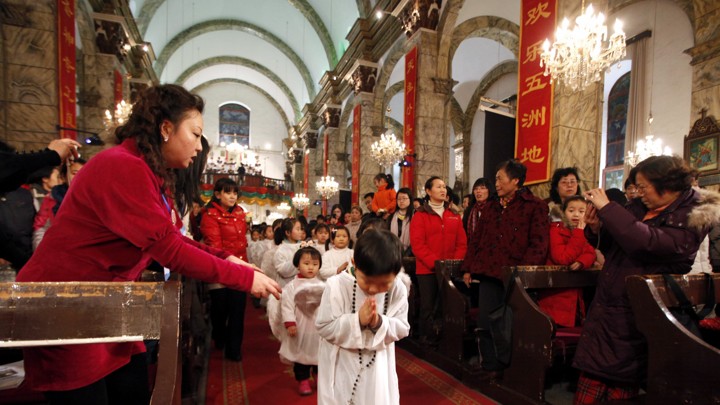
Children walk down the aisle during Christmas Mass at a Catholic church in Beijing.

As China’s economic and military power has expanded over the past decade, Beijing has shown a proclivity to renege on agreements and to make access to its markets conditional on acceding to its shifting demands. 
Countries, companies, and international organizations have found it difficult to push back.
The Vatican, as both a state and the spiritual head of a major international institution, is now grappling with this challenge. 
In September, the Holy See inked a provisional agreement with Beijing in an attempt to mend an almost 70-year-old schism. 
Vatican leaders argued that the deal would promote unity. 
They insisted that it would enable them to better minister to their Catholic flock in China. 
They dismissed concerns that it constituted “selling out” to a repressive government.
Then a Chinese bishop disappeared. 
The suspected arbitrary detention of a Vatican-appointed priest last month has reinforced worries that Beijing won’t ease its pressure on the Church but will instead use the deal to push for even more control.
The implications stretch well beyond the religious sphere—in fact, the Vatican deal is a broader object lesson in the costs of doing business with Beijing. 
If China is willing to backtrack on its agreement with the Vatican, that bodes poorly for foreign governments, international companies, and other organizations involved in dealmaking with the country.
Since the Vatican and Beijing broke diplomatic ties in 1951, the Church in China has been divided into official state-sanctioned Catholic places of worship with bishops appointed by Beijing, and underground churches whose leaders are secretly appointed by the Vatican but not officially recognized by the Chinese Communist Party. 
CCP authorities have harassed and detained underground clergy, and the dueling bishoprics have caused confusion and division among the laity. 
The pope has not been allowed to visit China or even to enter its airspace.
Vatican leadership suspects that the schism is one reason for Catholicism’s stagnant growth in China. There are about 10 million Chinese Catholics (though estimates vary), a number that has remained relatively steady in recent decades while the number of Protestant Christians has risen dramatically, reaching up to 100 million by some counts. 
That was a major motivation for the deal, which has been under discussion since 2014.
Under the terms of the agreement, which has not yet been fully made public, Francis has recognized seven party-appointed bishops, while Beijing has in turn recognized a portion of the formerly underground Vatican-appointed ones. Wenzhou
In the future, the Holy See is expected to reach a compromise with Beijing over new appointments, in an arrangement that gives the CCP control over who is selected.
But then last month, Shao Zhumin, a Vatican-appointed bishop of the eastern city of Wenzhou, who remains unrecognized by Beijing, disappeared. 
It was the latest in a string of detentions that Shao has faced in recent years. 
Some Chinese Catholics had naively hoped that such arbitrary arrests, a relatively common occurrence for underground priests, would end after the agreement was reached.
“The government has not given up its hope for control. They want the Church to be another tool of the state,” Paul Mariani, a Jesuit priest who researches Chinese religious policy at Santa Clara University, told me. 
“That’s common in China, across labor unions or NGOs—they all have to fall under the party at some level.”
Shao’s disappearance has, so far at least, seemed to vindicate the deal’s naysayers. 
Critics have accused the Vatican of giving in to an atheist, communist government with a long history of persecuting the faithful. 
Joseph Zen, the retired cardinal of Hong Kong and a fierce critic of the CCP, called the agreement “an incredible betrayal,” accusing the Holy See of “giving the flock into the mouths of the wolves.”
Sophie Richardson, the China director of Human Rights Watch, told me, “Watching a major world faith come to an agreement with an authoritarian government that’s notorious for repressing religious freedom and to effectively cede some authority to that government sets a very worrying precedent.”
The deal comes as the religious-freedom environment in China has reached its worst level in years, as the government has detained 1 million Muslim citizens in illegal detention camps, banned online Bible sales, increased control over churches and temples, and sought to incorporate party ideology directly into religious doctrine.
“The pope has effectively given Xi Jinping a stamp of approval when the latter’s hostility to religious freedom couldn’t be clearer,” Richardson said, referring to the Chinese president.
It’s not just domestic and religious groups that have felt the tightening grip of the Communist Party. International companies are forced to hand over their proprietary technology in order to do business in China. 
The Chinese government blocks the websites of businesses that do not abide by its tough online censorship laws, leading major companies such as Apple and LinkedIn to comply with official demands to remove certain content. 
In April, Beijing demanded that international air carriers change their website language regarding Taiwan to bring it in line with the Chinese government’s position that the self-governing island democracy is a Chinese province, threatening consequences for airlines that did not comply by a given deadline (to date, almost all airlines have complied).
“It’s hard to imagine China putting as much pressure on those organizations 20 years ago,” said Rush Doshi, a postdoctoral researcher specializing in China at the Brookings Institute. 
“It was afraid of the commercial and international backlash. Now there is less concern about the backlash because China is bigger and more powerful. They couldn’t afford to adopt that attitude when their economy was far smaller than that of the United States.”
In recent years, the CCP has also applied similar pressure to major international institutions such as the United Nations, seeking in some cases to change the very nature of liberal bodies to more closely resemble its own illiberal preferences. 
China has sought to erode human-rights enforcement at the United Nations by packing hearings with pro-Beijing participants, offering generous investment deals to countries in exchange for their support, and blocking activists from entering UN grounds.
“Everyone is being forced to play by Chinese government rules,” said Shanthi Kalathil, who directs the International Forum for Democratic Studies at the National Endowment for Democracy. “Increasingly, we see the Chinese government trying to impose its own definition and its own rules on international institutions and other governments. And that extends to governments such as the Vatican, it extends to arenas such as the UN, and to Chinese government bilateral relations with other countries.”
And in some cases, even when an equitable deal has been reached, the party has demonstrated a growing willingness to backtrack on commitments.
In 2015, for example, Xi reached two agreements with President Barack Obama—to reduce cyber-hacking attempts and to cease China’s militarization in the South China Sea. 
Despite these high-profile deals, however, the Chinese navy continued to build military facilities in contested waters in the South China Sea. 
And in October, the U.S. government revealed that Chinese-sponsored cyber-hacking attempts on U.S. targets had once again surged.
“If China can renege on a deal with a superpower—over hacking and over the South China Sea—then it can renege on deals with middle powers or small countries without fear of consequence,” said Doshi.
Xi has spent his six years as president strengthening the party’s grip over every aspect of Chinese society and cracking down harshly on any organization that could potentially compete for the loyalty of Chinese citizens, particularly targeting religious groups.
From that perspective, the agreement with the Vatican is the party’s attempt to finally eliminate the gray area in which underground churches have long operated, rather than a desire to cede partial control over bishop appointments to a foreign head of state thousands of miles away.
“How many times have we seen this movie?” asked Richardson.
“I’m not sure why the pope and the Vatican will succeed when many others have not.”

vendredi 5 octobre 2018

Chinese Saga

The Chinese head of Interpol has disappeared — in China
By James McAuley and Gerry Shih

An image from Interpol shows Meng Hongwei, Chinese president of Interpol, speaking in Bali, Nov. 10, 2016. 

PARIS — French authorities launched an investigation into the disappearance of Interpol president Meng Hongwei, whose wife informed French police that he went missing after returning to his native China last week, local media reported Friday.
Meng, a former government minister, was last seen Sept. 29, his wife said, according to unnamed French police officials cited by France’s Europe 1 radio station. 
Other police officials also confirmed the investigation to the Reuters news agency.
Interpol — headquartered in Lyon, France — is an international organization facilitating police cooperation across borders. 
Meng’s wife reported her husband’s disappearance to French authorities because she has been living in France with their children, Europe 1 reported.
A spokeswoman for France’s Interior Ministry, which oversees the national police force, did not immediately respond to a request for independent confirmation. 
Neither did a spokeswoman for the Lyon prosecutor, which oversees investigations in the region.
In a statement, Interpol said only that the disappearance is a “matter for the relevant authorities in both France and China” and declined to elaborate further.
Meng, 64, was named president of Interpol in November 2016, and his term is slated to end in 2020. He is the first Chinese citizen to head the body and was previously China’s vice minister of public security.
The circumstances of his disappearance have raised the possibility that he may have fallen into the dragnet of China’s multiyear anti-corruption campaign, which has seen thousands of officials and business executives suddenly vanish before reemerging to face government charges months later.
That would be a stunning reversal for Meng, who was elected to head Interpol two years ago at the precise moment China was seeking international help to arrest corrupt officials. 
In recent years, China has submitted to Interpol extensive lists of repatriation targets and “red notices” — an international alert for a wanted person ­— for what it says are corrupt fugitives.
At the time of his appointment, human rights groups expressed concern about the opacity of China’s legal system and warned that Beijing could use its clout in Interpol to arrest political dissidents.
During Meng’s tenure, China has submitted “red notices” for dissident business executives and figures such as the German national Dolkun Isa, the head of the Munich-based World Uighur Congress that represents the Uighur minority in far western China. 
China has labeled Isa a terrorist but has not provided public proof.
China last year also requested multiple Interpol red notices seeking the arrest of Guo Wengui, a dissident billionaire who had fled to New York while claiming he possessed explosive secrets about the Communist Party leadership.

vendredi 24 novembre 2017

Rogue Nation: The disappeared

Accounts from inside China's secret prisons
By Chieu Luu and Matt Rivers

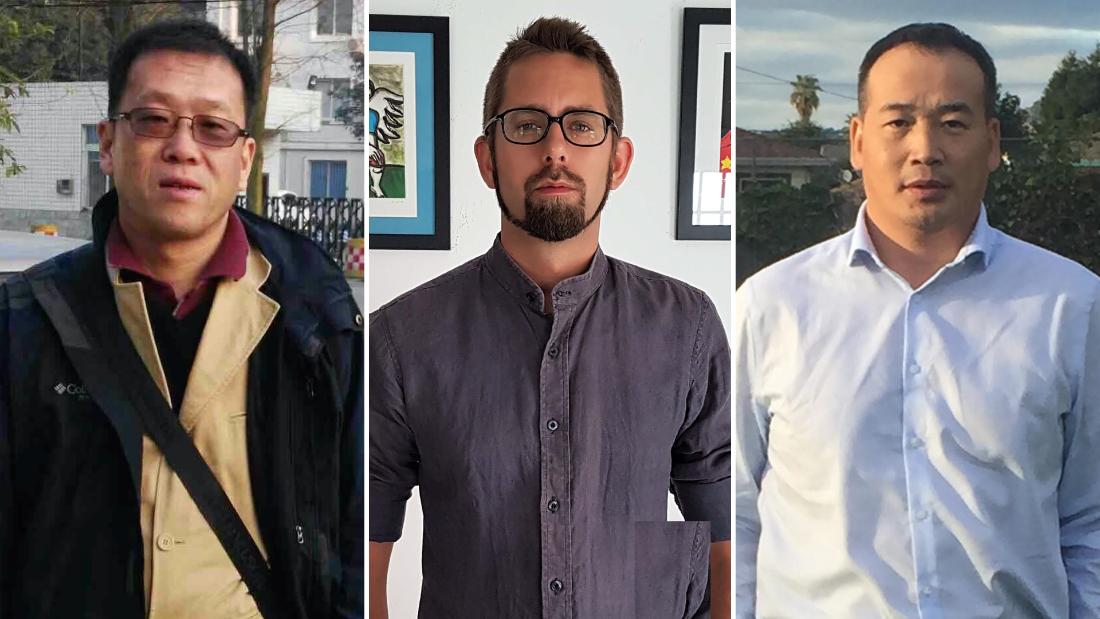
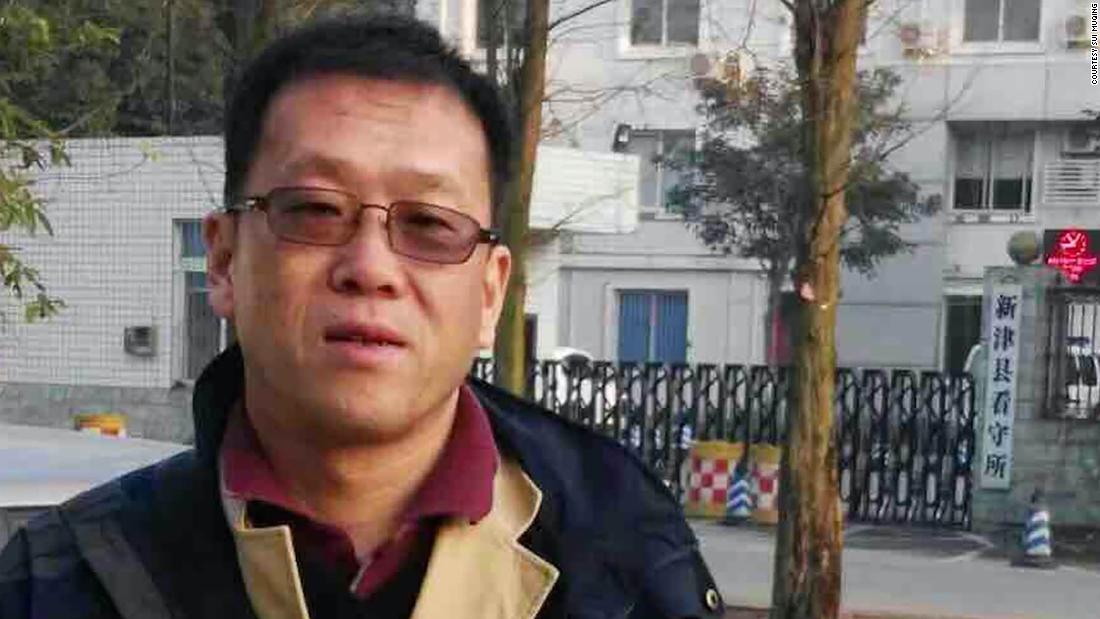
Sui Muqing says he was forced to stay awake while he was interrogated for more than four days.
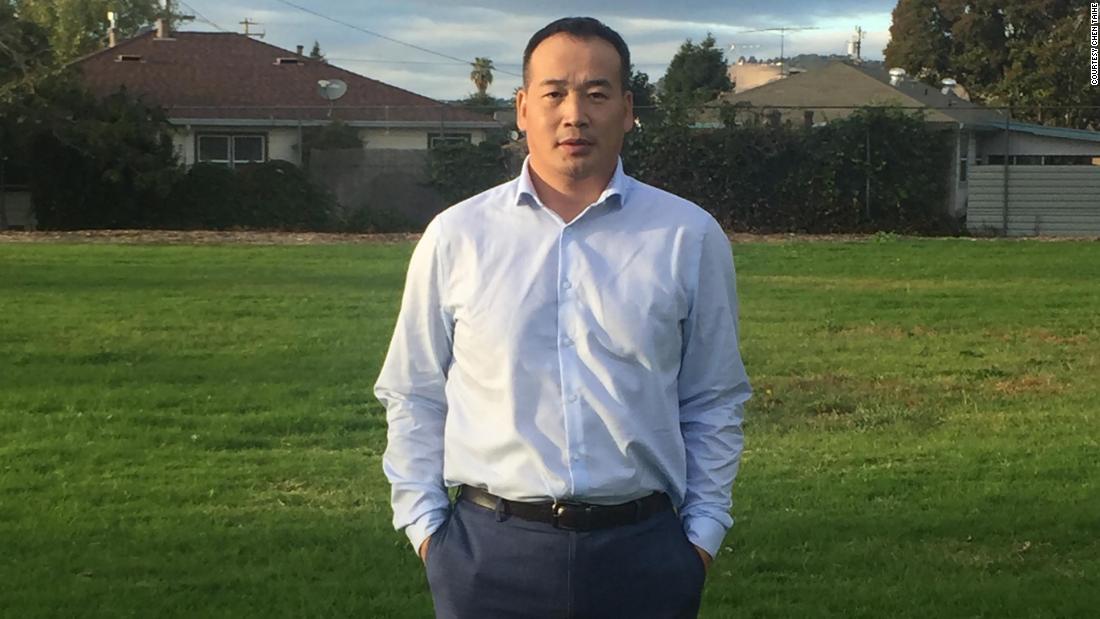
Chen Taihe describes being held in a jail cell so crowded he couldn't relieve himself.
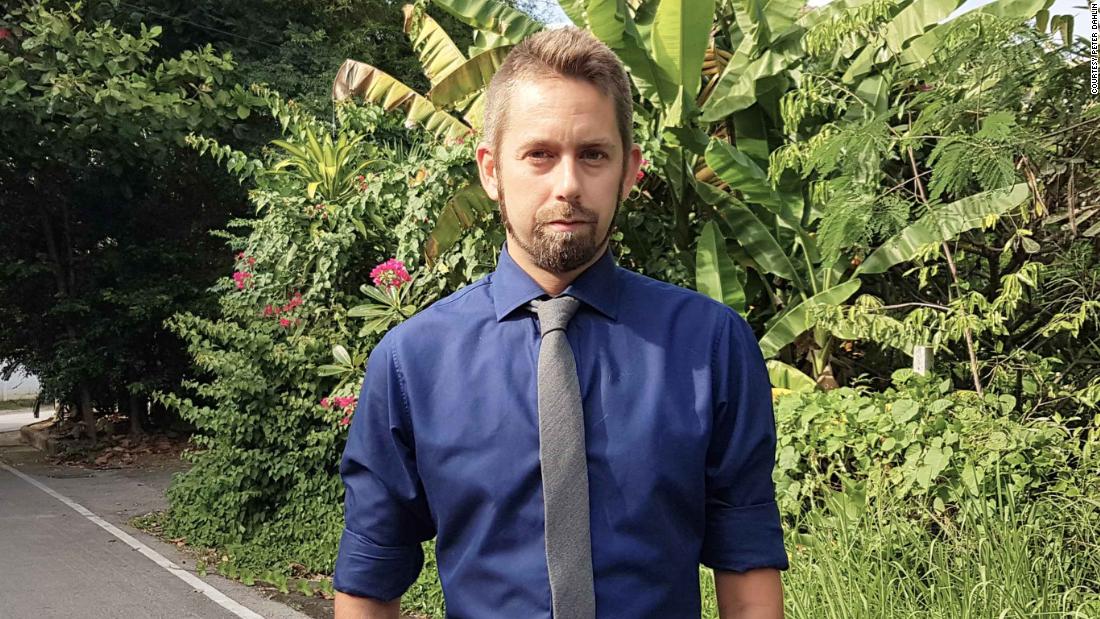
And Peter Dahlin was left so traumatized by his experience, he slept with a knife next to his bed.
Three men, in three different parts of China.
They didn't know each other, but all had one thing in common: They advocated for human rights and became caught up in what activists say is the Chinese government's brutal crackdown on dissent.
Xi Jinping's wide-reaching sweep on perceived threats to both his rule and the Chinese Communist Party has led to the arrests of dozens of activists, bloggers, feminists, artists and lawyers.
The men, who CNN spoke to in detail over the course of the last 12 months, describe being forcibly taken from their homes, detained for weeks, sometimes months, in secret prisons, denied communication with family and legal representation, strong-armed into making videotaped confessions, and ultimately released without being convicted of a single crime.
Sui, Chen and Dahlin all say they were explicitly told not to talk about what happened to them, but have decided to speak out anyway. 
They say they want to shed light on the lengths to which China's government will go to silence anyone it deems a threat.
CNN reached out to the Chinese government for comment on each of the cases in this story, but received no response. 
Beijing has said regularly in the past that it does not torture prisoners and maintains these lawyers and activists are criminals dealt with under the law.

The 709 crackdown

While being a human rights lawyer has never been an easy path in Communist China, forced disappearances of lawyers were rare before 2015.
But on July 9 of that year, prominent Beijing rights lawyer Wang Yu disappeared, along with her husband, also a lawyer, and their teenage son.
The following day, police raided Wang's law firm and detained seven of her colleagues. 
Seven other rights lawyers were also detained or reported missing, according to the Hong-Kong based China Human Rights Lawyers Concern Group, which has meticulously documented the cases. It became known as the "709 crackdown" -- a reference to the date the first arrests occurred.
Sui was among them. 
He'd earlier in the day spoken to two foreign media outlets to raise concern about Wang's disappearance.
That night, a security guard called up to Sui's apartment and said his car had been scratched in an accident and when he stepped outside, a group of police quickly whisked him away, said Sui. 
He wasn't seen again for nearly five months.

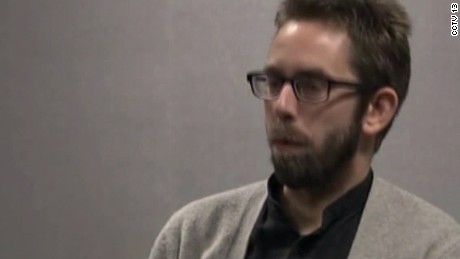
From left to right: Sui Minqing, Peter Dahlin and Chen Taihe.

Two days later, on July 12, the same thing happened to Chen. 
He said police asked him to come down from his apartment to answer a few questions. 
"I intentionally left my cell phone upstairs in my apartment because I thought I'd be back in a few minutes." 
He didn't return for six weeks.
During a period of less than a week, at least 146 lawyers and their families were detained in a nationwide swoop.
The roots of the crackdown on lawyers can be traced back to an editorial in the overseas edition of state-run People's Daily in July 2012, which warned the United States would use five categories of people to destabilize the Communist Party's near seven-decade rule. 
Rights advocates and lawyers were at the top of the list.
Dahlin, a Swedish national who co-founded a Beijing-based NGO that provided legal aid and training to Chinese lawyers, wasn't caught up in the first wave of detentions, and assumed his status as a foreigner might offer him some protection.
In early January 2016, however, he got tipped off authorities might be after him. 
He was about to depart for Beijing airport when 20 police officers turned up at his apartment.
They detained him and his girlfriend and they ransacked his home, he says, seizing computers and documents.
Dahlin says he was accused of masterminding a plan to smuggle the son of Wang Yu, the first lawyer to be detained in the swoop, into Myanmar, in an effort to evade authorities in October 2015.
He said investigators realized early on he had nothing to do with it, but instead of letting him go, quickly turned their attention to his NGO -- Chinese Urgent Action Working Group -- pressing him to give up information about his colleagues and other activists his group worked with.
Authorities said that Dahlin worked for an illegal organization that sponsored activities that jeopardized China's national security. 
The NGO said it "undertakes rapid response assistance for rights defenders in need."
By October 2017, some 321 lawyers, rights activists, their family members and staff had been caught up in the 709 crackdown.

How lawyers disappear
A key tool in the crackdown has been a relatively new form of detention. 
In 2012, China introduced "residential surveillance at a designated location" (RSDL) into the Criminal Procedural Law.
It appeared to legalize a long-used practice of "black jails" -- a means of temporarily detaining people outside the Chinese legal system who could not be immediately charged with a crime.
The government denied black jails existed in 2009. 
But in 2011 Chinese state media reported on a campaign by the Beijing Municipal Public Security Bureau to crack down on them.
The amended law says residential surveillance shouldn't exceed six months but requires detainees' families be notified within 24 hours, unless they can't be reached, and guarantees all suspects the right to a lawyer, with whom a meeting should be granted within 48 hours of a request.
The new system gives arbitrary detention a legal gloss and normalizes enforced disappearances. 
Earlier this year, 11 countries called on China to end the practice and investigate reports of torture against human rights lawyers. 
The UN High Commission on Human Rights has also called on China to halt the detention of lawyers.

Chen Taihe, a blogger, was detained in Guilin. He now lives in the US.

Although they were held at opposite ends of the country, Sui, Chen and Dahlin all describe similar conditions: Sparsely furnished rooms with black-out curtains on the windows and fluorescent lights kept on 24-hours a day.
They say they slept on a single bed, and were not allowed any reading or writing materials. 
Guards were always in the room watching their every move, even when they used the bathroom.
"There's nothing to look at except some very beige-looking suicide padding on the wall," said Dahlin.
He described being so bored he almost looked forward to the daily interrogations, "because at least you're taken out to another room ... and have some kind of interaction with people."
The interrogators used methods which Dahlin said reminded him of "bad American movies."
"They would have lots of people rush into your cell at night surrounding your bed just trying to scare you," he said.

Peter Dahlin, a Swedish national, was detained in China on January 4, 2016 and held for three weeks.

Just months earlier, Sui says he was held at a police training facility in Guangzhou, the free-wheeling hub of China's manufacturing heartland where he worked as a human rights lawyer defending a number of high-profile activists.
He says interrogators accused him of inciting subversion and pressed him to give them details ranging from his personal life and finances, to his work, clients, and all of his contacts.
Initially he refused to answer the questions, but his resistance only made his interrogators push harder. 
"They wouldn't let me sleep for four days and nights. By the fifth day, I felt like I was going to die," he said.
Sui said it was the sleep deprivation plus threats of torture which ultimately broke his will and made him cooperate. 
He said investigators threatened to shackle his hands, hang him from the ceiling and shine a flashlight directly into his eyes.
"I knew someone who had a heart attack due to deprivation of sleep in jail, so I was a bit frightened my life could be at risk if I continued to fight back," he said.

Sui Muqing, a lawyer, was detained from July 10, 2015 until January 6, 2016.

Chen, a professor who advocated for a US-style jury system in China on his blog, was first accused of "picking quarrels and provoking troubles," -- a vague charge often used by Chinese authorities that can carry a 10-year prison sentence. 
He told CNN he refused to admit any wrongdoing during a 20-hour interrogation, but then found himself sharing a jail cell with inmates accused of crimes ranging from petty theft to murder.
"The cell was so crammed I had to ask other prisoners to make room so I could urinate and defecate," he said. 
"I didn't have a spoon or chopsticks to eat with. We'd get one scoop of rice and would have to eat it with our hands."
After a month, Chen said he was told to collect his belongings. 
He thought he was going home -- but instead was driven to what appeared to be an abandoned hotel and held for another 10 days.
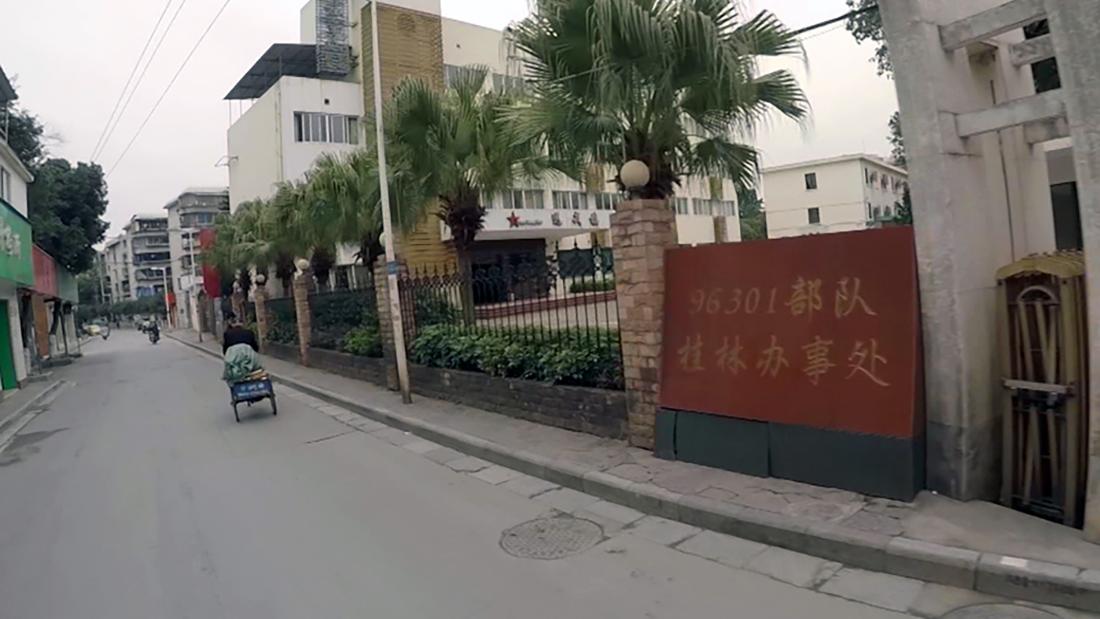
Earlier this year, CNN visited the nondescript building where Chen said he was held in Guilin, a southern city famed for its stunning landscape of karst mountains. 
Signs posted around the area in Chinese and English marked it as military property, but it otherwise appeared open and accessible.
Local officials denied that the building was used as a secret detention center.

The building in Guilin where Chen Taihe was held.

'You have to confess'
The rights activists held captive weren't just concerned about their own well being. 
Their loved ones were also threatened.
Dahlin's interrogators made it clear that they'd keep his girlfriend, a Chinese national, in custody for as long as it took to resolve his case.
"She was taken hostage just to put pressure on me," he said. 
Dahlin asked about his girlfriend every day but got limited answers.
"They said she was being treated quite well. That she was being given yoghurt and fruit and things like that. She was allowed to make a few drawings and do yoga in her room," he said. 
"They knew she had nothing to give them."
Finally, after more than three weeks, Dahlin was told he was going to be released -- but he had to do one thing: confess on camera.
He said he knew what authorities were really going to do with it. 
But wanting to speed up his release -- and that of his girlfriend -- Dahlin agreed to play his part.

Dahlin 'confesses' on state TV

He was taken into a room where a woman from state broadcaster China Central Television (CCTV) was sitting with a cameraman. 
Dahlin was handed a piece of paper with the questions that she would ask and the answers he would give.
"I have caused harm to the Chinese government. I have hurt the feelings of the Chinese people. I apologize sincerely for this," Dahlin said in the confession broadcast nationwide and splashed across state-run newspapers.
Immediately after its broadcast activists denounced it as a forced confession -- one of many that have been shown on CCTV in the years since Xi came to power.
Sui and Chen said they had to make similar "confessions." 
All three men now maintain their innocence, but they said they had no choice but to do as authorities wanted.
Sui says he admitted to charges of inciting subversion. 
Chen told CNN he confessed to charges of picking quarrels and provoking troubles, inciting subversion and embezzlement.
"You have to confess," Chen said. 
"Otherwise they won't let you go."

No end in sight
The crackdown on lawyers is still taking place.
On Tuesday, a court in Changsha, central China sentenced human rights lawyer Jiang Tianyong to two years in prison after convicting him of inciting subversion against the state.
In August, he had confessed in a trial that was streamed live online and watched by his wife Jin Bianling in California.
"He used to tell me, if I ever admit to a crime like this, it means I've been tortured," Jin said.
Jiang was a prominent human rights lawyer who had represented some of his colleagues targeted in the 709 crackdown, and was an outspoken critic of the government. 
He disappeared in November 2016, en route to catching a train from the central city of Changsha to Beijing. 
Months went by before the authorities confirmed he had been detained.
"Please give me another chance to be a human being ... and to make up for my wrongdoings," Jiang told a panel of three judges at his August trial.
Albert Ho, a Hong Kong-based activist with the China Human Rights Lawyer Concern Group, said Jiang, like other lawyers his group has spoken to, likely admitted to the charges in order to live to fight another day.
"Only an idiot would believe that he is truly speaking from his heart," Ho said.

Sleeping with a knife
Six days after his "confession" was broadcast on CCTV, Dahlin was released and expelled from China. 
His girlfriend was also released without charge.
Dahlin is now based in Thailand, but has trouble forgetting his time in detention.
"Early on it was quite extreme. Every little noise at night would wake me up. I'd sleep with a knife next to my bed, ready to stab the first Chinese person who comes into my gate," he said.

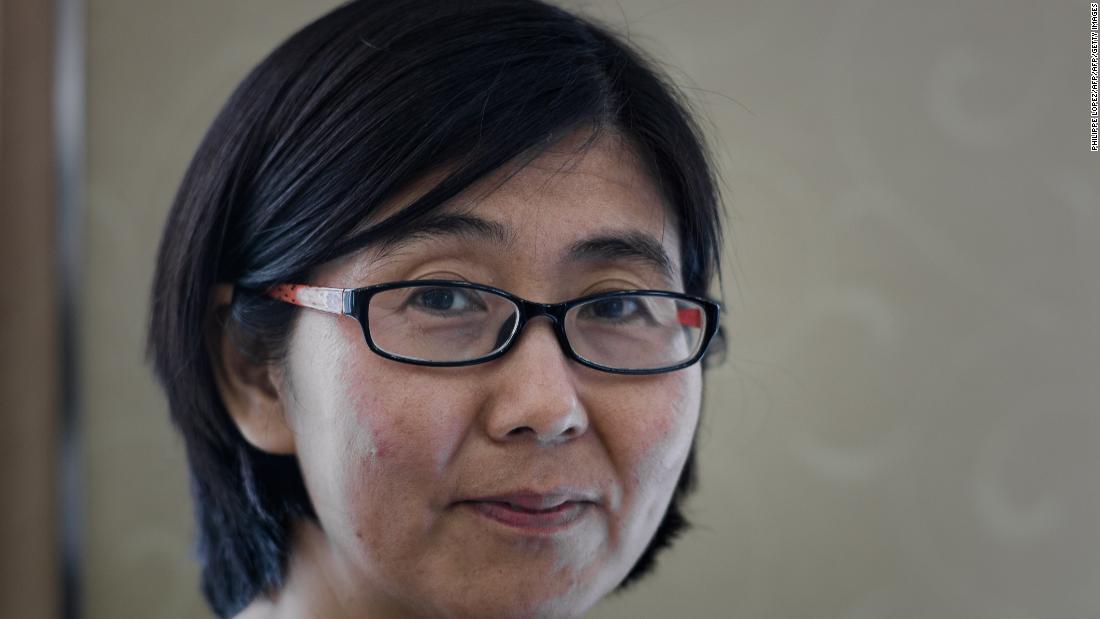
Wang Yu poses during an interview in Hong Kong on March 20, 2014.

Wang Yu, the first lawyer detained in the 709 crackdown, was charged with subversion, while her husband was charged with inciting subversion. 
They were both released on bail after more than a year in custody, after Wang's taped confession was aired on CCTV.
In it, Wang renounced her legal work and blamed "foreign forces" for using her law firm to undermine and discredit the government. 
Their son, who was detained along with them, was released soon afterward, but his movements have been heavily restricted.
Authorities never aired Chen's statement. 
He was released a day after recording it and the charges against him were dropped.
"I have no criminal record, but they can still use the video to discredit me," he said.
Chen and his family now live in US, where he's a visiting scholar at the University of California's Hastings Law School and studies the US jury system. 
He said he won't return to China until it becomes more democratic.
Sui was released on bail after his "confession," which was also never broadcast. 
He continues to practice law in Guangzhou, but said his movements have been restricted and fears the worst may still be yet to come.
"It's increasingly difficult to maintain a harmonious society through brainwashing," Sui said.
"The only resort left is violence. For anyone who's not submissive, a brutal crackdown is on the way."