FARA should apply to Confucius Institutes
BY ANDY KEISER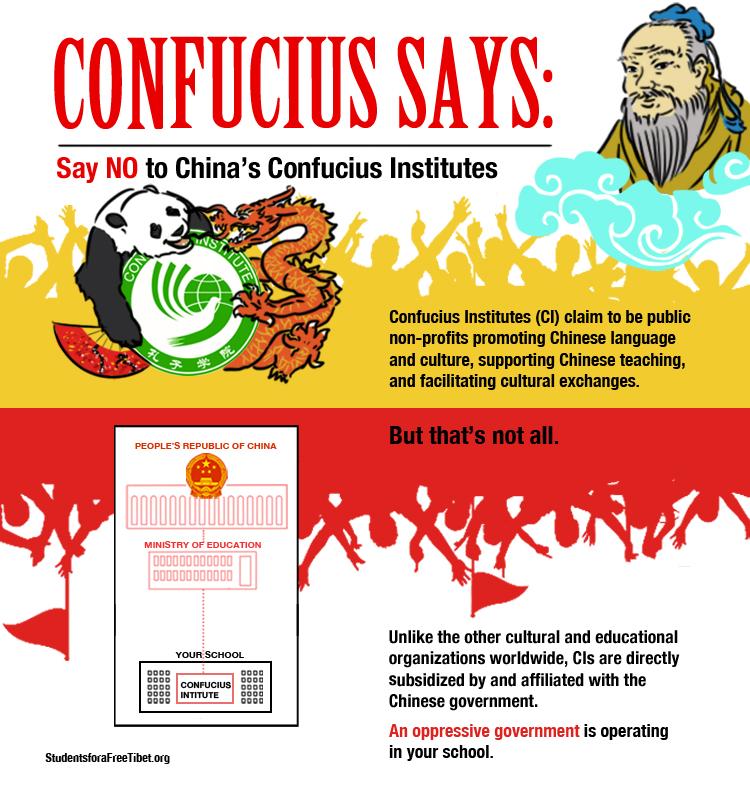
Under Xi Jinping's consolidated power, China is working diligently to supplant the United States as the world's top economic and military power.
That includes a comprehensive effort to influence American K-12 and higher educational students with a favorable view of the Communist Chinese government to shape U.S. policy over the long-term.
This influence operation by a hostile foreign power, led by China's state-controlled Confucius Institutes, should trigger the Justice Department to require a Foreign Agents Registration Act (FARA) filing by the institutes and its employees.
FARA requires anyone working at the behest of a foreign government to register with the Department of Justice.
FARA requires anyone working at the behest of a foreign government to register with the Department of Justice.
Originally written to combat propaganda, FARA also covers lobbying and public relations.
FARA is a content-neutral disclosure statute that is designed to expose foreign associations to help ensure transparency and accountability in public policy.
Confucius Institutes are extensions of the Chinese government, plain and simple.
Confucius Institutes are extensions of the Chinese government, plain and simple.
They are owned and controlled by the government in Beijing and are overseen by the Office of Chinese Language International, commonly known as Hanban, a division of the Chinese Ministry of Education.
The Chinese government spends billions of dollars annually on propaganda activities promoted through Confucius Institutes.
The Chinese government spends billions of dollars annually on propaganda activities promoted through Confucius Institutes.
Primarily targeted to the U.S., there are more than 100 Confucius Institutes in the American universities and colleges that have opted into the programing.
Confucius Institutes have expanded their reach to include K-12 education through an effort called "Confucius Classrooms."
The underhanded genius behind Confucius Institutes is that they operate under the benign guise of teaching Chinese language, culture and history while simultaneously ensuring that they can restrict speech, control curriculum and force educational institutions to choose Confucius Institute faculty from a pre-approved list of teachers provided by the Hanban.
The underhanded genius behind Confucius Institutes is that they operate under the benign guise of teaching Chinese language, culture and history while simultaneously ensuring that they can restrict speech, control curriculum and force educational institutions to choose Confucius Institute faculty from a pre-approved list of teachers provided by the Hanban.
According to a letter Senator Chuck Grassley (R-Iowa) sent last year to then-Attorney General Jeff Sessions, Confucius Institutes "require the teaching to ignore human rights abuses, and stress that Taiwan and Tibet are part of China, among other restrictions."
Institute presence, particularly on U.S. college campuses, can also be a threat to economic and national security.
Institute presence, particularly on U.S. college campuses, can also be a threat to economic and national security.
The Chinese government can hand-pick employees at Confucius Institutes and use them as its eyes and ears or task them to steal sensitive, valuable university research.
The transparency of a FARA filing would at least give more insight to U.S. counterintelligence professionals and to the public about the scope and scale of Confucius Institute activities.
According to Grassley's letter, a Chinese government official stated that the "Confucius Institute is an appealing brand for expanding our culture abroad. It has made an important contribution toward improving our soft power... using the excuse of teaching Chinese language, everything looks reasonable and logical."
Others have taken note.
Others have taken note.
The Permanent Subcommittee on Investigations, led by Senators Rob Portman (R-Ohio) and Tom Carper (D-Del.), released a bipartisan report in 2015 that detailed the activities of Confucius Institutes.
Among several alarming findings, it details that since 2006 the Chinese government has given more than $158 million to fund Confucius Institutes in the U.S.
It has veto authority over events and speakers at the institutes, and controls every aspect of their operations in the United States, including staff members pledging to protect Chinese national interests.
Grassley recently introduced the Foreign Agents Disclosure and Registration Enhancement Act of 2019 to beef up FARA enforcement and held a hearing on foreign threats to taxpayer funded research, which focused extensively on China's activities on university campuses.
Grassley recently introduced the Foreign Agents Disclosure and Registration Enhancement Act of 2019 to beef up FARA enforcement and held a hearing on foreign threats to taxpayer funded research, which focused extensively on China's activities on university campuses.
Sen. Ted Cruz (R-Texas) has led a series of efforts against Chinese influence and espionage operations targeting American higher education, having secured a provision in the National Defense Authorization Act for Fiscal Year 2019 prohibiting the Department of Defense from funding Confucius Institutes.
Sen. Cruz has also introduced legislation called the Stop Higher Education Espionage and Theft Act to further crack down on Confucius Institutes, which he called "the velvet glove around the iron fist of their campaigns on our campuses."
The Chinese government's desire to influence our public policy through propaganda, conduct aggressive espionage on our soil and steal our intellectual property is real and hard to overestimate. The activities occurring at Confucius Institutes to achieve China's goals undoubtedly trigger the requirements of FARA.
Sen. Cruz has also introduced legislation called the Stop Higher Education Espionage and Theft Act to further crack down on Confucius Institutes, which he called "the velvet glove around the iron fist of their campaigns on our campuses."
The Chinese government's desire to influence our public policy through propaganda, conduct aggressive espionage on our soil and steal our intellectual property is real and hard to overestimate. The activities occurring at Confucius Institutes to achieve China's goals undoubtedly trigger the requirements of FARA.
The Department of Justice should take immediate action to provide the type of transparency needed to help protect our nation.