By FRANK CHEN
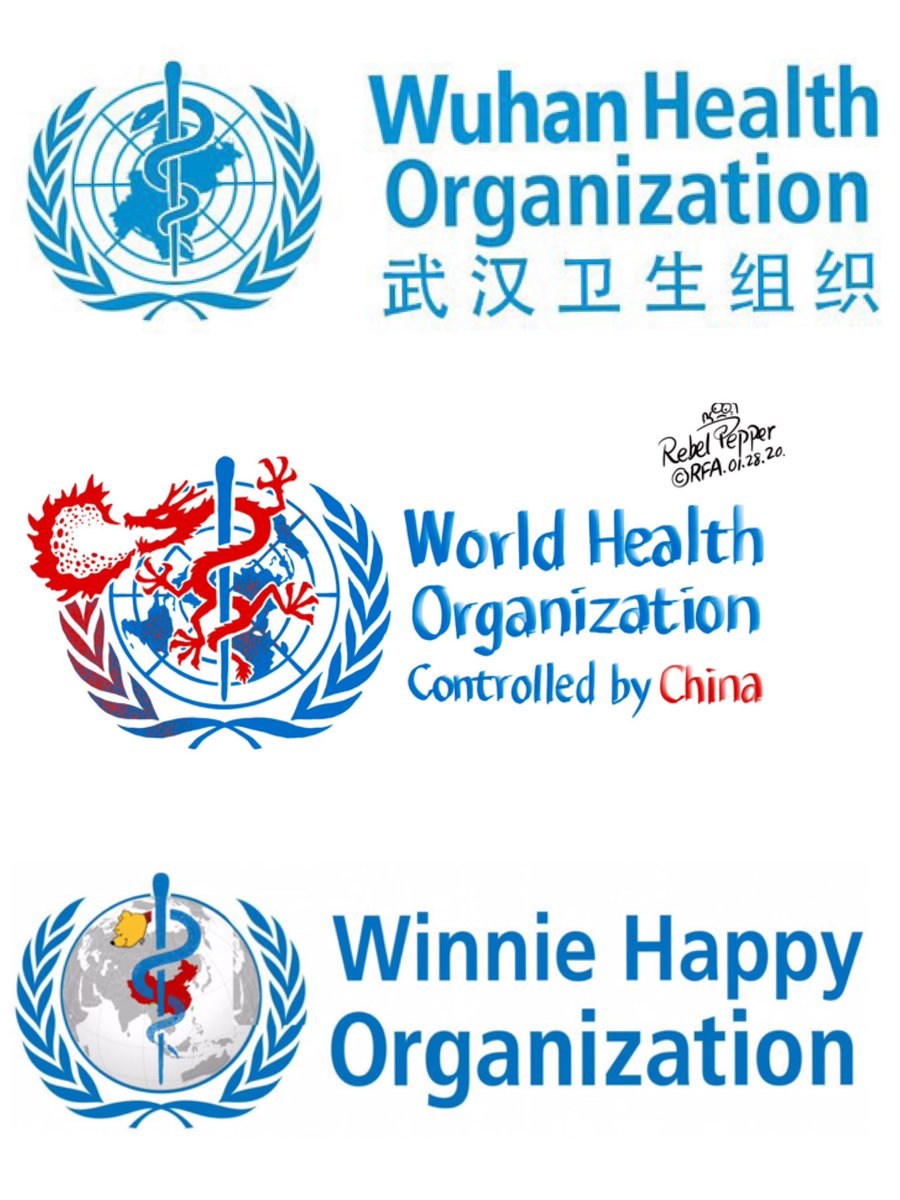
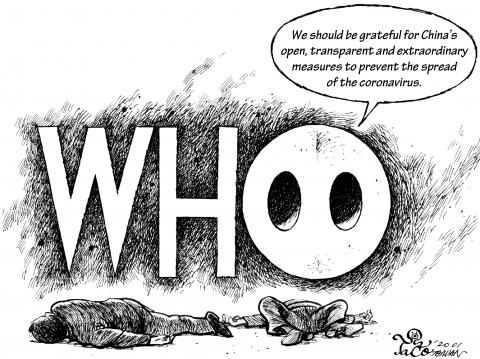
Questions have been raised over the World Health Organization’s handling of the Chinese coronavirus in China, with one dissident calling the WHO an ‘affiliated organization’ of the Chinese Communist Party.
The comment came from Yu Jie, a scholar-turned-dissident who lives in exile in the US.
The comment came from Yu Jie, a scholar-turned-dissident who lives in exile in the US.
Yu was a close associate of the late Nobel Peace Prize laureate Liu Xiaobo and compared the WHO to an ‘affiliated organization’ of the Chinese Communist Party.
Yu noted the WHO’s flawed risk assessment of the spread of the Chinese coronavirus as well as its foot-dragging before declaring the public health emergency as an incident posing global risks.
Another critic was famed Chinese artist Ai Weiwei, a thorn in Beijing’s side for his politically iconoclastic artwork.
He also relayed a petition letter demanding WHO Director-General and famous Beijing puppet Tedros Adhanom’s resignation.
“On January 23rd, 2020, Adhanom declined to declare China virus outbreak as a global health emergency. The number of infected and deaths has risen more than tenfold within only five days since then. Part of it is related to Adhanom’s underestimation of the situation in China.
“We believe the WHO is supposed to be politically neutral … On the other hand, Taiwan should not be excluded from the WHO for any political reasons. Their technologies are far more advanced than some of the countries on the ‘selected WHO list’ and can contribute to the global fight against the virus given its well-rounded medical and public health expertise and geographical proximity to mainland China,” read the petition.
When Chinese dictator Xi Jinping met Adhanom in Beijing at the end of last month, there were three tables separating Xi and Adhanom when the two were seated inside the Great Hall of the People, with no interpreters working behind them.
This unusual arrangement for when Xi receives a foreign dignitary has been interpreted by some observers as Xi’s unease about being infected with the coronavirus.
It was thought Xi wanted to keep a safe distance and take no risks, even though Adhanom was coming from Geneva, which had not been hit by the outbreak that started in Wuhan in the central Chinese province of Hubei.
Chinese dictator Xi Jinping with his puppet Tedros Adhanom in the Great Hall of the People in Beijing.
In a long-winded speech during the sit-down, Xi talked up how he had personally orchestrated the response to the pandemic and overseen the deployment of resources, stressing China’s confidence and capabilities to triumph over the virus under the strong and robust leadership of himself and the mighty Communist Party.
It was surely too much to expect Xi to make a personal appearance in the epidemic epicenter of Wuhan, where the acute respiratory disease has, regardless of the rampant under-reporting, struck down 35,991 people and killed more than 1,000, according to the latest official figure as of Friday afternoon.
The WHO, nonetheless, praised China’s “aggressive response” to the virus by closing transportation, schools and markets.
Adhanom, who hails from Ethiopia, a country that is a recipient of a large amount of Chinese foreign aid for Africa, was addressed by Xi and the Chinese state media as an “old friend” of China.However, he is now accused of fawning to Xi and putting the WHO under Beijing’s spell, especially after his indecision to announce a global health emergency early on, as well as his “gullible” acceptance of China’s tally of those infected, statistics from a country that are usually met with incredulity internationally.
In a remedial move, the WHO also held a press conference to update the public on the ongoing contagion, but the tone was as optimistic as the theme of many press conferences held by the Chinese government and attended by the deferential state media outlets.
 The Beijing stooges: World Health Organization (WHO) Health Emergencies Programme head Michael Ryan, left, WHO Director-General Tedros Adhanom Ghebreyesus and WHO Chair of Emergency Committee on Ebola Robert Steffen attend a combined news conference after a two-day international conference on Chinese coronavirus vaccine research.
 Chinese Premier Li Keqiang flew into Wuhan at the end of last month, but it appears Xi Jinping has no plans to inspect the epicenter of the contagion.
The WHO cited Chinese health officials as noting that the number of new infections of the Chinese coronavirus appeared to be stabilizing outside Wuhan and the rest of Hubei province this week, despite a change in China’s methodology for determining who had the disease, which led to a spike in confirmed cases in Hubei.
Cadres in the Chinese virus-stricken province said on Thursday that “clinically diagnosed” cases would be counted as “confirmed cases” and that the change was made so a broader set of patients could receive the same treatment as those confirmed with the infection.
Obsequious Acquiescence
Sylvie Briand, WHO’s director of infectious hazards, endorsed the changes to diagnosis and treatment, saying it would be "normal" for a government to alter the case definition during the course of an outbreak as the situation would be constantly evolving.

Masked doctors wave a Communist Party flag at a hospital in Wuhan in a ceremony to muster ranks.

Doctors in protective gear prepare before entering wards for the infected.
Also, the WHO’s acquiescence when Beijing moved to lock down Wuhan and put its remaining residents – almost 10 million people – into mandatory quarantine regardless of their physical condition contradicts its calls not to curtail the flow of people from China.
It was only after its belated emergency categorization of the disease – seen as being too pliant in the face of Beijing’s concerns over the economy and the country’s image – did the United Nations agency start to mobilize financial and political support to contain the spread.
The WHO has long been seen as under Beijing’s sway.
Adhanom’s predecessor -- also a Beijing puppet -- Margaret Chan, was thrust into her position as the WHO chief with Beijing’s stumping efforts for her during the selection process back in 2007.
Chan, whose catastrophic handling of the SARS crisis once drew hefty flak when she was Hong Kong’s health minister in 2003, in turn did Beijing’s bidding to bar Taiwan’s participation and diverted substantial resources into the WHO’s programs in China, among other things.