Affichage des articles dont le libellé est Simon Cheng. Afficher tous les articles

vendredi 22 novembre 2019

Chinese State Terrorism

Former British consulate worker tells of torture by China over Hong Kong
By Simon Denyer 
A protester holds a poster at a rally in August supporting Simon Cheng, a British Consulate employee who was detained while returning from a trip to China.

HONG KONG — A former employee of the British Consulate in Hong Kong said Wednesday that he was repeatedly tortured by Chinese secret police over 15 days in August and was accused of inciting pro-democracy protests in the territory on behalf of the British government.
Simon Cheng, 29, in his first public account of his treatment published on Facebook, described being handcuffed and shackled, blindfolded and hooded, deprived of sleep, made to sit absolutely still or hung in an uncomfortable spread-eagle position for hours on end, and constantly threatened during incessant interrogations.
British Foreign Minister Dominic Raab said his government was shocked and appalled by the “brutal and disgraceful treatment” that Cheng said he was subjected to after being detained during a business trip to Shenzhen in mainland China in August, and said it had summoned the Chinese ambassador in London to protest.
But China said its ambassador would never accept Britain’s “false allegations.”
Cheng’s detention reflects the growing bitterness between China and the West over the pro-democracy protests in Hong Kong, but his treatment also reflects Beijing’s increasing willingness to flout diplomatic norms as it becomes more assertive in projecting its power worldwide.
Meanwhile in Hong Kong, police and protesters braced for a final showdown at a university in Hong Kong on Wednesday as a small group of anti-government demonstrators continued to hold out against a police encirclement.
Cheng’s account was released just a day after the U.S. Senate unanimously passed legislation aimed at protecting human rights in Hong Kong and threatening sanctions against officials who have violated human rights there.
Cheng said he was arrested at the border between Hong Kong and mainland China, accused of inciting the protests. 
He was then shackled to a steel “tiger chair” unable to move his arms or legs, and threatened with indefinite criminal detention, while being denied access to a lawyer and not allowed to contact relatives.
He was later transferred to the secret police, when he was handcuffed, shackled, blindfolded and hooded.

“I was hung (handcuffed and shackled) on a steep X-Cross doing a spread-eagled pose for hours after hours,” he wrote. 
“I was forced to keep my hands up, so blood cannot be pumped up my arms. It felt extremely painful.”
Cheng said they forced him to do “stress test” exercises for hours on end, beat him with what felt like a sharpened baton if he did not do so, including on his “vulnerable and shivering body parts,” such as his knee.

His treatment left him seriously bruised on his ankles, thighs, wrists and knees, he said.
“Sometimes, they instructed me to stand still (handcuffed, shackled, blindfolded, and hooded) for hours after hours,” Cheng wrote. 
“I was not allowed to move and fall asleep, and if I did, then I would be punished by being forced to sing the Chinese national anthem, which they said can ‘wake me up.’ This was the nonphysical torture — sleep deprivation — they used against me.”
Cheng said the British Consulate had asked him to collect information about the protests in Hong Kong, to evaluate travel alerts and ascertain whether British citizens were involved. 
That work involved joining messaging and discussion groups and establishing contacts with protesters.
However, that appeared to have drawn the attention of China’s surveillance state. 
Cheng was accused of being a British spy and an enemy of the Chinese state, and told to confess that the British government was instigating the protests in Hong Kong by donating money, materials and equipment.
Cheng said that he had a massage in Shenzhen “for relaxation” after finishing work there and that China accused him of soliciting prostitution. 
He said he was ultimately forced to record a video confession admitting to this offense, as well as a separate confession for “betraying the motherland.”
Britain’s Raab described Cheng as a “valued member” of the consulate’s team. 
“We were shocked and appalled by the mistreatment he suffered while in Chinese detention, which amounts to torture,” he said in a statement.
Since being released, Cheng has negotiated his exit from the British Foreign Service and is applying for asylum in an undisclosed location.
Police detained protesters and students who tried to flee the Hong Kong Polytechnic University campus late Tuesday. 

A diplomatic showdown was also brewing between China and the United States over the Senate bill passed Monday.
The bill would require the secretary of state to certify annually whether Hong Kong is sufficiently autonomous from China to justify its special trading status.
Failure to do so would effectively deal a massive blow to Hong Kong’s status as a global financial and trading hub, and the American Chamber of Commerce warned of possible “unintended, counterproductive” consequences that could undermine the territory’s unique place in the world.
Protesters camp out in a gymnasium at Hong Kong Polytechnic University on Nov. 20. 

To become law, the measure must be combined with a separate bill passed by the House, and then President Trump must sign it.

jeudi 21 novembre 2019

Perfidious and Ungrateful Albion

UK criticised for its treatment of worker tortured in China
Simon Cheng, a former UK consular employee, has only been offered a two-year visa
By Emma Graham-Harrison and Verna Yu in Hong Kong


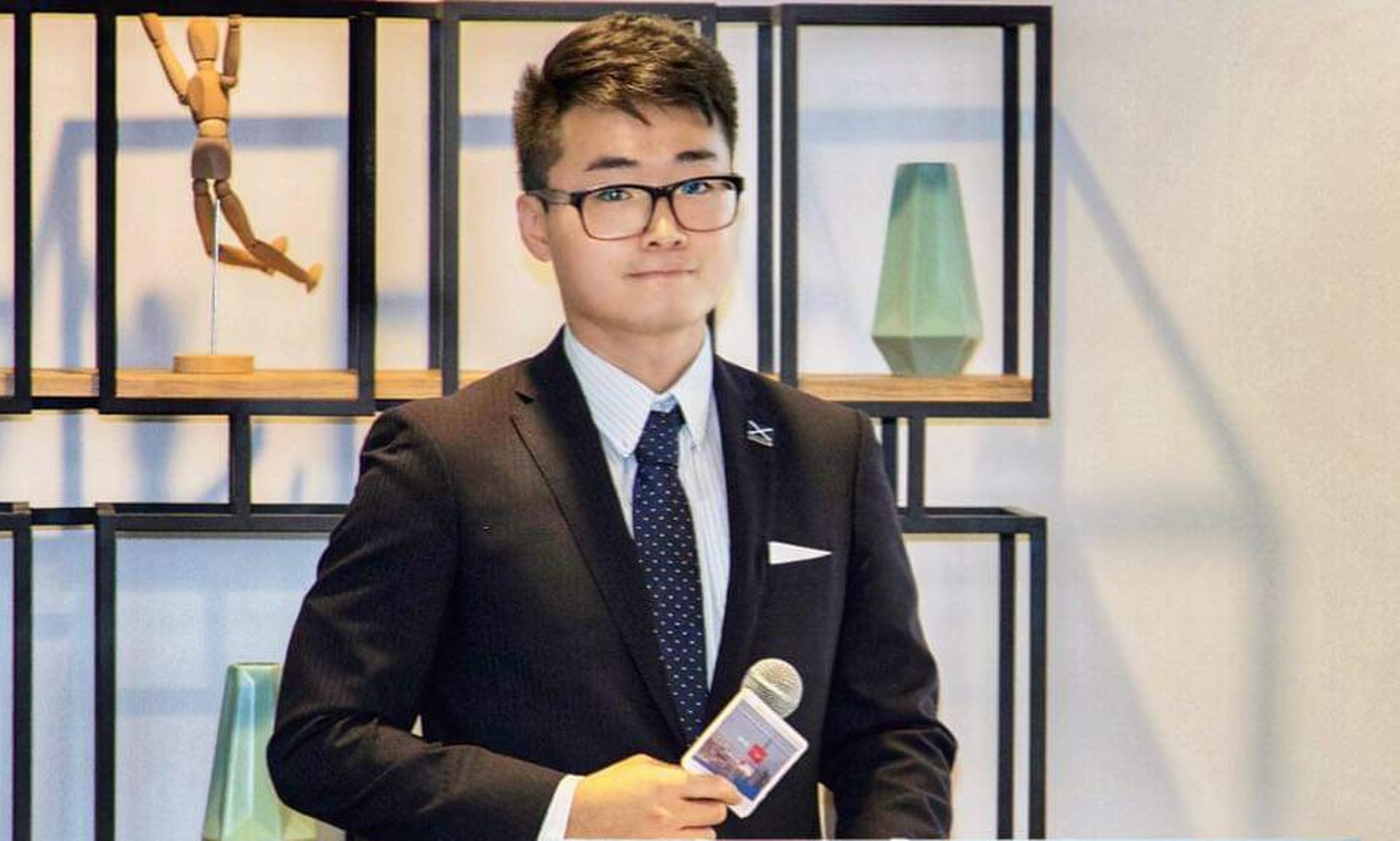
Simon Cheng had been tasked with monitoring the protests in Hong Kong for the British embassy. 

Questions have been raised about Britain’s treatment of a former UK consular worker from Hong Kong, who said he was asked to resign after being detained and tortured on a work trip to mainland China.
Simon Cheng has been offered a two-year UK visa, but sources said it is a “working holiday” type, which only allows him to spend 12 months employed and leaves him without a path to permanent residency.
It raises the prospect that even if he moves to Britain, he could eventually be forced to return to Hong Kong, where he said he no longer feels safe, in 2021. 
Critics say Britain should do more to protect ex-diplomatic staff.
“The details of what Mr Cheng says happened to him are heartbreaking and extraordinary: a kidnapping and a forced confession obtained by brutal torture,” said Lord Alton, vice chair of the cross-party Westminster Friends of Hong Kong group.
“The UK government must begin immediately preparing targeted sanctions, while offering asylum to those seeking to escape the iron grip of dictatorship like Simon Cheng.”
Cheng was seized at the border in late August, on his way back from a work trip to the Chinese border city of Shenzhen. 
He had been tasked with monitoring the protests in Hong Kong for the British embassy, in addition to his main job promoting trade.
He went public this week with an account of the torture that followed. 
Over 15 days of detention, it included stress positions, beating and psychological abuse, when he was accused of being a British agent.
He was so frightened after his ordeal that he initially refused to even let the UK consulate issue a statement condemning his treatment, he told the BBC, and has since fled Hong Kong.
Despite initially being granted compassionate leave, he said the UK had come to see him as a security risk because of his long interrogation, and this month he was asked to leave his post. 
“I was asked to resign on November 2019, which ended my roughly two-year service and employment.”
The British government claims that Cheng left his position voluntarily, and foreign secretary Dominic Raab said supporting the 29-year-old was his “over-riding concern”. 
He described Cheng’s ordeal as “disgraceful” and has summoned the Chinese ambassador to demand Beijing hold those responsible to account.
But the UK has offered Cheng only a two-year visa, and foreigners need to spend five years in the UK to be eligible for permanent residency.
After Cheng was released in September, he said he felt unsafe in Hong Kong because of threats from Chinese security officials who had originally detained him.

The Chinese authorities warned they could “abduct me back to mainland China in Hong Kong anytime if I don’t behave myself, such as exposing their hidden political motivation and agenda behind my detention to anyone”, he wrote.
Cheng said that he also did a full debrief with senior UK consulate officials after he was freed, and was warned to look out for suspicious people following him. 
He has now fled to a third country, while other activists are rallying international support.
“That someone could be tortured by a dictatorship and then effectively fired by the UK government is horrific and twisted,” said pro-democracy group Stand with Hong Kong. 
Asking someone to resign is hardly different to sacking them, not to mention treating Simon as a security risk after his ordeal, they said.
It also called on the government to prepare targeted sanctions like ones passed by the US.

mercredi 20 novembre 2019

Despicable China

Ex-Worker at U.K. Consulate in Hong Kong Tortured by China 
Simon Cheng spoke out publicly for the first time since he was detained in early August at the end of a business trip from Hong Kong to mainland China. 
By Amy Qin

Protesters outside the British Consulate in Hong Kong expressing support for Simon Cheng in August.

BEIJING — A former employee of Britain’s consulate in Hong Kong said on Wednesday that the Chinese police ortured and beat him, deprived him of sleep and hung him in a spread-eagled pose for hours as they sought information about what they alleged was foreign interference in the protests that have convulsed the city.
In a statement posted on Facebook, Simon Cheng spoke out publicly for the first time since he was detained in early August at the end of a business trip from Hong Kong to mainland China. 
When he was released after 15 days, the Chinese authorities said Mr. Cheng had confessed to unlawful activities.
“I was handcuffed, shackled, blindfolded and hooded,” Mr. Cheng, 29, said in his statement. 
“I speak out now because the case is relevant to the public interest on knowing the flawed judicial process in mainland China.”
Responding to the allegations, Foreign Secretary Dominic Raab of Britain said he had summoned the Chinese ambassador in the United Kingdom to express outrage at what he called “the brutal and disgraceful treatment of Simon in violation of China’s international obligations.”
“Simon Cheng was a valued member of our team. We were shocked and appalled by the mistreatment he suffered while in Chinese detention, which amounts to torture,” Mr. Raab said, according to the Foreign and Commonwealth Office.
Mr. Cheng’s accusations of extrajudicial torture of a Hong Konger could further inflame the protests, which began in June as a demonstration against an unpopular bill that would have allowed extraditions to the mainland. 
The protests have since morphed into a pitched battle between protesters, the police and the government over the future of the city.
Mr. Cheng’s disappearance prompted fears that China had detained him as a warning to protesters, or to Britain, which has expressed support for the pro-democracy movement.
Mr. Cheng traveled to Shenzhen, a mainland city that borders Hong Kong, to attend a business conference on Aug. 8. 
As he was making his way back he wrote to his girlfriend on WeChat, the Chinese messaging app, on a high-speed train. 
“Pray for me.”

vendredi 23 août 2019

The battle goes on!

Hong Kong airport targeted in weekend protest after last week's mayhem
By Donny Kwok, Twinnie Siu


HONG KONG -- Hong Kong braced for an anti-government protest “stress test” of the airport this weekend, as weeks of sometimes violent demonstrations in the Chinese-ruled city showed no signs of let-up amid rising tension between China and some Western nations.
The airport, reached by a gleaming suspension bridge carrying both rail and road traffic, was forced to close last week when protesters, barricading passageways with luggage trolleys, metal barriers and other objects, clashed with police.
China’s Hong Kong affairs office condemned the mayhem as “near-terrorist acts”.
“Go to the airport by different means, including MTR, airport bus, taxi, bike and private car to increase pressure on airport transport,” protest organizers wrote online on Friday.
The Airport Authority published a half-page notice in newspapers urging young people to “love Hong Kong” and said it opposed acts that blocked the airport, adding that it would keep working to maintain smooth operations.
Hong Kong’s high court extended an order restricting protests at the airport. 
Some activists had apologized for last week’s airport turmoil.
The protests, originally over a now-suspended bill that would have allowed extraditions to China, have plunged the former British colony into its worst crisis since its return to China in 1997 and pose a major challenge for Communist Party rulers in Beijing.
The unrest has widened into calls for greater freedom, fueled by worries about the erosion of rights guaranteed under a “one country, two systems” formula, adopted after the handover, such as an independent judiciary and the right to protest.
Transport Secretary Frank Chan said airport passenger volume from Aug 1 to 21 was down 11% from the corresponding period last year, with cargo volume down 14%.
Commerce Secretary Edward Yau said visitor arrivals started to fall in mid-July. 
For Aug 15 to 20, arrivals were down 49.6% on the corresponding period of 2018.
“It was the fastest and steepest drop in recent years, and the situation is obviously very worrisome,” he told reporters.
The Canadian consulate said it had suspended travel to mainland China for local staff, just days after a Chinese employee of the city’s British consulate was confirmed to have been detained in China.
China has said that Simon Cheng, the consulate employee, was detained in the border city of Shenzhen neighboring Hong Kong. 
Beijing has accused Britain and other Western countries of meddling in its affairs in Hong Kong.
Canada’s latest travel advisory on Thursday warned that increased screening of travelers’ digital devices had been reported at border crossings between mainland China and Hong Kong.

BACK IN THE USSR

Protests on Friday included a march by accountants, a “Baltic Chain”, in which protesters will join hands across different districts in the evening, and a “rally of Christians”.
“A lot of bosses are apolitical. However, politics comes to you even when you try to avoid it,” a city legislator, Kenneth Leung, told the accountants’ rally.
“We used to be ranked as the freest economy in the world for almost 20 years. Can we keep the ranking? No, it’s over. Our core values are integrity and honesty. We need to stick to our international core values.”
He put the number taking part in the march at 5,000.
In 1989, an estimated two million people joined arms across three Baltic states in a protest against Soviet rule that became known as the “Baltic Way” or “Baltic Chain”.
Alphabet Inc’s Google has said its YouTube streaming video service disabled 210 channels engaging in a Chinese coordinated influence operation around the Hong Kong protests. 
Twitter and Facebook have also dismantled a similar campaign originating in mainland China.
The protests have caused corporate casualties, such as the Cathay Pacific airline, amid mounting Chinese scrutiny over the involvement of some of its staff in protests.
Cathay confirmed on Friday that Rebecca Sy, the head of Cathay Dragon’s Airlines Flight Attendants’ Association, was no longer with the company. 
Her departure follows the shock resignation of Cathay Chief Executive Rupert Hogg last week.
Sy said she was fired immediately after managers saw her Facebook account without being given a reason.
The Hong Kong Confederation of Trade Unions called on Cathay to end to what it described as “white terror”, following Sy’s sacking. 
It said 14 people had been fired in connection with the protests.
White terror is a common expression to describe anonymous acts that create a climate of fear. 
Cathay pilots and cabin crew this week described political denunciations, sackings and phone searches by Chinese aviation officials.
Demonstrators have five demands: withdraw the extradition bill, set up an independent inquiry into the protests and perceived police brutality, stop describing the protests as “rioting”, waive charges against those arrested, and resume political reform.