Affichage des articles dont le libellé est The China Quarterly. Afficher tous les articles

vendredi 19 avril 2019

Born to Censor


Scholars say they thought a China studies journal was run on Western standards of free expression, but they found Chinese government control instead.
By Elizabeth Redden

Yet another account of censorship involving a China studies journal has come to light. 
And the scholars involved say this case involves an insidious “blurring of boundaries” where they were misled into thinking Western publishing standards would apply when in fact the journal in question was subject to Chinese government censorship.
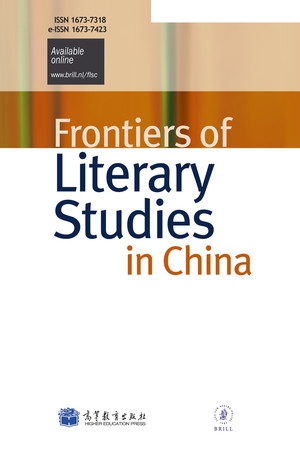
Lorraine Wong and Jacob Edmond, both professors at the University of Otago, in New Zealand, have written an account of the censorship they encountered when they edited a planned special issue of the journal Frontiers of Literary Studies in China. 
The journal is published by the Netherlands-based publishing company Brill in association with the China-based Higher Education Press, an entity that describes itself on its website (in Chinese) as affiliated with China’s Ministry of Education. 
The journal's editorial board lists scholars from major American and international universities -- including Cornell University, Duke University, Harvard University, the University of California, Davis, and the University of Washington -- and its editor in chief is based at New York University. The journal’s editorial office is located in Beijing.
Wong and Edmond wrote that the association with Brill, along with the involvement of leading scholars in the field on the editorial board, led them to mistakenly assume the publication standards would be akin to those of other journals in the field published in the U.S. 
What they found, however, was that the affiliation with the Higher Education Press and the location of the editorial office in Beijing means “the journal is subject to the full range of Chinese government censorship.”
Wong and Edmond encountered this censorship in editing the planned special issue on the topic of “how diverse understandings and uses of the Chinese script have shaped not only Chinese literature and culture but also representations of China in the wider world.” 
They oversaw a peer-review process and accepted four essays.
But they wrote that when they received the proofs for the issue shortly before the publication date, one of the four essays, by Jin Liu, of the Georgia Institute of Technology, was entirely missing. 
Their introductory essay had also been “crudely edited” to remove references to Liu’s essay, which focused on an artist who uses invented characters to satirize the Chinese Communist Party.
“When we wrote to the FLSC editor, Xudong Zhang, to question this censorship, we were told that the removal of Liu’s essay should come as no surprise, since FLSC has its editorial office in Beijing and so must abide by normal Chinese censorship,” Wong and Edmond wrote. 
“However, Zhang went further. He went on to say that Liu’s essay should never have been accepted and that he was now using his editorial prerogative to reject it.” 
Email correspondence with Zhang shared with Inside Higher Ed verifies this general account.
Zhang, a professor of comparative literature and East Asian studies at New York University, declined to comment via email, saying he would like to confer with the editorial board before issuing a statement. 
He did say there were "misrepresentations in the article about the editorial process and decision making, but those may appear to be academic niceties compared with the larger issue of censorship in China and U.S. academic response to it."
One listed member of the editorial board, Nick Admussen, an assistant professor of Chinese literature and culture at Cornell University, said on Twitter that he had asked to be de-listed from the editorial board and that he had never agreed to join in the first place. 
“There is something fake about the journal, it shouldn't be on Brill, and while it has published useful and meaningful research, it's not for me,” he wrote.
Brill’s chief publishing officer, Jasmin Lange, issued a written statement saying Brill's cooperation with Higher Education Press in China is under review.
“Since 2012 Brill has had an agreement with Higher Education Press (HEP) in China to distribute the journal Frontiers of Literary Studies in China,” Lange said. 
“HEP is responsible for the editorial process and production of the journal. Brill distributes the journal in print and online to customers outside China. We are very concerned about the developments that were described in the recent blog post by Lorraine Wong and Jacob Edmond. Brill, founded in 1683, has a long-standing tradition of being an international and independent publisher of scholarly works of high quality. We are committed to the furthering of knowledge and the concepts of independent scholarship and freedom of press. The cooperation with HEP is currently under review and Brill will not hesitate to take any necessary action to uphold our publishing ethics.”
Brill is the latest international scholarly publisher to find itself embroiled in issues related to the exportation of Chinese censorship. 
In 2017, Cambridge University Press briefly blocked access in mainland China to more than 1,000 journal articles in the prestigious journal The China Quarterly before reversing course and restoring access to the articles, which dealt with sensitive topics in China like the Cultural Revolution, Tibet, Tiananmen Square and the pro-democracy movement, and the East Turkestan colony. 
The German publisher Springer Nature has stood by its decision to block access to journal articles in China on the grounds that limiting access to certain content in China is necessary to preserve access to its wider catalog. 
More recently it’s come to light that Chinese importers have stopped buying whole journals in China or area studies.
International scholarly publishers interested in maintaining access to the massive Chinese market are coming under pressure to comply with Chinese government censorship demands, in effect helping spread the Chinese censorship regime beyond China's borders and tainting scholarly publishing standards worldwide. 
In reflecting on what happened in their specific case, Wong and Edmond wrote that scholars are used to different sets of rules applying to publication inside mainland China and outside China, but that the details of the Frontiers case suggest that distinction is breaking down.
They wrote, “We were naïve to assume that the association with Brill and the international editorial board indicated that the journal operated according to the normal standards for non-Mainland publications and would not be subject to censorship -- a mistaken belief shared by us as editors and our contributor, Liu. In subsequent correspondence, we have discovered from senior colleagues that others, particularly colleagues in junior and vulnerable positions, have also been caught in the unexpected application of censorship to a journal that, at a casual glance, might appear to sit outside the boundaries of Chinese government control. The journal Frontiers of History in China, which is likewise jointly published by Brill and the Higher Education Press, may have misled others in a similar way.
“It is precisely the blurring of boundaries between publication inside and outside Mainland China that makes the precedent of FLSC particularly worrying and insidious,” they continued. 
“We have trained ourselves to read between the lines of work published on the Mainland, noting and compensating for the telling absences. But what happens when it is no longer obvious where something was published and according to which rules? Moreover, in these straitened times, dependence on editorial and financial support may well lead other editors, academics and publishing houses outside China to add their stamp of legitimacy to such censorship.”
Wong and Edmond wrote that they withdrew the entire issue of Frontiers in solidarity with Liu and that three of the four essays, including Liu's, have just been published in another journal, Chinese Literature: Essays, Articles, Reviews (their essay on the censorship they experienced serves as a preface to the three essays, and was also published Thursday on the Modern Chinese Literature and Culture Resource Center website).
“I admire the two special editors, their courage for speaking out and letting the broader academic community know about this,” said Liu, an associate professor of Chinese language and culture at Georgia Tech. 
“I think scholars will be more careful to submit their articles to this journal later on.”
In an interview, Edmond, an associate professor of English at Otago, said he and Wong decided to go public with what happened "because of our belief in academic freedom, also a desire for the Chinese studies community to at least have a proper conversation about the potential through such joint publication deals and other forms of partnership for Chinese government censorship to be extended beyond the borders of China. We consider these really serious issues."
Charlene Makley, a professor of anthropology at Reed College who has tracked issues related to censorship in China studies journals, said that "many of the previous examples that have come to light have been more about Chinese importers choosing not to buy whole journals or trying to pressure publishers to get rid of certain articles just due to key terms. We haven’t [previously] seen cases come to light where you actually see editors stepping in and going after content.
"This might be a tip of an iceberg or it might be an anomaly," Makley said. 
"What’s happening I think is as they say the boundaries are blurring: there’s no easy distinction between China publication and outside China publication because of these behind-the-scene connections between Chinese publications and non-Chinese distributors and publishers. We need somebody to be trying to unpack some of those behind-the-scene relationships. There’s a lot more going on behind the scenes than authors and peer reviewers know and maybe even editors -- in this case, they were invited editors."

mardi 12 décembre 2017

China’s Cover-Up

When Communists Rewrite History
By Orville Schell

The Chinese Communist leader Mao Zedong’s “permanent revolution” destroyed tens of millions of lives. 
From the communist victory in 1949 in the Chinese Civil War, through the upheaval, famine, and bloodletting of the Great Leap Forward and the Cultural Revolution, until Mao’s death in 1976, the Chinese Communist Party (CCP) set segments of Chinese society against one another in successive spasms of violent class warfare. 
As wave after wave of savagery swept China, millions were killed and millions more sent off to “reform through labor” and ruination.
Mao had expected this level of brutality. 
As he once declared: “A revolution is neither a dinner party, nor writing an essay, painting a picture, or doing embroidery. It cannot be so refined, so leisurely, gentle, temperate, kind, courteous, restrained and magnanimous. A revolution is an insurrection, an act of violence by which one class overthrows another.”
Today, even experts on Chinese history find it difficult to keep track of all the lethal “mass movements” that shaped Mao’s revolution and which the party invariably extolled with various slogans. 
Mao launched campaigns to “exterminate landlords” after the Communists came to power in 1949; to “suppress counterrevolutionaries” in the early 1950s; to purge “rightists” in the late 1950s; to overthrow “capitalist roaders” during the Cultural Revolution in the late 1960s; and to “rectify” young people’s thinking by shipping them off to China’s poorest rural areas during the Down to the Countryside Movement in the late 1960s and early 1970s. 
The ideological rhetoric obscured the extremism of these official actions, through which the party permitted the persecution and liquidation of myriad varieties of “counterrevolutionary elements.” 
One of Mao’s most notable sayings was “the party commands the gun, and the gun must never be allowed to command the party.” 
Long after his death, his successors carried on in that tradition, most visibly during the Tiananmen Square massacre and the ensuing crackdown that the CCP carried out in response to peaceful protests in 1989, which led to untold numbers of dead and wounded.
Today, China is enjoying a period of relative stability. 
The party promotes a vision of a “harmonious society” instead of class struggle and extols comfortable prosperity over cathartic violence. 
Someone unfamiliar with the country might be forgiven for assuming that it had reckoned with its recent past and found a way to heal its wounds and move on.
Far from it. 
In fact, a visitor wandering the streets of any Chinese city today will find no plaques consecrating the sites of mass arrests, no statues dedicated to the victims of persecution, no monuments erected to honor those who perished after being designated “class enemies.” 
Despite all the anguish and death the CCP has caused, it has never issued any official admission of guilt, much less allowed any memorialization of its victims. 
And because any mea culpa would risk undermining the party’s legitimacy and its right to rule unilaterally, nothing of the sort is likely to occur so long as the CCP remains in power.

(RE)WRITTEN BY THE VICTORS
Despite its success in shepherding China’s economic development and rise to global power, the party remains insecure and thin-skinned, perhaps because its leaders are still so painfully aware of the party’s historical liabilities. 
The Central Propaganda Department—which, along with myriad other state organs, is tasked with censoring the media and making sure that all educational materials toe the party’s line—has sealed off entire areas of China’s past. 
Serious consequences flow from the manipulation of something as fundamental to a country’s identity as its historical DNA. 
Maintaining a “correct” version of history not only requires totalitarian controls but also denies Chinese the possibility of exploring, debating, understanding, and coming to terms with the moral significance of what has been done to them and what they have been induced to do to themselves and one another.
The task of “correcting” or erasing entire segments of a country’s past is costly and exhausting. 
An example of the lengths to which propaganda officials go has recently been brought to light by Glenn Tiffert, a China scholar at the University of Michigan. 
Through dogged sleuthing, he discovered that two digital archives—the China National Knowledge Infrastructure, which is connected to Tsinghua University, and the National Social Sciences Database, which is sponsored by the Chinese government—were missing the same group of 63 articles published between 1956 and 1958 by two Chinese-language academic law journals. 
These articles had long been available via both archives, only to inexplicably disappear. (Tiffert is not sure when the erasure occurred.) 
His study revealed that certain scholars, especially those who had been influenced by the West and had run afoul of the party’s ever-changing political lines, almost always had their articles deleted. 
At the same time, certain topics, such as “the transcendence of law over politics and class, the presumption of innocence, and the heritability of law,” and certain terminology, such as the phrases “rule of law” and “rightist elements,” also seemed to serve as cause for removal. 
Tellingly, there was a striking uniformity in the writers and topics that were excised.

Students attend a history course at the China Executive Leadership Academy of Pudong in Shanghai, September 2012.

Except for a few institutions abroad that maintain hard-copy collections of such journals, those articles are now unavailable to Chinese citizens and to the world. 
Such manipulation is made all the more pernicious owing to the fact that “even sound research practice may offer no defense,” as Tiffert points out. 
“Perversely, the more faithful scholars are to their censored sources, the better they may unwittingly promote the biases and agendas of the censors, and lend those the independent authority of their professional reputations.”
As the astrophysicist and dissident Chinese intellectual Fang Lizhi wrote in 1990 of such state-sponsored assaults on China’s historical memory:
The policy’s aim is to force the whole of society to forget its history, and especially the true history of the Chinese Communist party itself...
In an effort to coerce all of society into a continuing forgetfulness, the policy requires that any detail of history that is not in the interests of the Chinese Communists cannot be expressed in any speech, book, document, or other medium.
Fang wrote those words just after the Tiananmen Square massacre, when he was trapped in the U.S. embassy and the CCP was undertaking one of its most audacious efforts at historical erasure—namely, wiping away all traces of the crimes it had just committed from archives, books, and electronic media. 
So successful was this censorship that, in 2004, the Chinese dissident and future Nobel laureate Liu Xiaobo lamented that even though “the people of Mainland China have suffered some unimaginable catastrophes after the Communist accession to power, the post-Tiananmen generation has no deep impression of them and lacks firsthand experience of police state oppression.” 
Ten years later, the Chinese artist Ai Weiwei put it more bluntly: “Because there is no discussion of these events, Chinese still have little understanding of their consequences. Censorship has in effect neutered society, transforming it into a damaged, irrational, and purposeless creature.”
In this way, China has become “the People’s Republic of Amnesia,” in the words of Louisa Lim, a former BBC and NPR correspondent in Beijing, who used that phrase as the title of her 2014 book. As she wrote, “A single act of public remembrance might expose the frailty of the state’s carefully constructed edifice of accepted history, scaffolded in place over a generation and kept aloft by a brittle structure of strict censorship, blatant falsehood and willful forgetting.”

A man stands in front of a column of army tanks on Changan Avenue east of Tiananmen Square in Beijing, June 1989.

THE STONES SPEAK

But is it really better for societies or communities to collectively remember traumatic periods of their histories? 
Might not such retrospection reopen old wounds and revive old, murderous struggles?
The CCP would like the people it rules—and the rest of the world—to embrace such logic and accept that evasion of the brutal truth about the past is the best route to healing.
An entirely different school of thought grew out of the German experience of facing up to the crimes of the Nazis. 
The man who devised the road map for the expiation of German guilt was the philosopher and psychoanalyst Karl Jaspers, who in 1945 gave a series of influential lectures at the University of Heidelberg that were later collected in a book titled The Question of German Guilt. 
Even though what happened under Adolf Hitler precipitated something “like a transmutation of our being,” said Jaspers, Germans were still “collectively liable.” 
All of those “who knew, or could know”—including those “conveniently closing their eyes to events or permitting themselves to be intoxicated, seduced, or bought with personal advantage, or obeying from fear”—shared responsibility. 
The “eagerness to obey” and the “unconditionality of blind nationalism,” he declared, constituted “moral guilt.” 
Human beings are, said Jaspers, responsible “for every delusion to which we succumb.” 
He put his faith in healing through “the cultivation of truth” and “making amends,” a process he believed had to be completely free from any state-sponsored propaganda or manipulation.

Security cameras in front of the giant portrait of former Chinese Chairman Mao Zedong in Tiananmen Square, Beijing, November 2012.
“There can be no questions that might not be raised,” he declared, “nothing to be fondly taken for granted, no sentimental and no practical lie that would have to be guarded or that would be untouchable.” 
In Jaspers’ view, only through historical awareness could Germans ever come to terms with their past and restore themselves to a semblance of moral and societal health.
Jaspers’ approach owed a great deal to psychoanalytic theory and the work of Sigmund Freud. 
For Freud, understanding a patient’s past was like “excavating a buried city,” as he wrote in 1895. Indeed, he was fond of quoting the Latin expression saxa loquuntur: “The stones speak.” 
Such mental archaeology was important to Freud because he believed that a repressed past inevitably infected the present and the future with neuroses unless given a conscious voice to help fill in what he called “the gaps in memory.” 
In this sense, history and memory were Freud’s allies and forgetting was his enemy.
Mao, too, was fascinated by history, but he took a far more utilitarian view of it: for him, the historical record served chiefly to fortify his own reductive theories. 
Independent historians engaging in free-form explorations of the past represented a profound threat, and during Mao’s reign, many of them were dismissed from their official positions, charged as “counterrevolutionaries,” sent off for “thought reform” at labor camps, and in all too many cases persecuted to death.

DANGEROUS HISTORY

Given his own neo-Maoist predilections, it is hardly surprising that Xi Jinping also views independent scholars as dangerous progenitors of what Chinese state media have termed “historical nihilism.” 
In 2015, the People’s Liberation Army Daily warned that China “must be [on] guard” against such malefactors because they are now “spreading from the academic realm into online culture,” where “capricious ideas are warping historical thoughts and leading discourse astray.”
Tiffert spells out what it means when Chinese historians run afoul of party censors. 
They confront, he writes, “a sliding scale of penalties, including harassment by the authorities, closure of publications and online accounts, humiliating investigations into personal affairs, business activities and tax status, and ultimately unemployment, eviction, and criminal prosecution.” 
Last year, Chinese civil law was even amended to punish “those who infringe upon the name, likeness, reputation, or honor of a hero, martyr, and so forth, harming the societal public interest,” writes Tiffert, which explains why “previously outspoken intellectuals and activists are going silent.”
Tiffert also reports that “the Chinese government is leveraging technology to quietly export its domestic censorship regime abroad, by manipulating how observers everywhere comprehend its past, present, and future.” 
Indeed, last summer, Beijing hectored Cambridge University Press into sanitizing the digital archive of The China Quarterly, an important English-language academic journal, by removing over 300 articles the CCP found objectionable from its Chinese search function. (The publisher reversed its decision days after a number of news outlets reported on its initial capitulation.) 
Then, last November, Springer Nature, the publisher of such titles as Nature and Scientific American, eliminated from its Chinese websites a large number of articles that included politically sensitive references—more than 1,000 articles in all, according to the Financial Times.
China’s leaders seem to believe they can escape the party’s compromised history without penalty, at least in the short run—and they might be right. 
After all, China’s economic progress and emergence as a significant global power do not appear to have been impeded, so far. 
The CCP is wagering that it can undo, or at least dodge, the long-term damage it has inflicted on the Chinese people by simply erasing history.
But hiding the crimes of the past sits uneasily alongside the CCP tenet that there is no such thing as “universal values,” which are invariably associated with democracy and human rights and which the party casts as something foisted on China by the West as a way to undermine China’s authoritarian one-party system. 
According to this view, human beings have no common bias against such things as persecution, forced confession, torture, and violent repression; no basic shared yearning for liberty or for freedom of expression, assembly, and religion; and no desire to live in a world where wrongs can ultimately be righted.
If that were true, however, the party would have no reason to fear an honest accounting of the past. After all, if universal values do not exist, then Mao’s attacks on his critics and enemies do not represent grave transgressions. 
And yet the CCP goes to great lengths to hide the truth about those deeds—a contradiction that suggests something like a guilty conscience, or at least embarrassment at being exposed. 
If that is the case, then perhaps some future Chinese regime will have to find a way to acknowledge and even come to terms with the full dimensions of what the CCP has done to China.
For the foreseeable future, however, that seems unlikely.
In the wake of China’s Democracy Wall Movement of 1978–79, during which thousands of Beijingers gathered at an unprepossessing brick wall to hang political posters, deliver speeches, and hold political debates, Chinese writers began examining their country’s decades of political oppression. 
This writing came to be known as “investigative reportage” and “scar literature.” 
But such inquiries ended after 1989, and ever since Xi took office, in 2012, an ever-heavier shroud of censorship has cast China into an increasingly deep state of historical darkness. 
A recent study by the China Media Project, at the University of Hong Kong, searched 140 mainland Chinese publications for articles about the Cultural Revolution, a ten-year period during which countless millions of middle-class Chinese, intellectuals, and Western-trained professionals were persecuted and killed for having “bad class backgrounds.” 
The researchers found only three articles that dared delve into that decade in any detail. 
For publications to cover the subject more thoroughly “would mean running a foolish risk,” wrote the authors of the project’s report.
And even if such work were someday again welcomed in China, its impact might be less than dramatic, because so much has been suppressed and repressed. 
In the words of the dissident Liu: “Eyes kept too long in the darkness do not easily adapt to dazzling sunlight when it suddenly pours through a window.”