Affichage des articles dont le libellé est Citizen Lab. Afficher tous les articles

mardi 8 mai 2018

Hackers in China are part of massive government group

Hacks that were previously thought to be the work of unrelated groups have actually been coordinated by China since at least 2009
BY ZOEY CHONG


There's a Chinese proverb that roughly translates to "One chopstick is easily broken, but a bundle of chopsticks is unbreakable."
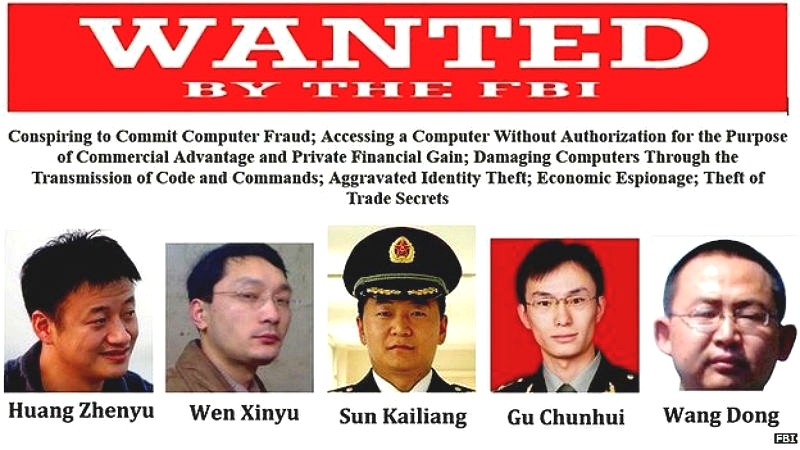
Multiple hacking groups in China previously thought to be individual actors are actually part of a larger, long-running, state-sponsored umbrella group, according to threat research group 401TRG at Denver-based security company ProtectWise.
The larger group, which 401TRG dubbed the Winnti umbrella, is an "advanced and potent threat" with a primary long-term mission that is politically focused, the researchers warn in a report released last week. 
Winnti refers to a "custom backdoor used by groups under the umbrella," 401TRG said in its report.
Hacking activities are not uncharted waters for China. 
According to a report earlier this year from security company Recorded Future, the Chinese government lied about belatedly informing the Chinese public of security flaws in order to hide exploits it was using in attacks.
The state-sponsored campaigns stretch back to 2009, with some reports of potential activity as far back as 2007, 401TRG said. 
These include some highly visible operations uncovered by Kaspersky Lab in 2013 and Trend Micro in 2017, as well as attacks targeting journalists reported by the Citizen Lab.
People working for the umbrella group typically begin by phishing users who may provide a stepping stone to a target network, according to the report. 
Data is then harvested using malware, though "campaign themes have matured" this year with "code signing certificates and software manipulation" becoming more popular.
"Gaming studios and high tech businesses" in China, Japan, South Korea and US have been the group's initial targets
While Winnti umbrella attackers usually use their own command-and-control servers to mask their actual location, 401TRG said, they have occasionally made "sloppy" mistakes that provide clues to their Chinese origins. 
In these cases, they "mistakenly" accessed machines using IP addresses linked to a China Unicom network in the Xicheng District of Beijing.
The group continues to function, the report said.

mercredi 6 septembre 2017

Orwell 2017

China’s Internet Crackdown Is Another Step Toward Digital Totalitarian State
By IAN WILLIAMS

Bill Clinton once mocked attempts by China to limit free speech online.
“Good luck,” he said. 
“That’s sort of like trying to nail Jell-O to the wall.”
But 16 years later, Beijing is taking steps to isolate the Chinese internet from the outside world, while drastically stepping up digital surveillance of those within and cracking down on online anonymity.
Chinese authorities are targeting virtual private networks (VPNs) and other tools that are used to circumvent the so-called "Great Firewall," the country’s system of strict internet censorship. 
VPNs provide anonymity and access to banned or blocked websites, such as Facebook and Twitter, and until recently have been used widely in China.
And from Oct. 1, users posting comments on web platforms or other internet forums will have to use their real identities. 
Forbidden content includes damaging the nation’s honor, endangering national security, spreading rumors and disrupting social order. 
The list encompasses just about anything the authorities decide they don't like.
China’s cyber-regulator has banned any VPNs it has not approved, leading to shutdowns across the country. 
Apple has removed VPNs from its China app store, in a move that Amnesty International described as a “deplorable decision.”

'Distract the Public and Change the Subject'
Until now, the Great Firewall, though formidable, has been porous. 
That's partly because of VPNs, but also as a result of the ingenuity of internet users themselves, playing cat-and-mouse with the authorities. 
Previous attempts at real-name registration have not been widely enforced.
The firewall has operated by blocking specific websites and by the use of key word filters, preventing searches of sensitive words or phrases, like “democracy,” “Tiananmen” or “June 4,” the date of the 1989 massacre in and around Tiananmen Square. 
This automated element is complemented by an estimated 100,000 internet police who check content.

A Chinese man stands alone to block a line of tanks in Beijing's Tiananmen Square on June 5, 1989. He was calling for an end to bloodshed against pro-democracy demonstrators and was pulled away by bystanders before the military vehicles continued on their way.

The system has become increasingly sophisticated, employing up to 2 million additional loyalists to join and steer conversations and debates, according to China's state-sponsored media, where this is seen as more effective than simply blocking them. 
These loyalists have been dubbed the “50 Cent Army,” since each member is paid that sum each time they post in favor of the Communist Party.
The system was analyzed earlier this year by three American academics: Gary King of Harvard University, Jennifer Pan of Stanford University and Margaret Roberts of the University of California at San Diego.
They estimate the Chinese government “fabricates and posts about 448 million social media comments a year.” 
They say the operation is massive and secretive, the goal being to “distract the public and change the subject.”

Winnie the Pooh
Even before the VPN ban, Xi Jinping had been progressively tightening controls, re-enforcing the firewall as users have found ways of circumventing censorship through the use of symbols, images or acronyms to comment on events or mock their leaders. 
One of the most popular images for Xi, a picture of Winnie the Pooh, who appears to share the president’s physique, was recently outlawed by the censors.
China has built the world’s most extensive system of internet control, but while it has always been wary of VPNs, sporadically trying to block them, it had grudgingly tolerated their use until recently. This is largely because of their widespread adoption by business leaders and academia, who prize secure communications and access to unfiltered information from outside China.
The latest moves suggest those concerns are trumped by the Communist Party’s desire for greater control. 
Beijing has given assurances that “official” VPNs will be made available to businesses which need them, but that is likely to trigger further alarm bells, given widespread Chinese economic espionage and intellectual property theft.
ExpressVPN, one of the biggest providers, said the move “represents the most drastic measure the Chinese government has taken to block the use of VPNs to date, and we are troubled to see Apple aiding China’s censorship efforts.”
On Monday, the South China Morning Post reported that a 26-year-old had been jailed for 9 months for selling VPN software which allowed users to "visit foreign websites that could not be accessed by a mainland [China] IP address.”
The crackdown has been given legal basis by a new cybersecurity law, which was introduced in June. James Zimmerman, the chairman of the American Chamber of Commerce in China, described it as “a step back for innovation in China.”

Images Blocked in Mid-Transit

Along with the crackdown on VPNs, researchers say there is a more concerted re-tooling of the Great Firewall. 
Citizen Lab, a University of Toronto-based group studying internet censorship, has found evidence of images of Nobel Peace Prize winner Liu Xiaobo blocked in mid-transit during chats on WeChat, a popular Chinese platform. 
This followed the death of the human rights activist from cancer while in police custody.
Citizen Lab's report describes this as “the first time we see image filtering in one-on-one chats, in addition to image filtering in group chats and WeChat moments."
Lotus Ruan, one of the Citizen Lab researchers, speculates that the latest crackdowns might be related to the forthcoming Communist Party Congress, now confirmed to begin on Oct. 18. 
The key five-yearly event will confirm the new leadership line-up and set policy direction.
“Censorship on Chinese internet is increased around political or sensitive events,” she said, but added that it could equally be a long-term trend for what she describes as the Chinese “intranet” — a system increasingly closed and separated from the rest of the world’s internet.
That’s echoed by the Electronic Frontier Foundation, a privacy and free-speech advocacy group, which believes the best indication of where the crackdown is leading will come later this year, after the Congress. 
“If VPNs remain absent, it may signal an even darker turn for Chinese internet censorship,” according to an EFF report.
There is other evidence that the latest crackdowns are more than just the ebb and flow of censorship, and part of a concerted effort by the Communist Party to assert what Xi calls “internet sovereignty.”
Cambridge University Press (CUP) recently blocked online access in China to 300 articles in its leading journal on the country, which were deemed by Beijing to be politically sensitive. 
It re-instated them after heavy criticism for colluding with Chinese censorship.
The South China Morning Post last month attended the Beijing Book Fair and reported that CUP isn’t the only Western publisher practicing self-censorship. 
It quoted several others saying they routinely keep sensitive topics out of publications available in China.
Publishers, as well as tech firms such as Apple, see complying with Chinese censorship as the price to be paid for access to what they hope will be a lucrative market.
Efforts are also underway in China to develop a “social credit system,” the idea being to encourage acceptable online behavior by harvesting and analyzing digital behavior. 
The developers say it will help stamp out fraud and provide a measure of individual credit-worthiness. 
But the government is also taking a strong interest, seeing its potential for social management, evaluating loyalty by analyzing the way an individual uses social media, what they post and share, and the sites they visit.
The implications of this sort of big data analytics are also raising alarm bells in the West, but the difference is that in China there is an almost total lack of internet privacy. 
Users have been described as “running naked” online, with their data fully exposed and unprotected.
China's measures to overcome obstacles that Clinton highlighted in his Jell-O comment have been motivated to a large extent by fear of an Arab Spring-style uprising — a revolution using social media to organize and coordinate protests and spread unfiltered information.
While it could well be that the latest levels of censorship ebbs after the forthcoming Communist Party Congress, tools are being lined up to reinforce and bolster the Great Firewall, cementing over the holes, and building behind it a separate intranet that the Economist magazine dubbed “The Digital Totalitarian State.”

mercredi 23 août 2017

Rogue Nation

Blunt instrument? What a list of banned articles says about Chinese censors
By John Ruwitch

People walk past the Cambridge University Press (CUP) stall at the Beijing International Book Fair in Beijing, China, August 23, 2017. 

SHANGHAI -- An old review of an academic monograph on agrarian revolutionaries in 1930s China is hardly a political third rail in Beijing today, even by the increasingly sensitive standards of the ruling Communist Party.
That such a piece appeared on a list of some 300 scholarly works that Cambridge University Press (CUP) said last week the Chinese government had asked it to block from its website offers clues about the inner workings of China's vast and secretive censorship apparatus, say experts.
Xi Jinping has stepped up censorship and tightened controls on the internet and various aspects of civil society, as well as reasserting Communist Party authority over academia and other institutions, since coming to power in 2012.
Far from being a well-oiled machine, though, China's censorship regime is fragmented and often undermined by gaps, workarounds, and perhaps even hasty officials, say academics specializing in Chinese politics.
"Crude is the word," said Jonathan Sullivan, an associate professor at the University of Nottingham in Britain. 
"The blunt way in which articles were chosen for censoring ... suggest to me that there was not a lot of thought put into it."
CUP, the publishing arm of Britain's elite Cambridge University, on Monday reversed its decision to comply with the request to censor the articles published in the journal China Quarterly following an outcry over academic freedom.
China's response remains to be seen. 
The education ministry, foreign ministry, cyberspace administration and state publishing authority all declined to comment.
The list of articles the authorities wanted blocked covered topics that are considered sensitive by the government, including the 1989 Tiananmen Square democracy protests, the 1966-76 Cultural Revolution, Tibet, Taiwan and the violence-prone far-western region of Xinjiang.
But it was far from thorough or comprehensive.
The article on 1930s agrarian revolutionaries may have got there by mistake, say experts.
What appears to have condemned the scathing but otherwise innocuous 1991 review of Kamal Sheel's book about a Communist base area in China's southern heartland was the fact the place was named Xinjiang, and the word appeared in the book title.
The Chinese characters are different for Xinjiang, the village, and Xinjiang, the mostly-Muslim region more than 2,500 km (1,550 miles) to the northwest that is beset by ethnic tensions and occasional unrest. 
But in English they are indistinguishable.

KEYWORD SEARCHES

Xu Xibai, a doctoral candidate at the University of Oxford, tweeted a brief analysis of the list that noted that its creators appear to have hastily searched the China Quarterly database for taboo words in titles and abstracts.
"The censors probably used a few keyword searches to locate just enough articles to make a nice, long list to impress their superiors," Xu's post said. 
"They did not bother to read the articles or go through the content list manually."
An article defending Mao Zedong was on the censored list, for instance, while others more critical of the former paramount leader were not.

People talk at the Cambridge University Press (CUP) stall at the Beijing International Book Fair in Beijing, China, August 23, 2017. 

Some sensitive subjects seem to have eluded the officials' net.
The Communist Party tightly controls discourse on the 1958-61 Great Leap Forward, in which millions starved to death due to ill-conceived economic policies. 
Censors have banned books on the topic but it was apparently not on this list.
Nor were the brutal, Communist-led land reforms of the 1950s, or the Hundred Flowers Movement, an effort by Mao to lure critics out of the woodwork by feigning openness, only to punish them.
The party's efforts to censor news and information have sometimes backfired or left outsiders perplexed.
In 2009, software designed to check pornographic and violent images on PCs blocked images of a movie poster for cartoon cat Garfield, dishes of flesh-color cooked pork and on one search engine a close-up of film star Johnny Depp's face.
Citizen Lab, a group of researchers based at the University of Toronto, compiled a list of words banned as of last year on popular live streaming sites in China. 
Among them: "Moulin Rouge", "braised rabbit", "helicopter" and "zen".
The request to block the articles was passed to Cambridge University Press by its import agent, but without knowing where it originated it is hard to draw firm conclusions, said Sebastian Veg, a China scholar at the School of Advanced Studies in Social Sciences in Paris.
"The censorship system is of course centrally directed, but not uniform," Veg said.
Lee Siu-yau, assistant professor of Greater China studies at the Education University of Hong Kong, suspects the request was a trial balloon.
"They usually start with something small-scale and gradually expand and make their requirements more difficult," he said.
"This might be one of the first steps that the Chinese government would take to see if it could actually influence international academic publishers."

lundi 17 juillet 2017

Rogue Nation

Liu Xiaobo’s Death Pushes China’s Censors Into Overdrive
By AMY QIN

A vigil for the Chinese dissident Liu Xiaobo in Hong Kong on Saturday. China’s censors blocked images of Mr. Liu and of people commemorating him. 

BEIJING — It came as little surprise when, after the death of the dissident Liu Xiaobo last week, China’s vast army of censors kicked into overdrive as they scrubbed away the outpouring of grief on social media that followed.
The accounts of censorship have been mostly anecdotal. 
But systematic research from the Citizen Lab at the University of Toronto’s Munk School of Global Affairs shows that there was a “significant shift” in censorship techniques in the days after Mr. Liu’s death, particularly on WeChat, the popular messaging app from Tencent.
On WeChat, which has more than 768 million daily active users, the number of keyword combinations that were blocked greatly increased, according to the report that the Citizen Lab published on Sunday. 
Additions to the blacklist included general references to his death like “Xiaobo + died” in Chinese and in English, and even just his name “Liu Xiaobo,” effectively censoring any messages that mentioned him.
The Citizen Lab said it was also the first time that images were automatically filtered in private one-on-one chats on WeChat. 
Blocked images included photographs of Liu Xiaobo and of people commemorating him.
One of the distinguishing features of WeChat is that it does not notify users when their messages are blocked. 
The service also makes a distinction between accounts registered to phone numbers from mainland China and phone numbers from elsewhere.
In one experiment, researchers at the Citizen Lab found that a photo of Liu Xiaobo posted to an international user’s WeChat social media feed was visible to other users abroad but was hidden from users with Chinese accounts.
The heightened — yet uneven — censorship in recent days has elicited frustration and confusion among Mr. Liu’s supporters.
On the day after Mr. Liu’s death, one user posted on his WeChat feed: “‘Did you see what I just sent?’ ‘No, I can’t see it.’ For the last two days, this has been the constant question and answer among friends.”
The aggressive attempt at censorship is just the latest indication of the strong grip that the Chinese government maintains on local internet companies. 
In addition to automatically filtering certain keywords and images, internet companies like Baidu, Sina and Tencent also employ human censors who retroactively comb through posts and delete what they deem as sensitive content, often based on government directives.
Failure to block such content can result in fines for companies or worse, revocation of their operational licenses. 
Censors have been on especially high alert this year in light of the Communist Party’s 19th National Party Congress in the fall.
Over the years, the constant cat-and-mouse game between Chinese censors and internet users has led to the rise of a robust internet culture in which censorship is normalized and satire and veiled references are par for the course.
So even as censors stepped up scrutiny in recent days, many savvy Chinese internet users found ways to evade those efforts. 
In tributes to Mr. Liu, users referred to him as “Brother Liu” or even “XXX.” 
They posted passages from his poems and abstract illustrations of Mr. Liu and his wife, Liu Xia.
Over the weekend, however, the tributes gave way to scathing critiques as friends and supporters of Mr. Liu reacted angrily to the news of Mr. Liu’s cremation and sea burial under strict government oversight.
One user took to his WeChat feed on Sunday to express disgust with the use of Mr. Liu’s corpse in what some called a blatant propaganda exercise. 
“Swift cremation, swift sea burial,” he wrote. 
“Scared of the living, scared of the dead, and even more scared of the dead who are immortal.”

vendredi 14 avril 2017

Rogue Nation, Rogue App

China’s WeChat Is a Censorship Juggernaut
By Scott Cendrowski

Earlier this month the Chinese social media giant Tencent passed Wells Fargo as the world's tenth most valuable publicly traded company.
It would never have grown to that size were it not for the company's close relationship with China's government. 
The government requires a high level of cooperation from technology companies, which is one reason Google decided to leave the market seven years ago and why overseas social networks like Facebook, Twitter, Pinterest, Line, Telegram, among others, remain blocked in China.
When it comes to censoring topics the government wants, Tencent's cooperation has gone to impressive new lengths, according to a new report released yesterday by The Citizen Lab at the University of Toronto.
The report details the ways Tencent censors keywords without users ever knowing; deletes images appearing on WeChat news feeds, which was previously undiscovered; and doesn't subject overseas users to the same onerous censorship as Chinese users.
Similar censorship exists on Sina Weibo, China's Twitter.
But WeChat, with 889 million monthly average users and a Facebook-like closed infrastructure that creates a sense of privacy, is becoming the more important platform for China's one-party government to monitor and shape.
Researchers tested censorship using terms related to the imprisonment of 250 human rights lawyers and workers starting in the summer of 2015. 
The episode earned the moniker "709 crackdown" for the first disappearances of two lawyers on July 9th, 2015. 
The topic has since gained attention inside and outside the country as the biggest crackdown on human rights workers since just after the Tiananmen Square massacre. 
In January, one lawyer's description of his treatment was made public. 
“I’m going to torture you until you go insane,” human rights lawyer Xie Yang said one of his interrogators told him.
Citizen Lab found 41 keyword combinations related to the "709 crackdown" were censored on WeChat without users knowing. 
If they sent messages to friends containing the phrases, or posted them to their Moments "news feed," the messages appeared on their end but couldn't been seen by anyone else.
Previous research has found WeChat censors terms, such as those relating to the Hong Kong protests in 2014. 
A Tencent spokeswoman didn't respond to a request for comment Friday.
New in the latest report was that images are now being censored. 
In the past, images were a way to evade censors. 
Citizen Lab found infographics and profiles of the lawyers caught up in the 709 crackdown were censored in individual messages and Moments pages. 
"Our discovery of related blocked images on WeChat confirms the existence of image filtering and reveals the high level and extent of censorship enforced on this popular chat app," the researchers wrote.
More keywords and images were censored if they were sent to group chats containing up to 500 members than one-on-one exchanges, researchers said. 
But the same keywords were not censored on accounts registered to a phone number outside China.
The research shows how easily China's censors can co-opt the social network, as well as the consequences. 
"While there is tremendous effort and numerous global petitions to help Chinese rights defenders, many of these messages fail to reach domestic audiences in China due to information control practices, including search filtering and keyword and image censorship on chat apps," researchers wrote.

jeudi 13 avril 2017

Rogue Nation, Rogue App

University of Toronto researchers uncover extent of WeChat and China’s censorship on 709 crackdown
By NATHAN VANDERKLIPPE -- BEIJING

Even as it was arresting, torturing and imprisoning human-rights lawyers, the Chinese government blocked discussion of its actions on local social media, including images distributed by those drawing attention to what had taken place.
Researchers at the University of Toronto’s Citizen Lab discovered that WeChat, China’s digital-communication lifeblood, has censored 42 combinations of terms related to the “709 crackdown,” so called because it began on July 9, 2015.
The research underscores how Chinese authorities assert broad control over information inside the country, eliminating unfavourable information.
Nearly 250 lawyers and activists have been questioned, detained and arrested since 2015. 
Several have provided what foreign governments, including Canada, have called credible details of torture. 
Twelve of their names are included among the blocked terms.
The digital redactions illuminate how Chinese censorship is “reactive to news events. And compared with other events or categories of censored keywords, the 709 crackdown is one of those censored on a higher frequency,” said Lotus Ruan, a research fellow at Citizen Lab.
Inside China, information on the lawyers “has been sanitized or harmonized, so a lot of information is officially-approved information.”
And in what the researchers called a new revelation, China’s sophisticated censorship tools have expanded to include the ability to peer at digital photographs and delete those deemed sensitive. 
The blocking even extends to altered images.
“This finding is the first documentation of image filtering on the app,” the researchers wrote in a report titled We (can’t) Chat. 
It “reveals the high level and extent of censorship enforced on this popular chat app.”
Those images included pictures of people holding signs with the slogan “Oppose Torture. Pay attention to Xie Yang” – one of the arrested lawyers who provided chilling details of his interrogation. 
Mr. Xie told his lawyers he was punched, kicked and kneed by interrogators who left him temporarily crippled and at one point threatened: “I’m going to torment you until you go insane.”
Chinese suppression of speech goes beyond eliminating those details from its domestic Internet. 
On March 28, lawyer Chen Jiangang, who has represented Mr. Xie, also received a message that his WeChat account had been permanently cancelled.
Mr. Chen so commonly experiences chat censorship that he said “it’s no longer strange at all.” 
But for others, it can cause fear, he said, by driving home the feeling that they are being “monitored or taken noticed of by the security police.”
That’s not idle speculation; new regulations issued last year specify that prosecutors and police have the right to collect social-media comments as “electronic data.”
Often, however, censorship on platforms such as WeChat is done invisibly, meaning a sender doesn’t know that a blocked message has not reached its recipient. 
Message blocking is primarily directed at users with accounts registered to mainland China phone numbers. 
Messages and images are more commonly expunged in group chats than individual conversations.
Images are also censored from WeChat Moments, which functions somewhat similar to a Facebook news feed. 
“Higher attention is being paid to group chat and Moments,” Ms. Ruan said.
Searches related to the crackdown on lawyers were censored, too, on Sina Weibo, a Twitter-like service, where 60 keyword combinations were blocked.

Stripped of other sources of information, users of the local Chinese Internet are left with only the government narrative.
On Baidu, the primary search engine in a country that blocks access to Google, the top result for “709 case” points to a July 7, 2016, editorial in the nationalist tabloid newspaper, Global Times, which argued that it was a greater violation of law for foreign countries to attack Chinese human rights, than for China to arrest those it deems subversive.
Chinese authorities say that the lawyers received fair legal treatment, while local propaganda films have called defenders of human rights “agents of Western powers.”
Local censorship of the lawyers crackdown extended to critical statements posted by Western countries decrying Chinese actions, which Web users were unable to repost.
The Citizen Lab researchers said their work “highlights the challenges faced by individuals, NGOs, and the international community in conducting advocacy work related to the ‘709 Crackdown,’ as well as many other politically sensitive cases in China.”

jeudi 1 décembre 2016

Biggest Enemy of the Internet

  • Tencent's top social messaging app WeChat censors users abroad
  • Chinese censorship garners support from top Chinese tech firms Alibaba Holdings Ltd and Tencent Holdings Ltd, which owns WeChat.
Reuters

A picture illustration shows a WeChat app icon in Beijing, December 5, 2013. 

Censorship on China's top social messaging app WeChat goes beyond the country's borders, according to a report released on Thursday, with messages containing sensitive terms that are sent from overseas to mainland-linked accounts being blocked.
China has stepped up efforts to remove non-sanctioned online content in the past year and increase surveillance measures, garnering support from top Chinese tech firms including Alibaba Holdings Ltd and Tencent Holdings Ltd, which owns WeChat.
"Tencent respects and complies to local laws and regulations in countries we operate in," a Tencent spokeswoman told Reuters, declining to comment on the censorship features directly.
Messages from overseas accounts containing terms deemed sensitive by the Chinese government, such as references to the banned Falun Gong spiritual movement, do not appear on the service after being sent, if sent to or from an account linked to a Chinese phone number, a report released by Toronto-based Citizen Lab showed on Thursday.
The issue particularly affected group chats including three or more users and continued to affect users who later switched to a foreign phone number, according to the researchers.
"(WeChat) features are based on account registration and censorship is another feature they can turn on or off depending on what kind of account you have," Masashi Crete-Nishihata, one of the researchers on the project, told Reuters.
"Mainland China WeChat users face censorship regardless of where they are in the world," he said.
China formalized strict real-name authentication regulations for tech companies in 2016, requiring users on social media and e-commerce platforms to link their real name to a phone number that can be tracked.
Authorities cite cyber terrorism risks and the preservation of social stability as reasons for the heightened surveillance.
WeChat has more than 800 million monthly active users who spend an average of 40 minutes a day using the app, which also includes payment, ride-hailing and gaming features.
In a test conducted by Reuters on Thursday, users based overseas who had registered with a foreign phone number were unable to send sensitive phrases to a group chat containing a China-registered user.

jeudi 10 novembre 2016

China’s vast Internet prison

In law and in practice, China is creating the world’s largest online thought prison. 
The Washington Post

A live visualization of the online phishing and fraudulent phone calls across China. 

CHINA’S INTERNET is a universe of contradictions. 
It has brought hundreds of millions of people online and has become a vast marketplace for digital commerce, yet it is also heavily policed by censors to snuff out any challenge to the ruling Communist Party. 
Under Xi Jinping, the censors are working overtime to keep 721 million Internet users under control.
The latest effort came Monday. China’s national parliament approved a cybersecurity law that can be used to restrict free speech and force foreign Internet companies to heed the demands of China’s security services. 
Censorship is not new in China; a huge phalanx of officials are devoted to it, harsh punishments are meted out, and the country is ringed by a content-blocking Great Firewall. 
But now censorship will be more fully enshrined in the legal code.
Article 12 of the new law prohibits use of the Internet for “inciting subversion of the national regime” or “the overthrow of the Socialist system.” 
Also banned is inciting separatism or ethnic hatred, “endangering national unity,” or “fabricating” or disseminating false information about the economy. 
These are all touchstones of Chinese authoritarianism, vague enough to be deployed in many circumstances to smother dissent. 
Article 37 of the new law requires “critical information infrastructure operators” to store users’ data, including that of foreign companies, on Chinese territory, making it easier for the security services to snoop. 
Article 24 requires Internet providers to demand the real identity of those they provide services to — making it easier for security services to track down those who would like to speak their mind. 
Many foreign businesses are also alarmed that the new law gives the Chinese authorities access to their technology and data.Offering a glimpse of how censorship actually works in China, Ronald Deibert, director of the Citizen Lab at the University of Toronto’s Munk School of Global Affairs, released a report recently on digital streaming services. 
Similar to Periscope (which is banned in China), these apps, such as YY, 9158 and Sina Show, have become a craze. 
Mr. Deibert’s researchers downloaded these three, and between February 2015 and October 2016 extracted 19,464 keywords that trigger censorship on chats associated with each application. 
Rather than monolithic control, they found censorship is decentralized and somewhat chaotic; the platforms are often expected to adhere to a kind of “self-discipline” rather than direct orders. 
Mr. Deibert’s group discovered that the most popular app, YY, with 844 million registered users, automatically sends a report back when a user types a banned keyword; the report includes not only the user’s name but also who the message was sent to and the message itself.
In law and in practice, China is creating the world’s largest online thought prison. 
It turns the idea of the Internet as a force for freedom on its head, and as China goes, so go other tyrants. 
From Vietnam to Saudi Arabia, from Russia to Turkey, the age of Internet repression has blossomed.