Affichage des articles dont le libellé est Ma Jian. Afficher tous les articles

vendredi 26 avril 2019

'Truth is Under Threat.'

Ten Questions for Chinese Dissident Author Ma Jian
BY AMY GUNIA

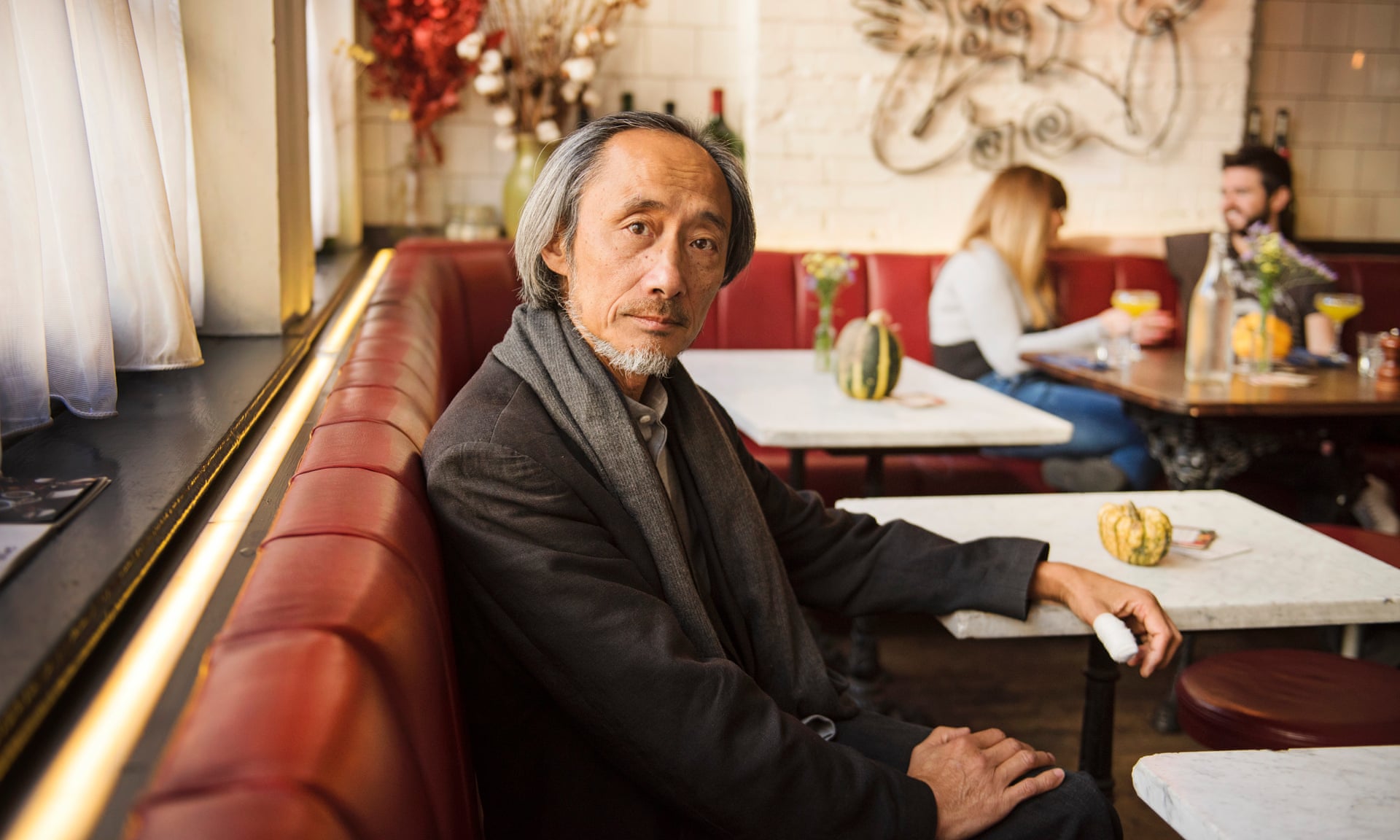
Ma Jian, writer, known as the Chinese Solzhenitsyn at the Oxford Literary Festival 2019 in Oxford, England on April 5, 2019.

Ma Jian has a flair for the provocative. 
In 2012, the London Book Fair partnered with the all-powerful Chinese state agency responsible for regulating publications and the Internet—the General Administration for Press and Publication. 
He then attempted to hand a copy of a book he had written, its cover also marked with a red X, to the head of the agency, who was attending the fair. 
The book was about one of China’s most taboo topics—the 1989 massacre in Tiananmen Square.
Ma had reason to be angry: his books have been banned in his homeland for the last 30 years, and he has not been allowed to return to China for the last few years as the country’s dictator, Xi Jinping, has initiated a widespread crackdown on dissent.
The author was born in the Chinese city of Qingdao in 1953. 
He started his career on a more traditional path, at a petrochemical plant in Beijing, before deciding to become a photojournalist. 
In the 1980s, he began hanging out in the Chinese capital’s underground literary and art scene and took up painting again—a childhood love that was interrupted by the Cultural Revolution. 
He also started writing. 
His first book, 1988’s Stick Out Your Tongue, inspired by his travels in Tibet, caught the attention of the country’s censors, and all copies were destroyed. 
Since then, none of his books have been allowed to be published in China.
His latest work is, without a doubt, a political statement. 
China Dream—a phrase borrowed directly from Xi who commonly uses it to describe a “great rejuvenation of the Chinese nation”—is a scathing, dystopian novel that follows a fictional Chinese provincial leader as he works to replace people’s dreams with government propaganda.
But Ma says that he refuses to stand down. 
“I have never allowed myself to not write something for fear of consequences; that would be the death of literature in my mind,” Ma told TIME.
China Dream has already been released in the U.K., where he now lives with his wife and children, and it will be available in the U.S. on May 7.
Here’s what the writer-in-exile had to say about the new title and what is happening in China today.

Tell us about your new book.
China Dream was inspired by the idea that China was shrouded in a veil of lies. 
It was a strong desire to expose these lies and shine a light on them that drove me to write the book. 
I wanted to reveal the darkness that lies at the core of Xi Jinping’s sunny utopia.

Did you draw on inspiration from your own life for the book?
[The book’s main character] Ma Daode’s task is not only to suppress memories of the past but also to control speech in the present. 
My whole life has been affected by the [Chinese government’s] desire to clampdown on personal liberties and freedom of speech. 
When I was living in China in the 1980s I was continually being detained, arrested for things I said, or paintings I created. 
This has continued today where my books are still banned and I am forced to live in exile.

“China Dream” is a phrase commonly used by Xi Jinping and in Chinese propaganda. Why did you chose to call the book that?
When Xi Jinping rose to power and announced his China Dream of national resurgence, and made this the bedrock of his rule, I at once saw it as a crime. 
It is criminal for a leader to impose a dream on a nation. 
Dreams are an expression of the most unfettered realm of the human spirit.

What is your dream for China?
My dream for China is that it will become a country that respects freedom of speech, where independent thought prospers. 
This, of course, would be a time when a totalitarian regime no longer exists, where people are free to determine their own life paths and to dream their own dreams. 
It will be a country that gives dignity to every individual life, where people feel safe in their own homes, and feel that they can express their thoughts freely that go against official ideology without fear of arrest or suppression.

How do you stay attuned to what is going in China while living outside of it?
In fact, I feel more attuned to what is going on in China living in London, more connected than I did in China when my movements were monitored, when I was forbidden to meet with sensitive people, where information was blocked by the firewall. 
Here I can know real-time, through the internet, what is happening. 
Information that is restricted in China, I have full access to.

What do you want China’s youth, who have not been able to learn about what happened in Tiananmen, to know about the massacre?
My hope is that the young people of today will have an opportunity to re-connect with their own history that has been denied them. 
They need to learn the lessons of those crucial years, because the situation [in China] today is more dangerous than it has been in many decades.

Is the Chinese government succeeding in its efforts to enforce censorship?
At the moment, it looks like their system of censorship is succeeding in maintaining the Communist Party’s barbaric rule. 
The party has huge amounts of money, it has an army of censors.

What do you hope readers will learn from reading your book?
We are now in a state of turmoil, in a state of flux, where there is a loss of faith in all leaders, where truth is under threat. 
I hope that this book can show that is vital that individuals never give up asking questions. 
If you stop reflecting on the past, if you don’t question what is fed to you, if you don’t question the motives of the people who are leading you, we will all share a common fate, and that is that we will all be controlled by people that are more stupid and evil and than us.

Did any recent events in particular prompt you to start writing the book?
I only have to read the news from China; every day there is something that will fill me with rage. 
But perhaps one of the sparks for writing of this particular book was attending the London Book Fair where China was the guest of honor.
Here in the country where I had sought refuge, where I thought that the freedom of expression was one of the founding values, I saw how the red carpet was rolled out for the Chinese censors-in-chief.

A talk you were scheduled to give in Hong Kong last year was suddenly cancelled (before being re-instated). The motivation was political. Will China Dream be published in Hong Kong?

Until now, all of my books have been published in Hong Kong in the Chinese language, but the spread of the Communist party’s control beyond its borders means that no Hong Kong publisher would dare to publish this book.
Originally there was one publisher who was willing to publish it in Hong Kong, we got quite far in the process—it had been edited and the cover had been approved. 
Suddenly they said they were not going to go ahead with it, and they did not give me a clear reason. 
I can only assume that they received a message from above or they realized themselves that it could be too dangerous and they could face possible arrest as other publishers have in Hong Kong.

jeudi 22 novembre 2018

China Dream by Ma Jian – stinging satire from a novelist in exile

Buried dreams and past betrayals erupt into the present moment, in a feverish vision of contemporary Chinese society
By Madeleine Thien
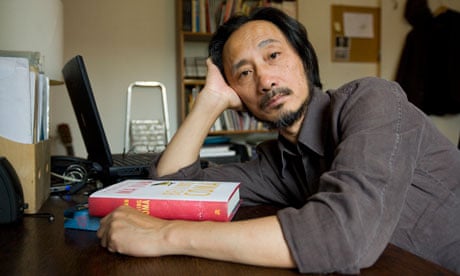
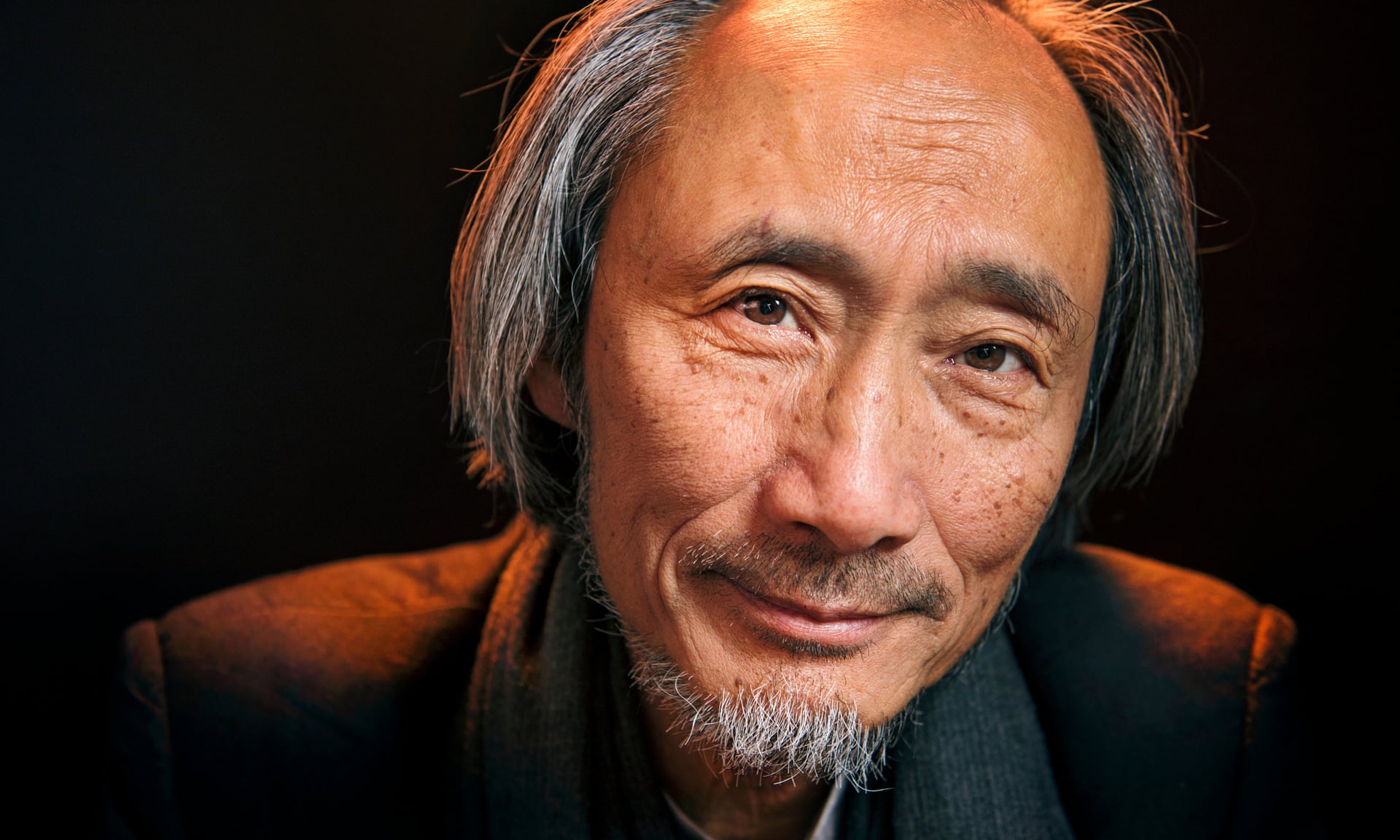
Bleakly funny … Ma Jian. 
On the cover of Ma Jian’s new novel, an ancient tree is exploding in all directions, its branches seeming to lash out at the heavens. 
Designed by another exile from China, artist Ai Weiwei, the image is a haunting doorway into China Dream, a biting and humane novel of stunning concision in which buried dreams and past betrayals erupt into the present moment.
In 2012, Xi Jinping used the phrase the Chinese Dream (zhōngguó mèng) to describe “the great rejuvenation” of the nation. 
A national solidarity movement, the Chinese Dream attempts to fuse cultural pride and individual self-realisation with the country’s economic growth and rising influence. 
The slogan is everywhere, on billboards, in speeches and advertisements, and mixes patriotism and self-help with the “twin goals of reclaiming national pride and achieving personal wellbeing”.
Ma was born in 1953, the same year as Xi Jinping. 
Both men witnessed the shaming, exile and loss of family members during Mao Zedong’s political campaigns. 
In 1983, Ma himself was arrested for the crime of spiritual pollution; he chronicled his exile to the most remote regions of the country in Red Dust, an unforgettable memoir of post-Mao China. 
Today, the lives of Ma and Xi remain strikingly at odds. 
In 2018, Xi ended term limits on the presidency, thus opening the door to his indefinite rule. 
Ma, barred from even entering China, has mischievously stolen Xi’s signature slogan.
China Dream’s antihero, Ma Daode, is vice-chair of the local writers’ association and director of the newly created China Dream Bureau, dedicated to ensuring that the Chinese Dream enters “the brain of every resident of Ziyang City”. 
Ma Daode is clever and influential: he has stashed mooncakes filled with little gold bars in his attic, and is juggling so many lovers that he keeps a “Fragrant Beauties Register”; one lover calls him Mr Dirty Dream. 
But his hard-won success is being undermined by terrifying slivers of memory. 
He places his hopes in an imagined “China Dream Device” which, if implanted, would make all dreams – first and foremost his own – comply with Xi’s vision and allow him to wake up inside “a life of unbridled joy”.
Bleakly funny, incisive, stinging and – in its most destabilising passages – gut-wrenching, China Dream, brilliantly translated by Flora Drew, is set at a time when reality and dystopia have begun to bleed into one another. 
In the kaleidoscope of Ma Daode’s thoughts, different times converge; dream locations are overlaid on the sites of nightmares. 
A wild grove outside Ziyang City is, in the present, a demolition site making ready for the very expensive Yaobang Industrial Park; in the 1990s, a secret cemetery; in 1968, the mass grave for hundreds of Red Guards killed during internecine warfare. 
It is also the deserted place where Ma Daode buried his parents, who killed themselves in 1966, during the first year of the Cultural Revolution, after being mercilessly beaten by Red Guards. 
In the novel, all times come to us in the present tense. 
Ai Weiwei’s ancient tree on the cover is, it appears, detonating its branches into the now.
Even an orgy can’t help the beleaguered Ma Daode stay in the moment. 
In a comic passage that grows increasingly surreal and moving, he entertains three women in a room decorated to resemble Chairman Mao’s private railway car. 
As Cultural Revolution songs, popular once more, ring out from the karaoke machine, Ma Daode recites Song dynasty poetry. 
On a TV screen, the 2013 sentencing of Bo Xilai for corruption and abuse of power plays out on the evening news. 
One of the women laughs when Ma Daode complains that her Red Guard costume is inauthentic, replying: “Our boss told us we are all the heirs of Communism.” 
His body, heart and mind are divided into so many eras and conflicting desires, it’s no wonder he believes that the cure is China Dream Soup, a broth of eternal forgetting he will obtain from a qigong healer and market to the world. 
“But what I want to forget the most,” he says, “is my shameful betrayal of my father. When I see him again, I will fall to my knees and beg for his forgiveness.” 
But how can Ma Daode erase his remorse at responsibility for his parents’ deaths without also consigning every memory of them to oblivion?

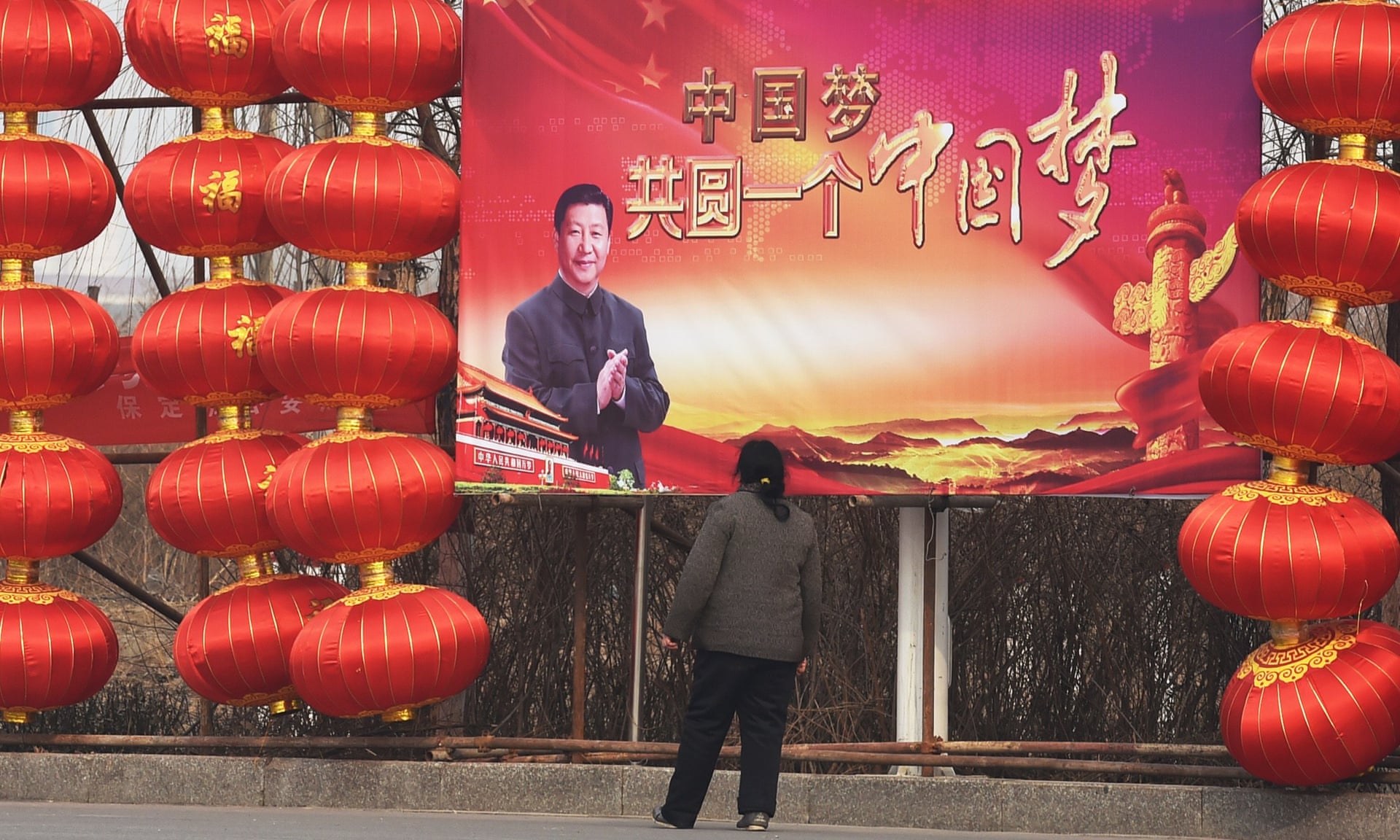
Xi Jinping promotes ‘the dream’ on a billboard in China’s northern Hebei province. 

Over the 40 years of his career, Ma has ingeniously chronicled a China struggling both to change and to remember. 
Beijing Coma, his unparalleled novel of the 1989 Tiananmen demonstrations, is a classic work, as is The Dark Road, the macabre, spellbinding story of a mother’s determined journey to outwit the one-child policy. 
By rights, Ma should be recognised as one of China’s greatest living novelists, yet his name cannot be mentioned in the national press. 
Beijing’s censorship of his books – banned for the last 30 years – has been effective. 
Recently, a well read and accomplished Shanghai editor told me, after I mentioned Ma, that she had never heard of him. 
“What kind of books does he write?” she asked, perplexed. 
“Does he write in Chinese?”
In the last chapters of China Dream, Ma Daode, remembering his own life and the lives of his parents, tries to renounce his need to mourn. 
He could be speaking to us, or to China’s contemporary writers and historians, or to the future, when he says: “Those who have tears, lend them to those who have none.” 
Last year, an essay by Chinese blogger Zhang Wumao, which described Beijing as a city where people “cannot move, cannot breathe”, and where migrant workers “strive for over a decade to buy an apartment the size of a bird cage”, went viral. 
It was swiftly censored and erased from the internet, and Chinese state media reprimanded Zhang, insisting that Beijingers “are all the more real because of their dreams”. 
The fictional Ma Daode, too, wishes to be remade by fantasies. 
He goes to great lengths to step out of history, to be reborn and absolved by a beautiful dream.
Ma has a marksman’s eye for the contradictions of his country and his generation, and the responsibilities and buried dreams they carry. 
His perceptiveness, combined with a genius for capturing people who come from all classes, occupations, backgrounds and beliefs; for identifying the fallibility, comedy and despair of living in absurd times, has allowed him to compassionately detail China’s complex inner lives. 
Censoring his novels and banning his name have been Beijing’s cynical response to Ma’s artistry, and to the human lives that the novelist cannot forget, even as the Chinese Dream envelops them.

• China Dream by Ma Jian, translated by Flora Drew (Chatto, £12.99). 

jeudi 8 novembre 2018

Ma Jian: ‘Freedom can’t be taken for granted. We have to remain constantly vigilant’

The exiled Chinese writer on the murder of dissidents, attacks on free speech and his new novel exposing the brutality of his homeland
Interview by Claire Armitstead
‘Everyone thought economic expansion meant China would become increa­singly like the west, but that has been a catastrophic miscalculation’ … the novelist Ma Jian. 

In an era of growing political impunity, when dissidents are murdered on foreign soil and even the head of Interpol is not immune from being “disappeared”, Ma Jian seems almost recklessly brave. Could there be a more provocative title than that given by the exiled novelist to his latest satirical onslaught on the country of his birth? 
For, with China Dream, he co-opts the rhetoric of the Chinese dictator Xi Jinping to tell the story of a politician who is driven mad by memories of his own corruption.
Xi first used the phrase shortly after becoming general secretary of the Communist party in 2012, and Ma has responded “in a rush of rage” with a short, ferocious novel about the way turbo-capitalism and authoritarianism have combined to inform a Chinese dream that excludes all but a chosen few. 
“I wanted to give myself the challenge of encapsulating everything in as few words as possible,” he says, wryly adding that it will be interesting to see how the Chinese authorities react to the novel, given that they’ve outlawed so many “key words” online – “even the name Winnie-the-Pooh is banned because people joked that Xi Jinping resembled him”.
A momentary silence falls as we consider the surreal possibility of the “paramount leader” being forced to ban his own slogan. 
But the reality, Ma acknowledges, is that censorship is now so all-encompassing that the novel will very probably not be allowed to exist in Chinese, even in Hong Kong, which has historically provided a toehold for work by dissident authors banned on the mainland.


‘Today’s China is more extreme than anything George Orwell could have imagined’ … Ma Jian. 

In a tranquil London cafe, close to the home he shares with his translator and partner Flora Drew and their four children, the risks this slight, 65-year-old writer is taking are hard to comprehend. 
Despite living in the UK for 17 years, he does not speak English. 
It’s not as if he hasn’t tried, says Drew, who translates our interview, but he has a stubborn devotion to his mother tongue and remains more engaged with goings-on in China than those in his adopted country. 
“Living in the west allows me to see through the fog of lies that shrouds my homeland,” he writes in the foreword to China Dream. 
During the interview, he invokes Dante’s Divine Comedy: “It’s only through being expelled that the poet gets to see heaven and hell and purgatory.”
It was a perspective forced on him from his earliest days, as one of five children born into a well-to-do family in the provincial city of Qingdao in 1953. 
A childhood in which he had already shown promise as an artist came to an abrupt end with the start of the Cultural Revolution. 
He was 13 years old. 
His art teacher was persecuted as a “rightist” and his grandfather, a landlord and tea connoisseur, was executed. 
At 15, he joined an arts propaganda troupe, beginning an adult life that would take him through various industrial assignments to a job as a photojournalist. 
He married a dancer and had the regulation single child. 
Then a photography prize brought him to the attention of the authorities and he was transferred to work for the foreign propaganda unit of the Federation of Trade Unions in Beijing.

‘When a regime is trying to hurt a person’s physical being, at the heart of it is an attempt to crush their soul’ … Ma Jian. 

There, living in a “one‑bed shack”, he connected with a buzzy young community of writers and artists. 
Officially, he worked as a journalist. 
Unofficially, he made and occasionally sold paintings. 
“Mostly they were stolen, but a man from the US embassy bought one for $40,” he recalls. 
“My hair was encrusted with oil paint and the walls were papered with my paintings.”
In 1983, just as he turned 30, he hit the crisis that would upend his life. 
Divorced from his wife, who forbade him to make contact with his daughter, he was arrested for “spiritual pollution”. 
Though Ma was released, his shack was ransacked and his canvases ripped up. 
“I never painted again,” he says. 
“I saw what a fragile medium it was, and how vulnerable to abuse and persecution, and I asked myself what was I going to do for the rest of my life?”
In his attempt to answer this question he converted to Buddhism and set off on a three-year journey across China on foot. 
At first, he was afraid even to record what he witnessed in his notebook, in case it fell into the wrong hands, but gradually, he says, “I saw that through literature I could paint my own reality. I could record history.”
He arrived in the Tibetan capital of Lhasa to find a people whose traditions had been corrupted by poverty and political oppression even as they celebrated the 20th anniversary of their “liberation” to the status of autonomous region. 
In 1987, Ma poured his impressions into a collection of short stories, belatedly published in English as Stick Out Your Tongue. 
It was immediately banned by the Chinese censors, sending him into an exile from which he has never permanently returned, though until six years ago he was allowed to visit China, and continues to keep in close contact with friends and family.
He turns up for the interview with a dramatically bandaged thumb, the result of an accident while building a shed in his garden, the explanation of which leads on to one of his latest frustrations. 
He had written a letter to one of his brothers inviting him to come over to help, he says, “but during this time there was a huge demo of disgruntled veterans demanding higher benefits, so the whole town had been sealed off and surrounded by armed police. No information was able to get in or out, so the letter has probably been handed over to the authorities. What happened there shows how today’s China is more extreme than anything George Orwell could have imagined, because these events don’t even reach public consciousness: it’s as if they never happened.”
It is not only China that troubles Ma today. 
“The world is becoming increasingly unsafe,” he says. 
“Just look at what happened to Jamal Khashoggi: within the space of seven minutes we saw the triumph of barbarism over civilisation. But this is happening every day in China. Everyone thought we could ignore what happened in 1989 [the Tiananmen Square massacre] and that economic expansion meant it would become increasingly like the west, but that has been a catastrophic miscalculation. China might have draped itself in a coat of prosperity, but inside it’s become more brutal than ever, and it’s this venomous combination of extreme authoritarianism and extreme capitalism which has infected countries around the world.”
Erasure of memory is the abiding theme of Ma’s work, whether through the literal motif of an unconscious man in his epic 2008 novel Beijing Coma, set around Tiananmen Square, or through the allegorical pursuit of a recipe for “Old Lady Broth of Amnesia” to which the municipal leader Ma Daode devotes himself in China Dream, tormented by a past in which he drove his own parents to suicide by denouncing them. 
“The process of dragging back memories that are being constantly erased, especially from my position of exile, makes even more important to me the primacy of memory,” Ma says, “and how it not only involves a nation’s sense of history but a person’s sense of self.”
His satire is always firmly located in violations of the human body. 
Stick Out Your Tongue told stories of ritual rape and multi-generational incest. 
In his 2013 novel, The Dark Road, aborted late-term foetuses are carried around in plastic bags or boiled in Cantonese restaurants to make potency soups for men. 
The fourth of China Dream’s seven episodes takes Ma Daode to a strip club, where VIPs have orgies in Mao’s private room with women who are identified only by numbers. 
The reason for this, he explains, is because “totalitarianism not only seeks to control the thought but also the body in which those thoughts are housed”.
“As a writer, when you are trying to describe your characters, there’s a visceral connection to their being. But in my exploration of the body I’m always trying to show that in these systems, when a regime is trying to hurt a person’s physical being, at the heart of it is an attempt to crush their soul. Sometimes, the body can survive but a lot of the time it becomes no more than a carcass.”
Red Dust, his semi-fictionalised 2001 account of his life-changing three-year journey, introduced another persistent theme, betrayal. 
It recounted how he was twice betrayed by an actor girlfriend, whom he, in turn, considered denouncing to the film studio that employed her, out of jealousy over her infidelity. 
None of his characters is without blame, but neither are they entirely evil. 
Even Ma Daode in China Dream attempts to warn protesters that they will be killed if they refuse to move out when bulldozers arrive to clear their homes for redevelopment.

Exiled author Ma Jian banned from visiting China

Ma relates his story quietly and urgently through Drew, keeping his own record of the conversation in spidery Chinese script. 
The couple met in 1997 when she was working on a TV documentary about the handover of Hong Kong to China and he was one of the few local people who agreed to speak. 
He invited her to a poetry reading and gave her all his books to read; she stayed on to finish them, and by the time she left they were together. 
He moved briefly to Germany after the handover before joining her in London. 
She has translated everything he has written since. 
Does she worry that his repeated attacks on China may put him in danger? 
“This is the first time I’ve felt concerned, because there’s a brazenness to the behaviour now and they can do it without any backlash at all,” she says.
But the couple have kept faith with the best of the country, sending their 15-year-old son to study martial arts at a Shaolin monastery and to spend time with his Chinese family. 
Ma plans to travel to the Hong Kong literary festival this month, to present his novel in English. 
“I refuse to be afraid,” he says. 
“The disregard for truth is infectious. It also explains the rise of Trump. We need to protect concepts of humanity, and freedom can’t be taken for granted. We have to remain constantly vigilant. The more you buckle under these pressures, the huger the monster becomes. One’s responsibility as a writer is to be fearless.”

Hong Kong arts centre cancels Chinese dissident author event

Exiled Chinese writer Ma Jian was due to promote his satiric novel China Dream

Ma Jian, who lives in London, writes dark satirical books about life in China.

A Hong Kong arts centre hosting the city’s high-profile literary festival has cancelled appearances by exiled Chinese writer Ma Jian, said the author, as Beijing tightens its grip on the semi-autonomous city.
It is the latest blow to freedom of speech in Hong Kong as concerns grow that liberties are under serious threat from an assertive China.
Ma, who now lives in London, writes dark and satirical works depicting life in China and his books are banned on the mainland.
He was due to promote his latest novel China Dream later this week, a title that plays on Chinese dictator Xi Jinping’s rhetoric of national rejuvenation and is described by publisher Penguin as “a biting satire of totalitarianism”.
The author announced on Twitter that his two speaking events had been cancelled by Tai Kwun arts centre, where the festival is held, not by festival organisers who he said were trying to find an alternative venue.
“Just been told that my two events at the Hong Kong International Literary Festival this week can no longer be held at Tai Kwun, where all the other events are taking place. An alternative venue will have to be found. No reason has been given to me yet,” he said in his tweet.
Hong Kong’s government says it wants to turn the city into an arts and culture hub, with Tai Kwun the result of a multimillion-dollar renovation of a colonial-era prison and police station, led by the government and the Hong Kong Jockey Club.
Tai Kwun and the Hong Kong International Literary Festival were unable to immediately comment.
Hong Kong has rights that are not enjoyed on the mainland, protected by an agreement made before the city was handed back to China by Britain in 1997, but there are fears they are being steadily eroded.
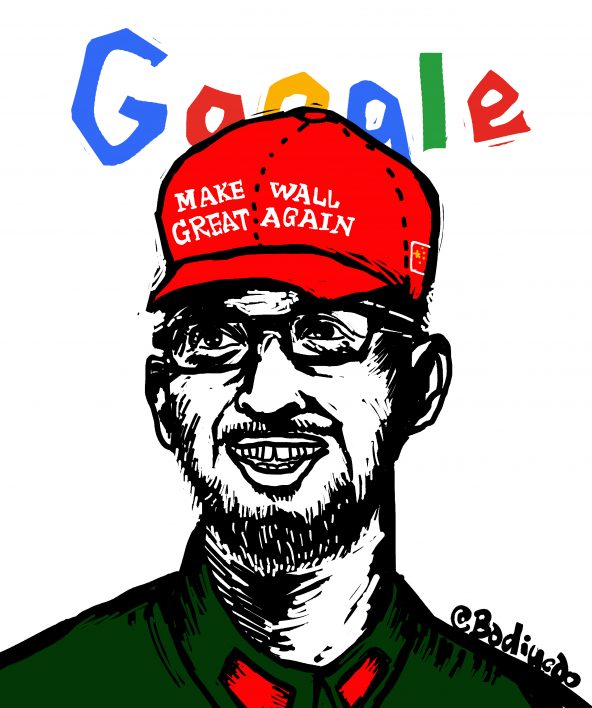
A highly anticipated art show by Chinese political cartoonist Badiucao was cancelled last week with Hong Kong organisers citing safety concerns due to “threats made by Chinese authorities relating to the artist”.
Hong Kong authorities also faced a major backlash when they denied a visa without explanation last month to a Financial Times journalist who had chaired a press club talk by a Hong Kong independence activist.
The Hong Kong literary festival attracts leading authors from around the world and this year features Scottish novelist Irvine Welsh and bestselling American author Cheryl Strayed.

mardi 23 mai 2017

Chinese Fifth Column: VOA Blocks Businessman From Revealing Chinese Spying Secrets

Guo Wengui details PRC intel operations, a potential intelligence windfall for FBI, CIA
By Bill Gertz

Guo Wengui 

An exiled Chinese businessman with close ties to the government has begun revealing secrets about Beijing's intelligence operations after China pressured the official Voice of America radio to curtail a lengthy interview with him.
Four VOA employees were suspended last month after more than an hour of the radio's exclusive interview with billionaire businessman Guo Wengui exceeded a time limit imposed under radio rules.
The four employees of the Chinese language radio division are now calling on Congress to investigate whether VOA managers gave in to pressure from China's government to shorten the Guo interview and as a result undermined the radio's integrity.
Sasha Gong, one of the four suspended employees and chief of VOA's Mandarin language service, says Congress should probe the matter.
"I would like the Congress to investigate if the management of the taxpayer-funded Voice of America caved in to the request and demand of the Chinese government. If so, what is the reason behind their decision?" she said.
A VOA spokesman defended the decision to cut off the interview after an hour based on the radio's practices limiting time devoted to live interviews.
"Pressure from the Chinese government played no role in any decision-making," said the spokesman, George Mackenzie. 
"VOA and the [parent organization Broadcasting Board of Governors] have decades-long histories of producing full fair and balanced journalism in the face of even the most extreme pressures."
VOA is the official U.S. government radio broadcaster providing news in 40 languages.
Critics have charged VOA is poorly managed and its news reports are too friendly toward anti-democratic states such as China.
Guo has close ties to senior Chinese Communist Party leaders, including government ministers and Politburo members. 
In April, he began disclosing detailed information on what he says is corruption among senior Chinese leaders, along with details of Chinese intelligence activities.
The four employees charged in an open letter to Congress that "a series of arguments and debates" led VOA to halt the April 19 on-air interview with Guo after one hour and 19 minutes. 
They said said cutting off the interview "gravely damaged" the "integrity and credibility of VOA as a media outlet."
"Furthermore, as VOA is a federal entity, the U.S. government's integrity and credibility have been greatly damaged, too," they said. 
"Therefore, the U.S. national interests have been greatly undermined as well."
MacKenzie, the VOA spokesman, said decisions on handling the Guo interview were based on journalistic guidelines requiring verification, balance, and fairness that apply to all VOA's various language services.
"There was no input whatsoever from the U.S. government, nor would the firewall permit any such input," MacKenzie said, referring to limits of official U.S. government controls.
China, meanwhile, has taken steps to intimidate Guo's family members and the businessman himself who is said to be in hiding in New York.
Guo's knowledge of Chinese intelligence operations could provide an intelligence windfall for the CIA and FBI, based on his access to Ministry of State Security (MSS) operations overseas and in the United States.
Ma Jian, a former MSS vice minister who was imprisoned for corruption last year, recently surfaced in an online Chinese video charging that he was in the pay of Guo and that they shared information.
After the VOA curtailed his interview, Guo, who has claimed to be working with Chinese intelligence and security services, took to social media and began providing daily videos and reports revealing Chinese spying and other sub rosa activities.
Writing on Twitter under the name @KwokMiles, Guo recently disclosed that MSS operatives work closely with wealthy Chinese nationals like him who are tasked with funding and conducting intelligence operations on behalf of MSS.
For example, in the United States, Chinese surrogates have funded private investigators to spy on the offspring of high-ranking Chinese officials, many of whom are in the real estate business or attend American universities.
In a bid to silence Guo, China detained two of his brothers. 
The brothers were eventually released and Guo said they had been tortured by authorities.
Additionally, Guo's wife and daughter currently have been allowed by Chinese authorities to visit him in New York but are required to return to China after 20 days where they can be used for political leverage against Guo.
Guo stated in one recent video that he fears his family is being used by the government to pressure him into silence or to force his return to China.
Guo also announced that he is offering $100 million to anyone who can produce evidence, such as bank records, revealing high-level corruption by Chinese officials.
In the portion of the VOA interview that aired, Guo dismissed the Interpol red notice as part of Chinese effort to silence him. 
China spent $60 million annually to arrange for Interpol to pick a Chinese national as its director. 
The current director is Meng Hongwei.
Guo said he has been in the United States since 2015 and holds several foreign passports. 
Asked about MSS activities, Guo said the ministry uses Chinese businessmen as agents called "commercial anchors" who assist MSS.
Ma Jian, the imprisoned MSS official, was in charge of directing his overseas business activities on behalf of the service, Guo said, adding that he has no formal relationship with MSS beyond the use of his business resources.
Guo also alleged he has information about corruption involving the family of Wang Qishan, the senior Party official in charge of Xi Jinping's nationwide anti-corruption drive. 
Wang is a member of the Politburo Standing Committee, the seven member collective dictatorship that rules China.
On Capitol Hill, committee aides said both the Senate Foreign Relations Committee and House Foreign Affairs Committee are monitoring the issue.
A House committee spokesman said: "The Foreign Affairs Committee is aware of the matter and following it. Sadly, this appears to be one more example of the need for reform at VOA."
A Senate Republican aide added: "Since the reports first surfaced, we have been tracking the suspensions and are prepared to conduct further oversight if necessary."
Sen. James Lankford (R., Okla.) is also looking into the matter, a spokesman said.
A Justice Department spokesman declined to comment.
According to the suspended VOA employees, Guo earlier this year contacted the radio and said he wanted to go public with details of corruption by senior Chinese officials.
The employees who signed the statement to Congress are Sasha Gong, Fred Wang, Huchen Zhang, and Robert Li. 
They have denied any wrongdoing and are asserting that VOA management is treating them unfairly over the Guo interview.
Days before the planned three-hour live interview on VOA, China issued an arrest warrant for Guo in Dalian, and then an Interpol "red notice" calling for Guo's detention, claiming he was wanted for unspecified bribery charges.
An official at China's embassy then called VOA on April 18 and demanded the radio cancel its upcoming interview with Guo.
VOA managers, including director Amanda Bennett and deputy director Sandy Sugawara, decided to limit the Guo interview to one hour and ordered it halted
after the interview exceeded that limit.

A White House petition was set up May 18 calling on the U.S. government to protect Guo as a "whistleblower."
"Chinese billionaire Guo Wen Gui is hunted by Chinese communist party by all means, he is exposing the massive corruption on highest level of Communist party and launching a campaign to push for Chinese Constitutional reform," the petition states.
The petition also said China has issued "an assassination bounty reward" for Guo and his family.
The dissident Chinese news outlet China Digital Times has documented some of Guo's charges and reported that Guo is planning an international news conference at an unspecified time in the future.
Disclosure of the Chinese intelligence activities come as the New York Times reported last weekend that China executed or imprisoned up to 20 of the CIA's recruited agents, based on a Chinese mole in the agency or a compromise of its secure communications.
The newspaper quoted intelligence sources as saying the damage began in 2010 and continued for two years, effectively neutralizing the CIA's sources of information on a major intelligence target.

jeudi 27 avril 2017

What you need to know about China’s most wanted man

By Zheping Huang
Can't stop won't stop.

The Chinese government can’t seem to do anything about its most wanted man, who now lives in exile in the US.
Guo Wengui is not the first businessperson to have fled China, perhaps with secret information about the ruling elite. 
Previous fugitives, however, have either decided to stay silent and keep their whereabouts secret (paywall), or have been forcefully taken back to China before they can kick up too much of a fuss.
Guo is an outlier. 
Equipped with masterful social media skills, and protected by bodyguards (link in Chinese) in his Manhattan penthouse, Guo has been making serious accusations of corruption against China’s former and current officials. 
One of them, Wang Qishan, is widely considered the second-most powerful man in the nation.
The episode offers a good example of how the intricate ties between China’s rich and powerful can risk turning into a liability. 
If Guo is to be believed, China’s ruling Communist Party may be far more corrupt than the party is ready to ever publicly admit.

Who the heck is he?

Guo, also known as Miles Kwok, is a Chinese property tycoon who has been living overseas for more than two years. 
At the height of his career, Guo had a net worth of $2.6 billion, ranking 74th among China’s richest in 2014, according to the Hurun Report. 
One of his most well-known properties is the Pangu Plaza, a torch-shaped building close to Beijing’s Olympic stadium.


The 50-year-old billionaire first came to the spotlight during a corporate feud in late 2014. 
At the time Guo sought to acquire a large stake in Founder Securities, China’s sixth-largest brokerage, but squabbled over the terms with his former business partner Li You, who was the head of Founder’s state-owned parent.
The aborted business deal ended badly for both sides. 
In January 2015, Li was arrested by police on alleged corruption charges, and soon afterwards, Ma Jian, a former deputy spy chief who is reportedly a close ally to Guo, was also investigated for corruption.
In March 2015, Chinese financial news outlet Caixin published an investigative report (link in Chinese) detailing how Guo developed close ties with high-ranking Chinese officials including Ma to further his business interests. 
The report also revealed that in 2006 Guo secretly recorded a sex tape of a Beijing deputy mayor for not approving the Pangu project initially.
Guo denied that report and launched a personal attack on Caixin’s influential editor-in-chief Hu Shuli. 
In response, Caixin sued Guo for defamation.

What does he allege?
Since then, Guo has stayed quiet for the most part as he shuttled between Europe and the US—until recently. 
In the last few months he has taken to Twitter enthusiastically and granted several interviews with US-based publications, accusing former and current Chinese Communist Party officials of corruption.
“Striving for China’s true rule of law!” he says in his Twitter bio. 
“This is just the beginning!”
One of his latest allegations of corruption is against Wang Qishan, China’s top graft-buster who’s known to be a close ally of Xi Jinping. 
In a live interview with the Voice of America (VOA) last week, Guo claimed that deputy national police chief Fu Zhenhua, on behalf of Xi, had demanded he look into Wang’s nephew’s investment in Hainan Airlines—a very busy acquirer of travel-related assets around the world in the last few years. 
Guo said that Fu had made threats against his family to force him to cooperate. 
Guo said Fu told him that “Chairman Xi just uses (Wang), but doesn’t trust him.”
Guo also went after Wang’s predecessor, He Guoqiang, the former top disciplinary official before Xi came to office in 2012. 
In a March interview with Mirror Media Group, a Chinese-language news outlet based in Long Island, Guo claimed that He’s son He Jintao was the behind-the-scenes backer of Guo’s business rival Li You, the second-biggest shareholder in Founder Securities, who is now in jail.
The New York Times, citing corporate records and an interview with He’s relative, reported (paywall) that the He family did appear to control a stake in Founder through a series of shell companies.
Guo claims his assets in China were seized, and that his family members and former employees are being detained. 
He says he owns 11 passports, including ones from the European Union and the US, and that he hasn’t used any Chinese identification for more than two decades.

What does the Chinese government say?

China has asked Interpol, the international police organization, to issue a “red notice” to seek Guo’s arrest. 
Countries do not have to honor a red notice, which is not an international arrest warrant. 
In November, Interpol appointed a Chinese security official as its new chief.
Chinese authorities did not give reasons for the notice, which was issued just before Guo’s VOA interview. 
Hong Kong’s South China Morning Post reported, citing unidentified sources, that Guo is accused of giving about $9 million in bribes to Ma, the disgraced former spy-master.
Guo said in the VOA interview that he was in regular contact with FBI agents, and was not worried about being arrested.
VOA said Chinese officials had expressed concerns about Guo’s interview. 
The Chinese foreign ministry has threatened not to renew VOA’s correspondents’ visas in China in response to the interview. 
VOA abruptly ended the interview early, and later said in a statement that it was due to a “miscommunication.”
Meanwhile, China is publicly going after Guo. 
After the VOA interview, Ma, who has not gone on trial yet, appeared for the first time after his arrest in a 20-minute video on YouTube to confess that he had misused his power to help Guo gain business interests in return for gifts including cash and properties.
The Beijing News reported (link in Chinese), citing unidentified government sources, that two executives of Guo’s Beijing-based companies were arrested last week for bribery and fraud charges. The newspaper also revealed that Xiang Junbo—China’s insurance regulator who was recently arrested—helped Guo get loans that Guo later misappropriated to buy a Hong Kong property in 2014, when Xiang was still working at Agricultural Bank of China, one of the nation’s big-four state banks.
So he must be a big deal.
Guo’s fight against the party establishment comes on the eve of its major leadership reshuffle this fall, when Xi is slated to start his second five-year term.
In the past five years, Xi has netted thousands of allegedly corrupt officials in a seemingly never-ending, ruthless anti-graft campaign steered by his powerful ally Wang. 
Speculation is mounting that Xi is likely to break an unwritten rule on retirement age in the party to let 68-year-old Wang seek a second term. 
Guo’s claims against Wang would seriously damage the legitimacy of Xi’s anti-corruption efforts.
The Chinese Communist Party also hates uncertainty, and Guo’s very public crusade against it is exactly what the party does not need, especially ahead of major events. 
Guo said that in the next few weeks he plans (link in Chinese) to hold a tell-all press conference on China’s anti-corruption campaign, and said he has information on four specific officials including Wang Qishan.
At least for now, no one appears to be able to stop Guo from speaking out from his Manhattan home.

Can anyone stop him?

For a few brief moments, it seemed that Guo may have been silenced.
Twitter briefly suspended Guo’s account today (April 27). 
Almost all of his 103,000 followers had disappeared when the account was back up and running, but those followers were later restored. 
Twitter did not immediately respond to a request for comment.
A similar episode happened to Guo’s Facebook account last week. 
The account was restored after Guo complained about his suspension from Facebook on Twitter. Facebook said that the suspension was a mistake (paywall) due to the company’s automated systems, without elaborating.