Affichage des articles dont le libellé est class action lawsuit. Afficher tous les articles

mardi 3 décembre 2019

TikTok Spying for China

TikTok sent US user data to China, lawsuit claims
BBC News

Video-sharing app TikTok has been hit with a class action lawsuit in the US that claims it transferred "vast quantities" of user data to China.
The lawsuit accuses the company of "surreptitiously" taking content without user consent.
Owned by Beijing-based ByteDance, TikTok has built up a keen US fan base.
TikTok, which is thought to have about half a billion active users worldwide, has previously said it does not store US data on Chinese servers.
However, the platform is facing mounting pressure in North America over data collection and censorship concerns.
The lawsuit filed in a Californian court last week claims TikTok "clandestinely... vacuumed up and transferred to servers in China vast quantities of private and personally-identifiable user data".
The data could be used to identify, profile and track users in the US "nw and in the future".
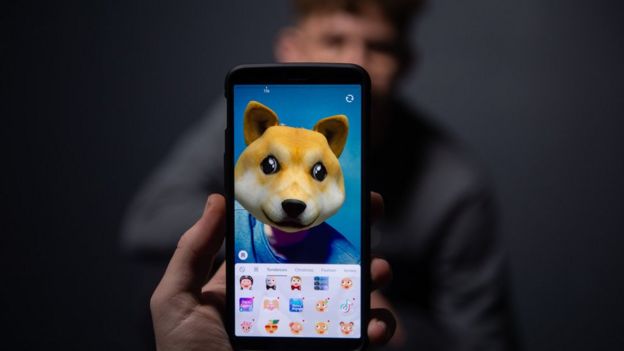
Ima
TikTok lets users make short videos and set them to music, before sharing with followers

The plaintiff is named as Misty Hong, a Californian-based university student. 
Ms Hong claims she downloaded the app this year but did not create an account.
Months later the firm had created an account for her, and surreptitiously took draft videos she had created but never intended to publish.
The data was sent to two servers in China, backed by Tencent and Alibaba.

The lawsuit also argues TikTok unfairly profits from "secret harvesting" of private data by using that data to derive "vast targeted-advertising revenues and profits".
TikTok did not immediately respond to requests for comment.

What is TikTok?
The platform has exploded in popularity in recent years, mostly with people under 20.
They use the app to share 15-second videos that typically involve lip-synching to songs, comedy routines and unusual editing tricks.
Alongside its rapid expansion, concerns have grown -- chiefly in the US -- over the potential to compromise users' privacy.
US lawmakers have put pressure on the company to clear up allegations that it is beholden to the Chinese state.
TikTok operates a similar but separate version of the app in China, known as Douyin. 
It says all US user data is stored in the United States, with a backup in Singapore.
Still, the company found itself in hot water last week, apologising to a US teenager who was blocked from the service after she posted a viral clip criticising China's treatment of the Uighur Muslims.
The company later lifted the ban.

vendredi 25 novembre 2016

China's Fifth Column

Phone Maker Faces Lawsuit Over 'Backdoor' to China
by Jeff John Roberts 

Secret software sent texts to China.

A U.S. company is facing a class action lawsuit following reports it sold thousands of Android phones containing software that sent consumers’ private messages to China.
Miami-based Blu Products, which sells low cost phones through Amazon and BestBuy, came to attention last week when the New York Times identified it as among the phone makers whose products contained a so-called “backdoor.”
In this case, the backdoor served to send copies of users’ text messages and phone call data every 72 hours to a Chinese software firm called Shanghai AdUps Technologies. 
It also relayed other data, such as information about location and app usage, every 24 hours. 
Following the report of the secret backdoor, Blu Products told the Times that 120,000 of its devices had been affected and that it had pushed out a software update to stop them sending information to China. 
It also said it had not known about the backdoor.
But the incident also led Rosen Legal, a firm specializing in class action lawsuits, to post a “security alert” warning consumers about the backdoor, and inviting those who had bought certain Blu Products devices to be part of an investigation and participate in the lawsuit. 
The notice also explained how consumers could determine if their devices had been affected by what the firm calls “spyware”:
You can check to see if your Blu Products phone was affected by going to the Settings Menu in Android, selecting “Apps,” followed by “Show System” and then “Wireless Update.” 
If your version of Wireless Update is from 5.0.x to 5.3.x, or above, you phone was affected and you may be a member of the class action.
Blu Products, for its part, dismissed the law firm’s allegations.
“This is a non issue and there is no wrong doing from BLU to warrant any such claim,” said Carmen Gonzalez, senior marketing director for Blu Products, said in an email to Fortune.
The controversy comes at a time of growing concern over how phones, and many other Internet-connected devices, are susceptible to hacking or intrusive software that records or transmits private information. 
This week, a security firm reported the existence of another powerful backdoor in over 3 million Android devices that permits China to monitor the device owners’ communications.