By Josh Rogin

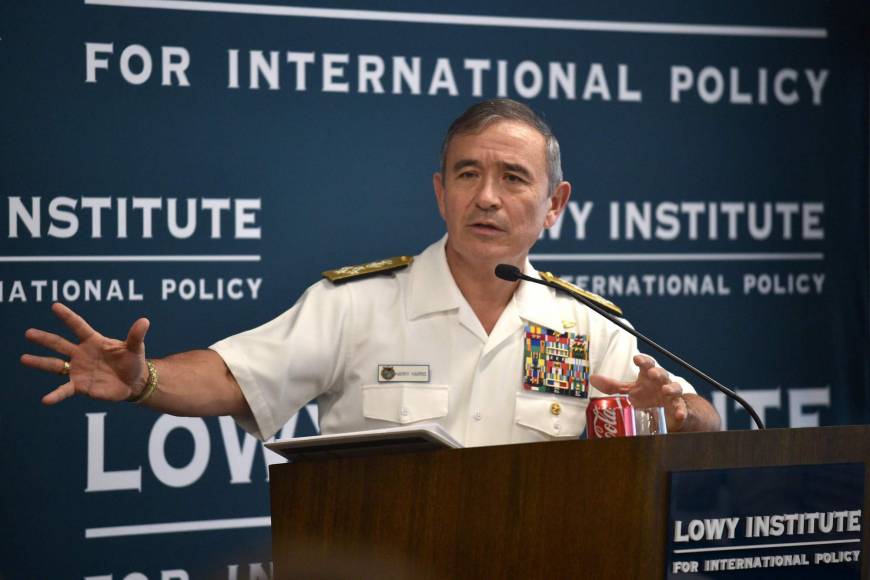
The commander of the U.S. Pacific Command, Adm. Harry Harris, testifies before a House Armed Services Committee hearing on Capitol Hill in Washington on April 26.
The Chinese government is denying reports that its ambassador to Washington asked the Trump administration to fire Adm. Harry Harris, the head of U.S. Pacific Command (PACOM) and a strong voice inside the U.S. government calling for a tough China policy.
This may mark the end of Beijing’s not-so-subtle campaign against Harris, which has been going on for years.
During the presidential transition, Chinese Ambassador to the United States Cui Tiankai and Trump’s son-in-law Jared Kushner established a secret channel for communication with the help of former secretary of state Henry Kissinger.
During the presidential transition, Chinese Ambassador to the United States Cui Tiankai and Trump’s son-in-law Jared Kushner established a secret channel for communication with the help of former secretary of state Henry Kissinger.
On May 6, the Japanese newswire Kyodo News’s Beijing bureau reported that Cui requested Trump get rid of Harris, before last month’s summit between Trump and Xi Jinping at Mar-a-Lago, offering unspecified help to solve the North Korean crisis.
“A source close to U.S.-China ties” told Kyodo that the Trump administration likely rejected the request.
One White House official told me today that Cui never requested to Kushner that the Trump administration fire Harris.
But a Trump transition official who was briefed on the Cui-Kushner meetings told me that Cui did raise the issue during the transition, but no promises were made.
Regardless, Harris’s allies in Congress are ready to take up his cause if the Chinese effort against Harris continues or if the Trump administration tries to throw the admiral overboard.
Regardless, Harris’s allies in Congress are ready to take up his cause if the Chinese effort against Harris continues or if the Trump administration tries to throw the admiral overboard.
Sen. John McCain (R-Ariz.) said the Kyodo report was “outrageous” if true.
“I hope the Trump administration will reject such an inappropriate and presumptuous demand with the ridicule it deserves,” he said.
“I hope the Trump administration will reject such an inappropriate and presumptuous demand with the ridicule it deserves,” he said.
“The fact that the Chinese government would make such a request only confirms that Admiral Harris is the right leader for Pacific Command.”
Pacific Command’s chief spokesman Capt. Darryn James told me that the story could be just another attempt by the Chinese government to smear Harris, as it has been doing for a long time.
“I don’t know anything about alleged conversations, but for years there’s been a lot of Chinese propaganda directed at Admiral Harris that we don’t pay much attention to,” said James.
Pacific Command’s chief spokesman Capt. Darryn James told me that the story could be just another attempt by the Chinese government to smear Harris, as it has been doing for a long time.
“I don’t know anything about alleged conversations, but for years there’s been a lot of Chinese propaganda directed at Admiral Harris that we don’t pay much attention to,” said James.
“Admiral Harris’s focus remains on protecting America’s interests in his area of responsibility.”
China’s Global Times, which often writes in support of the Chinese government, blamed the story on the Japanese media in a May 7 op-ed, accusing Japan of making up stories to thwart the warming of U.S.-China relations.
China’s Global Times, which often writes in support of the Chinese government, blamed the story on the Japanese media in a May 7 op-ed, accusing Japan of making up stories to thwart the warming of U.S.-China relations.
The op-ed also claimed that China was fine with Harris being PACOM commander.
“Beijing has become more and more confident about developing ties with a Trump-led US,” it said. “China is able to keep normal interaction with the US Asia-Pacific command led by Harris. We do not count on any senior US official to take a pro-China position and we can cope with any who take a hard stance toward China.”
That’s a big shift from what the Chinese media has been saying about Harris since he became PACOM commander in 2015.
“Beijing has become more and more confident about developing ties with a Trump-led US,” it said. “China is able to keep normal interaction with the US Asia-Pacific command led by Harris. We do not count on any senior US official to take a pro-China position and we can cope with any who take a hard stance toward China.”
That’s a big shift from what the Chinese media has been saying about Harris since he became PACOM commander in 2015.
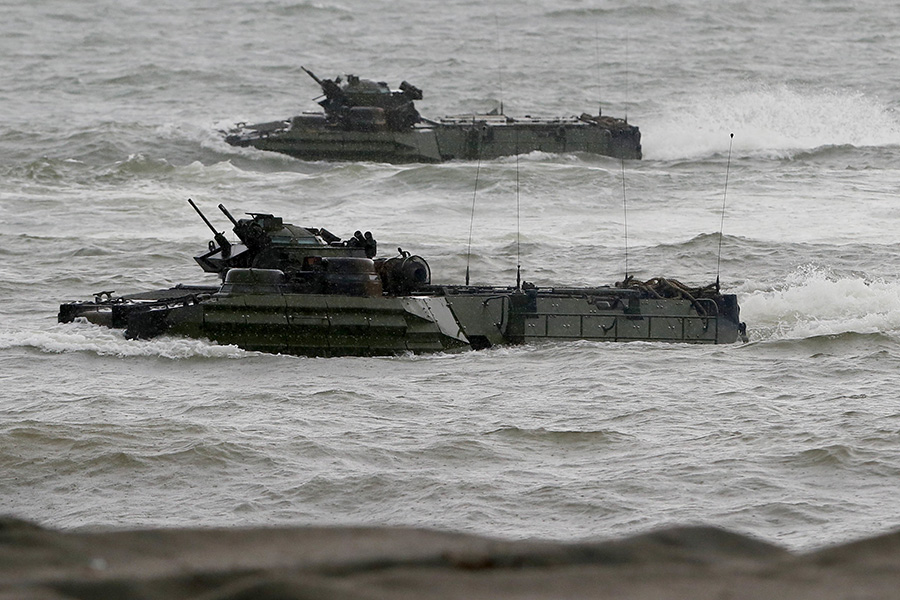
Harris has been a strong voice inside the U.S. government for tougher measures to confront all manners of Chinese aggression, including its militarization of artificial islands in the South China Sea.
It was Harris who famously coined the term “Great Wall of Sand” to describe Beijing’s effort to expand its control in the Western Pacific.
The Chinese government singled out Harris for attacks early on because it recognized his influence, said Bonnie Glaser, senior adviser for Asia at the Center for Strategic and International Studies.
“They realized he was going to be an effective commander who was going to be able to marshal support for a tougher stance vis-a-vis China,” she said.
The Chinese government singled out Harris for attacks early on because it recognized his influence, said Bonnie Glaser, senior adviser for Asia at the Center for Strategic and International Studies.
“They realized he was going to be an effective commander who was going to be able to marshal support for a tougher stance vis-a-vis China,” she said.
“Harris has been willing to speak truth to power.”
China’s official and unofficial news agencies have been attacking Harris for years, often accusing him of being Japanese, in order to question his motivations.
China’s official and unofficial news agencies have been attacking Harris for years, often accusing him of being Japanese, in order to question his motivations.
In fact, Harris’s mother was Japanese and his father was a U.S. Navy chief petty officer stationed in Yokosuka, Japan.“Some may say an overemphasis on the Japanese background about an American general is a bit unkind,” China’s official state media outlet Xinhua wrote last year.
“But to understand the American’s sudden upgraded offensive in the South China Sea, it is simply impossible to ignore Admiral Harris’s blood, background, political inclination and values.”
“But to understand the American’s sudden upgraded offensive in the South China Sea, it is simply impossible to ignore Admiral Harris’s blood, background, political inclination and values.”
Beijing’s long campaign against Harris seems to have backfired.
The shift in China’s tone suggests a realization that the more Harris is attacked by Beijing, the safer he may be in his job.
If Trump dumps Harris now, it will look like yet another concession to China that undermines U.S. and regional security in exchange for promises of future help on North Korea that may never come.
If Trump dumps Harris now, it will look like yet another concession to China that undermines U.S. and regional security in exchange for promises of future help on North Korea that may never come.