Affichage des articles dont le libellé est Chuck Grassley. Afficher tous les articles

mercredi 18 décembre 2019

U.S. Congress Orders Probe of Satellite Loophole China Exploited

American Quislings: China uses U.S.-built satellites to support its police, military, with the help of Carlyle Group and Boeing 
By Brian Spegele and Kate O’Keeffe

AsiaSat 9, a Hong Kong company’s powerful U.S.-made satellite, was prepared for launch in 2017. 

Congress ordered the Commerce Department to examine a loophole in federal law that has allowed China’s government to use U.S.-built satellites to support its police and military, following an investigation by The Wall Street Journal.
The National Defense Authorization Act—a defense-policy bill passed Tuesday by the Senate and earlier by the House—instructs the Commerce Department to investigate the national-security implications of the current system and make recommendations on potential new export rules to prevent China from using U.S. satellites.
The U.S. effectively bars China from buying U.S. satellites outright.
But a Journal article April detailed how Chinese companies, backed by their government, devised a workaround in which offshore firms legally purchased U.S. satellites, then leased their bandwidth to mainland Chinese entities.
While the Commerce Department is responsible for regulating the export of commercial satellite hardware, it doesn’t monitor how foreign customers use the satellites once they are launched.
American satellites from producers including Boeing Co. have been used to boost communications for Chinese troops in the contested South China Sea, the Journal reported.
They also helped ensure connectivity for authorities as they sought to quell protests and riots in the Chinese regions of Tibet and East Turkestan.
The defense-bill provision was put forward in June by Sen. Michael Bennet (D., Colo.) after seeing the April investigation and an earlier Journal story that showed how a Chinese government-backed financial firm secretly funded the construction of an advanced Boeing satellite.
“Reports that satellites produced by U.S. companies are being used to advance the military and intelligence goals of our adversaries, namely China, demand the highest level of scrutiny,” he said.
The April article also prompted inquiries to the State Department by Sens. Chuck Grassley and Joni Ernst —both Iowa Republicans—and attracted the attention of the U.S.-China Economic and Security Review Commission, a bipartisan panel convened by Congress to provide recommendations on China issues.
In July, the State Department responded to the senators, deferring questions regarding satellite regulation to the Commerce Department.
It also called on China in the letter to “immediately end its campaign of repression in East Turkestan.”
The defense bill, which President Trump is expected to sign, reflects lawmakers’ hardened stance on China.
It also will restrict the removal of Chinese telecom giant Huawei Technologies Co. from a Commerce Department export blacklist until certain conditions are met and bar the use of federal funds for Chinese buses and railcars.
The company at the center of the satellite issue is Asia Satellite Telecommunications Holdings Ltd., which is jointly controlled by a Chinese government-owned conglomerate named Citic Group and the U.S. private-equity firm Carlyle Group.
Since the Journal’s report in April, AsiaSat delisted from the Hong Kong stock exchange, making its business less transparent to the public.
AsiaSat, Carlyle, Boeing and the Commerce Department declined to comment on the National Defense Authorization Act provision, which also directs the Commerce Department to assess the “potential harm” to U.S. commercial-satellite producers of any new licensing requirements regulating bandwidth use.

jeudi 12 décembre 2019

World Bank Funding Genocide

China tried to get World Bank to fund surveillance in East Turkestan
By Bethany Allen-Ebrahimian

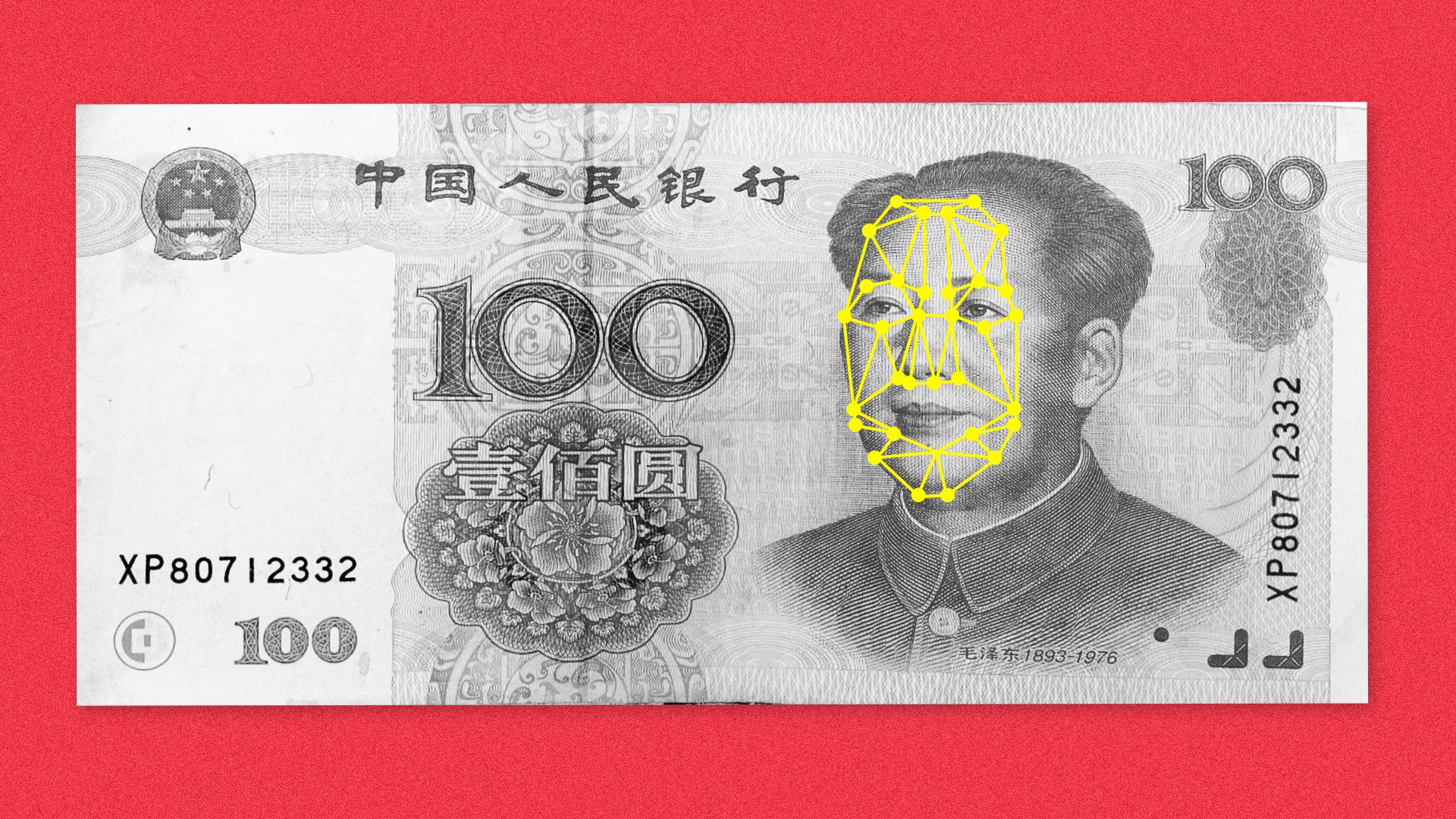
Chinese recipients of World Bank loans tried to secure funding for the purchase of facial recognition technology for use in China’s northwest colony of East Turkestan, according to documents obtained by Axios.

Why it matters: The World Bank's loan program in East Turkestan demonstrates the extreme moral hazard that is now facing any organization with operations in the region, where China has constructed a surveillance state and detained more than a million ethnic minorities.
In more than 8,000 pages of official World Bank Chinese-language procurement documents dated June 2017 and reviewed by Axios, Chinese recipients of the loan program requested tens of thousands of dollars for the purchase of facial recognition cameras and software, night-vision cameras, and other surveillance technology for use in East Turkestan schools.
The World Bank told Axios those funds were not yet disbursed.
A World Bank spokesperson said, “As an institution focused on ending poverty, the World Bank knows that inclusive societies are key to sustainable development, and we take a strong line against discrimination of any kind. We promote equal access to opportunities, including education and training, so that everyone can seek to realize his or her full potential. We are fully committed to the integrity of our projects. We respond immediately when issues are raised, and we act based on facts.”

The big picture: In 2015, the World Bank began a loan program called the “East Turkestan Technical and Vocational Education and Training Project.” 
The program provides $50 million over five years to five vocational schools and their partner schools.
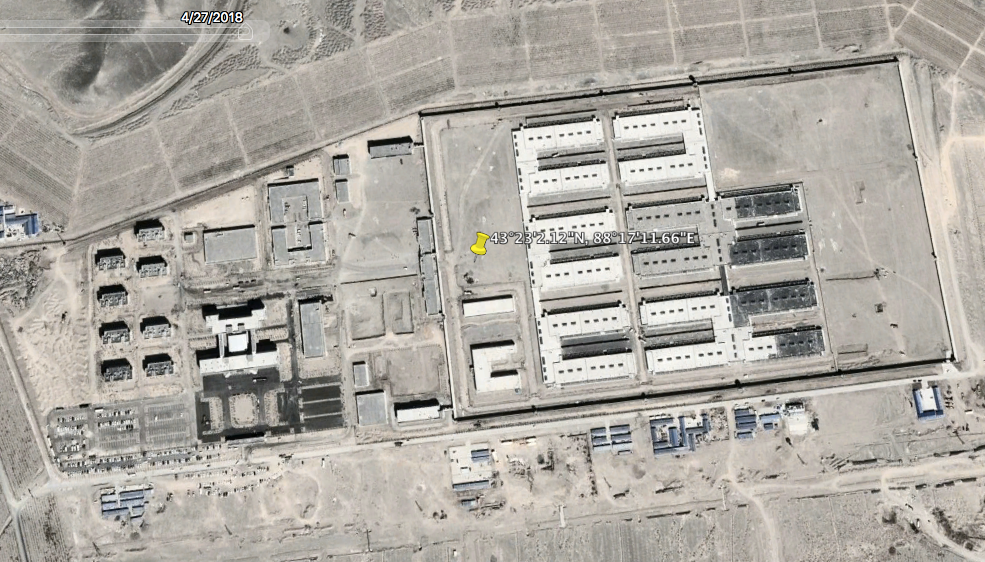
By early 2017, China had blanketed East Turkestan in surveillance, which it used to help round up ethnic minorities into concentration camps Beijing doublespeak calls "vocational training centers." 
The World Bank did not review or scale back the program at that time.
In August, the loan program came under congressional scrutiny for complicity in China’s repression.
In November, the World Bank announced it was scaling back the program and would only fund the original "schools", not their partners.
But the 2017 procurement documents came from those five original "schools", which continue to receive World Bank funding.
One of the items requested by a World Bank-funded school was a video management and facial recognition software system that can create a “blacklist face database that can be set and armed” so that “blacklist alarms can be performed when blacklisted individuals pass through” and the resulting images sent directly to Chinese police.
Such systems have been used to flag East Turkestan ethnic minorities for extrajudicial detention.
A requirement for one of the facial recognition systems requested by a World Bank-funded "school" was that it be able to "distinguish between males and females with a reliability of 97%."
The vast majority of the more than 1 million detainees in the camps are male — being both Uighur and male is essentially an automatic strike against a person.The budget request for the system was approximately $12,800.
The World Bank confirmed to Axios that the "schools" had requested the equipment, but stated that the government had canceled the procurement plan in October 2017 and that no World Bank funds were provided for surveillance equipment.

Between the lines: A World Bank spokesperson also told Axios that the June 2017 procurement documents had not been translated into English, meaning only Chinese-speaking staff could read them, complicating oversight of this specific procurement plan.
The spokesperson said that one of its partner schools in East Turkestan — the school that purchased $30,000 in riot gear and tear gas launchers in 2017, resulting in a media storm— had been the scene of violent anti-government protests in 2014.
The procurement documents also show loan recipients wanted equipment that was “compatible” with Chinese video surveillance manufacturers HikVision and DaHua, which have provided similar equipment for the camps and local governments in East Turkestan.
In October, the U.S. government prohibited U.S. companies from exporting components to Hikvision and Dahua without approval, citing their complicity in gross human rights violations.
The bottom line: The World Bank continued the loan program after the Chinese "schools" requested highly advanced surveillance equipment for a simple educational project — a lapse that bolsters Sen. Chuck Grassley's concerns about a massive "breakdown" in its oversight process.

Go deeper: Read the procurement documents

mercredi 7 août 2019

Chinese Fifth Column

FARA should apply to Confucius Institutes
BY ANDY KEISER

Under Xi Jinping's consolidated power, China is working diligently to supplant the United States as the world's top economic and military power. 
That includes a comprehensive effort to influence American K-12 and higher educational students with a favorable view of the Communist Chinese government to shape U.S. policy over the long-term.
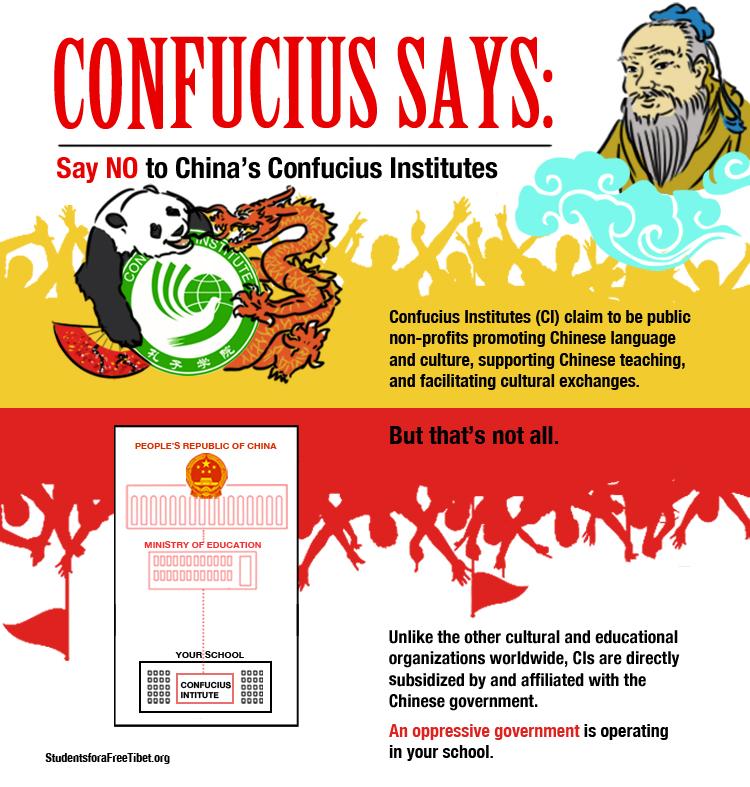
This influence operation by a hostile foreign power, led by China's state-controlled Confucius Institutes, should trigger the Justice Department to require a Foreign Agents Registration Act (FARA) filing by the institutes and its employees.
FARA requires anyone working at the behest of a foreign government to register with the Department of Justice. 
Originally written to combat propaganda, FARA also covers lobbying and public relations. 
FARA is a content-neutral disclosure statute that is designed to expose foreign associations to help ensure transparency and accountability in public policy.
Confucius Institutes are extensions of the Chinese government, plain and simple. 
They are owned and controlled by the government in Beijing and are overseen by the Office of Chinese Language International, commonly known as Hanban, a division of the Chinese Ministry of Education.
The Chinese government spends billions of dollars annually on propaganda activities promoted through Confucius Institutes.
 
Primarily targeted to the U.S., there are more than 100 Confucius Institutes in the American universities and colleges that have opted into the programing. 
Confucius Institutes have expanded their reach to include K-12 education through an effort called "Confucius Classrooms."
The underhanded genius behind Confucius Institutes is that they operate under the benign guise of teaching Chinese language, culture and history while simultaneously ensuring that they can restrict speech, control curriculum and force educational institutions to choose Confucius Institute faculty from a pre-approved list of teachers provided by the Hanban.
According to a letter Senator Chuck Grassley (R-Iowa) sent last year to then-Attorney General Jeff Sessions, Confucius Institutes "require the teaching to ignore human rights abuses, and stress that Taiwan and Tibet are part of China, among other restrictions."
Institute presence, particularly on U.S. college campuses, can also be a threat to economic and national security. 
The Chinese government can hand-pick employees at Confucius Institutes and use them as its eyes and ears or task them to steal sensitive, valuable university research. 
The transparency of a FARA filing would at least give more insight to U.S. counterintelligence professionals and to the public about the scope and scale of Confucius Institute activities.
According to Grassley's letter, a Chinese government official stated that the "Confucius Institute is an appealing brand for expanding our culture abroad. It has made an important contribution toward improving our soft power... using the excuse of teaching Chinese language, everything looks reasonable and logical."
Others have taken note. 
The Permanent Subcommittee on Investigations, led by Senators Rob Portman (R-Ohio) and Tom Carper (D-Del.), released a bipartisan report in 2015 that detailed the activities of Confucius Institutes. 
Among several alarming findings, it details that since 2006 the Chinese government has given more than $158 million to fund Confucius Institutes in the U.S. 
It has veto authority over events and speakers at the institutes, and controls every aspect of their operations in the United States, including staff members pledging to protect Chinese national interests.
Grassley recently introduced the Foreign Agents Disclosure and Registration Enhancement Act of 2019 to beef up FARA enforcement and held a hearing on foreign threats to taxpayer funded research, which focused extensively on China's activities on university campuses. 
Sen. Ted Cruz (R-Texas) has led a series of efforts against Chinese influence and espionage operations targeting American higher education, having secured a provision in the National Defense Authorization Act for Fiscal Year 2019 prohibiting the Department of Defense from funding Confucius Institutes.
Sen. Cruz has also introduced legislation called the Stop Higher Education Espionage and Theft Act to further crack down on Confucius Institutes, which he called "the velvet glove around the iron fist of their campaigns on our campuses."
The Chinese government's desire to influence our public policy through propaganda, conduct aggressive espionage on our soil and steal our intellectual property is real and hard to overestimate. The activities occurring at Confucius Institutes to achieve China's goals undoubtedly trigger the requirements of FARA. 
The Department of Justice should take immediate action to provide the type of transparency needed to help protect our nation.

vendredi 26 octobre 2018

China's crimes against humanity

China Must End Its Campaign of Religious Persecution
By SEN. CHUCK GRASSLEY Concentration Camps Construction is Booming in East Turkestan

The United States was founded on the premise that all individuals are created equal, with certain unalienable rights. 
Throughout our history, Americans have fought and died for these rights. 
They are ingrained in the fabric of our society and regularly debated, whether in coffee shops on Main Street or the halls of Congress.
Those fundamental rights and freedoms are part of our national identity, but that’s not the case in other parts of the world. 
That’s why for more than a century, the United States has been a vocal supporter, not just rhetorically but financially, as well, of global humanitarian efforts.
Over the past two decades, religious persecution in China has become a larger and more pressing issue. 
The Department of State’s annual International Religious Freedom report has included the People’s Republic of China as a particularly concerning offender since 1999.
Disturbing reports have surfaced out of China of late detailing the imprisonment of Christian pastors, Bible burning, and demolishing of Christian churches. 
The Chinese government has rounded up more than one million Uighur and Kazakh Muslims into concentration camps. 
The state has long suppressed the freedom of Tibetan Buddhists, as well as those who practice Falun Gong.
The Chinese government has removed crosses from 1,200 to 1,700 Christian churches as of a 2016 New York Times report, and has instructed police officers to stop citizens from entering their places of worship. 
There have been violent confrontations between government authorities and worshipers, and communist leaders have implemented restrictions prohibiting children 18 years old and younger from participating in religiously-focused education.
A piece published in Forbes earlier this year describes how Chinese authorities have bulldozed homes belonging to Uighur Muslims, collected passports to restrict travel and collected Uighur DNA and fingerprints in order to track its own citizens.
Communist leaders in China try to explain away these abuses by reiterating their commitment to preserving the Chinese culture, a practice known as sinicization. 
Approximately 100 million people in China belong to religious groups that are outside what the Chinese government deems acceptable. 
That’s approximately 100 million people who are subject to persecution by communist leaders in China, and even those that practice an officially sanctioned religion have not been spared harassment. That persecution stems from religious differences and has spread to other areas of daily life, including the restriction of social media.
The United States doesn’t have the singular authority to stop the religious persecution occurring in China, but it can apply significant pressure to Chinese leaders by linking the need for religious freedom to the economic and political aspects of our bilateral relationship that are important to China. As China’s largest trading partner, the United States is in a powerful position to influence Chinese leaders and stand up for human rights. 
Fighting for religious liberty should be a central part of the United States’ relationship with China. Senator David Perdue and I, with a bipartisan group of senators, recently introduced a resolution condemning violence against religious minorities in China and reaffirming America’s commitment to promote religious freedom and tolerance around the world. 
It also calls on China to uphold its Constitution and urges the President and his administration to take actions to promote religious freedom through the International Religious Freedom Act of 1988, the Frank R. Wolf International Religious Freedom Act, and the Global Magnitsky Act.
No matter where they live, everyone should be able to freely express their religious beliefs. 
The United States has been a beacon of freedom since before its founding. 
We must continue that tradition by doing what we can to promote human rights and freedoms both here and around the globe.

vendredi 17 novembre 2017

Chinese Spies

U.S. Congress urged to require Chinese journalists to register as agents
By David Brunnstrom

China's mole in New Zealnd: Yang Jian
Spying HQ: Xinhua serves the functions of an intelligence agency by gathering information and producing classified reports for the Chinese leadership. It had important offices at the United Nations in New York, Washington, Chicago, Los Angeles, Houston and San Francisco.

WASHINGTON -- A report to the U.S. Congress released on Wednesday accused Chinese state media entities of involvement in spying and propaganda and said their staff in the United States should be required to register as foreign agents.
The annual report of the U.S. China Economic and Security Review Commission said that while China had tightened restrictions on domestic and foreign media, Chinese state media had rapidly expanded overseas.
The commission, created by Congress in 2000 to monitor national security implications of U.S.-China trade relations, said China’s state media expansion was part of a broader effort to exert greater control over how China is depicted globally, as well as to gather information.
The report highlighted the rapid growth of the Xinhua news agency and noted that it had offices at the United Nations in New York, Washington, Chicago, Los Angeles, Houston and San Francisco.
“Xinhua serves the functions of an intelligence agency by gathering information and producing classified reports for the Chinese leadership on both domestic and international events,” the report said.
It quoted testimony to the commission by the U.S. Government-funded rights organization, Freedom House, as saying it was a “loophole” that individuals working for Xinhua and China’s People’s Daily newspaper were not covered by the Foreign Agents Registration Act.
FARA, first passed in 1938 in the lead up to World War Two to combat German propaganda efforts, requires foreign governments, political parties and lobbyists they hire in the United States to register with the Department of Justice.
The China Daily, an English-language newspaper owned by China’s government and ruling Communist Party, is already registered under FARA but only its top executives are required to individually disclose working for the publication.
A bipartisan group of U.S. lawmakers is working to overhaul FARA after Paul Manafort, former campaign manager for President Donald Trump, and a business associate were indicted for failing to register under the law.
The reform, backed by powerful Senate Judiciary Committee chairman Chuck Grassley, could provide an opportunity for Congress to act on the commission recommendations.
On Monday, the Kremlin-backed television station RT America registered under FARA after U.S. intelligence agencies in a report in January called it a “state-run propaganda machine” that contributed to the Kremlin’s campaign to interfere with last year’s U.S. presidential election.
Under the act, RT will be required to disclose financial information. 
Moscow has said it views the action against RT as an unfriendly act.