Intelligence agent who has applied for asylum in Australia is now a target of Chinese killers
By Christopher Knaus and Ben Doherty
Security experts have urged Wang Liqiang’s minders to ‘double up’ protection.
The Australian minders of the Chinese defector Wang Liqiang have been urged to “double up” protection duties as experts raise significant fears about his safety.
Chinese state media have sought to discredit Wang as a convicted “fraudster”, liar and a fake after he publicly revealed his role within Chinese intelligence and his bid for Australia’s protection on Saturday in the Sydney Morning Herald and Age newspapers.
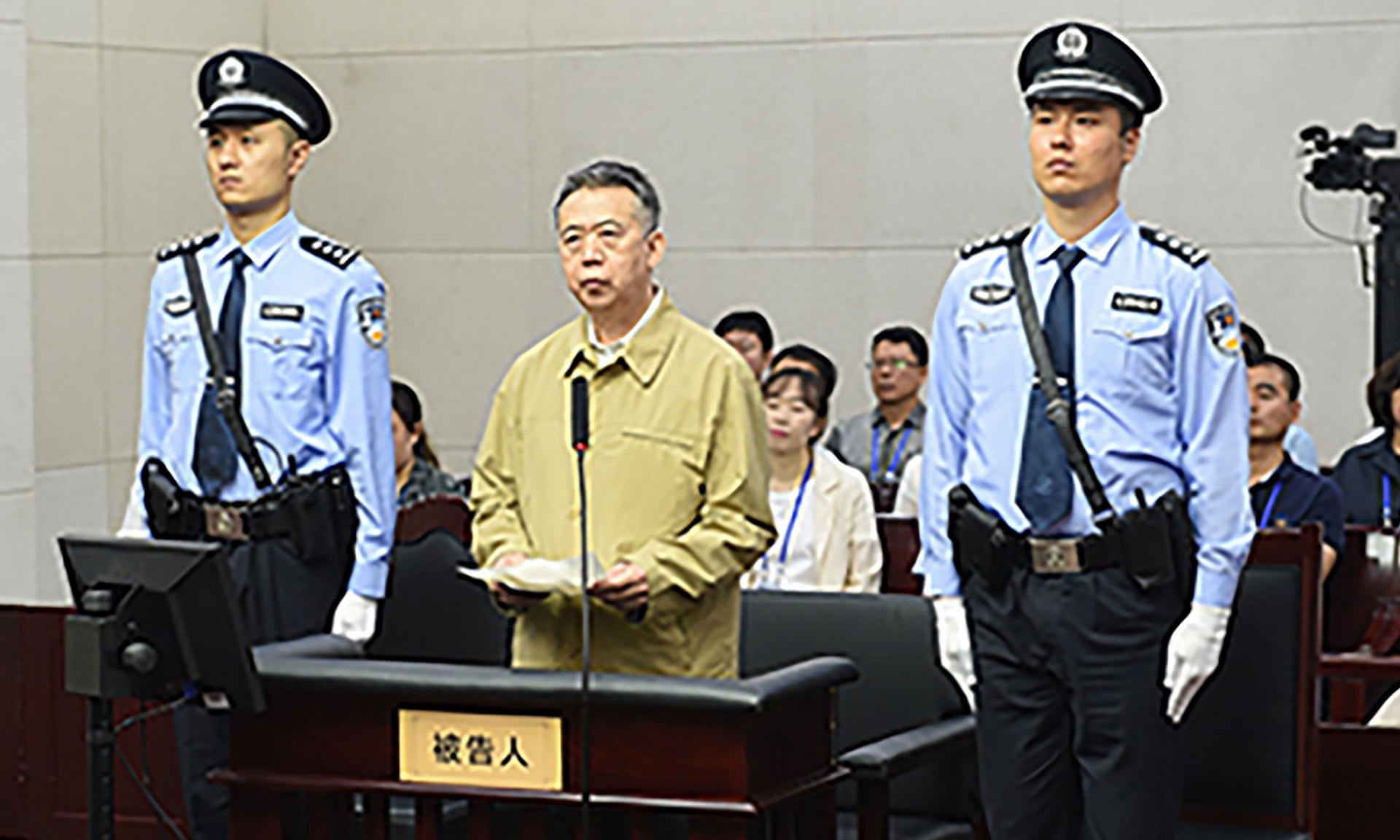
The Chinese government released a notice from the Shanghai public security bureau stating it was investigating him for fraud, and released an online court record suggesting a fraud conviction was recorded in 2016.
Wang’s lawyer in Australia, George Newhouse, told Guardian Australia: “He denies those allegations.”
Wang is staying in an undisclosed location in Sydney.
He is in the country on a tourist visa and has formally applied for asylum.
Guardian Australia has been told he holds significant concerns for his own and his family’s safety.
One of the experts who helped investigate Wang’s claims, Alex Joske of the Australian Strategic Policy Institute, said there was reason to doubt the allegations aired by the Chinese government about his fraud conviction.
He said it was clear from the Chinese police statements that Wang was now “a target”.
“He’d be a target of the Chinese government and we can see from the allegations that the Chinese government has made, those accusations from the police, that they are trying to go after him,” Joske said.
John Blaxland, a security and intelligence expert at the Australian National University, said the extraordinary revelations of China’s actions were unlike anything Australia has seen “in a generation”.
He said significant protective precautions must be taken to guard Wang against retribution.
“If I was his minders, I would be looking to double up on protection duties,” he told the Guardian.
“And he must have minders. I’m assuming that someone is looking out for him and there are some protective measures in place. There’s a lot of egg being thrown around and it’s stuck on a lot of people’s faces.”
Asked about what was being done to keep Wang safe, prime minister Scott Morrison said simply that the public could “expect the same protections to apply to anyone who is living in our country, whether on a visa or any other arrangement”.
“Well he’s in Australia. He’s in Australia. And we have the rule of law in Australia,” Morrison said.
The concerns for Wang come after the death of Bo “Nick” Zhao in a Melbourne hotel room in March – which passed almost unnoticed at the time.
Nine newspapers reported allegations on Monday that Zhao had been approached by Chinese businessmen in Melbourne to run for federal parliament, effectively as an agent of Beijing.
Zhao, a 32-year-old car dealer who had run into financial difficulties, was found dead by a cleaner in a hotel room in Glen Waverley on 3 March this year.
Former colleagues remember him as quiet but determined.
Yvan Lieutier, who worked with Zhao through a Heidelberg car dealership for five months, told the Guardian he was a “very quiet” young man, but one who was “was pretty ambitious for his age”.
He was approached to run for parliament in early 2019, and reported the approach to Asio several weeks before his death.
A cause of death has not been established and Victoria police have referred Zhao’s death to the coroner.
Police said: “Local police prepared a report for the coroner in relation to the death of a 31-year-old man in Glen Waverley on 3 March 2019. As this matter is currently before the coroner, it would not be appropriate to comment further at this time.”
The Victorian coroner’s court confirmed that its investigation into Zhao’s death was “open and ongoing” but that no decision had been taken on if, or when, a public hearing might be held.
Blaxland said the reports of Chinese influence, if accurate, were “grave”.
“If what we are reading is correct, then we face a challenge the likes of which we have not seen in a generation,” he told Guardian Australia.
Chongyi Feng, an associate professor in China Studies at the University of Technology Sydney, said Wang’s claims required further investigation by Australian intelligence authorities.
“The claim by Mr Wang confirms many things that have been reported and discussed over the last two years,” Feng said.
“It is crystal clear that the Australian government and public should have done more and should do more to address Chinese interference. We already have effective new laws [targeting foreign interference], but those laws should be implemented with greater vigour.”
Zhao’s death needed “to be investigated very thoroughly,” he said.
Feng said he believed political concerns over Australia’s economic relationship with China were the most significant factor in an unwillingness to push back harder against Beijing.
“The intelligence officials of Australia understand what is happening, but … political leaders need to do more to address this, even if those actions might offend the Beijing authorities and may cause some commercial loss or lost business deals. Australia should put human rights and democracy before commercial interests.”
Asio’s director general, Mike Burgess, said his agency “was previously aware of matters that have been reported ... and has been actively investigating them.
“Given that the matter in question is subject to a coronial inquiry, and as not to prejudice our investigations, it would be inappropriate to comment further.”
Burgess said allegations of foreign interference were treated seriously, and that hostile foreign powers posed a significant threat to Australia.
“As the director general of security, I am committed to protecting Australia’s democracy and sovereignty,” he said.
“Hostile foreign intelligence activity continues to pose a real threat to our nation and its security. Asio will continue to confront and counter foreign interference and espionage in Australia.”
Wang has claimed in media interviews that he is a spy seeking to defect to Australia, and willing to reveal secrets of Chinese efforts to infiltrate and influence Australia’s political system.
He had engaged in espionage activities in Hong Kong, including helping to organise the October 2015 kidnapping of Lee Bo, the owner of Causeway Bay Bookshop, who was targeted by Beijing for allegedly distributing dissident materials.
Wang said Beijing covertly controls listed companies to finance intelligence operations, including surveilling dissidents, co-opting media organisations, and running “cyber armies” to shift political opinion.