Affichage des articles dont le libellé est national security threats. Afficher tous les articles

lundi 4 novembre 2019

Wicked Xi and the Traitorous Apple

Apple and TikTok's China ties are national security threats
By Kim Hart

Senator Josh Hawley. 

Sen. Josh Hawley says Apple and TikTok are threatening U.S. national security through their Chinese operations and connections.
In an exclusive interview with "Axios on HBO," the Missouri Republican called out Apple for choosing Chinese profits over American values. 
He also called on TikTok, owned by Beijing-based ByteDance, to testify under oath that it does not share American data with China's Communist Party.

Why it matters: On Tuesday, Hawley will chair a hearing highlighting the compromises that, he argues, U.S. tech companies make to do business in China. 
The hearing comes amid increasing tensions over trade and technology transfers between the U.S. and China.
Hawley invited Apple and TikTok executives to testify at Tuesday's hearing, called “How Corporations and Big Tech Leave Our Data Exposed to Criminals, China, and Other Bad Actors.”
The companies declined to appear, as of Sunday. 
The subcommittee will have open chairs for them during the hearing.

Hawley said he has two primary concerns:
American tech companies making deals with China's government to do business there.
China-based tech companies that are growing rapidly in America and collecting U.S. consumer data in the process.
"[As] these Big Tech companies try to get into the Chinese market, the compromises that they have to make with the Communist Chinese Party — who, let's not forget, partner with or control every industry of any size in China — what does that do to American security?" Hawley told "Axios on HBO."

The big picture: Hawley, who chairs the Senate Judiciary crime and terrorism subcommittee, is one of the most vocal Republican critics of Silicon Valley in Congress.
Lawmakers are already skeptical of TikTok's ties to China. 
Last week, Sens. Chuck Schumer (D-N.Y.) and Tom Cotton (R-Ark.) asked for a national security review of the platform.
On Friday, Reuters reported the U.S. government has opened a national security investigation into TikTok owner's acquisition of social media app Musical.ly two years ago.

The other side: TikTok, which is very popular among teenagers, has said all U.S. user data is stored in the U.S., with a backup server in Singapore. 
That doesn't ease Hawley's concerns.
"I would say that doesn't necessarily mean that the communist government doesn't have access to the data," he said. 
"I don't know that it matters where the data is stored for that kind of a company. I think you've got to assume that there is a backdoor way into that data."
He added that TikTok is a company people don't know much about. 
"Maybe it's growing in popularity, but what exactly does that company do? What's happening to our data when we use the app? Americans deserve answers."
A TikTok spokesperson said in a statement provided to Axios that the company appreciates the invitation to the hearing. 
"Unfortunately, on short notice, we were unable to provide a witness who would be able to contribute to a substantive discussion."
"We remain committed to working productively with Congress as it looks at how to secure the data of American users, protect their privacy, promote free expression, ensure competition and choice among internet platforms, and preserve U.S. national security interests," the spokesperson continued.
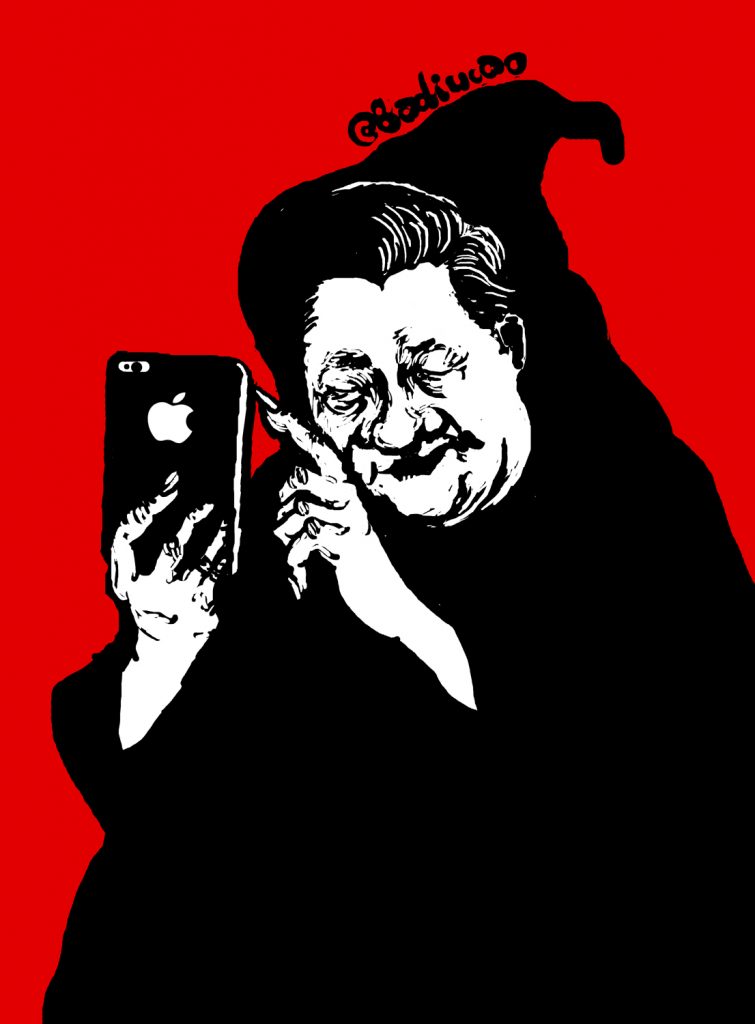
Apple, for its part, has said it uses encryption across devices and servers in all countries and insists there are no backdoors into data centers or systems. 
When asked about these security practices, Hawley wasn't comforted.
"My question is, are they storing encryption keys in China? The answer to that is yes. Then what kind of data are they storing in China? Whose data? Any American data? What about people who have Chinese relatives or business partners or other ventures, so they're communicating with people in China? Does that expose American users to potential surveillance by the Chinese state?"
Apple declined to comment on this story. 
However, it previously said that Apple — not its Chinese partner — retains control over encryption keys to iCloud data stored there.
Hawley said Silicon Valley needs to make a stand against China.
"They're willing to trade our basic democratic values and the privacy and security of Americans in order to make a buck in China and to get the favor of the Beijing government."

The bottom line: Hawley said his concern is that "the Communist Party could be scooping up" troves of data from the U.S. teenagers using TikTok and Apple products and apps.
"Think about what it will mean in 20 years when there's that much more data on them. Think about the profiles that American companies, [and] Chinese companies connected to the Communist Party, could build on people who are today just in their teens. I mean, these are the things that as a parent with two small children at home, I worry about every day."
                                                                                                      — Josh Hawley

lundi 11 décembre 2017

Nation of spies: New Zealand security chiefs warn of China threat

Agencies call for robust response from new government to Beijing’s drive for influence 
By Jamie Smyth in Sydney

Famous Chinese mole Jian Yang

Zealand’s security chiefs have called for a more vocal government response to national security threats after a spate of spying incidents highlighted Beijing’s attempts to influence the country’s growing Chinese community.
Briefings prepared for Prime Minister Jacinda Ardern and Andrew Little, the minister in charge of security agencies, mark the latest official expression of concern over Beijing’s political influence in New Zealand and Australia as they experience a surge in political activity from people with close ties to China’s Communist party as their Chinese-born populations surge.
One briefing cites “activities in New Zealand over the past year [that] have included attempts to access sensitive government and private sector information, and attempts to unduly influence expatriate communities”.
While the identity of the foreign governments spying in New Zealand are redacted, security experts say Beijing is stepping up a campaign to influence China’s growing diaspora in the Pacific nation and a host of other western countries. 
About 4 per cent of New Zealand’s population, or 171,411 people, identified themselves as ethnically Chinese in the 2013 census, with a further 19,000 Chinese citizens gaining residency over the past four years. 
The briefings on New Zealand’s security environment say that until recently it has been rare for the country’s prime ministers or national security system to openly provide information on security matters.
Unlike in Australia, where a public debate on Chinese influence has been raging for months and has led to a change in policy, New Zealand’s politicians have been reluctant to discuss the matter openly.
“We think that a wider dialogue with the public, on a regular basis and covering a wide range of national security issues, will support a risk and resilience-based approach to national security by normalising issues that can often seem quite abstract or removed from most New Zealanders,” another of the briefings says. 
Beijing on Monday played down the concerns expressed in the briefings, saying it was interesting that “recently, many western countries have spontaneously become concerned about interference in their internal affairs”.
 The briefings follow a report by the FT in September about how New Zealand’s spy agency had investigated a Chinese-born member of parliament in connection with 15 years he spent working at elite Chinese military training academies.
Jian Yang, an MP for New Zealand’s ruling National party since 2011, denied being a spy, saying the reports were a “smear campaign” motivated by anti-Chinese racism. 
 “The New Zealand intelligence community is telling the government they have got a problem and they need to deal with it publicly, to put some sunlight on it,” said Anne-Marie Brady, politics professor at the University of Canterbury. 
 She said China was undoubtedly the country referred to in the security briefing as seeking to influence its expatriate community.
A Canterbury university report co-authored by Ms Brady identified Beijing’s financial support for a wide range of New Zealand “United Front” organisations, aimed at advancing Chinese interests. 
Wellington remains reluctant to speak publicly about Chinese influence in domestic politics, fearing it could hurt commercial ties with Beijing as it seeks to upgrade its trade deal with China, Ms Brady said.
 China is New Zealand’s second-largest trade partner, accounting for 17 per cent of all exports in 2016 and total two-way trade worth NZ$23bn ($16bn).
 Western nations including the US, Germany and Australia are increasingly highlighting Beijing’s use of covert espionage, propaganda activities and attempts to influence its Chinese diaspora to advance its interests overseas. 
 Last week Australian Prime Minister Malcolm Turnbull cited “disturbing reports about Chinese influence” in domestic politics following the publication of tough new spying and foreign influence laws.
That followed revelations that Sam Dastyari, an opposition Labor senator who received Chinese cash, called publicly for Australia to respect China’s territorial claims in the South China Sea — a position contrary to that of his party.
 Beijing reacted furiously to the Australian rhetoric, with the Chinese embassy in Canberra deriding the ““irresponsible remarks” made by some Australian politicians and officials “to the detriment of political mutual trust”.
 A Monday article in China’s state-run People’s Daily described Australian media’s coverage of alleged Chinese influence as paranoid and racist.

mardi 21 février 2017

China's Espionage Tools

Foreign users are staying away from Chinese apps
By Viola Zhou

Chinese technology companies with global ambitions still share one common hurdle: they can not protect users’ private data, thanks to Beijing’s pathological internet controls.
From cellphone makers to social media platforms to photo-editing apps, Chinese internet products stir up privacy controversies when they tap overseas markets.
The latest to come under the spotlight is an app that applies virtual makeup on selfies.
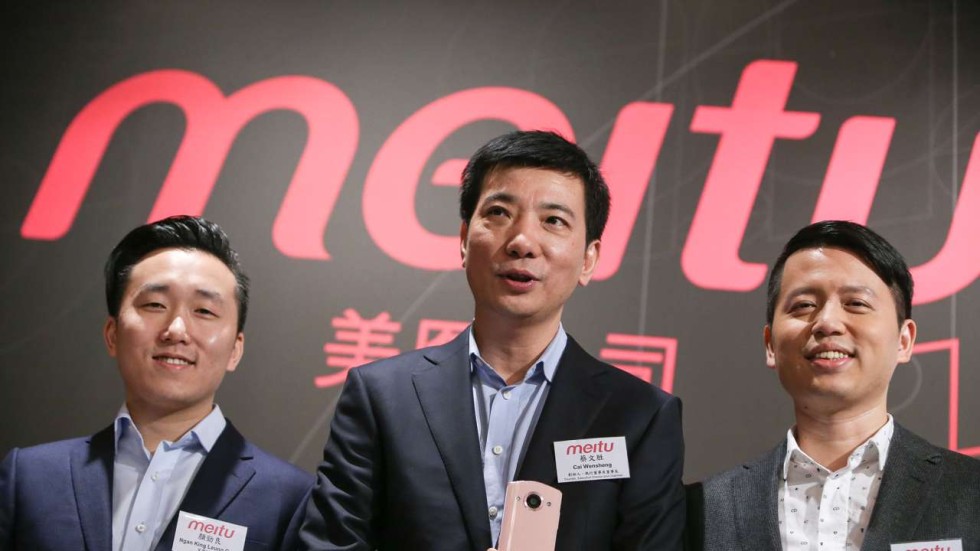
Meitu has been popular in China for years with its parent company launching a US$630 million initial public offering in Hong Kong last year.
Its recent rise to fame in the west, however, was followed by media reports denouncing the beauty app selling people’s personal and phone information.
The company has refuted the claims, but knowing their data was being sent to China was enough to scare off consumers abroad.
“They have prejudices against China,” Meitu’s chairman Cai Wensheng said at a media briefing earlier this month. 
“Our company is in China. Of course our servers are based there.”
Meitu’s experience highlights a deep distrust in Chinese IT products among foreign consumers, especially as Chinese government continues to tighten its grips in the cyberspace.
To get past this global perception of the country’s censorship paranoia, analysts say mainland tech companies must try to commit themselves to more transparency, to win over the hearts and minds of overseas users.
Security concerns are not new to China’s tech sector, of course.
Telecom gears made by Huawei and ZTE were labelled national security threats by the US government in 2012, while phonemaker Xiaomi faced data privacy investigations in Taiwan and Singapore. 
New internet regulations issued by Beijing only added to the worries that mainland products pose privacy threats.
A controversial cyber security law passed in November requires internet operators to store internet logs for at least six months and provide “technical support” to any investigations involving potential crime or national security.
During the Meitu controversy, technology bloggers and security commenters based their accusations on a Chinese regulation issued in June last year requiring China’s app developers to verify users’ identities and save their activity logs for 60 days.
Both rules state they apply to those that provide internet services within China, without specifying how data from foreign users of Chinese companies is handled.
Foreign businesses said that such laws will be used to force tech firms to hand over data.
Joel Snyder, senior partner at US IT consulting firm Opus One, said western consumers remain worried that Chinese companies do not follow the moral code in protecting users’ privacy.
Spying for China

“US and European consumers know that the Chinese government has its hands in every software and hardware company and that there are numerous ways in which private information might be compromised in favour of the Communist Party,” Snyder said in an email to the South China Morning Post.
Heavy online censorship by Beijing has also hurt the image of Chinese tech companies.
The country’s most popular instant-messaging app WeChat was blocking keywords that Beijing deemed "harmful", according to a November study by the University of Toronto’s Citizen Lab.
Its parent company Tencent has insisted it "complies with" the local laws and regulations in which is operates.
Although the study also shows censors do not act on accounts registered with overseas phone numbers, people outside of China are concerned what they say to their friends on WeChat are filtered out and monitored.
Queenie Wong, 22, who works for an accounting firm in Hong Kong, said she uses Whatsapp and Facebook’s Messenger instead of WeChat to avoid censorship.
“Overall I’m not confident about mainland apps,” Wong said. 
“The Chinese government controls the internet. I don’t want my private information to be sent there.”
Wong’s concerns are shared by her family and friends.
In Hong Kong, Tencent used to give out freebies and have local celebrities star in advertisements to boost the popularity of WeChat.
But it has so far failed to beat Whatsapp, which promises that messages cannot be read by third-parties with its end-to-end encryption.
Some have taken action to address such concerns. 
Xiaomi in 2014 shifted some of its data on non-Chinese customers from servers in Beijing to those in the US and Singapore.
Its vice president Hugo Barra at the time said on his blog that the data migration “better equips us to maintain high privacy standards and comply with local data protection regulations”.
“This is a very high priority for Xiaomi as we expand into new markets over the next few years.”
Following the most recent accusations against Meitu, it issued a statement explaining how it uses customer phone data to track app performances and customise in-app advertisements.
Its chairman said the company is also considering setting up servers in Hong Kong and the US.
“We pay great attention to privacy,” Cai said. 
“If a company fails in this area, it will not be able to develop, especially when targeting overseas users.”
Internet experts say mainland tech companies can change the negative perception with stronger and more transparent security practices.
Lam Kwok-yan, cyber security researcher at the Nanyang Technological University in Singapore, says Chinese apps or mobile phones put their users at risk because they contain malware or fail to ensure secure data transmission.
Lam said to convince overseas users their products are safe, Chinese firms should adopt international security standards in developing the apps, testing them and handling user’s information.
Snyder also said mainland internet companies should exercise transparent security measures to gain the trust of western consumers.
“The key factor here is reputation,” he said.
“Chinese companies have made no great effort in building their reputation as developers and as trusted sources in US and European markets.”