By Michael Forsythe, David Enrich and Alexandra Stevenson

The towering International Commerce Center houses Deutsche Bank’s offices in Hong Kong. Confidential documents detail how the company’s hiring practices in China curried favor with the state.
It was a brazen campaign to win business in China by charming and enriching the country’s political elite.
The bank gave a Chinese president -- Jiang Zemin -- a crystal tiger and a Bang & Olufsen sound system, together worth $18,000.
A premier -- Wen Jiabao -- received a $15,000 crystal horse, his Chinese zodiac animal, and his son got $10,000 in golf outings and a trip to Las Vegas.
A top state banking official, a son of one of China’s founding fathers, accepted a $4,254 bottle of French wine — Château Lafite Rothschild, vintage 1945, the year he was born.
Millions of dollars were paid out to Chinese consultants, including a business partner of the premier’s family and a firm that secured a meeting for the bank’s chief executive with the president.
And more than 100 relatives of the Communist Party’s ruling elite were hired for jobs at the bank, even though it had deemed many unqualified.
This was all part of Deutsche Bank’s strategy to become a major player in China, beginning nearly two decades ago when it had virtually no presence there.
And it worked.
By 2011, the German company would be ranked by Bloomberg as the top bank for managing initial public offerings in China and elsewhere in Asia, outside Japan.
The bank’s rule-bending rise to the top was chronicled in confidential documents, prepared by the company and its outside lawyers, that were obtained by the German newspaper Süddeutsche Zeitung. The previously undisclosed documents, shared with The New York Times, cover a 15-year period and include spreadsheets, emails, internal investigative reports and transcripts of interviews with senior executives.
The documents show that Deutsche Bank’s troubling behavior in China was far more extensive than the authorities in the United States have publicly alleged.
And they show that the bank’s top leadership was warned about the activity but did not stop it.
Josef Ackermann, the bank’s chief executive until 2012, said in an interview with The Times and separately in answers to written questions that he was not familiar with many of the details contained in the documents.
But he defended the bank’s broader practices.
“This was part of doing business in this country,” Mr. Ackermann said.
“At the time, this was the way things were done.”

Josef Ackermann, the bank’s chief executive until 2012, said in an interview that China was “a relationship country,” and that “of course we cultivated these people.”
For years, Deutsche Bank has been a poster child for misconduct in the finance industry.
Regulators and prosecutors around the world have imposed billions of dollars in penalties against the bank for its role in a wide range of scandals.
Most recently, the bank has been under investigation for the facilitation of money laundering in Russia and elsewhere.
Deutsche Bank — which for two decades was the primary lender to Trump — also has been under scrutiny by two congressional committees and by state prosecutors in New York who are investigating Trump’s finances.
In August, the bank agreed to pay $16 million in a settlement with the United States Securities and Exchange Commission related to allegations that it had used corrupt means to win business in both China and Russia, violating anti-bribery laws, though it did not admit wrongdoing.
That penalty, the documents show, amounted to a small fraction of the revenues gained in China from business stemming in part from the activities.
The bank’s outside lawyers had warned executives in 2017 that they could face a penalty of more than $250 million from the S.E.C. related to China.
There is no evidence that German regulators investigated the bank’s activities in China, though they were alerted to some of it, according to the documents.
Reasons for concern appear throughout the documents, which include internal investigations conducted by two law firms, Gibson, Dunn & Crutcher and Allen & Overy, at the time of the S.E.C.’s action.
Deutsche Bank, the documents show, dispensed hundreds of thousands of dollars to secure meetings for top executives with China’s leadership.
An obscure company received $100,000 to arrange a 2002 meeting between Ackermann and Jiang Zemin, then the country’s president.
In all, the documents show, the bank paid seven consultants more than $14 million, including for help buying a stake in a Chinese bank and winning coveted assignments from state-owned companies. Some of the payments were flagged internally as problematic but allowed to go through.
On multiple occasions, according to the documents, Deutsche Bank tried to win business by collaborating with family members of Wen Jiabao, China’s premier from 2003 to 2013.
The Wens’ enormous accumulation of wealth was the focus of a 2012 investigation by The Times that found family members had controlled assets worth at least $2.7 billion.
Winning Over the Wens
Among its many ties to China’s political elite, Deutsche Bank cultivated a deep relationship with the family of Wen Jiabao during his term as premier of China.
Wen himself received gifts from the bank valued at more than $15,000.
But it was a family affair, involving his son, daughter and their spouses, as well as a close business associate of the family.

Wen Jiabao
Zhang Beili
Premier
2003-13
Diamond expert
WIFE
Wen family
EMPLOYED
SON-IN-LAW
DAUGHTER
DAUGHTER-IN-LAW
SON
Liu
Chunhang
Wen
Ruchun
Yang
Xiaomeng
Winston
Wen
GOLF
PARTNER
Co-founder of the
New Horizon Capital
private equity firm
RECOMMENDED
ACQUAINTANCE
RECOMMENDED
Huang
Xuhuai
Liu
Lina
Jane
Jin
Jean
Kang
FRIEND
GIFTS
HIRED
INVESTED
HIRED
Josef Ackermann provided Mr. Wen with a crystal horse sculpture valued at more than $15,000.
Deutsche Bank hired several job candidates referred to them by members of the Wen family.
Deutsche Bank invested in Winston Wen’s private equity firm, as well as paying for golfing vacations for him.
Lee Zhang hired Mr. Huang as a consultant in 2005 and again in 2006, paying him more than $5 million.
Deutsche Bank
Josef Ackermann
Lee Zhang
Chief executive
2002-12
Head of corporate
finance in Asia
2004-10
Such hires can be illegal if they are done in exchange for business.
The bank’s outside lawyers calculated that just 19 of its so-called relationship hires helped bring in $189 million in revenue, including a plum assignment in 2006 managing a state bank’s market debut, then the biggest initial public offering in history.
Most of the Chinese government officials entangled in the bank’s activities have since retired, among them Jiang and Wen.
Most of the Chinese government officials entangled in the bank’s activities have since retired, among them Jiang and Wen.
But two parents of people the bank employed are now members of the Politburo Standing Committee, the country’s pinnacle of power.
And the country’s vice president, Wang Qishan, accepted gifts from the bank when he held previous positions, such as mayor of Beijing.
Efforts by The Times and Süddeutsche Zeitung to reach Jiang, Wang and Wen — as well as other Chinese officials, executives and relatives mentioned in the documents — either were unsuccessful or received no response.
Efforts by The Times and Süddeutsche Zeitung to reach Jiang, Wang and Wen — as well as other Chinese officials, executives and relatives mentioned in the documents — either were unsuccessful or received no response.
Several current and former Deutsche Bank employees declined to comment.
Tim-Oliver Ambrosius, a spokesman for the bank, did not respond to specific questions about the documents.
Tim-Oliver Ambrosius, a spokesman for the bank, did not respond to specific questions about the documents.
In a written statement, he said that the company had “thoroughly investigated and reported to authorities certain past conduct,” adding that the bank had “enhanced our policies and controls, and action has been taken where issues have been identified.”
“These events date back as far as 2002 and have been dealt with,” the statement said.
Ackermann said that he had cautioned the bank’s staff that “no business is worth risking the bank’s reputation.”
“These events date back as far as 2002 and have been dealt with,” the statement said.
Ackermann said that he had cautioned the bank’s staff that “no business is worth risking the bank’s reputation.”
Though he pushed employees to increase revenue and profits, he said, “feeling pressure cannot excuse violating compliance rules and regulations or the law of the land.”
Playing Catch-Up
When Ackermann was picked in 2000 as the next chief executive, his ambition was for Deutsche Bank to be universally recognized as a global leader.
Playing Catch-Up
When Ackermann was picked in 2000 as the next chief executive, his ambition was for Deutsche Bank to be universally recognized as a global leader.
And he wanted it done fast.
China was critical.
China was critical.
It was the most populous country in the world and on its way to becoming the second-largest economy.
Yet Deutsche Bank was far behind its rivals there.
Goldman Sachs and Morgan Stanley had been at the forefront of helping China modernize its moribund financial system and network of state-owned businesses.
Goldman Sachs and Morgan Stanley had been at the forefront of helping China modernize its moribund financial system and network of state-owned businesses.
In 1995, Morgan Stanley helped set up the country’s first investment bank, China International Capital Corporation.
Goldman won the rights in 1997 to bring China Telecom, the country’s phone monopoly, to the international market through an initial public offering in Hong Kong.
Ackermann had to play catch-up.
A first step for the bank was poaching Lee Zhang, the head of Goldman Sachs’s Beijing office.
Ackermann had to play catch-up.
A first step for the bank was poaching Lee Zhang, the head of Goldman Sachs’s Beijing office.
Zhang was fluent in the ways of both China and Western business.
Born and raised in China, he had studied in Canada and later moved to California, where he worked for Hewlett-Packard and studied business administration.
He then went to Hong Kong, eventually landing at Goldman.
Zhang’s mandate was to transform Deutsche Bank into a player in China.
Zhang’s mandate was to transform Deutsche Bank into a player in China.
That required winning over the Communist Party.
Zhang began hiring aggressively.
Zhang began hiring aggressively.
Many of his recruits — dozens and dozens of them, according to spreadsheets compiled by the bank’s lawyers — were young, inexperienced and well connected.
They came to know him as Uncle Zhang.
Ma Weiji, whose parents were senior executives at state-owned companies, interviewed for a job in 2007.
Ma Weiji, whose parents were senior executives at state-owned companies, interviewed for a job in 2007.
It did not go well.
A senior Deutsche Bank executive emailed Zhang that Ma “was probably one of the worst candidates.”
He got the job nevertheless.
He got the job nevertheless.
Soon, Ma was using his family connections to secure meetings for the bank with his parents’ companies, according to a memo by Allen & Overy.
Another job candidate was a son of Liu Yunshan, then China’s propaganda minister.
Another job candidate was a son of Liu Yunshan, then China’s propaganda minister.
He “cannot meet our standard,” a Deutsche Bank employee wrote in an email about the company’s equity capital markets group.
He was offered a job anyway.
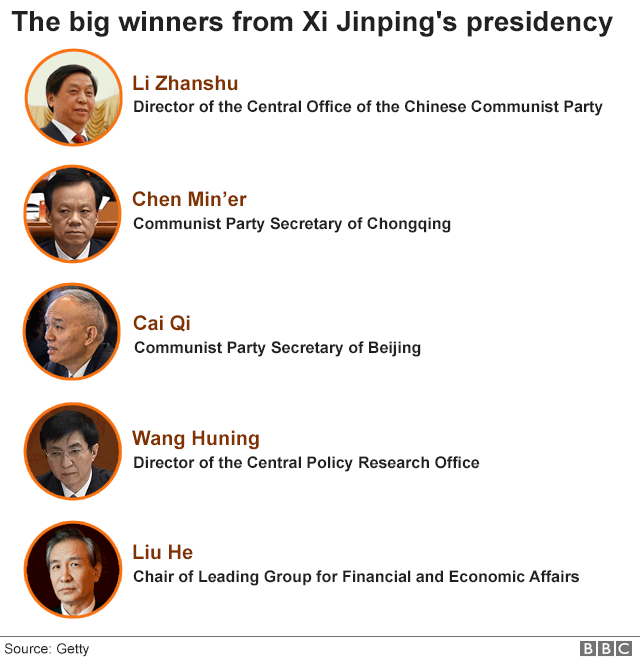
The younger daughter of Li Zhanshu — now a top member of the Politburo Standing Committee — was judged unqualified for the bank’s corporate communications team.
The younger daughter of Li Zhanshu — now a top member of the Politburo Standing Committee — was judged unqualified for the bank’s corporate communications team.
She got an offer, too.
Even for qualified candidates, political connections were taken into account.
Wang Xisha, whose father was the top official in Guangdong Province when she applied in 2010, was a veteran of the rival bank UBS and had also interned at Goldman Sachs.
Even for qualified candidates, political connections were taken into account.
Wang Xisha, whose father was the top official in Guangdong Province when she applied in 2010, was a veteran of the rival bank UBS and had also interned at Goldman Sachs.
During her recruitment process, one banker noted that she would “have access” to a state-owned automaker, according to Allen & Overy.
Her father, Wang Yang, is now a member of the Politburo Standing Committee.
In 2006, Deutsche Bank began to engage in what it called referral hiring.
In 2006, Deutsche Bank began to engage in what it called referral hiring.
The goal was to drum up business for the bank by doling out personal favors to current and prospective clients, the S.E.C. found.
Premier Wen Jiabao’s son-in-law, who was a senior official at China’s banking regulator, referred one candidate.
Wen’s daughter-in-law referred another.
Both were hired.
A state railway executive in China referred the son of a judge on the Supreme People’s Court.
A state railway executive in China referred the son of a judge on the Supreme People’s Court.
The assistant president of the oil refiner Sinopec referred a candidate, too.
So did the general manager of the state-owned Industrial and Commercial Bank of China.
Zhang, reached by phone, declined to be interviewed for this article.
Zhang, reached by phone, declined to be interviewed for this article.
He also did not respond to written questions sent through a business associate.
“It’s a relationship country,” Ackermann said in the interview.
“It’s a relationship country,” Ackermann said in the interview.
“Of course we cultivated these people.”
Cashmere Overcoats
The roster was set.
The first nine foursomes to tee off at Deutsche Bank’s Beijing golf invitational in October 2003 were a predictable mix of German and Chinese executives.
The 10th group was different.
The 10th group was different.
It included Winston Wen, son of the newly appointed premier, as well as Huang Xuhuai, a close business associate of the Wen family.
They were joined by a top official from PetroChina, a state-owned oil company.
The fourth player was Zhang.
The fourth player was Zhang.
The following month, he, Huang and Wen would be off to Thailand for more golf, and later to Germany, according to documents compiled for the bank’s internal investigation.
The relationships that Zhang built with the golfers were microcosms of how the bank made a name for itself in China beyond its strategic hiring.
The relationships that Zhang built with the golfers were microcosms of how the bank made a name for itself in China beyond its strategic hiring.
They were showered with gifts.
They were enlisted to introduce Deutsche Bank executives to Chinese decision makers.
And they were hired as consultants to help win the bank work.
Among dozens of gifts to political leaders and heads of state-run companies, the oil executive received golf clubs and a bag valued at more than $2,500.
Executives at China Life Insurance, which picked Deutsche Bank to help manage its I.P.O. in 2003, were treated to Louis Vuitton luggage, cashmere overcoats, golf clubs, even a sofa, totaling more than $22,000, according to a memo by Gibson, Dunn & Crutcher.
The bank prohibited gifts to public officials unless the legal and compliance departments signed off, and Gibson Dunn found that Zhang, who generated many of the expenses, had violated that policy.
The law firm’s research showed that from 2002 to 2008, bank officials gave more than $200,000 in gifts to Chinese officials, their relatives and executives of state-owned companies.
Among dozens of gifts to political leaders and heads of state-run companies, the oil executive received golf clubs and a bag valued at more than $2,500.
Executives at China Life Insurance, which picked Deutsche Bank to help manage its I.P.O. in 2003, were treated to Louis Vuitton luggage, cashmere overcoats, golf clubs, even a sofa, totaling more than $22,000, according to a memo by Gibson, Dunn & Crutcher.
The bank prohibited gifts to public officials unless the legal and compliance departments signed off, and Gibson Dunn found that Zhang, who generated many of the expenses, had violated that policy.
The law firm’s research showed that from 2002 to 2008, bank officials gave more than $200,000 in gifts to Chinese officials, their relatives and executives of state-owned companies.
More than a fourth went to people on the Politburo or their relatives, including Jiang Zemin, the president; and Wen Jiabao, the premier.
Some of the gifts, like the crystal tiger for Jiang Zemin, who was born in 1926, the year of the tiger, were “provided” by Ackermann, according to the internal investigation.
Ackermann said that while he didn’t recall personally giving the items, he was aware that the bank’s staff thought it a good idea.
Some of the gifts, like the crystal tiger for Jiang Zemin, who was born in 1926, the year of the tiger, were “provided” by Ackermann, according to the internal investigation.
Ackermann said that while he didn’t recall personally giving the items, he was aware that the bank’s staff thought it a good idea.
He has not been accused of wrongdoing in China.
“They said that’s what Goldman and JPMorgan are doing, so we should do it,” Ackermann said in the interview.
“They said that’s what Goldman and JPMorgan are doing, so we should do it,” Ackermann said in the interview.
“I don’t think Wen Jiabao would be somehow influenced by a gift of a few thousand.”
In 2016, JPMorgan was fined $264.4 million by the Justice Department for its Chinese hiring.
In 2016, JPMorgan was fined $264.4 million by the Justice Department for its Chinese hiring.
Other banks were also known to engage in similar practices.
The Swiss bank Credit Suisse paid $77 million last year in criminal penalties and other fines. Goldman Sachs has not been accused of wrongdoing in its China business.
‘Red Flags’
The plan to increase Deutsche Bank’s clout in China also included buying a big stake in a midsize Beijing bank, Huaxia.
The acquisition plan, code-named Project Rooster, involved hiring Huang, one of Zhang’s golf partners.
Huang had no experience in banking but had worked in a diamond company run by the wife of the premier, according to a background check that was done for the bank at the time.
He was paid the equivalent of more than $2 million.
The bank’s compliance department didn’t stand in the way of the consulting role, but some senior executives were uneasy.
“Based on the information from the search firm, if this person is not known to the market and industry, why are we paying for the service and what are we paying for?” Polly Lee, the bank’s head of compliance in Hong Kong, wrote in an email to Till Staffeldt, a regional executive who was pushing for Huang’s hiring.
The bank’s compliance department didn’t stand in the way of the consulting role, but some senior executives were uneasy.
“Based on the information from the search firm, if this person is not known to the market and industry, why are we paying for the service and what are we paying for?” Polly Lee, the bank’s head of compliance in Hong Kong, wrote in an email to Till Staffeldt, a regional executive who was pushing for Huang’s hiring.
“My concern is this individual is fronting for someone else.”
Staffeldt is now Deutsche Bank’s global chief operating officer for regulation, compliance and preventing financial crime.
Deutsche Bank’s bid for Huaxia was successful.
Staffeldt is now Deutsche Bank’s global chief operating officer for regulation, compliance and preventing financial crime.
Deutsche Bank’s bid for Huaxia was successful.
In late 2005, the bank secured a 9.9 percent stake, which later increased to almost 20 percent.
It was unclear what Huang did to help the deal go through, but Gibson Dunn later found that the circumstances around his hiring raised “red flags” that might have violated the Foreign Corrupt Practices Act, in part because of Huang’s ties to the family of the premier, Wen.
In 2006, Deutsche Bank again brought Huang on as a consultant.
In 2006, Deutsche Bank again brought Huang on as a consultant.
This time, his task was to “study in-depth the financial safety of China’s banking industry.”
He received $3 million.
Inside the bank, concerns had been mounting about Zhang’s use of consultants to win business.
Inside the bank, concerns had been mounting about Zhang’s use of consultants to win business.
Frank Nash, who ran the bank’s Asian corporate finance division until 2004, warned a top executive, Michael Cohrs, about the problematic use of politically connected consultants.
Cohrs shared those concerns with the bank’s lawyers, including Richard Walker, a general counsel.
Cohrs shared those concerns with the bank’s lawyers, including Richard Walker, a general counsel.
They concluded that Zhang was operating inside the law, three people familiar with those discussions told The Times.
Zhang kept going.
Zhang kept going.
In 2006 he turned to another consultant named Huang to help the bank secure a role in the I.P.O. of Industrial and Commercial Bank of China.
The stock offering was set to be the world’s largest ever.
The banks handling the transaction reaped not only huge fees but also coveted bragging rights.
That man, Huang Xianghui, was lacking in banking experience, and a background check found that the Beijing company he claimed to work for did not appear to exist at the address on his business card.
That man, Huang Xianghui, was lacking in banking experience, and a background check found that the Beijing company he claimed to work for did not appear to exist at the address on his business card.
But what he did have, according to the bank’s documents, was a previous affiliation with PetroChina, the state oil company.
Zhang hired him.
Huang’s original contract said he would receive $3 million for services that were “solely focused on the energy industry.”
Huang’s original contract said he would receive $3 million for services that were “solely focused on the energy industry.”
In a draft, someone crossed out “the energy industry” and wrote “ICBC,” a reference to the giant state-owned bank.
Deutsche Bank went on to win a high-profile role in the I.P.O.
The success ingratiated Zhang with his superiors, especially Ackermann.
The success ingratiated Zhang with his superiors, especially Ackermann.
Zhang would escort him to meetings with top Chinese leaders, including the president and premier, as well as to gatherings with cultural and academic experts, Ackermann said.
While at Deutsche Bank, Zhang was appointed to a top government advisory body, signaling his insider status.
“He introduced me to all sorts of people,” Ackermann said in the interview.
“He introduced me to all sorts of people,” Ackermann said in the interview.
But Cohrs, who was the head of investment banking, warned the company’s lawyers that he was “scared of how Lee Zhang was doing business and whether there was money being passed around in envelopes,” the documents show.
There was reason to be concerned.
There was reason to be concerned.
A Settlement, No Wrongdoing
In 2010, the head of I.C.B.C. approached Ackermann and said he wanted to hire Zhang, citing his excellent work at Deutsche Bank, according to Ackermann.
He became senior executive vice president at the giant Chinese bank.
Two years later, Ackermann stepped down as chief executive.
Two years later, Ackermann stepped down as chief executive.
A top executive warned his successor, Anshu Jain, that the bank had grown overly reliant on winning business from state-owned companies, an area rife with corruption risks, according to a person with direct knowledge of the warning.
In 2013, when the United States began investigating JPMorgan’s hiring practices in China, Deutsche Bank initiated an internal review.
In 2013, when the United States began investigating JPMorgan’s hiring practices in China, Deutsche Bank initiated an internal review.
It found a troubling pattern of politically connected hiring, and reported the findings to the S.E.C. and the Justice Department.
The S.E.C. subpoenaed the bank in April 2014.
The S.E.C. subpoenaed the bank in April 2014.
Months later, Deutsche Bank sued Zhang, accusing him of profiting from one of the consulting companies he had hired because it was owned by a relative.
Zhang denied wrongdoing in the suit.
The Times and Süddeutsche Zeitung found two other consulting companies used by Deutsche Bank that appeared to be owned by Zhang’s wife.

Deutsche Bank agreed to pay $16 million this year in a settlement with the Securities and Exchange Commission, in part because of its activity in China.
Amazing Channel Holdings and Speedy Link Holdings, both registered in the British Virgin Islands, list Ji Zhengrong as the owner, according to documents found in the Panama Papers.
The Times and Süddeutsche Zeitung found two other consulting companies used by Deutsche Bank that appeared to be owned by Zhang’s wife.
Deutsche Bank agreed to pay $16 million this year in a settlement with the Securities and Exchange Commission, in part because of its activity in China.
Amazing Channel Holdings and Speedy Link Holdings, both registered in the British Virgin Islands, list Ji Zhengrong as the owner, according to documents found in the Panama Papers.
Zhang’s wife has the same name, and her birth date, listed in Hong Kong court records, matches the birth date in the offshore company records.
Speedy Link was paid $3.65 million by Deutsche Bank to assist in its successful bid to help manage the I.P.O. of China Life Insurance Company in 2003, according to the bank’s documents.
Speedy Link was paid $3.65 million by Deutsche Bank to assist in its successful bid to help manage the I.P.O. of China Life Insurance Company in 2003, according to the bank’s documents.
Amazing Channel Holdings was paid $100,000.
At the time, Deutsche Bank’s top lawyer was Walker, who had been warned of executives’ concerns about politically connected consultants in China.
Before joining Deutsche Bank, Walker had been the head of the S.E.C.’s enforcement division.
At the time, Deutsche Bank’s top lawyer was Walker, who had been warned of executives’ concerns about politically connected consultants in China.
Before joining Deutsche Bank, Walker had been the head of the S.E.C.’s enforcement division.
Now, as the agency’s investigation unfolded, bank officials were feeling optimistic.
Lawyers for Deutsche Bank traveled to the S.E.C.’s office in Salt Lake City to give a presentation on the company’s internal investigation.
Lawyers for Deutsche Bank traveled to the S.E.C.’s office in Salt Lake City to give a presentation on the company’s internal investigation.
They argued that its hiring of Chinese princelings was far less extensive and systematic than at other banks, according to a person briefed on the meeting.
The lawyers told Walker afterward that the S.E.C. seemed to share the bank’s perspective, the person said.
The lawyers told Walker afterward that the S.E.C. seemed to share the bank’s perspective, the person said.
The agency’s investigators had concluded that when the bank hired politically connected employees, they were generally well qualified — something the bank’s internal reviews had cast doubt on.
This August, the S.E.C. announced that it was closing its investigation and had settled with the bank without requiring an admission of wrongdoing.
This August, the S.E.C. announced that it was closing its investigation and had settled with the bank without requiring an admission of wrongdoing.
Asked about the previously undisclosed Deutsche Bank documents, Chandler Costello, an S.E.C. spokeswoman, said, “The S.E.C. does not comment on details of any investigation, but, as always, the S.E.C. is committed to pursuing violations of federal securities law, wherever or by whomever they may occur.”
Earlier this year, the bank disclosed that it remained under investigation by the Justice Department for its hiring practices and use of consultants in foreign countries.
Earlier this year, the bank disclosed that it remained under investigation by the Justice Department for its hiring practices and use of consultants in foreign countries.