Affichage des articles dont le libellé est Cloudhopper. Afficher tous les articles

jeudi 7 février 2019

China's global theft of commercial secrets

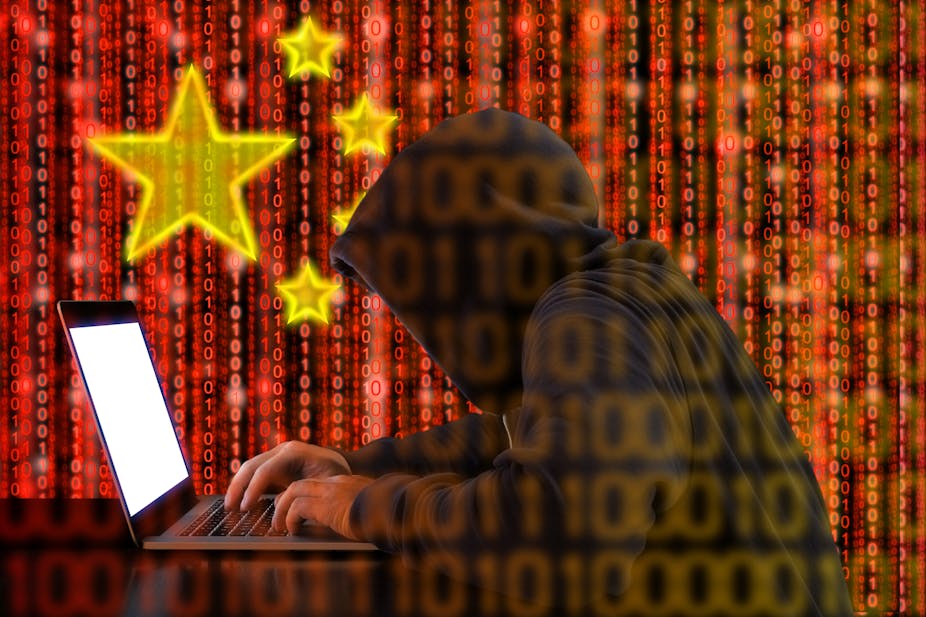
China hacked Norway's Visma to steal client secrets
By Jack Stubbs

LONDON -- Hackers working on behalf of Chinese intelligence breached the network of Norwegian software firm Visma to steal secrets from its clients, cybersecurity researchers said, in what a company executive described as a potentially catastrophic attack.
The attack was part of what Western countries said in December is a global hacking campaign by China's Ministry of State Security to steal intellectual property and corporate secrets, according to investigators at cybersecurity firm Recorded Future.
China's Ministry of State Security has no publicly available contacts. 
The foreign ministry did not respond to a request for comment.
Visma took the decision to talk publicly about the breach to raise industry awareness about the hacking campaign, which is known as Cloudhopper and targets technology service and software providers in order reach their clients.
Cybersecurity firms and Western governments have warned about Cloudhopper several times since 2017 but have not disclosed the identities of the companies affected.
Reuters reported in December that Hewlett Packard Enterprise Co and IBM were two of the campaign's victims, and Western officials caution in private that there are many more.
At the time IBM said it had no evidence sensitive corporate data had been compromised, and Hewlett Packard Enterprise said it could not comment on the Cloudhopper campaign.
Visma, which reported global revenues of $1.3 billion last year, provides business software products to more than 900,000 companies across Scandinavia and parts of Europe.
The company's operations and security manager, Espen Johansen, said the attack was detected shortly after the hackers accessed Visma's systems and he was confident no client networks were accessed.

"PARANOIA HAT"
"But if I put on my paranoia hat, this could have been catastrophic," he said. 
"If you are a big intelligence agency somewhere in the world and you want to harvest as much information as possible, you of course go for the convergence points, it's a given fact."
"I'm aware that we do have clients which are very interesting for nation states," he said, declining to name any specific customers.
Paul Chichester, director for operations at Britain's National Cyber Security Centre, said the Visma case highlighted the dangers organisations increasingly face from cyber attacks on their supply chains.
"Because organisations are focused on improving their own cyber security, we are seeing an increase in activity targeting supply chains as actors try to find other ways in," he said.
In a report https://www.recordedfuture.com/apt10-cyberespionage-campaign with investigators at cybersecurity firm Rapid7, Recorded Future said the attackers first accessed Visma's network by using a stolen set of login credentials and were operating as part of a hacking group known as APT 10, which Western officials say is behind the Cloudhopper campaign.
The U.S. Department of Justice in December charged two members of APT 10 with hacking U.S. government agencies and dozens of businesses around the world on behalf of China's Ministry of State Security.
Priscilla Moriuchi, director of strategic threat development at Recorded Future and a former intelligence officer at the U.S. National Security Agency, said the hackers' activity inside Visma's network suggested they intended to infiltrate client systems in search of commercially-sensitive information.
"We believe that APT 10 in this case exploited Visma networks to enable secondary operations against Visma's customers, not necessarily to steal Visma's own intellectual property," she said. "Because they caught it so early they were able to discourage and prevent those secondary attacks." 

vendredi 21 décembre 2018

China's Cyber-Aggressions

China hacked Hewlett Packard Enterprise, IBM and then attacked clients 
By  Christopher Bing, Jack Stubbs, Joseph Menn
Signs for Hewlett Packard Enterprise Co. cover the facade of the New York Stock Exchange November 2, 2015. 

WASHINGTON/LONDON/SAN FRANCISCO -- Hackers working on behalf of China’s Ministry of State Security breached the networks of Hewlett Packard Enterprise Co and IBM, then used the access to hack into their clients’ computers, according to five sources familiar with the attacks.
The attacks were part of a Chinese campaign known as Cloudhopper, which the United States and Britain on Thursday said infected technology service providers in order to steal secrets from their clients.
While cybersecurity firms and government agencies have issued multiple warnings about the Cloudhopper threat since 2017, they have not disclosed the identity of technology companies whose networks were compromised.
International Business Machines Corp said it had no evidence that sensitive corporate data had been compromised. 
Hewlett Packard Enterprise (HPE) said it could not comment on the Cloudhopper campaign.
Businesses and governments are increasingly looking to technology companies known as managed service providers (MSPs) to remotely manage their information technology operations, including servers, storage, networking and help-desk support.
Cloudhopper targeted MSPs to access client networks and steal corporate secrets from companies around the globe, according to a U.S. federal indictment of two Chinese unsealed on Thursday. 
Prosecutors did not identify any of the MSPs that were breached.
Both IBM and HPE declined to comment on the specific claims made by the sources.
“IBM has been aware of the reported attacks and already has taken extensive counter-measures worldwide as part of our continuous efforts to protect the company and our clients against constantly evolving threats,” the company said in a statement. 
“We take responsible stewardship of client data very seriously, and have no evidence that sensitive IBM or client data has been compromised by this threat.”
HPE said in a statement that it had spun out a large managed-services business in a 2017 merger with Computer Sciences Corp that formed a new company, DXC Technology.
“The security of HPE customer data is our top priority,” HPE said. 
“We are unable to comment on the specific details described in the indictment, but HPE’s managed services provider business moved to DXC Technology in connection with HPE’s divestiture of its Enterprise Services business in 2017.”
DXC Technology declined to comment, saying in a statement that it does not comment on reports about specific cyber events and hacking groups.
Reuters was unable to confirm the names of other breached technology firms or identify any affected clients.
The sources, who were not authorized to comment on confidential information gleaned from investigations into the hacks, said that HPE and IBM were not the only prominent technology companies whose networks had been compromised by Cloudhopper.
Cloudhopper, which has been targeting technology services providers for several years, infiltrated the networks of HPE and IBM multiple times in breaches that lasted for weeks and months, according to another of the sources with knowledge of the matter.
IBM investigated an attack as recently as this summer, and HPE conducted a large breach investigation in early 2017, the source said.
The attackers were persistent, making it difficult to ensure that networks were safe, said another source.
IBM has dealt with some infections by installing new hard drives and fresh operating systems on infected computers, said the person familiar with the effort.
Cloudhopper attacks date back to at least 2014, according the indictment.
The indictment cited one case in which Cloudhopper compromised data of an MSP in New York state and clients in 12 countries including Brazil, Germany, India, Japan, the United Arab Emirates, Britain and the United States. 
They were from industries including finance, electronics, medical equipment, biotechnology, automotive, mining, and oil and gas exploration.
One senior intelligence official, who declined to name any victims who were breached, said attacks on MSPs were a significant threat because they essentially turned technology companies into launchpads for hacks on clients.
“By gaining access to an MSP, you can in many cases gain access to any one of their customers,” said the official. 
“Call it the Walmart approach: If I needed to get 30 different items for my shopping list, I could go to 15 different stores or I could go to the one that has everything.”
Representatives with the FBI and Department of Homeland Security declined to comment. 
Officials with the U.S. Justice Department and the Chinese embassy in Washington could not be reached.
A British government spokeswoman declined to comment on the identities of companies affected by the Cloudhopper campaign or the impact of those breaches.
“A number of MSPs have been affected, and naming them would have potential commercial consequences for them, putting them at an unfair disadvantage to their competitors,” she said.

mardi 9 octobre 2018

Europe raises flags on rampant China’s cyber espionage

By LAURENS CERULUS 

The EU is gearing up to confront China on alarming levels of Beijing-linked cyber espionage on European industry.
The European Commission’s department for industry is drafting a document that would sum up Europe’s worries on the issue, two sources briefed on the plan told POLITICO, and could still come up with new measures to defend European trade secrets during this mandate, which ends in May next year.
The European Commission Thursday met a group of national government experts, foreign affairs officials and industry lobbyists to go over a study by PricewaterhouseCoopers and the Commission department that is likely to lead to EU action in coming months.
The study, an executive summary of which was obtained by POLITICO, offers a peek into “public and private sector concerns about the increasing risks associated with cyber-theft of trade secrets in Europe.”
In the manufacturing sector, it said, industrial espionage and cybertheft of trade secrets constitute up to 94 percent of all cyberattacks. 
The summary cites estimates that Chinese cyber espionage is costing Europe up to €60 billion in economic growth — a figure that would rise as European companies digitize their services.

Previous reports have consistently pointed fingers at Beijing as the world’s most active government on cyber espionage.

PwC will finalize the report later this month, it said at Thursday’s meeting, after which the Commission would release it and work on its own follow-up.
The Commission’s initiative comes as Bloomberg Businessweek on Thursday published a extensive investigation into how manufacturing subcontractors in China implanted chips as tiny as a grain of rice in parts of servers that make their way onto the global market and into the server centers of cloud services giant Amazon Web Services, Apple and other tech firms. 
The microchips would give Chinese actors access to data touching the servers.
Previous reports have consistently pointed fingers at Beijing as the world’s most active government on cyber espionage. 
A 2013 study by Mandiant raised flags across the world and governments have sought to strike deals with China to stop the practice.
The U.S. struck a deal with China in 2015. 
But intelligence officials have complained that Chinese counterparts have failed to abide by the terms of the agreement. 
On Wednesday, the Department of Homeland Security warned industry that the Beijing-linked “Cloudhopper” hacking group is again launching a widespread campaign on technology service providers to hack and steal industrial secrets.
The PwC study recommends that the European Union, as well as member countries, engage in talks similar to the U.S.-China dialogue. 
It also says that the EU could broaden its requirement to report cyber incidents to companies outside of critical infrastructure sectors. 
It adds that 60 percent of respondents that agree with the need for notifications said that such a notification system should be made mandatory across the EU.
Compared to national governments in and beyond Europe, the EU has in the past been cautious about wading into the debate. 
It lacks an intelligence agency, and is still struggling with the question of whether and how it can attribute cyberattacks to third countries — a naming-and-shaming power that is currently the purview of member countries and not Brussels.
European industry is getting increasingly anxious about the issue, however.
The PwC study says people working in industrial sectors in Italy, France, Germany and the Netherlands are most concerned about cyber espionage. 
Germany is most affected, the study says, as 17 percent of companies reported the theft of sensitive data between 2015 and 2017.
Europe’s largest business lobby BusinessEurope released a statement Thursday in which it asks the EU to come up with a “strategy to deter hostile actors” like China. 
“Diplomatic action or economic retaliation could be considered,” the group says, adding that “the EU could seek to cooperate with the United States, Japan and other OECD economies to apply political pressure.”