Affichage des articles dont le libellé est Jerry Chun Shing Lee. Afficher tous les articles

lundi 16 décembre 2019

Chinese Espionage: U.S. Expelled Chinese Officials After Breach of Military Base

Chinese Embassy officials trespassed onto a Virginia base that is home to Special Operations forces. 
By Edward Wong and Julian E. Barnes

Spy nest: The Chinese Embassy in Washington. The expulsions show the American government is now taking a harder line against espionage by China.

WASHINGTON — The American government secretly expelled two Chinese Embassy officials this fall after they drove on to a sensitive military base in Virginia, according to people with knowledge of the episode. 
The expulsions are the first of Chinese diplomats suspected of espionage in more than 30 years.American officials believe at least one of the Chinese officials was an intelligence officer operating under diplomatic cover, said six people with knowledge of the expulsions. 
The group, which included the officials’ wives, evaded military personnel pursuing them and stopped only after fire trucks blocked their path.
The episode in September, which neither Washington nor Beijing made public, has intensified concerns in the Trump administration that China is expanding its spying efforts in the United States.
American intelligence officials say China poses a greater espionage threat than any other country.In recent months, Chinese officials with diplomatic passports have become bolder about showing up unannounced at research or government facilities, American officials said, with the infiltration of the military base only the most remarkable instance.
The expulsions, apparently the first since the United States forced out two Chinese Embassy employees with diplomatic cover in 1987, show the American government is now taking a harder line against espionage by China, officials said.
On Oct. 16, weeks after the intrusion at the base, the State Department announced sharp restrictions on the activities of Chinese diplomats, requiring them to provide notice before meeting with local or state officials or visiting educational and research institutions.
At the time, a senior State Department official told reporters that the rule, which applied to all Chinese Missions in the United States and its territories, was a response to Chinese regulations imposed years ago requiring American diplomats to seek permission to travel outside their host cities or to visit certain institutions.
Two American officials said last week that those restrictions had been under consideration for a while because of growing calls in the American government for reciprocity, but episodes like the one at the base accelerated the rollout.
The base intrusion took place in late September on a sensitive installation near Norfolk, Va. 
The base includes Special Operations forces, said the people with knowledge of the incident. 
Several bases in the area have such units, including one with the headquarters of the Navy’s elite SEAL Team Six.
The Elizabeth River in Norfolk, Va. The military base intrusion took place in late September on an installation considered especially sensitive in the area.

The Chinese officials and their wives drove up to a checkpoint for entry to the base, said people briefed on the episode. 
A guard, realizing that they did not have permission to enter, told them to go through the gate, turn around and exit the base, which is common procedure in such situations.
But the Chinese officials instead continued on to the base, according to those familiar with the incident. 
After the fire trucks blocked them, the Chinese officials indicated that they had not understood the guard’s English instructions, and had simply gotten lost, according to people briefed on the matter.
American officials said they were skeptical that the intruders made an innocent error and dismissed the idea that their English was insufficient to understand the initial order to leave.
It is not clear what they were trying to do on the base, but some American officials said they believed it was to test the security at the installation, according to a person briefed on the matter. 
Had the Chinese officials made it onto the base without being stopped, the embassy could have dispatched a more senior intelligence officer to enter the base.
The Chinese Foreign Ministry and Chinese Embassy in Washington did not reply to requests for comment about the episode. 
Two associates of Chinese Embassy officials said they were told that the expelled officials were on a sightseeing tour when they accidentally drove onto the base.
The State Department, which is responsible for relations with the Chinese Embassy and its diplomats, and the F.B.I., which oversees counterintelligence in the United States, declined to comment.
Chinese Embassy officials complained to State Department officials about the expulsions and asked in a meeting whether the agency was retaliating for an official Chinese propaganda campaign in August against an American diplomat, Julie Eadeh. 
At the time, state-run news organizations accused Ms. Eadeh, a political counselor in Hong Kong, of being a “black hand” behind the territory’s pro-democracy protests, and personal details about her were posted online. 
A State Department spokeswoman called China a “thuggish regime.”
So far, China has not retaliated by expelling American diplomats or intelligence officers from the embassy in Beijing, perhaps a sign that Chinese officials understand their colleagues overstepped by trying to enter the base. 
One person who was briefed on reactions in the Chinese Embassy in Washington said he was told employees there were surprised that their colleagues had tried something so brazen.

The American Consulate in Hong Kong in September.

In 2016, Chinese officers in Chengdu abducted an American Consulate official they believed to be a C.I.A. officer, interrogated him and forced him to make a confession. 
Colleagues retrieved him the next day and evacuated him from the country. 
American officials threatened to expel suspected Chinese agents in the United States, but apparently did not do so.
China is detaining a Canadian diplomat on leave, Michael Kovrig, on espionage charges, though American officials say he is being held hostage because Canada arrested a prominent Chinese technology company executive at the request of American officials seeking her prosecution in a sanctions evasion case.
For decades, counterintelligence officials have tried to pinpoint embassy or consulate employees with diplomatic cover who are spies and assign officers to follow some of them. 
Now there is growing urgency to do that by both Washington and Beijing.
Evan S. Medeiros, a senior Asia director at the National Security Council under Barack Obama, said he was unaware of any expulsions of Chinese diplomats or spies with diplomatic cover during Obama’s time in office.
If it is rare for the Americans to expel Chinese spies or other embassy employees who have diplomatic cover, Medeiros said, “it’s probably because for much of the first 40 years, Chinese intelligence was not very aggressive.”
“But that changed about 10 years ago,” he added. 
“Chinese intelligence became more sophisticated and more aggressive, both in human and electronic forms.”
For instance, Chinese intelligence officers use LinkedIn to recruit current or former employees of foreign governments.
This year, a Chinese student was sentenced to a year in prison for photographing an American defense intelligence installation near Key West, Fla., in September 2018. 
The student, Zhao Qianli, walked to where the fence circling the base ended at the ocean, then stepped around the fence and onto the beach. 
From there, he walked onto the base and took photographs, including of an area with satellite dishes and antennae.
When he was arrested, Zhao spoke in broken English and, like the officials stopped on the Virginia base, claimed he was lost.
Chinese have been caught not just wandering on to government installations but also improperly entering university laboratories and even crossing farmland to pilfer specially bred seeds.
In 2016, a Chines, Mo Hailong, pleaded guilty to trying to steal corn seeds from American agribusiness firms and give them to a Chinese company. 
Before he was caught, Mo successfully stole seeds developed by the American companies and sent them back to China, according to court records. 
He was sentenced to three years in prison.
The F.B.I. and the National Institutes of Health are trying to root out Chinese scientists in the United States who are stealing biomedical research for China. 
The F.B.I. has also warned research institutions about risks posed by Chinese students and scholars.
Last month, Jerry Chun Shing Lee, a former C.I.A. officer, was sentenced to 19 years in prison, one of several former American intelligence officials sentenced this year for spying for Beijing.
His work with Chinese intelligence coincided with the demolition of the C.I.A.’s network of informants in China — one of the biggest counterintelligence coups against the United States in decades. 
From 2010 to 2012, Chinese officers killed at least a dozen informants and imprisoned others. 
One man and his pregnant wife were shot in 2011 in a ministry’s courtyard, and the execution was shown on closed-circuit television, according to a new book on Chinese espionage.
Many in the C.I.A. feared China had a mole in the agency, and some officers suspected Lee, though prosecutors did not tie him to the network’s collapse.
For three decades, China did have a mole in the C.I.A., Larry Wu-Tai Chin, considered among the most successful enemy agents to have penetrated the United States. 
He was arrested in 1985 and convicted the next year, then suffocated himself with a trash bag in his jail cell.

mercredi 27 novembre 2019

Sino-American Double Loyalty

Ex-C.I.A. Officer Sentenced to 19 Years in Chinese Espionage Conspiracy
Jerry Chun Shing Lee pleaded guilty to conspiring with Chinese intelligence agents
By Zach Montague

Jerry Chun Shing Lee, 55, pleaded guilty in May to conspiring with Chinese intelligence agents.

ALEXANDRIA, Va. — A former C.I.A. officer was sentenced to 19 years in prison on Friday for conspiring to deliver classified information to China in a case that touched on the mysterious unraveling of the agency’s informant network in China.
The former officer, Jerry Chun Shing Lee, 55, pleaded guilty in May to conspiring with Chinese intelligence agents starting in 2010, after he left the agency. 
Prosecutors detailed a long financial paper trail that showed that Lee received more than $840,000 for his work.
Lee, an Army veteran, worked for the C.I.A. from 1994 to 2007, including in China. 
After he resigned, he formed a tobacco company in Hong Kong with an associate who had ties to the Chinese intelligence community. 
Lee then began meeting with agents from China’s Ministry of State Security, who assigned him tasks he admitted to taking on and offered to “take care of him for life.”
While working in Hong Kong in 2010, Lee reapplied for employment with the C.I.A. but misled American officials repeatedly in interviews about his dealings with Chinese intelligence officers and the source of his income.

Around the time Lee began speaking to Chinese agents, the C.I.A. was rocked by major setbacks in China as its once-robust espionage network there began to fall apart. 
Between 2010 and 2012, dozens of C.I.A. informants in China disappeared, either jailed or killed, embroiling the agency in an internal debate about how Chinese intelligence officers had identified the informants. 
Many within the agency came to believe that a mole had exposed American informants, and Lee became a main suspect.
But F.B.I. agents who investigated whether he was the culprit passed on an opportunity to arrest him in the United States in 2013, allowing him to travel back to Hong Kong even after finding classified information in his luggage. 
F.B.I. agents had also covertly entered a hotel room Lee occupied in 2012, finding handwritten notes detailing the names and numbers of at least eight C.I.A. sources that he had handled in his capacity as a case officer.
The investigators apparently decided that by continuing to quietly monitor Lee, they might glean more clues about the disappearing C.I.A. informants in China. 
But even after his arrest in 2018 on the same charge the C.I.A. was prepared to bring in 2013, they were unable to determine whether Lee was involved in the disclosures to Chinese intelligence operatives.
Because of Lee’s plea agreement, in which he admitted to one count of possessing information classified as secret — a lower level than top secret — prosecutors asked for a relatively lighter sentence of roughly 22 to 27 years, rather than life in prison.
But prosecutors argued that even if Lee never turned over information to Chinese intelligence officers, the fact that he shared his knowledge of American intelligence work with Chinese agents alone could have a chilling effect on the C.I.A.’s source-building efforts.
“It makes it difficult to recruit people in the future if they know the C.I.A. isn’t protecting their people,” said Adam L. Small, a federal prosecutor in Northern Virginia, where Lee was charged. 
“These are people who put their names and lives in his hands.”
The sentence for Lee is the latest in a string of recent cases in which American intelligence workers have been handed lengthy prison terms for espionage connected to China. 
In announcing Lee’s sentence, Judge T. S. Ellis III said that a hefty sentence was necessary to deter others from jeopardizing American intelligence.
In May, another C.I.A. case officer, Kevin Patrick Mallory was sentenced to 20 years in prison for selling classified documents to a Chinese intelligence officer for $25,000. 
Judge Ellis, who presided over that case as well, decided that a life sentence for Mallory was excessively harsh even though prosecutors showed he successfully transmitted secret information.
In September, Ron Rockwell Hansen, a former Defense Intelligence Agency officer, received 10 years in prison for attempting to pass along defense secrets.
In announcing the sentence, Judge Ellis said he was not convinced that Lee’s interactions with Chinese intelligence officers were benign, and that it is common in espionage cases to never fully uncover the extent of illicit dealings.
While he acknowledged that Lee, a naturalized citizen born in Hong Kong, had done a great deal with his life as an American — four years in the Army, a 13-year career with the C.I.A. — Judge Ellis appeared unmoved.
“That gets erased,” he said, “when you betray your country.”

jeudi 2 mai 2019

Sino-American Doubtful Loyalty

Ex-C.I.A. Officer Pleads Guilty to Conspiring With China
By Julian E. Barnes

Jerry Chun Shing Lee, 54, faces up to life in prison on a conspiracy charge, but prosecutors will seek 17 to 27 years.

ALEXANDRIA, Va. — A former C.I.A. officer pleaded guilty on Wednesday to a charge of conspiring with Chinese intelligence agents in a case that highlighted the growing aggressiveness of Beijing’s spy services.
The officer, Jerry Chun Shing Lee, 54, entered the guilty plea as part of an agreement with prosecutors, who dropped two charges related to retaining classified information. 
Judge T. S. Ellis III of Federal District Court in Alexandria is scheduled to sentence Lee at the end of August.
Lee could still face up to life in prison on the conspiracy charge, but as part of the plea deal prosecutors will seek a sentence of 17 to 27 years. 
At the hearing on Wednesday, Judge Ellis repeatedly said he did not have to be bound by that agreement. 
Lee, wearing a green jumpsuit labeled “Alexandria Inmate,” said he understood.
Lee’s contact with Chinese intelligence came in 2010, at the same time the C.I.A.’s informant network in China collapsed. 
Intelligence officials have been divided over how the network crumbled. 
While some believed that the Chinese had hacked the covert system the C.I.A. used to communicate with its foreign sources, others believed that Lee had given the Chinese at least some of the names.
Lee had the names of C.I.A. assets in notebooks found by the F.B.I. 
But no evidence has been entered publicly in court that those informants were among the C.I.A. assets arrested or killed by China.
In his guilty plea, Lee acknowledged that he met with Chinese intelligence agents and took instructions from them about information they sought.
F.B.I. and Justice Department officials pronounced themselves satisfied with the plea, which avoided a trial that could have risked making public information that the F.B.I. and the C.I.A. want to keep secret.
“By knowingly aiding a foreign government, Lee put our country’s national security at serious risk and also threatened the safety and personal security of innocent people, namely his former intelligence colleagues,” said John Brown, the F.B.I.’s assistant director for counterintelligence.
The case has received a high level of attention because of an increase in Chinese espionage in recent years. 
Kevin Mallory, a former official with the C.I.A. and the Defense Intelligence Agency, was found guilty in June. 
Ron Hansen, another D.I.A. official, was sentenced to 15 years in prison in March.
“This is the third case in less than a year in which a former U.S. intelligence officer has pleaded or been found guilty of conspiring with Chinese intelligence services to pass them national defense information,” said John C. Demers, an assistant attorney general. 
“Every one of these cases is a tragic betrayal of country and colleagues.”
Lee was born in Hong Kong but grew up in Hawaii and was a naturalized American citizen. 
After he left the C.I.A. in 2007, he moved with his family to Hong Kong.
After leaving the C.I.A., Lee took a job with an international tobacco company but was fired two years later. 
In June 2010, he started a cigarette import business in Hong Kong, with a former Hong Kong police officer who prosecutors said Wednesday had ties to Hong Kong intelligence.
Lee’s business partner set up a meeting in mainland China with two people who turned out to be Chinese intelligence operatives, prosecutors said. 
Lee reported that meeting to the C.I.A. later, prosecutors said Wednesday, but lied about the circumstances and did not tell the agency he had been offered money.
Prosecutors outlined how Lee created a document with information about C.I.A. facilities and then tried to delete that document. 
They also said Lee had notebooks with the names of C.I.A. assets, the information defense lawyers said was never given to Chinese intelligence.
A pretrial sentencing report is due in mid-August, about a week before Lee’s sentencing.

lundi 19 novembre 2018

Chinese Theft of Trade Secrets

America’s overt payback for China’s covert espionage
By David Ignatius

Chinese dictator Xi Jinping in Beijing on Nov. 2. 

While the U.S.-China trade war has been getting the headlines, U.S. intelligence and law enforcement agencies have been waging a quieter battle to combat Chinese theft of trade secrets from American companies — a practice so widespread that even boosters of trade with China regard it as egregious.
The Trump administration’s campaign of tariffs will eventually produce some version of a truce.
But the battle against Beijing’s economic espionage is still accelerating, and it may prove more important over time in leveling the playing field between the two countries.
To combat Chinese spying and hacking, U.S. intelligence agencies are increasingly sharing with the Justice Department revelatory information about Chinese operations.
That has led to a string of recent indictments and, in one case, the arrest abroad of a Chinese spy and his extradition to the United States to face trial.
The indictments don’t just charge violations of law; they also expose details of Chinese spycraft.
And there’s a hidden threat: The Chinese must consider whether the United States has blown the covers of not just the people and organizations named in the criminal charges but also others with whom they came in contact.
This law enforcement approach to counterespionage requires public disclosure of sensitive information, something that intelligence agencies often resist.
But it seems to be an emerging U.S. strategy.
The Justice Department has pursued a similar open assault on Russian cyberespionage, with three recent indictments naming a score of Russian operatives and disclosing their hacking techniques, malware tools and planned targets.
China, like Russia, is displaying an increasingly freewheeling and entrepreneurial approach to espionage. 
Several indictments unsealed since September reveal how the Ministry of State Security, the Chinese spy service, has operated through its regional bureaus — in this case the Jiangsu provincial office of the MSS — to obtain precious U.S. technology.
The indictments allege that from 2010 to 2015, the Jiangsu branch ran a team of nine hackers who tried to steal U.S. techniques for making jet engines. 
This is a subtle and highly valuable aspect of aerospace technology, one of the few that China hasn’t yet mastered or stolen, and the Chinese evidently wanted to obtain by stealth what they couldn’t produce on their own.
“The concerted effort to steal, rather than simply purchase, commercially available products should offend every company that invests talent, energy and shareholder money into the development of products,” said Adam Braverman, the U.S. attorney in San Diego who helped prosecute the cases.
The San Diego indictment lists the hacker names used by the conspirators, handles such as “Cobain,” “sxpdlcl” and “mer4en7y.”


Yanjun Xu, who also uses the names Qu Hui and Zhang Hui, was extradited to the US with help from Belgian authorities for seeking to steal trade secrets and other sensitive information from GE Aviation, an American company that leads the way in aerospace.


A separate indictment charged an MSS officer named Yanjun Xu, a deputy division director in the Jiangsu bureau, with trying to steal jet engine secrets from GE Aviation; Xu was arrested in April in Belgium after he began trying to penetrate the company’s operations, and he was extradited to the United States last month.


Ji Chaoqun: US army reservist accused of trying to recruit Chinese spies

The United States in September arrested a U.S. Army reservist named Ji Chaoqun and charged that he had helped the Chinese gain information about aerospace industry targets.
This month, the Justice Department also unsealed a September indictment that accused a Chinese company and its Taiwanese partner, both funded by the Chinese government, of trying to steal eight trade secrets for a memory-chip technology known as DRAM from Micron Technology Inc., based in Silicon Valley.
The indictment notes that the Chinese government had identified DRAM as “a national economic priority” that Beijing was determined to obtain.
The indictment, brought by the U.S. attorney in San Jose, uses blunt language to describe the plot: “In order to develop DRAM technology and production capabilities without investing years of research and development and the expenditure of many millions of dollars,” the defendants “conspired to circumvent Micron’s restrictions on its proprietary technology.”
What gives these indictments extra bite is that Xi Jinping had promised back in 2015 that China wouldn’t conduct economic cyberespionage anymore.
That pledge followed an indictment the previous year that revealed an elaborate plot by Chinese military hackers to steal U.S. commercial secrets.
But in the espionage world, promises not to spy are dubious at best. 


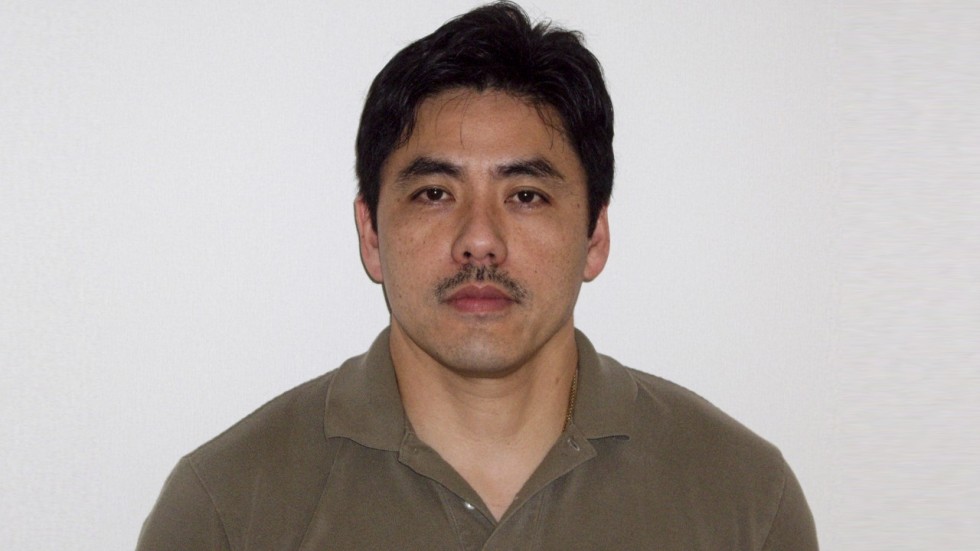
Jerry Chun Shing Lee: ex-CIA officer at the centre of one of the largest US intelligence breaches in decades.

Over the past three years, the Justice Department has charged former CIA officer Jerry Chun Shing Lee and five other Americans with stealing secrets on behalf of Beijing.
As a rising power, China is also a rising threat in the intelligence sphere.
The U.S. counterattack, in part, seems to be a public revelation of just how and why Beijing is stealing America’s secrets — overt payback for covert espionage.

vendredi 2 novembre 2018

CHINA'S 5 STEPS FOR RECRUITING SPIES


US Stupidity Enabling Chinese Spies to Steal Tons of US Defense and Trade Secrets
By Garrett M. Graff
BEWARE OF CHINESE spies offering laptops, women, or educational stipends—and especially watch out for odd LinkedIn requests.
On Tuesday, the Justice Department unsealed new charges against 10 Chinese intelligence officers and hackers who perpetrated a years-long scheme to steal trade secrets from aerospace companies.
The case continues an impressive tempo from the Justice Department, as it continues to try curb China's massive, wide-ranging, and long-running espionage campaign. 
In fact, it's the third time since September alone that the US government has charged Chinese intelligence officers and spies, including one of its biggest coups in years: The extradition earlier this month of a Chinese intelligence officer, caught in Europe, who will face a US courtroom.
That arrest marks the first time the US has prosecuted an officer of China's Ministry of State Security. The feds believe that the suspect, Yanjun Xu, spent years cultivating a person he thought was a potential asset inside GE Aviation, which makes closely held jet engine technology.
While historic, the GE Aviation case hardly stands as an outlier. 
Chinese espionage against the US has emerged over the past two decades as the most widespread, damaging, and pernicious national security threat facing the country—compromising trade secrets, American jobs, and human lives.
Even as popular culture and public attention has focused in the past decade on a few high-profile cases against Russian intelligence operations, China’s spying efforts have yielded a more steady stream of incidents. 
Over the last 15 years, dozens of people have been arrested, charged, or convicted of economic or military espionage for China. 
In just the 28-month period that a notorious Russian spy ring unraveled around 2010, US officials charged and prosecuted more than 40 Chinese espionage cases, according to a Justice Department compilation.
The majority of Chinese espionage cases over the years have involved ethnic Chinese, including Chinese students who came to the US for college or advanced degrees, got hired at tech companies, and then absconded back to China with stolen trade secrets. 
Historically, very few Chinese spying cases have featured the targeting or recruitment of Westerners. But this year has seen a rash of cases of Sino-Americans recruited to spy on China’s behalf, encouraged to turn over sensitive military, intelligence, or economic information—at least one of which started with a simple LinkedIn message.
Sifting through more than a dozen of the major cases that have targeted Westerners, though, provides an illuminating window into how China recruits its spies. 
The recruitment follows a well-known five-step espionage road map: Spotting, assessing, developing, recruiting, and, finally, what professionals call “handling.”

Stage 1: Spotting
The first step in any espionage recruitment is simply knowing the right people to target. 
That job often falls to what intelligence professionals call a “spotter,” a person who identifies potential targets, then hands them off to another intelligence officer for further assessment. 
These spotters, sometimes friendly officials at think tanks, universities, or corporations, are often separate from the intelligence officers who ultimately approach potential spies, allowing a level or two of remove. 
They sometimes have such “deep cover” that they are considered too valuable to make a recruitment approach directly, leaving that work to a cut-out who could more easily disappear if the recruitment pitch is rejected.
In that vein, last week’s Yanjun Xu indictment ties in to another little-noticed September arrest, where the FBI charged a 27-year-old Chinese citizen and Chicago resident with acting as an unregistered foreign agent for China—the federal criminal charge that prosecutors often use as code for spying. That man, Ji Chaoqun, had arrived in the United States in 2013 to study electrical engineering at the Illinois Institute of Technology, and had subsequently enlisted in the Army Reserves.
Yet according to the government’s criminal complaint, Ji Chaoqun had less pure motives at heart than service: He had been recruited at a Chinese job fair while in college to join a “confidential unit” and work as a “spotter” for Yanjun Xu, helping the MSS officer identify potential recruits and providing background reports on at least eight potential spies. 
In a 2015 email, Ji Chaoqun wrote that he was enclosing “eight sets of the midterm test questions for the last three years,” according to court documents. 
He attached eight PDFs of background reports downloaded from sites like Intelius, Instant Checkmate, and Spokeo, which compile public records on individuals for purchase online. (The sites limit purchases to US-based consumers, so they were inaccessible to Yanjun Xu himself.)
All eight of the targeted individuals were ethnic Chinese who worked in science or technology. 
Seven of them were either currently employed or had recently retired from US defense contractors, according to the US government.
“Spotting” doesn’t necessarily have to involve human targets; an article in the November issue of WIRED, excerpted from the new book Dawn of the Code War, outlines the US pursuit of the Chinese spy Su Bin, who was captured in Canada in 2014 after working for years as a technical “spotter” for Chinese military intelligence officers.                         
Su, an aviation expert, would examine stolen file directories hacked by Chinese intelligence to point them to the most valuable and relevant documents, helping them navigate massive troves of files on secret projects like the US development of the C-17 military transport plane.

Chinese intelligence officer of China's Ministry of State Security Xu Yanjun was extradited to the US with help from Belgian authorities for seeking to steal trade secrets and other sensitive information from an American company that leads the way in aerospace.

Stage 2: Assessing
Once intelligence officers identify potential recruits, they then examine how they might encourage those targets to spy. 
Professionals often summarize the motives for espionage with the acronym MICE: money, ideology, coercion, and ego. 
Spies want to be paid for their work, or believe in the cause, or can be blackmailed, or want the ego boost that comes with leading a double life.
While it often relies on ideology or coercion in pressuring ethnic Chinese to spy on its behalf abroad, China has proved particularly successful in luring Westerners with cash. 
In June of this year, FBI agents arrested a Utah man as he prepared to fly to China and charged him with attempting to pass national defense information to China. 


The felony complaint says that Ron Rockwell Hansen, a former Defense Intelligence Agency officer, had been struggling financially, living primarily off his $1,900-a-month DIA pension and facing debts of more than $150,000. 
In 2014, Rockwell allegedly began meeting with two MSS officers—who introduced themselves to him as “David” and “Martin." 
During one 2015 business trip to China, they offered him up to $300,000 a year for “consulting services.” 
Hansen was, according to the government, to “attend conferences or exhibitions on forensics, information security, and military communications and to conduct product research.” 
The money, in turn, would be funneled to him by David and Martin by “overpaying him for purchases of computer forensic products.”
Hansen attended defense and intelligence conferences, on China’s behalf, for nearly four years, from 2013 through 2017. 
He took photos, made notes, and tried to strike up contact with former DIA and intelligence colleagues. 
He also purchased restricted forensics software to transport to China.
All told, according to the complaint, Hansen made 40 trips to China between 2013 and 2018, often returning with tens of thousands of dollars in cash—four trips cited by the government netted him $19,000, $30,000, $20,000, and, in 2015, $53,000. 
Ultimately, court documents show that Hansen received upwards of $800,000 from Chinese sources. 
Hansen pleaded not guilty to 15 counts in July.
In another major corporate espionage case that dates back to 2011, a grand jury indicted the Sinoval Wind Group, a Chinese company, for trade secret theft and wire fraud related to its partnership with American Superconductor. 
The indictment specifically alleged that Sinoval stole American Superconductor's source code for its wind turbine, recruiting an employee to betray the Massachusetts-based company with promises of wealth and women. 
The two firms had been working together on massive wind farms in China; American Superconductor provided the software for the turbines, while Sinovel manufactured the turbines and did the construction work.
American Superconductor managers had heard horror stories of American companies having their intellectual property stolen by Chinese business partners, so the company went to great lengths to lock down its software and allow access only by its own employees. 
Chinese spy Dejan Karabasevic

Sinovel, instead, recruited Dejan Karabasevic, a Serbian employee based in Austria, to out-and-out steal the source code. 
Karabasevic pleaded guilty in an Austrian court in 2011.
“They offered him women. They offered him an apartment. They offered him money. They offered him a new life,” the head of American Superconductor, Daniel McGahn, later told 60 Minutes.
Karabasevic was quite clear about his motives: As detailed in court documents, he wrote in one email to his new Chinese business partners, “All girls need money. I need girls. Sinovel needs me.” 
The Chinese firm ultimately offered Karabasevic $1.7 million to steal the turbine source code. 
He wrote to Sinovel in one text message: “I will send the full code of course.”
American Superconductor only became aware of the theft when its engineers noticed that some of the turbines being installed in Sinovel’s large wind farms in China were running a version of the operation software that hadn’t yet been released; by then, it was too late. 
The collapse of the partnership forced the company to lay off 600 of its 900 employees; a federal jury found Sinovel guilty on counts of theft of trade secrets and wire fraud in January of this year.


Spies for China. The Indian-American Noshir Gowadia; the Chinese-American Wenxia Man and the Chinese-Canadian Su Bin. 

Stage 3: Developing
Intelligence officers generally don’t lead off by asking potential sources to betray their country or their employer. 
The third stage of espionage recruitment, instead, is known as “developing,” when recruiters begin to ask for trivial requests or favors to establish rapport. 
As former CIA director John Brennan said last year, “Frequently, people who go along a treasonous path do not know they are on a treasonous path until it is too late.”
In one of its more daring efforts in recent years, Chinese intelligence tried to place an ambitious China-loving American student inside the CIA, hoping that the would-be mole could rise through the undercover ranks of the agency.


A shot of Glenn Duffie Shriver from the FBI's video.


Glenn Duffie Shriver, a student from outside Richmond, Virginia, had become intrigued with China during a 45-day summer study abroad program in 2001. 
He later returned for his junior year abroad, becoming fluent in Chinese, and moved to Shanghai, where he acted in Chinese films and commercials. 
Around 2004, he responded to a newspaper ad asking for someone to write a white paper about trade relations between the US, North Korea, and Taiwan; the woman who hired him, calling herself “Amanda,” paid him $120 for the essay. 
She told him she liked the work and asked if he’d be interested in more—and then introduced him to two men, “Mr. Wu” and “Mr. Tang.”
Over time, those two encouraged Shriver to return to the US to join either the State Department or the CIA. 
“We can be close friends,” they told him. 
Shriver flunked the foreign service exam twice, but the MSS paid him a combined $30,000 for the effort. 
In 2007, Shriver applied to the CIA’s National Clandestine Service, the unit that runs its undercover foreign operatives, and received a $40,000 payment from the Chinese MSS.
The US government ultimately arrested Shriver, and the FBI even turned the incident into a low-budget movie to warn other students studying abroad about Chinese friends bearing gifts. 
Shriver pleaded guilty to one count of conspiracy to communicate national defense information in 2010.
“It started out fairly innocuous: ‘Oh, you know, we really want to help young people here in China. You know, we realize sometimes you’re far from home and the costs can be quite a bit, so here is just a little bit to help you out,’” Shriver said at his sentencing. 
“And then it kind of spiraled out of control. I think I was motivated by greed. I mean, you know, large stacks of money in front of me.”
That subtle evolution and push over the line from personal or professional favor to outright espionage was also clearly evident in last week’s case against MSS official Yanjun Xu, who had targeted GE Aviation. 
The GE case, which reads almost like a slow-motion David Ignatius espionage novel, was somewhat unique: No documents or trade secrets were compromised—the sting appeared to unfold with the cooperation of the company—but the recruiter apparently followed a clear path of asking for small things before pushing the employee over the line to outright theft.
Yanjun Xu began his recruitment efforts, officials said, by contacting American aerospace experts under the guise of an educational exchange; he worked with the Nanjing University of Aeronautics and Astronomics, one of China’s top engineering schools, to invite the targeted aerospace engineers to give lectures on their work. 
The targeted GE employee, identified only as “Employee #1” in court documents, was both reimbursed for travel expenses and paid a $3,500 “stipend” for the lecture at NUAA. 
The ploy was one Xu appeared to use routinely; court documents cite other examples of “seminars” and “educational exchanges” with aerospace engineers that served as recruiting efforts for espionage.
During the unnamed GE employee’s visit to NUAA in June 2017, according to court records, Xu introduced himself, using the cover identity of “Qu Hui,” and explained that he worked for the Jiangsu Science and Technology Promotion Association. 
The American engineer and Xu had multiple meals together and Xu invited the engineer to return for another lecture. 
By January 2018, Xu was regularly asking the GE engineer to pass along small details about system specifications and the company’s design process, authorities say. 
He then provided what amounted to a shopping list of aviation design secrets, asking, “Can you take a look and see if you are familiar with those?”
In February, Xu allegedly asked for a copy of the employee’s file directory for his company-issued computer, explaining how to appropriately sort and save the directory for Xu’s review. 
The two then began to make plans for Xu to access the company computer during a business trip to Europe; as Xu explained, according to court documents, “We really don’t need to rush to do everything in one time because if we’re going to do business together, this won’t be the last time, right?” 
It was on what Xu thought was that European business trip in April that the Chinese intelligence officer was arrested in Belgium.

Stage 4: Recruiting
The direct request to spy is often the most fraught moment of an espionage operation—but sometimes it starts off easily enough. 
One-time CIA officer Kevin Mallory was recruited to spy for the Chinese right off LinkedIn in February 2017. 
Mallory, who was working as a consultant at the time, was contacted over the social network by someone from a Chinese think tank known as the Shanghai Academy of Social Sciences. 
The FBI said in court documents that the organization—China’s oldest social science think tank—is regularly relied upon by MSS, who “[use] SASS employees as spotters and assessors,” and that MSS officers “have also used SASS affiliation as cover identities.”
Mallory spoke by phone with the purported SASS employee, and subsequently traveled to China twice, in March and April 2017, for in-person meetings. 
There, he received a special phone and instructions on how to use its secure messaging capabilities to contact his Chinese “clients.” 
According to the criminal complaint, Mallory also wrote two short white papers on US policy matters for his Chinese intelligence handlers.
Mallory was caught, in part, because he didn’t realize that the device didn’t wipe sent secure messages, and FBI agents were able to peruse his communications with the Chinese intelligence officers. 
The deal was quite explicit: In one message, Mallory wrote, “your object is to gain information, and my object is to be paid for.” 
Ultimately, the FBI believed that Mallory passed at least three classified documents to the Chinese and was paid about $25,000.
Mallory was found guilty of conspiracy to commit espionage during a June trial, though the judge threw out two convictions related to sharing or trying to share national defense information.


Sino-American double loyalty: China gave ex-CIA agent Jerry Chun Shing Lee US$100,000 and promised to take care of him ‘for life’

Stage 5: Handling
The most delicate part of an espionage operation is always maintaining the regular, day-to-day communication between a spy and his or her assigned “handler.”
Whereas previous generations often relied on the Cold War tradecraft of physical “dead drops” or in-person “brush passes” for covert information exchanges, today’s espionage often relies on encrypted communication tools, surreptitious cell phones, and emails left in draft folders.
Some of that modern tradecraft was on display in the charges against another former CIA case officer, naturalized US citizen Jerry Chun Shing Lee, who is the most devastating Chinese spy ever. 
According to court documents released following his arrest in January, Lee met with two Chinese intelligence officers in April 2010, who promised him “a gift of $100,000 cash in exchange for his cooperation and that they would take care of him for life.” 
Beginning the very next month, the Chinese intelligence officers began passing “taskings” to Lee in envelopes, delivered by one of his business associates, that asked him to reveal sensitive information about the CIA.
Lee ultimately received requests for at least 21 different pieces of information, according to court documents. 
In response to one such request, Lee “created on his laptop computer a document that included entries pertaining to certain locations to which the CIA would assign officers and a particular location of a sensitive operation to which the CIA would assign officers with certain identified experience.” 
Communications flowed, in part, through an email address created using his daughter’s name.
It appears that Lee’s work has helped devastate America’s own spy networks inside China. 
While the government’s reliance on an insecure encrypted communications system exposed several of its own human assets, according to a recent report in Foreign Policy, its problems may not have only been high tech. 
When FBI agents covertly searched Lee’s luggage at one point, the Justice Department indictment says, they discovered a “Day Planner containing handwritten, classified information up to the Top Secret level pertaining to, but not limited to, operational notes from asset meetings, operational meeting locations, operational phone numbers, the true names of assets, and covert CIA facilities.”

President Trump noted that “almost every Chinese student that comes over to this country is a spy.”

jeudi 16 août 2018

American Amateurism

Botched CIA Communications System Helped Blow Cover of Chinese Agents
The number of informants executed in the debacle is higher than initially thought.

BY ZACH DORFMAN

It was considered one of the CIA’s worst failures in decades: Over a two-year period starting in late 2010, Chinese authorities systematically dismantled the agency’s network of agents across the country, executing dozens of U.S. spies. 
But since then, a question has loomed over the entire debacle.
How were the Chinese able to roll up the network?
Now, nearly eight years later, it appears that the agency botched the communication system it used to interact with its sources, according to five current and former intelligence officials. 
The CIA had imported the system from its Middle East operations, where the online environment was considerably less hazardous, and underestimated China’s ability to penetrate it.
“The attitude was that we’ve got this, we’re untouchable,” said one of the officials who, like the others, declined to be named discussing sensitive information. 
The former official described the attitude of those in the agency who worked on China at the time as “invincible.”
Other factors played a role as well, including China’s recruitment of former CIA officer Jerry Chun Shing Lee around the same time. 

Chinese mole: Ex-CIA officer Jerry Chun Shing Lee

Federal prosecutors indicted Lee earlier this year in connection with the affair.
But the penetration of the communication system seems to account for the speed and accuracy with which Chinese authorities moved against the CIA’s China-based assets.
“You could tell the Chinese weren’t guessing. The Ministry of State Security [which handles both foreign intelligence and domestic security] were always pulling in the right people,” one of the officials said.
“When things started going bad, they went bad fast.”
The former officials also said the real number of CIA assets and those in their orbit executed by China during the two-year period was around 30, though some sources spoke of higher figures. 
All the CIA assets detained by Chinese intelligence around this time were eventually killed.
The CIA, FBI, and National Security Agency declined to comment for this story. 
The Chinese Embassy in Washington did not respond to requests for comment.
At first, U.S. intelligence officials were “shellshocked,” said one former official. 
Eventually, rescue operations were mounted, and several sources managed to make their way out of China.
One of the former officials said the last CIA case officer to have meetings with sources in China distributed large sums of cash to the agents who remained behind, hoping the money would help them flee.
When the intelligence breach became known, the CIA formed a special task force along with the FBI to figure out what went wrong. 
During the investigation, the task force identified three potential causes of the failure, the former officials said: A possible agent had provided Chinese authorities with information about the CIA asset network, some of the CIA’s spy work had been sloppy and might have been detected by Chinese authorities, and the communications system had been compromised. 
The investigators concluded that a “confluence and combination of events” had wiped out the spy network, according to one of the former officials.
Eventually, U.S. counterintelligence officials identified Lee, the former CIA officer who had worked extensively in Beijing, as China’s informant. 
Lee was in contact with his handlers at the Ministry of State Security through at least 2011.
Chinese authorities paid Lee hundreds of thousands of dollars for his efforts, according to the documents. 
He was indicted in May of this year on a charge of conspiracy to commit espionage.
But Lee’s betrayal alone could not explain all the damage that occurred in China during 2011 and 2012, the former officials said. 
Information about sources is so highly compartmentalized that Lee would not have known their identities. 
That fact and others reinforced the theory that China had managed to eavesdrop on the communications between agents and their CIA handlers.
When CIA officers begin working with a new source, they often use an interim covert communications system—in case the person turns out to be a double agent.
The communications system used in China during this period was internet-based and accessible from laptop or desktop computers, two of the former officials said.
This interim, or “throwaway,” system, an encrypted digital program, allows for remote communication between an intelligence officer and a source, but it is also separated from the main communications system used with vetted sources, reducing the risk if an asset goes bad.
Although they used some of the same coding, the interim system and the main covert communication platform used in China at this time were supposed to be clearly separated. 
In theory, if the interim system were discovered or turned over to Chinese intelligence, people using the main system would still be protected—and there would be no way to trace the communication back to the CIA. 
But the CIA’s interim system contained a technical error: It connected back architecturally to the CIA’s main covert communications platform. 
When the compromise was suspected, the FBI and NSA both ran “penetration tests” to determine the security of the interim system. 
They found that cyber experts with access to the interim system could also access the broader covert communications system the agency was using to interact with its vetted sources, according to the former officials.
In the words of one of the former officials, the CIA had “fucked up the firewall” between the two systems.
U.S. intelligence officers were also able to identify digital links between the covert communications system and the U.S. government itself, according to one former official—links the Chinese agencies almost certainly found as well. 
These digital links would have made it relatively easy for China to deduce that the covert communications system was being used by the CIA. 
In fact, some of these links pointed back to parts of the CIA’s own website, according to the former official.
The covert communications system used in China was first employed by U.S. security forces in war zones in the Middle East, where the security challenges and tactical objectives are different, the sources said. 
“It migrated to countries with sophisticated counterintelligence operations, like China,” one of the officials said.
The system was not designed to withstand the scrutiny of a place like China, where the CIA faced a highly sophisticated intelligence service and a completely different online environment.
As part of China’s Great Firewall, internet traffic there is watched closely, and unusual patterns are flagged. 
Even in 2010, online anonymity of any kind was proving increasingly difficult.
Once Chinese intelligence obtained access to the interim communications system,­ penetrating the main system would have been relatively straightforward, according to the former intelligence officials. 
The window between the two systems may have only been open for a few months before the gap was closed, but the Chinese broke in during this period of vulnerability.
Precisely how the system was breached remains unclear. 
The Ministry of State Security might have run a double agent who was given the communication platform by his CIA handler. 
Another possibility is that Chinese authorities identified a U.S. agent—through information provided by Lee—and seized that person’s computer. 
Alternatively, authorities might have identified the system through a pattern analysis of suspicious online activities.
China was so determined to crack the system that it had set up a special task force composed of members of the Ministry of State Security and the Chinese military’s signals directorate (roughly equivalent to the NSA), one former official said.
Once one person was identified as a CIA asset, Chinese intelligence could then track the agent’s meetings with handlers and unravel the entire network. (Some CIA assets whose identities became known to the Ministry of State Security were not active users of the communications system, the sources said.)
One of the former officials said the agency had “strong indications” that China shared its findings with Russia, where some CIA assets were using a similar covert communications system. 
Around the time the CIA’s source network in China was being eviscerated, multiple sources in Russia suddenly severed their relationship with their CIA handlers, according to an NBC News report that aired in January—and confirmed by this former official.
The failure of the communications system has reignited a debate within the intelligence community about the merits of older, lower-tech methods for covert interactions with sources, according to the former officials.
There is an inherent paradox to covert communications systems, one of the former officials said: The easier a system is to use, the less secure it is.
The former officials said CIA officers operating in China since the debacle had reverted to older methods of communication, including interacting surreptitiously in person with sources. 
Such methods can be time-consuming and carry their own risks.
The disaster in China has led some officials to conclude that internet-based systems, even ones that employ sophisticated encryption, can never be counted on to shield assets.
“Will a system always stay encrypted, given the advances in technology? You’re supposed to protect people forever,” one of the former officials said.

samedi 9 juin 2018

Ex-C.I.A. Officer Is Convicted of Spying for China

By Adam Goldman
Kevin Mallory, a former C.I.A. case officer faces life in prison after he was found guilty of espionage charges and lying to the F.B.I. about his contacts with Chinese intelligence.

WASHINGTON — A former C.I.A. case officer faces life in prison after he was convicted on Friday of betraying his country to spy on behalf of China.
Kevin Mallory, 61, of Leesburg, Va., was found guilty of espionage charges and lying to the F.B.I. about his contacts with Chinese intelligence.
The verdict capped a nearly two-week trial that offered a rare glimpse into the murky world of American espionage cases, which typically do not go to trial because of the difficulties involving highly classified information.
“There are few crimes in this country more serious than espionage,” said G. Zachary Terwilliger, the United States attorney for the Eastern District of Virginia. 
“This office has a long history of holding those accountable who betray their country and try and profit off of classified information.”
Mallory’s lawyers have steadfastly denied the charges. 
They claim that Mallory, a former C.I.A. clandestine officer and a private consultant, is a patriot who planned to use his recruitment to lure Chinese intelligence handlers into the C.I.A.’s grasp. 
Mallory left the C.I.A. in 2012.
“This was an intelligence operation against Chinese intelligence,” Mallory’s lawyer Geremy Kamens said Thursday during closing arguments. 
“In reality, Kevin Mallory was working against the Chinese.”
The jury was not convinced, deliberating for a day before deciding to believe the substantial evidence prosecutors presented in the federal courtroom in Northern Virginia.
In early 2017, a Chinese headhunter sent Mallory a message about contracting work using a networking site. 
But the job Mallory thought he was exploring turned out to have a far different purpose.
He was passed to a Chinese intelligence operative working for a think tank who wanted him to become an informant. 
And over the next four months, Mallory, who is fluent in Mandarin Chinese, traveled to Shanghai, had covert communications with the operative on a Chinese-provided phone and passed information — including an unclassified white paper on American intelligence policy — to his handlers.
But Chinese attempts to protect the contents of the phone from prying eyes failed because of an apparent technical problem. 
The F.B.I. was able to analyze it and found a handwritten index describing eight documents. 
Four of the documents listed in the index were found on the phone, with three containing classified information.
The twist in Mallory’s spy career was that he told the F.B.I. and the C.I.A. parts of the story and provided his phone to agents. 
This was evidence that Mallory was not a spy, his lawyers said.
The prosecution said that story was “totally and completely absurd.” 
Mallory selectively disclosed his contacts in order to have a potential defense in case federal investigators caught on to his true plan: to trade American secrets for cash.
“His intent was never to help,” John Gibbs, a federal prosecutor, said Thursday. 
“His intent was to lie.”
At the time he was recruited, prosecutors say, Mallory was thousands of dollars in debt and behind on his mortgage, making him a prime target for intelligence operatives looking to trade money for secrets. 
In Mallory’s case, the Chinese gave him $25,000, the authorities said.
Mallory is scheduled to be sentenced in September.
The high-profile case is among several recent ones involving Chinese attempts to recruit former American intelligence officials. 
In January, the F.B.I. arrested Jerry Chun Shing Lee, another former C.I.A. officer, who had repeated contacts with Chinese intelligence. 
He has been charged with illegally possessing classified information and conspiring to spy for the Chinese.
Last week, prosecutors charged Ron Rockwell Hansen, a former Defense Intelligence Agency case officer, with attempted espionage. 
The F.B.I. began investigating Hansen’s activities in 2014.

vendredi 8 juin 2018

U.S. officials prepare to thwart Chinese spying at Singapore summit

The Chinese have used everything from bugged hotel keys to “friendship” pins to spy on Americans — and they’re getting better at it all the time.
By Courtney Kube, Carol E. Lee, Ken Dilanian and Andrea Mitchell 
The Capella Hotel on Singapore's resort island of Sentosa is the venue for next week's summit between Donald Trump and North Korean leader Kim Jong Un.

WASHINGTON — China may not have a seat at the table during Donald Trump's upcoming nuclear summit with North Korean leader Kim Jong Un, but U.S. officials say they are preparing to counter the Chinese spies they expect to be all over Singapore next week seeking inside information on the talks.
Chinese espionage against the U.S. has become more pervasive than that of any other adversary, current and former U.S. intelligence officials tell NBC News, and the Singapore summit is the latest spy-versus-spy battleground.
The Chinese, who have been known to bug everything from hotel keys to the gifts given to American visitors, are expected to deploy their increasingly sophisticated repertoire of intelligence gathering techniques, both human and electronic, in Singapore.
U.S. officials are concerned China has recruited informants among the waiters and other staff in Singapore’s restaurants and bars, who are paid to eavesdrop on American customers and report back to their Chinese handlers.
Officials also expect electronic surveillance of the summit meeting sites. 
Americans will sweep for bugs in rooms at the Capello Hotel that could be used for side discussions, and could erect tents inside hotel meeting rooms to block any concealed cameras from viewing classified documents.
Chinese intelligence agencies have shown the ability to penetrate mobile phones even when they are off, and U.S. officials are now told to take their batteries out when they are concerned about eavesdropping, according to a U.S. intelligence official.
"Chinese intelligence collection could be amped up around the summit," said Jeremy Bash, an NBC News analyst who was chief of staff to CIA Director Leon Panetta. 
"They have prioritized surveillance in recent years and their technical prowess has really advanced."
For years, the Chinese have engaged in a massive effort to recruit human spies in the West, and can call on an army of skilled hackers to gather intelligence from the web.
But recently Chinese intelligence agencies have grown more creative and adept, U.S. officials say, posing an increasing threat to America’s secrets.
“China remains a particularly aggressive espionage actor and is using increasingly sophisticated technological platforms to carry out its objectives,” said Dean Boyd, a spokesman for the National Counterintelligence and Security Center, the DNI’s new counterintelligence agency.
According to three U.S. officials, in one recent case a top U.S. official working in China repeatedly had trouble with his hotel key card. 
He had to replace it several times at the front desk because it wouldn’t open his door.
He brought one of the key cards back to the U.S., where security officials found a microphone embedded inside, according to the U.S. officials.
The Chinese have placed listening and tracking devices in chips embedded in credit cards, key chains, jewelry, and even event credentials, the officials said, often with the intent of capturing secret conversations among American officials.
In advance of Chinese dictator Xi Jinping’s 2017 meeting with Trump at Mar-a-Lago, Trump’s south Florida estate, White House officials received detailed briefings on how the Chinese would try to spy on them during the visit "in every possible way,” said an official who was part of the visit.
And U.S. officials “swept all of our phones afterward” to check if they were infiltrated by the Chinese, the official added.
Seven months later when Trump traveled to Beijing, White House officials were given more extensive briefings, according to officials who were on the trip, in which they were told to assume the Chinese would be tracking, taping and watching them the entire time they were in the country.
During the visit, the officials say the Chinese gave the U.S. delegation pins that the Americans called their friendship pins. 
But members of the delegation were not allowed to wear the pins into a secure area because security officials warned they likely had embedded listening devices.
The officials said their belongings were rifled through while they were not in their hotel rooms, as happened to U.S. officials during previous presidential trips to China. 
Some senior members of Trump’s delegation packed carry-on bags with anything they didn’t want the Chinese to see and took the bags wherever they went, including out to dinner in restaurants, according to officials.
Even inside the U.S., the surveillance can be brazen. 
During a meeting between senior U.S. military officials and a Chinese military delegation several months ago at the Pentagon, one of the Chinese generals didn’t hide his efforts to record the meeting, pointing his large watch in the direction of the Americans whenever they spoke, according to two officials familiar with details of the meeting.
That story is among the anecdotes detailed in a recent internal report by the Defense Department and the intelligence community about the threat of surveillance inside the Pentagon.
Defense Department spokesman Chris Sherwood declined to discuss the report, saying, "We don't comment on intel nor on specific threat reports.”
According to Daniel Russel, a former assistant secretary of state for East Asian and Pacific Affairs, “all’s fair in love, war and espionage.”
Russel, who is now vice president at the Asia Society, added: “There’s an awful lot that the Chinese do to us that we do, or try to do, to them. But as technology improves, the capabilities of the Chinese to collect become increasingly sophisticated.
“The real story is the incredible acceleration of technology, artificial intelligence, data gathering and monitoring.”
Cellphones can also be vulnerable. 
After Barack Obama’s first trip to China in 2009, one of his national security advisers had to throw away a Blackberry device because the Chinese had penetrated it, a former administration official said.
Trump’s use of non-secure cell phones in the White House is a massive security risk, experts say. 
Because smart phones can be turned into bugs and location tracking devices, Obama was not allowed to have one until 2016, and even then, he joked about how little functionality it had.
It’s been widely reported that Trump has rebuffed efforts by security officials to get him to use a secure mobile device, and he has been using standard-issue smart phones for Twitter and to place calls.
The Washington Post reported this week that the Department of Homeland Security has found evidence of the use of sophisticated technology to intercept cell phone calls outside the White House, a type of technology that is available commercially and U.S. officials say Chinese and other foreign intelligence agencies regularly use.
One former senior U.S. official said the Chinese have good intelligence collection operations in Singapore.
“What they would want to get is to know what people in the meetings said and what happened,” the official said, and to get inside U.S. government officials’ phones and computers.
During other trips to China during the Obama administration, U.S. officials took increasingly strict steps to minimize any intelligence gathering from their meetings or devices. 
The Chinese would put microphones in U.S. officials’ hotel rooms, credentials and the friendship pins featuring each country’s flag.
Officials were not allowed to bring those items into any meetings or secure area, instead leaving them outside those rooms, and always leaving them behind in China. 
U.S. officials also would leave any personal electronic devices on a government plane while in the country. 
The Chinese would similarly spy on reporters traveling with the president.
U.S. government employees based in China are now told to presume their residences are wired for sound and video, and that the Chinese have recorded what they say or do at home.
Cabinet and other government officials are briefed on China’s spying techniques, including the possibility that their hotel rooms could be wired.
U.S. officials said the presumption on any visit to China or any interaction with Chinese officials outside the country is that Beijing would be trying to collect intelligence on the Americans or otherwise compromise them.
A man (right, wearing blue tie) identified by Hong Kong media as former CIA agent Jerry Chun Shing Lee stands in front of a member of security at the unveiling of a Leonardo da Vinci's painting at the Christie's showroom in Hong Kong.

Just this week, two U.S. intelligence officials appeared in court to face charges of spying for China, and a third Chinese agent, former CIA officer Jerry Chun Shing Lee, faces trial next year.
The Chinese are making use of a massive trove of federal personal data they stole in 2015 to identify and target vulnerable intelligence officers, two U.S. officials told NBC News.
"China poses the most sophisticated counterintelligence threat to the U.S. of any other country right now,” said Bash. 
“And their intelligence gathering is probably at its highest peak in a long time."

mercredi 6 juin 2018

Former U.S. Intelligence Officer Charged With Selling Secrets To China

By SCOTT NEUMAN
Ron Rockwell Hansen, 58, of Syracuse, Utah, was arrested on Saturday by the FBI on charges of attempted espionage for the Chinese.

A former Defense Intelligence Agency officer has been charged with attempted espionage for selling secrets to China.
Ron Rockwell Hansen, a 58-year-old Utah resident, was seized on Saturday on his way to the Seattle-Tacoma International Airport, where prosecutors say he meant to board a China-bound flight.
According to The Associated Press, a 41-page felony complaint details how Hansen was paid as much as $800,000 over a period of years to provide technology and secrets to Beijing.
"Several years after he left the U.S. government, he attended trade conferences on behalf of China and shared information he gathered with officials connected to Chinese intelligence. Charging documents also allege he transferred forensic software worth several thousand dollars, in violation of export controls," the AP writes.
The FBI began investigating Hansen in 2014 and he approached FBI informants in 2015 and again in 2016, acknowledging to them that he was being paid to pass information to China, according to the AP.
Reuters reports that he also sold export-controlled technology.
"His actions are a betrayal of our nation's security and the American people and are an affront to his former intelligence community colleagues," John Demers, the head of the Justice Department's National Security Division, was quoted by Reuters as saying.
Hansen was a DIA case officer while on active military duty from 2000-2006 and held a top-secret clearance for years.

Former CIA Officer Jerry Chun Shing Lee, Charged With Spying For China
Last month, Jerry Chun Shing Lee, a 53-year-old former Central Intelligence Agency officer who is a naturalized U.S. citizen, was charged with conspiracy to commit espionage on behalf of China.
In 2012, the FBI searched his hotel room in Honolulu and discovered notebooks of handwritten notes – including information about U.S. assets in China, according to court documents.

mardi 5 juin 2018

Ron Rockwell Hansen: US arrests man for trying to spy for China

A former US intelligence officer has appeared in court in Seattle charged with attempting to spy for China.
BBC News

Ron Rockwell Hansen, 58, was arrested by the FBI on Saturday on his way to a Seattle airport for a flight to China.
The justice department says Hansen attempted to pass on information and received at least $800,000 (£600,000) for acting as a Chinese agent.
He agreed in a brief court appearance to be returned to his home state of Utah to face charges.

What are the charges?

Hansen, who lives in Syracuse, Utah, was charged with attempting to gather or deliver national defence information to aid a foreign government.
Other charges -- there are 15 in total -- include acting as an unregistered foreign agent for China, bulk cash smuggling, structuring monetary transactions and smuggling goods from the US.
If convicted of attempted espionage, Hansen faces a maximum penalty of life in prison.
Assistant Attorney General John Demers called Hansen's actions "a betrayal of our nation's security" and an "affront to his former intelligence community colleagues".
John Huber, US attorney for the state of Utah, called the allegations "very troubling".

Who is Ron Hansen?
According to court documents cited by the justice department, Hansen served in the US Army as a warrant officer with a background in signals intelligence and human intelligence, before being recruited by the DIA as a civilian intelligence case officer in 2006.
The justice department says Hansen, who is fluent in Mandarin and Russian, held top secret clearance "for many years" and travelled regularly between the US and China in 2013-17.
He has attempted repeatedly to regain access to classified information after he stopped working for the US government, thereby alerting authorities to his actions.

What is the DIA?
The Defense Intelligence Agency is a branch of the Department of Defense, responsible for analysing and disseminating military intelligence.
The agency's primary responsibility is providing foreign military intelligence for US combat missions. 
It was established in 1961 and now has about 17,000 employees.

How are US-China relations?

The arrest comes at a challenging time for relations between the two countries. 
On Saturday, US Defence Secretary James Mattis accused China of attempting to intimidate its neighbours by deploying missiles to disputed islands in the South China Sea.
Trade talks currently taking place between the two countries in Beijing have been overshadowed by a looming start date for US tariffs on Chinese goods.
Late last month, the White House announced plans to place a 25% tariffs on $50bn (£37bn) worth of Chinese imports, a significant escalation in a trade war between the two countries.

What other spying cases have been reported?
Hansen is the latest in a string of former US intelligence officers caught up in spying cases related to China:
  • Jerry Chun Shing, a former CIA case officer, was charged earlier this month with conspiring to gather or deliver national defence information to China
  • Former CIA officer, Kevin Mallory, is currently on trial in Virginia, charged with selling information to the Chinese