BY IVAN TSELICHTCHEV

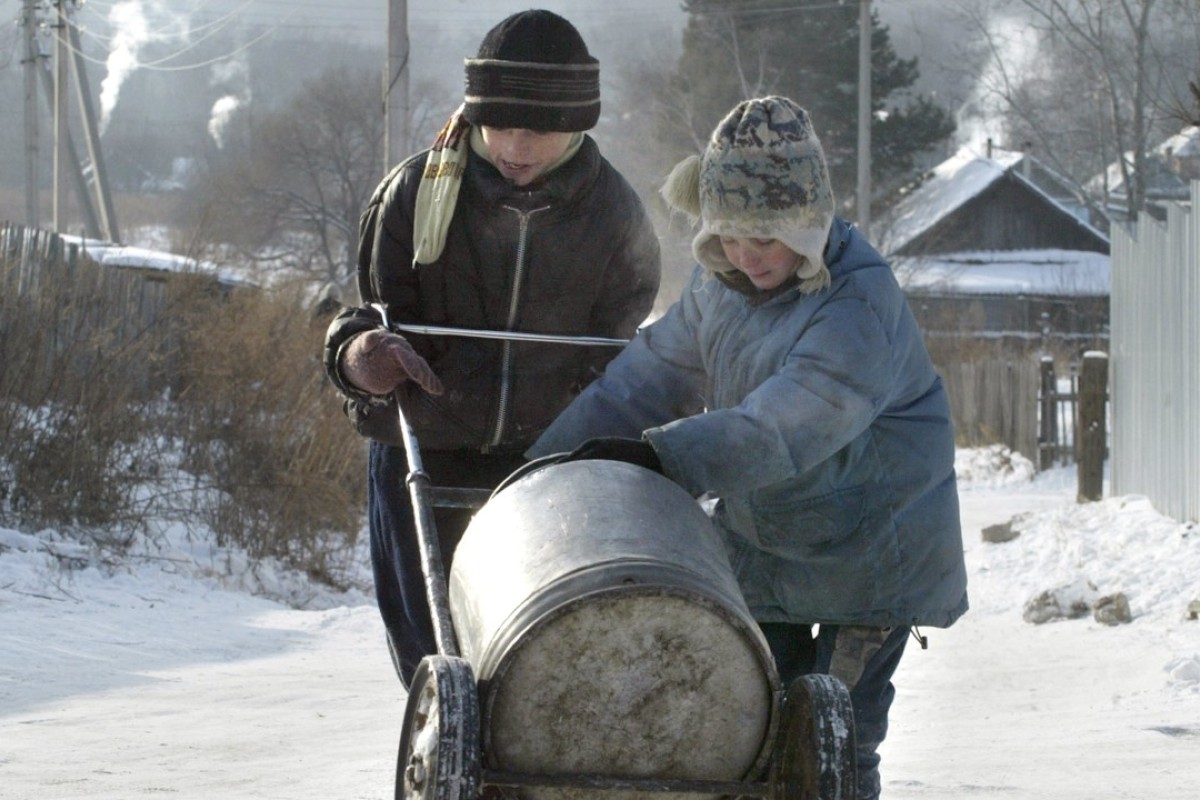 Children transport spring water to their village outside Khabarovsk, Russia. A 100 billion yuan investment fund is the latest in a string of efforts to strengthen ties along the border of China and Russia.
Recent meetings between Beijing and Moscow – at the Belt and Road Forum last month and at a two-day summit last week in Russia – are the latest in a string of efforts to strengthen Sino-Russian ties, especially along the border.
Territorial issues
The 1858 Aigun Treaty between the Russian Empire and the Qing Dynasty established the Sino-Russian border along the Amur River, reversing the previous Nerchinsk Treaty of 1689.
In China, both treaties are viewed as unequal, drawn up in a time of China’s weakness.
In 1969, when confrontation between Beijing and Moscow peaked, military clashes broke out on the border, raising fears of an all-out war.
The economic dimension
Economic activities of the Chinese in the RFE are still expanding, with the tacit approval of the Russia.
One of the major Chinese activities in the RFE, and also Siberia, is agriculture.
In 2009, China and Russia launched a long-term programme of cooperation in the border regions.
First, China has vast underdeveloped areas of its own, especially in the west with a sparse population density comparable to the RFE.
Diagnosis and prospects
The scale of the Chinese presence in the RFE is still comparatively small.
Children transport spring water to their village outside Khabarovsk, Russia. A 100 billion yuan investment fund is the latest in a string of efforts to strengthen ties along the border of China and Russia.Recent meetings between Beijing and Moscow – at the Belt and Road Forum last month and at a two-day summit last week in Russia – are the latest in a string of efforts to strengthen Sino-Russian ties, especially along the border.
However, like many nations, Russia has found that working with China can be a double-edged sword.
Sino-Russian relations are “at their best time in history”, Xi Jinping told Russian media attending the summit – words that were backed up with the announcement of a US$10 billion fund for cross-border infrastructure projects.
But for all the fanfare surrounding the fund, Chinese investment in the region is helping to fuel tension, raising fears of China’s growing presence in the Russian Far East.
Sino-Russian relations are “at their best time in history”, Xi Jinping told Russian media attending the summit – words that were backed up with the announcement of a US$10 billion fund for cross-border infrastructure projects.
But for all the fanfare surrounding the fund, Chinese investment in the region is helping to fuel tension, raising fears of China’s growing presence in the Russian Far East.
A side effect of Beijing’s investment – an influx of Chinese migrants – is perceived by locals as an expression of China’s territorial expansion.
Russian political groups and media outlets have tapped into this anxiety.
An apocalyptic film China – a Deadly Friend (in the series “Russia Deceived”) became an instant internet hit after its release in 2015.
In the film, China is preparing to invade the RFE in its quest for global dominance and that Chinese tanks could reach the centre of the city of Khabarovsk within 30 minutes.
Just 30km from the Chinese border, Khabarovsk is the second largest city in the RFE after Vladivostok and the region’s administrative centre.
According to Russia’s census of 2010, the number of Chinese residing in the country was just 29,000, down from 35,000 in 2002 – no more than 0.5 per cent of the total population of the RFE.
Other estimates, however, put the number of Chinese in Russia at 300,000 to 500,000.
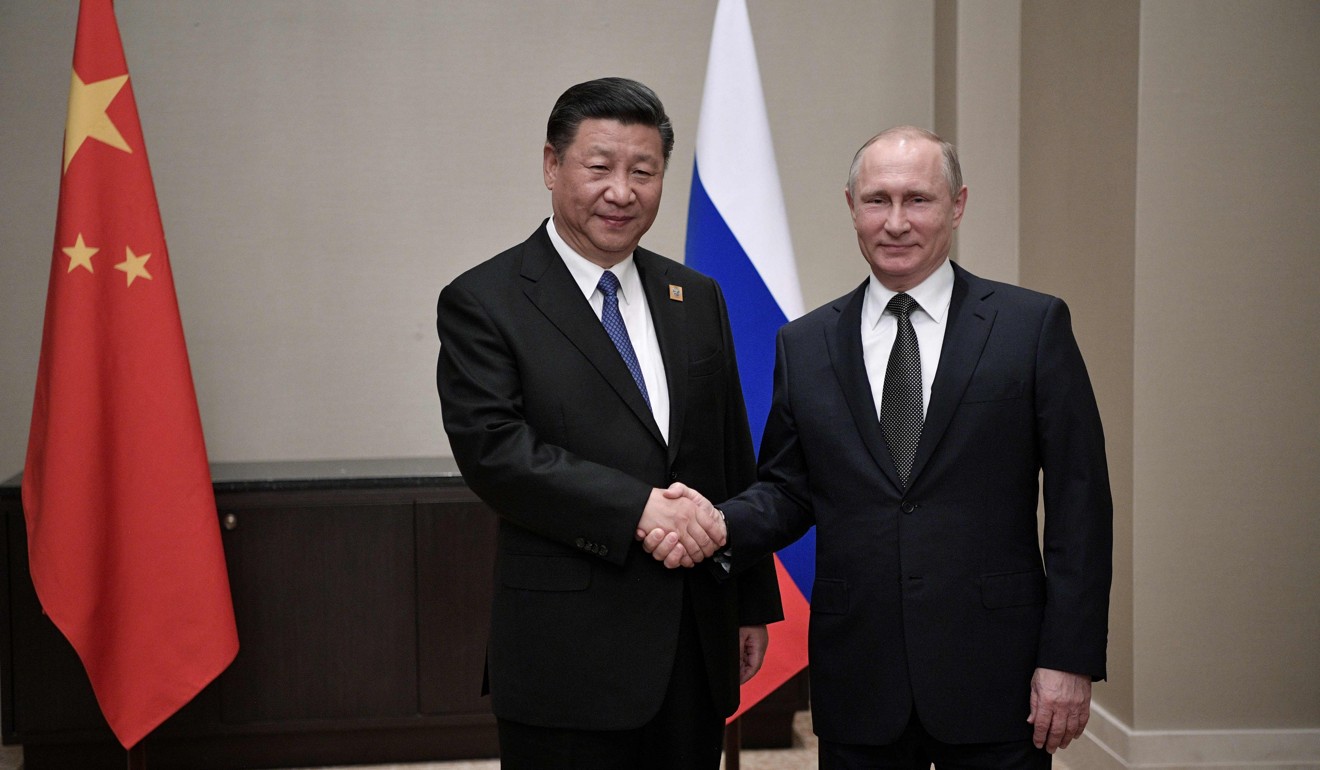 Transfer of territory: Xi Jinping shakes hands with Vladimir Putin during their meeting in Astana.
The issue of Chinese presence in the RFE touches a raw nerve in Russia, largely for two reasons. First, Russians view it in the context of the enormous and growing economic and population incongruence with China and second, the three-decades-long Sino-Soviet confrontation, including border clashes in the late 1960s.
Other estimates, however, put the number of Chinese in Russia at 300,000 to 500,000.
Transfer of territory: Xi Jinping shakes hands with Vladimir Putin during their meeting in Astana. The issue of Chinese presence in the RFE touches a raw nerve in Russia, largely for two reasons. First, Russians view it in the context of the enormous and growing economic and population incongruence with China and second, the three-decades-long Sino-Soviet confrontation, including border clashes in the late 1960s.
China’s population is about 10 times that of Russia.
The population of the RFE, comprising seven provinces, is only a little more than 6 million – an average density of less than one person per square kilometre.
Furthermore, the population in this region is in decline due to low birth rates and migration to other regions of Russia where living and working conditions are better.
Since 1991, the RFE has lost about a quarter of its population.
China’s gross domestic product is almost 10 times that of Russia’s and the gap is increasing.
China’s gross domestic product is almost 10 times that of Russia’s and the gap is increasing.
The Chinese economy grows almost 7 per cent a year, while Russia has just gotten over a recession and is unlikely to grow more than 1.5 per cent to 2 per cent in the coming years.
Irrespective of its rich natural resources, the RFE remains one of the most problematic Russian regions in terms of infrastructure, industrial development and living conditions.
Irrespective of its rich natural resources, the RFE remains one of the most problematic Russian regions in terms of infrastructure, industrial development and living conditions.
The outdated infrastructure of most towns and villages, especially those in the border area, is in stark contrast to the state-of-the-art facilities built in Chinese border cities like Suifenhe or Heihe.
Territorial issues
The 1858 Aigun Treaty between the Russian Empire and the Qing Dynasty established the Sino-Russian border along the Amur River, reversing the previous Nerchinsk Treaty of 1689.
Russia got over 600,000 sq km on the left bank of the Amur, known as Priamurye, which had been held by China.
With the signing of the Convention of Beijing two years later, it also acquired the vast area on the right bank of Amur, east of its tributary Ussuri River (Ussuri joins Amur in Khabarovsk) – thus gaining complete control over the Primorye region down to Vladivostok.
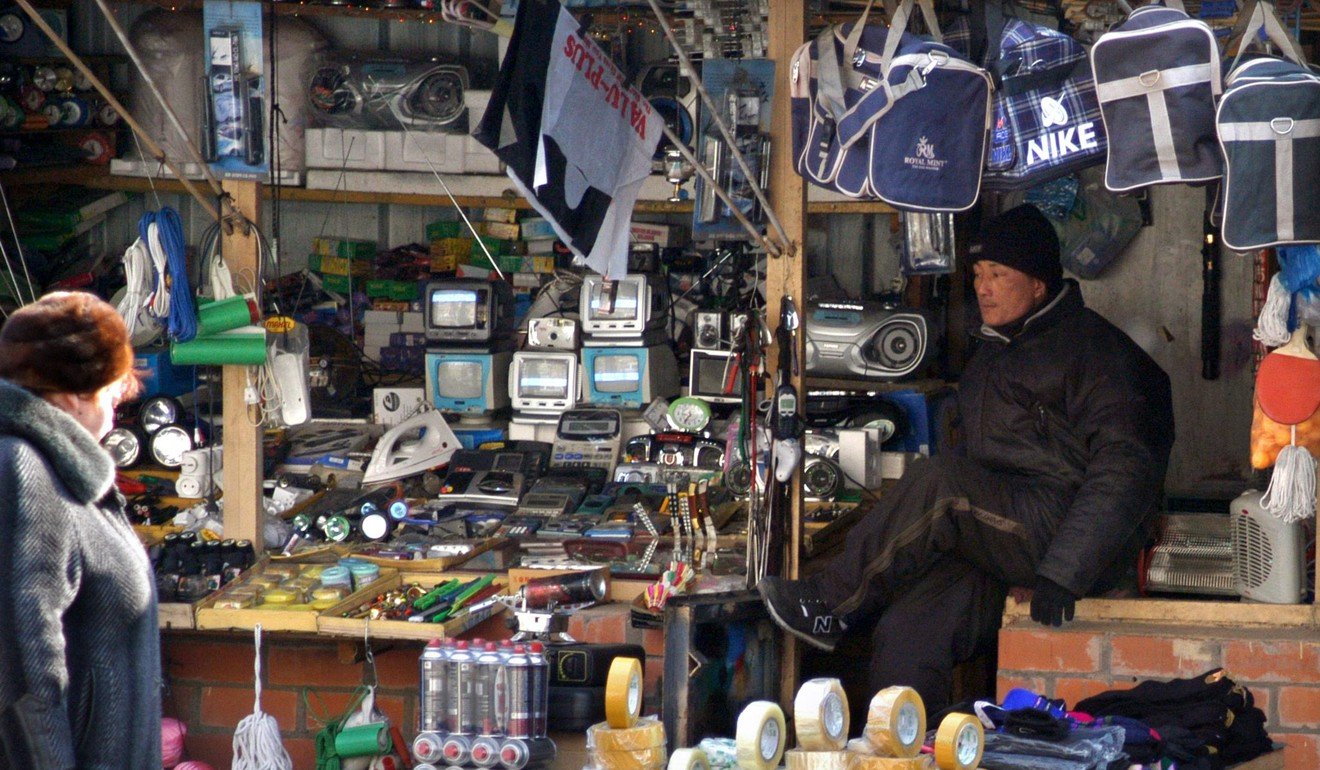
A Chinese man sells goods at a market in the town of Vladivostok. Some estimates put the number of Chinese in Russia at 300,000 to 500,000.
In China, both treaties are viewed as unequal, drawn up in a time of China’s weakness.
In 1969, when confrontation between Beijing and Moscow peaked, military clashes broke out on the border, raising fears of an all-out war.
In 1989, bilateral relations were normalised.
The border was largely finalised by the agreement of 1991.
Historian Boris Tkachenko said China netted 720 sq km.
Ironically, the territories it got included the Island of Zhenbao – the scene of the bitterest military confrontation in 1969.
The issue of the territorial status of the two small islands near Khabarovsk along the junction of Amur and Ussuri rivers – Yinlong and Heixiazi – was left to be settled later.
Under the agreement of 2004, the former and about half of the latter were transferred to China. Critics say that Moscow made too many concessions.
With the signing of the additional border agreement in 2008, officially all the territorial issues were settled.
China and Russia are now strategic partners.
But many in China feel that as the Aigun Treaty and the Convention of Beijing were unjust, China should at some point get back territories it ceded.
The economic dimension
Economic activities of the Chinese in the RFE are still expanding, with the tacit approval of the Russia.
One of the major Chinese activities in the RFE, and also Siberia, is agriculture.
Chinese farmers are cultivating corn, soybean, vegetables and fruits there while many are engaged in pig husbandry.
For this, Russia is leasing land – hundreds of thousands of hectares, usually at preferential rates.
Recently a new accord was signed to lease about 150,000 hectares of farm land in the Trans-Baikal region in Eastern Siberia to the Chinese for 49 years at a symbolic price of about US$5 per hectare.
Recently a new accord was signed to lease about 150,000 hectares of farm land in the Trans-Baikal region in Eastern Siberia to the Chinese for 49 years at a symbolic price of about US$5 per hectare.
Almost all the woodlands in the area near the Chinese border had already been leased for timber extraction.
Critics are saying that it means a sell-out of the native land at a discount price.
Critics are saying that it means a sell-out of the native land at a discount price.
However, more major matters for concern also exist.
The top headache is the excessive use of chemicals.
The top headache is the excessive use of chemicals.
The nitrates in the fruits and vegetables grown by the Chinese far exceed the norms, according to Russian monitoring authorities.
Many chemicals they use are unknown in Russia, and there is no methodology for their analysis.
This poses health risks for consumers, and also risks soil degradation.
One more surprise for Russians was Chinese-run pig farms.
One more surprise for Russians was Chinese-run pig farms.
The animals grow at an “unthinkable” pace and to an “unthinkable” size – apparently, due to the intensive use of chemicals in their forage.
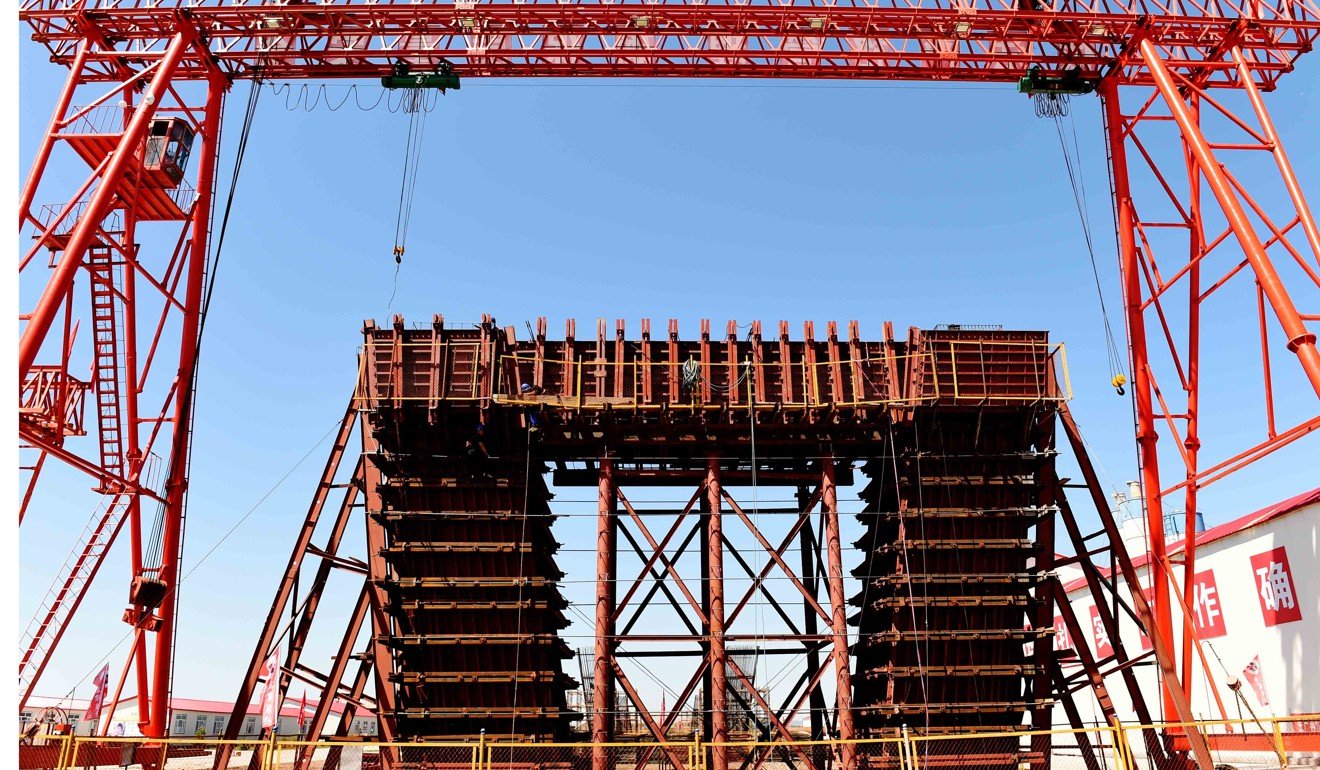 Builders work at the construction site of Heihe-Blagoveshchensk road bridge at the border of China and Russia. The 19.9km highway bridge stretches from Heihe, a border town in northeastern China's Heilongjiang Province, to the Russian city of Blagoveshchensk. The road bridge is scheduled to open to traffic in October 2019.
Builders work at the construction site of Heihe-Blagoveshchensk road bridge at the border of China and Russia. The 19.9km highway bridge stretches from Heihe, a border town in northeastern China's Heilongjiang Province, to the Russian city of Blagoveshchensk. The road bridge is scheduled to open to traffic in October 2019. In 2009, China and Russia launched a long-term programme of cooperation in the border regions.
It includes 205 key projects: 94 on the Russian side and 111 on the Chinese side.
The latter, however, are mostly stalled as Russian counterparts don’t provide enough financing to implement them.
In contrast, projects started in Russia by the Chinese are extracting metallic ores and other natural resources, producing cement and modernising customs and border control facilities.
When implementing cooperation projects, the Chinese side, first and foremost, seeks to send in large numbers of labourers.
When implementing cooperation projects, the Chinese side, first and foremost, seeks to send in large numbers of labourers.
More often than not, it appears to be a precondition for launching such projects.
In 2014, Russia enacted the Territories of Accelerated Development (TAD) law – special economic zones providing substantial tax and other benefits, including reduced mineral extraction fees.
In 2014, Russia enacted the Territories of Accelerated Development (TAD) law – special economic zones providing substantial tax and other benefits, including reduced mineral extraction fees.
No permits are required for hiring foreign workers.
The territories are established initially for 70 years, but the term can be extended.
They are managed not by local administrations but by Committees and Management Companies appointed by the government.
Land or real estate there can be confiscated from Russian citizens at the request of the managing company.
Initially TAD will be created only in the RFE, starting from the Khabarovsk and Primorye provinces. The Chinese will be the major players and beneficiaries.
China may transfer more major enterprises to the RFE, from construction projects to shipbuilding to telecoms.
Initially TAD will be created only in the RFE, starting from the Khabarovsk and Primorye provinces. The Chinese will be the major players and beneficiaries.
China may transfer more major enterprises to the RFE, from construction projects to shipbuilding to telecoms.
The Russian side is willing to accept them, provided they meet environmental standards.
All this obviously sets the stage for a deeper involvement of the Chinese in the RFE economy and the rise in the number of Chinese residents.
All this obviously sets the stage for a deeper involvement of the Chinese in the RFE economy and the rise in the number of Chinese residents.
Yet, their numbers will not surge dramatically.
Economic factors, limiting China’s presence are also at work.
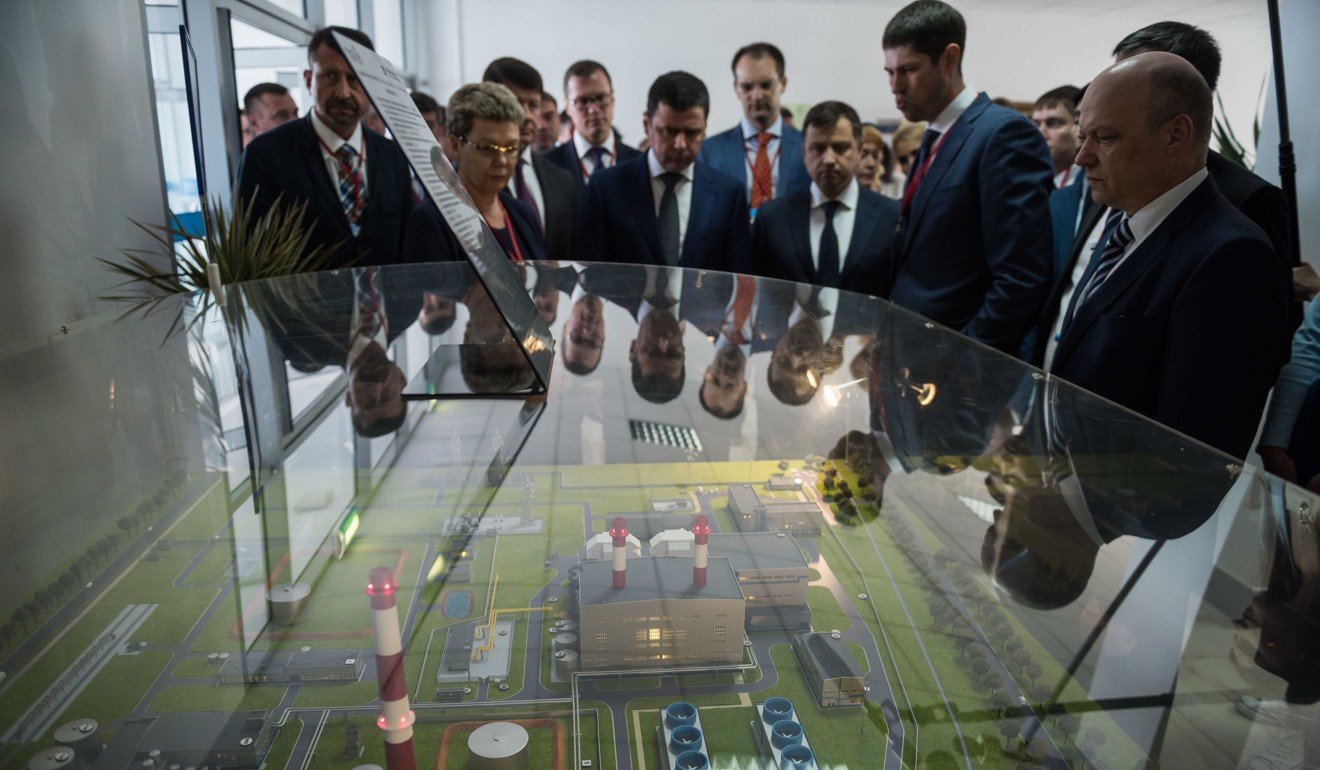 Guests view the sand table model of a heat and power plant in Yaroslavl Province, Russia. A gas-steam combined heat and power plant built by a China-Russia joint venture has been officially brought online.
Guests view the sand table model of a heat and power plant in Yaroslavl Province, Russia. A gas-steam combined heat and power plant built by a China-Russia joint venture has been officially brought online.First, China has vast underdeveloped areas of its own, especially in the west with a sparse population density comparable to the RFE.
For Beijing, development of those areas appears to be a priority.
Second, Russia’s attractiveness as an employment destination is declining as wages in China are growing faster and may have already exceeded Russian levels.
Third, Russia’s economy has gone through a recession and very low growth rates are expected. Chinese investors’ enthusiasm is not increasing.
Second, Russia’s attractiveness as an employment destination is declining as wages in China are growing faster and may have already exceeded Russian levels.
Third, Russia’s economy has gone through a recession and very low growth rates are expected. Chinese investors’ enthusiasm is not increasing.
They have many other attractive foreign investment destinations around the world to choose from.
Diagnosis and prospects
The scale of the Chinese presence in the RFE is still comparatively small.
In the coming years it is likely to grow at a moderate pace.
Economic interests of both sides are complementary, not conflicting.
Economic interests of both sides are complementary, not conflicting.
The RFE needs Chinese labour resources, money and technologies. China needs RFE’s land, natural resources and markets.
That said, there is a risk that those stronger links may also raise anxieties and tensions, especially on the Russian side, and may amplify xenophobic sentiments.
Russia will have to accommodate more and more Chinese, providing a comfortable working and living environment, making them abide by their rules.
Interaction with the Chinese will be productive only if more Russians choose to live and work in the RFE, drawn in by improved infrastructure and new industries.
Otherwise, as Vladimir Putin put it, the majority of Russia’s population there will speak Chinese, no doubt.
The issue of the Chinese in the RFE is manageable only if Russia is able to attract more Russians to the region.
If not, then the growing Chinese presence may become a geopolitical bomb. ■

