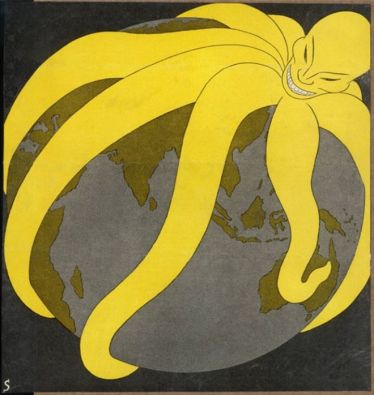
Affichage des articles dont le libellé est String of Pearls. Afficher tous les articles

dimanche 21 mai 2017

Chinese Peril

India's "new Silk Road" snub highlights gulf with China
Reuters
India's snub to the "Belt and Road" project was the strongest move yet by Modi to stand up to China.
NEW DELHI -- China invited Indian Prime Minister Narendra Modi and six cabinet colleagues to its "new Silk Road" summit this month, even offering to rename a flagship Pakistani project running through disputed territory to persuade them to attend, a top official in Modi's ruling group and diplomats said.
But New Delhi rebuffed Beijing's diplomatic push, incensed that a key project in its massive initiative to open land and sea corridors linking China with the rest of Asia and beyond runs through Pakistani controlled Kashmir.
The failure of China's efforts to bring India on board, details of which have not been previously reported, shows the depths to which relations between the two countries have fallen over territorial disputes and Beijing's support of Pakistan.
India's snub to the "Belt and Road" project was the strongest move yet by Modi to stand up to China.
But it risks leaving India isolated at a time when it may no longer be able to count on the United States to back it as a counterweight to China's growing influence in Asia, Chinese commentators and some Indian experts have said.
Representatives of 60 countries, including the United States and Japan, travelled to Beijing for the May 14-15 summit on Xi Jinping's signature project.
But Ram Madhav, an influential leader of Modi's ruling Bharatiya Janata Party (BJP) involved in shaping foreign policy, said India could not sign up so long as the China-Pakistan Economic Corridor (CPEC) -- a large part of the "Belt and Road" enterprise -- ran through parts of Pakistan-administered Kashmir that India considers its own territory.
"China routinely threatens countries when it finds issues even remotely connected to its own sovereignty question being violated," Madhav said. 
"No country compromises with its sovereignty for the sake of trade and commerce interests."
India, due to the size and pace of expansion of its economy, could potentially be the biggest recipient of Chinese investment from the plan to spur trade by building infrastructure linking Asia with Europe, the Middle East and Africa, according to a Credit Suisse report released before the summit.
Chinese investments into India could be anything from $84 billion to $126 billion between 2017 to 2021, far higher than Russia, Indonesia and Pakistan, countries that have signed off on the initiative, it said.
China has not offered any specific projects to India, but many existing schemes, such as a Bangladesh-China-India-Myanmar Economic Corridor that has been planned for years, have now been wrapped into the Belt and Road enterprise.
China is also conducting feasibility studies for high-speed rail networks linking Delhi with Chennai in southern India that would eventually connect to the modern day "Silk Road" it is seeking to create.
But if India continues to hold back from joining China's regional connectivity plans the commercial viability of those plans will be called into question, analysts say.
China has held talks with Nepal to build an $8 billion railway line from Tibet to Kathmandu, but it ultimately wants the network to reach the Indian border to allow goods to reach the huge Indian market.

STRATEGIC FEARS

India has other worries over China's growing presence in the region, fearing strategic encirclement by a "string of pearls" around the India Ocean and on land as China builds ports, railways and power stations in country such as Nepal, Sri Lanka and Bangladesh.
Ashok Kantha, who was India's ambassador to China until 2016, said India had repeatedly conveyed its concerns to China, especially about the China-Pakistan Economic Corridor and the need to have open discussions about it.
"Where is the economic rational for CPEC?" he said. 
"There is no major economic driver, the drivers are essentially political and strategic in character."
Just a week before the summit, China's ambassador to India, Luo Zhaohui, offered to change the name of CPEC to placate New Delhi and ensure it didn't boycott the Beijing conference.
Luo did no elaborate on the proposal, made during a speech at an Indian military think-tank, according to people who attended the meeting and local media reports. 
A transcript released later by the Chinese embassy did not include a reference to changing the project's name.
But Chinese officials in the past have suggested this could mean adding India to the name to make it the "China-Pakistan-India Economic Corridor".
A Chinese diplomat, speaking on condition of anonymity, suggested India could build infrastructure on its side of Kashmir which could eventually be linked to the roads and power lines China planned to build in Pakistani Kashmir.
Indian experts said another proposal explored in meetings between former diplomats and academics from the two sides was renaming the project the "Indus Corridor" to overcome India's objection that the "China-Pakistan" name endorses Pakistan's claim to Kashmir. 
Pakistan and India have fought two of their three wars over Kashmir, which they both claim in full. Chinese Foreign Ministry spokeswoman Hua Chunying did not comment directly on any offer to change the name of CPEC, but drew attention to Xi's remarks during the summit that China would follow the principle of peaceful co-existence and that New Delhi need not worry.
"I think the concerns from the India side should be able to be resolved," she said.
Indian Foreign Ministry spokesman Gopal Baglay said New Delhi had not received any suggestions through proper channels and that India wanted a meaningful discussion with China on the whole project.

vendredi 5 mai 2017

Chinese Paranoia

China Tries To Encircle India. It Won't Work
By Panos Mourdoukoutas 

China’s efforts to encircle India won’t work. 
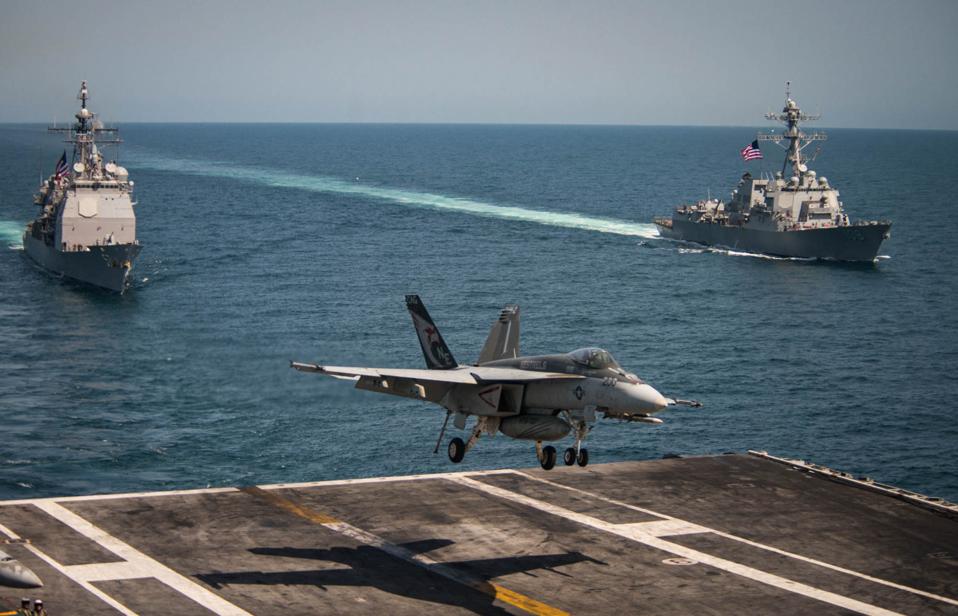
That’s the message India and its allies, America and Japan are prepared to send to Beijing in a joint naval exercise.
China has an official and an unofficial agenda for the Indian Ocean.
The official agenda is to foster trade and economic growth for all countries in the region, from Pakistan to Sri Lanka, to India, and Bangladesh.
The unofficial agenda is to encircle India, something investors should keep a close eye on, as it is expected to raise geopolitical risks in the region.
To execute this agenda, China has been pursuing massive infrastructure projects -- like CEPC in Pakistan, and the building and modernizing of ports in both Pakistan and Sri Lanka, something these countries needed very badly.
“China has clearly responded to a strong demand from Indian Ocean countries for better maritime infrastructure and increased connectivity,” says Nilanthi Samaranayake, strategic studies analyst, CNA, a non-profit research organization in the Washington area. 
“Some countries see their ports as being too congested or unable to handle larger container ships, so projects by Chinese companies are seen as helping to build or modernize infrastructure and promote wider national development goals.”
There are clear signs that these projects are beginning to yield results for China's official agenda. 
The China-Pakistan Economic Corridor (CPEC) is changing life in China’s Northwest Xinjiang Uyghur region, bringing something special to the region: seafood from Pakistan.
This little bonus is being shipped by container trucks through the corridor, which currently accounts for 2 percent of the total trade between the two countries; and more goods are expected to come through CPEC from the Middle East and Africa.
“Regarding India, it’s important to note that some of China’s maritime infrastructure developments have facilitated India’s trade, such as through the port of Colombo,” adds Samaranayake.
But China’s enormous investment in CPEC and port infrastructure in the Indian Ocean serves much more than trade. 
It advances Beijing’s “String of Pearls” strategy, as well as its unofficial agenda to encircle India through its arch-rival, Pakistan.
“Besides having investments that have purely commercial goals in Pakistan as they would in any other country, the Chinese have two main goals in investing in that particular country,” explains Dimitrijevic. 
 “First is to continue the “String of Pearls” strategy of developing commercial and military outposts along their main maritime trading route. These include the Strait of Malacca, Sri Lanka, Pakistan, the Maldives, the Strait of Hormuz and Somalia. There is a second reason for the Chinese to invest and that’s to make India feel China’s strong presence, in its neighbor and arch-rival Pakistan.”
That could explain India’s unease with China’s ambitious Indian Ocean agenda. 
“Despite the commercial benefits of this activity, India is concerned about the strategic implications of China’s increasing commercial and military presence in the Indian Ocean,” says Samaranayake. “China continues to deploy naval task forces in support of counterpiracy operations and is building a base in Djibouti. This is a region that India sees as its primary area of interest, so concern about China’s expansion of Indian Ocean activity is understandable.”
Understandable or not, China’s unofficial agenda to encircle India won’t work. 
New Delhi and its allies—the US and Japan—won’t let it happen. 
And they are prepared to send this message to Beijing with a joint naval exercise in the Malabar in the Bay of Bengal this coming July.

lundi 17 avril 2017

Chinese Peril

New Delhi needs better ties with neighbours to tackle Beijing's String of Pearls
By Sl Narasimhan
y7.jpg
India-China relations have a major impact on the region. 
There is a perception that China has been moving very strongly into India’s neighbourhood with her dollar diplomacy.
The South Asian region is in dire need of support for its growth and development. 
India was not able to help her neighbours because of three reasons: One, her own financial requirements for uplifting the population was enormous. 
Second, her delivery mechanisms for the promises made by India’s leaders leave much to be desired. Third, there is also a suspicion in the minds of smaller countries regarding India’s intentions.
China has started showing interest in Afghanistan. 
She sent her first consignment of weapons and equipment in July 2016. 
Recently, there have been reports that Chinese PLA and Afghan troops have carried out coordinated patrolling.
China has also facilitated talks with the Taliban. 
She was also part of the Russia-China-Pakistan trilateral talks on Afghanistan in 2016. 
She is increasing her investments in that country.
China – Nepal relations have seen the maximum growth in the recent times. 
China has been investing in road construction, hydroelectric projects, dry ports, World Peace City in Lumbini, creation of China Study Centres, an airport in Pokhara, optical fibre cable connectivity from Kathmandu to Chinese border and a railway line connecting Lhasa and Nepal.
In 2014, for the first time, her investments in Nepal were more than that of India. 
The first China-Nepal joint military exercise is about to take place from 16 April, 2017. 
Maoist insurgency in Nepal, though that movement had no link to Mao or China, brought China closer to Nepal.
China is Myanmar’s largest trading partner with an annual trade of US $ 13.05 billion. 
Pipelines from Kyaukphyu to Kunming were completed in 2015. 
A copper mine in Letpadaung, Kyaukphyu Deep Sea Port and Special Economic Zone project, an oil refinery in Dawei and supply of military equipment during the period when Myanmar was under sanctions marked cooperation between China and Myanmar. 
China also assists Myanmar in handling the ethnic strife in Myanmar’s north east.
China is also Bangladesh’s largest trade partner. 
Xi Jinping, during his visit to Bangladesh in October 2016, signed a number of agreements and memorandum of understanding for infrastructure construction, energy, power, transportation, communication and establishment of economic and industrial zones worth approximately $25 billion. China is also developing Sonadia Port. 
80 percent of Bangladesh armed forces’ equipment comes from China.
In Sri Lanka, China is involved in major infrastructure projects: The construction of Hambantota port, a SEZ and refinery near that port, Colombo South Harbour and Port City projects, Norochcholai thermal power plant, a number of roads, railway lines, Mattala airport. 
China’s military supplied Sri Lanka arms worth $ 1.2 billion, at a discounted 'friendship' rate. 
China also provided weapons and equipment to Sri Lanka during her war against LTTE.
China is assisting Maldives with infrastructure projects: Developing Laamu Atoll, construction of Male-Hulumale bridge, upgrading Male airport, tourism resorts and housing projects. 
Chinese tourists make up 30 percent of visitors to Maldives.
Thus, India feels concerned about China’s forays into her neighbourhood. 
China, for its part, has done nothing to help improve her relationship with India. 
She has stood in the way of India getting permanent membership in the United Nations Security Council on the premise that India has joined hands with Japan, who has a frosty relationship with China.
China has also been an impediment in India getting a membership in the Nuclear Suppliers Group on procedural issues. 
But she has also indicated that she will support Pakistan’s induction into the group. 
One is not sure how that will overcome the procedural impediments, in addition to the fact that Pakistan’s nuclear proliferation record is far from satisfactory. 
China also repeatedly placed on technical hold and then vetoed India and other countries’ application to proscribe some leaders from Pakistan as terrorists. 
The organisations that these individuals lead have already been placed on the proscribed list by the United Nation's 1267 Sanctions Committee.
Because of these issues, the countries in the region are unsure of the relationship that they need to pursue with India and China. 
Some countries try to play India and China against each other to their own benefit. 
Sub-regional groupings like Saarc have not been effective due to India-Pakistan relations and China’s support to Pakistan. 
The relations between countries in the Indo-Pacific, as the region covering Indian and Pacific Oceans have come to be known in recent times, is dominated to some extent by India-China relations.
India-China relations also have an impact in the Central Asian Republics, Mongolia, North and South Korea, Japan, Vietnam and ASEAN. 
Connectivity projects in the region are affected adversely by this bilateral relationship. 
Bangladesh-China-India-Myanmar Corridor which preceded China’s Belt and Road Initiative (BRI), has been included by China as part of the BRI.
While India supports the corridor, including it in the BRI has not gone down well with her. 
Bhutan-Bangladesh-India-Nepal Motor Vehicles Agreement was signed in June 2015 to have seamless connectivity between these countries and facilitate multi modal transportation. 
While Bangladesh, Nepal and India have ratified it, Bhutan is yet to ratify it due to environmental concerns.
Any discussion on China’s influence in the region will not be complete without discussing her relations with Pakistan. 
It appears that China has taken it upon herself to assist Pakistan out of her financial quagmire. 
In addition to the assistance China provides to Pakistan diplomatically and militarily, the economic angle of the relationship is gaining momentum with the China-Pakistan Economic Corridor.
The project that started with just $46 billion has gone up to approximately $55 billion with various projects getting added to it. 
On 12 April, 2017 Dr Farookh Saleem in his column in The International News of Pakistan questioned as to how the eight power plants that are being constructed in Pakistan will raise a surplus of $ 2.4 billion as payment to China in the first year of their operations. 
It seems Chinese assistance does not offer free lunches to the recipients.
India has started reaching out to her neighbours. 
During the recent visit of Sheikh Hasina, overlooking protocol, Prime Minister Narendra Modi received her at the airport. 
A $5 billion credit line has been extended to Bangladesh, the highest amount given by India to any country.
Twenty-two agreements were signed during the visit. 
Even though the Teesta Water issue remained unresolved, the very fact that Mamata Banerjee took part in the visit held out hopes that the issue may get resolved sooner or later. 
This visit was a correct example of how India should maintain good relations with her neighbours. One sincerely hopes that this visit is a harbinger of things to come.

dimanche 26 mars 2017

Chinese Peril

The Real Reasons Behind China's Big Investments In Sri Lanka
By Panos Mourdoukoutas

What’s China doing in Sri Lanka? 
Officially, it’s building the country’s infrastructure. 
Like the ports of Colombo and Hambantota, which have left the country heavily indebted.
Unofficially, China is setting up outposts in the Indian Ocean as part of Beijing’s broader strategy to secure the passage of Middle East oil through the Strait of Malacca and counter American naval hegemony in the region.
China has increasingly come to rely on the Middle East for its oil needs, which must be shipped through the Strait of Malacca to reach its shores. 
This means that Beijing runs the risk of being cut off from Middle East oil supplies should America blockade the Strait -- in the event of a further escalation of South China Sea disputes or an outright war between America and China.
“In the event of war with the United States, Chinese policy planners have long feared a retaliatory US naval blockade of the Strait of Malacca to cut off vital oil supplies,” says Nilanthi Samaranayake
“In a 2003 speech, Hu Jintao even acknowledged China’s vulnerability in the Strait. Thus, some American security analysts have argued that the People’s Republic of China (PRC) has been actively constructing a “string of pearls in the Indian Ocean Region (IOR) to secure the safe passage of oil by Chinese ships, as well as to position China as a countervailing presence to US naval hegemony in the Sea Lines of Communications (SLOCs).”
That could explain why Chinese submarines have begun suddenly and repeatedly showing up in the Chinese-operated South Container Terminal in the port of Colombo.
And why China has been telling India to stay off Sri Lanka.
That’s something investors in Southeast Asian markets should keep a wary eye on, as it opens yet another front between the two Asian giants, which could drag in America.
And that raises the geopolitical risk of investing in the region. 
Though Chinese and Indian markets seem to be ignoring these risks, for now.

mercredi 26 octobre 2016

Thucydides Trap in Asia: The Sino-Indian conflict

By Abir Chattaraj

At the battle of Pylos (Seventh year of the Peloponnesian War), the Athenians won a major victory over Sparta. 
In consequence of their loss, Sparta sent envoys to Athens to offer a peace treaty. 
The Spartan envoys enjoined the Athenians to “treat their gains as precarious,” and advised that “if great enmities are ever to be really settled, we think it will be, not by the system of revenge and military success… but when the more fortunate combatant waives his privileges and, guided by gentler feelings, conquers his rival in generosity and accords peace on more moderate conditions than expected.”
Unfortunately this age old wisdom pervades the Chinese in Asia.
The Greek historian Thucydides theorised that when an established power encountered a rising power, a conflict between them was inevitable. 
Today China, Asia’s established power and India, a rising power are heading towards this very own Thucydides trap.
China today perceives India as an adversary. 
Its very actions are geared towards this objective. 
One-third of Chinese naval power is being deployed to the Indian Ocean Region. 
The Chinese are building a ring of alliances under the “String of Pearls” doctrine with countries around India’s periphery: from Myanmar to Pakistan. 
It has interposed itself in India’s land disputes in Kashmir and Gilgit-Baltistan; accused India of propagating the Tibetan movement, covert attacks and espionage and human rights violations; excluded India from the China-sponsored Maritime Silk Road and the Quadrilateral Dialogue with US on Afghanistan, blocked India’s NSG bid and openly supported terrorist Masood Azhar in the Security Council.
Chinese military moves to contain India has become more robust and overt in recent months.
These include: support for Pakistan’s militarization; the constant irritant stationing of Chinese naval forces in the Sri Lanka; Gwadar in Pakistan occupied Balochistan; aggressive naval patrolling in the Indian Ocean Region; ever closer defense cooperation with and supplies to Pakistan, Bangladesh; joint naval and military exercises with Pakistan, Sri-Lanka, Bangladesh; an agreement with most Indian neighbours for Billions of Dollars worth of soft loans.
The recent ex-parte award against China on the South China Sea islands dispute by The Hague Arbitration Tribunal ,could bring the growing Sino-Indian tensions to a climax. 
China vehemently opposes any assistance given to Vietnam in any form whatsoever, contests Indian drilling of offshore oil reserves by ONGC in legitimate Vietnamese waters and holds maritime naval exercises on South China to reassert its territorial claims.
The invidious actions of China are likely to result in more heartburn in Indian diplomatic circles.
Beijing’s stance towards India-Japanese co-operation is also likely to harden. 
The US-Japan-India military exercises could be countered by joint China-Russia naval operations in the North China Sea.
The escalating Sino-US rivalry will compel Pakistan to align itself even more closely with China. Consequently, Pakistan will face even greater US pressure and coercion, including on Afghanistan, terrorism, nuclear and missile issues.
The impact of a Sino-Indian confrontation would be global. 
Russia-China defense and economic cooperation would intensify which is most likely to include huge fundings for the ailing Russian oil sector. 
The One Belt, One Road project will link China with Europe through Russia, greatly hampering the choke points in the Straits of Malacca. 
Africa could divide between Western, Indian and Chinese blocs. 
In Latin America, some other states may be open to closer relations with China to counter India’s growing reputation. 
The Sino-Indian economic relationship which currently is geared vehemently favorably towards China, would decline sharply, slowing growth in both countries and the world economy and possibly igniting another global economic crisis.
Of the nearly 15 historical cases reviewed by Dr Kissinger of established powers encountering rising rivals, 10 resulted in conflict. 
Both China and India could yet back away from the Thucydides trap. 
The onus for doing so rests with Beijing. 
Unfortunately, the anti-India populism reflected in the current Chinese diplomatic moves does not augur well for the triumph of restraint and reason.