Affichage des articles dont le libellé est China's crimes against humanity. Afficher tous les articles

mercredi 15 janvier 2020

Mankind's Enemy No. 1

China is a global threat to human rights, report finds
By Amy Woodyatt


The Chinese government increasingly poses a "global threat to human rights," according to NGO Human Rights Watch.
In its annual report reviewing human rights standards in nearly 100 countries, the NGO warned that China is carrying out an intensive attack on the global system for enforcing human rights.
The report's release comes after HRW executive director Kenneth Roth said he was denied entry to Hong Kong -- with no reason given by immigration authorities.
Roth had planned to launch the report in the city, which has been rocked by anti-government protests for over seven months.
HRW echoed longstanding concerns about China's use of an "Orwellian high-tech surveillance state" and sophisticated internet censorship system to catch and stamp out public criticism.
The report also pointed to the detainment and intense surveillance of hundreds of thousands of Uyghur Muslims in the far western colony of East Turkestan.
Beijing has faced increasing international pressure over its tactics in East Turkestan, with multiple, unprecedented leaks shining a light on a massive network of concentration camps targeting Muslims. Former detainees have also spoken out, with a former teacher in the camps telling CNN they witnessed abuse and attempts at brainwashing of detainees.
Beijing has previously denied accusations of ethnic or religious discrimination in East Turkestan, which is home to 10 million Muslims.
Beyond East Turkestan, HRW warned of "mass intrusions" on personal privacy including the forced collection of DNA and use of artificial intelligence and big data analysis "to refine its means of control."
High-tech surveillance and censorship tactics pioneered in East Turkestan have previously been rolled out to other parts of the country, and there have been concerns that other religious minorities -- including Hui Muslims and Tibetan Buddhists -- are facing similar restrictions to those placed on Islam in East Turkestan.
"Beijing has long suppressed domestic critics," Roth said in a news release after he was prevented from entering Hong Kong.
"Now the Chinese government is trying to extend that censorship to the rest of the world. To protect everyone's future, governments need to act together to resist Beijing's assault on the international human rights system."
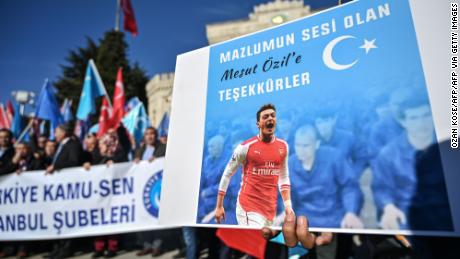
Mesut Ozil vs. China: Arsenal star makes human rights stand

'Lukewarm and selective support'
As well as criticizing China for undermining international human rights protections, HRW also took aim at democratic governments and world leaders for their "lukewarm and selective support" for existing standards.
The organization criticized Donald Trump, who was deemed to be "more interested in embracing friendly autocrats than defending the human rights standards that they flout."
It also singled out the European Union for a failure to adopt a "strong common voice" on human rights, both in China and around the world, and noted that it was instead distracted by Brexit, nationalism and migration.
In the report, the NGO calls for governments and financial institutions to offer alternatives to Chinese loans and development aid, and for universities and companies to promote codes and common standards for dealing with China.
Beijing has emerged as the primary donor for much of the developing world, as well as extending major trade and infrastructure investment through Xi Jinping's Belt and Road project.
The report also urges leaders to force a discussion about East Turkestan -- where massive concentration camps are located -- at the UN Security Council.
Such international condemnation has been hard to come by, however, particularly among Muslim countries, which might be expected to speak out against China's hardline tactics.
At the UN General Assembly in late October, 23 mostly Western countries came forward to make a strong, official statement criticizing Beijing's East Turkestan concentration camps.
In response, Belarus issued a statement claiming 54 countries were in support of the East Turkestan camps system. 
Not all signatories were revealed, but a similar statement in July included several Muslim countries, such as Saudi Arabia, Pakistan and Iran.
"An inhospitable terrain for human rights is aiding the Chinese government's attack," the organization said in a statement.
"A growing number of governments that previously could be relied on at least some of the time to promote human rights in their foreign policy now have leaders, such as Donald Trump, who are unwilling to do so."

mardi 14 janvier 2020

China's crimes against humanity

China calls them ‘kindness students.’ They’re actually victims of cultural genocide.
The Washington Post
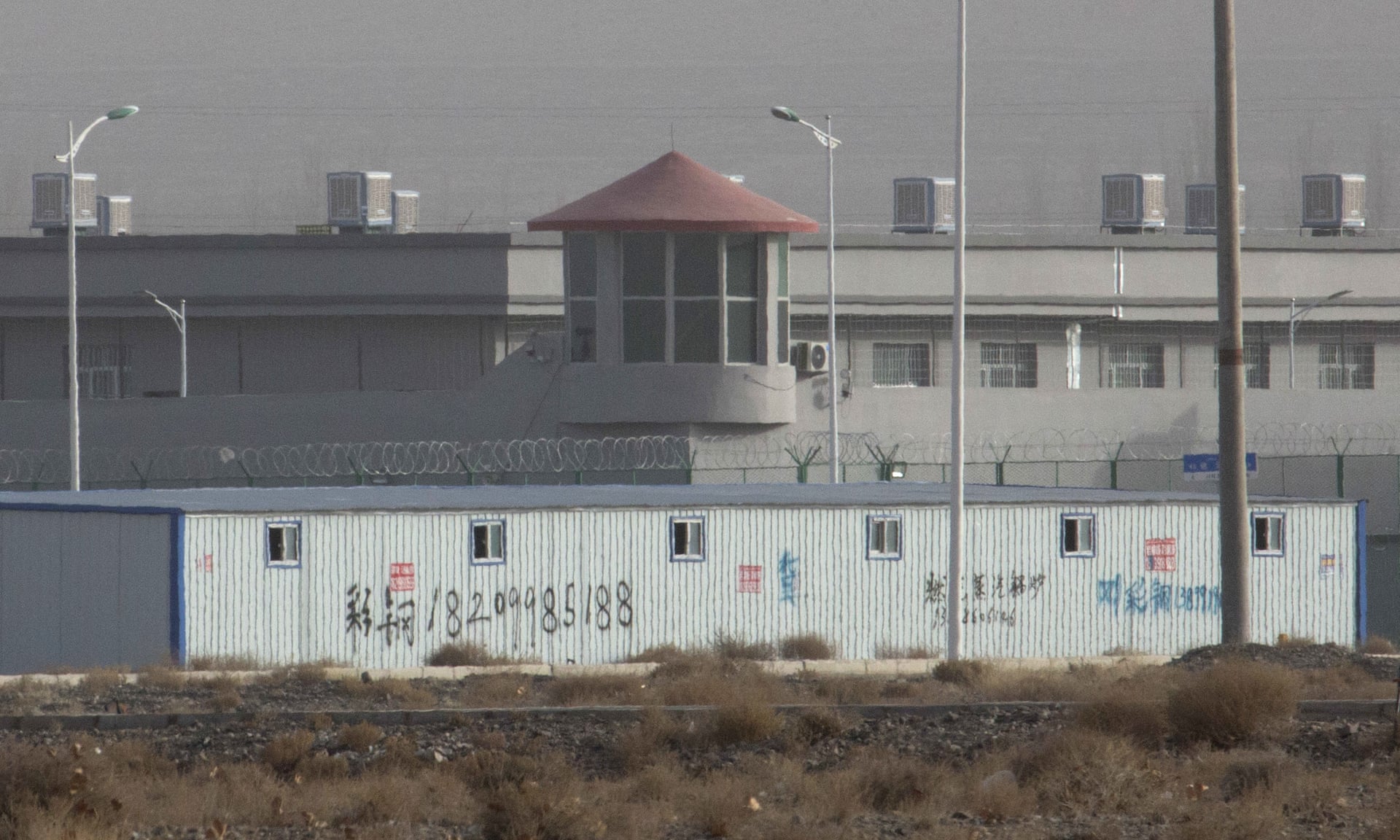
Workers walk by the perimeter fence of a concentration camp in Dabancheng in East Turkestan, China, on Sept. 4, 2018. 

IMAGINE THIS: a facility in southern East Turkestan colony in China, in a dusty village nestled among fields of barren walnut trees.
It is surrounded by a tall brick wall, two layers of barbed wire, cameras on every corner, and a guard wearing a black helmet and protective vest with a metal detector at the entrance.
This is a school?
The building, recently described in a New York Times article, is a clue to the eradication of a people’s culture and language taking place every day in concentration camps in western China. 
The building is in fact a boarding school and part of China’s attempt to wipe out the mind-set of the ethnic Uighur population and others, including Kazakhs.
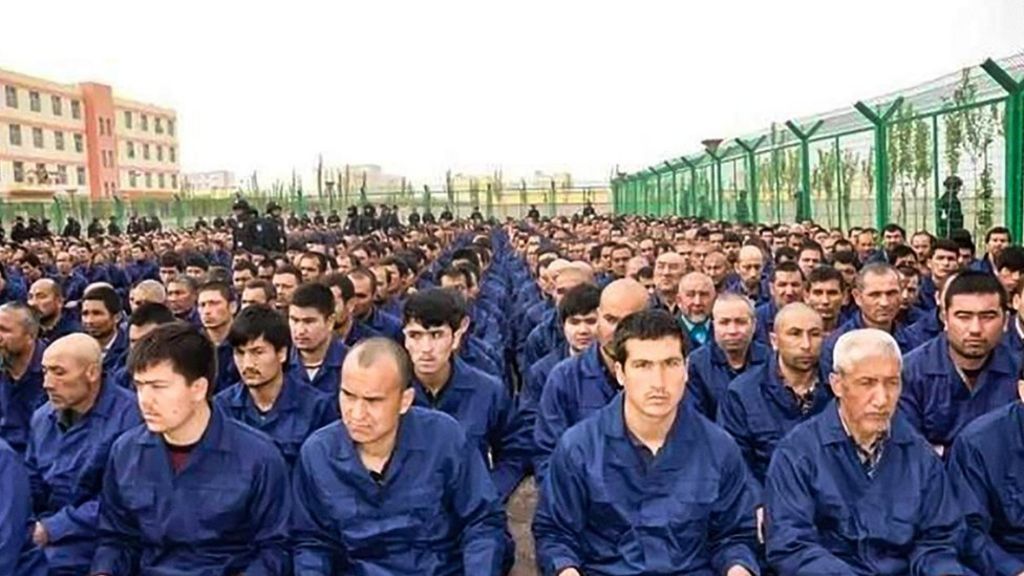
They are Turkic Muslims, and about 1.8 million of them are now incarcerated in camps that China calls “vocational education” facilities but look more like prisons.
As the Times article and other recently published research has revealed, China’s attempts to suppress Uighur traditions start with the youngest.
Children are separated from their parents — who are hauled off to faraway camps — and the kids are then subjected to intensive indoctrination at places such as the boarding school. 
The goal is to erase from their minds the Uighur language and cultural ways and replace them with coerced respect for China’s ruling Communist Party and the traditions of its Han-majority population.
In the village with the barbed wire, government officials call the children “kindness students,” referring to the party’s supposed "generosity" in making special arrangements.
But the glove bearing this generosity has a fist inside.
As Adrian Zenz at the Victims of Communism Memorial Foundation has documented, in some Uighur-majority regions in southern East Turkestan, preschool enrollment more than quadrupled in recent years, exceeding the average national enrollment growth rate by more than 12 times.
Why? 
Because parents, and in some cases both parents, have disappeared into the camps. 
China is carrying out cultural genocide and social reengineering on young minds when they are most impressionable.
China has claimed the campaign is a response to extremism and violence in East Turkestan a decade ago, but these methods far exceed what would be needed for counterterrorism.
The punishment of the Uighur Muslims appears to fit the definition of crimes against humanity. 
The annual report of the Congressional-Executive Commission on China, released Wednesday, says: “Security personnel at the camps subjected detainees to torture, including beatings; electric shocks; waterboarding; medical neglect; forced ingestion of medication; sleep deprivation; extended solitary confinement; and handcuffing or shackling for prolonged periods, as well as restricted access to toilet facilities; punishment for behavior deemed religious; forced labor; overcrowding; deprivation of food; and political indoctrination.”
That is some “kindness.”
Congress should promptly finish with legislation that would pave the way for sanctions on those responsible for the repression.
If this horror is not ended soon, the entire world must ask: Should China be allowed to host the 2022 Winter Olympics in one city while running concentration camps in another?

lundi 23 décembre 2019

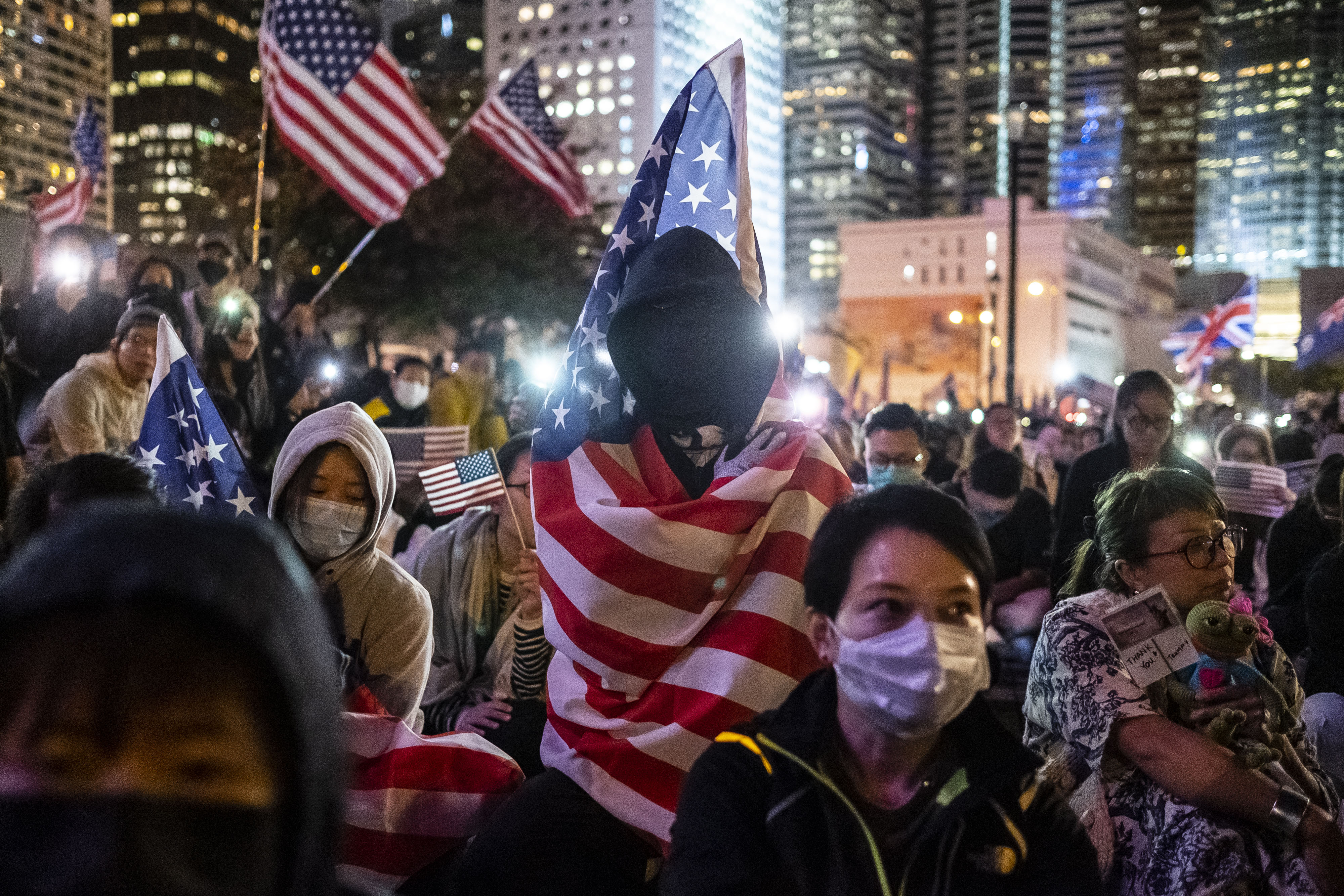
Hong Kong protesters rally in support of minority Uighurs

Largely peaceful rally descended into chaos after protesters grabbed a Chinese flag and tried to burn it.
hwww.aljazeera.com
Hong Kong protesters held a rally in support of the Uighurs on Sunday.

Riot police in Hong Kong broke up a rally in support of China's Uighurs on Sunday -- with one officer drawing a pistol -- after the initially peaceful protest descended into chaos when protesters removed a Chinese flag from a nearby government building and tried to burn it.
Organisers stopped the flag being burned, but riot police swooped in with pepper spray, sparking anger from the crowd who threw water bottles.
One officer drew his gun and pointed it at the crowd, but did not fire.
At least two protesters were arrested.
Several hundred people joined the rally, with some holding signs emblazoned with the blue and white flag of the independence movement in China's northwestern colony of East Turkestan.
China has faced international condemnation for detaining an estimated one million Uighurs and other mostly Muslim ethnic minorities in massive concentration camps.
The emergence of a huge surveillance and prison system that now blankets much of East Turkestan has been watched closely in Hong Kong, which has been convulsed by six months of huge and sometimes violent protests against Beijing's rule.
Pro-Uighur chants and flags have become commonplace in Hong Kong's marches, but Sunday's rally was the first to be specifically dedicated to Uighurs.
The crowd gathered in a square close to the city's harbourfront listening to speeches warning that the Chinese Communist Party's crackdown in East Turkestan could one day be replicated in Hong Kong.
"We shall not forget those who share a common goal with us, our struggle for freedom and democracy and the rage against the Chinese Communist Party," one speaker shouted through a loudspeaker to cheers.

'Control Freaks'
Many of those attending were waving the flag of East Turkestan, which has a white crescent moon on a blue background.

A man holds a flag during a rally to show support for Uighurs and their fight for human rights in Hong Kong. The characters read "Liberate Hong Kong. Revolution of our times." 

Others wore blue face masks displaying the East Turkestan flag.
People also carried flags for Tibet -- another restless region of China - and the self-ruled island of Taiwan that China claims as its own.
China runs Hong Kong on a "one country, two systems" model which allows the city key freedoms that are denied people on the authoritarian mainland.
The framework will end in 2047, 50 years after the handover.
Many people in Hong Kong fear an increasingly assertive China is already eroding those freedoms.
Many at Sunday's rally said they felt a mainland-style government was around the corner.
"The Chinese government are control freaks, they can't stand any opinions they disagree with," Katherine, a protester in her late twenties and a civil servant, told AFP before police moved in.
"In East Turkestan they are doing what they are doing because they have the power to do so. When they take over Hong Kong they will do the same," she added.
China cracked down on Uighurs and other Muslim minorities after a series of deadly attacks in the area.
It bristles at any criticism of its policies in East Turkestan.


Sonny Bill Williams follows Mesut Özil in support of Uighur ethnic group

‘Sad time when we choose cupidity over humanity’
Australian Associated Press

This is the first time Sonny Bill Williams has publicly voiced his opposition to China’s treatment of the Uyghur people.

Sonny Bill Williams has tweeted his support of the minority Uighur ethnic group, mirroring the stance of football star Mesut Özil.
Cross-code star Williams may further provoke Chinese officialdom with his social media post, which denounces the treatment of Uighurs.
In his tweet on Monday, Williams echoed the belief of Arsenal playmaker Özil, who is also a practising Muslim, that more countries should speak out against China’s reported actions of detaining Uighur people in concentration camps.


Former Germany midfielder Mesut Özil has criticized Muslim countries for not speaking up for minorities subjected to abuse in China. More than 1 million people have been sent to concentration camps in the East Turkestan colony.

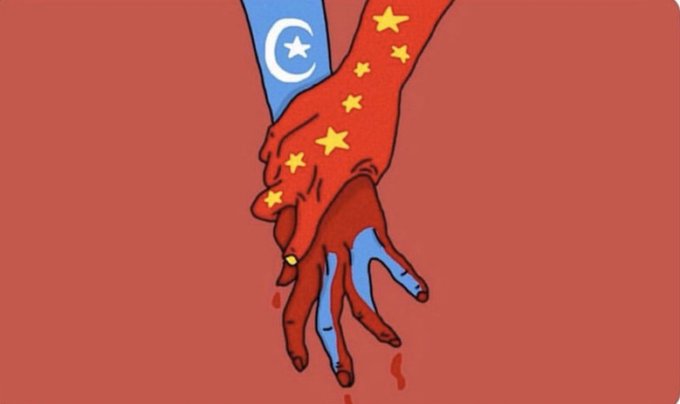
“It’s a sad time when we choose economic benefits over humanity #Uyghurs,” Williams wrote, accompanied by an image illustrating oppression against the Muslim minority group.


Sonny Bill Williams
✔@SonnyBWilliams
It’s a sad time when we choose economic benefits over humanity#Uyghurs

17K
9:02 PM - Dec 22, 2019


Greedy Arsenal distance themselves from Mesut Özil comments on Uighurs’ plight

Williams’ tweet comes a month after he signed a lucrative deal with Canada-based Super League club, Toronto Wolfpack, having ended a lengthy and successful career with the All Blacks.
It remains to be seen if there is a backlash from China against the 34-year-old New Zealander, who hasn’t previously voiced his opinion on such a sensitive international topic.
China’s state broadcaster removed the English Premier League match between Arsenal and Manchester City from its programming in response to Özil’s actions.
The German midfielder was also removed from a Chinese-produced football computer game.
Rugby league doesn’t have the same presence in China as football or basketball’s NBA, which paid a heavy financial price when an official criticised the Chinese government in October.
Houston Rockets general manager Daryl Morey tweeted support of protesters in Hong Kong, sparking Chinese demands that he be fired, which were rejected by the NBA.

jeudi 19 décembre 2019

Arbeit macht frei

China adds a sickening new dimension to its treatment of Uighurs
The Washington Post
An ethnic Uighur demonstrator attends a protest against China in front of the Chinese Consulate in Istanbul on Oct. 1. 

AT A news conference in Beijing recently, the head of China’s East Turkestan colony in the far northwest, Shohrat Zakir, said that “trainees” in a notorious archipelago of reeducation camps had all “graduated,” and “with the help of the government, stable employment has been achieved and their quality of life has been improved.”
In reality, China has corralled more than 1 million ethnic Uighurs and other Turkic Muslims into concentration camps in East Turkestan in order to wipe out their language, religion and culture. 
So what did they graduate to?
Many are being sent to factories no freer than the camps, in some cases located on the camp grounds or adjacent to them. 
If true, the creation of a chain gang of Uighur workers is yet another sickening dimension to one of the world’s most serious human rights crises. 
It should be the subject of a credible international investigation, with consequences.
Adrian Zenz, a senior fellow in China studies at the Victims of Communism Memorial Foundation, who has published pioneering work on the East Turkestan concentration camps, has now unearthed evidence that points to forced labor.
Writing in the Journal of Political Risk, he says, “Since the second half of 2018, limited but apparently growing numbers of detainees have been released into different forms of forced labor.” 
Mr. Zenz argues that the involuntary labor is one part of a “grand scheme that penetrates every corner of ethnic minority society with unprecedented pervasiveness,” sending a whole population into a state-controlled environment of political indoctrination, social control, extrajudicial internment and massive surveillance with the effect of breaking up traditional, religious and family life. 
It amounts to “targeted cultural genocide.”
Mr. Zenz bases his conclusions in part on Chinese government documents that point toward factories and workshops staffed by the internees from the concentration camps.
In the Xinhe County Industrial Park, he found, a garment company set up a work base to provide employment for 500 internees from the Xinhe County camp, and “the government provides police forces and special instructors so that the factory is run in a ‘semi-military style management’ fashion.”
What factory needs police, except to keep people from escaping?
In Yarkand County, Mr. Zenz found spreadsheets produced by local government authorities listing the employment situation of thousands of Uighur residents, and he noticed that 148 stood out as specially designated people who had been in detention, including in the camps.
Mr. Zenz points out in an essay in Foreign Policy the irony of placing the interned Uighurs into sweatshops: Many were once skilled businessmen, intellectuals and scientists. 
Mr. Zenz’s information is powerful but fragmentary; more needs to be uncovered about the patterns of forced labor he has begun to expose.
China is to host the Winter Olympics in February 2022.
Should such an event of global significance be held in a country that maintains concentration camps and coerced labor? 
It is not too early to begin raising the question.

vendredi 6 décembre 2019

American Quislings: Stop Investing in China’s Crimes Against Humanity,

It’s time for pension funds and others to stop supporting companies that abet Beijing’s crackdowns on China’s Uighurs and Hong Kong’s protesters.
By Danielle Pletka and Derek Scissors


Last month, the United States government issued sanctions against eight Chinese companies for complicity in the crackdown on Chinese Muslims in East Turkestan.
As many as a million Uighurs, Kazakhs and other ethnic minorities have been “interned” — wrenched away from families and dumped into harsh concentration camps.
In light of those sanctions, why haven’t the California State Teachers’ Retirement System and other American funds announced that they would stop investing in companies under sanctions?
And why is the federal employee retirement fund poised to move retirement assets to an index fund that includes Chinese companies in 2020?
By any standard, China is led by an amoral dictatorship.
In addition to the continuing horrors in East Turkestan, young people in Hong Kong fighting for freedom fear being brutalized by Chinese security forces. 
In the South China Sea, the People’s Liberation Navy has all but annexed a vast swath of other nations’ territory and international waters.
Chinese companies, answerable to the Communist Party, have built surveillance into drones that Americans buy and telephones that are bought the world over. 
Beijing trolls your children’s apps and Chinese hackers have already breached the private financial and personal information of millions of Americans, not to mention the possibility of forays into America’s most advanced defense plans.
American financial heavyweights and pension funds have in recent years shunned fossil fuels, guns and other investments on ethical grounds.
Yet when it comes to providing capital to Chinese companies — including those directly engaged in surveillance or supporting the People’s Liberation Army — many haven’t resisted investment.
Both state-owned and nominally private Chinese companies enjoy almost unfettered access to American capital markets, including listing on American exchanges and heavy investment from some of the nation’s largest pension funds. 
In mid-2019, China was among the top 10 countries in which the California State Teachers’ Retirement System (CalSTRS) invested. 
According to the most recent data, from June 2019, CalSTRS owned 4.1 million shares of Hangzhou Hikvision Digital Technology Co., which has faced sanctions from the Trump administration for manufacturing surveillance equipment that is being used in the East Turkestan concentration camps. 
The New York State Teachers’ Retirement System and the Florida state pension fund have owned shares of the same company (the New York State Common Fund liquidated its shares in Hikvision in May).
These and other pension funds including New York State’s, and the enormous California Public Employees’ Retirement System (CalPERS) have indirectly owned shares in iFlytek Co Ltd., another of the Chinese firms blacklisted by the U.S. government.
We reached out to the funds, seeking the current status of their investments in Chinese companies, but got little information.
“We have been tracking the situation,” CalSTRS told us, and a representative for the New York State Teachers’ Retirement System said: “Our holdings in public international equities are primarily held according to their weights in passive portfolios benchmarked to the MSCI ACWI ex-U. S. index, our policy benchmark.”
A company representative at CalPERS just pointed us to its Governance & Sustainability Principles. A representative for the Florida state pension fund confirmed that it still owns shares in Hikvision.
There are sound political and financial reasons to question the wisdom of exposure to Chinese public and “private” companies. 
It’s almost impossible to know at what moment the United States may levy sanctions against a company for complicity in the Chinese government’s malign agenda.
Hikvision, Huawei, ZTE (telecommunications conglomerates that also spy for their Beijing bosses), and some others, are good examples.
There is also pure fiscal prudence: Chinese corporate data is notoriously sketchy. 
China’s own National Audit Office has found a number of cases of falsified accounts among listed companies, even among top state-owned enterprises.
In an amusing example from earlier this year, the pharmaceutical manufacturer Kangmei discovered it didn’t have $4.4 billion in cash as its records indicated, with the explanation that it had experienced an “accounting error.”
Lack of accounting and management transparency also plague Chinese stocks listed on the NASDAQ, the New York Stock Exchange and other markets. 
Megacompanies like Alibaba Group, Baidu, PetroChina, China Life Insurance Company and JD.com officially have a combined market capitalization of over half a trillion dollars.
Despite that, Chinese firms have repeatedly failed to comply with American financial regulations, including required inspections of their accounting records — a requirement that runs counter to the goals of China’s National Administration for the Protection of State Secrets.
The Trump administration has considered blocking Chinese access to American capital markets for regulatory noncompliance.
A more straightforward option would be to demand compliance from Chinese firms.
After all, the notion that select foreign firms would be exempt from, say, environmental or labor regulations is absurd. 
Why are financial regulations different?
As far as indexed funds are concerned, a mild response may be in order.
Why tell individual or institutional investors they cannot invest, when simply informing them — cigarette warning style — could suffice: “This fund includes companies that help suppress human rights, support the Chinese Army and may be spying on the United States.” 
Who could argue against the government providing basic facts?
Ultimately, many of these problems fall into the category of known unknowns.
The main challenge is the risk posed to the uninformed: the millions of Americans who depend on their state or employee pension funds, and may have no clue where their hard-earned pennies are being invested. 
For example, the federal employees (including the military) whose 401(k)-like plan — known as the Thrift Savings Plan or TSP — has confirmed it will move its retirement assets to a new index made up of about 8 percent Chinese companies in 2020. 
As a result, federal employees could soon be supporting Chinese rights abusers, the People’s Liberation Army and spies.
Despite those facts, congressional efforts to derail TSP’s investment in Chinese firms have been met with horror.
Legislators can’t tell anyone where to invest — until they do, as the Islamic Republic of Iran and its supporters in corporate and financial America learned some years ago.
Divestment from companies and funds that treat money and morality as separate matters has been gaining speed at both the state and federal level. 
Perhaps it’s time for the same ideals to apply to China — one way to protect American investors, American ideals, and American security all at once.

mercredi 4 décembre 2019

China's crimes against humanity

Chinese Propaganda: Muslim Concentration Camp Survivor Arrested for ‘Inciting Hatred,’ Had Syphilis
By Frances Martel

The Chinese state propaganda outlet Global Times published an interview with a communist official in East Turkestan, home to most of the nation’s ethnic Uyghur Muslims, on Wednesday asserting that the concentration camps there are “schools” and all escaped prisoners are lying.
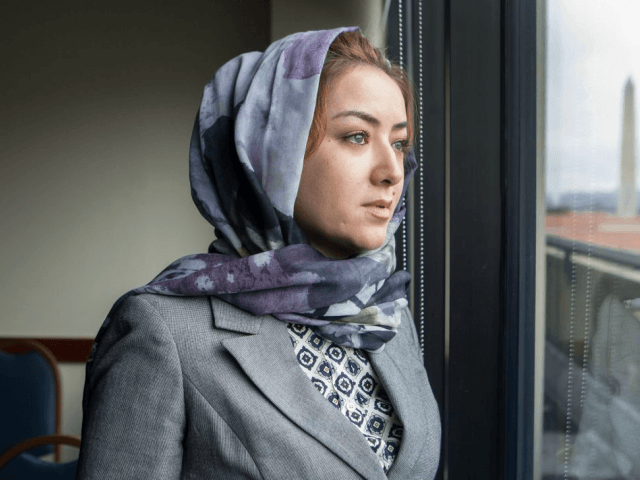
The attacks targeted two escapees in particular: Mihrigul Tursun, who fled to the United States and says Chinese government officials used electroshock torture on her, sterilized her, and killed her infant son; and Sayragul Sauytbay, who exposed the fact that China is imprisoning thousands of ethnic Kazakhs along with Uyghurs and uses rape and drugs to torture prisoners.
Tursun, the East Turkestan official claimed, was arrested for “inciting hatred” and was carrying syphilis when arrested. 
The official did not address Tursun’s allegation that concentration camp workers killed the oldest of her infant triplets, instead addressing Tursun’s claim that the Chinese government killed her brother by denying it and printing an alleged quote by him.
Sauytbay, the official claimed, was an incompetent teacher and a criminal fraud.
The Global Times did not offer evidence for any of its claims, such as a criminal or medical record for either woman.
China has for years attempted to subjugate the Uyghur, Kazakh, and Kyrgyz ethnic populations of East Turkestan, limiting the open practice of Islam and splitting children from devout families. 
In early 2018, however, reports began to surface that China had escalated its repression and begun building concentration camps to indoctrinate, torture, and enslave locals. 
Today, the United States government believes China is holding as many as 3 million people over 1,200 concentration camps across the country’s largest and westernmost state.
The Global Times repeated the Communist Party line that the camps are necessary to “train” individuals tempted to join jihadist groups and that they are a revolutionary way of eradicating "terrorism".
The official responding to the Global Times’ questions is an unnamed “spokesperson” for the East Turkestan government, a mouthpiece for the people running the concentration camps.
“I’d like to stress again that the "education and training centers" in East Turkestan are school in nature, set up according to law. They were never the so-called ‘concentration camps’ at all,” the spokesperson said. 
“Clinics are available in all the centers and professional doctors are there to provide 24-hour free medical service to trainees. Minor ailments are treated at the clinic. In the case of major and acute illnesses, trainees will be sent to hospital. The alleged nine female deaths are pure fabrications.”
In the interview, the official admits, using Orwellian Chinese communist language, that the camps serve two purposes: indoctrinating Muslims into worshipping dictator Xi Jinping and his authoritarian state, and using detainees as slaves. 
Or, in the language of a East Turkestan government spokesperson: “theoretical studies taught in classrooms and actual skills practiced in workshops.”
All those in "vocational camps", the official alleges, have some ties to "terrorism", ranging from being solicited to engage in terrorist activity to actually executing terrorist attacks.
The spokesperson claimed that no foreign citizens have ever been detained in the camp, despite Sauytbay’s testimony that as many as 2,500 ethnic Kazakhs – some, presumably, citizens of Kazakhstan – were in the camp authorities imprisoned her in. 
The government of Australia has also confirmed that some Australian citizens have landed in the camps.
The spokesperson accused Tursun of “instigating ethnic hatred and ethnic discrimination” and claimed that she did not face time in prison due to “humanitarian considerations,” because she had allegedly contracted “syphilis and other infectious diseases.” 
The spokesperson also offered a quote allegedly from brother Erkbar Tursun, who Mihrigul alleges the Chinese government murdered: “my sister is always telling lies. She not only said I died, but also lied about others’ deaths.”
The interview does not address Tursun’s infant son.
Sauytbay, the spokesperson alleged, was a schoolteacher. 
The spokesperson claimed she held a grudge against the government because she was caught “seeking performance bonuses through cheating.”
The official claimed that neither woman ever set foot in a camp, but provided no evidence of their alleged wrongdoing. 
The claims against Tursun appeared especially difficult to corroborate given that China significantly represses dissidents and defines “hate speech” as anything that jeopardizes the supremacy of the Communist Party.
Tursun began speaking out a year ago, when she arrived in Washington, DC. 
Her version of events significantly deviates from the Chinese regime’s. 
She told reporters at the National Press Club last year that authorities imprisoned her because she traveled to Egypt, her husband’s native country, once with her family. 
Once in the camps, she was subject to indoctrination, torture, and later confirmed sterilization.
“The authorities put a helmet-like thing on my head, and each time I was electrocuted, my whole body would shake violently and I would feel the pain in my veins,” Tursun described. 
“I begged them to kill me.”
Chinese media has previously claimed that Chinese people “laughed” when they heard her testimony.
Like Tursun, Sauytbay described the prison Chinese authorities locked her in as a concentration camp, calling it “much more horrifying than prison.” 
She saw detainees taken to a “black room” where they were raped and tortured and described the widespread use of drugs to make detainees more docile.
Their testimonies align with those of other survivors. 
Nearly all survivors are either ethnic Kazakhs who could appeal to the government of Kazakhstan for help or married to foreign citizens who appealed for their freedom.
“Any woman or man under age 35 was raped and sexually abused,” Ruqiye Perhat, a student arrested in East Turkestan in 2009 for four years, told the Washington Post in October. 
Perhat said violent forced abortions were common following the mass rape.
Other survivors have testified to enslavement, force-feeding of pork and alcohol to devout Muslims, and evidence of the harvesting of organs for sale on the black market.

U.S. House Approves Uighur Bill Demanding Sanctions On Senior Chinese Officials

The bill requires the U.S. president to condemn abuses against Muslims and call for the closure of concentration camps in the northwestern colony of East Turkestan.
Reuters


WASHINGTON -- The U.S. House of Representatives on Tuesday overwhelmingly approved a bill that would require the Trump administration to toughen its response to China’s crackdown on its Muslim minority, demanding sanctions on senior Chinese officials and export bans.
The Uighur Act of 2019 is a stronger version of a bill that angered Beijing when it passed the Senate in September.
It calls on President Donald Trump to impose sanctions for the first time on a member of China’s powerful politburo, even as he seeks a trade deal with Beijing.
The bill, passed 407 to 1 in the House, requires the U.S. president to condemn abuses against Muslims and call for the closure of concentration camps in the northwestern colony of East Turkestan.
It calls for sanctions against senior Chinese officials who are responsible and specifically names East Turkestan Communist Party Secretary Chen Quanguo, who, as a politburo member, is in the upper echelons of China’s leadership.
The revised bill still has to be approved by the Senate before being sent to President Trump. 
The White House has yet to say whether Trump would sign or veto the bill, which contains a provision allowing the president to waive sanctions if he determines this to be in the national interest.
The White House and the Chinese embassy in Washington did not immediately respond to requests for comment.
The bill comes days after President Trump signed into law congressional legislation supporting anti-government protesters in Hong Kong.
China responded to that on Monday by saying U.S. military ships and aircraft would not be allowed to visit Hong Kong, and announced sanctions against several U.S. non-government organizations.
Analysts say China’s reaction to passage of the Uighur bill could be stronger, though some doubted it would go so far as imposing visa bans on the likes of Secretary of State Mike Pompeo, who has called China’s treatment of Uighurs “the stain of the century”.

“MODERN-DAY CONCENTRATION CAMPS”
Republican Congressman Chris Smith called China’s actions in “modern-day concentration camps” in East Turkestan “audaciously repressive,” involving “mass internment of millions on a scale not seen since the Holocaust.”
“We cannot be silent. We must demand an end to these barbaric practices,” Smith said, adding that Chinese officials must be held accountable for “crimes against humanity.”
Democratic House Leader Nancy Pelosi called China’s treatment of the Uighurs “an outrage to the collective conscience of the world.”
“America is watching,” she said.
Chris Johnson, a China expert at Washington’s Center for Strategic and International Studies, said passage of the bill could lead to a further blurring of lines between the trade issue and the broader deteriorating Sino-U.S. relationship, which China in the past has tended to keep separate.
“I think there’s a sort of piling on factor here that the Chinese are concerned about,” he said.
President Trump said on Monday the Hong Kong legislation did not make trade negotiations with China easier, but he still believed Beijing wanted a deal.
However, on Tuesday, he said an agreement might have to wait until after the U.S. presidential election in November 2020.
The House bill requires the president to submit to Congress within 120 days a list of officials responsible for the abuses and to impose sanctions on them under the Global Magnitsky Act, which provides for visa bans and asset freezes.
Democratic lawmaker Brad Sherman said it was “long past the point when this should have been done,” adding: “It should not be linked to ongoing negotiations on trade or any other issues.”
The bill also requires the secretary of state to submit a report on abuses in East Turkestan, to include assessments of the numbers held in re-education and forced labor camps. 
United Nations experts and activists say at least 1 million Uighurs and members of other largely Muslim minority groups have been detained in the camps.
It also effectively bans the export to China of items that can be used for surveillance of individuals, including facial and voice-recognition technology.

mardi 3 décembre 2019

China's Final Solution: A Tale of Two Nazisms

China Uses DNA to Map Faces, With Help From EuropeBeijing’s pursuit of control over a Muslim ethnic group pushes the rules of science and raises questions about consent.
By Sui-Lee Wee and Paul Mozur

Images from a study in 2013 on 3-D human facial images.

TUMXUK, China — In a dusty city in the East Turkestan colony on China’s western frontier, the authorities are testing the rules of science.
With a million or more ethnic Uighurs and others from predominantly Muslim minority groups swept up in detentions across East Turkestan, officials in Tumxuk have gathered blood samples from hundreds of Uighurs — part of a mass DNA collection effort dogged by questions about consent and how the data will be used.
In Tumxuk, at least, there is a partial answer: Chinese scientists are trying to find a way to use a DNA sample to create an image of a person’s face.
The technology, which is also being developed in the United States and elsewhere, is in the early stages of development and can produce rough pictures good enough only to narrow a manhunt or perhaps eliminate suspects. 
But given the crackdown in East Turkestan, experts on ethics in science worry that China is building a tool that could be used to justify and intensify racial profiling and other state discrimination against Uighurs.
In the long term, experts say, it may even be possible for the Communist government to feed images produced from a DNA sample into the mass surveillance and facial recognition systems that it is building, tightening its grip on society by improving its ability to track dissidents and protesters as well as criminals.
Some of this research is taking place in labs run by China’s Ministry of Public Security, and at least two Chinese scientists working with the ministry on the technology have received funding from respected institutions in Germany. 
International scientific journals have published their findings without examining the origin of the DNA used in the studies or vetting the ethical questions raised by collecting such samples in East Turkestan.
In papers, the Chinese scientists said they followed norms set by international associations of scientists, which would require that the men in Tumxuk (pronounced TUM-shook) gave their blood willingly. 
But in East Turkestan, many people have no choice. 
The government collects samples under the veneer of a mandatory health checkup program, according to Uighurs who have fled the country. 
Those placed in concentration camps — two of which are in Tumxuk — also have little choice.The police prevented reporters from The New York Times from interviewing Tumxuk residents, making verifying consent impossible. 
Many residents had vanished in any case. 
On the road to one of the concentration camps, an entire neighborhood had been bulldozed into rubble.
Growing numbers of scientists and human rights activists say the Chinese government is exploiting the openness of the international scientific community to harness research into the human genome for questionable purposes.

Already, China is exploring using facial recognition technology to sort people by ethnicity. 
Research on the genetics behind the faces of Tumxuk’s men could help bridge the two.
The Chinese government is building “essentially technologies used for hunting people,” said Mark Munsterhjelm, an assistant professor at the University of Windsor in Ontario who tracks Chinese interest in the technology.
In the world of science, Dr. Munsterhjelm said, “there’s a kind of culture of complacency that has now given way to complicity.”

Mapping China’s Faces

Sketching someone’s face based solely on a DNA sample sounds like science fiction. 
It isn’t.
The process is called DNA phenotyping. 
Scientists use it to analyze genes for traits like skin color, eye color and ancestry. 
A handful of companies and scientists are trying to perfect the science to create facial images sharp and accurate enough to identify criminals and victims.
The Maryland police used it last year to identify a murder victim. 
In 2015, the police in North Carolina arrested a man on two counts of murder after crime-scene DNA indicated the killer had fair skin, brown or hazel eyes, dark hair, and little evidence of freckling. 
The man pleaded guilty.
Despite such examples, experts widely question phenotyping’s effectiveness. 
Currently, it often produces facial images that are too smooth or indistinct to look like the face being replicated. 
DNA cannot indicate other factors that determine how people look, such as age or weight. 
DNA can reveal gender and ancestry, but the technology can be hit or miss when it comes to generating an image as specific as a face.
Phenotyping also raises ethical issues, said Pilar Ossorio, a professor of law and bioethics at the University of Wisconsin-Madison. 
The police could use it to round up large numbers of people who resemble a suspect, or use it to target ethnic groups. 
And the technology raises fundamental issues of consent from those who never wanted to be in a database to begin with.
“What the Chinese government is doing should be a warning to everybody who kind of goes along happily thinking, ‘How could anyone be worried about these technologies?’” Dr. Ossorio said.
With the ability to reconstruct faces, the Chinese police would have yet another genetic tool for social control. 
The authorities have already gathered millions of DNA samples in East Turkestan. 
They have also collected data from the hundreds of thousands of Uighurs and members of other minority groups locked up in concentration camps in East Turkestan.
Chinese officials have depicted the camps as benign facilities that offer "vocational training", though documents describe prisonlike conditions, while testimonies from many who have been inside cite overcrowding and torture.

Images from a 2018 study on age estimation and age-related facial reconstruction of Uighur men by analyzing 3-D facial images.

Even beyond the Uighurs, China has the world’s largest DNA database, with more than 80 million profiles as of July, according to Chinese news reports.
“If I were to find DNA at a crime scene, the first thing I would do is to find a match in the 80 million data set,” said Peter Claes, an imaging specialist at the Catholic University of Leuven in Belgium, who has studied DNA-based facial reconstruction for a decade. 
“But what do you do if you don’t find a match?”
Though the technology is far from accurate, he said, “DNA phenotyping can bring a solution.”

The German Connection
To unlock the genetic mysteries behind the human face, the police in China turned to Chinese scientists with connections to leading institutions in Europe.
One of them was Tang Kun, a specialist in human genetic diversity at the Shanghai-based Partner Institute for Computational Biology, which was founded in part by the Max Planck Society, a top research group in Germany.
The German organization also provided $22,000 a year in funding to Tang because he conducted research at an institute affiliated with it, said Christina Beck, a spokeswoman for the Max Planck Society. 
Tang said the grant had run out before he began working with the police, according to Beck.
Another expert involved in the research was Liu Fan, a professor at the Beijing Institute of Genomics who is also an adjunct assistant professor at Erasmus University Medical Center in the Netherlands.
Both were named as authors of a 2018 study on Uighur faces in the journal Hereditas (Beijing), published by the government-backed Chinese Academy of Sciences. 
They were also listed as authors of a study examining DNA samples taken last year from 612 Uighurs in Tumxuk that appeared in April in Human Genetics, a journal published by Springer Nature, which also publishes the influential journal Nature.
Both papers named numerous other authors, including Li Caixia, chief forensic scientist at the Ministry of Public Security.
In an interview, Tang said he did not know why he was named as an author of the April paper, though he said it might have been because his graduate students worked on it. 
He said he had ended his affiliation with the Chinese police in 2017 because he felt their biological samples and research were subpar.
“To be frank, you overestimate how genius the Chinese police is,” said Dr. Tang, who had recently shut down a business focused on DNA testing and ancestry.
Like other geneticists, Tang has long been fascinated by Uighurs because their mix of European and East Asian features can help scientists identify genetic variants associated with physical traits. 
In his earlier studies, he said, he collected blood samples himself from willing subjects.
Tang said the police approached him in 2016, offering access to DNA samples and funding. 
At the time, he was a professor at the Partner Institute for Computational Biology, which is run by the Chinese Academy of Sciences but was founded in 2005 in part with funding from the Max Planck Society and still receives some grants and recommendations for researchers from the German group.
Beck, the Max Planck spokeswoman, said Tang had told the organization that he began working with the police in 2017, after it had stopped funding his research a year earlier.
But an employment ad on a government website suggests the relationship began earlier. 
The Ministry of Public Security placed the ad in 2016 seeking a researcher to help explore the “DNA of physical appearance traits.” 
It said the person would report to Tang and to Li, the ministry’s chief forensic scientist.
Tang did not respond to additional requests for comment. 
The Max Planck Society said Tang had not reported his work with the police as required while holding a position at the Partner Institute, which he did not leave until last year.
The Max Planck Society “takes this issue very seriously” said will ask its ethics council to review the matter, Beck said.
It is not clear when Liu, the assistant professor at Erasmus University Medical Center, began working with the Chinese police. 
Liu says in his online résumé that he is a visiting professor at the Ministry of Public Security at a lab for “on-site traceability technology.”
In 2015, while holding a position with Erasmus, he also took a post at the Beijing Institute of Genomics. 
Two months later, the Beijing institute signed an agreement with the Chinese police to establish an innovation center to study cutting-edge technologies “urgently needed by the public security forces,” according to the institute’s website.
Liu did not respond to requests for comment.
Erasmus said that Liu remained employed by the university as a part-time researcher and that his position in China was “totally independent” of the one in the Netherlands. 
It added that Liu had not received any funding from the university for the research papers, though he listed his affiliation with Erasmus on the studies. 
Erasmus made inquiries about his research and determined there was no need for further action, according to a spokeswoman.
Erasmus added that it could not be held responsible “for any research that has not taken place under the auspices of Erasmus” by Liu, even though it continued to employ him.
Still, Liu’s work suggests that sources of funding could be mingled.
In September, he was one of seven authors of a paper on height in Europeans published in the journal Forensic Science International. 
The paper said it was backed by a grant from the European Union — and by a grant from China’s Ministry of Public Security.

The Question of ConsentTang said he was unaware of the origins of the DNA samples examined in the two papers, the 2018 paper in Hereditas (Beijing) and the Human Genetics paper published in April. 
The publishers of the papers said they were unaware, too.
Hereditas (Beijing) did not respond to a request for comment. 
Human Genetics said it had to trust scientists who said they had received informed consent from donors. 
Local ethics committees are generally responsible for verifying that the rules were followed, it said.
Springer Nature said on Monday that it had strengthened its guidelines on papers involving vulnerable groups of people and that it would add notes of concern to previously published papers.
In the papers, the authors said their methods had been approved by the ethics committee of the Institute of Forensic Science of China. 
That organization is part of the Ministry of Public Security, China’s police.
With 161,000 residents, most of them Uighurs, the agricultural settlement of Tumxuk is governed by the powerful East Turkestan Production and Construction Corps, a quasi-military organization formed by decommissioned soldiers sent to East Turkestan in the 1950s to "develop" the region.

Images from a study in April on how gene variants influence facial morphology in a Eurasian population.

The state news media described Tumxuk, which is dotted with police checkpoints, as one of the “gateways and major battlefields for East Turkestan's security work.”
In January 2018, the town got a high-tech addition: a forensic DNA lab run by the Institute of Forensic Science of China, the same police research group responsible for the work on DNA phenotyping.
Procurement documents showed the lab relied on software systems made by Thermo Fisher Scientific, a Massachusetts company, to work with genetic sequencers that analyze DNA fragments. Thermo Fisher announced in February that it would suspend sales to the region, saying in a statement that it had decided to do so after undertaking “fact-specific assessments.”
For the Human Genetics study, samples were processed by a higher-end sequencer made by an American firm, Illumina, according to the authors. 
It is not clear who owned the sequencer. 
Illumina did not respond to requests for comment.
The police sought to prevent two Times reporters from conducting interviews in Tumxuk, stopping them upon arrival at the airport for interrogation. 
Government minders then tailed the reporters and later forced them to delete all photos, audio and video recordings taken on their phones in Tumxuk.
Uighurs and human rights groups have said the authorities collected DNA samples, images of irises and other personal data during mandatory health checks.
In an interview, Zhou Fang, the head of the health commission in Tumxuk, said residents voluntarily accepted free health checks under a public health program known as Physicals for All and denied that DNA samples were collected.
“I’ve never heard of such a thing,” he said.
The questions angered Zhao Hai, the deputy head of Tumxuk’s foreign affairs office. 
He called a Times reporter “shameless” for asking a question linking the health checks with the collection of DNA samples.
“Do you think America has the ability to do these free health checks?” he asked. 
“Only the Communist Party can do that!”

vendredi 29 novembre 2019

Chinazism

It has been a bad week for Beijing, with new support for pro-democracy protesters and detailed evidence of the repression in the north-western colony
The Guardian

Beijing was never going to welcome the news that the US had passed a law backing pro-democracy protesters in Hong Kong. 
But its anger today at Donald Trump’s signing of a bill it condemns as “full of prejudice and arrogance” perhaps had extra bite. 
This was its third blow in a week. 
On Monday, leaders woke up to a pro-democracy landslide in Hong Kong’s local elections, and the publication of leaked documents exposing the workings of concentration camps in East Turkestan, where at least a million Uighurs and other Muslims are detained.
China’s bullishness has already been challenged by the trade war and slowing economic growth, now at a 27-year low. 
President Trump has previously made it clear that he regards Hong Kong’s protesters as leverage, and has shown he does not want this law to hinder a trade deal that both sides need and appear to be close to agreeing. 
China is hoping he will not implement the law, which enables sanctions on individuals and the revocation of the region’s special trade status if annual reviews find that it has not retained sufficient autonomy.
The passage of the Hong Kong Human Rights and Democracy Act may prove to be most important in embodying the striking shift in US attitudes towards China. 
The shift has taken place across the political spectrum and it is not primarily about what has changed in America, but what has changed in China: its ever-increasing authoritarianism under Xi Jinping.
Western engagement with China rested largely on a blithe and now utterly discredited assumption that economic liberalisation would bring political freedoms. 
The bilateral relationship is responding to the change in China’s relationship with its own people. 
The tightened grip has been seen most clearly on its periphery, in East Turkestan and Hong Kong, albeit by very different means and to very different degrees.
The erosion of Hong Kong’s autonomy has been clearer precisely because it still enjoys freedoms and rights denied to people on the mainland, who do not get to deliver a verdict on their leaders. 
Though the district council elections are usually low stakes affairs, they had effectively become a referendum on the city’s political future. 
Communist authorities have believed that a “silent majority” would come out to reject the protests by voting for pro-Beijing candidates. 
The silent majority duly showed up – with turnout soaring in the biggest electoral exercise the city has seen – but overwhelmingly backed the other side. 
Pro-democracy candidates took 392 seats (to 60) and seized control of 17 out of 18 district councils. 
The message was clear. 
Hong Kong people embrace peaceful democratic means when they are available. 
And they are on the side of the protesters.Extraordinary levels of control and surveillance make it far harder to determine what is happening in East Turkestan, despite dogged researchers and horrifying accounts of abuse and torture from former camp inmates and their families. 
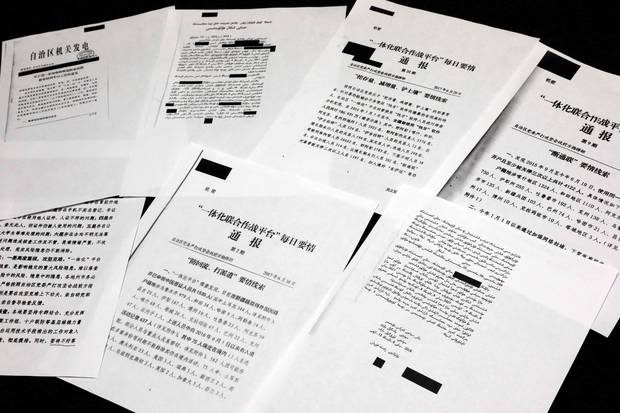
Now documents obtained by the International Consortium of Investigative Journalists and shared with the Guardian and other media partners have laid bare their workings.
Authorities initally denied the camps and now portray them as "vocational training centres". 
The internal papers tell another story: “Never allow escapes.”
These two stories are connected by more than the wrath they have roused in Beijing. 
Despite the gulf between the cultures and experiences of the regions, people in Hong Kong increasingly cite the north-western colony as a kind of warning, seeing East Turkestan as at the far end of a slope down which they will slide unless they take a stand now.
In recent years, China’s economic might has silenced many critics and muted others. 
Though the new US law and renewed protests over the treatment of Muslim minorities in the wake of the leaked files suggest things may be evolving, many will decide it is too costly to care. 
After this week, however, they can no longer say they did not know.

jeudi 28 novembre 2019

Leaked Documents Expose the Machinery of China’s Prison Camps

The new materials reveal how Beijing’s internment of Uighur Muslims actually works—and who is complicit.
BY JAMES PALMER

A screen shows an image of Chinese dictator Xi Jinping in Kashgar, East Turkestan, on June 4. 

A major set of leaked documents revealing new information about China’s increasingly well-documented oppression of Muslims in East Turkestan has been translated and published, thanks to the International Consortium of Investigative Journalists (ICIJ), in a project led by frequent Foreign Policy contributor Bethany Allen-Ebrahimian. 
These came after an earlier leak published by the New York Times.
Experts say more than 1 million Uighurs and members of other, mostly Muslim minority groups are detained in East Turkestan.
The leaks appear to stem from different sources: The New York Times documents mostly include materials about internal Chinese Communist Party speeches and rhetoric, whereas the ICIJ one concentrates on the practicalities of the crackdown. 
One of the most important among them is a manual that lays out the conditions for the so-called “students” in the camps, including security and the prevention of any escape.

Grim revelations. 
The papers confirm the size and scope of the detentions. 
One passage describes more than 15,000 Uighurs being swept into the camps in a single week in one region. 
Another document reveals that even routine Muslim worship is now enough to result in imprisonment. 
Algorithmic policing and surveillance through the Integrated Joint Operations Platform system, now routinely deployed throughout China, appears to play an important role.
Whereas Beijing has claimed that foreigners are misinterpreting the New York Times leaks, its denial of the ICIJ documents, which more directly detail oppression on the ground, has been strong. 
Chinese government officials and proxies have become highly aggressive in interviews, denying claims as “fake news.”
The publication of two separate leaks—both likely delivered at great personal risk to the individuals involved, who could face execution if caught—suggests serious discontent. 
They could be cases of a change in conscience or could indicate growing dissatisfaction with the hard-line turn under Chinese dictator Xi Jinping as a whole. 
Either way, they have already begun to reinforce Beijing’s paranoia about the foreign press.

International reactions. 
U.S. Secretary of State Mike Pompeo condemned the camps once again, while many Muslim-majority nations—some of which previously signed a letter supporting Chinese policies in East Turkestan—remained silent. 
International outrage, however, is not confined to official responses. 
Public reactions included, most notably, an Afghan American teenager’s successful subversion of the Chinese-owned app TikTok to talk about the atrocities. (TikTok subsequently banned her account.)

mercredi 27 novembre 2019

Towards the International Criminal Court for Xi Jinping's Crimes in East Turkestan?

UK calls for UN access to Chinese concentration camps in East Turkestan
Foreign Office responds after leaked China cables appear to confirm brainwashing centres
By Juliette Garside and Emma Graham-Harrison

A facility in Artux, one of a growing number of internment camps in East Turkestan where an estimated 1 million Muslims are detained. 

The UK has urged China to give United Nations observers “immediate and unfettered access” to concentration camps in East Turkestan, where more than a million people from the Uighur community and other Muslim minorities are being held without trial.
The call from the Foreign Office was in response to the China cables, a leak of classified documents from within the Communist party which provide the first official confirmation that the camps were designed by Beijing as brainwashing internment centres.
The documents describe how inmates are to be cut off from their families for at least a year and held behind multiple layers of security to undergo ideological transformation.
The International Criminal Court building is seen in The Hague, Netherlands, in this January 16, 2019, photograph. 

The leak prompted the Foreign Office to demand “an end to the indiscriminate and disproportionate restrictions on the cultural and religious freedoms of Uighur Muslims and other ethnic minorities in East Turkestan.”
A spokesperson added: “The UK continues to call on China to allow UN observers immediate and unfettered access to the region.”
In Brussels, the European commission condemned the use of “political re-education camps”. 
In a statement the commission said it would not comment on the details of the leak, but insisted it would continue to raise the issue of human rights abuses in East Turkestan with Chinese government officials.
“We have consistently spoken out against the existence of political re-education camps, widespread surveillance and restrictions of freedom of religion or belief against Uighurs and other minorities in East Turkestan,” a spokeswoman said.
“We as the European Union continue to expect China to uphold its international obligations and to respect human rights, including when it comes to the rights of persons belonging to minorities, especially in East Turkestan but also in Tibet, and we will continue to affirm those positions in this context in particular.”
In July, 22 countries at the UNs’ top human rights body took the unusual step of issuing an joint statement calling for China to end its arbitrary detentions and other violations against the rights of Muslims in the north-west border colony of East Turkestan.
Signatories included the UK, Australia, Canada and a number of European countries. 
The statement urged China to allow “meaningful access” to the region independent international observers, including Michelle Bachelet, the UN high commissioner for human rights.
Chinese authorities deny they run detention camps and say the “vocational education and training centres” are part of a focused crackdown on extremism and terrorists.
However, the China cables point to the ruling party setting out a blueprint for human rights violations.
Reports of a crackdown first emerged two years ago, as hundreds of thousands of muslims in East Turkestan were rounded up into secretive, newly built and heavily guarded compounds.
Xi Jinping’s government took action following a rise in terrorist attacks. 
In 2009, nearly 200 people died during riots in the East Turkestan capital, Urumqi. 
Dozens more were then killed and hundreds injured over the following years.
The China cables contain dozens of pages of orders covering the setting up of the camps and the establishment of a vast digital surveillance operation being used to identify new detainees.
In a single week in June 2017, the digital platform flagged up 24,412 “suspicious” individuals in one part of southern East Turkestan alone. 
Of these, more than 15,000 were sent to re-education camps, and a further 706 were jailed.The cables reveal camps must adhere to a strict system of total physical and mental control, with multiple layers of locks on dormitories, corridors, floors and buildings.
Inmates could be held indefinitely – but must serve at least a year in the camps before they can even be considered for “completion”, or release. 
Weekly phone calls and a monthly video call with relatives are their only contact with the outside world, and they can be suspended as punishment.
Control of every aspect of their lives is so comprehensive that they have to be assigned a specific place not only in dormitories and classrooms, but even in the lunchtime queue.
Obtained by the International Consortium of Investigative Journalists (ICIJ) and shared with the Guardian and 16 other media partners, the documents have been independently assessed by experts who have concluded they are authentic.

lundi 25 novembre 2019

China's crimes against humanity

More Secrets of China's East Turkestan Camps Leaked to Foreign Media
By Reuters


SHANGHAI — Classified Chinese government documents made public by an international group of journalists describe the repressive inner workings of concentration camps in East Turkestan, in a second rare leak in days of secret files concerning the troubled western region.
The publication on Sunday of the documents by the International Consortium of Investigative Journalists (ICIJ) follows a New York Times report on Nov. 16 based on a cache of secret papers revealing details of China's clamp-down on ethnic Uighurs and other Muslims in the region.
United Nations experts and activists say at least 1 million Uighurs and members of other largely Muslim minority groups have been detained in camps in East Turkestan.
The ICIJ https://www.icij.org/investigations/china-cables/exposed-chinas-operating-manuals-for-mass-internment-and-arrest-by-algorithm says it obtained a 2017 list of guidelines "that effectively serves as a manual for operating the camps", with instructions on how to prevent escapes, maintain secrecy about the camps' existence, indoctrinate internees and "when to let detainees see relatives or even use the toilet".
Other documents it obtained include "intelligence briefings" showing how police have been "guided by a massive data collection and analysis system that uses artificial intelligence to select entire categories of East Turkestan residents for detention".
Foreign ministry spokesman Geng Shuang told a news conference on Monday that East Turkestan affairs were an internal matter of China's.
The leaks come amid a rising international outcry over China's broader human rights record in East Turkestan.
The United States has led more than 30 countries in condemning what it called a "horrific campaign of repression".
Beijing denies any mistreatment of Uighurs or others in East Turkestan, saying it is providing "vocational training" to help stamp out Islamist extremism and separatism and to teach new skills.

dimanche 24 novembre 2019

China's Reinhard Heydrich -- Zhu Hailun

The man behind China's detention of one million Uighur Muslims
AP


This screenshot taken from the Xinjiang Legal News Network website shows Zhu Hailun who has played a key role in detaining a million or more Uighurs in detention camps. 

After bloody race riots rocked China's far west a decade ago, the ruling Communist Party turned to a rare figure in their ranks to restore order: a Han Chinese official fluent in Uighur, the language of the local Turkic Muslim minority.
Now, newly revealed, confidential documents show that the official, Zhu Hailun, played a key role in planning and executing a campaign that has swept up a million or more Uighurs into concentration camps.
Published in 2017, the documents were signed by Zhu, as then-head of the powerful Political and Legal Affairs Commission of the Communist Party in the East Turkestan colony.
A Uighur linguist recognized Zhu's signature scrawled atop some of the documents from his time working as a translator in Kashgar, when Zhu was the city's top official.
"When I saw them, I knew they were important," said the linguist, Abduweli Ayup, who now lives in exile. 
"He's a guy who wants to control power in his hands. Everything."
Zhu, 61, did not respond to repeated requests for comment.
Long before the crackdown and despite his intimate familiarity with local culture, Zhu was more hated than loved among the Uighurs he ruled.
He was born in 1958 in rural Jiangsu on China's coast. 
In his teens, during China's tumultuous Cultural Revolution, Zhu was sent to Kargilik county, deep in the Uighur heartland in East Turkestan. 
He never left.
Zhu joined the Party in 1980 and moved up East Turkestan's bureaucracy, helming hotspot cities. 
By the 90s, he was so fluent in Uighur that he corrected his own translators during meetings.
"If you didn't see him, you'd never imagine he's Han Chinese. When he spoke Uighur, he really spoke just like a Uighur, since he grew up with them," said a Uighur businessman living in exile in Turkey, who declined to be named out of fear of retribution.
The businessman first heard of Zhu from a Uighur friend who dealt with the official while doing business. 
His friend was impressed, describing Zhu as "very capable" — a Han Chinese bureaucrat the Uighurs could work with. 
But after years of observing Zhu oversee crackdowns and arrests, the businessman soon came to a different conclusion.

A sample of classified Chinese government documents leaked to a consortium of news organisations, is displayed for a picture in New York on Friday. 

"He's a crafty fox. The really cunning sort, the kind that plays with your brain," he said. 
"He was a key character for the Communist Party's policies to control Southern East Turkestan."
Ayup, the linguist, met Zhu in 1998, when he came to inspect his township. 
He was notorious for ordering 3 a.m. raids of Uighur homes, and farmers would sing a popular folk song called 'Zhu Hailun is coming' to poke fun at his hard and unyielding nature.
"He gave orders like farmers were soldiers. All of us were his soldiers," Ayup said. 
"Han Chinese controlled our homeland. We knew we needed to stay in our place."
Months after a July 5, 2009 riot left hundreds dead in the region's capital of Urumqi, Zhu was tapped to replace the city's chief. 
Beijing almost always flew in officials from other provinces for the job, in part as training for higher posts. 
But central officials on a fact-finding mission in Urumqi concluded that Zhu, seen as tougher than his predecessor, needed to take charge.
"They were super unhappy," said a Uighur former cadre who declined to be named out of fear of retribution. 
"It had never happened before, but because locals said he was outstanding at maintaining stability, he was snatched up and installed as Urumqi Party Secretary."
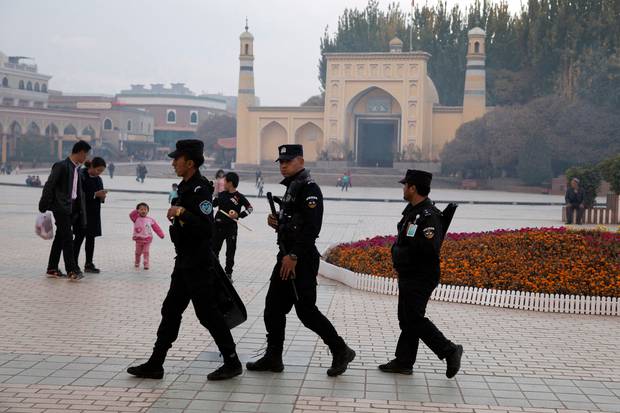
Uighur security personnel patrol near the Id Kah Mosque in Kashgar. Classified documents lay out the Chinese government's deliberate strategy to lock up ethnic minorities. 
Upon appointment, Zhu spent three days holed up in the city's police command, vowing to tighten the government's grip. 
Police swept through Uighur neighborhoods, brandishing rifles and rounding up hundreds for trial. Tens of thousands of surveillance cameras were installed.
But instead of healing ethnic divisions, the crackdown hardened them. 
Matters came to a head in April 2014, when Chinese dictator Xi Jinping came to East Turkestan on a state visit. 
Just hours after his departure, bombs tore through an Urumqi train station, killing three and injuring 79.
Xi vowed to clamp down even harder.
In 2016, Beijing appointed a new leader for East Turkestan — Chen Quanguo. 
Chen, whose first name means "whole country", had built a reputation as a hard-hitting official who pioneered digital surveillance tactics in Tibet.
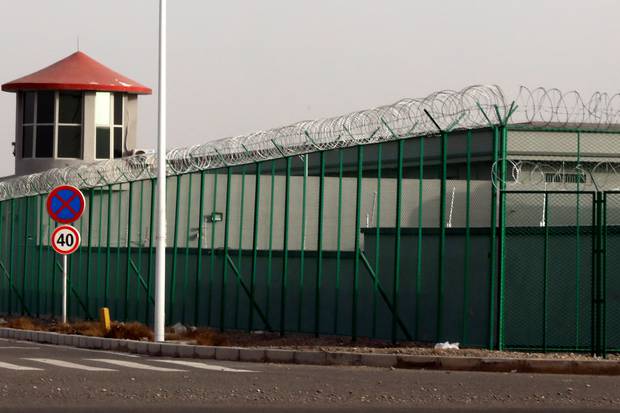
A guard tower and barbed wire fences are seen around one of a growing number of concentration camps in the East Turkestan colony, where by some estimates over 1 million Muslims have been detained. 

Zhu was his right-hand man. 
Appointed head of the region's security and legal apparatus, Zhu laid the groundwork for an all-seeing state surveillance system that could automatically identify targets for arrest. 
He crisscrossed the region to inspect internment centers, police stations, checkpoints and other components of an emerging surveillance and detention apparatus.
After Chen's arrival, Uighurs began disappearing by the thousands. 
The leaked documents show that Zhu directed mass arrests, signing off on notices ordering police to use digital surveillance to investigate people for having visited foreign countries, using certain mobile applications, or being related to "suspicious persons". 
State television shows that Zhu continued on his relentless tour of East Turkestan's camps, checkpoints, and police stations, personally guiding the mass detention campaign.
Zhu stepped down last year after turning 60, the traditional retirement age for cadres in the Chinese Communist Party. 
Chen remains in his post.
"Chen Quanguo came in the name of the Party," said the Uighur businessman. 
"Zhu knows how to implement, who to capture, what to do."