Affichage des articles dont le libellé est DRAM. Afficher tous les articles

lundi 19 novembre 2018

Chinese Theft of Trade Secrets

America’s overt payback for China’s covert espionage
By David Ignatius

Chinese dictator Xi Jinping in Beijing on Nov. 2. 

While the U.S.-China trade war has been getting the headlines, U.S. intelligence and law enforcement agencies have been waging a quieter battle to combat Chinese theft of trade secrets from American companies — a practice so widespread that even boosters of trade with China regard it as egregious.
The Trump administration’s campaign of tariffs will eventually produce some version of a truce.
But the battle against Beijing’s economic espionage is still accelerating, and it may prove more important over time in leveling the playing field between the two countries.
To combat Chinese spying and hacking, U.S. intelligence agencies are increasingly sharing with the Justice Department revelatory information about Chinese operations.
That has led to a string of recent indictments and, in one case, the arrest abroad of a Chinese spy and his extradition to the United States to face trial.
The indictments don’t just charge violations of law; they also expose details of Chinese spycraft.
And there’s a hidden threat: The Chinese must consider whether the United States has blown the covers of not just the people and organizations named in the criminal charges but also others with whom they came in contact.
This law enforcement approach to counterespionage requires public disclosure of sensitive information, something that intelligence agencies often resist.
But it seems to be an emerging U.S. strategy.
The Justice Department has pursued a similar open assault on Russian cyberespionage, with three recent indictments naming a score of Russian operatives and disclosing their hacking techniques, malware tools and planned targets.
China, like Russia, is displaying an increasingly freewheeling and entrepreneurial approach to espionage. 
Several indictments unsealed since September reveal how the Ministry of State Security, the Chinese spy service, has operated through its regional bureaus — in this case the Jiangsu provincial office of the MSS — to obtain precious U.S. technology.
The indictments allege that from 2010 to 2015, the Jiangsu branch ran a team of nine hackers who tried to steal U.S. techniques for making jet engines. 
This is a subtle and highly valuable aspect of aerospace technology, one of the few that China hasn’t yet mastered or stolen, and the Chinese evidently wanted to obtain by stealth what they couldn’t produce on their own.
“The concerted effort to steal, rather than simply purchase, commercially available products should offend every company that invests talent, energy and shareholder money into the development of products,” said Adam Braverman, the U.S. attorney in San Diego who helped prosecute the cases.
The San Diego indictment lists the hacker names used by the conspirators, handles such as “Cobain,” “sxpdlcl” and “mer4en7y.”



Yanjun Xu, who also uses the names Qu Hui and Zhang Hui, was extradited to the US with help from Belgian authorities for seeking to steal trade secrets and other sensitive information from GE Aviation, an American company that leads the way in aerospace.


A separate indictment charged an MSS officer named Yanjun Xu, a deputy division director in the Jiangsu bureau, with trying to steal jet engine secrets from GE Aviation; Xu was arrested in April in Belgium after he began trying to penetrate the company’s operations, and he was extradited to the United States last month.


Ji Chaoqun: US army reservist accused of trying to recruit Chinese spies

The United States in September arrested a U.S. Army reservist named Ji Chaoqun and charged that he had helped the Chinese gain information about aerospace industry targets.
This month, the Justice Department also unsealed a September indictment that accused a Chinese company and its Taiwanese partner, both funded by the Chinese government, of trying to steal eight trade secrets for a memory-chip technology known as DRAM from Micron Technology Inc., based in Silicon Valley.
The indictment notes that the Chinese government had identified DRAM as “a national economic priority” that Beijing was determined to obtain.
The indictment, brought by the U.S. attorney in San Jose, uses blunt language to describe the plot: “In order to develop DRAM technology and production capabilities without investing years of research and development and the expenditure of many millions of dollars,” the defendants “conspired to circumvent Micron’s restrictions on its proprietary technology.”
What gives these indictments extra bite is that Xi Jinping had promised back in 2015 that China wouldn’t conduct economic cyberespionage anymore.
That pledge followed an indictment the previous year that revealed an elaborate plot by Chinese military hackers to steal U.S. commercial secrets.
But in the espionage world, promises not to spy are dubious at best. 


Jerry Chun Shing Lee: ex-CIA officer at the centre of one of the largest US intelligence breaches in decades.

Over the past three years, the Justice Department has charged former CIA officer Jerry Chun Shing Lee and five other Americans with stealing secrets on behalf of Beijing.
As a rising power, China is also a rising threat in the intelligence sphere.
The U.S. counterattack, in part, seems to be a public revelation of just how and why Beijing is stealing America’s secrets — overt payback for covert espionage.

mercredi 7 novembre 2018

Chinese Kleptomania

The U.S. must take action to stop Chinese industrial espionage
The Washington Post

Attorney General Jeff Sessions said trade secrets stolen from an Idaho-based semiconductor company were valued at $8.75 billion. 

SPEAKING IN the White House Rose Garden in September 2015, Barack Obama and Xi Jinping announced a breakthrough. 
The United States and China pledged that neither nation “will conduct or knowingly support cyber-enabled theft of intellectual property, including trade secrets or other confidential business information for commercial advantage.” 
But Xi’s promises were always flimsy and short-lived. 
The agreement has collapsed. 
China is again trying to steal its way to greatness, and that calls for a resolute response.
The latest sign of trouble, but hardly the only sign, came in the indictments unsealed last week by the Justice Department. 
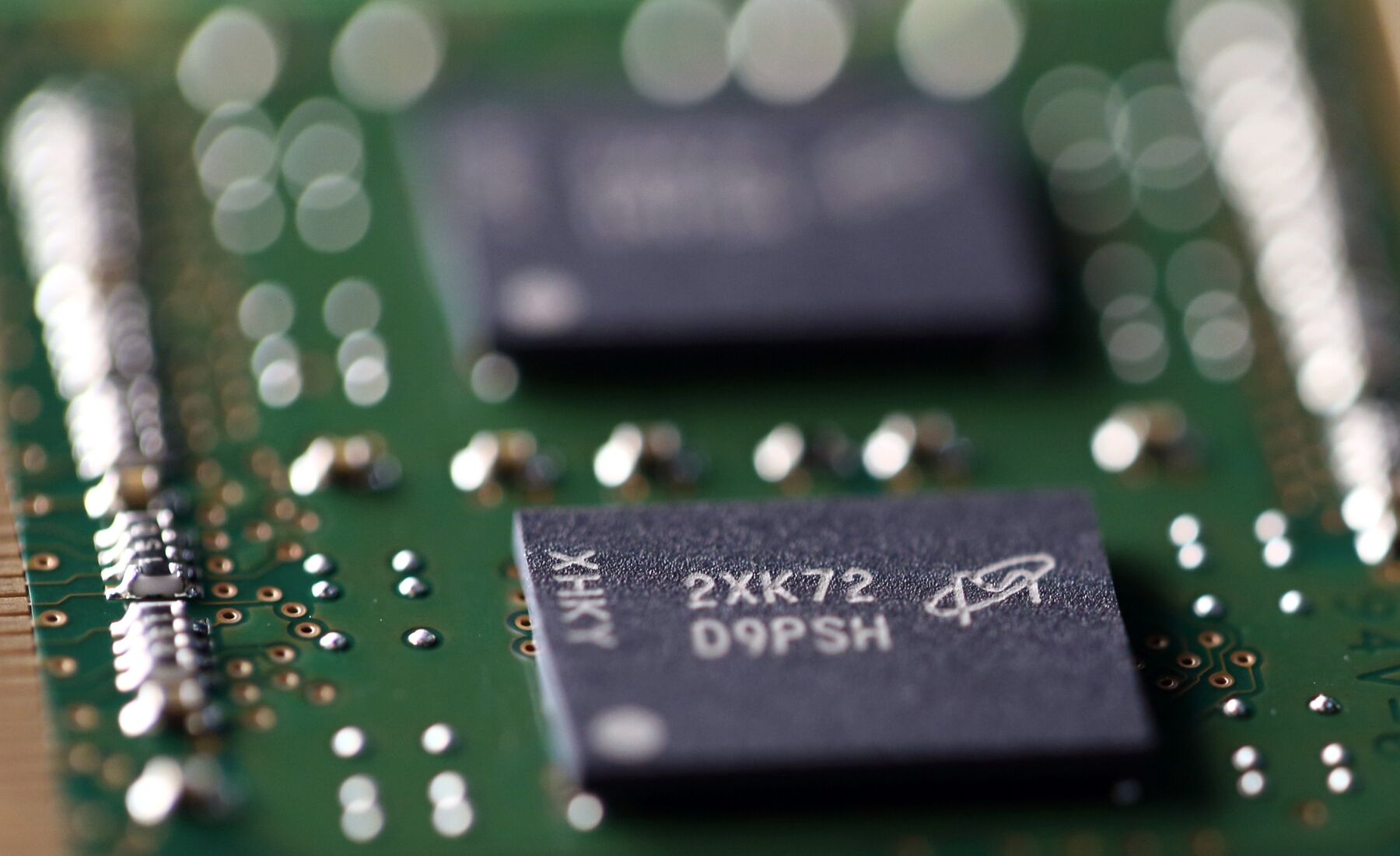
The United States charged that a state-owned Chinese company attempted to steal trade secrets from Micron, a semiconductor company based in Idaho that is the only U.S. maker of “dynamic random-access memory,” or DRAM, vital memory chips for computers, mobile devices and other electronics.
According to the indictment, one of Micron’s Taiwanese employees went to work for the Chinese company, then recruited others who brought with them 900 files that included confidential DRAM designs. 
The U.S. attorney for the Northern District of California, Alex Tse, said the haul took “some of the most advanced semiconductor technology in the world.” 
Attorney General Jeff Sessions said the stolen trade secrets were valued at $8.75 billion.
China lacked DRAM technology until recently, and the Micron case is another example of China’s quest to climb the ladder of economic development by stealing overseas technology and copying, re-engineering and manufacturing it, leapfrogging what would otherwise be decades of difficult and expensive work. 
This is not the sort of espionage seeking state secrets that all countries undertake, but a very targeted stealing to help China’s companies profit and conquer markets. 
The companies also receive robust capital infusions from the state. 
After the 2015 Rose Garden announcement, the Chinese stealing subsided for a while, so fewer U.S. companies were hit, but then the pace accelerated again in 2017.
Mr. Sessions insisted that “cheating must stop.” 
Mr. Obama had also insisted: “I indicated that it has to stop.” 
In fact, China’s industrial espionage is not a passing fancy but the pillar of a long-term drive to become a global economic, military and political power, with ambitions to rival the United States. Sadly, the hopes of the past two decades, that Beijing would become a fair competitor playing by international rules, have been dashed.
It is a good first response to indict the perpetrators in the Micron case, and for Mr. Sessions to bolster resources and attention to the threat. 
Beyond that, however, the United States must see the Chinese espionage for what it truly represents: the pursuit of superpower might by stealing the labor and investment of others. 
The economies of the United States and China are inexorably entwined, which will make confronting the espionage threat even harder. 
But it must be done. 
In the end, China will respond only to compulsion.

vendredi 2 novembre 2018

Taiwan's Double Loyalty

Theft of Micron Chip Secrets Is an Embarrassment for Taiwan
A loss of trust in the technology hub’s ability to protect intellectual property could threaten its economic survival.
By Tim Culpan
An article of faith. 

A U.S. indictment of United Microelectronics Corp. and three executives is a slap in the face for Taiwan.
As a critical partner in the nexus between U.S. clients and the Chinese supply chain, the last thing Taiwan needs right now is to become known as a place that can’t be trusted.
This isn’t the first time its credibility has come into focus.
Weak enforcement is endemic in Taiwan, from insider trading rules to know-your-customer requirements, and that includes many more cases of intellectual property theft.
According to the U.S. Justice Department, UMC executives were the front for a Chinese plan to steal semiconductor secrets from Boise, Idaho-based Micron Technology Inc. 
Even before jumping into bed with state-owned Fujian Jinhua Integrated Circuit Co., UMC had a history of questionable deals in China.
More than a decade ago, the Hsinchu-based company was charged with illegally investing in He Jian Technology (Suzhou) Co. and handed a paltry $150,000 fine. 
Years later, a court overturned an initial guilty verdict. 
That this case even dragged through the courts is a reflection of Taiwan’s weak legal structure and poorly worded regulations. 
In 2009, UMC publicly bought a stake in He Jian in the ultimate show of disdain for Taiwan’s attempts to hold onto locally developed technology.
There’s every indication that UMC takes the Jinhua case just as seriously as it did He Jian (i.e., not very). 
The company said it would halt R&D work for the Chinese client only this week, despite knowing of the case for over a year.
IP isn’t the only area of regulatory weakness. 
Mega Financial Holding Co. was handed a $180 million fine by New York State’s department of financial services in 2016 for money laundering after the regulator found that the bank's compliance program was a “hollow shell.” 
At least six current and former Taiwanese cabinet members were subsequently investigated locally for their lax supervision of Taipei-based Mega.
Cybersecurity is another area of concern, one with global implications. 
The problem was highlighted when an old piece of malware caught out Taiwan Semiconductor Manufacturing Co., UMC’s bigger rival. 
Ongoing attacks by China on local companies show there’s no room for complacency. 
For years, Taiwanese authorities were ill-equipped and largely uninterested in combating the threat, with interference ahead of local elections finally giving the issue some overdue attention.
And let’s not forget insider trading. 
Taiwan is a known hub of industry gossip, tips and non-compliance. 
Eight years ago, I spent months digging up details of its inside information ecosystem, with sources boasting to me about how much they knew and how easy it was to get away with trafficking in company secrets. 
To the best of my knowledge, none of those people have been investigated by Taiwanese regulators.
So when a Taiwanese company gets charged with leaking U.S. secrets to a Chinese government-backed entity, the sad truth is that we’re not surprised – even though we should be.
Taiwan, and its government, has spent four decades and billions of dollars building its technological know-how. 
That’s translated into trust on the part of Western companies that Taiwanese partners will keep their secrets.
With intellectual property at the heart of President Donald Trump’s trade war with China, Taiwan needs to show this hard-earned faith is still warranted. 
In the past few months, numerous companies have indicated a willingness to move production out of China – and in some cases back to Taiwan – in response not only to U.S. security concerns, but also to rising costs and new tariffs.
If Taiwan, and its companies, can’t be trusted to safeguard confidential information then there’s little reason for global clients to keep giving them orders. 
Chinese companies are eager to take over, and its government is ready and willing to spend money to make that happen.
That makes Taiwan’s protection of intellectual property not just a political and security issue, but one of economic survival.

China's Criminal Economic Activity

With new indictment, U.S. launches aggressive campaign to thwart China’s economic attacks
By Ellen Nakashima

Attorney General Jeff Sessions announced a new initiative to combat mounting criminal economic activity by China. 

The Justice Department on Thursday unveiled a broad new initiative to combat mounting criminal economic activity by China, announcing the plan as U.S. officials unsealed charges against several individuals and Chinese and Taiwanese companies for trade-secret theft.
Thursday’s actions follow a series of moves meant to put Beijing on notice. 
The Trump administration has prioritized countering threats to U.S. national and economic security as China seeks to supplant the United States as the world’s dominant economic power. 
The administration already has imposed tariffs on $250 billion worth of Chinese goods, and since September federal prosecutors have brought charges in three intellectual property theft cases involving Chinese spies and hackers.
“Chinese economic espionage against the United States has been increasing — and it has been increasing rapidly,” said Attorney General Jeff Sessions. 
“Enough is enough. We’re not going to take it anymore.”
The initiative is significant in that it fuses ongoing efforts within the FBI, Justice Department and other federal agencies into a single coordinated initiative, and sends a clear message to Beijing that Chinese economic espionage — whether by cyber or human means — will not be tolerated, officials said. 
The Chinese embassy did not respond to a request for comment.
As both countries place greater emphasis on competition and security, the big question, analysts say, is whether the two governments can maintain commercial engagement despite increasing tensions over the quest for technological supremacy. 
In the meantime, Washington is signaling that the gloves are off.
Under the initiative, Sessions said, the department will aggressively pursue trade-secret theft cases, and develop a strategy to identify researchers and defense industry employees who’ve been “co-opted” by Chinese agents to transfer technology to China.
“China wants the fruits of America’s brainpower to harvest the seeds of its planned economic dominance,” Assistant Attorney General John Demers said. 
With this new initiative, he said, “we will confront China’s malign behaviors and encourage them to conduct themselves as they aspire to be one of the world’s leading nations.”
The indictment alleges the defendants conspired to steal trade secrets from Micron, an Idaho-based semiconductor company with a subsidiary in Taiwan. 
Micron is worth an estimated $100 billion and is the only company in the United States that makes “dynamic random-access memory,” or DRAM, high-capacity data storage used in computers, mobile devices and other electronics. 
The company has a 20 to 25 percent share of the world’s supply of DRAM, prosecutors said.
According to the indictment, the Chinese government set up a state-owned company, Fujian Jinhua Integrated Circuit Co. Ltd., for the express purpose of developing DRAM technology and sought to learn trade secrets through the criminal acts of former employees of Micron’s Taiwan branch.
In July 2015, the president of Micron’s Taiwan subsidiary, Chen Zhengkun, also known as Stephen Chen, left to join United Microelectronics Corporation, a semiconductor foundry headquartered in Taiwan. 
Some months later, in early 2016, Jinhua, the Chinese company, began discussions with United Microelectronics to forge a technology cooperation agreement, according to the indictment. 
Chen helped negotiate the agreement, and in early 2017 became president of Jinhua in charge of its DRAM factory, prosecutors said.
It was Chen, who orchestrated the theft of trade secrets from Micron worth up to $8.75 billion.
Chen is said to have recruited former colleagues, including defendant He Jianting, or J.T. Ho, a Taiwanese national, who before leaving Micron stole confidential DRAM materials.
Chen also brought on defendant Kenny Wang, a Micron manager and Taiwanese national who stole more than 900 files, some containing confidential DRAM designs.
Wang downloaded secrets from Micron’s servers in the United States and stored them on his Google Drive account, the indictment said.
“This was,” said U.S. Attorney for the Northern District of California Alex Tse, “some of the most advanced semiconductor technology in the world.”
If convicted, the defendants face up to 14 years in prison and $5 million in fines. 
The two companies, United Microelectronics and Jinhua, could face fines worth more than $20 billion. 
The three men charged Thursday are in China, U.S. officials said.
This week, the Commerce Department added Jinhua to its “entity list” to prevent it from buying goods and services in the United States, effectively cutting it off from the U.S. market. 
Without equipment sold only in the United States, Jinhua cannot build the DRAM chips.
The Justice Department on Thursday also filed a civil suit in San Francisco seeking to stop the further transfer of these stolen trade secrets and to prevent the defendants from exporting to the United States any products resulting from the theft.
“We are not just reacting to crimes — we are acting to block the defendants from doing any more harm to Micron,” Sessions said.
The attorney general outlined a number of laws that prosecutors would use, including the Foreign Agents Registration Act, to identify unregistered agents seeking to advance China’s political agenda.
Congress in August passed the Foreign Investment Risk Review Modernization Act to expand the government’s power to review investments from foreign countries — a response to China’s efforts to obtain U.S. technology through mergers, acquisitions and takeovers. 
Last month, the Treasury Department released interim rules to implement the new law. 
Sessions said the Justice Department will work with Treasury on further developing those regulations.
The Justice Department also will target Chinese threats to U.S. companies that provide components for sensitive technologies, especially those in the telecommunications sector as it readies for the transition to 5G networks.
“This is consistent with the state of confrontational actions over the last couple of weeks taken by the administration to tackle everything China’s trying to do,” said Samm Sacks, a senior fellow at the Center for Strategic and International Studies. 
“It’s bigger than intellectual property theft. It’s supply chain risk. It’s China’s efforts to be global leaders in 5G. It’s traditional espionage. It’s influence operations. This is part of a much broader whole-of-government approach to countering China’s efforts to gain strategic advantage, particularly in emerging technology.”
Sessions noted that earlier this year, U.S. Trade Representative Robert E. Lighthizer found that Chinese sponsorship of hacking into American businesses has gone on for more than a decade. 
By some estimates, the cost to the U.S. economy is $30 billion annually. 

Chinese pledge
In September 2015, Chinese dictator Xi Jinping pledged that China would not target U.S. companies for the economic benefit of nonmilitary Chinese companies.
“Obviously that commitment has not been met,”
Sessions said.
Dmitri Alperovitch, a cyber expert and chief technology officer at the cybersecurity firm CrowdStrike, said the Chinese military curtailed its commercial hacking in 2016 but that over the past year, operatives affiliated with China’s Ministry of State Security have increasingly taken up the slack, stealing military, medical, agricultural, high-tech and other secrets.
For months, the Trump administration has been considering ways to decouple the U.S. and Chinese tech sectors: restricting visas for Chinese students in the scientific, engineering and math fields, banning Chinese telecommunications equipment companies from U.S. 5G networks, expanding export controls on U.S. tech firms, and increasing official scrutiny of Chinese investments and joint U.S.-Chinese research, Sacks said.
“This initiative is an important set of hammer blows against China’s efforts to disadvantage American companies, steal their intellectual property, and exercise unwanted influence in our universities and political system,” said James Mulvenon, a China expert and general manager of SOS International’s Special Programs Division, which provides consulting services to intelligence and defense agencies.