Affichage des articles dont le libellé est Spain. Afficher tous les articles

lundi 10 février 2020

Run For Your Life

Countries evacuating nationals from Chinese coronavirus areas
Reuters

A growing number of countries around the world are evacuating or planning to evacuate diplomatic staff and citizens from parts of China hit by the new coronavirus.
Following are some countries’ evacuation plans, and how they aim to manage the health risk from those who are returning.
- Kazakhstan, which has previously evacuated 83 from Wuhan, will send two planes to China on Feb. 10 and Feb. 12 to evacuate its citizens. Out of 719 Kazakhs remaining in China, 391 have asked to be repatriated.
- A second evacuation flight is bringing back another 174 Singaporeans and their family members from Wuhan to the city-state on Feb. 9, Singapore’s foreign ministry said.
- Thirty Filipinos returned to the Philippines on Feb. 9 from Wuhan, the Department of Foreign Affairs said. The returning passengers and a 10-member government team will be quarantined for 14 days.
- Britain’s final evacuation flight from Wuhan, carrying more than 200 people, landed at a Royal Air Force base in central England on Feb. 9. A plane carrying 83 British and 27 European Union nationals from Wuhan landed in Britain last week.
- The 34 Brazilians evacuated from Wuhan landed in Brazil on Feb. 9, where they will begin 18 days of quarantine.
- Two planes with about 300 passengers, mostly U.S. citizens, took off from Wuhan on Feb. 6 bound for the United States -- the third group of evacuees from the heart of the coronavirus outbreak, the U.S. State Department said.
- Uzbekistan has evacuated 251 people from China and quarantined them on arrival in Tashkent, the Central Asian nation’s state airline said on Feb. 6.
- A plane load of New Zealanders, Australians and Pacific Islanders evacuated from Wuhan arrived in Auckland, New Zealand on Feb. 5, officials said.
- Taiwan has evacuated the first batch of an estimated 500 Taiwanese stranded in Wuhan.
- Italy flew back 56 nationals from Wuhan to Rome on Feb. 3. The group will spend two weeks in quarantine in a military hospital, the government said.
- Saudi Arabia has evacuated 10 students from Wuhan, Saudi state television reported on Feb. 2.
- Indonesia’s government flew 243 Indonesians from Hubei on Feb. 2 and placed them under quarantine at a military base on an island northwest of Borneo.
- South Korea flew 368 people home on a charter flight that arrived on Jan. 31. A second chartered flight departed Seoul for Wuhan on Jan. 31, with plans to evacuate around 350 more South Korean citizens.
- Japan chartered a third flight to repatriate Japanese people, which arrived from Wuhan on Jan. 31, bringing the number of repatriated nationals to 565.
- Spain’s government is working with China and the European Union to repatriate its nationals.
- Canada evacuated its first group of 176 citizens from Wuhan to an Ontario air force base early on Feb. 5, according to the Globe and Mail newspaper. The country’s foreign minister said a second group should arrive later on Feb. 5 after changing planes in Vancouver. All evacuees will be quarantined on the base for two weeks.
- Russia said it would begin moving its citizens out of China via its Far Eastern region on Feb. 1, regional authorities said. It plans to evacuate more than 600 Russian citizens currently in Hubei, Deputy Prime Minister Tatiana Golikova said. A first Russian military plane took off on Feb. 4 to evacuate Russian citizens from Wuhan, the RIA news agency reported.
- The Netherlands is preparing the voluntary evacuation of 20 Dutch nationals and their families from Hubei, Foreign Minister Stef Blok said. The Netherlands is finalising arrangements with EU partners and Chinese authorities.
- France has evacuated some nationals from Wuhan and said it would place the passengers in quarantine. It said it would first evacuate nationals without symptoms and then those showing symptoms at a later, unspecified date.
- Swiss authorities said they hope to have about 10 citizens join the French evacuation of nationals from China.
- A plane brought 138 Thai nationals home from Wuhan last week. They will spend two weeks in quarantine.


jeudi 25 avril 2019

Belt and Road forum: China's 'project of the century' hits tough times

Raft of countries including Turkey have refused to attend latest summit amid growing concern about debt trap diplomacy
By Lily Kuo in Beijing

As China fetes its Belt and Road initiative at a summit this week, Chinese officials will be working hard to defend the flagship project from growing international criticism.
The three-day forum starting on Thursday is meant to promote Chinese dictator Xi Jinping’s “project of the century”, a foreign policy initiative launched in 2013 to revive ancient trading routes between Asia and Europe, as well as build new links in the Middle East, Africa, and South America.
But in contrast to its first summit two years ago, the Belt and Road Initiative (BRI) takes place in a much less welcoming environment. 
Critics say the initiative is an effort to cement Chinese influence around the world by financially binding countries to Beijing by way of “debt trap diplomacy”.
This week’s event is especially important for Beijing, which uses the forum as a way to convince the international community, as well as its own citizens, of the success of the project.
Beijing is likely to laud the memoranda of understanding signed at the event, which will conclude with a joint communique.


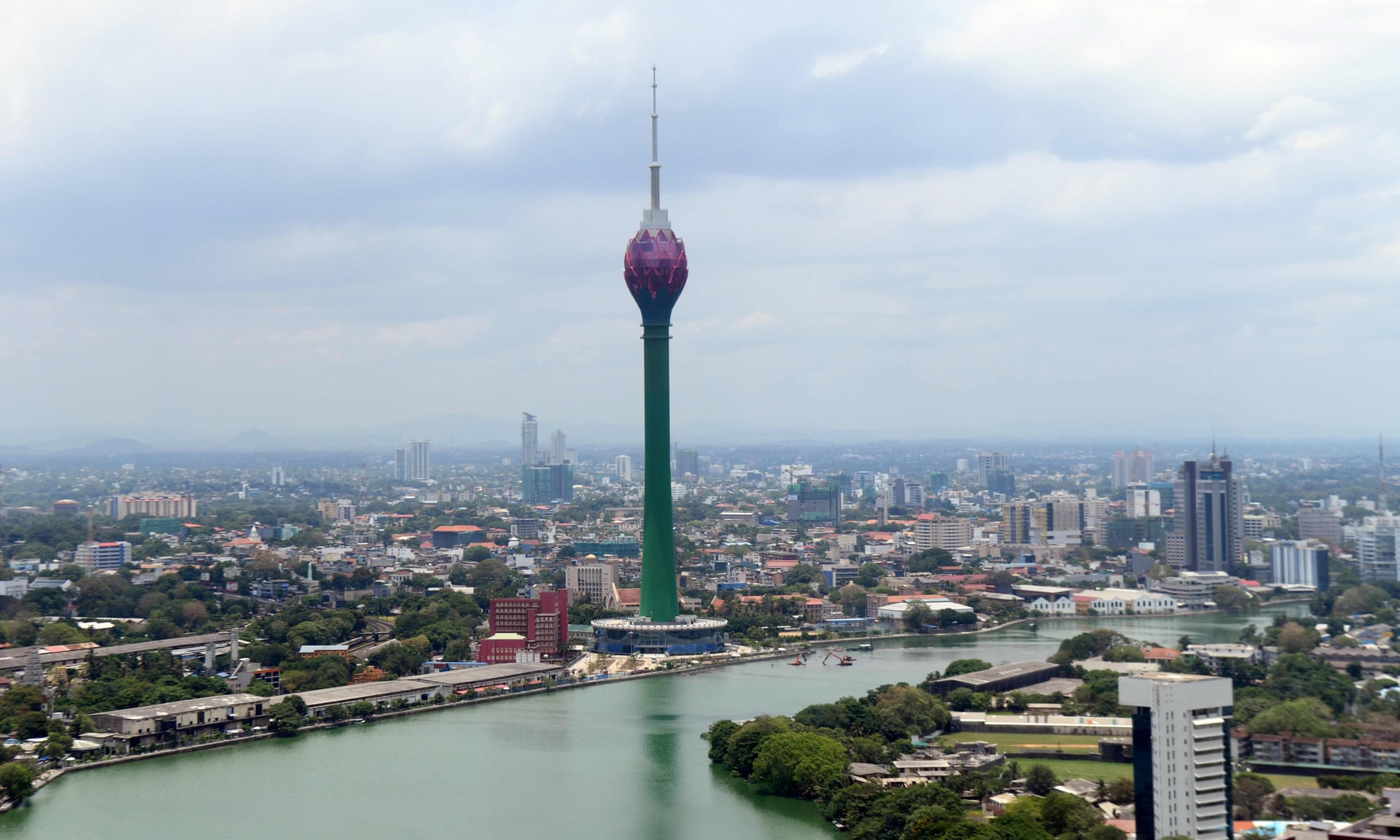
The China-funded Lotus Tower in central Colombo. 

“The overall purpose of the Belt and Road initiative is to generate legitimacy for the Chinese leadership and the Chinese Communist Party more broadly,” said Thomas Eder, a research associate at the Mercator Institute for Chinese Studies.
“Such prestige is bolstered by every government signing a BRI memorandum of understanding and every head of government attending a grand BRI summit in Beijing. These countries allow Xi Jinping to then tell Chinese citizens that the entire world is endorsing his policies and that he is the one to have put China firmly back at the centre of the global stage,” Eder said.
The event is to be attended by 37 leaders, including Vladimir Putin, Italian prime minister Giuseppe Conte, UK chancellor Philip Hammond, Pakistan’s prime minister Imran Khan and the heads of state of the 10 Asean (Association of South-east Asian Nation) states. 
The US is sending low-level delegates, and India is not attending.
Countries that previously attended but have chosen not to come this year include Turkey, which has publicly criticised China over is treatment of the Uighurs, a Muslim minority, Poland, Spain, Fiji, Sri Lanka, and Argentina, according to the Eurasia Group, citing geopolitical issues as a possible reason.


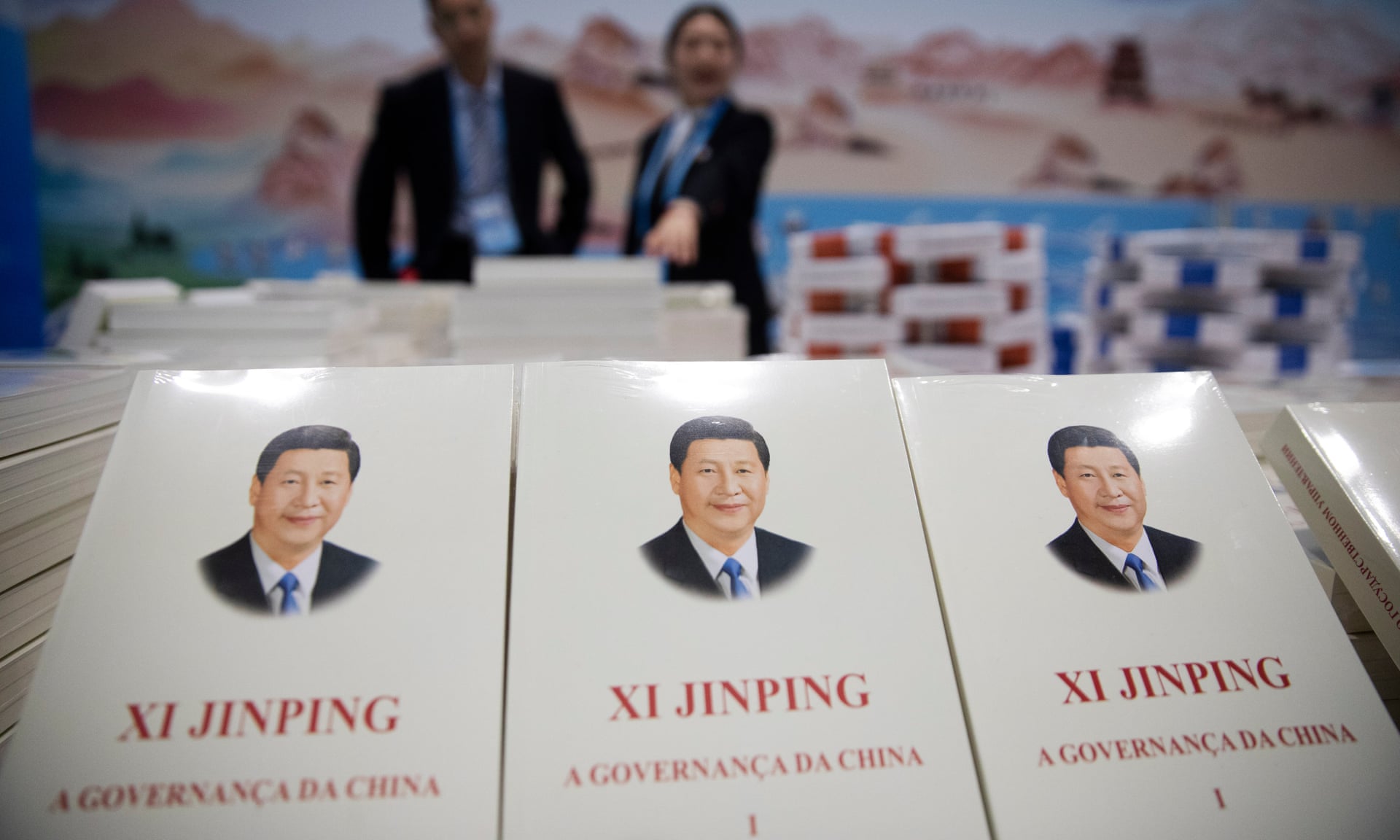
Books on Chinese dictator Xi Jinping are seen displayed in the media centre for the second Belt and Road Forum.

Critics have also called for China to institutionalise the Belt and Road initiative, so that the project is not seen as entirely Chinese-led. 
Others have cited environmental concerns, as Chinese companies build coal power projects around the world. 
Coal projects accounted for as much as 42% of China’s overseas investment in 2018, according to the China Global Energy Finance database.
“For the sake of the planet, for people who could be breathing in pollutants from coal plants and for the long-term economic health of many developing countries, let’s hope BRI quits coal,” said Wawa Wang, senior adviser at VedvarendeEnergi in Denmark.
Ahead of the forum, China has scored some key wins for the project. 
Italy is now the first G7 country to endorse the initiative, after signing up for Belt and Road in March, despite criticism from the US. 
This month, Malaysia agreed to continue a $10.7bn rail project, previously cancelled.
So far, China has signed more than 170 agreements with 125 countries, according to Chinese state media. 
Between 2013 and 2018, these deals totalled more than $90bn in Chinese investment.
Beijing has also begun to take some steps to soothe concerns. 
Officials are reportedly drafting rules on which projects can be called “Belt and Road”, to prevent the initiative’s brand from being diluted by unsuccessful projects. 
Chinese ambassadors in Kenya and Mexico have published editorials in local media defending the initiative.
On Friday, Xi will give a keynote address, where he is likely to strike a similar tone. 
“The Belt and Road is an initiative for economic cooperation, instead of a geopolitical alliance or military league, and it is an open and inclusive process rather than an exclusive bloc or ‘China club’,” Xi said in remarks given at a symposium in August.

mardi 2 avril 2019

Call for UK to ban patients travelling to China for 'organ tourism'

Forty MPs back effort before inquiry into China's forced organ harvesting
By Owen Bowcott 


UK patients should be banned from travelling to China for transplant surgery, the government has been told, before an inquiry into allegations of forced organ harvesting from prisoners of conscience.
The call has so far been backed by 40 MPs from all parties before the next session of the independent China tribunal, which is investigating claims that detainees are being targeted by the regime. 
Opening a Westminster Hall debate last week, the DUP MP Jim Shannon urged the UK government to consider imposing an organ tourism ban like those already enacted by Italy, Spain, Israel and Taiwan.
“It is wrong that people should travel from here to China for what is almost a live organ on demand to suit themselves,” Shannon, the MP for Strangford in Northern Ireland, said. 
“It is hard to take in what that means – it leaves one incredulous.
“It means someone can sit in London or in Newtownards and order an organ to be provided on demand. Within a month they can have the operation.
“We need to control that structurally, as other countries have, not simply because it is the right thing to do, but also because it is necessary to protect UK citizens from unwittingly playing a role in the horrifying suffering of religious or belief groups in China.”
The China Tribunal, chaired by Sir Geoffrey Nice QC who was formerly a prosecutor at the International Criminal Tribunal for the former Yugoslavia, has been taking evidence about mispractices from medical experts, human rights investigators and others.
It will hold a second round of hearings on 6 and 7 April in London. 
Its final judgment will be published on 13 June. 
China has been asked to participate but has declined to do so.
In an interim judgment released last December, the tribunal said: “In China forced-organ harvesting from prisoners of conscience has been practised for a substantial period of time involving a very substantial number of victims... It is beyond doubt on the evidence presently received that forced harvesting of organs has happened on a substantial scale by state-supported or approved organisations and individuals.”
Among those killed are members of religious minorities such as Falun Gong, Tibetans, Uighur Muslims and Christian sects. 
In 2014, China announced that it would stop removing organs for transplantation from executed prisoners.
It is not clear how many UK citizens have travelled to China for transplants. 
Waiting times for operations are said to be far shorter than in the west. 
One inquiry suggested that a liver transplant could be arranged privately at a Chinese hospital for $100,000.
Fiona Bruce, the Conservative MP for Congleton, who is also leading the campaign for a ban said during the Westminster debate: “Our government could inquire about the numbers of organ removals and their sources … They could reduce demand by banning organ tourism … This is not a case of a few voluntary organ transplants; it is a case of mass killings through forced organ removal, of religious persecution, of grave allegations of crimes against humanity.”
Mark Field, the Foreign Office minister, acknowledged that there was a growing body of research, much of which was “very worrying” but he believed relatively few people in the UK chose to travel to China for organ transplants.
Introducing a travel ban, he said, would be difficult to police since it would be hard to establish whether people had travelled there for that purpose. 
Field said: “But, it is important that we make them aware that other countries may have poorer medical and ethical safeguards than the UK, and that travelling abroad for treatments, including organ transplants, carries fundamental risks.”

mardi 28 février 2017

China-Taiwan Diplomacy Falls To New Low With Latest Spain Deportation Incident

By Ralph Jennings 

After a tour bus crashed two weeks ago along a freeway ramp in Taipei and killed 33 people, China expressed condolences and Taiwan said thanks for the thought. 
The two hadn’t exchanged basic pleasantries like that since May, when a new Taiwan president took offices and pushed China relations way down the list of government priorities after eight years of brisk, upbeat dialogue. 
But the condolences were just Taiwan’s proverbial sunny day before another typhoon.

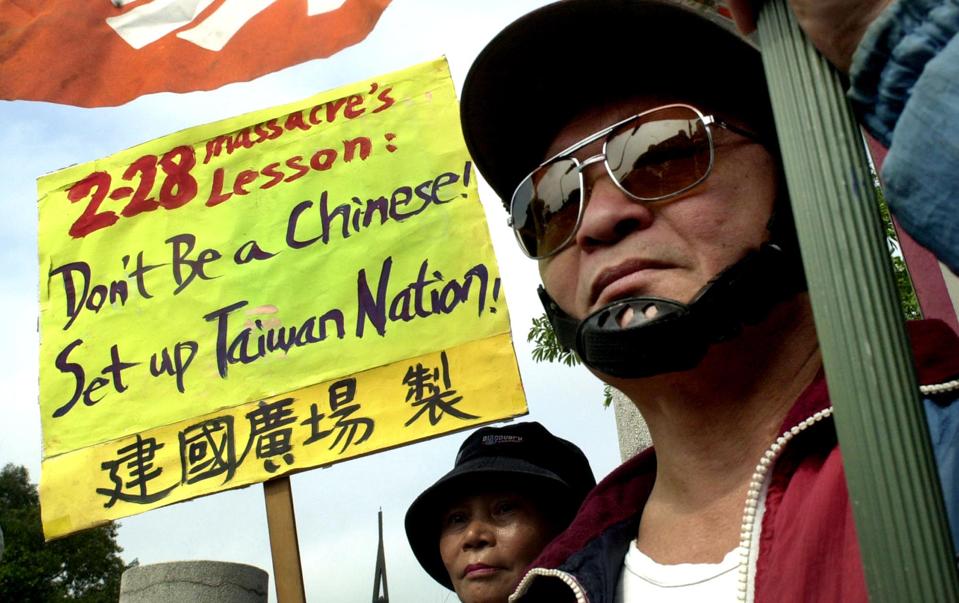
Pro-independence activists gather in 2003 outside a park in Taiwan to mark the anniversary of the bloody 1947 military crackdown that left thousands of people dead.

China claims sovereignty over Taiwan, which is self-ruled. 
Most people here say in opinion surveys they oppose China’s ambition to unify the two sides. 
A lot of those people voted for President Tsai Ing-wen, who's cold to the unification idea herself.
China and Taiwan began arguing through statements from government agencies last week after Spain agreed to deport more than 200 Taiwanese fraud suspects – to China. 
Like Kenya, Malaysia and other countries that have done the same with Taiwanese fraud suspects over the past year, Spain made the move because it backed Beijing’s political idea that people from both places belong to China and should be prosecuted there. 
They were suspected of using Spain as a base to defraud people of a combined $17 million in China, not in Taiwan where citizens are used to the scam because they were once the victims. 
Taiwan’s governmental Mainland Affairs Council slammed China for a “unilateral” decision that could damage prospects for trust and cooperation. 
China is likely to give the fraud suspects a harsher trial than what they would get in Taiwan, where judges might order one to five years in prison.
“This has taken place before, for sure,” says Alexander Huang, strategic studies professor at Tamkang University in Taiwan. 
This case stood out for Taiwan partly because “Spain is a larger country in Europe," he says. 
Taiwan said it had expected Madrid to take a more humanitarian approach. 
"But the thing that really triggered a nerve is China saying the suspects are not Republic of China citizens,” Huang says, using the legal name of Taiwan’s government.
China’s Taiwan Affairs Office touched off another storm last week when it said would hold formal events to mark the 70th anniversary of the “228” incident in Taiwan. 
On Feb. 28, 1947 a dispute between a cigarette vendor and an enforcement officer in Taipei ignited an anti-government rebellion. 
Strongman Chiang Kai-shek violently repressed it for years, killing tens of thousands. 
Feb. 28 is now an annual public holiday held in Taiwan, democratic for 30 years, to oppose any authoritarian rule. 
Beijing casts the Feb. 28 chain of events as part of a struggle to break free of Chiang’s then-ruling Nationalist Party, which had governed all of China before losing a civil war to the Communists.
But Taiwanese "secessionist forces" have "distorted facts of the uprising to stoke conflict and split public opinion on the island," China's official Xinhua News Agency said last week, citing a Taiwan Affairs Office spokesperson. 
"Secessionist forces" probably refer to advocates of Taiwan's legal independence from China, and those advocates tend to support Tsai's Democratic Progressive Party. 
Taiwan, though self-ruled, still claims mainland China in its constitution as Beijing claims Taiwan. Beijing prefers that tethering over independence. 
The Taiwan government’s Mainland Affairs Council on Thursday asked China to be fair, “understand the essence of this event correctly” and share Taiwan’s experience in remembering the date.
These rows between China and Taiwan will pass but pile up on other problems between the two sides. China didn’t like Tsai talking to Donald Trump by phone in December because it feared a stronger U.S.-Taiwan relationship despite a formal China-U.S. diplomatic alliance. 
Taiwan didn’t care for China’s passing its aircraft carrier near the island in December and January. Those are just two examples.