The Guardian
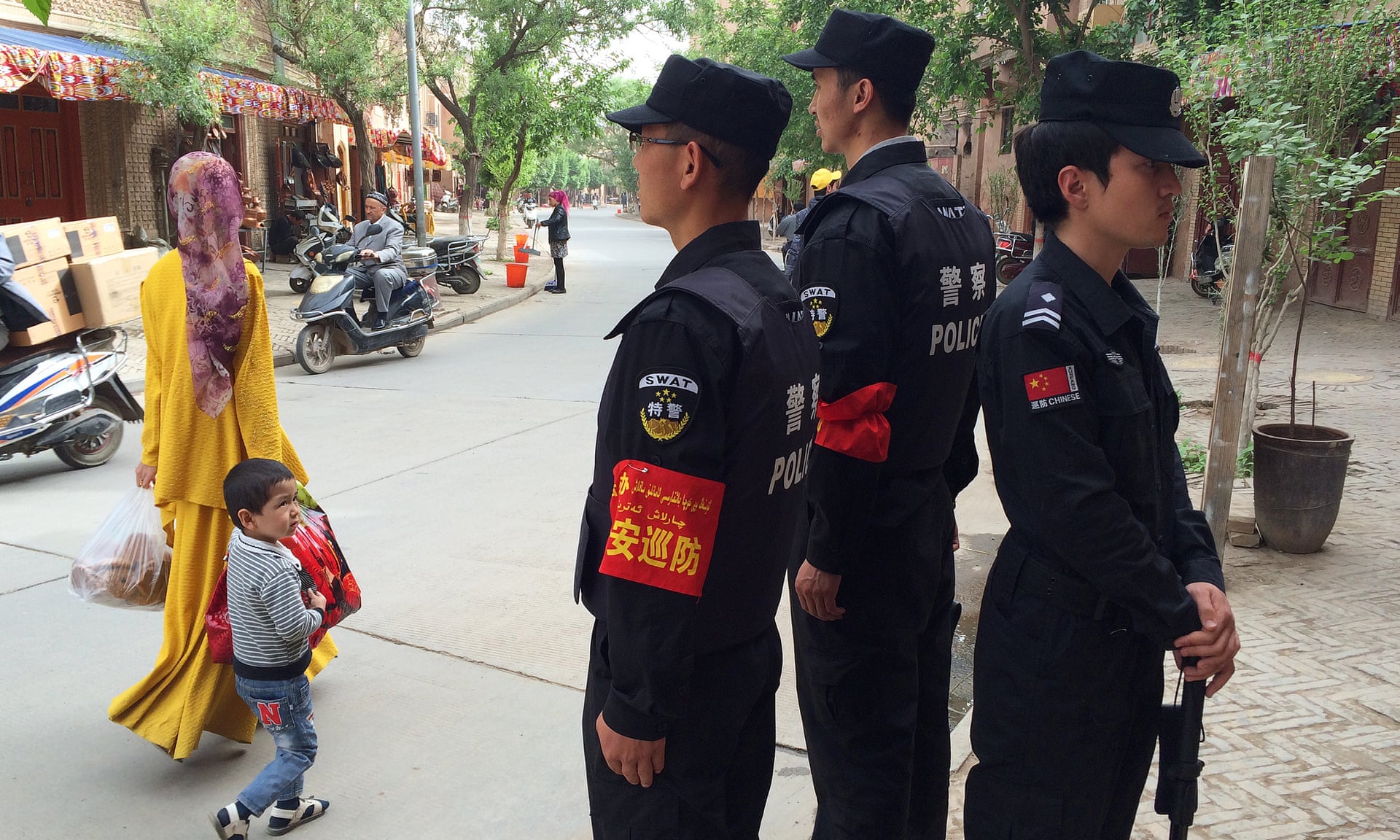 Police patrolling the Old Town in Kashgar, East Turkestan. ‘According to the group Chinese Human Rights Defenders, official data suggests a fifth of all arrests in China last year were in East Turkestan, which has just 1.5% of its population.’
It is unthinkable.
Yet week by week, the evidence mounts that in north-western China’s East Turkestan colony, as many as a million people are being held in extralegal indoctrination camps where inmates are forced to write self-criticisms, sing patriotic songs and chant slogans praising the Communist party. According to former detainees, people have been pulled in because they went abroad, because they engaged in conventional religious practices, or even because they do not speak Chinese.
Many are held indefinitely.
Some say they were tortured.
Most of those held are Uighurs, who make up less than half of the 23 million population of the region, or belong to Kazakh or other Muslim minorities.
One report, drawing upon official sources, suggests some areas have detention quotas.
The camps are the most shocking aspect of an intense and all-encompassing crackdown, described by Human Rights Watch this week as amounting to rights violations of a scope and scale not seen in China since the Cultural Revolution unleashed in 1966.
According to the group Chinese Human Rights Defenders, official data suggests a fifth of all arrests in China last year were in East Turkestan, which has just 1.5% of its population.
The human cost is immense, as a new Guardian report reveals.
The ordeal does not end when people are released: they remain burdened by trauma and the fear they could be seized again.
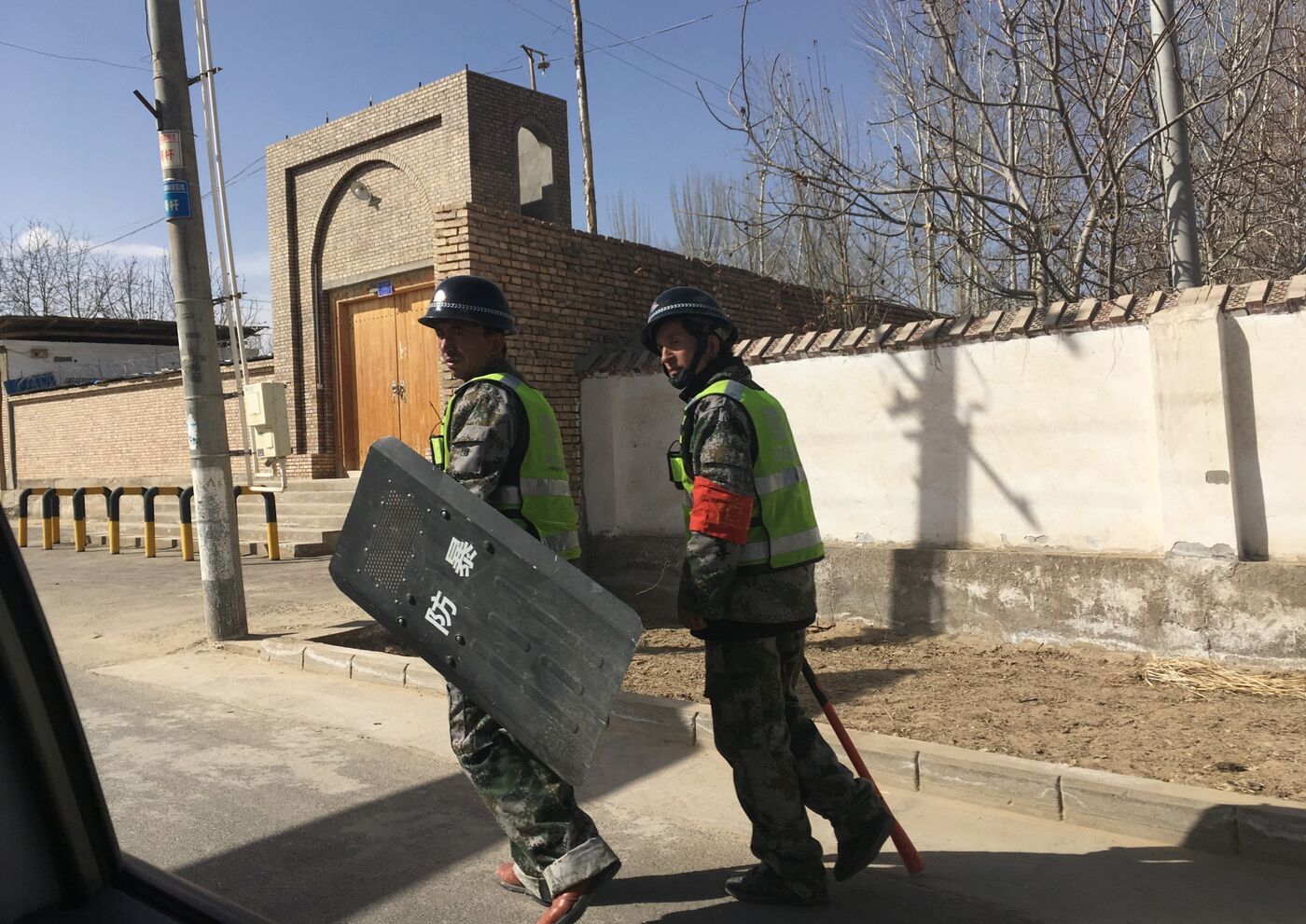
East Turkestan has become a digital police state, studded with checkpoints, security cameras and facial recognition technology.
China has always kept an iron grip on East Turkestan, including through tight restrictions on religion and culture.
But in 2014, after a series of more violent attacks that claimed dozens of lives, including suicide bombings and a knife attack in a train station, China launched an even harsher “Strike Hard Campaign”.
The mass detentions, which began early last year, are a step further.
One scholar warns that “an entire culture is being criminalised”.
China has acknowledged that "some" East Turkestan residents caught in anti-"terrorism" campaigns had been taken to “vocational education” centres (Satellite images and tendering and other official documents show vast new facilities with watchtowers and barbed wire fences.)
Other official sources have talked of “transformation through education”, which one government document described as “like a free hospital treatment for the masses with sick thinking”.
All this has been greeted by near-silence from majority-Muslim countries.
“They’re scared. Nobody wants to say anything,” said Anwar Ibrahim, in line to be Malaysia’s next prime minister, when he raised it this week.
The US now says it is “deeply troubled” by the crackdown; it is considering sanctions against officials and companies.
The new UN human rights chief, Michelle Bachelet, used her maiden speech to urge China to grant monitors access in light of “deeply disturbing” reports.
East Turkestan’s camps reflect the much more repressive turn China has taken generally in recent years, and perhaps the region’s geostrategic importance in the context of the Belt and Road Initiative, much of which runs through central Asia.
But their flourishing also reflects the secrecy shrouding them and the indifference with which reports have been greeted, giving China no incentive at all to moderate its course.
This should be the start of international pressure, not the end.

 Ayatollah Ali Khamanei