By Hal Brands
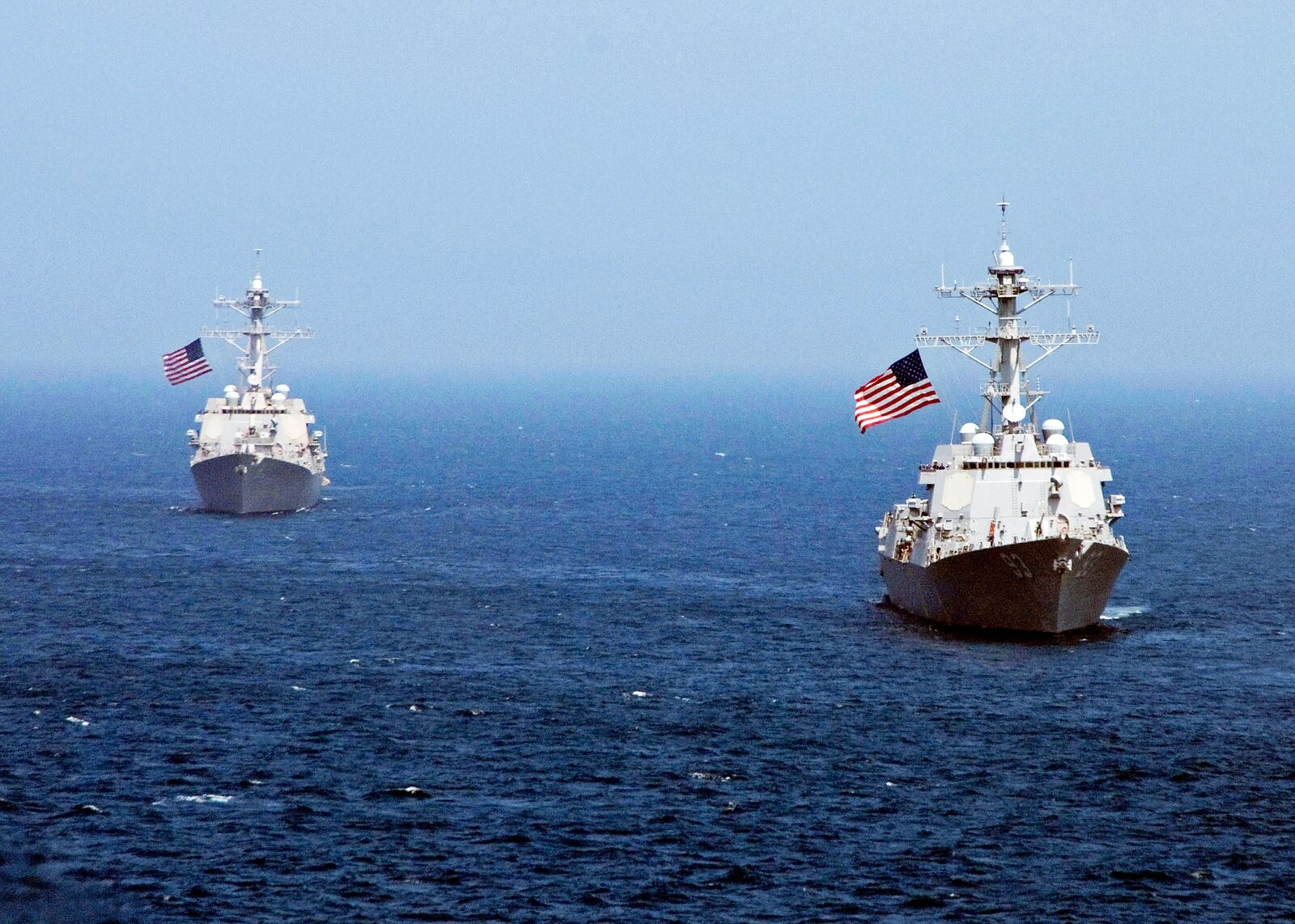 Projecting democracy.
 In the first three installments of this series, I've explored the changing nature of China's challenge to U.S. interests and the existing international order, with a particular focus on three issues: China’s progressively more global military ambitions, its promotion of authoritarianism and subversion of democratic practices abroad, and its efforts to build new international institutions more responsive to its own interests.
All of this is in addition to other, more familiar aspects of the Chinese challenge: Beijing’s efforts to overturn the military balance in the Western Pacific, its coercion of U.S. allies and partners, and its audacious plans to establish economic dominance in an array of critical sectors.
American officials have known for many years that China would eventually be a force to reckon with in global politics.
But how rapidly and expansively that challenge has emerged has nonetheless been striking.
The previous three articles were devoted largely to diagnosis rather than prescription.
The previous three articles were devoted largely to diagnosis rather than prescription.
Now I turn to the matter of solutions: How to deal with a China that is putting U.S. leadership and international order under stress on a variety of fronts at once.
Doing so will be no easy task, but neither should it be considered impossible.
Doing so will be no easy task, but neither should it be considered impossible.
Although some observers argue that the U.S. and its allies have little choice but to stand aside as the Chinese juggernaut advances, the fact is that Washington and its friends still control a clear preponderance of global power.
If they can get their act together, they ought to be able to protect their interests and defend the international system that has benefitted them all so enormously for the indefinite future.
Here are some basic guidelines.
First, with respect to China’s expanding military footprint, it is important to remember that this trend is not all bad, at least in the short term.
First, with respect to China’s expanding military footprint, it is important to remember that this trend is not all bad, at least in the short term.
A dollar that China spends on prestige capabilities such as a vulnerable aircraft carrier is a dollar it may not be able to spend on the more lethal anti-access/area-denial capabilities that could give U.S. forces fits in the Western Pacific.
Yet Washington still needs to be begin thinking about a future in which Beijing can create global dilemmas by projecting power outside the Western Pacific, contesting control of sea lanes in the Indian Ocean and beyond, and perhaps establishing a more significant presence in regions as far afield as Africa or even Latin America.
How can the U.S. and its allies safeguard their global freedom of action in light of this emerging challenge?
Yet Washington still needs to be begin thinking about a future in which Beijing can create global dilemmas by projecting power outside the Western Pacific, contesting control of sea lanes in the Indian Ocean and beyond, and perhaps establishing a more significant presence in regions as far afield as Africa or even Latin America.
How can the U.S. and its allies safeguard their global freedom of action in light of this emerging challenge?
It may not be strictly or even primarily a military task.
China will struggle to project power globally without foreign bases, and preventing key countries from granting those installations may be something that requires skillful diplomacy and economic assistance more than the application of force.
China will struggle to project power globally without foreign bases, and preventing key countries from granting those installations may be something that requires skillful diplomacy and economic assistance more than the application of force.
But regardless of the method, such efforts will represent an important facet of U.S.-China competition should Beijing’s military capabilities and horizons continue to expand.
Second, the U.S. needs to embrace the ideological dimension of the competition.
Second, the U.S. needs to embrace the ideological dimension of the competition.
The idea of waging a protracted ideological struggle is out of fashion, largely because of the hangover from the Iraq and Afghanistan wars.
But putting those conflicts aside for a moment, the fact remains that America’s democratic values have long represented an ideological and geopolitical advantage over its authoritarian rivals.
But putting those conflicts aside for a moment, the fact remains that America’s democratic values have long represented an ideological and geopolitical advantage over its authoritarian rivals.
Conversely, if China is successful in distorting democratic practices and making the world safer for autocracy, U.S. influence will suffer.
Granted, there may be cases where solicitude for human rights and democracy cannot trump all other concerns.
Granted, there may be cases where solicitude for human rights and democracy cannot trump all other concerns.
There is simply not an enormous amount Washington can do to pressure the Philippines’ authoritarian leader, Rodrigo Duterte, or Thailand’s military junta right now without further compromising its strategic position in Southeast Asia.
But the U.S. and its partners can still highlight the authoritarian, brutal aspects of Chinese rule; they can publicly expose and constrain Chinese efforts to distort democratic debate within their own societies; they can, in many cases, provide moral and material support to democratic actors in countries where democratic governance is either in danger or struggling to take hold.
This is not Wilsonianism run amok.
But the U.S. and its partners can still highlight the authoritarian, brutal aspects of Chinese rule; they can publicly expose and constrain Chinese efforts to distort democratic debate within their own societies; they can, in many cases, provide moral and material support to democratic actors in countries where democratic governance is either in danger or struggling to take hold.
This is not Wilsonianism run amok.
It is good practice in dealing with an authoritarian challenger that is not shying away from ideological competition.
Third, regarding the rival institutional order that China has begun to build, the key is to offer attractive alternatives to countries that are faced with hard choices.
Third, regarding the rival institutional order that China has begun to build, the key is to offer attractive alternatives to countries that are faced with hard choices.
Over the past year, I have heard numerous U.S. and allied officials say that smaller, poorer states in the Indo-Pacific region and elsewhere do not necessarily want to tilt toward Beijing economically and geopolitically.
They often recognize the danger of debt traps that will spring shut when large loans cannot be repaid. And several strongly object to Beijing's expansive claims on the South China Sea.
Nonetheless, they feel that they cannot say no to Chinese engagement and assistance -- even when they recognize its potentially predatory dimensions -- given their economic needs.
They often recognize the danger of debt traps that will spring shut when large loans cannot be repaid. And several strongly object to Beijing's expansive claims on the South China Sea.
Nonetheless, they feel that they cannot say no to Chinese engagement and assistance -- even when they recognize its potentially predatory dimensions -- given their economic needs.
If America and other liberal powers do not strengthen bilateral and multilateral development lending to pivotal countries, if they do not push forward with the trade arrangements that give nations in the Asia-Pacific and elsewhere options other than being pulled into Beijing’s orbit, if they do not reinvest in the U.S.-led institutions China is challenging such as the World Trade Organization and the Asia-Pacific Economic Cooperation forum, they will not have much luck stemming the Chinese tide.
This leads to a final point, which is that accomplishing any of the tasks outlined here will require a seriousness of purpose and an integration of national power that, under the current U.S. administration, has been painfully lacking.
To be fair, the Defense Department is rightly refocusing on long-term competition with China.
This leads to a final point, which is that accomplishing any of the tasks outlined here will require a seriousness of purpose and an integration of national power that, under the current U.S. administration, has been painfully lacking.
To be fair, the Defense Department is rightly refocusing on long-term competition with China.
Congress also deserves some credit for bringing a years-long period of U.S. military austerity to an end.
Yet the Trump administration has also overseen a disinvestment in and denigration of diplomacy; the careless discarding of America’s best tool of geo-economic competition with China, the Trans-Pacific Partnership trade deal; and a striking indifference, at least on the part of the president himself, to the role that American values have long played in accentuating U.S. power.
Moreover, Trump has undercut the multilateral democratic unity necessary to do so by pursuing trade policies that threaten to injure allies such as Japan.
The U.S. and its friends will find it hard enough to address the difficulties China poses if they cooperate effectively and bring all the elements of their influence to bear.
Yet the Trump administration has also overseen a disinvestment in and denigration of diplomacy; the careless discarding of America’s best tool of geo-economic competition with China, the Trans-Pacific Partnership trade deal; and a striking indifference, at least on the part of the president himself, to the role that American values have long played in accentuating U.S. power.
Moreover, Trump has undercut the multilateral democratic unity necessary to do so by pursuing trade policies that threaten to injure allies such as Japan.
The U.S. and its friends will find it hard enough to address the difficulties China poses if they cooperate effectively and bring all the elements of their influence to bear.
They will find it far, far harder if they don’t.

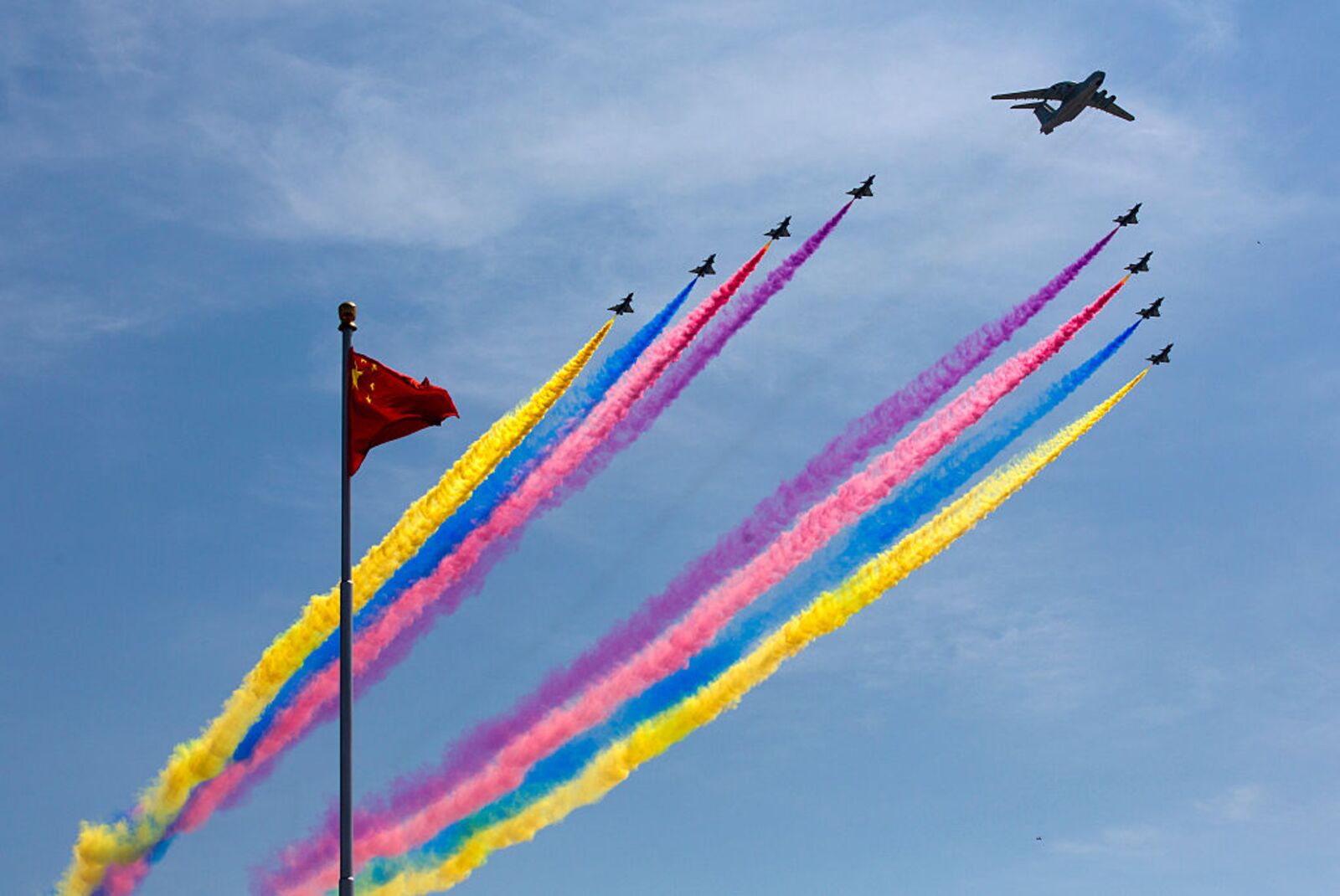 Only an exercise, for now.