Affichage des articles dont le libellé est International Criminal Court. Afficher tous les articles

mercredi 27 novembre 2019

Towards the International Criminal Court for Xi Jinping's Crimes in East Turkestan?

UK calls for UN access to Chinese concentration camps in East Turkestan
Foreign Office responds after leaked China cables appear to confirm brainwashing centres
By Juliette Garside and Emma Graham-Harrison
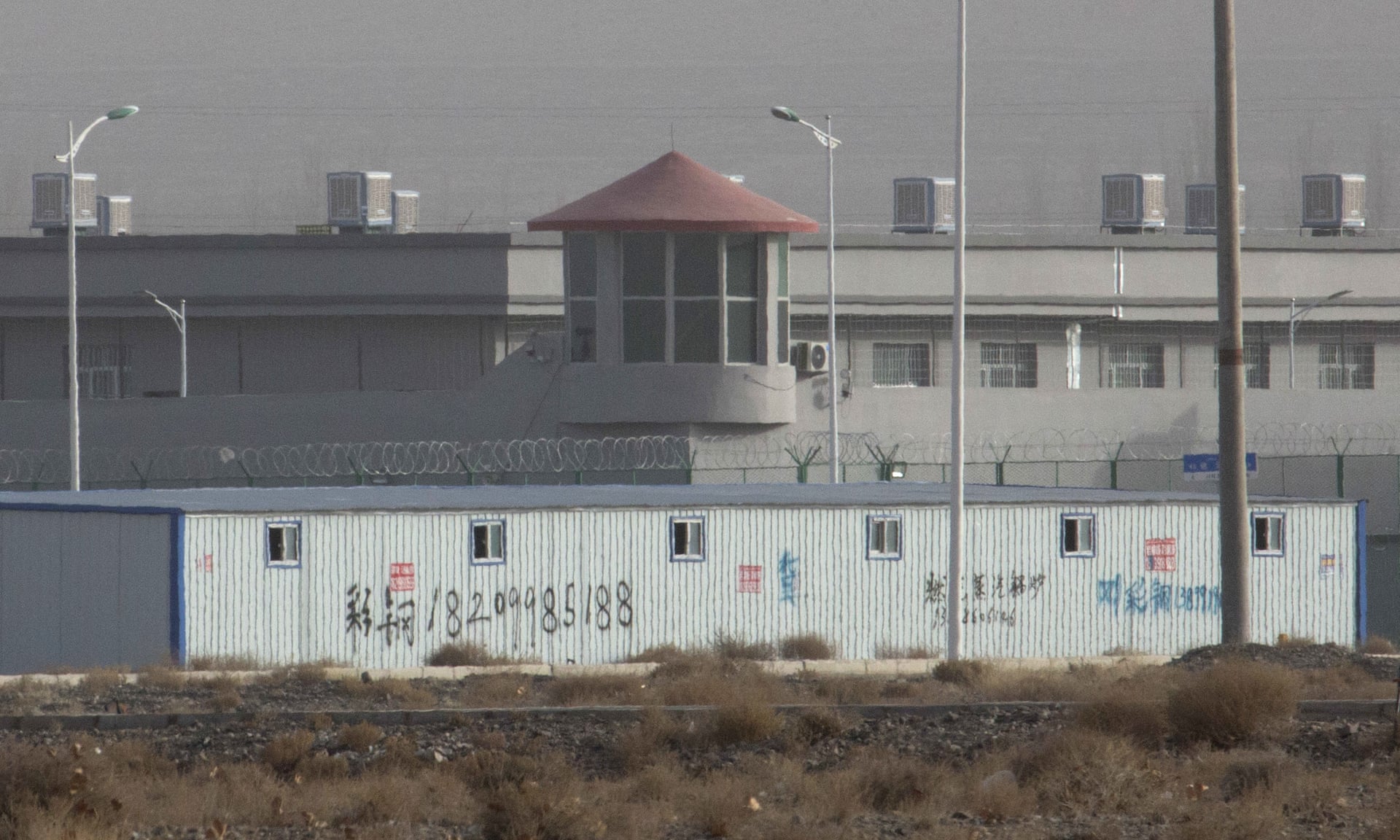
A facility in Artux, one of a growing number of internment camps in East Turkestan where an estimated 1 million Muslims are detained. 

The UK has urged China to give United Nations observers “immediate and unfettered access” to concentration camps in East Turkestan, where more than a million people from the Uighur community and other Muslim minorities are being held without trial.
The call from the Foreign Office was in response to the China cables, a leak of classified documents from within the Communist party which provide the first official confirmation that the camps were designed by Beijing as brainwashing internment centres.
The documents describe how inmates are to be cut off from their families for at least a year and held behind multiple layers of security to undergo ideological transformation.
The International Criminal Court building is seen in The Hague, Netherlands, in this January 16, 2019, photograph. 

The leak prompted the Foreign Office to demand “an end to the indiscriminate and disproportionate restrictions on the cultural and religious freedoms of Uighur Muslims and other ethnic minorities in East Turkestan.”
A spokesperson added: “The UK continues to call on China to allow UN observers immediate and unfettered access to the region.”
In Brussels, the European commission condemned the use of “political re-education camps”. 
In a statement the commission said it would not comment on the details of the leak, but insisted it would continue to raise the issue of human rights abuses in East Turkestan with Chinese government officials.
“We have consistently spoken out against the existence of political re-education camps, widespread surveillance and restrictions of freedom of religion or belief against Uighurs and other minorities in East Turkestan,” a spokeswoman said.
“We as the European Union continue to expect China to uphold its international obligations and to respect human rights, including when it comes to the rights of persons belonging to minorities, especially in East Turkestan but also in Tibet, and we will continue to affirm those positions in this context in particular.”
In July, 22 countries at the UNs’ top human rights body took the unusual step of issuing an joint statement calling for China to end its arbitrary detentions and other violations against the rights of Muslims in the north-west border colony of East Turkestan.
Signatories included the UK, Australia, Canada and a number of European countries. 
The statement urged China to allow “meaningful access” to the region independent international observers, including Michelle Bachelet, the UN high commissioner for human rights.
Chinese authorities deny they run detention camps and say the “vocational education and training centres” are part of a focused crackdown on extremism and terrorists.
However, the China cables point to the ruling party setting out a blueprint for human rights violations.
Reports of a crackdown first emerged two years ago, as hundreds of thousands of muslims in East Turkestan were rounded up into secretive, newly built and heavily guarded compounds.
Xi Jinping’s government took action following a rise in terrorist attacks. 
In 2009, nearly 200 people died during riots in the East Turkestan capital, Urumqi. 
Dozens more were then killed and hundreds injured over the following years.
The China cables contain dozens of pages of orders covering the setting up of the camps and the establishment of a vast digital surveillance operation being used to identify new detainees.
In a single week in June 2017, the digital platform flagged up 24,412 “suspicious” individuals in one part of southern East Turkestan alone. 
Of these, more than 15,000 were sent to re-education camps, and a further 706 were jailed.The cables reveal camps must adhere to a strict system of total physical and mental control, with multiple layers of locks on dormitories, corridors, floors and buildings.
Inmates could be held indefinitely – but must serve at least a year in the camps before they can even be considered for “completion”, or release. 
Weekly phone calls and a monthly video call with relatives are their only contact with the outside world, and they can be suspended as punishment.
Control of every aspect of their lives is so comprehensive that they have to be assigned a specific place not only in dormitories and classrooms, but even in the lunchtime queue.
Obtained by the International Consortium of Investigative Journalists (ICIJ) and shared with the Guardian and 16 other media partners, the documents have been independently assessed by experts who have concluded they are authentic.

vendredi 27 juillet 2018

Evil Empire

China's crimes against humanity you've never heard of
By Michael Caster

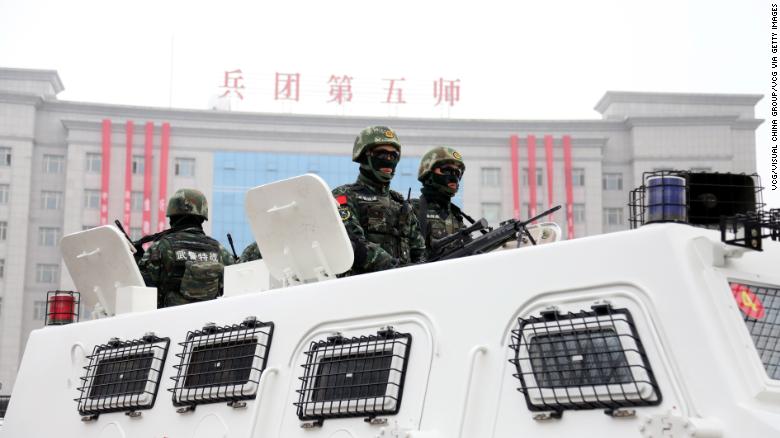
Soldiers and paramilitary police patrol during a pep rally for an anti-terrorism and maintaining stability rally in East Turkestan in March 2017.

I first visited East Turkestan in July 2009, returning to Beijing only days before demonstrations in the region's capital, Urumqi, turned deadly.
Police responded to the violence with a massive crackdown, and detentions or disappearances ranged into the thousands.
To control the spread of information, internet access to all of East Turkestan was cut off for around 10 months.
Since then, China's persecution of Uyghurs, a Turkic-speaking Muslim minority who form a bare majority in East Turkestan, has intensified, accelerating in particular since 2016 with a change in Party leadership in the region.
While violent resistance has been episodic, and should be denounced, the Chinese authorities have suppressed even peaceful expression of Uyghur rights, most notably the 2014 life sentence handed down to Uyghur intellectual Ilham Tohti on the absurd charge of separatism.
Despite the increasingly dire human rights situation in East Turkestan, few around the world are aware of it, and even fewer have spoken out. 
We are now reaching a crisis point, when speaking out is not enough.
The persecution must be called by its true name, and measures taken accordingly.
Chinese officials in East Turkestan have previously said they protect the "legitimate rights and interests of all ethnicities and prohibit the discrimination and oppression against any ethnic groups." Beijing also denies arbitrarily arresting or detaining citizens based on ethnicity or religion, saying its actions in East Turkestan are related to counter terrorism and anti-extremism.

China's crimes against humanity
The concept of crimes against humanity originated in the 18th century, denouncing the atrocities of slavery and colonialism, and entered international law after World War II. 
Today, the 1998 Rome Statute of the International Criminal Court provides the most thorough definition.
The statute lists 11 acts, which when widespread or systematic, may rise to the level of crimes against humanity. 
These include: the forcible transfer of populations; arbitrary imprisonment; torture, the persecution of ethnic, cultural or religious groups; enforced disappearances; and apartheid, the institutionalized systematic oppression and domination by one racial group over others.
Unlike war crimes, crimes against humanity can be committed during peace time, but the idea that victims live in peace is only a callous technicality.
The situation that is unfolding in East Turkestan, I would argue, fits the textbook definition of crimes against humanity.

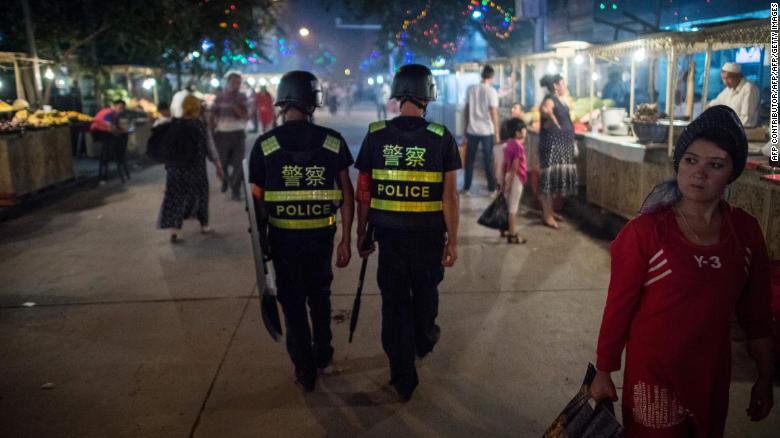
Police patrol in a night food market near the Id Kah Mosque in Kashgar in East Turkestan.

Beijing's final solution to the East Turkestan problem
Uyghurs in East Turkestan and elsewhere in China face systematic persecution.
With Islam a fundamental part of the Uyghur identity, so-called counter-terrorism campaigns which have cracked down hard on Muslim practices and increasingly criminalized Islam, are tantamount to the criminalization of being Uyghur.
This has reportedly included the banning dozens of Uyghur names, with violators at risk of not having their children's births registered; to forcing Uyghurs to denounce core tenets of their religion. Parents caught teaching their children about Islam risk detention or having their offspring taken away.
According to new research by New York-based Chinese Human Rights Defenders, in 2017 criminal arrests in East Turkestan accounted for a shocking 21% of all national arrests, even though the region's population is only 1.5% of China's total. 
In prison, according to state media, so-called "religious extremists" euphemistically undergo thought rectification.
As in apartheid South Africa, checkpoints and restrictions on movement are a fact of daily life for Uyghurs.
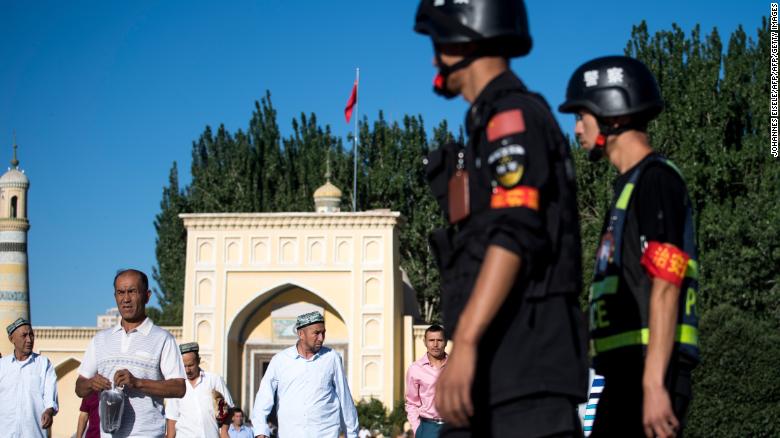
Armed police scan IDs, checking biometric and personal data. 
Religiosity, having relatives abroad, or simply being Uyghur increase the chances of being detained, as do the contents of a person's phone or computer.
Since 2015, as I have reported for the London-based Minority Rights Group, Uyghurs have had to obtain permission to visit relatives or seek medical treatment outside their hometowns, and passports started being recalled. 
Increasingly, the threat of detention and concerns over surveillance make contact between distant family members impossible.

Police patrol as Muslims leave the Id Kah Mosque after the morning prayer on Eid al-Fitr in 2017 in the old town of Kashgar in East Turkestan.

Nowhere are the signs of crimes against humanity more alarming than in the expanding system of concentration camps which are springing up across East Turkestan.
While the government officially denies the camps exist, in July state media reported authorities admitted to having transferred some 460,000 Uyghurs for "vocational training," as part of a bid to "to improve social stability and alleviate poverty."
Evidence suggests as many as one million Uyghurs and other Muslims are interned across East Turkestan in "re-education centers," around 10% of the population.
What little is known about what happens inside points to systematic physical and psychological torture, and indoctrination. 
One former detainee said she was not allowed to wear underwear and her head was shaved, while another described having tried to commit suicide by bashing his skull against a wall. 
Many simply disappear.
Meanwhile, so-called "becoming family" and "home stay" policies force Uyghur families to accept Communist Party officials into their homes to observe and report on their behavior. 
Imagine a family member has been taken away and now you are forced to host their abductor, quite possibly in the same room left empty by their disappearance.
Children whose parents have been detained are transferred to state custody, where, by some accounts, "they are locked up like farm animals" in so-called orphanages.

A proper response
Awareness of crimes against Uyghurs is only barely beginning to attract the level of attention demanded by their severity.
Journalists, diplomats and others who speak out about East Turkestan should at least acknowledge the appearance of ongoing crimes against humanity.
The international community must demand an independent and effective commission of inquiry into the crimes against humanity in East Turkestan.
This week, US lawmakers are holding hearings on the "arbitrary detention, torture, (and) egregious restrictions on religious practice and culture" in East Turkestan.
Under the Global Magnitsky Human Rights Accountability Act, according to Human Rights Watch, Washington can "impose visa bans and targeted sanctions on individuals anywhere in the world responsible for committing human rights violations or acts of significant corruption."
Those who bear responsibility for the dire situation in East Turkestan must be held responsible.