By Peter Hartcher
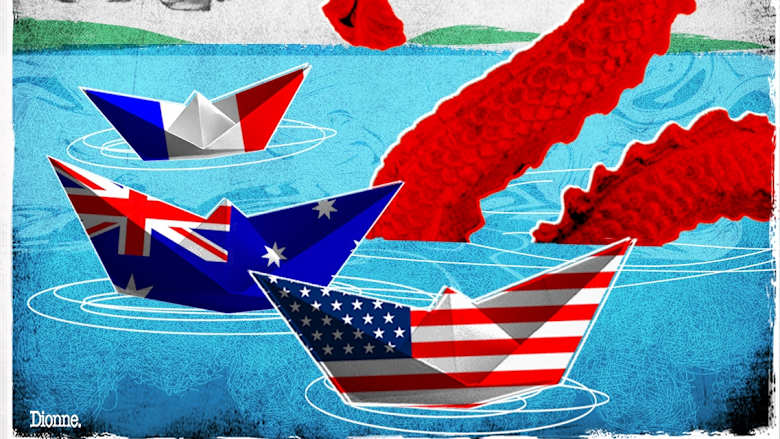
One nation after another at a weekend conference lined up to denounce China for breaking international law and to reassert "the rules-based order", but a curious pattern quickly emerged.
The further a country from the front line of China's relentless expansion into the South China Sea, the tougher it talked.
The countries who are actually losing their claimed territories to China's military forces were much more diplomatic.
The further a country from the front line of China's relentless expansion into the South China Sea, the tougher it talked.
The countries who are actually losing their claimed territories to China's military forces were much more diplomatic.
So diplomatic, in fact, that they tiptoed carefully around the subject and had little or nothing to say.
One of the striking new responses to China's unchecked gains in the region is the rising protest from Europe.
One of the striking new responses to China's unchecked gains in the region is the rising protest from Europe.
The annual Shangri-la security dialogue in Singapore heard stern words from the defence ministers of Britain, France and Germany on the weekend.
All three declared that they will uphold "the rule of law" in the South China Sea.
France and Britain said that they were stepping up naval movements through the zone: "No less than five French ships sailed in this area in 2017," said French Minister for the Armed Forces Florence Parly.
France and Britain said that they were stepping up naval movements through the zone: "No less than five French ships sailed in this area in 2017," said French Minister for the Armed Forces Florence Parly.
"European ships are mobilising more widely."
Britain's Defence Secretary Gavin Williamson quipped: "We have been pleased to commit three Royal Navy ships to this region in the last year, although hearing France committed five, I think I have to commit to six" this year.
Parly said that Britain and France, both permanent members of the UN Security Council, were sending naval ships to visit Singapore next week and then into "territorial waters" in the South China Sea.
They would also be carrying German naval observers.
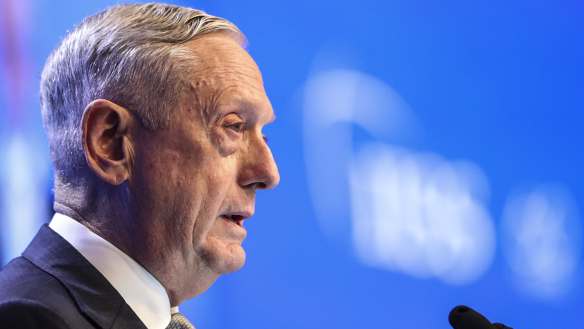
US warns of 'consequences' if China continues 'intimidation and coercion'
She said that the French vessels expected to come under challenge, just as the US navy was challenged by China's navy last week when they sailed within 12 nautical miles of Woody Island in the Paracels group.
US warns of 'consequences' if China continues 'intimidation and coercion'
She said that the French vessels expected to come under challenge, just as the US navy was challenged by China's navy last week when they sailed within 12 nautical miles of Woody Island in the Paracels group.
This is the island, also claimed by Vietnam, where China landed heavy bombers last month.
"At some point a stern voice intrudes into the transponder and tells us to sail away from supposedly ‘territorial waters’,” said Parly.
"At some point a stern voice intrudes into the transponder and tells us to sail away from supposedly ‘territorial waters’,” said Parly.
“But our commander then calmly replies that he will sail forth, because these, under international law, are indeed international waters.”
Why does Europe care?
Why does Europe care?
Because, said Britain's Williamson, the commercial shipping artery that runs through the South China Sea is incredibly important: "If there's a problem there, there's a problem for the whole world."
Parly said: "We do it because under international law we know that practice can become accepted. If a fait accompli is not questioned it can be opened. We place ourselves in the position of persistent objector to any claim of de facto sovereignty."![]()
Parly said: "We do it because under international law we know that practice can become accepted. If a fait accompli is not questioned it can be opened. We place ourselves in the position of persistent objector to any claim of de facto sovereignty."
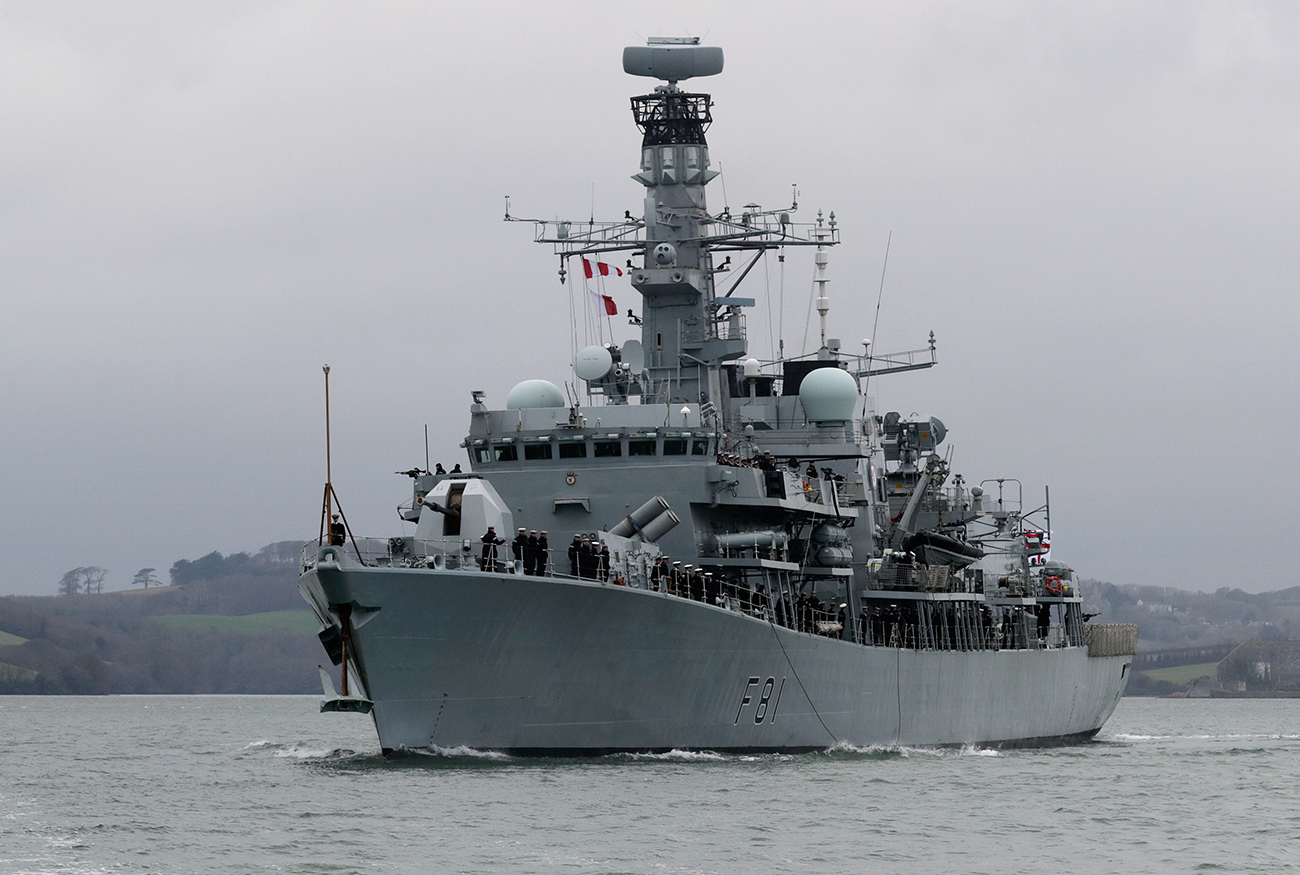
HMS Sutherland
India, a fast-rising power, is a lot closer to the hot zone than Europe, and India's Prime Minister Narendra Modi set out a policy that brings it even closer.
Modi described India's interests as defined by the Indo-Pacific, "from the shores of Africa to that of the Americas".
Modi described India's interests as defined by the Indo-Pacific, "from the shores of Africa to that of the Americas".
A vast span that includes, of course, the South China Sea, which he mentioned specifically.
When Modi spoke of the problems in the region, he didn't name China but told the conference that "above all, we see assertion of power over recourse to international norms".
When Modi spoke of the problems in the region, he didn't name China but told the conference that "above all, we see assertion of power over recourse to international norms".
He called for a "free, open, inclusive region".
He noted the importance of freedom of navigation.
In competition with China's narrative of its history and values, Modi spelled out India's own historical relationship to the ocean over thousands of years and asserted the "foundation of our civilisational ethos – of pluralism, co-existence, openness and dialogue. The ideals of democracy that define us as a nation also shape the way we engage the world".![]()

French Defence Minister Florence Parly.
In competition with China's narrative of its history and values, Modi spelled out India's own historical relationship to the ocean over thousands of years and asserted the "foundation of our civilisational ethos – of pluralism, co-existence, openness and dialogue. The ideals of democracy that define us as a nation also shape the way we engage the world".
French Defence Minister Florence Parly.

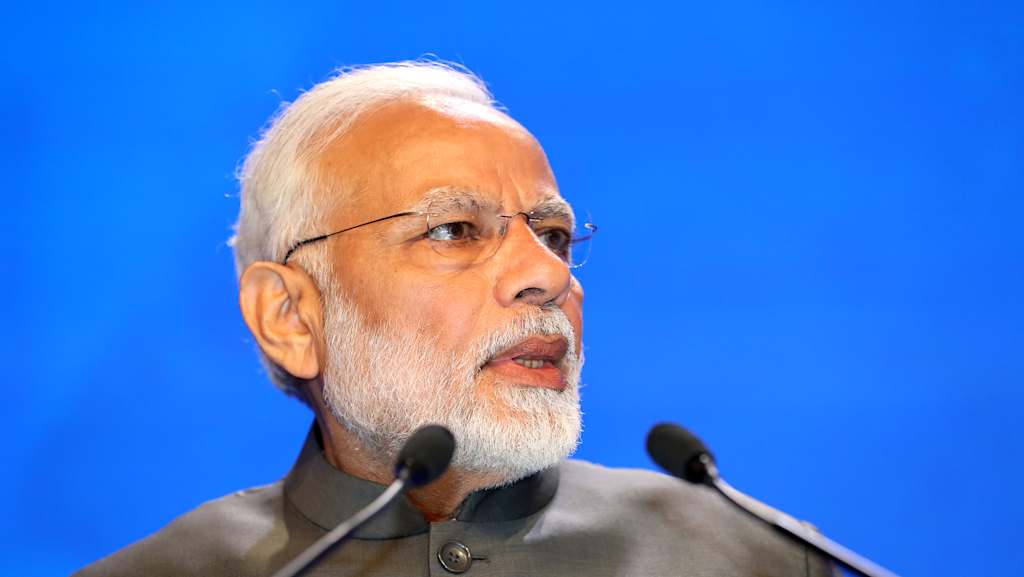
Narendra Modi, India's Prime Minister, delivers the keynote at the Shangri-la dialogue.
And in a departure from India's long passivity, the Indian leader described an active military outreach: "Indian Armed Forces, especially our navy, are building partnerships in the Indo-Pacific region for peace and security, as well as humanitarian assistance and disaster relief."
While the great powers stepped forward to decry the breakdown of the rules-based order, the front-line casualties were very quiet.
While the great powers stepped forward to decry the breakdown of the rules-based order, the front-line casualties were very quiet.
China's island-building and militarisation has hit the Philippines and Vietnam harder than any other countries, and in past years they were outspoken about it.
The defence ministers of both countries spoke at the conference. Both avoided any mention of their territorial claims.
The defence ministers of both countries spoke at the conference. Both avoided any mention of their territorial claims.
They avoided touching on China's forcible island-building and militarisation of the disputed maritime space.
One of their fellow ASEAN members, Indonesia's Defence Minister, Ryamizard Ryacudu, even went so far as to say that there was no problem.
One of their fellow ASEAN members, Indonesia's Defence Minister, Ryamizard Ryacudu, even went so far as to say that there was no problem.
Indonesia makes no claim to the island groups claimed by the Philippines and Vietnam.
But it has had its own clash with China over the Natuna Islands at the southern end of the South China Sea.![]()
Ryamizard dismissed any possibility of armed conflict in the region.
Ryamizard dismissed any possibility of armed conflict in the region.
"I talked about factual threats," he said in response to a question on the subject.
As for conventional war or strategic threat, "I don't see any potential threat. Indonesia sees the most factual threat as terrorism."
And the traditional leading power in the Pacific?
And the traditional leading power in the Pacific?
Speaking at the same conference, US Defence Secretary Jim Mattis was blunt on China's recent deployment of cruise missiles to the disputed territories of the South China Sea: "Despite China’s claims to the contrary, the placement of these weapons systems is tied directly to military use for the purposes of intimidation and coercion.”
It seems to have worked.
It seems to have worked.
It seems that the Philippines and Vietnam have been intimidated into quiescence.
And while Mattis talked tough and threatened China with unspecified "consequences", the force of his message was soon undercut by his President.
When the hundreds of military chiefs and defence officials who'd heard Mattis' words on the Saturday woke on the Sunday, they saw an overnight tweet from Donald Trump.
When the hundreds of military chiefs and defence officials who'd heard Mattis' words on the Saturday woke on the Sunday, they saw an overnight tweet from Donald Trump.
Trump noted Mattis' charge that China had deployed "coercion and intimidation" and he added: "Very surprised that China would be doing this?"
The US has suffered a loss of credibility and, with antics like this, why would anyone take it seriously?
The US has suffered a loss of credibility and, with antics like this, why would anyone take it seriously?
South East Asia is giving up on America and yielding to China.
More distant great powers have noticed.
More distant great powers have noticed.
They are worried but none is prepared to stand in China's way.
China has launched more tonnage of new warships in just the last four years than the entire French navy can boast in totality, according to the International Institute of International Affairs.
Beijing continues to get its way.