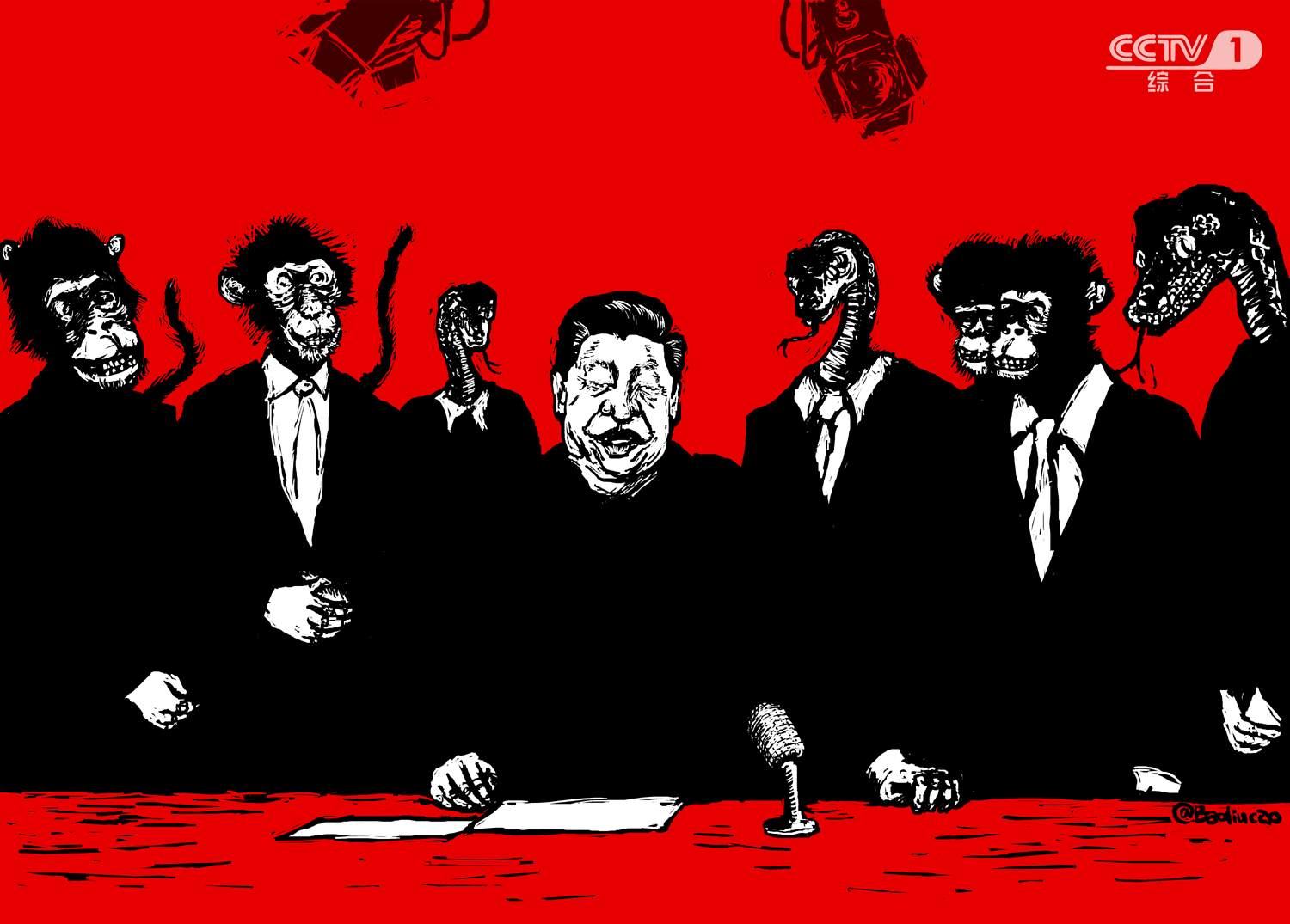
Affichage des articles dont le libellé est power struggle. Afficher tous les articles

mercredi 7 février 2018

Island Paradise Becomes Latest Flashpoint in India-China Rivalry

  • Maldives under state of emergency as president battles court
  • China, India are jockeying for influence as regime teeters
By Iain Marlow
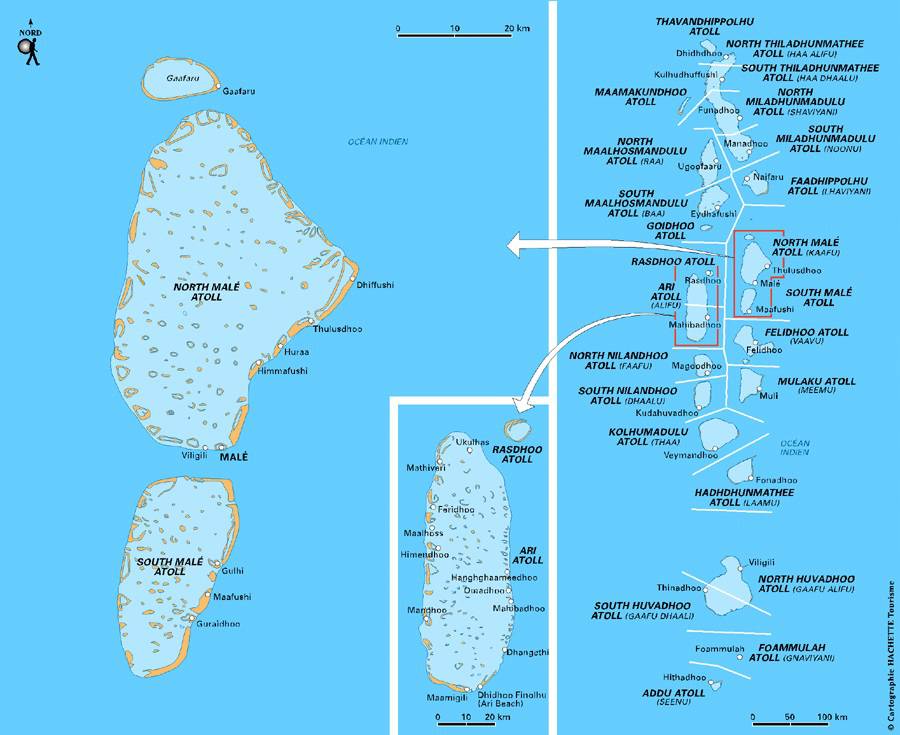


A power struggle in the Maldives, a tiny Indian Ocean nation known for scenic luxury resorts and crystal-clear blue water, is taking center stage in a wider battle for regional influence between India and China.
On Monday, President Abdulla Yameen declared a state of emergency after the Supreme Court ordered him to free political prisoners and opposition politicians he’s thrown in jail. 
Security forces then stormed the court and arrested two judges, as well as a former leader. 
The remaining judges later annulled the previous ruling, the Associated Press reported Wednesday.
The political drama has sparked concern in India, which said last week in an unusually strong statement that it’s “imperative” for the government to obey the Supreme Court. 
China, which signed a free trade agreement with the Maldives last year, said Tuesday the country of roughly 400,000 people has “the wisdom and capabilities to cope with the current situation independently.”
India, which views China as its main geopolitical foe in Asia, has been more assertive under Prime Minister Narendra Modi in pushing to maintain geo-strategic supremacy in the Indian Ocean, with backing from the U.S. and Japan. 
China, meanwhile, has expanded its influence by building ports in Sri Lanka, Pakistan and Djibouti, a small African nation that is also home to its first overseas military base.

China Outreach

“As India tries to establish itself as the preeminent power in the Indian Ocean region, the Maldives have become increasingly important,” said Constantino Xavier, a fellow at Carnegie India in New Delhi. 
Yameen has “definitely accelerated his outreach to China, to fend off pressure from the west and also reduce leverage from India.”
The Maldives has become politically volatile in recent years. 
Yameen, who has courted Chinese and Saudi investment since coming to power in an election in 2013, has been criticized by the State Department for jailing opposition politicians and eroding human rights protections.
Before the decision to annul the court ruling, Mohamed Nasheed, an exiled former Maldives president and opposition leader, had asked India’s armed forces to back an envoy that would help enforce the order, free political prisoners and secure the safety of judges. 
The U.S. has condemned the state of emergency.

No Good Options
The judiciary has acted as a democratic check on Yameen, who still enjoys control over the state’s security forces, according to Dhruva Jaishankar, a foreign policy fellow at Brookings India.
“Yameen has been trying over the last few years to consolidate his political presence,” Jaishankar said, adding this has involved seeking Chinese funding. 
“India has been tentatively backing pro-democracy forces, but is also trying not to push him into the arms of the Chinese and the Saudis.”
Beijing has become more economically important to the Maldives in recent years. 
China sent about 300,000 tourists to the Maldives in 2017, more than any other country. 
Beijing has begun financing infrastructure projects, and unidentified Chinese company recently took out a 50-year lease on an island near the capital Male to build a resort.
Concerns are growing that China may eventually engage in land reclamation in the Maldives similar to what Beijing has done in the South China Sea, according to David Brewster, an academic at the Australian National University.
“It would take a miracle to be able to turn Yameen away from China while also restoring some semblance of democracy,” Brewster said. 
“India has no good options.”

mercredi 9 novembre 2016

The enemy for China is within

In spite of all of the experience of the Chinese people over 2,000 years, they have not come up with a system of government which can deal with the effective and peaceful transfer of power. 
Real Vision TV

For one of Hong Kong’s leading political commentators, with an insider’s perspective of China’s history, it’s not the currency, capital flight or a peasant uprising that’s keeping him awake at night.
The “real Black Swan” that China has to face up to is the enemy within — in the upper echelons of the military and government — as well as its inability to transfer power peacefully and the threat of a long and bitter civil war.
TL Tsim has studied the Chinese political scene since the 1980s, with a background in journalism, including the South China Morning Post and Hong Kong Economic Journal before starting his own consultancy. 
In an interview with Real Vision TV he said the greatest misconception among its people is that Chinese dynasties are super stable structures that last a long time.

Long civil wars follow Chinese dynasties

That’s not really the case, he argued, because none of them lasted longer than the Habsburgs in Austria, who ruled for over 800 years. 
The last one in China – the Qing dynasty -- lasted 260 years, which is much shorter in comparison. People also underestimate the length of the civil wars between Chinese dynasties, which can last for 150 years, he adds.
“That is something most Chinese people do not understand. And it has a bearing on the way we go forward,” Tsim said. 
“In spite of all of the learning, and the experience of the Chinese people over 2,000 years, they have not come up with a system of government which can deal with the effective and peaceful transfer of power. 
In the West, you do it through the ballot box. So Brexit is Brexit. You accept it. 
But in China, the fight goes on.”

Considering the collapse of the Chinese communist party

The shortest dynasty of any size and power in Chinese history was the Yuan dynasty, which lasted just less than 100 years, Tsim said. 
“This government, this administration, the Chinese Communist Party, came to power in 1949. And so it's been around for 67 years."
“We don't know when something like the Russian collapse, the implosion of the former Soviet Union might take place. 
We don't know whether this is going to be the Yugoslavian model, when the country broke up into six or seven parts. 
So to speculate on the timing of it is something I do not do.
“But it is not idle to speculate on how this is going to happen. 
The most likely scenario is a power struggle over-spilling into a coup d'etat and then over-spilling into civil war. 
That would be the trajectory.”

Internal party conflict sparked Soviet breakup

The real concern for Tsim – and he said for the Chinese leaders as well– is that if you look at the breakup of the former Soviet Union, the problem was internal, arising out of disagreements within the center of the party itself.
“And this is what they need to guard against,” Tsim said. 
“This is why you've seen the arrest of Bo Xilai, the arrest of Zhou Yongkang, who was the former security czar, a member of the Politburo Standing Committee. 
Then you have the arrests of the two generals, General Xu and General Guo. 
Those are the players that could have toppled a government because they are strong. 
They have the backing of armed forces behind them”

The Chinese model is bitter long standing civil war

What was ultimately a peaceful disintegration of the former USSR, is unlikely to happen in China because there will be a fight, Tsim said. 
“They would not have sat down and talked about it and then take the decision to simply allow this to happen. 
This is not the Chinese model.
“And sadly, I think we're not going to see a Yugoslavian model either, because there they did have a civil war. 
But the civil war-- the war was small, in terms of size and scale, and didn't last very long. 
That is not the Chinese model either. 
The Chinese model is a bitter, long-standing civil war -- very destructive, very divisive. 
This is the real black swan.”

mercredi 26 octobre 2016

Chinese vendetta

Godfather Xi: Behind China's Anti-Graft Campaign, A Drive To Crush Rivals
By ANTHONY KUHN

China's ruling Communist Party is pledging tighter discipline than ever for its 88 million members and no let up in a four-year anti-corruption campaign that has seen more than 1 million officials investigated for graft.
The party's self-supervision, since it doesn't allow much independent oversight, is the focus of the party's most important meeting of the year this week. 
The four-day conclave will lay the groundwork for an expected second and final term for Xi Jinping, following a congress of party delegates next fall.
The anti-corruption drive has boosted Xi's popularity among the graft-weary populace. 
It has also cast a chill over some sectors of the economy — luxury goods, restaurants — that benefited from the wheeling and dealing of businessmen and officials.
But Xi's administration has admitted that deeper structural reforms will be needed to address the root causes of corruption, and those measures have not yet taken shape. 
Corruption remains rampant in daily life, such as the state-dominated health and education sectors, where citizens have to pay bribes to get access to top schools and hospitals.

Eliminating factions

Absent from the discussion is the fact that much of the anti-corruption campaign so far has been aimed at eliminating covert factions operating inside the party.
"These issues could, in the future, be one of regime survival," warns Boston University political scientist Joe Fewsmith.
He argues that this is how Chinese Communist Party leaders rise to power — by eliminating rival factions. 
Mao Zedong did it some seven decades ago, and Xi appears to be doing it now.
He says these winner-take-all feuds break out "because you don't really have a mechanism to sort out who legitimately rules."
It's not a subject China's leaders like to talk about in public. 
The phrase and the idea of factions is taboo to a party that proclaims its own unity and "altruism". Official literature refers to "gangs" and "cliques," not factions.
China's anti-corruption campaign "has nothing to do with a power struggle," Xi insisted in a speech in Seattle last year. 
"In this case, there is no House of Cards."
Xi was referring, of course, to the TV drama in which actor Kevin Spacey plays Frank Underwood, a conniving politician with an arsenal of dirty tricks.
Xi may deny that there's a power struggle, but experts and state media often describe the anti-graft drive as a fierce political struggle.
Zhuang Deshui, who follows the anti-corruption issue at Beijing University, says that high-ranking officials netted in the anti-graft drive did indeed pocket large chunks of the nation's wealth.
But "more importantly," he says, "they were trying to seize control of state power."

High-profile figures go down

The highest of these officials to fall so far are ex-security czar Zhou Yongkang, and ex-presidential aide Ling Jihua
Both were convicted on criminal corruption charges, not political offenses.
"There are many details of this that we don't know," adds Fewsmith, "but they are clearly being accused here by Xi of engaging in factional activity to contest some part of the party's leadership."
Both men commanded large factions which controlled parts of the government and owed personal allegiance to these two men, not the party or the state.
Zhou installed confidantes throughout the security apparatus, and in Sichuan province, where he worked as an official.
"This is why Xi Jinping had to rebuild the security system" after taking office in 2012, notes Zhuang Deshui.
State media have reported that anti-graft officials were still mopping up the remains of these two factions within the bureaucracy this year.
In an indication of the importance of factions as a target of the anti-graft drive, Zhuang estimates that nearly half of the roughly 160 officials at the Cabinet level or above netted so far in the campaign had ties to these two factions.

A long history

Factions are not allowed in the Communist Party, but they have nevertheless been a prominent feature of Chinese politics in the modern age, and for centuries before that.
For example, statesman and essayist Ouyang Xiu counseled the Renzong Emperor of the Song Dynasty that political factions have existed all along, and what's important is distinguishing between good and bad ones.
"In general," Ouyang wrote in the year 1044 AD, "gentlemen form factions on the basis of shared moral principles. Men of lesser character form them on the basis of profit."
In recent decades, some have advocated legalizing factions within the Communist Party. 
After all, they argue, party members should be allowed to group themselves based on ideas and policies. 
But unfortunately, says Beijing University's Zhuang Deshui, that's not the case.
"It would be better if these factions had common goals and ideologies," he says. 
"What concerns us is that they're only after power for its own sake."
But experts say it would be an oversimplification to say that Xi Jinping is only interested in knocking out rivals and consolidating power.
Joe Fewsmith of Boston University adds that Xi wants to change his party's political culture, restoring the discipline and loyalty he believes the party commanded under Mao Zedong, and other "revolutionaries", including Xi's own father, Xi Zhongxun
He served in a number of positions after the revolution, including vice premier, and head of the Communist Party's propaganda department.
Xi "does worry a lot about who's up and down. But, yes, he also worries about the party as an institution, and he's determined to revive those elements of the party which he associates with his father and the 1950s," says Fewsmith.
But Ren Jianming, who studies anti-corruption issues at the Beijing University of Aeronautics and Astronautics, says that besides strict party discipline, another approach is also needed: "To develop democracy within the party, allowing everyone to express their opinions and prescriptions through formal channels."
However, official news reports about this week's meeting make no mention of such an approach.
And with Xi's main rival factions quashed, it's not clear who the next big targets of the anti-corruption campaign will be.