Affichage des articles dont le libellé est Silicon Valley. Afficher tous les articles

dimanche 4 août 2019

Supreme Tech Quisling

Good for China and Google, Bad for America.
Google is sharing a military technology with America's monstrous enemy.

By Peter Thiel
DeepMind drew attention in 2016, when its AlphaGo software beat Lee Sedol, champion of the game Go.

A “Manhattan Project” for artificial intelligence is how Demis Hassabis, the founder of DeepMind, described his company in 2010, when I was one of its first investors. 
I took it as figurative grandiosity. 
I should have taken it as a literal warning sign, because that is how it was taken in foreign capitals that were paying close attention.
Now almost a decade later, DeepMind is the crown jewel of Google’s A.I. effort. 
It has been the object of intense fascination in East Asia especially since March 2016 when its AlphaGo software project beat Lee Sedol, a champion of the ancient strategic board game of Go.
Such feats notwithstanding, DeepMind, having now gone on three times longer than the original Manhattan Project, is not clearly any closer to its core goal of creating an “artificial general intelligence” that rivals or replaces humanity. 
But it is finally becoming clear that, as with nuclear fission before it, the first users of the machine learning tools being created today will be generals rather than board game strategists.
A.I. is a military technology. 
Forget the sci-fi fantasy; what is powerful about actually existing A.I. is its application to relatively mundane tasks like computer vision and data analysis. 
Though less uncanny than Frankenstein’s monster, these tools are nevertheless valuable to any army — to gain an intelligence advantage, for example, or to penetrate defenses in the relatively new theater of cyberwarfare, where we are already living amid the equivalent of a multinational shooting war.
No doubt machine learning tools have civilian uses, too; A.I. is a good example of a “dual use” technology. 
But that common-sense understanding of A.I.’s ambiguity has been strangely missing from the narrative that pits a monolithic “A.I.” against all of humanity.
A.I.’s military power is the simple reason that the recent behavior of America’s leading software company, Google — starting an A.I. lab in China while ending an A.I. contract with the Pentagon — is shocking. 
As President Barack Obama’s defense secretary Ash Carter pointed out last month, “If you’re working in China, you don’t know whether you’re working on a project for the military or not.”
No intensive investigation is required to confirm this. 
All one need do is glance at the Communist Party of China’s own constitution: Xi Jinping added the principle of “civil-military fusion,” which mandates that all research done in China be shared with the People’s Liberation Army, in 2017.
That same year, Google decided to open an A.I. lab in Beijing. 
According to Fei-Fei Li, the executive who opened it, the lab is “focused on basic A.I. research” because Google is “an A.I.-first company” in a world where “A.I. and its benefits have no borders.” All this is part of a “huge transformation” in “humanity” itself. 
Back in the United States, a rebellion among rank and file employees led Google last June to announce the abandonment of its “Project Maven” A.I. contract with the Pentagon. 
Perhaps the most charitable word for these twin decisions would be to call them naïve.
How can Google use the rhetoric of “borderless” benefits to justify working with the country whose “Great Firewall” has imposed a border on the internet itself? 
This way of thinking works only inside Google’s cosseted Northern California campus, quite distinct from the world outside. 
The Silicon Valley attitude sometimes called “cosmopolitanism” is probably better understood as an extreme strain of parochialism, that of fortunate enclaves isolated from the problems of other places — and incurious about them.
A little curiosity about China would have gone a long way, since the Communist Party is not shy about declaring its commitment to domination in general and exploitation of technology in particular. 
Of course, any American who pays attention and questions the Communist line is accused by the party of having a “Cold War mentality” — but this very accusation relies on forgetfulness and incuriosity among its intended audience.
Since 1971, the American elite’s Cold War attitude toward China’s leaders has been one of warm indulgence. 
In the 1970s and 1980s, that meant supporting China against a greater adversary, the Soviet Union. What is extremely strange is that this policy of indulgence continued and even deepened after the Soviet Union’s collapse in 1991.
A few years after the Cold War ended, American leaders started treating China the way they had treated West Germany and Japan. 
We tolerated punishing trade deficits in the 1970s and 1980s to support those two allies, and we had strategic reasons to do it. 
As for building up China in the 1990s and 2000s, America’s generosity was supposed to somehow lead to China’s liberalization. 
In reality, it led to the transfer of our industrial base to a foreign rival.In this sense, a zombie “Cold War mentality” never went away — though it certainly stopped making sense. 
Only recently, with help from Xi Jinping’s decision last year to, in effect, declare himself potential leader for life, has Donald Trump become the first president since Richard Nixon to pay attention and run a reality check on China.
Silicon Valley is not alone in its inattention to geopolitical reality; Wall Street has been eager to make excuses for Google’s naïveté. 
The timing is not coincidental; just this week American officials met their Chinese counterparts in Shanghai to negotiate a trade deal.
The flip side of China’s huge trade surplus has been America’s huge current account deficit. 
All of the dollars we send abroad that never get used to buy American goods have to go somewhere, and most go through New York’s money center banks on their way to buying financial assets. 
Since upsetting this imbalance is a threat to profits, Wall Street would prefer to cave on trade and keep Google’s stock price high while they’re at it.
But the banks’ experience of the last few decades of globalization has not been representative. 
The trade deficits that brought flows of money to Wall Street took jobs and bargaining power away from the median worker.Wages have been stagnant since the 1970s
The difference between our post-1971 era of globalization and the post-1945 midcentury boom is a breakdown in the relationship between the parts and the whole: An archipelago of inward-looking, parochial places like Wall Street and Silicon Valley have done exceedingly well for themselves while their fellow citizens have been left behind in a stagnant economy.
In the 1950s, the cliché was that “what’s good for General Motors is good for the country.” 
Google makes no such claim for itself; it would be too obviously false. 
Instead, Google says it is “committed to significantly improving the lives of as many people as possible”— a standard so vague as to defy any challenge.
By now we should understand that the real point of talking about what’s good for the world is to evade responsibility for the good of the country.

lundi 10 décembre 2018

China's theft of US intellectual property

Beyond Huawei, Venture Capitalist's Death Hurts China's Technology Quest
The loss of Zhang Shoucheng highlights tensions over Chinese venture capital investments in U.S. technology startups.
By Shuli Ren
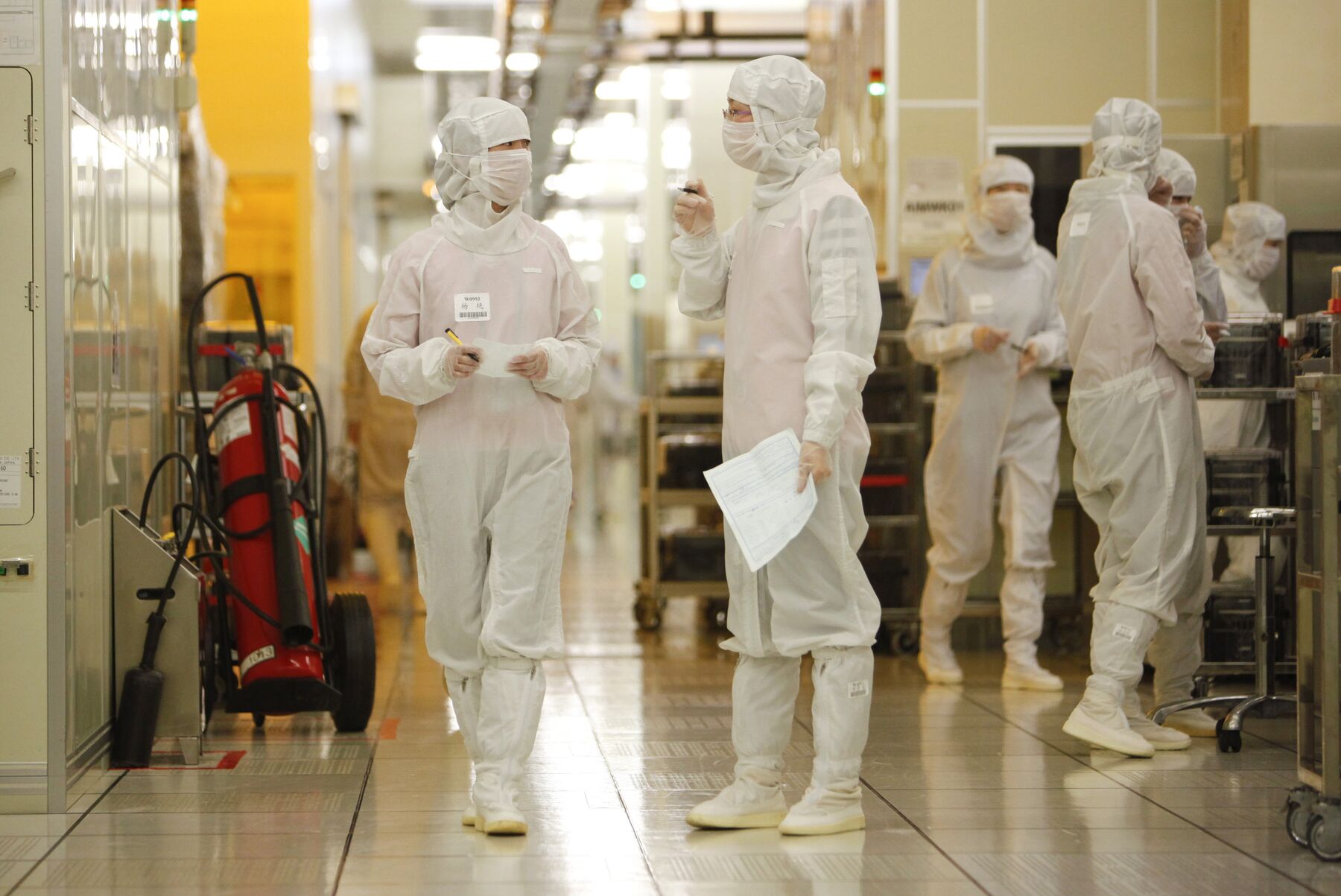
China has a wall of venture capital money, including from chipmaker Semiconductor Manufacturing International Corp.

The death of a Chinese scientist in the U.S. has passed unnoticed beside the blizzard of global headlines devoted to the Huawei arrest, yet the tragedy bears upon another important aspect of Beijing's quest for technological leadership.
Zhang Shoucheng, a Chinese venture capitalist, died on Dec. 1, the same day that Meng Wanzhou, the chief financial officer of Huawei Technologies Co., was arrested in Vancouver. 
There was speculation on Chinese social media that Zhang’s death was connected to an U.S. government investigation into his venture capital fund.
Zhang Shoucheng founded a $400 million fund that invests in Silicon Valley startups and was active in "helping" U.S.-trained Chinese researchers to return home.
His death highlights a deep pool of Beijing-backed money that has been passing under the public radar.
Consider the fund Zhang founded. 
Danhua Capital was cited in a report last month by the Office of the United States Trade Representative after an investigation into China’s technology policies and practices.
Through Zhang's Danhua Capital, China is infiltrating Silicon Valley. 
Between 2015 and 2017, 10 percent to 16 percent of venture capital deals counted Chinese as participants.

Infiltrators
The report singled out Zhang’s firm as an example of the new tactics China is using to steal U.S. technology. 
The fund lists 113 U.S. companies in its portfolio, most falling within emerging sectors that the Chinese government has identified as strategic priorities.
At least one has decided to reduce operations in Silicon Valley and open operations in China.
For years, China relied on government subsidies to encourage development of key industries. 
But starting in 2014, subsidies gave way to so-called “guidance funds”, or state-backed funds of funds that act like venture capital and private equity firms. 
As of the first half, various levels of the government had established 1,171 guidance funds, aiming to raise and deploy a staggering 5.9 trillion yuan ($858 billion).
Danhua Capital, also known as Digital Horizon Capital, is a major beneficiary of China’s shift into guidance funds. 
It counts Zhongguancun Development Group, a state-backed investment fund with more than 10 billion yuan in assets, as a major investor. 
The firm invests in artificial intelligence, big data, blockchain and other disruptive technology sectors.
One can see why these Chinese state-backed funds make the U.S. government nervous.
The scale is unprecedented. 
For instance, the $21 billion China Integrated Circuit Industry Investment Fund, established in September 2014 and nicknamed the “Big Fund,” is raising another $47 billion this year. 
In addition, there’s already evidence that shows China is abandoning fund-of-funds best practices.
In a 2014 interview, Zhongguancun, set up in the early 2000s long before the recent explosion of guidance funds, said that it would contribute to no more than 30 percent of the total capital of venture capital funds in which it invested, and that it would not interfere with fund managers' decisions. 
In other words, it would act only as a passive investor.
But the new kids on the block aren’t abiding by the old rules. 
For instance, this May, China's largest chip foundry company, Semiconductor Manufacturing International Corp., partnered with the Big Fund to establish a new 1.8 billion yuan venture capital vehicle. 
The fund is clearly in the driver’s seat: It contributed 49.5 percent of the capital and owns 15 percent of SMIC.
In August, the U.S. government signed an update to legislation for the Committee on Foreign Investment in the U.S., broadening governmental scrutiny to vetting VC-backed, and especially Chinese state-funded, investments in U.S. tech startups.
With Zhang's death, China has lost a valuable connection to the newest technology in Silicon Valley. But my bet is that Beijing won’t ease back on its aggressive theft tactics. 
The wall of money is too big and the strategic imperative to upgrade China's technology is too great.

samedi 28 juillet 2018

China Threat

San Francisco is a nirvana for China's main intelligence agency — and the center of an intensifying spy war
By John Haltiwanger
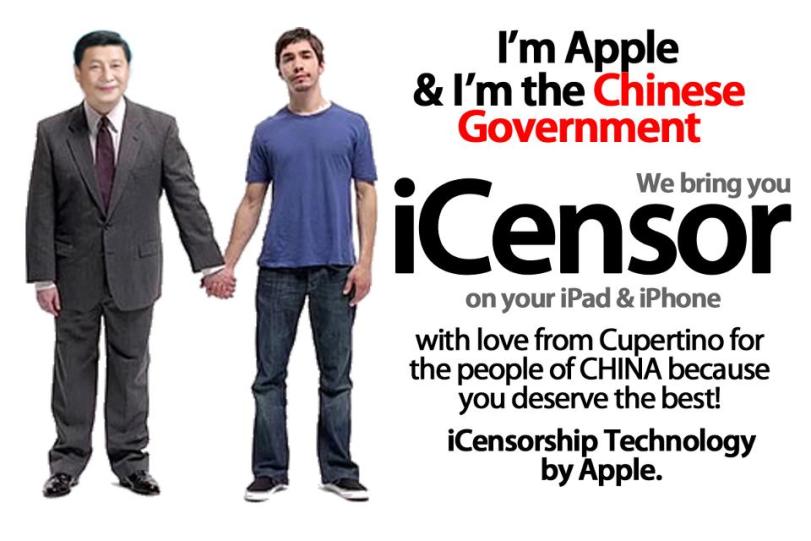
Chinese see San Francisco and Silicon Valley as top priorities in terms of economic and cyber espionage.
  • San Francisco and Silicon Valley are top priorities for Beijing's efforts to steal US trade and technological secrets.
  • California is the only state where China's main intelligence agency has a dedicated unit focused on political intelligence and influence operations.
  • Tech firms — even those with high-level government contracts — are unprepared to respond to espionage and have few incentives to report such activities.
San Francisco and Silicon Valley are top targets for China's main intelligence agency and Beijing's efforts to steal billion of dollars in US trade and technological secrets are only set to increase, according to a new report from Politico .
The intelligence offensive being launched and led by China could also signal how it intends to operate in other US states and countries in the years to come, the Politico report states.
The national conversation regarding espionage might be dominated by discussions of Russian election interference, which is certainly a serious threat, but China's activities out West are reportedly becoming more and more sophisticated.
Russia and even US allies, such as South Korea and Israel, are also quite active in the region.
But it's China's Ministry of State Security (MSS), the country's primary intelligence agency, that has placed particular emphasis on California.

China is dedicating a lot of attention to spying in California

According to the Politico report, California is the only state where the MSS has a dedicated unit focused on political intelligence and influence operations.
This is linked to the fact there are a significant number of influential Chinese immigrants and a large population of Chinese-Americans in the area, and MSS sees potential for recruiting local officials who might be able to move up the political latter.
Chinese officials also pressure Chinese nationals based in California into helping them gather intelligence on tech companies by using their family members back home as leverage or threatening students with a loss of government funding. 
The Chinese government also does this with US citizens who still have family in China.
Tech firms -- even those with high-level government contracts -- are also apparently unprepared to respond to espionage and have few incentives to report such activities, according to the Politico report. 
This is linked to the fact the local communities are quite liberal and the companies might fear being accused of profiling if they singled out Chinese employees.
There have also situations in which employees of tech companies have sold information to the Chinese or Russian governments and the executives decided not to pursue charges because they didn't want their stockholders or investors to know. 
In short, the tech companies would rather avoid the bad press than see employees face legal repercussions for espionage.
In this context, one former US official reportedly told Politico that San Francisco is like a "nirvana" for MSS.

'They have all the time in the world, and all the patience in the world'

Kathleen Puckett, who worked counterintelligence in the Bay Area from 1979 to 2007, told Politico, "The Chinese just have vast resources."
"They have all the time in the world, and all the patience in the world," Puckett added. 
"Which is what you need more than anything."
These sentiments were echoed by FBI Director Christopher Wray at the Aspen Security Forum last week.
"China from a counterintelligence perspective represents the broadest, most pervasive, most threatening challenge we face as a country," Wray said. 
The FBI director has consistently warned of China's efforts in this regard.
Similarly, a government report released on Thursday warned China, Russia, and Iran are ramping up cyber espionage efforts in the US and pose a "significant threat to America's prosperity."
"Foreign economic and industrial espionage against the United States continues to represent a significant threat to America's prosperity, security and competitive advantage," the National Counterintelligence and Security Center said. 
"China, Russia and Iran stand out as three of the most capable and active cyber actors tied to economic espionage and the potential theft of US trade secrets and proprietary information."

vendredi 29 juin 2018

China's theft of US intellectual property

China's penetration of Silicon Valley creates risks for startups
By Heather Somerville

Stanford University's campus is seen in an aerial photo in Stanford, California, U.S. on April 6, 2016.

SAN FRANCISCO -- Danhua Capital has invested in some of Silicon Valley’s most promising startups in areas like drones, artificial intelligence and cyber security
The venture capital firm is based just outside Stanford University, the epicenter of U.S. technology entrepreneurship.
Yet it was also established and funded with help from the Chinese government. 
And it is not alone.
More than 20 Silicon Valley venture capital firms have close ties to a Chinese government fund or state-owned entity, according to interviews with venture capital sources and publicly available information.
While the U.S. government is taking an increasingly hard line against Chinese acquisitions of U.S. public companies, investments in startups, even by state-backed entities, have been largely untouched.
That may well be poised to change as the U.S. Congress finalizes legislation that dramatically expands the government’s power to block foreign investment in U.S. companies, including venture investments.
The new law would give the U.S. government’s Committee on Foreign Investment in the United States (CFIUS) wide latitude to decide what sorts of deals to examine, eliminating certain ownership thresholds, with a particular focus on so-called “critical” technologies.
“The perception is that a lot of the tech transfer of worry to the U.S. security establishment is happening in the startup world,” said Stephen Heifetz, a former member of CFIUS and now a lawyer representing companies going through CFIUS review.
The latest version of the bill exempts “passive” investors, which would cover many of the limited partners that back venture firms. 
But limited partners that have some control over the business, or firms whose managing partner is a “foreign person”, could be subject to scrutiny.
The university endowments and family offices that traditionally provide most of the money for venture firms are usually one of many limited partners and have minimal if any involvement in the startups they help fund.
Chinese entities also sometimes take a passive role in big venture funds. 
But venture capital sources say that Chinese government funds often play a more influential role in the smaller venture firms they back by providing a greater percentage of their funding. 
That empowers them to request information about startups or help them to open offices in China -- potentially opening those startups to CFIUS review.
The possibility of a regulatory crackdown has caused unease in the startup world. 
Venture firm Andreessen Horowitz is counseling startups that if they raise money from a China-backed investor, they put themselves at risk of government scrutiny.
“The window for some startups to raise money from China may be closing,” said Chris Nicholson, co-founder of AI company Skymind, which has raised money from Chinese Internet group Tencent Holdings Ltd and a Hong Kong family office.

SENSITIVE AREAS
Until recently, the original source of funds for venture investments has not been an issue in Silicon Valley. 
Venture firms are not obliged to disclose who their investors are and entrepreneurs rarely ask, leading some dealmakers to question how CFIUS could keep tabs on startup investing.
Danhua Capital, which is backed by the Zhongguancun Development Group, a state-owned enterprise funded by the Beijing municipal government, has holdings in the most sensitive technology sectors.
Its investments include data management and security company Cohesity, which counts the U.S. Department of Energy and U.S. Air Force among its customers.
Drone startup Flirtey, which in May was selected by the U.S. Department of Transportation to participate in projects to help the agency integrate drones safely into U.S. air space, is also part of the Danhua portfolio.
Shoucheng Zhang, Danhua’s founder and a Stanford University physics professor, declined to answer specific questions from Reuters. 
In an email, he said: “Most of our (limited partners) are publicly listed companies in New York or Hong Kong stock exchanges. We will of course fully comply with any legislations and regulations.”
Cohesity declined to comment. 
A spokeswoman for Flirtey said Danhua’s minority investment did not come with any information rights.
The practice of investing through layers of funds, known as funds of funds, can make it all but impossible to know where money is coming from. 
Westlake Ventures, backed by the Hangzhou city government in eastern China, invests in at least 10 other Silicon Valley venture funds, including Palo-Alto based Amino Capital.
Larry Li, founder and managing partner at Amino Capital, said he took the money that was on offer when he launched his fund in 2012. 
He said he felt his firm wasn’t the kind of known quantity that could tap the big pensions and endowments.
“We weren’t going to the Harvard endowment or Yale endowment; that’s like mission impossible,” Li said. 
“You need to have some special source of funds to get started.”
China-backed funds include Oriza Ventures, which belongs to the investment arm of the Suzhou municipal government, and has backed AI and self-driving car startups. 
SAIC Capital, the venture arm of state-owned auto company SAIC Motor, has invested in Silicon Valley autonomous driving, mapping and artificial intelligence startups.
Even well-known startup accelerator 500 Startups raised part of its main fund from the Hangzhou government.
500 Startups and Oriza declined to comment, while SAIC did not respond to a request for comment.
Capital controls have slowed the flow of Chinese money into the United States since 2016, but sources say venture investments have been more resilient than sectors like real estate, in part due to the Chinese government’s focus on improving its domestic high-tech industry.

‘CROWN JEWELS’
U.S. politicians were galvanized by a Department of Defense report released last year that warns that Chinese venture investors are accessing “the crown jewels of U.S. innovation.”
The report helped guide Sen. John Cornyn, a Texas Republican who sponsored the Senate version of the CFIUS reform bill, people with knowledge of the matter said. 
A spokeswoman said Cornyn “is especially concerned with Chinese state-backed venture capital investments.”
For now, at least, President Donald Trump has backed away from his declared intention to clamp down on a wide range of Chinese technology investments through a special emergency order, saying he would leave the job to CFIUS. 
But if Congress fails to pass the bill quickly, Trump said he would use his executive powers.

jeudi 7 septembre 2017

U.S. Tech Quislings

Tech companies automate Chinese censorship around the world
By Nick Monaco and Samuel Woolley 

A troubling trend is sweeping Silicon Valley—big tech acquiescing to digital authoritarianism to gain access to the Chinese market.
In July, Apple removed VPNs from its Chinese app store and announced plans to build a data center in Guizhou to comply with China’s new draconian cybersecurity laws.
This follows Facebook’s decision months earlier to build a tool that allowed third-parties in China to suppress controversial content on its network
While these moves can be rationalized from most business perspectives, acquiescing to China’s digitally authoritarian policies for market access will have harrowing political consequences in the long term.
Apple and Facebook, two of the most powerful companies in the world, have set dangerous precedents in these decisions that risk being followed both in and outside of the tech industry. 
When big tech bends its principles to limbo into Chinese markets, it encourages other Western companies and institutions to do so as well.
The latest example is Cambridge University Press
The prominent publishing house recently removed hundreds of academic articles from the website of its publications China Quarterly and the Journal of Asian Studies, in response to Chinese authorities deeming them controversial. 
After outcry from academics and researchers, Cambridge University Press reversed its decision – but the fact remains that they were willing to censor peer-reviewed academic research.
At best, such decisions risk entrenching the status quo – China has already ranked as the lowest in the world in Internet freedom for two years running. 
 At worst, these moves encourage the omnipotent aspirations of the Chinese government to build a digital dictatorship.
Chinese AI research and production is set to supersede the US in the next few decades, especially given Trump and the GOP’s refusal to recognize the importance of scientific R&D and blue-sky research
Given this outlook, Western tech companies must consider the social ramifications of their involvement in China.
It’s undeniable that the Party may be on the brink of unprecedented automated repression – extremely few companies control the most popular apps in China, and – as experts like Richard McGregor have shown – the Chinese Communist Party always has its hands in the country’s most successful businesses
The possibilities that would exist – such as automated mining of publicly and privately available data coupled with mass sentiment analysis to predict and quell dissent in advance – have horrifying implications for human rights. 
Repressive governance could, to a large extent, become an automated affair.
China has already implemented a frightening citizenship score pilot program, which gives each citizen a “social credit score”. 
It is also known that markedly more scrupulous governments, from Mexico to Ecuador, have deployed surveillance and intelligence systems against political opposition
The possibility of AI autocracy in the People’s Republic is real, and it is one that Western tech companies are tacitly endorsing when they choose to forfeit digital rights in favor of market access.
It would also be naïve to assume this form AI autocracy will stay put in the Middle Kingdom. Authoritarians have a way of sharing repressive technology – which is why one of Egypt’s biggest telecoms companies, Orascom, owns 75% of North Korea’s only official mobile network, Koryolink. It is also why China’s cellphone company Huawei helped Iranian security forces to stifle dissent at home.
Two-thirds of all internet users worldwide live in countries where criticism of the authorities is subject to censorship. 
It would be reasonable, with this in mind, to assume that China’s AI authoritarian model—if successful—could become the soft-power the country has lacked on the world stage up to now.
The Economist rightfully pointed out in July: “Western companies are at least engaged in an open debate about the ethical implications of AI; and intelligence agencies are constrained by democratic institutions. Neither is true of China. [..] If China ends up having most influence over its future, then the state, not citizens, may be the biggest beneficiary”.
In an era where the leader of the free world is emboldening authoritarians on everything from reneging on human rights to slanderously impugning the press, the onus falls on civil society and the private sector to maintain and promote liberal democratic values at home and abroad. 
Western tech companies are one of the most powerful actors in the latter sphere, and also fund many in the former
This puts them in a unique position to promote privacy, security and digital rights around the world.
The social and political consequences of technology are externalities that must be accounted for. 
It is impossible to decouple business decisions in the tech community from responsibility for the consequences that result from them, especially as technology continues to play an ever more crucial role in individuals’ daily lives.

mercredi 14 juin 2017

Chinese Peril

U.S. weighs restricting Chinese investment in artificial intelligence
By Phil Stewart | WASHINGTON
An MQ-9 Reaper remotely piloted drone aircraft performs aerial maneuvers over Creech Air Force Base, Nevada, U.S., June 25, 2015. 
U.S. Defense Secretary James Mattis testifies before the Senate Armed Services Committee on Capitol Hill in Washington, D.C., U.S., June 13, 2017.

The United States appears poised to heighten scrutiny of Chinese investment in Silicon Valley to better shield sensitive technologies seen as vital to U.S. national security, current and former U.S. officials tell Reuters.
Of particular concern is China's interest in fields such as artificial intelligence and machine learning, which have increasingly attracted Chinese capital in recent years. 
The worry is that cutting-edge technologies developed in the United States could be used by China to bolster its military capabilities and push it ahead in strategic industries.
The U.S. government is now looking to strengthen the role of the Committee on Foreign Investment in the United States (CFIUS), the inter-agency committee that reviews foreign acquisitions of U.S. companies on national security grounds.
An unreleased Pentagon report, viewed by Reuters, warns that China is skirting U.S. oversight and gaining access to sensitive technology through transactions that currently don't trigger CFIUS review. 
Such deals include joint ventures, minority stakes and early-stage investments in start-ups.
"We're examining CFIUS to look at the long-term health and security of the U.S. economy, given China's predatory practices" in technology, said a Trump administration official, who was not authorized to speak publicly.
Defense Secretary Jim Mattis weighed into the debate on Tuesday, calling CFIUS "outdated" and telling a Senate hearing: "It needs to be updated to deal with today's situation."
CFIUS is headed by the Treasury Department and includes nine permanent members including representatives from the departments of Defense, Justice, Homeland Security, Commerce, State and Energy. 
The CFIUS panel is so secretive it normally does not comment after it makes a decision on a deal.
Under former President Barack Obama, CFIUS stopped a series of attempted Chinese acquisitions of high-end chip makers.
Senator John Cornyn, the No. 2 Republican in the Senate, is now drafting legislation that would give CFIUS far more power to block some technology investments, a Cornyn aide said.
"Artificial intelligence is one of many leading-edge technologies that China seeks and that has potential military applications," said the Cornyn aide, who declined to be identified.
"These technologies are so new that our export control system has not yet figured out how to cover them, which is part of the reason they are slipping through the gaps in the existing safeguards," the aide said.
The legislation would require CFIUS to heighten scrutiny of buyers hailing from nations identified as potential threats to national security. 
CFIUS would maintain the list, the aide said, without specifying who would create it.
Cornyn's legislation would not single out specific technologies that would be subject to CFIUS scrutiny. 
But it would provide a mechanism for the Pentagon to lead that identification effort, with input from the U.S. technology sector, the Commerce Department, and the Energy Department, the aide said.
James Lewis, an expert on military technology at the Center for Security and International Studies, said the U.S. government is playing catch-up.
"The Chinese have found a way around our protections, our safeguards, on technology transfer in foreign investment. And they're using it to pull ahead of us, both economically and militarily," Lewis said.
"I think that's a big deal."
China made the United States the top destination for its foreign direct investment in 2016, with $45.6 billion in completed acquisitions and greenfield investments, according to the Rhodium Group, a research firm. 
Investment from January to May 2017 totaled $22 billion, which represented a 100 percent increase against the same period last year, it said.

AI'S ROLE IN DRONE WARFARE
Concerns about Chinese inroads into advanced technology come as the U.S. military looks to incorporate elements of artificial intelligence and machine learning into its drone program.
Project Maven, as the effort is known, aims to provide some relief to military analysts who are part of the war against Islamic State.
These analysts currently spend long hours staring at big screens reviewing video feeds from drones as part of the hunt for insurgents in places like Iraq and Afghanistan.
The Pentagon is trying to develop algorithms that would sort through the material and alert analysts to important finds, according to Air Force Lieutenant General John N.T. "Jack" Shanahan, director for defense intelligence for warfighting support.
"A lot of times these things are flying around (and)... there's nothing in the scene that's of interest," he told Reuters.
Shanahan said his team is currently trying to teach the system to recognize objects such as trucks and buildings, identify people and, eventually, detect changes in patterns of daily life that could signal significant developments.
"We'll start small, show some wins," he said.
A Pentagon official said the U.S. government is requesting to spend around $30 million on the effort in 2018.
Similar image recognition technology is being developed commercially by firms in Silicon Valley, which could be adapted by adversaries for military reasons.
Shanahan said he was not surprised Chinese firms were making investments there.
"They know what they're targeting," he said.
Research firm CB Insights says it has tracked 29 investors from mainland China investing in U.S. artificial intelligence companies since the start of 2012.
The risks extend beyond technology transfer.
"When the Chinese make an investment in an early stage company developing advanced technology, there is an opportunity cost to the U.S., since that company is potentially off-limits for purposes of working with (the Department of Defense)," the report said.

CHINESE INVESTMENT
China has made no secret of its ambition to become a major player in artificial intelligence, including through foreign acquisitions.
Chinese search engine giant Baidu Inc launched an AI lab in March with China's state planner, the National Development and Reform Commission. 
In just one recent example, Baidu Inc agreed in April to acquire U.S. computer vision firm xPerception, which makes vision perception software and hardware with applications in robotics and virtual reality.
"China is investing massively in this space," said Peter Singer, an expert on robotic warfare at the New America Foundation.
The draft Pentagon report cautioned that one of the factors hindering U.S. government regulation was that many Chinese investments fall short of outright acquisitions that can trigger a CFIUS review. Export controls were not designed to govern early-stage technology.
It recommended that the Pentagon develop a critical technologies list and restrict Chinese investments on that list. 
It also proposed enhancing counterintelligence efforts.
The report also signaled the need for measures beyond the scope of the U.S. military, such as changing immigration policy to allow Chinese graduate students to stay in the United States after completing their studies, instead of returning home.
Venky Ganesan, managing director at Menlo Futures, concurred about the need to keep the best and brightest in the United States.
"The single biggest thing we can do is staple a green card to their diploma so that they stay here and build the technologies here – not go back to their countries and compete against us," Ganesan said.