Affichage des articles dont le libellé est Thousand Talents Programme. Afficher tous les articles

mercredi 29 janvier 2020

American Quislings

Harvard scientist lied about academic, financial ties with Chinese
Charles M. Lieber, the chair of Harvard’s chemistry department, lied about contacts with a Chinese state-run initiative that seeks to draw foreign-educated talent.
By Ellen Barry

Charles M. Lieber at an award ceremony in Jerusalem in 2012.

BOSTON — Early Tuesday morning, F.B.I. agents arrived at two of the most protected corners of Harvard University’s academic cloister, raking through a gabled house in the suburb of Lexington and a neoclassical brick building in Cambridge.
By afternoon, one of Harvard’s scientific luminaries was in handcuffs, charged with making a false statement to federal authorities about his financial relationship with the Chinese government, and especially his participation in its Thousand Talents program, a campaign to attract foreign-educated scientists to China.
The arrest of Charles M. Lieber, the chair of Harvard’s department of chemistry and chemical biology, signaled a new, aggressive phase in the Justice Department’s campaign to root out scientists who are stealing research from American laboratories.
For months, news has been trickling out about the prosecution of scientists, mainly Chinese graduate students and researchers working in American laboratories. 
But Lieber represents a different kind of target, a star researcher who had risen to the highest reaches of the American academic hierarchy.
Lieber, a leader in the field of nanoscale electronics, has not been accused of sharing sensitive information with Chinese officials, but rather of hiding — from Harvard, from the National Institutes of Health and from the Defense Department — the amount of money that Chinese funders were paying him.
Lieber’s lawyer, Peter Levitt, made no comment after a preliminary hearing in federal court in Boston on Tuesday.
His arrest sent shock waves through research circles.
“This is a very, very highly esteemed, highly regarded investigator working at Harvard, a major U.S. institution, at the highest rank he could have, so, all the success you can have in this sphere,” said Ross McKinney Jr., chief scientific officer of the Association of American Medical Colleges. 
“It’s like, when you’ve got it all, why do you want more?”
McKinney described anxiety among his colleagues that scientists will be scrutinized over illegitimate sources of international funding.
“We worry that, slowly but surely, we’re going to be criminally charged. This is a big deal. We all could end up in jail.”
Lieber, 60, was charged with one count of making a false or misleading statement, which carries a maximum sentence of five years in prison. 
He appeared in court on Tuesday wearing the outfit he had put on to head to his office at Harvard: a Brooks Brothers polo shirt, cargo pants and hiking boots. 
He appeared subdued as he flipped through the charge sheet. 
Levitt, his lawyer, said it was his first opportunity to read the charge against him.
Harvard said Lieber had been placed on indefinite administrative leave.“The charges brought by the U.S. government against Lieber are extremely serious,” said Jonathan Swain, a spokesman for the university. 
“Harvard is cooperating with federal authorities, including the National Institutes of Health, and is initiating its own review of the misconduct.”
Lieber was one of three scientists to be charged with crimes on Tuesday.

Harvard Chinese criminals
Zaosong Zheng, a Harvard-affiliated cancer researcher was caught leaving the country with 21 vials of cells stolen from a laboratory at Beth Israel Deaconess Hospital in Boston, according to the authorities. 
He had admitted that he had planned to turbocharge his career by publishing the research in China under his own name. 
He was charged with smuggling goods from the United States and with making false statements, and was being held without bail in Massachusetts after a judge determined that he was a flight risk. 
His lawyer has not responded to a request for comment.

The third was Yanqing Ye, who had been conducting research at Boston University’s department of physics, chemistry and biomedical engineering until last spring, when she returned to China. 
She hid the fact that she was a lieutenant in the People’s Liberation Army, and continued to carry out assignments from Chinese military officers while at B.U.
Yanqing was charged with visa fraud, making false statements, acting as an agent of a foreign government and conspiracy.
She was in China and was not arrested.
Prosecutors made it clear that the charges announced on Tuesday were part of a bigger crackdown on researchers working with the Chinese government.
“No country poses a greater, more severe or long-term threat to our national security and economic prosperity than China,” said Joseph Bonavolonta, special agent in charge of the F.B.I.’s Boston field office. 
“China’s communists’s goal, simply put, is to replace the U.S. as the world superpower, and they are breaking the law to get there.”
He called Massachusetts, with its cluster of elite universities and research institutions, “a target-rich environment.”

Charging documents in the case describe Lieber’s growing commitments in China, and efforts to hide them from his employers in the United States.
In 2011, the documents say, he signed an agreement to become a “strategic scientist” at Wuhan University of Technology in China, entitling him to a $50,000 monthly salary, $150,000 in annual in living expenses and more than $1.5 million for a second laboratory in Wuhan. 
In 2013, he celebrated the founding of a joint laboratory, the WUT-Harvard Joint Nano Key Laboratory.
He was informed in 2012 that he had been selected to participate in the Thousand Talents plan, the China-run program.
In 2015, Harvard officials discovered that Lieber was leading a laboratory at Wuhan University, and informed him that the use of Harvard’s name and logo was a violation of university policy. 
Lieber then distanced himself from the project, but continued to receive payment.Then in 2017 he was named a university professor, Harvard’s highest faculty rank, one of only 26 professors to hold that status. 
The same year, he earned the N.I.H. Director’s Pioneer Award for inventing syringe-injectable mesh electronics that can integrate with the brain.
Investigators from the Defense Department — which had extended $8 million in grants to Lieber — began questioning him in 2018 about secondary sources of income, prosecutors said.
Lieber told them that he was aware of China’s Thousand Talents program, but had never been invited to participate, prosecution documents say. 
Two days after that conversation, the documents say, Lieber asked a laboratory associate to help him identify web pages in which he was named as the head of the Chinese lab.
“I lost a lot of sleep worrying all of these things last night and want to start taking steps to correct sooner than later,” he wrote in an email to a research colleague that was cited by prosecutors. 
“I will be careful about what I discuss with Harvard University, and none of this will be shared with government investigators at this time.”
Last year, Harvard was required to submit a detailed report about Lieber to N.I.H., which had provided $10 million in grants for his research projects. 
He told university officials that he had “no formal association” with the Wuhan University of Technology, prosecutors said, and that he “is not and has never been” a participant in the Thousand Talents program.The campaign to scrutinize scientists’ foreign funding is a relatively new one.
Late in 2018, Jeff Sessions, then the attorney general, announced that the United States was “standing up to the deliberate, systematic and calculated threats posed, in particular, by the communist regime in China.”
As a result, researchers are adjusting to a higher level of scrutiny about foreign funding than they faced in the past, said Derek Adams, a former federal prosecutor who specialized in civil fraud.
“The problem here, in my view, is that in 2018 there was a material change in the way the F.B.I. and the agencies were approaching this issue,” said Adams, now a partner in the law firm Feldesman Tucker Leifer Fidell.
In many cases, he said, “they’re looking at conduct that occurred many years ago. For an individual that may have had an obligation to disclose, it may not have been front at center at that time.”
Frank Wu, a law professor and former president of the Committee of 100, an organization of communist Chinese-Americans, has criticized the recent prosecutions as “potentially devastating to American science, because the number of people who have some connection to China is so vast.” Until recently, he said, such collaborations were considered healthy.
“These rules are new rules,” he said.

lundi 4 novembre 2019

Born to Spy: The Chinese and Sino-American Massive Threat


Scientists With Links to China Are Stealing Biomedical Research
Nearly 200 investigations are underway at major academic centers. Researchers of Chinese descent are usual suspects.
By Gina Kolata

The M.D. Anderson Cancer Center in Houston. Administrators have investigated five faculty members on suspicions that they stole intellectual property or violated funding rules.


The Sino-American scientist at M.D. Anderson Cancer Center in Houston was hardly discreet. 
“Here is the bones and meet of what you want,” he wrote in a misspelled email to researchers in China.
Attached was a confidential research proposal, according to administrators at the center. 
The scientist had access to the document only because he had been asked to review it for the National Institutes of Health — and the center had examined his email because federal officials had asked them to investigate him.
The N.I.H. and the F.B.I. have begun a vast effort to root out scientists who are stealing biomedical research for China from institutions across the United States.
Almost all of the incidents they uncovered and that are under investigation involve scientists of Chinese descent, including naturalized American citizens, stealing for China.
Seventy-one institutions, including many of the most prestigious medical schools in the United States, are now investigating 180 individual cases involving theft of intellectual property. 
The cases began after the N.I.H., prompted by information provided by the F.B.I., sent 18,000 letters last year urging administrators who oversee government grants to be vigilant.
So far, the N.I.H. has referred 24 cases in which there may be evidence of criminal activity to the inspector general’s office of the Department of Health and Human Services, which may turn over the cases for criminal prosecution. 
“It seems to be hitting every discipline in biomedical research,” said Dr. Michael Lauer, deputy director for extramural research at the N.I.H.
China is exploiting the openness of the American scientific system to engage in wholesale economic espionage. 
The scale of the dragnet has sent a tremor through the ranks of suspected Sino-American and Chinese biomedical researchers.
“You could take a dart board with medical colleges with significant research programs and, as far as I can tell, you’d have a 50-50 chance of hitting a school with an active case,” said Dr. Ross McKinney Jr., chief scientific officer of the Association of American Medical Colleges.
The theft involves not military secrets, but scientific ideas, designs, devices, data and methods that may lead to profitable new treatments or diagnostic tools.
Some researchers under investigation have obtained patents in China on work funded by the United States government and owned by American institutions, the N.I.H. said. 
Others are suspected of setting up labs in China that secretly duplicated American research, according to government officials and university administrators.
The N.I.H. has not named most of the scientists under investigation, citing due process, and neither have most of the institutions involved. 
“As with any personnel matter, we typically do not share names or details of affected individuals,” said Brette Peyton, a spokeswoman at M.D. Anderson.
But roughly a dozen Chinese scientists are known to have resigned or been fired from universities and research centers across the United States so far. 
Some have declined to discuss the allegations against them; others have denied any wrongdoing.
In several cases, Chinese scientists supported by the N.I.H. or other federal agencies are accused of accepting funding from the Chinese government in violation of N.I.H. rules. 
Some have said that they "did not know" the arrangements had to be disclosed or were forbidden.
“How would you feel if you were a U.S. scientist sending your best idea to the government in a grant application, and someone ended up doing your project in China?” said Dr. Ross McKinney, chief scientific officer at the Association of American Medical Colleges.
In August, Feng Tao, 48, a chemist at the University of Kansas known as Franklin, was indicted on four counts of fraud for failing to disclose a full-time appointment at a Chinese university while receiving federal funds.
His lawyer, Peter R. Zeidenberg, declined to comment on Tao’s case but suggested that prosecutors were targeting academics nationwide who had made "simple" mistakes.
“Professors, they get their summers off,” he said in an interview.
“Oftentimes they will take appointments in China for the summer. They don’t believe they have to report that.”
The investigations have left Chinese and Sino-American academics feeling “that they are at risk,” said Frank Wu, a former president of the Committee of 100, an organization of pro-Beijing Sino-American scientists.
Wu and other critics said the cases recalled the government’s investigation of Wen Ho Lee, a scientist at the Los Alamos National Laboratory who was accused in 1999 of stealing nuclear warhead plans for China and incarcerated for months.
He pleaded guilty to a single felony count of "mishandling" secrets.
Dr. Lauer and other officials said the investigations into biomedical research have uncovered clear evidence of wrongdoing.
In one case at M.D. Anderson, a Chinese scientist who had packed a suitcase with computer hard drives containing research data was stopped at the airport on the way to China, Dr. Lauer and officials at the center said.
Overall, they argued, the cases paint a disturbing picture of economic espionage in which the Chinese government has been taking advantage of a biomedical research system in the United States built on trust and the free exchange of ideas.
“How would you feel if you were a U.S. scientist sending your best idea to the government in a grant application, and someone ended up doing your project in China?” Dr. McKinney asked.
‘This was something we had never seen.’

The F.B.I. director Christopher Wray appearing before the Senate Judiciary Committee on July 23.

Concern at the N.I.H. about the theft of biomedical research stretches back at least to June 2016, when the F.B.I. contacted N.I.H. officials with unusual questions about the American scientific research system.
How did peer review happen? 
What sort of controls were in place? 
“They needed to know how our system worked as compared to, say, national defense,” Dr. Lauer said.
The F.B.I. declined to discuss ongoing investigations, including why it initiated so many and how targets were selected. 
But Christopher Wray, director of the F.B.I., told the Senate Judiciary Committee in July that China is using “nontraditional collectors” of intelligence, and is attempting to “steal their way up the economic ladder at our expense.”
The F.B.I.’s national field office for commercial counterespionage, in Houston, asked administrators from Texas academic and medical centers to attend classified meetings in the summer of 2018 to discuss evidence of intellectual property theft. 
The administrators were given emergency security clearances and told to sign nondisclosure agreements.
Then, acting on information from the F.B.I. and other sources, the N.I.H. in late August 2018 began sending letters to medical centers nationwide asking administrators to investigate individual scientists.
“This was something we had never seen,” Dr. Lauer said. 
“It took us a while to grasp the seriousness of the problem.”
Some of the first inklings of trouble were discovered by administrators at M.D. Anderson, a prominent cancer research and treatment center. 
Between August 2018 and January 2019, five letters arrived at the center from the N.I.H. asking administrators to investigate the activities of five Chinese faculty members.
Dr. Peter Pisters, president of the cancer center, said he and his colleagues reviewed faculty emails, and they turned up disturbing evidence.
Among the redacted emails provided to The New York Times was one by a Chinese scientist planning to whisk proprietary test materials to colleagues in China. 
“I should be able to bring the whole sets of primers to you (if I can figure out how to get a dozen tubes of frozen DNA onto an airplane),” he wrote.

Chinese moles: Li Xiao-Jiang, right, and Li Shihua in Guangzhou, China. They were employed at Emory University in Atlanta for more than 20 years.

The redacted M.D. Anderson emails also suggest that a Chinese scientist at the medical center sent data and research to the Chinese government in exchange for a $75,000 one-year “appointment” under the Thousand Talents Program, which Beijing established a decade ago to recruit scientists to Chinese universities.
Researchers are legally obligated to disclose such payments to the N.I.H. and to their academic institutions, and the scientist had not done so, according to an internal report on the investigation.
Still another Chinese scientist at M.D. Anderson had forwarded a confidential research proposal to a contact in China, writing, “Attached please find an application about mitochondrial DNA mutation in tumor development. Please keep it to yourself.”
Administrators at M.D. Anderson said three of the Chinese scientists had resigned and one had retired. 
The fifth case involved a scientist whose transgressions may not be serious enough to be fired.
Xifeng Wu, who left M.D. Anderson and is now dean of the School of Public Health at Zhejiang University in China, declined to comment on the circumstances of her resignation. 
“I would like to focus on my research,” she said.
M.D. Anderson is not the only institution wrestling with Chinese scientific misconduct.
Last month, two married scientists, Yu Zhou, 49, and Li Chen, 46, who had worked at Nationwide Children’s Hospital in Columbus, Ohio, for a decade, were indicted on charges that they stole technology developed at the hospital and used it to apply for Chinese patents and set up biotech companies in China and the United States.
In May, two scientists at Emory University in Atlanta, Li Xiao-Jiang and Li Shihua, were fired after administrators discovered that Li Xiao-Jiang had received funding from China’s Thousand Talents Program.
The couple had worked there for more than two decades, researching Huntington’s disease. University administrators declined to provide further information.
In July, Kang Zhang, the former chief of eye genetics at the University of California, San Diego, resigned after local journalists disclosed his involvement with a biotech firm in China that relies on research he had performed at the university.
Zhang, also a member of the Thousand Talents Program, did not tell the university about his role. 

Dr. Michael Lauer, deputy director for extramural research at the National Institutes of Health in Bethesda, Md. “We know there are companies formed in China for which we funded the research,” he said.

What is coming to light, Dr. Lauer said, is “a tapestry of incidents.”
Start-up companies in China were founded on scientific and medical technology that the N.I.H. developed with taxpayer money. 
“We know there are companies formed in China for which we funded the research,” Dr. Lauer said.
Scientists of Chinese descent also secretly received patents in China for research conducted in the United States, according to Dr. Lauer, and researchers in the Thousand Talents Program signed contracts that require them to provide the Chinese government with confidential results obtained in the United States or other lab discoveries.
“If the N.I.H. funded it, it should be available to U.S. taxpayers,” said Dr. McKinney, of the Association of American Medical Colleges. 
“But if a project is also funded in China, it is moving intellectual property to China.”

Chinese and Sino-American Massive Threat

The National Institutes of Health in Bethesda, Md. 

Federal and academic officials stress that they are not targeting Chinese researchers on the basis of their ethnicity. 
But the F.B.I.’s silence regarding how so many investigations began has exacerbated concern that the government’s efforts to uncover economic espionage may tar all Chinese and Sino-American scientists.
With the Trump administration imposing tariffs intended to punish violations of intellectual property rights, Wu sees a sharp reversal in attitudes about China and the Chinese.
“I am getting calls and emails constantly now from ethnic Chinese — even those who are U.S. citizens — who feel suspected,” he said. 
To Dr. Lauer, the charges of racism are unfounded. 
“Not all the foreign influence cases involve China,” he said. 
“But the vast majority do.”
The real question, he added, is how to preserve the open exchange of scientific ideas in the face of growing security concerns. 
At M.D. Anderson, administrators are tightening controls to make data less freely available.
People can no longer use personal laptops on the wireless network. 
The center has barred the use of flash drives and disabled USB ports. 
And all of its employees’ computers can now be monitored remotely.
The N.I.H. is clamping down, too. 
It recommends that reviewers of grant applications have limited ability to download or print them. Those traveling to certain regions should use loaner computers, it says, and academic institutions should be alert to frequent Chinese travel by scientists, or frequent publishing with colleagues outside the United States.
The National Science Foundation has commissioned an independent scientific advisory group to recommend ways of balancing openness and security, and warned scientists it funds that they are prohibited from participating in programs like China’s Thousand Talents Program.
The F.B.I. has given research institutions tools to scan emails for keywords in Mandarin that might tip off administrators to breaches, according to Dr. McKinney.
“The effects this will have on long-term, trusting relationships are hard for us to face,” he said. 
“We just are not used to systematic cheating.”

mardi 28 mai 2019

Chinese espionage: US lab scientist lying about China contact

  • Scientist in New Mexico accused of concealing truth about involvement in China’s Thousand Talents Programme
  • The state-run programme has added to US concerns about espionage from China
Associated Press

China’s Thousand Talents Programme aids the transfer of American technology and know-how to China.


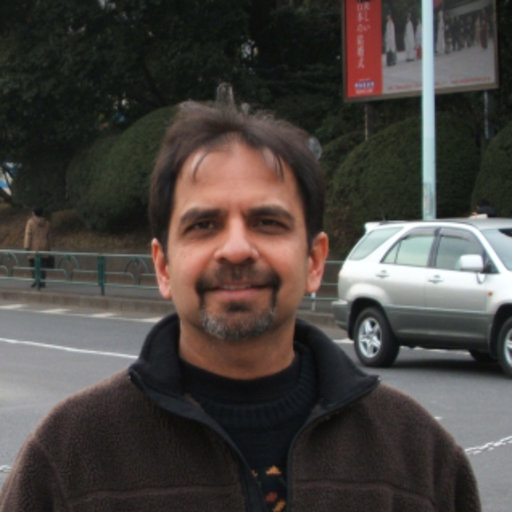
Chinese spy Turab Lookman

A scientist for a US laboratory in New Mexico is scheduled to appear in court on Tuesday on charges that he lied about contact he had with a state-run programme in China that seeks to draw foreign-educated talent.
Turab Lookman, who lives in Santa Fe and until recently worked at the Los Alamos National Laboratory, was asked on an employment questionnaire and by federal officials if he had been recruited by China’s Thousand Talents Programme or applied to work there, authorities said.
He is accused in an indictment filed last week of falsely stating three times between November 2017 and September 2018 that he had not.
Thousand Talents is a programme established by China to recruit people with access to and knowledge of foreign technology and intellectual property. 
For years, it was known as one of many state initiatives aimed at reversing a decades-long brain drain in China.
Earlier this year, a Chinese research oceanographer with the National Oceanic and Atmospheric Administration (NOAA) was sentenced to time served in Florida for working for the US agency and two China programmes, one of which was Thousand Talents.


Chinese spy Chunzai Wang

Chunzai Wang’s sentence came after he pleaded guilty to a charge of accepting a salary from another source while working for NOAA.
Lookman was arrested on Thursday on charges of making false statements, and faces up to five years in prison if convicted, according to the US attorney’s office.
His hearing on Tuesday morning in Albuquerque is being held to determine whether he should be detained as he awaits trial.
Court records did not yet list a lawyer for Lookman.
The Albuquerque Journal reported that Lookman began working in 1999 at the laboratory in Los Alamos.
The once-secret city in the mountains of northern New Mexico is where the atomic bomb was developed decades ago as part of the Manhattan Project.
The laboratory is now tasked with ensuring the safety of the nation’s nuclear stockpile, reducing weapons threats and tackling energy, infrastructure, health and security problems.

Chinese-hunt: Emory University in Atlanta fires two Chinese over undisclosed funding ties to China

Sackings come after investigation into researchers at dozens of colleges financed by the National Institutes of Health
By Lu Zhenhua

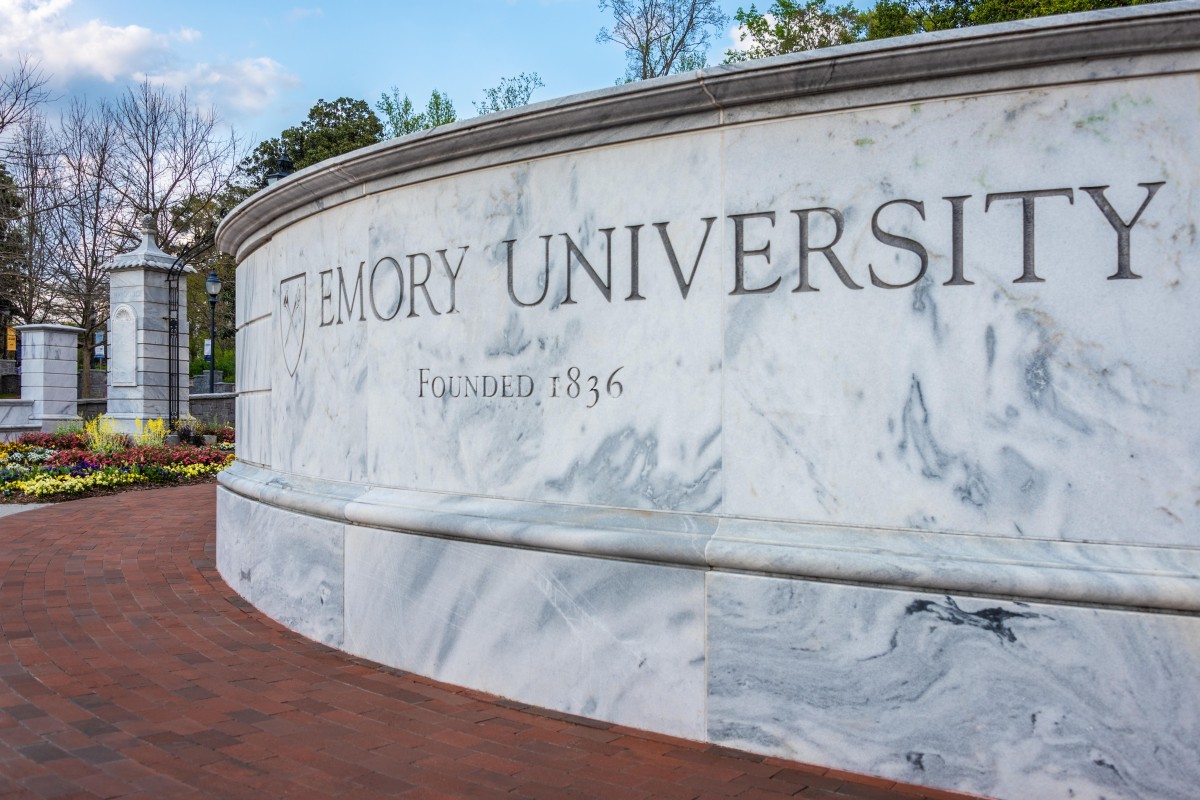
Emory University in Atlanta, Georgia, said it sacked two scientists over their funding and research ties to China.

Emory University in Atlanta, Georgia, has sacked two Chinese scientists for failing to disclose their sources of overseas financing and research ties in China.
The university said on Thursday that an investigation revealed that the two Chinese faculty members had “failed to fully disclose foreign sources of research funding and the extent of their work for research institutions and universities in China”.
“Emory has shared this information with the National Institutes of Health (NIH), and the faculty members are no longer employed at Emory,” the statement said, without naming the two.
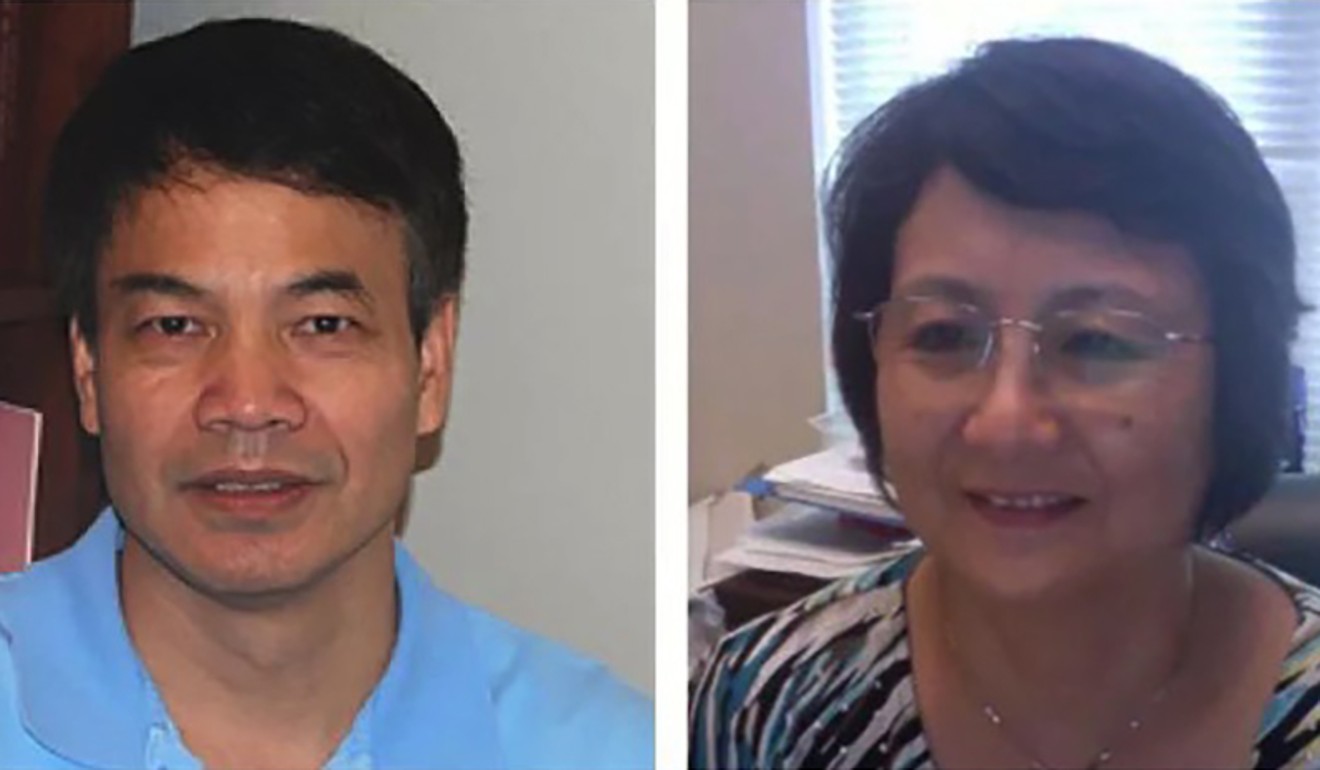
Chinese science website Zhishi Fenzi identified the scientists as Li Xiaojiang and his wife, Li Shihua, who were professors in the university’s department of human genetics.
Quoting unnamed members of Li Xiaojiang’s research team, the website said the university shut down his laboratory on May 16 while he was on leave in China, seizing computers and documents and questioning other staff about the professors’ ties with China.
The profiles of both professors have been removed from the university’s website along with the homepage for Emory’s Li Laboratory.
The action came after the NIH, the main funding agency for biomedical and public health research in the US, started investigating the foreign ties of NIH-funded researchers at more than 55 US institutions, including Emory.
NIH director Francis Collins told a US Senate hearing in early April that the investigation found “egregious instances” of violation of rules for funding disclosure and intellectual property theft.
Li Xiaojiang had worked at Emory for more than two decades and led the university’s research on gene-editing technology, establishing on a pig model for treating Huntington’s disease, a fatal genetic disorder that causes the progressive breakdown of nerve cells in the brain.
He had been selected as a member of the Thousand Talents Programme, a Chinese government-backed scheme to encourage leading professionals to work in China. 
He previously worked for the Institute of Genetics and Developmental Biology at the Chinese Academy of Sciences.
Reports on the website of Jinan University in Guangzhou indicate that Li Xiaojiang heads a research team at the university, where his wife is also a visiting scholar.

Intellectual property thieves: Li Xiaojiang (left) and Li Shihua (right)

In Atlanta, Emory denied that Chinese researchers had been singled out.
“It is important to note that Emory remains committed to the free exchange of ideas and research,” university spokesman Vince Dollard said.
“At the same time, Emory also takes very seriously its obligation to be a good steward of federal research dollars and to ensure compliance with all funding disclosure and other requirements.”
Chinese academics, engineers and companies have faced new challenges as tensions between China and the US have risen.
The NIH declined to reveal internal deliberations about a specific case, but said that in general it identified threats in three ways: notification by the FBI, an NIH-funded institution or an anonymous tip.
“Importantly, individuals that are being reviewed are not all of Chinese ethnicity. However, China’s Thousands Talents Programme is a known prominent player,” the NIH Office of Extramural Research said in a statement.
Washington denied the 10-year visas of a number of Chinese "experts" over allegations that they were spying for Chinese intelligence agencies. 
And, in addition to blacklisting Chinese telecommunications giant Huawei Technologies, the administration of US President Donald Trump is considering blocking more Chinese technology companies from the American market, according to US media reports.