Affichage des articles dont le libellé est human rights abuses in China. Afficher tous les articles

mercredi 20 novembre 2019

International Duty of Interference in China which Violates Human Rights

U.S. Senate passes Hong Kong rights bill backing protesters
By Richard Cowan, Patricia Zengerle

The U.S. Senate unanimously passed legislation on Tuesday aimed at protecting human rights in Hong Kong amid a crackdown on a pro-democracy protest movement.
Protesters are seen after leaving the campus of the Hong Kong Polytechnic University (PolyU), in Hong Kong, China November 19, 2019. 

Following the voice vote, the “Hong Kong Human Rights and Democracy Act” will go to the House of Representatives, which approved its own version last month.
The two chambers will have to work out their differences before any legislation can be sent to Donald Trump for his consideration.
“The people of Hong Kong see what’s coming -- they see the steady effort to erode the autonomy and their freedoms,” Republican Senator Marco Rubio said at the start of the brief Senate debate, accusing Beijing of being behind the “violence and repression” in the Asian financial hub.
The Senate passed a second bill, also unanimously, that would ban the export of certain crowd-control munitions to Hong Kong police forces. 
It bans the export of items such as tear gas, pepper spray, rubber bullets and stun guns.
Under the first Senate bill, U.S. Secretary of State Mike Pompeo would have to certify at least once a year that Hong Kong retains enough autonomy to qualify for special U.S. trading consideration that bolsters its status as a world financial center. 
It also would provide for sanctions against officials responsible for human rights violations in Hong Kong.
There was no immediate response from the White House, which has yet to say whether Trump would approve the Hong Kong Human Rights bill. 
A U.S. official said recently that no decision had been made, but the unanimous Senate vote could make a veto more difficult for the Republican president.
The official, who spoke on condition of anonymity, said if the measure got to Trump’s desk there would probably be an intense debate between Trump aides worried it could undermine trade talks with China and those who believe it is time to take a stand against China on human rights and Hong Kong’s status.
In Beijing on Wednesday, China condemned the passage of the Hong Kong Human Rights and Democracy Act.
Pompeo said on Monday the United States was gravely concerned about Hong Kong’s deepening unrest and violence, urging the city’s government to tackle public concerns and China to honor the promises it made to maintain liberties after taking back the territory from British rule in 1997.
Pompeo addressed the issue again on Tuesday before leaving the United States for a NATO meeting in Brussels.
“We continue to urge everyone to do this peacefully,” he told reporters. 
“There is a political resolution of this that is achievable, we hope that’ll be the path forward.”
Demonstrators are angry at what they see as Chinese meddling in the freedoms promised to Hong Kong when Britain handed it back to China.
Senate aides said they expected the legislation eventually would move forward as an amendment to a massive defense bill, the National Defense Authorization Act, expected to pass Congress later this year.

Detained protesters lay on the floor after they tried to leave Hong Kong Polytechnic University (PolyU) campus, in Hong Kong, China November 19, 2019. 

Demonstrators in Hong Kong have been protesting in the streets amid increasing violence and fears that Beijing will ratchet up its response to stop the civil disobedience.
Following passage of the bill, Senate Democratic Leader Chuck Schumer said, “We have sent a message to Xi Jinping: Your suppression of freedom, whether in Hong Kong, in northwest China or in anywhere else, will not stand.“
You cannot be a great leader -- and you cannot be a great country -- when you oppose freedom, when you are so brutal to the people of Hong Kong, young and old, who are protesting.”
East Turkestan, in northwest China, is home to many mostly Muslim Uighurs, large numbers of whom have been detained in thousands of concentration camps.
Trump prompted questions about his commitment to protecting freedoms in Hong Kong when he referred in August to the mass street protests as “riots” that were a matter for China to deal with.
Trump has since urged China to handle the issue humanely, warning that anything bad that happened in Hong Kong could hurt talks to end a trade war between the world’s two largest economies.

mercredi 19 avril 2017

Richard Gere is not in big movies anymore because China hates him

By Aine Ryan
Richard Gere hasn't made a big studio movie in nearly a decade, and China is to blame.
"There are definitely movies that I can't be in because the Chinese will say, 'Not with him,'" Richard told The Hollywood Reporter.
"I recently had an episode where someone said they could not finance a film with me because it would upset the Chinese."
The Pretty Woman star's remarks follow the Wall Street Journal's declaration that "You Can’t Make Movies Without China," noting that the country's $6.6 billion box-office total last year came second only to the United States'.
China's disdain for Richard stems from the 67-year-old's political remarks at the 1993 Academy Awards.
While presenting an award for art direction, he went off-script to protest China's occupation of Tibet and its "horrendous, horrendous human rights situation."
Then, in 1997, Richard starred in the thriller Red Corner as an American businessman who falls foul of China's legal system when he is wrongfully accused of murder.
"Everyone was happy with the film," Richard said. 
"I get calls from the heads of the studio. Went on Oprah. Then, out of nowhere, I get calls saying, 'We don't want you doing press.' MGM wanted to make an overall deal with the Chinese. China told them, 'If you release this film, we're not buying it.' And so, they dumped it."
That year, he was given a lifelong ban from entering China and soon found the backlash creeping into every aspect of his career.
"There was something I was going to do with a Chinese director, and two weeks before we were going to shoot, he called saying, 'Sorry, I can't do it,'" the American Gigolo and Chicago star revealed. 
"We had a secret phone call on a protected line. If I had worked with this director, he, his family would never have been allowed to leave the country ever again, and he would never work."
In 2008, Richard called for a boycott of the Beijing Olympics. 
He also continues to support the cause through his two foundations, the International Campaign for Tibet and The Gere Foundation in New York.
The star – who is currently busy with two small budget feature films, Norman and The Dinner – has accepted his Hollywood fate.
"I'm not interested in playing the wizened Jedi in your tentpole," he said. 
"I was successful enough in the last three decades that I can afford to do these [smaller films] now."

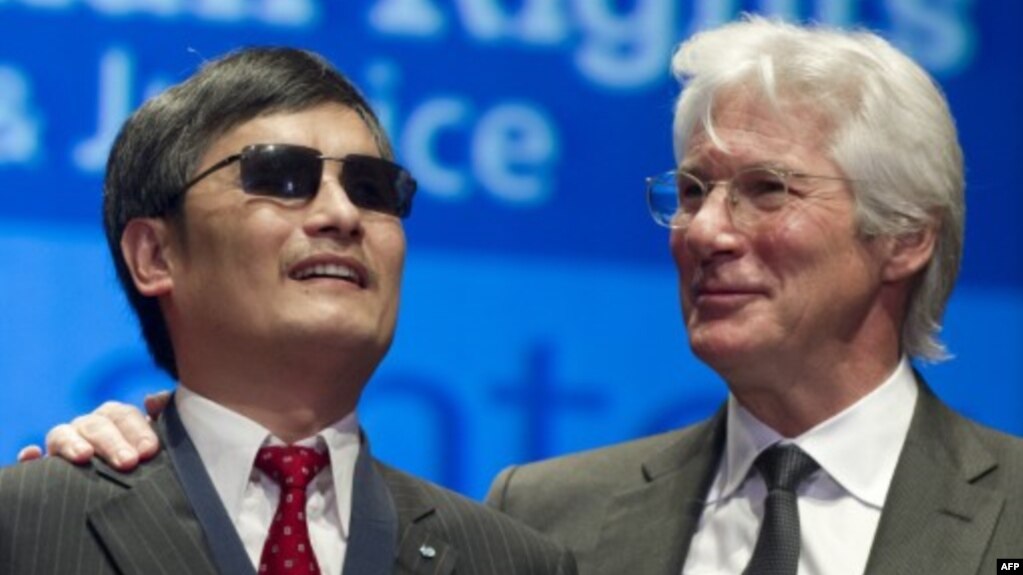
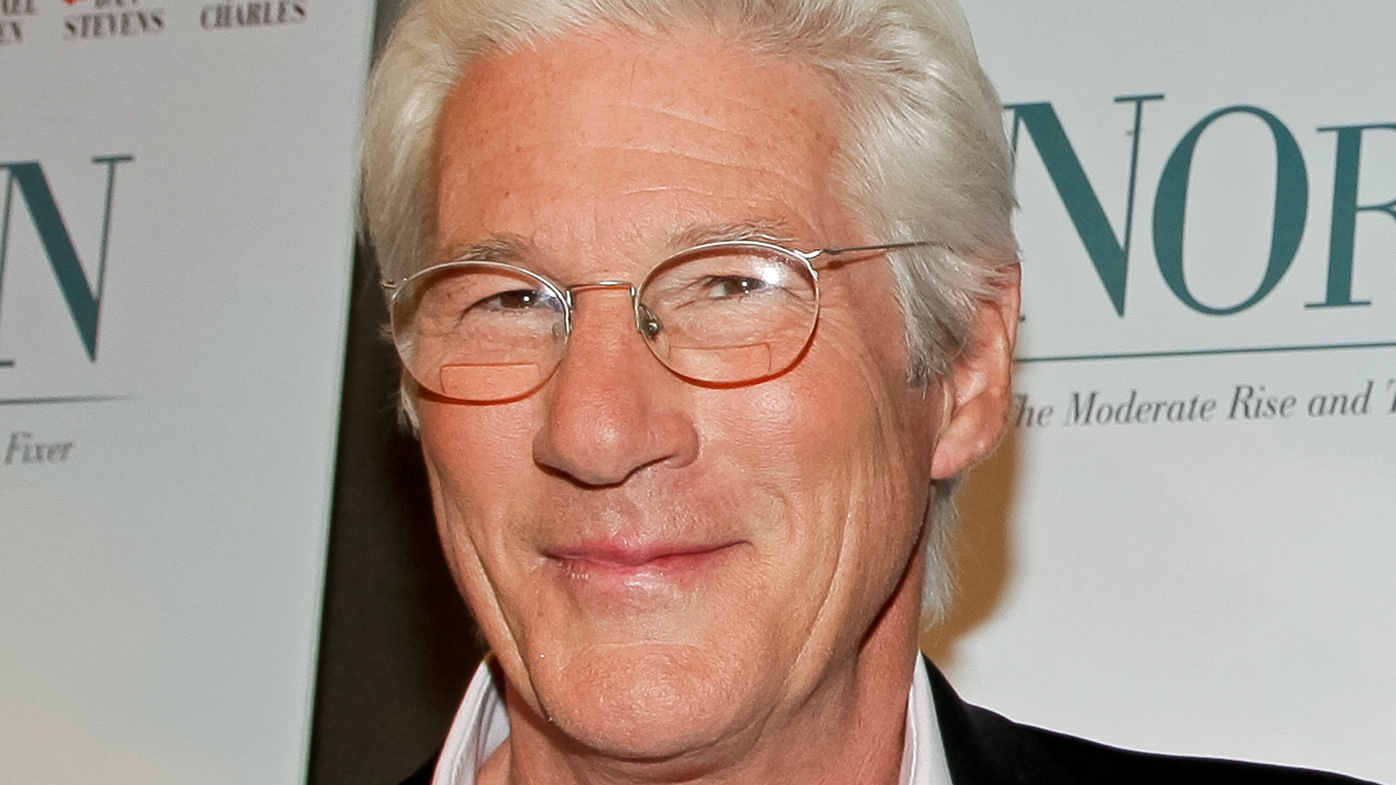
Chinese activist lawyer Chen Guangcheng (L) stands alongside actor Richard Gere (R) after being presented Tom Lantos Human Rights Prize Jan 29, 2013.

mardi 10 janvier 2017

Beauty and the Chinese Beast

Barred from China and silenced in the US, this beauty queen isn't backing down
By James Griffiths
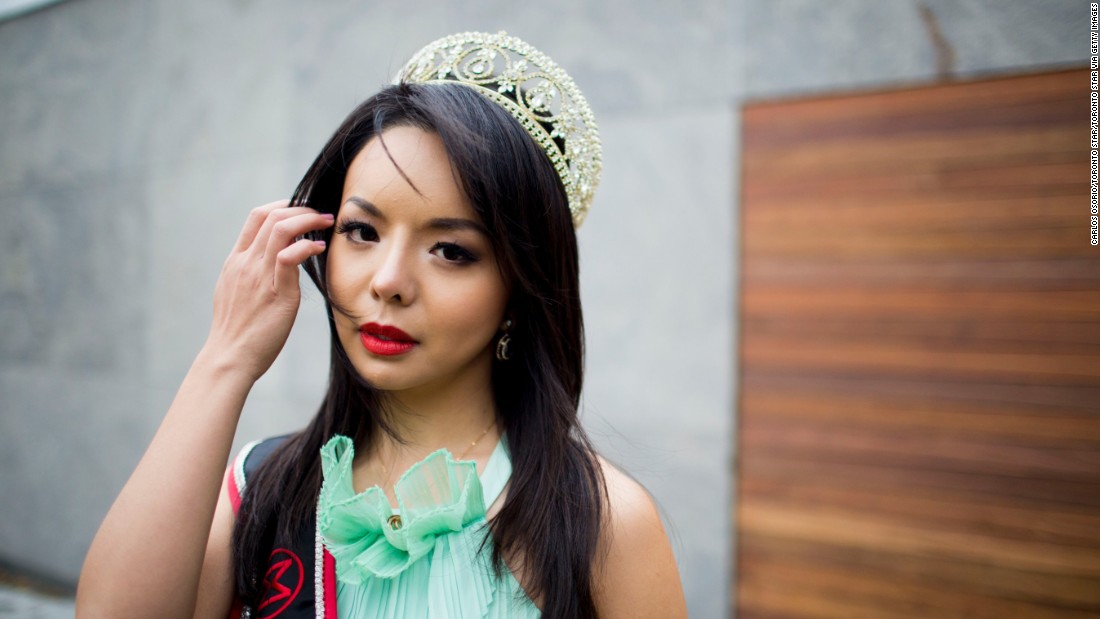
Anastasia Lin is barred from entering China and has been blocked from speaking out in the US.
Hong Kong -- Anastasia Lin just wanted her father to see her face.
Prevented from taking part in Miss World 2015 when China refused to allow her to enter the country, where the final was being held, she tried again this past December.
The Canadian was under no illusions about coming home with the 2016 crown. 
Getting on stage would be enough: the Miss World final is broadcast around the globe, including in her native China, where her father has been harassed and prevented from leaving.
In the end she appeared on screen for all of six seconds, during her introduction. 
For the rest of the show she was tucked away at the back of the crowd of contestants, or at the corners of the stage.
"It was really too naive to think that my father could see me," Lin said.
If she is slightly bitter, it's with good reason. 
Her sliver of screen time was bought with months of practice and rehearsal, and, most painfully for an outspoken human rights activist, her silence.
During the competition, Lin was placed under a communication blackout and forbidden from speaking to journalists, part of what analysts say is a pattern of western companies cooperating with China to silence critics overseas.
Miss World chairwoman Julia Morley said the organization did "our best to assist Miss Lin and have done absolutely nothing to prevent her doing everything she wanted to do."

Good little Communist

Chinese students wearing the uniform of the Young Pioneers.

Lin, 26, was born in China's Hunan province. 
As a child, she wore the iconic red scarf of the Young Pioneers and vowed to "struggle for the cause of Communism."
One of her duties in the state-run youth organization was to corral other children to watch propaganda broadcasts, which at the time were intently focused against Falun Gong.
The spiritual movement, which has roots in the ancient Chinese meditative martial art qigong, exploded in popularity in the 1990s, growing to an estimated 30 million members by the end of the decade, according to the US State Department.
In 1999, after upwards of 10,000 Falun Gong practitioners staged a peaceful demonstration in Beijing -- the largest mass protest the Chinese capital had seen since the Tiananmen Square massacre a decade before -- the movement was banned and a brutal crackdown launched, with tens of thousands of people arrested.
Now a prominent spokeswoman against the persecution of Falun Gong practitioners, Lin said she was largely unaware of the crackdown at the time. 
It wasn't until she moved to Canada at age 13 that she "learned that what were told in China was completely different to reality."

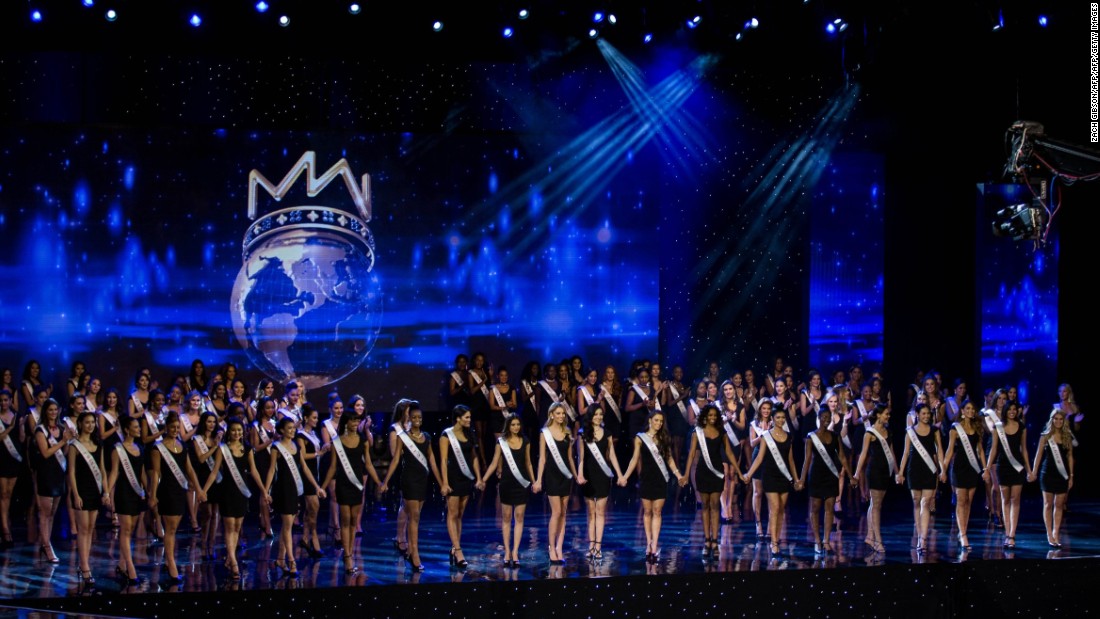
Contestants on stage during Miss World 2016 in Washington DC.
Speaking out
"I didn't start as an activist at all," Lin said.
As a teenager, she was focused on acting and modeling, eventually studying theater at the University of Toronto.
It was there that she was approached by a Chinese producer who was looking for someone to play the role of a student killed during the 2008 Sichuan earthquake. 
Thousands of children died during the disaster, as shoddily built schools collapsed on top of them.
"He said they couldn't find anyone to play this role, because it was too sensitive," Lin said. 
"I jumped on the opportunity."
Similar offers quickly followed: "At one point I really had a monopoly on these types of roles."
At the same time, she began competing in beauty pageants to raise her profile and get on-camera experience. 
She placed third in Miss World Canada in 2013, going on to win the competition outright in 2015.
That's when the trouble started.

Miss World contestant denied entry to China 02:13
Blocked
As Canadian champion, Lin was due to take part in Miss World 2015, to be held that year in Sanya, on China's southern island of Hainan. 
But as the event approached, her visa request went ignored and she was left hanging, unsure if she could take part in the competition.
She also began receiving distressing messages from her father, who still lives in China. 
Lin said he was approached by security officers and told that if she didn't "stop her political and human rights activities" her family members would be arrested.
These threats did not stop her speaking out -- "my personality is that I can't really hide things" -- but she and her father no longer talk due to fears for his safety.
Many activists have made similar allegations. 
Ilshat Hassan, president of the Uyghur American Association -- which advocates for members of China's Turkic-speaking Muslim minority -- told CNN last year that his family has faced repeated harassment over his activism. 
"Just months ago my mum says please stop what you're doing, or don't call us," he said.
Determined to at least try and take part in Miss World, Lin flew to Hong Kong -- where Canadians do not require a visa to enter -- and attempted to get a flight to Sanya.
"They declared me persona non grata and prevented me from boarding the plane," she said.
Her denial of entry was quickly reported worldwide, massively raising her profile, and earning her a denouncement in the state-run Global Times, which accused her of lacking "reasonable understanding of the country where she was born" and warned her against "being tangled with hostile forces against China."

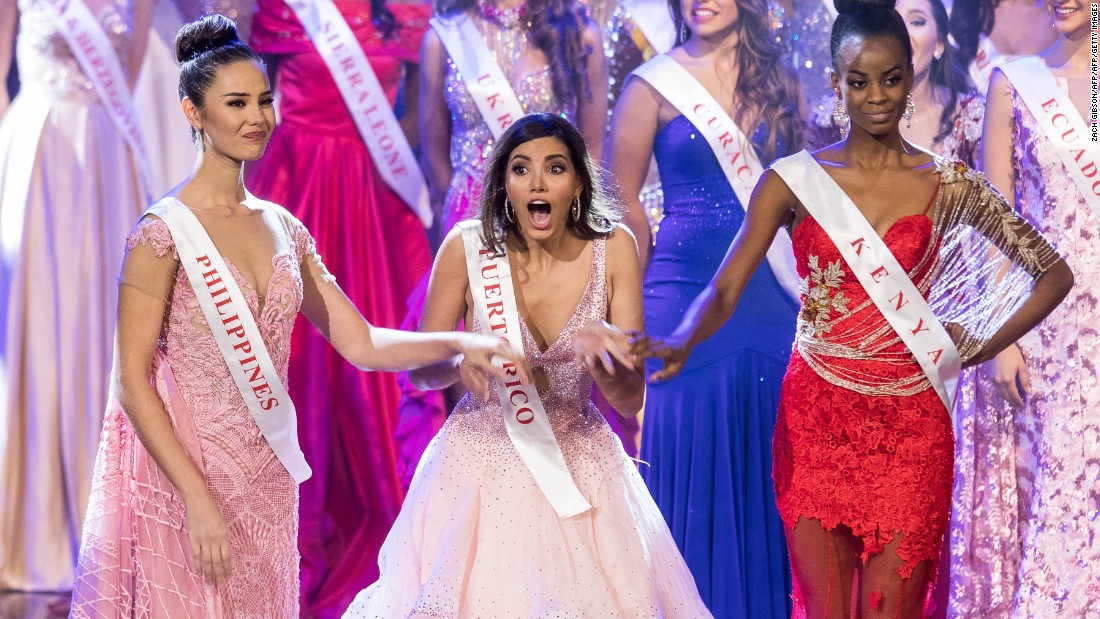
Miss Puerto Rico Stephanie Del Valle (center) reacts after winning Miss World 2016.
Silenced
Given a second chance to participate in Miss World 2016, Lin vowed to toe the line, not wanting to be denied a place in the final again. 
"I wanted to do things by the book," she said.
Nevertheless, she chose as her "Beauty with a Purpose" project to shine the light on organ harvesting in China, a topic with which she had become familiar with after acting in the Canadian film "The Bleeding Edge."
In June, a report by former Canadian lawmaker David Kilgour, human rights lawyer David Matas, and journalist Ethan Gutmann claimed, based on publicly reported figures by hospitals, that China was still engaged in the widespread and systematic harvesting of organs from prisoners, including prisoners of conscience.
Arriving in Washington DC, Lin received multiple media requests. 
Keen to play by the rules, she said she forwarded them all to Miss World officials, only to have them all initially denied, though several were later granted.
Lin was also angrily rebuked after an official spotted her chatting with a reporter in the lobby of her hotel.
"They said I was breaking rules, telling lies," she said. 
"I felt like a criminal."
During this period, at least six other contestants were allowed to give interviews.
After Miss World allowed her to give press interviews, Lin was still carefully monitored when talking to reporters.

Censorship
Western companies and governments are facing increasing pressure from Beijing as it attempts to sideline overseas critics, said Amnesty International researcher Patrick Poon.
CNN has previously reported how Beijing has reached across borders in its hunt for dissidents, working with cooperative governments to deport critics back to China.
Economic pressure has also been brought to bear on companies that depend on revenue from China.
Last week, Apple removed the New York Times from its Chinese app store on the grounds the paper's app "(violated) local regulations," a move anti-censorship activist Charlie Smith characterized as "actively enabling infringements of human rights."
"Foreign governments and foreign organizations should rethink whether what they have been doing in kowtowing to China's influence means that they compromise (dissidents') freedom of expression and freedom of movement," Poon said.
China's Ministry of Foreign Affairs did not respond to a request for comment.
Miss World's Morley denied Lin's accusations that her treatment was related to pressure from Beijing, pointing out that this year's competition, unlike Miss World 2015, did not have any Chinese sponsors.
Despite her experiences, Lin said she was grateful to the competition for giving her a platform.
"It's not Miss World's fault they're so nervous, they're a vulnerable pageant organization," Lin said. "The entire world is economically tied to China."

vendredi 16 décembre 2016

Beauty and the Chinese Beast

A beauty queen speaks out about China, and causes tensions at Miss World
By Maura Judkis

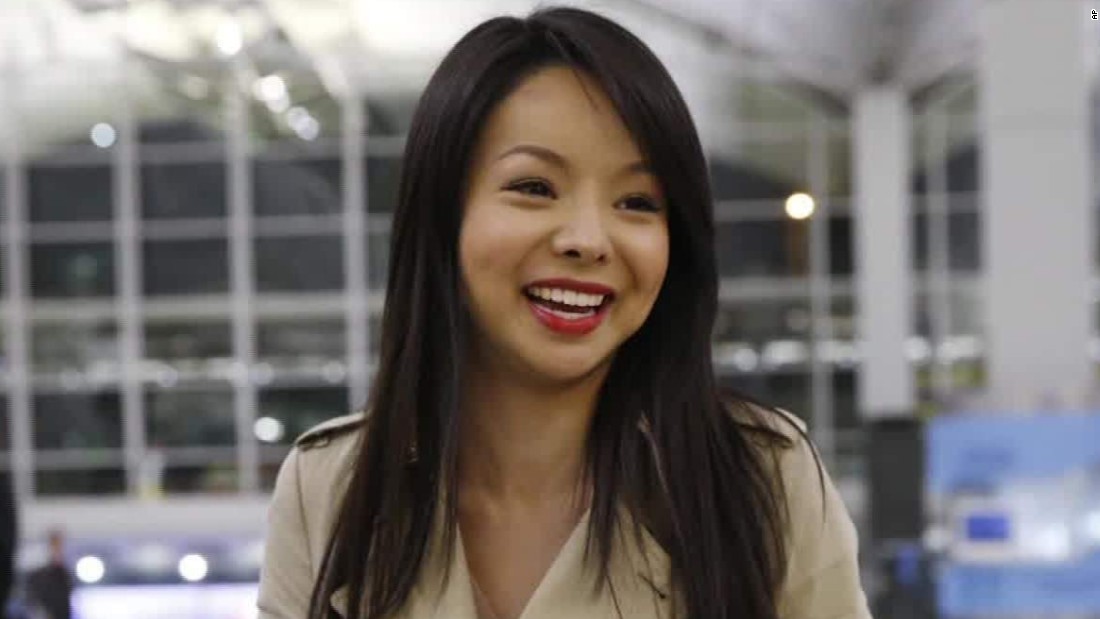
Anastasia Lin in a photo taken last year when she was first crowned Miss World Canada — but was unable to compete at the international pageant in China because the government denied her a visa.

Everything seemed to be going well for Miss Canada, Anastasia Lin, during an interview Wednesday promoting the Miss World pageant — until she was asked whether she would be attending a screening of her new movie, which has reportedly enraged officials in her native China.
Lin shot a glance at the four pageant officials assigned to listen in.
“You can ask them,” she told a Washington Post reporter.
One of the officials maintained that Lin could go “if she has spare time” but that she hadn’t yet asked to go.
That’s when things got testy, Lin noting sharply that the screening’s hosts had repeatedly sent requests on her behalf, her handlers insisting she just needed to abide by "certain" protocols.
It was a tempered explosion of the tensions surrounding Lin’s presence at the beauty contest, taking place Sunday at the new MGM National Harbor casino complex in Maryland.
Miss Canada has found herself at odds with Miss World organizers, in a conflict stretching back more than a year regarding her advocacy work against human rights abuses in China — historically, a major sponsor and booster of the pageant.
Lin, 26, a resident of Canada since she was 13, was supposed to represent the country in the 2015 pageant in Sanya, China.
But Chinese authorities denied her a visa because of her political activity and support of Falun Gong, the Buddhist-inflected spiritual movement that has been banned by the government since 1999.
Lin at a press conference in Hong Kong last year. Miss World invited her to compete this year, with the pageant being held in the U.S.

With the pageant moving this year to the United States, organizers offered her another shot at the crown.
Lin signed on, saying she carried no grudge about last year.
“In all fairness, they were in China with 130 girls,” she told The Post on Wednesday.
“For anyone to take a principled stand, it’s not easy.”
But tensions have remained.
The New York Times reported Tuesday night that pageant officials had barred Lin from speaking to the media. 
A Boston Globe reporter attempted to talk to Lin this month, and was sent away.
Meanwhile, Lin recently had a starring role — as a Falun Gong practitioner who is jailed and tortured — in “The Bleeding Edge,” a movie that portrays Chinese political prisoners forced to undergo organ harvesting. 
The D.C.-based Victims of Communism Memorial was scheduled to host a screening Wednesday night, but attempts to invite Lin had been thwarted by the pageant, the Times reported.
And yet Wednesday, after the Times story appeared, Miss World officials made Lin available for a previously requested interview with The Washington Post.
She spoke candidly in front of her handlers about consequences of her advocacy.
Lin’s father still lives in China, and, as she wrote in an op-ed for The Washington Post last year, he has faced intense pressure from state-owned media and banks, and his business and morale have suffered.
“To the point of self-harm,” she said.
Lin said she recently received a series of alarming text messages but would not elaborate.
“I believe he is in stable condition right now,” she said.
“I can understand why he feels like he can’t take it anymore.”
The pageant allowed Lin to meet at the State Department with David Saperstein, the ambassador-at-large for religious freedom, to talk about her father.
“Because it’s still a very fluid situation in China, they don’t know what’s going to happen,” she said.
Four representatives of the pageant — publicist Veronica Jeon and three others who did not give names — sat in on Lin’s interview, which included another contestant and the reigning Miss World, Mireia Lalaguna.
In front of them, Lin said that she was not being silenced.
“The first two weeks, I don’t know what happened, but I’m talking to you now, so that’s all that’s important,” she said.
Still, the tension was clear.
One of the pageant officials maintained that all contestants simply needed to “run it by us” if they wanted to see visitors or speak to the media, “so it doesn’t interrupt any rehearsal time [or] doing a specific event.”
“Uh, well, I wish I had known that two weeks ago when the Boston Globe journalist got kicked out,” Lin said, obviously vexed but maintaining a beauty-queen composure.
The official said that the reporter “didn’t ask for the necessary steps to go and meet her.”
“Uh, he did,” Lin said, “sending two requests before we even came here.”
The pageant has forged close ties to China, which has hosted Miss World seven times since 2000. Chinese companies have sponsored the pageant lavishly, and the city of Sanya built a special theater for it.
This year’s pageant, though, is “self-financed,” Jeon said.
Julia Morley, the pageant’s longtime chief executive, was not available for comment.
Lin said that even if she doesn’t win, the most important thing is her presence on that stage.
“This show is going to be broadcast to China,” said Lin.
“For them to be able to see me on a screen and see that I haven’t given up, I haven’t forgotten, and then their voice can be heard is — it’s very important for me and for a lot of people who I have spoken to.”