Affichage des articles dont le libellé est Nicaragua. Afficher tous les articles

mardi 6 juin 2017

Axis of Evil: Russia and China Are Bulking Up in the U.S.’s Backyard

Putin and Xi are working to win over small, poor countries with promises of aid, military support, and investment, even as Trump scales back.
By Ezra Fieser

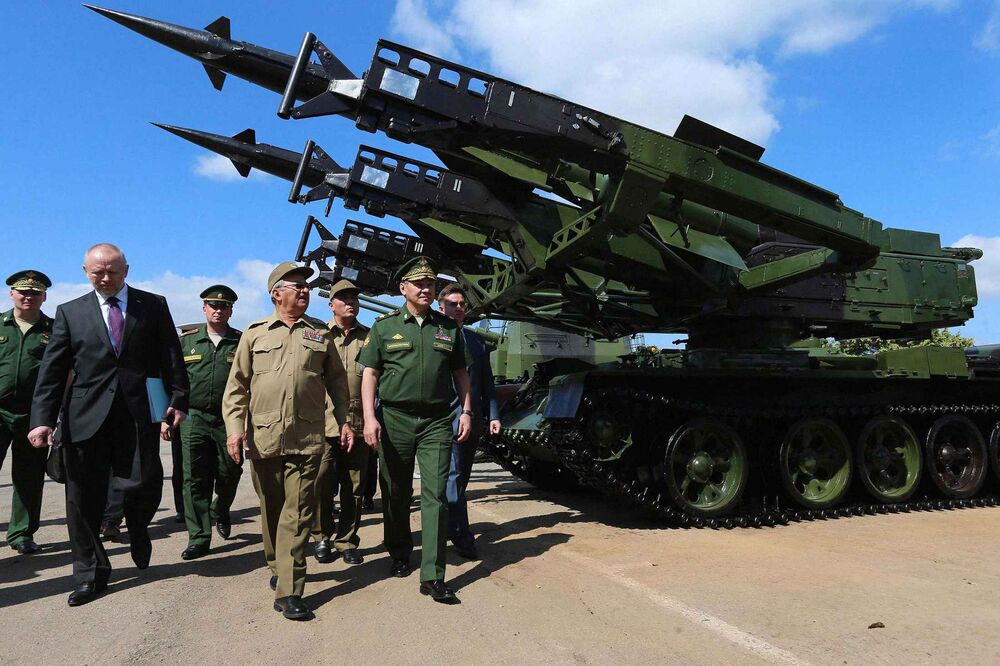
Russian Defense Minister Sergei Shoigu (center) inspects a Cuban tank division during a 2015 visit to Havana. 

As supplies of crude from its old ally Venezuela dwindled last year, Cuba began turning out the lights in government offices and shuttering oil refineries. 
Then, Havana turned to an old friend for help: Russia. 
In early May the Kremlin sent a tanker full of fuel across the Atlantic as part of a deal to keep the communist island running for three months. 
It was the first such shipment Cuba had received in years from its former benefactor, but it wasn’t the only sign Russia has returned to a region it had all but abandoned after the Cold War. 
Moscow is building a satellite-tracking station in Managua and considering reopening Soviet-era military bases in the region, as well as expanding economic ties and doling out aid in countries across Central America and the Caribbean. 
Vladimir Putin has even offered to restore the Capitol building in Havana, which bears a striking resemblance to the one in Washington.
“This could purely be a way of the Russians telling the gringos, ‘Be careful, we can come back to your backyard,’ ” says Jorge Piñon, director of the Latin America and Caribbean Energy Program at the University of Texas at Austin, who estimates Russia’s fuel shipments to Cuba are worth more than $100 million. 
“Or it’s a long-term strategic commitment, and this is the first building block of a considerable investment in the region.”
China also has been building up its presence in the Caribbean Basin. 
Chinese companies and the government have poured $6 billion into the area since 2012, according to a tally of large investments by the American Enterprise Institute. 
Beijing’s interest isn’t just economic: It wants to persuade the Dominican Republic and 10 other countries in the region to sever their diplomatic ties with Taiwan as it seeks to curtail its rival’s role on the international stage. 
The People’s Republic of China considers Taiwan part of its territory under its One China policy. 
For years, Beijing and Taiwan competed for diplomatic allegiances promising low-cost loans and outright aid. 
But in 2007, when Costa Rica switched from Taiwan to Beijing, the two governments entered a détente. 
That may have changed with the election of Taiwan’s pro-independence leader Tsai Ing-wen, whom Donald Trump telephoned after the November election. 
After the phone call, Beijing convinced the tiny African island nation São Tomé and Príncipe to cut ties with Taiwan. 
Tsai quickly arranged a trip to Central America in January, visiting three countries to shore up relations.
A top diplomat from one Caribbean country, who spoke on condition of anonymity, expects several countries to switch allegiances over the next year or two, as more Chinese money flows in: “You’ll see these countries leave Taiwan in bunches.”
Even before Trump signaled the U.S. would scale back its global role under his “America First” policy, China and Russia were using their size and resources to win over small, mostly poor countries with promises of aid, military support, and investments in everything from cricket stadiums to a proposed canal stretching across Nicaragua. 
“Both Russia and China recognize the region’s geopolitical importance due to its proximity to the U.S.,” says Evan Ellis, professor of Latin American Studies at the U.S. Army War College’s Strategic Studies Institute in Carlisle, Pa. 
“The difference is that while China wants to build an economic presence to position itself softly, the Russians are the opposite; they want to use their presence to provoke.”
In a bygone era, such incursions might have drawn a quick, even hostile, U.S. response. 
Yet since the end of the Cold War, Washington has largely turned its focus away from hemispheric affairs, creating an opening for China and Russia, says Richard Feinberg, a senior fellow at the Brookings Institution in Washington. 
“If you take China, for example, they see a disorganized, inward-looking United States and they see themselves as, comparatively speaking, well-organized and able to establish a long-term vision for the region through gradually building influence,” he says. 
“And I can easily see how enticing it is for Putin to establish Russia as a regional power. He’d welcome the opportunity to do more in the Caribbean.”
Nikolay Smirnov, Russia’s Guyana-based ambassador to the southern Caribbean, balks at the notion that Russia is trying to provoke the U.S. 
Instead, he emphasizes the potential for greater cooperation between Russia and countries in the region on issues like climate change, trade, and fighting drug trafficking. 
“In the foreign policy of modern Russia, there exist opportunities for all countries, small or large, to participate in economic as well as political partnerships,” says Smirnov. 
“Our position is not to intrude into anyone else’s relations or to compete with others’ interests.”
The U.S. remains the dominant economic force in Central America and the Caribbean, with about $80 billion in two-way trade last year, according to U.S. Census Bureau figures. 
It is also the region’s single-largest source of foreign direct investment, which totaled $18 billion in 2015, according to the U.N.’s Economic Commission for Latin America and the Caribbean. 
However, Trump’s proposed budget envisions a near 40 percent reduction in aid to Central American countries, according to an analysis by the Washington Office on Latin America, an advocacy organization.
Russia, meanwhile, has been doling out aid to small Caribbean islands and forgiven $32 billion in Cuban debt. 
Chinese capital has flowed into hotel projects in Barbados and power plants in Haiti. 
In Jamaica, where a $730 million toll road nicknamed the “Beijing Highway” opened last year, Chinese-financed infrastructure projects are seen as key to pulling the country out of a decade-long economic slump, says Anelia Nelson, an officer at Jamaica Promotions Corp., a quasi-­government agency.
In April, U.S. Navy Admiral Kurt Tidd, head of Southern Command, told Congress that he was concerned about China’s exercise of soft power in the region as well as the growing involvement of Russia’s military. 
“Even seemingly benign activities can be used to build malign influence,” he said.
Take Nicaragua, whose President Daniel Ortega refers to Putin as his “hermano.” 
Since the two countries agreed to expand military ties two years ago, Russia has docked its warships in Nicaraguan ports and supplied the Central American country with tanks, aircraft, and weapons. 
It’s now putting the finishing touches on a station to track GPS satellites. 
Its location, near the U.S. embassy, has raised suspicions that it might also be used to spy on the U.S. and its partners.
Despite Trump’s seemingly cozy relationship with Putin, the new administration is pushing back. 
The spending bill the president signed in early May bans some U.S. funding to countries, including Nicaragua, that recognize South Ossetia and Abkhazia, the self-proclaimed independent states that fought alongside Russia against neighboring Georgia in 2008. 
Separately, Senator Ted Cruz (R-Texas) is a co-sponsor of a bill called the Nicaraguan Investment Conditionality Act that requires countries seeking loans from international financial institutions first hold free and fair elections and promote democracy.

mercredi 11 janvier 2017

Taiwan's President Tsai Ing-wen meets with leaders of Honduras, Nicaragua

One meeting was held without giving prior notice to Taiwan’s press pool.
By Elizabeth Shim

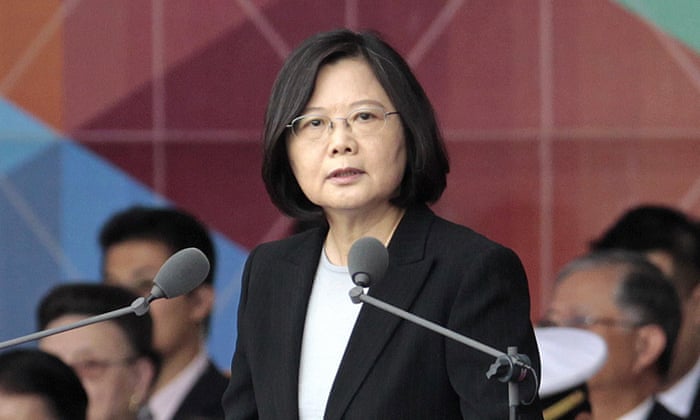
President of Taiwan, Tsai Ing-wen (L), is wecomed by Honduran presidential nominee Ricardo Alvarez (R) after her arrival at Palmerola Air Baseon Sunday. Tsai arrived in Honduras, where she is scheduled to meet with Honduran President Juan Orlando Hernandez, as part of her tour to Central America aimed to strengthen diplomatic ties and cooperation between Taiwan and its Central American allies. 
Taiwan's President Tsai Ing-wen shakes hands with a worker during a visit to a Free Trade Zone in Managua, Nicaragua, on Tuesday. Tsai Ing-wen was visiting Nicaragua as the first part of a Central American tour. 

TAIPEI, Taiwan -- Taiwanese President Tsai Ing-wen met with the president of Nicaragua and held talks with Honduran Cardinal Óscar Andrés Rodríguez Maradiaga in the countries that still maintain diplomatic relations with Taipei.
Tsai, who is on a tour of Central America, had already met with Texas Gov. Greg Abbott and Sen. Ted Cruz in Houston.
On Monday, Tsai met with the Honduran cardinal in the capital city of Tegucigalpa, at the Basílica de Suyapa, Taiwanese newspaper China Times reported Tuesday.
Tsai attended a mass at the church that was held for Taiwan and afterward the Taiwanese leader met with Honduras President Juan Orlando Hernandez.
On Monday afternoon, Tsai left Honduras and arrived in adjacent Nicaragua, according to Taiwan's Central News Agency. 
At 6:30 p.m., Tsai met with President Daniel Ortega for a summit that took place quickly and without giving prior notice to Taiwan's press corps, according to the reports.
Ahead of the meeting between Tsai and Ortega, there was speculation in Taiwan the Nicaraguan government was delaying confirmation of a date for talks, because the country was considering following the example of São Tomé and Príncipe, and cutting diplomatic ties with Taipei in favor of forging relations with China.
Some members of Taiwan's press corps have experienced difficulties in the countries.
One Taiwanese reporter posted a photo of a bill issued at the Real InterContinental Tegucigalpa hotel in Honduras, clearly showing "Taiwan, Province of China" next to the reporter's name, according to Central News Agency.
The hotel said the wording on the document was a mistake, according to the report.

samedi 7 janvier 2017

Two Chinas Policy

Taiwan President Tsai Ing-Wen Heads to Americas. 
It should not surprise anyone if President Trump's advisers meet with President Tsai.
By THE ASSOCIATED PRESS

BEIJING — President Tsai Ing-wen pledged to bolster Taiwan's international profile as she set off on a trip to reinforce relations with diplomatic allies in Central America, a task that has taken on new urgency as Beijing ramps up efforts to diplomatically isolate Taipei.
Speaking to reporters before her departure, Tsai said the visits to Honduras, Nicaragua, Guatemala and El Salvador would "show the international society that Taiwan is a capable and responsible partner for cooperation."
She will transit through Houston and San Francisco.
Beijing regards the self-governing island as part of China and officials complained after President Donald Trump last month spoke by phone with the Taiwanese leader. 
Trump raised further concerns in Beijing when he questioned a U.S. policy that since 1979 has recognized Beijing as China's government and maintains only unofficial relations with Taiwan.
U.S. lawmakers often meet with Taiwanese presidents when they transit through the U.S. — most recently in June, when Tsai met in Miami with Republican Sen. Marco Rubio of Florida.
This time, it was not clear if Tsai would meet Trump, though some observers said a meeting with Trump's transition team could happen.
"It should not surprise anyone if the president's advisers who will be working on Asia policy meet with President Tsai," said Ross Feingold, a Taipei-based senior adviser at D.C. International Advisory, a consulting firm whose chief executive has been consulted by the Trump transition team.
"China might issue its usual statements of displeasure ... but it really doesn't depart from precedent," Feingold said. 
"A meeting with Trump would be the biggest precedent changer."
Regardless, Tsai is likely to keep the U.S. stops low-key to avoid further inflaming tensions with China, which has been angered by Tsai's refusal to endorse Beijing's concept that Taiwan and the mainland are part of a single China. 
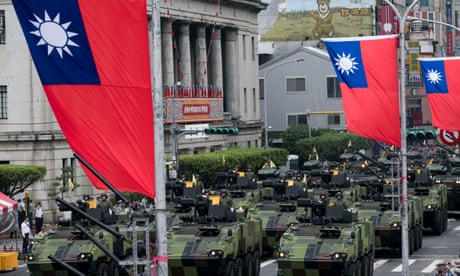
In late December, in what Beijing called routine exercises, China's first and only aircraft carrier and a fleet of warships sailed past Taiwan's south, prompting Taipei to deploy fighter jets to monitor the fleet.
In Central America, Tsai will focus on strengthening ties with allies to fend off Beijing's efforts to draw governments away from Taipei and further diminish its global presence. 
Beijing and Taipei have competed for allies for much of the nearly seven decades since the end of China's civil war in 1949, when the defeated Nationalist government fled across the Taiwan Strait.
Tsai, who is leading a delegation of 120 people, will meet with most of the four countries' leaders and attend the inauguration of Nicaraguan President Daniel Ortega. 
She said she would also interact with the heads of state of other countries at the inauguration.
Beijing has intervened to prevent the island's participation in international forums and established diplomatic relations with former Taipei allies Gambia and Sao Tome and Principe. 
The moves have been seen as effectively abandoning the unspoken diplomatic truce that lasted eight years under Tsai's China-friendly predecessor. 
Just 21 countries and governments, mostly in Latin America and the Caribbean, now have official ties with Taipei.
Observers were watching to see if any of the four Central American nations might defect despite Tsai's efforts, but say stronger U.S. support under Trump's administration would help balance future diplomatic losses.
"We should expect that in the Trump administration the U.S. would be more vociferous and emphatic about Taiwan's participation in international organizations," Feingold said.
Washington remains Taiwan's main source of weapons, with $14 billion in approved arms sales since 2009, and is bound by law to consider threats to the island's security a matter of "grave concern."
If Beijing aggressively pursues existing Taipei allies, leveraging its growing economic, military and political clout, the competition could prove too expensive for Taipei and prompt Tsai to seek even deeper ties with the U.S.
"She may think now that it's America or bust," said Sean King, a Taipei-based senior vice president at consulting firm Park Strategies. 
"She's probably going to lose these peripheral countries eventually anyway, so why not go for the gusto and get as close to the U.S. while she can?"

samedi 31 décembre 2016

Beijing Pathetic Monologue: China repeats call to block President Tsai's transit in US.

Tsai Ing-wen will visit Houston and San Francisco on her way to and from Latin America
By Nandini Krishnamoorthy
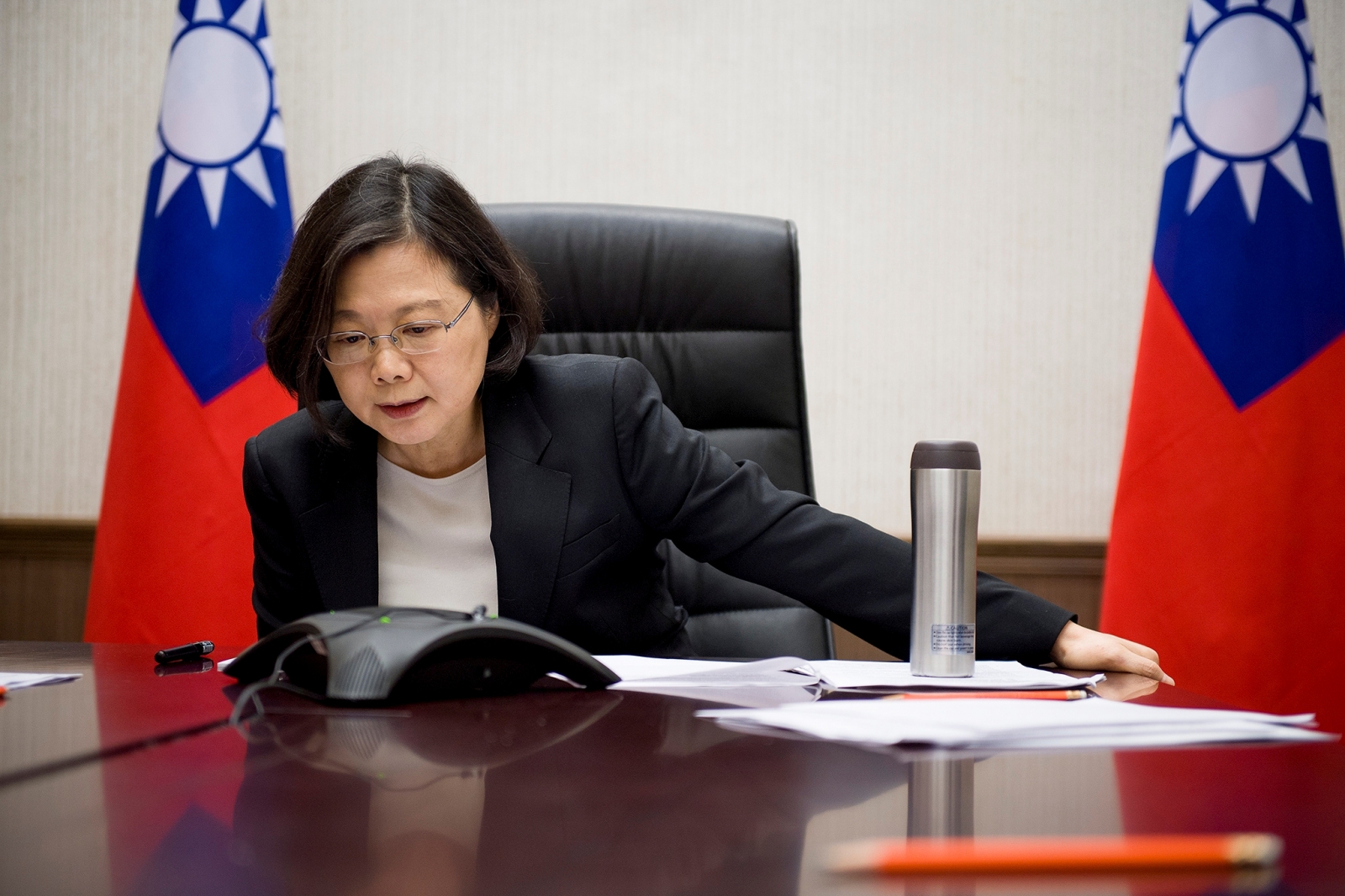
Taiwan's President Tsai Ing-wen (pictured speaking to US President Donald Trump at her office in Taipei, Taiwan) might meet Trump in January during her trip to three Central American nations
Taiwan announced its President Tsai Ing-wen's itinerary for US where she will transit through Houston and San Francisco on her way to visit allies in Latin America in January, her office said on Friday (30 December). 
The announcement has prompted Beijing to repeat calls to the US to block Tsai's stopover.
Tsai will arrive in Houston on 7 January and leave the following day. 
On her way back, after visiting Honduras, Nicaragua, Guatemala and El Salvador, she will visit San Francisco on 13 January, presidential office spokesman Alex Huang told daily news briefing.
Tsai's office denied commenting on whether she would be meeting President Donald Trump's transition team while she is in the US. 
However, the US mission in the self-governing island, the American Institute in Taiwan (AIT), said her visit would be "private and unofficial".
"President Tsai's transit through the United States is based on long-standing US practice and is consistent with the unofficial nature of our relations with Taiwan," Alys Spensley, acting AIT spokeswoman, told Reuters.
The already troubled China-US ties were further strained following Tsai's phone call to Trump earlier this month that resulted in Beijing in casting doubt on the incoming president and his administration's commitment to 'one China' principle.
China's Foreign Ministry repeated calls to stop Tsai from transiting through America and warned the US to not send any "wrong signals to Taiwan independence forces".
"We think everyone is very clear on her real intentions," Reuters cited the ministry as saying, without explaining.
Speaking to the members of parliament on Friday (30 December), Xi Jinping stressed the communist country would make "unremitting efforts" at unification and development of peaceful ties across the Taiwan Strait, Xinhua news agency reported.
Meanwhile, Tsai assured on Saturday (31 December) that her country will remain "calm" when dealing with issues concerning China, however, she warned of uncertainties in 2017 that could test Taiwan's national security team.

jeudi 29 décembre 2016

President Tsai Ing-wen to stop in U.S. en route to countries in Central America

Routine trip has taken on significance after Trump call
By Adela Lin and Ting Shi

Taiwan President Tsai Ing-wen will transit through the U.S. en route to Central America next month, a routine stopover that has taken on added significance after President Donald Trump spoke with her by phone and separately questioned the One-China policy.
Tsai’s office will unveil the details of her U.S. stops at a later date, Foreign Ministry spokeswoman Eleanor Wang said in a text message. 
Her Jan. 7-15 trip announced last week to Honduras, Nicaragua, Guatemala and El Salvador will “boost cooperation and deepen friendship” with Taiwan’s Central American allies, Wang said.
While the ministry had said previously that Tsai wouldn’t transit in New York and won’t meet Trump, the stopover risks further tensions between the U.S. and China ahead of Trump’s inauguration. 
Trump has already signaled a more antagonistic approach to China as president, with the self-governing island potentially becoming one of the biggest flash points between the two global powers.
“Supporters of Taiwan and critics of China in the U.S. will obviously welcome this move as not bowing to Chinese pressure,” said Ja Ian Chong, an assistant professor with the National University of Singapore who specializes in Asia-Pacific relations. 
“This could set the tone for an even more contentious and tumultuous U.S.-China relationship.”
Ma Ying-jeou, Tsai’s predecessor, transited in Houston and Los Angeles during a March trip to Central America. 
Tsai’s trip comes at a particularly sensitive time after Trump angered Beijing in accepting the phone call from the Taiwanese president.
The 10-minute conversation on Dec. 2 was the closest a Taiwanese leader has come to getting formal recognition from Washington since the U.S. established ties with the Communist government in Beijing almost four decades ago.

jeudi 22 décembre 2016

Two Chinas Policy

Taiwan's president to visit US: Tsai Ing-wen may meet Donald Trump in person
By Simon Tisdall

President Tsai Ing-wen. Taiwan has been self-governing and de facto independent since the end of China’s civil war.

Taiwan’s president is planning to meet members of Congress next month during a stopover visit to the US that will go ahead despite strong Chinese government objections, a senior Taiwanese official has said.
China tried to block the visit by President Tsai Ing-wen in the wake of a row over pro-Taiwan comments by president Donald Trump who also held an unprecedented phone conversation with the Taiwan leader.
The visit has caused speculation in Washington and Taiwan that Tsai may meet Trump in person during a nine-day trip that begins on 7 January and includes brief state visits to Honduras, Nicaragua, Guatemala and El Salvador.
Speaking to the Taiwan legislature’s foreign and national defence committee, Javier Hou, deputy foreign minister, said Tsai’s planned stopover in the US would be made in accordance with past practice.
The foreign ministry was seeking to arrange for Tsai to meet members of the US Senate and House of Representatives, Hou said. 
The exact locations of the meetings, and the duration of the stopover, have yet to be announced. Trump’s transition HQ is in New York.
Trump infuriated China’s leadership when he spoke to Tsai on the phone and later made separate comments questioning the longstanding “one China” policy, under which the US notionally accepts Beijing’s view that Taiwan is part of China. 
The US does not officially host Taiwanese leaders.
Taiwan has been self-governing and de facto independent since the end of China’s civil war. 
Beijing regards it as a renegade province.
Alex Huang, spokesman for Taiwan’s presidential office, denied that the planning or disclosure of the transit stops were being delayed due to pressure from China. 
“There is no problem of that kind,” Huang said.
But China this week reiterated its strong objection to Tsai and her 90-strong government delegation touching down on US soil, claiming that allowing her to do so would “send wrong signals to Taiwan independence forces”.
Hua Chunying, China’s foreign ministry spokeswoman, suggested that Tsai, whose ruling Democratic Progressive party is viewed with deep suspicion in Beijing, would use the trip to rally diplomatic and political opposition to China.
“As for the question of the leader of the Taiwan region possibly transiting the United States, I think her real aim needs no explanation,” Hua said.

Any meeting between Tsai and Trump would be politically explosive, coming so close to Trump’s inauguration on 20 January. 
It would probably exacerbate tensions caused by the president’s blunt criticisms of Chinese trade policy, military activity in the South China Sea, and recent seizure of a US underwater research drone.
Tensions have also been stoked by this week’s decision by the indebted west African country, São Tomé and Príncipe, to break off ties with Taiwan and align itself with China. 
Taiwanese MPs said China was using “dollar diplomacy” to further isolate the island.
Beijing has gradually been chipping away at Taiwan’s overseas relationships. 
It consistently opposes Taiwanese membership of international forums. 
After losing São Tomé and Príncipe, Taiwan has formal diplomatic relations with 20 countries and the Holy See remaining, mostly small countries that look to it for development aid.
Tsai appealed for unity this week at a closed-doors meeting of her ruling DPP. 
“At a time of change, national solidarity across party lines is increasingly needed to fight against foreign forces,” a party spokesman, Yang Chia-liang, quoted Tsai as saying. 
“China has never stopped suppressing Taiwan’s international participation and diplomatic efforts.”

mercredi 30 novembre 2016

Axis of Evil

Michael Flynn, a Top Trump Adviser, Ties China and North Korea to Jihadists
By EDWARD WONG

Retired Lt. Gen. Michael T. Flynn, the choice of President-elect Donald J. Trump for national security adviser, speaking at the Republican National Convention in Cleveland in July.

What if someone were to tell you that China and North Korea are allied with militant Islamists bent on imposing their religious ideology worldwide?
You might not agree. 
After all, China and North Korea are officially secular Communist states, and China has blamed religious extremists for violence in Muslim areas of its Xinjiang region.
But such an alliance is the framework through which retired Lt. Gen. Michael T. Flynn, the pick of President Donald J. Trump for national security adviser, views the two East Asian countries. 
To the list of pro-jihadist anti-Western conspirators, General Flynn adds Russia, Cuba and Venezuela, among others. (Never mind that he has recently had close financial and lobbying relationships with conservative Russian and Turkish interests.)
By appointing General Flynn, Mr. Trump has signaled that he intends to prioritize policy on the Middle East and jihadist groups, though the Obama administration seems to have stressed to Mr. Trump the urgency of dealing with North Korea’s nuclear program. 
General Flynn is an outspoken critic of political Islam and has advocated a global campaign led by the United States against “radical Islam.” 
He once posted on Twitter that “Fear of Muslims is RATIONAL.”
General Flynn is about to take on what many consider the most important foreign policy job in the United States government. 
He is expected to coordinate policy-making agencies, manage competing voices and act as Mr. Trump’s main adviser, and perhaps arbiter, on foreign policy.
General Flynn’s peers in the Army have praised him for his work gathering intelligence in Iraq and Afghanistan. 
But senior officials have criticized him for being a poor manager as director of the Pentagon’s Defense Intelligence Agency. 
After being forced from the job in 2014, he began denouncing the Obama administration in public, saying the White House refused to acknowledge important intelligence on growing jihadist threats and their ideological foundations.
He then wrote a book, with a co-author, on his military career and the need to intensify the campaign against Islamic extremists. 
The book, “The Field of Fight: How We Can Win the Global War Against Radical Islam and Its Allies,” published in July, is one of the few places where General Flynn has discussed his views on China and North Korea. 
The mentions are infrequent, but they give some clue as to how he views the Asian nations.
Here are the most relevant passages. 
In the introduction, General Flynn says one of his goals in writing the book is: “to show you the war being waged against us. 
This administration has forbidden us to describe our enemies properly and clearly: They are Radical Islamists. 
They are not alone, and are allied with countries and groups who, though not religious fanatics, share their hatred of the West, particularly the United States and Israel. 
Those allies include North Korea, Russia, China, Cuba, and Venezuela.”
He tries to further explain that alliance through a vague mention of a common ideology:
“There are many similarities between these dangerous and vicious radicals and the totalitarian movements of the last century. 
No surprise that we are facing an alliance between Radical Islamists and regimes in Havana, Pyongyang, Moscow, and Beijing. 
Both believe that history, and/or Allah, blesses their efforts, and so both want to ensure that this glorious story is carefully told.”
Early in his career, General Flynn served with the 25th Infantry Division in the Asia-Pacific region. He writes: “This opened up my eyes to the type of enemies we saw across a wide swath of the Asia-Pacific rim. 
There were many, and still are.”
General Flynn also gives a bit more detail on how he sees this global alliance:
“The war is on. 
We face a working coalition that extends from North Korea and China to Russia, Iran, Syria, Cuba, Bolivia, Venezuela, and Nicaragua. 
We are under attack, not only from nation-states directly, but also from Al Qaeda, Hezbollah, ISIS, and countless other terrorist groups. (I will discuss later on, the close working relationships between terror groups and organized criminal organizations.) 
Suffice to say, the same sort of cooperation binds together jihadis, Communists, and garden-variety tyrants.
“This alliance surprises a lot of people. 
On the surface, it seems incoherent. 
How, they ask, can a Communist regime like North Korea embrace a radical Islamist regime like Iran?”
General Flynn goes on to discuss reports that North Korea has cooperated with Iran and Syria on nuclear programs and trade. 
He asserts that Iran is the “linchpin” of the global anti-Western network. 
He writes: “The mullahs have already established strategic alliances in our own hemisphere with Cuba and Venezuela, and are working closely with Russia and China; a victory over the ‘Great Satan’ in Iraq will compel the smaller Middle Eastern countries to come to terms with Tehran, and make the region much more inhospitable to us and our friends and allies.”
Finally, General Flynn writes that if the United States loses the global war, one result will be living under “the grim censorship we see in groups such as the Islamic State, Al Qaeda, and the Taliban or from nations like Iran, North Korea, and Cuba.”
John Delury, a scholar of Chinese history and the Koreas at Yonsei University in Seoul, South Korea, shared these thoughts after reading General Flynn’s book:
“General Flynn seems to be all about one thing — fighting ‘radical Islam’ — and that means Asia goes on the back burner. 
Obama was trying to ‘pivot’ from costly wars in the Middle East to economic opportunity in Asia, a strategy that was still in-progress and that Hillary Clinton would have stuck with. 
But Flynn has no concept of the importance of Asia. 
For him, America needs to become single-minded in the top priority — destroying radical Islam, at home and abroad.
“Flynn’s obsession with eliminating radical Islam is likely to color his view of everything else — including key strategic questions facing East Asia like the rise of China, resurgence of Japan and nuclear breakout of North Korea. 
Running the National Security Council is all about juggling priorities, keeping your eye on the ball while maintaining strategic balance. Flynn doesn’t come across as much of a juggler. 
For him, there is only one ball out there.
“If Flynn is able to press his global war on radical Islam, America’s rivals in Asia will seize the opportunity to further their interests. 
China can speed up its march to displace the U.S. as the architect of Asian security. 
North Korea can finish its drive to joining the nuclear club. 
Life will also change for America’s Asian allies, who will no longer be able to count on U.S. commitment to their development and defense. 
And America’s role as a promoter of human rights and liberal values — a contested and problematic mission, albeit a noble one — could become a thing of the past.
“Here’s an example of how Flynn’s global war on radical Islam could have unanticipated side effects on Asian security. 
In his book, Flynn links North Korea to his ‘enemy number one,’ the Islamists, by citing Pyongyang’s military and economic ties to Syria and Iran. 
Well, what if the North Koreans promised an envoy from Trump — who said he’s willing to talk to Kim Jong-un — that they would cut their links to radical Islam and even give the Americans some intel based on their years of cooperation? 
Nonproliferation guarantees, which the North Koreans put out as bait throughout the Obama years, to no effect, could serve as a starting point for resumed U.S.-D.P.R.K. negotiation under a Flynn foreign policy. 
The old dictum stands — my enemy’s enemy is my friend. 
Flynn is crystal clear who the enemy is, radical Islam. 
Anyone who shows eagerness to fight the Islamists buys a seat at Flynn’s national security table.”