BY AMY MACKINNON

A boy wearing a blue mask with tears of blood participates in a protest march demanding the European Union take action against China in support of the Uighurs, in Brussels, on April 27, 2018.
Two human rights advocates who focus on China issues say they were told by U.S. officials last year that the Trump administration was preparing to impose sanctions on Beijing in December over its treatment of Uighur Muslims in the country’s western region of East Turkestan.
The advocates were given to understand that the sanctions would fall under the Global Magnitsky Act, which enables the U.S. government to place travel bans and asset freezes on human rights abusers.
But when International Human Rights Day came and went on Dec. 10—the day the United States customarily unveils a tranche of such sanctions each year—no announcement was made.
The administration squelched the plan in order to avoid harming trade talks with China.
“Discussions with government officials indicated that there would be sanctions forthcoming in December,” said Sophie Richardson, Human Rights Watch’s China director.
“Discussions with government officials indicated that there would be sanctions forthcoming in December,” said Sophie Richardson, Human Rights Watch’s China director.
A second human rights advocate, who did not want to be named, heard similar things in briefings with government officials.
Richardson said she has since heard from officials who expressed frustration that the sanctions issue was off the table due to the trade talks.
Richardson said she has since heard from officials who expressed frustration that the sanctions issue was off the table due to the trade talks.
She declined to identify the officials who had briefed her.
Rob Berschinski, the senior vice president for policy at Human Rights First, said his organization had also been “cautiously optimistic” that the sanctions on Chinese officials would be announced in December under the Global Magnitsky Act.
The U.S. failure to impose sanctions over China’s actions in East Turkestan—where it has forced up to a million Uighurs into internment camps—has been a big disappointment for the human rights community.
“While the U.S. is negotiating trade agreements, I think it’s important to remember that history is not going to remember the details of the negotiations but where the United States was on this massive human rights issue,” said Francisco Bencosme, the Asia-Pacific advocacy manager at Amnesty International USA.
At a hearing of the Senate Foreign Relations Committee on Wednesday, Secretary of State Mike Pompeo said the United States was considering imposing Magnitsky sanctions in many places, including China.
A spokesperson for the State Department said: “The United States is developing a whole-of-government strategy to address the unprecedented campaign of repression in East Turkestan.”
“In regards to specific actions by the United States, the State Department does not forecast potential sanctions.”
At the Treasury, a spokesperson said officials would not “telegraph sanctions or comment on prospective actions.”
A United Nations human rights panel has said China has turned East Turkestan, home to some 11 million people, mostly Uighurs, into a “massive internment camp that is shrouded in secrecy.”
Rob Berschinski, the senior vice president for policy at Human Rights First, said his organization had also been “cautiously optimistic” that the sanctions on Chinese officials would be announced in December under the Global Magnitsky Act.
The U.S. failure to impose sanctions over China’s actions in East Turkestan—where it has forced up to a million Uighurs into internment camps—has been a big disappointment for the human rights community.
“While the U.S. is negotiating trade agreements, I think it’s important to remember that history is not going to remember the details of the negotiations but where the United States was on this massive human rights issue,” said Francisco Bencosme, the Asia-Pacific advocacy manager at Amnesty International USA.
At a hearing of the Senate Foreign Relations Committee on Wednesday, Secretary of State Mike Pompeo said the United States was considering imposing Magnitsky sanctions in many places, including China.
A spokesperson for the State Department said: “The United States is developing a whole-of-government strategy to address the unprecedented campaign of repression in East Turkestan.”
“In regards to specific actions by the United States, the State Department does not forecast potential sanctions.”
At the Treasury, a spokesperson said officials would not “telegraph sanctions or comment on prospective actions.”
A United Nations human rights panel has said China has turned East Turkestan, home to some 11 million people, mostly Uighurs, into a “massive internment camp that is shrouded in secrecy.”
The Daily Beast has reported that China is also seeking to build a worldwide register of Uighurs who live abroad and has threatened to detain their relatives if they do not comply with requests for information from the Chinese police.
Many Uighurs living in the United States have family in the camps and face the dilemma to speak out—at the risk of more harm to their relatives—or keep silent.
“Every Uighur in the USA has family members in the concentration camps,” said Murat Ataman, whose brother, Dilshat Perhat Ataman, was taken to a camp in June 2018.
Many Uighurs living in the United States have family in the camps and face the dilemma to speak out—at the risk of more harm to their relatives—or keep silent.
“Every Uighur in the USA has family members in the concentration camps,” said Murat Ataman, whose brother, Dilshat Perhat Ataman, was taken to a camp in June 2018.
Dilshat, an editor of a popular Uighur website, served a four-year sentence in prison between 2010 and 2014 on charges of endangering state security.
It took four months for Murat to learn that his brother had been taken to a camp.
It took four months for Murat to learn that his brother had been taken to a camp.
Uighurs in East Turkestan are forced to install monitoring apps on their cellphones, limiting their ability to communicate freely with the outside world and making it hard for their families abroad to track their whereabouts.
On March 27, Pompeo met with members of the Uighur diaspora.
On March 27, Pompeo met with members of the Uighur diaspora.
Among the group was Ferkat Jawdat, who came to the United States as a refugee in 2011.
His mother and four of his father’s relatives are currently being detained in East Turkestan.
Five days after the meeting, Jawdat received a message from contacts in China that his aunt and uncle had been sent to the camps.
Five days after the meeting, Jawdat received a message from contacts in China that his aunt and uncle had been sent to the camps.
Jawdat said that members of his family have previously been questioned about his activism in the United States.
“I decided to go public because I don’t know if I can save my mom or not, but I want to save the other people,” he said.
“China’s plan is to wipe out the whole nation. This will be written in the history books as a genocide... My children, your kids, they’re going to learn about this. I don’t want my daughter to one day ask me, ‘What did you do to stop this?’” Jawdat said.
Commenting on the suggestion that trade talks had been given priority over the mass incarceration of Muslims in China, he said: “The U.S. should give up some economic development to save our next generations.”
Members of Congress from both the Democratic and Republican parties have repeatedly called on the Trump administration to place sanctions on Chinese officials involved in human rights abuses in East Turkestan and have introduced sanctions bills in both the Senate and the House of Representatives.
“For nearly a year I have joined my colleagues on both sides of the aisle in demanding the Trump Administration impose sanctions on Chinese officials directly involved in putting roughly a million Uighurs into internment camps,” Democratic Rep. Brad Sherman, the chairman of the House Foreign Affairs Subcommittee on Asia, the Pacific, and Nonproliferation, said in a statement to Foreign Policy.
At a rally in support of the Uighurs in Washington, D.C., on Saturday, successive speakers called for the United States to place sanctions on Chinese officials.
“Each time the world swears never again. When will we actually mean it?” said Dolkun Isa, the president of the World Uyghur Congress.
Given China’s influential economic clout, many members of the Uighur community see the United States as their only hope.
Among Muslim countries, only Turkey has sharply condemned China for its treatment of the Uighurs and other Muslims.
“I decided to go public because I don’t know if I can save my mom or not, but I want to save the other people,” he said.
“China’s plan is to wipe out the whole nation. This will be written in the history books as a genocide... My children, your kids, they’re going to learn about this. I don’t want my daughter to one day ask me, ‘What did you do to stop this?’” Jawdat said.
Commenting on the suggestion that trade talks had been given priority over the mass incarceration of Muslims in China, he said: “The U.S. should give up some economic development to save our next generations.”
Members of Congress from both the Democratic and Republican parties have repeatedly called on the Trump administration to place sanctions on Chinese officials involved in human rights abuses in East Turkestan and have introduced sanctions bills in both the Senate and the House of Representatives.
“For nearly a year I have joined my colleagues on both sides of the aisle in demanding the Trump Administration impose sanctions on Chinese officials directly involved in putting roughly a million Uighurs into internment camps,” Democratic Rep. Brad Sherman, the chairman of the House Foreign Affairs Subcommittee on Asia, the Pacific, and Nonproliferation, said in a statement to Foreign Policy.
At a rally in support of the Uighurs in Washington, D.C., on Saturday, successive speakers called for the United States to place sanctions on Chinese officials.
“Each time the world swears never again. When will we actually mean it?” said Dolkun Isa, the president of the World Uyghur Congress.
Given China’s influential economic clout, many members of the Uighur community see the United States as their only hope.
Among Muslim countries, only Turkey has sharply condemned China for its treatment of the Uighurs and other Muslims.
Muslim-majority states have even supported it.
In 2017, Egypt detained and deported dozens of Uighur students back to China.
On a visit to China this year, Saudi Crown Prince Mohammed bin Salman said the kingdom supported China’s right to undertake anti-terrorism measures.
Last month, the Organisation of Islamic Cooperation—whose 57 member states have substantial Muslim populations—passed a resolution that commended China’s efforts to care for its Muslim citizens.
China has invested heavily in countries across Central Asia and the Middle East as part of its Belt and Road Initiative.
Berschinski of Human Rights First, who previously served in the Obama administration as deputy assistant secretary of state for democracy, human rights, and labor, said 2018 was the first year that no sanctions were announced under the Magnitsky Act or the Global Magnitsky Act on International Human Rights Day.
No official explanation was given, although Berschinski suggested that perhaps a work overload at the Treasury Department may have been a contributing factor.
The Magnitsky Act takes its name from a Russian lawyer, Sergei Magnitsky, who died in a Moscow prison after exposing widespread corruption.
China has invested heavily in countries across Central Asia and the Middle East as part of its Belt and Road Initiative.
Berschinski of Human Rights First, who previously served in the Obama administration as deputy assistant secretary of state for democracy, human rights, and labor, said 2018 was the first year that no sanctions were announced under the Magnitsky Act or the Global Magnitsky Act on International Human Rights Day.
No official explanation was given, although Berschinski suggested that perhaps a work overload at the Treasury Department may have been a contributing factor.
The Magnitsky Act takes its name from a Russian lawyer, Sergei Magnitsky, who died in a Moscow prison after exposing widespread corruption.
Passed in 2012, the law enabled the U.S. government to place sanctions on human rights abusers.
The Global Magnitsky Act, enacted in 2016, extended that ability to the rest of the world.
“People are starting to get concerned that the administration is giving up on Global Magnitsky sanctions,” Berschinski said.
“People are starting to get concerned that the administration is giving up on Global Magnitsky sanctions,” Berschinski said.


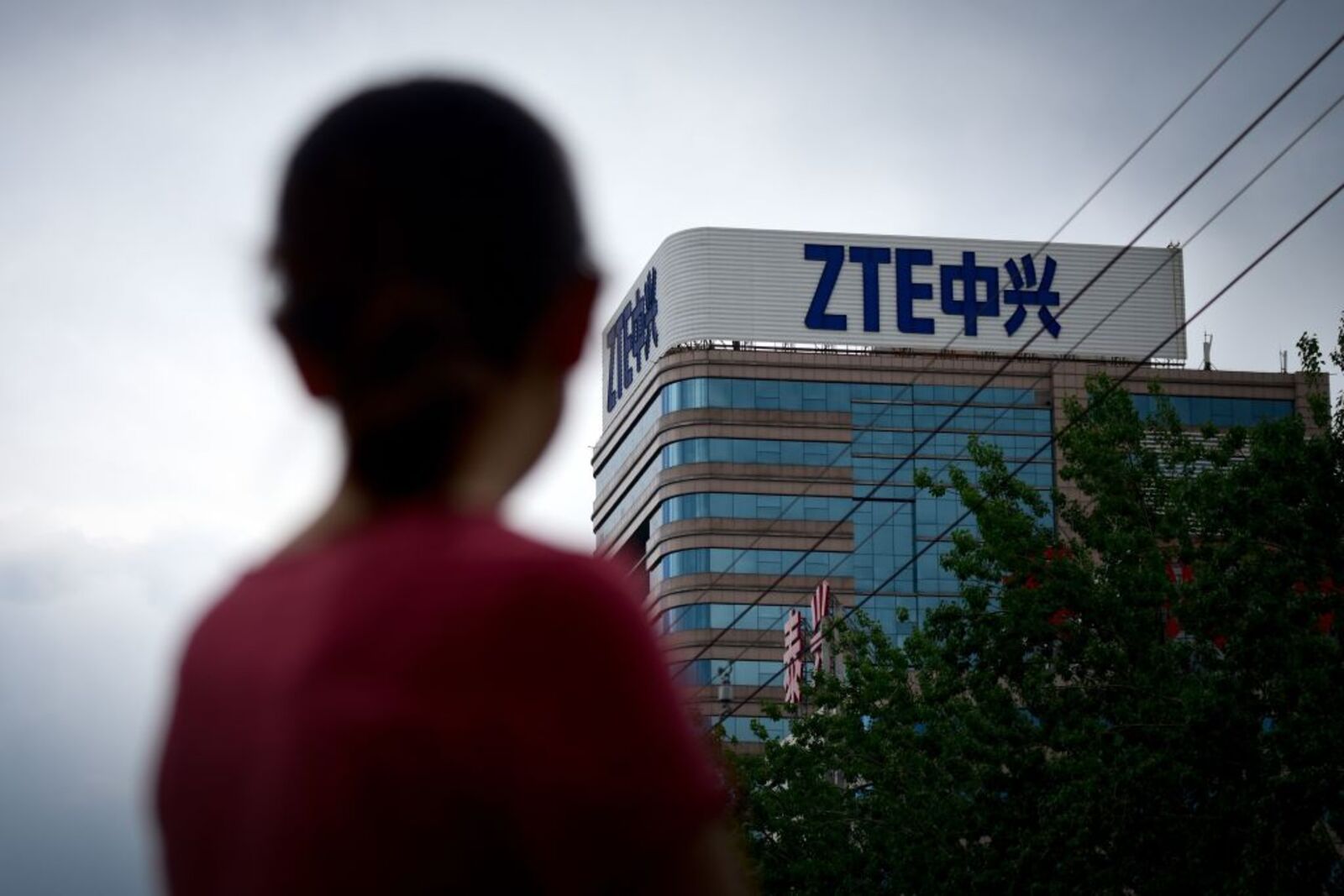 ZTE is a double offender.