Affichage des articles dont le libellé est Jeremy Hunt. Afficher tous les articles

vendredi 5 juillet 2019

‘WE CAN’T GULP AND MOVE ON’

Jeremy Hunt refuses to rule out Chinese sanctions or diplomatic expulsions over crackdown on Hong Kong protests
By Christy Cooney

JEREMY Hunt has refused to rule out placing sanctions on China or expelling diplomats over the crackdown on protests in Hong Kong.
The foreign secretary said the UK couldn't just "gulp and move on" in response to the ongoing situation in the former British territory.

Foreign Secretary Jeremy Hunt said he woudln't rule out sanctions against China in response to the situation in Hong Kong

Protesters in Hong Kong stormed the parliament building this week

Once inside parliament, protesters raised the Union Jack.

Speaking to the BBC, he added he would not discuss any potential consequences "because you don't want to provoke the very situation you are trying to avoid".
Recent weeks have seen repeated clashes between police in Hong Kong and demonstrators.
In early June, one million people took to the streets of Hong Kong to oppose a proposed new law that would allow extradition from Hong Kong to mainland China.
Authorities in the territory have sought to suppress opposition, deploying police armed with batons and tear gas.
The change would erode Hong Kong’s judicial independence and allow China to target political opponents in the territory.
Hunt's comments come as China has accused the UK of "interfere in its domestic affairs" and having a "colonial mindset".
Hunt has been on the campaign trail to become next Tory leader and replace Theresa May as prime minister.
He is currently the underdog against former London mayor Boris Johnson.
On Monday, Hunt marked the 22nd anniversary of the end of British rule by tweeting in support of the demonstrators.
"Want to stress UK support for Hong Kong and its freedoms is UNWAVERING on this anniversary day," he wrote.
"No violence is acceptable but HK people MUST preserve right to peaceful protest exercised within the law, as hundreds of thousands of brave people showed today."

'JUST ANOTHER CHINESE CITY'
Hong Kong has been a semi-autonomous region since 1997, when a 99-year lease held by Britain expired.
Since then, it has been governed under a "one country, two systems" arrangement with Beijing, with its citizens enjoying broadly more freedoms than those in mainland China.
Carrie Lam, the head of the Hong Kong government, has agreed to suspend the planned extradition law, but refuses to abandon it or stand down.
Monday night saw protesters storm and occupy the building that houses Hong Kong's legislature, half the members of which are not elected but appointed by a committee accountable to Beijing.
Once inside, they sprayed graffiti on the walls and raised the Union Jack.
Martin Lee QC, a pro-democracy figure and former legislator who has helped organise the protests, said earlier this month: “If we lose this one, Hong Kong is not Hong Kong any more, it’s just another Chinese city.”
The Hong Kong government says the bill is a necessary step to fight crime, and that China is an important strategic partner, but opponents fear that it would not resist politically-motivated requests from Beijing.
The new bill would create a system for case-by-case fugitive transfers between Hong Kong and China.
Chinese state media has blamed “foreign forces” for the unrest, though did not specify who those foreign forces might be.
The protests are the first major demonstrations since the Umbrella Movement in 2014, which began amid fears that proposed electoral reforms would allow restrictions on political candidates tantamount to the screening practised by the Chinese Communist Party.

Hong Kong authorities deployed riot police earlier this month to disperse peaceful protesters

mardi 2 juillet 2019

UK warns China of serious consequences if Hong Kong rights not honored

By Alistair Smout
Jeremy Hunt, a leadership candidate for Britain's Conservative Party, delivers a speech on his Brexit plan, in London, Britain, July 1, 2019. 

LONDON -- Britain warned China on Tuesday there would be serious consequences if Beijing broke its promises to protect freedoms in Hong Kong, after police fired tear gas to disperse hundreds of protesters.
Officers moved in after crowds stormed and trashed the legislature in the former British colony on Monday, the anniversary of its return to Chinese rule, protesting against proposed legislation allowing extraditions to mainland China.
British foreign minister Jeremy Hunt condemned violence on both sides but said China needed to stick to commitments it made when it took back Hong Kong to allow freedoms there not enjoyed in mainland China, including the freedom to protest.
“There will be serious consequences if that internationally binding legal agreement were not to be honored,” said Hunt, who is a candidate to replace Theresa May as British Prime Minister.
“The UK signed an internationally binding legal agreement ... that enshrines the ‘one country, two systems rule’, enshrines the basic freedoms of the people of Hong Kong and we stand four square behind that agreement, four square behind the people of Hong Kong,” he told the BBC.
China said on Monday Britain no longer has any responsibility for Hong Kong and needed to stop “gesticulating” about the city.
It has denied interfering in Hong Kong affairs, though protesters have said the extradition bill is part of a relentless move toward mainland control.
Hunt said many supporters of the Hong Kong demonstrators would have been dismayed by footage of Monday’s protests.
“But we urge the authorities not to use what happened as a pretext for repression, but rather to understand the root causes of what happened which is a deep-seated concern by people in Hong Kong that their basic freedoms are under attack,” he said.
The protests have created a fresh crisis for Chinese dictator Xi Jinping, who is already grappling with a trade war with Washington, a faltering economy and tension in the South China Sea.
China and Britain signed a Joint Declaration in 1984 on the terms of the return of Hong Kong.
Monday marked the 22nd anniversary of the actual handover in 1997, and some protesters hung a colonial flag in a chamber of the Legislative Council building after getting in.

mercredi 31 octobre 2018

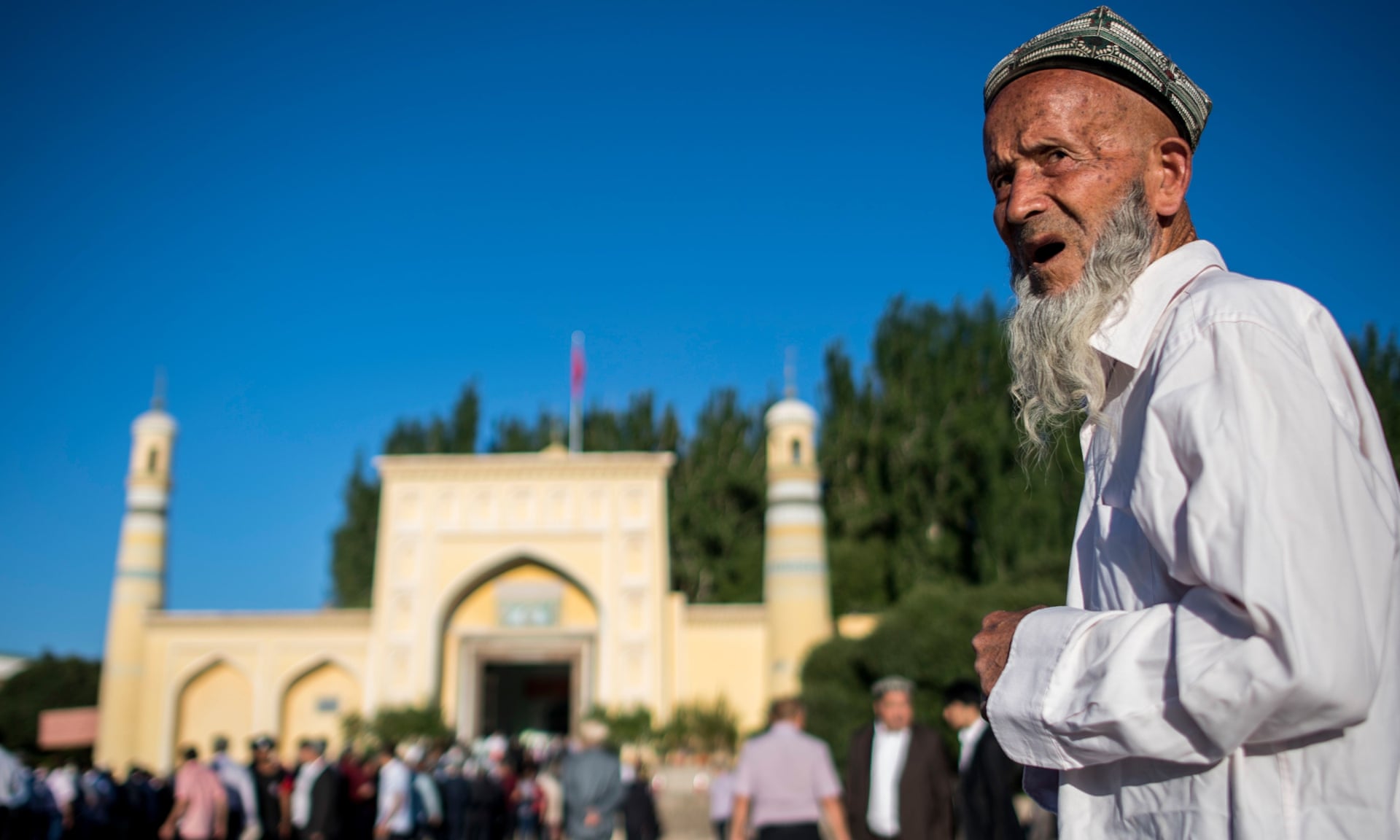
UK confirms reports of Chinese mass internment camps for Uighur Muslims

Criticism is mounting over reports of concentration camps in the western colony of East Turkestan
By Lily Kuo

 Several countries, including the UK, have asked Beijing about East Turkestan ahead of a UN panel review in November of China’s human rights record.

British diplomats who visited East Turkestan have confirmed that reports of mass internment camps for Uighur Muslims were “broadly true”, the foreign secretary, Jeremy Hunt, has told parliament.
Beijing faces mounting international criticism over its policies in East Turkestan, a far-western colony of China where an estimated 1 million members of Muslim minorities have been detained in a network of camps.
Hunt told parliament on Tuesday that diplomats had visited East Turkestan in August and “concur that those reports are broadly accurate”.
His comment puts pressure on Beijing before a UN human rights panel that will on 6 November review China’s human rights record. 
The UK, the US, the Netherlands, Sweden, Austria, Norway, Germany and Belgium have asked about East Turkestan in questions submitted for China ahead of the process known as the universal periodic review (UPR).
Hunt said he had raised the issue with his Chinese counterpart, the foreign minister, Wang Yi, on a trip in July. 
“We continue to be extremely concerned about what is happening,” he said.
“A senior cabinet member raising the issue in parliament sends a message to China that the UK is serious about what’s happening in East Turkestan and China will likely hear more at the UPR,” said Frances Eve, a researcher at Chinese Human Rights Defenders.
Ahead of the panel, China has ramped up its defence of the camps, where ex-detainees have said they were abused, forced to learn Mandarin, as well as undergo political indoctrination.
After denying their existence, China has begun acknowledging them but described the camps as "vocational training centres" that embody the “humane management and care” of a campaign in the name of counter-"terrorism".