Affichage des articles dont le libellé est pollution. Afficher tous les articles

lundi 19 août 2019

China's Belt and Road Plan Is Destroying the World

All Chinese-financed, coal-fired power plants built overseas use low-efficiency, subcritical coal technology, which produces the highest emissions of any form of power generation. Thus, China is destroying the environment.
By Sagatom Saha

China has continually assured the world that its Belt and Road Initiative (BRI) is a green project. 
At the first BRI forum in May 2017, Chinese dictator Xi Jinping touted BRI as a “vision of green development and a way of life and work that is green, low-carbon, circular and sustainable.” 
Similar promises were made at this year’s forum in April. 
However, China has long been the world’s largest exporter of coal power equipment, exporting twice as much as its nearest competitor. 
At the same time as the first forum, Chinese companies were building an estimated 140 coal plants abroad, including in countries like Egypt and Pakistan that previously burned little to no coal. 
At the current rate, Chinese coal plant developers will drive energy investments that make it impossible to limit global warming to safe levels. 
If Chinese development banks continue their current practices, then pollution will inevitably worsen around the world.

The Belt and Road’s Dirty Truths
Much of what Beijing touts as development assistance for power projects worsens pollution. 
Nearly 40 percent of Chinese Development Bank (CDB) and Chinese Ex-Im spending on electricity generation has gone toward coal. 
As a result, the amount of coal-fired generation Chinese policy banks are directly responsible for between 2013, the year that BRI was announced, and 2018 could generate enough electricity to power Norway or Poland.
This surge in coal-fired generation will come with a drastic emissions increase. 
Chinese development finance flows between 2013 and 2018, by conservative estimates, will contribute to annual emissions equivalent to that of the Netherlands. 
Overall, projects backed by Chinese development banks will produce more coal-fired power globally than clean energy generation, setting the path ahead in the wrong direction. 
If it were not for government support, then Chinese coal power suppliers almost certainly would not be as successful and global emissions would be fewer.
The CDB and Chinese Ex-Im financed power plants in thirty-eight countries since 2013, nearly half of which are fossil fuel-based. 
Most Chinese-financed, coal-fired power plants built overseas use low-efficiency, subcritical coal technology, which produces some of the highest emissions of any form of power generation. 
In more than one-third of countries, projects funded by the Chinese development banks increase national emissions intensity. 
That is, Chinese foreign aid makes those countries’ power sectors higher emitting than before.
The picture is even worse in countries where China has concentrated efforts. 
In Pakistan, where Beijing has focused massive amounts of BRI spending through the China-Pakistan Economic Corridor, China has financed so much coal that its power investments are more than twice as emissions heavy as Pakistan’s electric grid was in 2012. 
Overall, as Chinese development finance in a country’s power sector increases, it becomes harder for that country to lower emissions.
Beijing did not finance fossil fuel projects in more than half of the thirty-eight countries, but China’s non-fossil fuel projects constitute one-off investments over the six-year period. 
Moreover, nearly all those non-fossil fuel projects are not wind and solar but hydroelectric dams, which carry their own environmental damage. 
China’s hydroelectric projects portend ruin for millions of farmers and fishermen.

Better Alliances and Best Practices
The United States should not allow China to freely and falsely claim the mantle of global environmental and clean energy leadership. 
BRI marks a new era of U.S.-China global competition, in which Chinese funding for development and infrastructure projects could bring Beijing economic and strategic benefits at America’s expense. Take Southeast Asia, for example—Cambodia, Indonesia, Laos, and Vietnam all receive Chinese development finance for power generation projects. 
The region is home to the Straits of Malacca, the second largest oil trade chokepoint after Hormuz, several U.S. military installations, and the world’s fastest-growing economic market.
As it stands, Beijing is leveraging environmentally and socially harmful infrastructure projects for diplomatic capital that blunts America’s Indo-Pacific military presence and gives it a competitive advantage over the United States in an important emerging market. 
On the other side of Asia, Beijing-backed coal projects are, in part, helping the Chinese Communist Party deepen defense cooperation with Islamabad while worsening air pollution that already causes tens of thousands of premature deaths annually.
The State Department should highlight these environmental and social costs and the comparative advantage of U.S. power projects under Indo-Pacific Strategy initiatives, which seek to grow the region’s energy markets while minimizing environmental impact. 
If the United States firmly communicates the environmental and social costs of Chinese development finance, then Beijing’s reputation should suffer accordingly amid a growing global backlash to BRI.
Further, the United States should cement ongoing partnerships with Australia, India, and Japan—some of America’s strongest allies in the Indo-Pacific region—to internationalize new standards on “quality infrastructure.” 
Even with the creation of the new International Development Finance Corporation (DFC), the United States cannot compete dollar for dollar with BRI. 
This burden-sharing strategy will help pool and coordinate funds competing with Beijing.
The United States will find it difficult to sway countries away from Chinese development finance and China away from financing low-quality coal projects. 
That China has been supporting coal abroad while canceling coal projects at home is simple self-interest: Beijing sees coal equipment exports as a solution for excess industrial capacity. 
Beijing must keep legacy coal manufacturers afloat because the Chinese coal industry and steel industry, which depends on coal, supply roughly twelve million Chinese jobs. 
The United States should consider the important role that domestic concerns play in Beijing’s development assistance plans and pursue strategies that help assuage them. 
The Energy Department could facilitate projects to transition coal and steelworkers in both the United States and China into roles in the clean energy economy, such as the production and installation of solar panels and wind turbines.
Despite repeated claims of “green development,” Xi Jinping tacitly admitted BRI’s first phase has been an environment failure. 
After the second Belt and Road Forum, the Chinese Ministry of Foreign Affairs released a list of deliverables that include many efforts to make BRI greener. 
The United States can independently verify and communicate widely whether China is making progress toward these goals. 
Unless the United States challenges Chinese claims and competes with Chinese development projects, Beijing will continue to diplomatically benefit from asserting leadership with little cost.
Chinese development finance has an even more harmful impact than visible, given the low quality of Chinese coal technology. 
More transparency would allow the United States to engage China on BRI’s true environmental and social impact. 
If the United States can successfully push China to become a more responsible provider of development assistance, then global prosperity would grow, emissions increases would slow, and Beijing’s ability to deploy foreign aid at America’s expense would diminish.

jeudi 13 septembre 2018

Ibsen Play Is Canceled in China After Audience Criticizes Government

By Alex Marshall and Zoe Mou
A handout image of an earlier production of Henrik Ibsen’s “An Enemy of the People” by the Schaubühne Berlin company.

A German theater production that invited audiences in China to voice their complaints about society has been canceled over fears of what they might say.
The Schaubühne Berlin company was due to perform “An Enemy of the People,” a 19th-century play by the Norwegian playwright Henrik Ibsen, in Nanjing on Thursday and Friday. 
But the shows were abruptly canceled after members of the audience in Beijing last week shouted criticisms of their authoritarian government.
The theater in Nanjing that was to host the play cited “technical problems,” including a hole in the stage, Tobias Veit, the Schaubühne’s executive director, said in a telephone interview.
But Mr. Veit said the real reason for the cancellation appeared to be that the theater managers deemed the play, first performed in 1883, too risky given the audience comments in Beijing.
“People were saying things like, ‘The biggest problem in China is the question of free speech,’ and things about economic scandals, corruption and how the press is not revealing the truth,” Mr. Veit said. 
“We thought they might not speak openly, but they did and actually talked about the political and social issues in China.”
After that first show on Sept. 6 at the National Center for the Performing Arts, an egg-shaped landmark in central Beijing, the venue’s management called a meeting with Mr. Veit and his colleagues, and asked them to cut the part where the audience is given a chance to voice grievances.
“They said the risk that things are said by the audience that can’t be controlled is too big,” Mr. Veit said, and that future performances would have to be canceled unless the change was made. 
After some discussion, the Schaubühne team agreed, deciding that it was better to go on with the truncated show than cancel entirely.
But Mr. Veil said he suspected that news of the controversy had reached Nanjing, the next scheduled site for performances.
“I don’t know if the authorities in Nanjing heard about it, or they were directed by Beijing,” he said.
“I would understand the reaction if we came to China to provoke, but that is not the case,” Mr. Veit said. 
“We came there to have a dialogue. That is what theater is about.”
Chen Qiwen, a social media editor who watched the second, partly censored performance of the play the next night in Beijing, said he was not surprised that “An Enemy of the People” had set Chinese officials on edge. 
Under Xi Jinping, censorship and control of culture has reached new extremes.
“To me, it was not surprising at all that they canceled the oncoming performances in Nanjing,” Mr. Chen said by telephone.
He said the Beijing performance had been his best drama viewing experience this year, “not only because of the quality of the drama, but also the ridiculousness and absurdity that has been revealed through the interaction of what happened on and off stage, and the resemblance between the story and this country’s reality.”
The Schaubühne company has performed in China many times before, and Ibsen’s plays and their liberal themes have gone through periods of wild popularity in China — especially during the May Fourth Movement in the early 20th century. 
But this particular drama would seem to have plenty of potential to unnerve Chinese censors, and embolden their critics.
“An Enemy of the People” is about a small-town doctor in Norway who discovers the public baths are contaminated. 
He tries to reveal the scandal, but is run out of the town for threatening its tourist business.
The play’s themes of pollution, corruption and a tame, muted news media have clear resonance in China. 
During the second staging in Beijing, the German actors signaled that something had been cut from their performance by pausing pointedly in silence during the censored segment of the play. 
And even in that second, censored show, one member of the audience shouted, “Freedom for the individual,” Mr. Veit said.
The third performance, on Sept. 8, was also censored.
The Schaubühne’s contemporary production has already toured globally without incident, including at the Brooklyn Academy of Music. 
It adds a 15-minute section to the play in which one of the actors reads a critique of modern society and then asks others what they think. 
Audiences often break out in criticisms of their own governments and societies, Mr. Veit said.
But the Chinese censors had fair warning of what might happen, he said.
“They invited us, they had the DVD with the complete show and the script, so they should have been aware what was going to happen,” Mr. Veit said. 
“But I think the hierarchies didn’t realize the potential that if an audience begins to talk, you don’t know what it’ll say.”

vendredi 10 août 2018

China’s Belt and Road is conduit for polluting investments

China’s Belt and Road is spreading polluting investments around the world 
By Kelly Sims Gallagher


China’s Belt and Road Initiative (BRI) is the biggest vehicle for foreign direct investment in the world, but it is presently locking in outdated, dirty, and inefficient technologies in recipient countries rather than preparing them for sustainable prosperity in a carbon-constrained world.
 China must overhaul its social and environmental policies governing overseas investments to make them consistent with its domestic policies.
As China seeks to reduce its overseas investment risks, it should be conscious that social instability caused by air pollution and climate damage rank among the biggest risks of all.
 According to official Chinese government sources, the BRI is motivated by a desire to “promote an orderly and free flow of economic factors, highly efficient allocation of resources, and deep integration of markets by enhancing the connectivity of the Asian, European, and African continents and their adjacent seas”.
 China’s overseas investment flows hit a record $183bn in 2016, second only to the US and representing a 44 per cent increase over the previous year, according to Unctad.
In terms of overall stocks of foreign direct investment, China is also second only to the US with $4.7tn compared with the US investment of $6.4tn.
In terms of FDI stock, China is the largest investor in least-developed countries, the top investor in developing Asia, the third-largest investor in Russia, eastern Europe, and Central Asia, and the fourth-largest investor in Africa.
 For energy-specific projects, Chinese-led policy banks lent $160bn in overseas finance for the energy sector since 2000, nearly equalling total energy finance from the World Bank and regional development banks during the same period.
Some 80 per cent of China’s overseas energy investments are in fossil fuels compared with only 3 per cent in solar and wind and 17 per cent in hydro.
Although there are undoubtedly economic and development benefits created for Chinese investors and host countries deriving from China’s substantial FDI, there is growing controversy over the significant social and environmental impacts of China’s overseas investments.
 While local communities have protested the localised environmental effects of certain investment projects, broader concerns about the greenhouse gas emissions resulting from new long-lived infrastructure projects that could last 50-75 years for a new power plant, for example, are also emerging.
In addition, concerns have emerged about debt sustainability as well as geopolitical and national security issues.
 China’s policy banks, specifically the China Development Bank and China ExIm Bank, and state-owned commercial banks like the Industrial and Commercial Bank of China still actively lend for coal-fired power plants. 
 While China’s policy or state-owned commercial banks have never formally limited their investments in coal-fired power plants, the Chinese government did state that “China will strengthen green and low-carbon policies and regulations with a view to strictly controlling public investment flowing into projects with high pollution and carbon emissions both domestically and internationally” in the context of a 2015 US-China Joint Statement on Climate Change at the Presidential level.
 Of course, recipient countries could limit new coal power plant construction through their own domestic energy, air quality, water, and climate policies.
In 2016, colleagues and I determined that between 2001 and 2016, Chinese financial institutions supported the construction of more than 50 coal-fired power plants abroad that were either under construction or operational. 
 A majority of these power plants, or 58 per cent, used sub-critical coal technology, which is the most energy inefficient form of coal-fired power plant and, therefore, the type that is most carbon intensive. 
We then estimated that on an annual basis, this fleet of more than 50 coal-fired power plants would release nearly 600m metric tons of carbon dioxide per year, which is equivalent to 11 per cent of total US emissions in 2015. 
 While the governance system for overseas investments has matured, the policies governing the environmental dimensions of China’s FDI are relatively weak and mostly voluntary in nature.
 The policies governing China’s overseas investments remain inconsistent with the policies that govern domestic investments.
Chinese companies and investors are solely required to adhere to the environmental policies and preferences of the recipient country governments, and even then, there do not appear to be serious enforcement consequences for companies or banks that fail to do so.
 Policies specifically aimed at limiting emissions of climate-altering greenhouse gases from China’s FDI do not exist.
 Many observers have suspected that one purpose of the BRI is to provide a pressure relief valve for China’s legacy industries. 
On the other hand, the Chinese government’s go-out strategy and industrial policies in support of strategic industries could result in a considerable amount of new “green” investment overseas given many of China’s strategic industries are, in fact, green industries.
 The relatively recent solar investments in Pakistan are a good example of the alignment between strategic industry promotion and the provision of green finance.
It is important to remember, however, that the predominance of China’s global energy investments between 2000 and 2016 were in fossil fuels — $54.6bn in oil, $43.5bn in coal, $18.8bn in natural gas — compared with $2.4bn in solar, $1.7bn in wind, and $24.9bn in hydropower.
 Domestically, the Chinese government is making a tremendous effort to promote and unlock green finance, and there are undoubtedly spillovers from the domestic provision of green finance to BRI countries.
The remarkable growth of China’s green bond market, for example, provides evidence that there is a strong appetite for green growth inside China.
International investors also appear eager to invest in green financial instruments within China.
The question now is how to apply these same instruments to outbound investments, especially within the BRI.
The first place for the Chinese government to start is to overhaul the policies governing those overseas investments.

mardi 26 septembre 2017

Chinese Peril

As China has boosted renewable energy it’s moved dirty coal production to Africa
By David Obura

Got coal?

China is transforming its sources of energy domestically in a bid to reverse decades of environmental pollution. 
But the switch to renewable energy has brought about a conundrum: what to do with the jobs and industries that have no future in this new system?
Export them. 
Several African countries are accepting the poisoned chalice of China’s subsidised development through the construction of outdated, dirty coal plants.
Kenya is one. 
Its coastline is a national asset for fisheries, tourism, a growing population and economic development. 
But Amu Coal—a consortium of Kenyan and Chinese energy and investment firms—is set to start building a coal plant on the only part that is untouched by industrial development. 
The plant is planned to be some 20 kilometers from the town of Lamu on the mainland coast, at the mouth of Dodori Creek.Lamu. 

Quite apart from the unfavourable economic and financing aspects for generating energy from coal, the plant may be Kenya’s single largest pollution source.
The problems should be set out in the Environment and Social Impact Assessment study required by Kenya’s Environment Act and vetted through the National Environment Management Authority. 
But three key issues are omitted or glossed over by the study. 
Any one of them should be cause for the environment authority, other arms of the Kenyan government and certainly the public to oppose the coal plant.
Thankfully, opposition is growing.

Key issues against plant
The first is a classic Industrial Revolution, Victorian issue. 
Toxic pollution. 
Coal releases a range of toxic substances into the environment. 
These go into the atmosphere, rain, groundwater, and seawater – and then to flora, fauna and people. 
These substances are barely mentioned in the assessment study. 
There are also no detailed estimates on the amounts that could be released and how they could be reduced by mitigating actions. 
The coal intended for use – initially to be imported from South Africa, and classified as “bituminous”, releases large amounts of toxins, particularly if improperly burned.
The impact study also doesn’t clearly state the full size of the mountain of coal residue left behind after burning—almost 4km long by 1km wide and 25 metres high. 
No credible plan for disposing of the waste is presented.
Second is Kenya’s contribution to global carbon dioxide emissions. 
Under the Paris Agreement on climate change the Jubilee government committed to reduce these by 30% by 2030. 
The impact study dismisses the carbon emissions from the plant as negligible on a global scale, at only 0.024% of global emissions. 
But what it attempts to hide is that the emissions of the coal plant alone will double Kenya’s energy sector’s entire CO2 emissions. 
This at the same time that citizens, businesses and the government are investing in efforts to reduce their carbon footprints, through – for example through wind, solar and geothermal power generation.Cars parked under solar panels at Africa’s largest solar carport in Nairobi’s Garden City shopping mall. 

The third reason is a chimera of the above—climate change and toxic pollution combined. 
It is reasonably certain that sea levels will rise due to climate change. 
Estimates suggest this could be in the order of half to one metre by the end of this century, and very possibly more. 
The toxic waste mountain left by the plant will be on Kenya’s flattest shoreline, built on sand. 
Its base will be maybe 2-3 metres above sea level, and tens to 100m from the shoreline. 
This is the most vulnerable part of Kenya’s coast where sea level rises, and yet the massive toxic dump is to be placed there.
Part of the impact assessment argues that “the area is remote” so few people will be affected by pollution. 
Quite apart from the flawed logic that it’s okay to pollute natural wilderness areas, if plans for a major urban development under the LAPSSET project—Eastern Africa’s largest and most ambitious infrastructure project bringing together Kenya, Ethiopia and South Sudan—are concluded, there will be a city of over one million people in the area by 2050.
The report contains nothing about exposure of this number of people to toxic waste. 
Even the Strategic Environment Assessment for the LAPSSET project, conducted in the last few years, doesn’t include the coal plant in its assessment. 
The logic is that the plant is “not part of LAPSSET” yet even the simplest understanding of the purpose of both impact assessments and strategic environment assessments is to consider all interacting threats, and particularly the biggest ones, to the environment and people.
Improved standards are undoubtedly needed in Kenya’s Environment Impact Assessment sector. 
The country will develop, by hook or by crook, with or without a vision for 2030. 
Strengthening environment and social impact assessment as a tool to facilitate the right sort of development—where currently it’s viewed by business and most government authorities as a pesky bureaucratic step at best—will be one of the single most significant steps the government can take to protect and grow the natural and social assets that secure, healthy and equitable development is founded on.

samedi 8 juillet 2017

Chinese Quiet Invasion of Siberia: A Geopolitical Time Bomb

Demographic genocide: The influx of Chinese migrants fuels resentment regarding China’s presence
BY IVAN TSELICHTCHEV

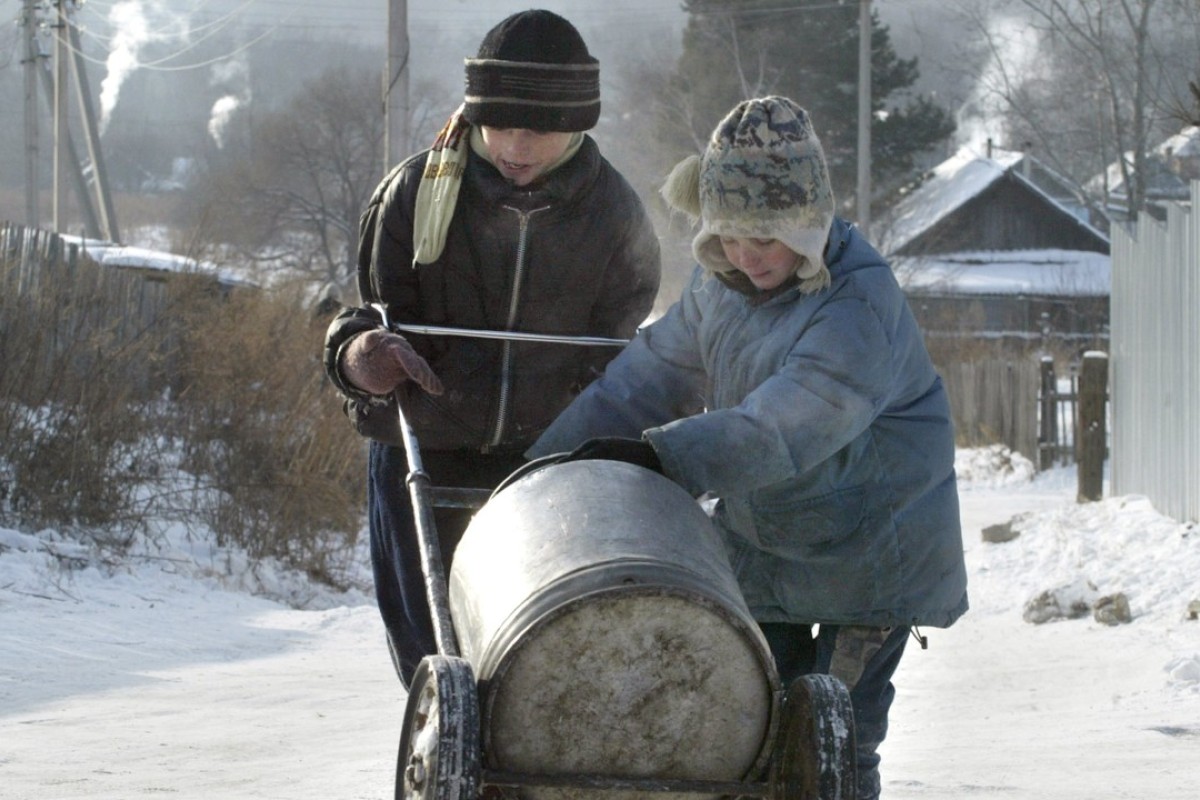
Children transport spring water to their village outside Khabarovsk, Russia. A 100 billion yuan investment fund is the latest in a string of efforts to strengthen ties along the border of China and Russia.

Recent meetings between Beijing and Moscow – at the Belt and Road Forum last month and at a two-day summit last week in Russia – are the latest in a string of efforts to strengthen Sino-Russian ties, especially along the border. 
However, like many nations, Russia has found that working with China can be a double-edged sword.
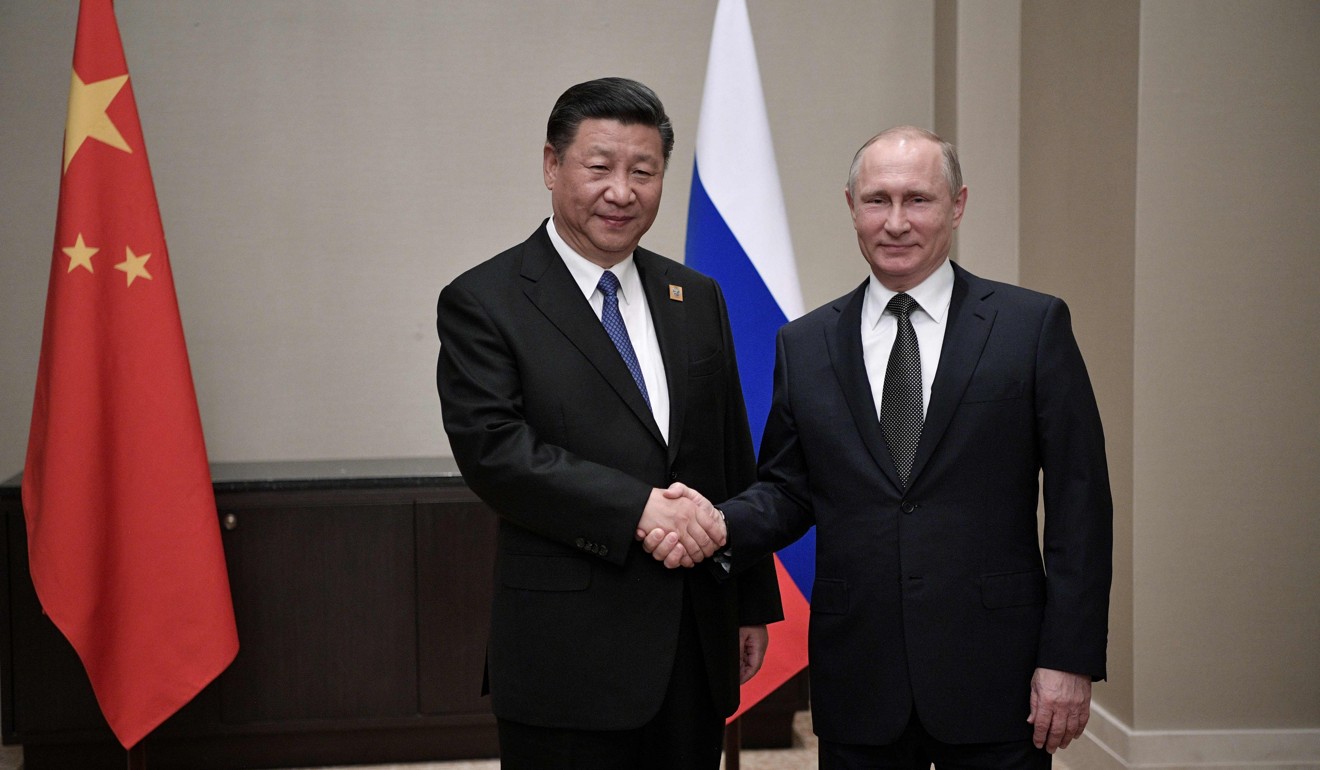
Sino-Russian relations are “at their best time in history”, Xi Jinping told Russian media attending the summit – words that were backed up with the announcement of a US$10 billion fund for cross-border infrastructure projects.
But for all the fanfare surrounding the fund, Chinese investment in the region is helping to fuel tension, raising fears of China’s growing presence in the Russian Far East. 
A side effect of Beijing’s investment – an influx of Chinese migrants – is perceived by locals as an expression of China’s territorial expansion. 
Russian political groups and media outlets have tapped into this anxiety.
An apocalyptic film China – a Deadly Friend (in the series “Russia Deceived”) became an instant internet hit after its release in 2015. 
In the film, China is preparing to invade the RFE in its quest for global dominance and that Chinese tanks could reach the centre of the city of Khabarovsk within 30 minutes. 
Just 30km from the Chinese border, Khabarovsk is the second largest city in the RFE after Vladivostok and the region’s administrative centre.
According to Russia’s census of 2010, the number of Chinese residing in the country was just 29,000, down from 35,000 in 2002 – no more than 0.5 per cent of the total population of the RFE.
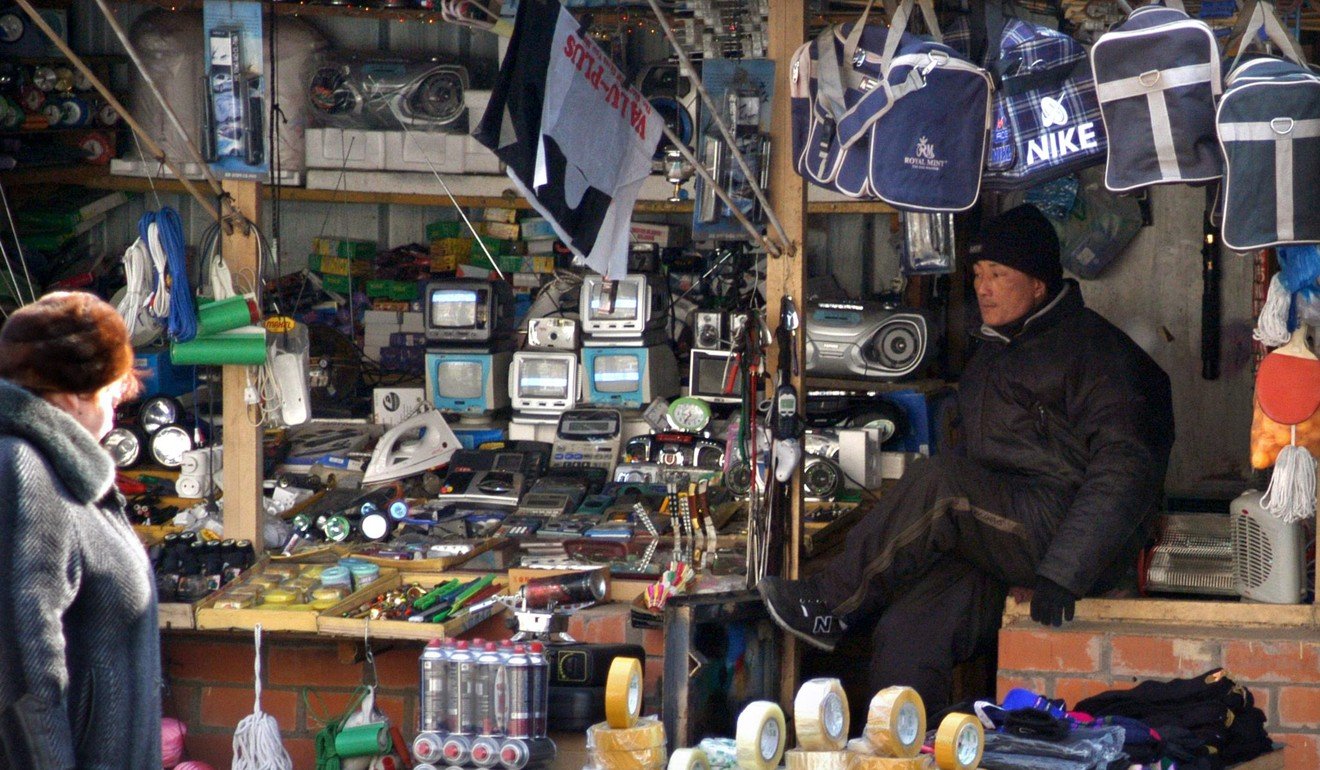
Other estimates, however, put the number of Chinese in Russia at 300,000 to 500,000.
Transfer of territory: Xi Jinping shakes hands with Vladimir Putin during their meeting in Astana. 

The issue of Chinese presence in the RFE touches a raw nerve in Russia, largely for two reasons. First, Russians view it in the context of the enormous and growing economic and population incongruence with China and second, the three-decades-long Sino-Soviet confrontation, including border clashes in the late 1960s.
China’s population is about 10 times that of Russia. 
The population of the RFE, comprising seven provinces, is only a little more than 6 million – an average density of less than one person per square kilometre. 
Furthermore, the population in this region is in decline due to low birth rates and migration to other regions of Russia where living and working conditions are better. 
Since 1991, the RFE has lost about a quarter of its population.
China’s gross domestic product is almost 10 times that of Russia’s and the gap is increasing. 
The Chinese economy grows almost 7 per cent a year, while Russia has just gotten over a recession and is unlikely to grow more than 1.5 per cent to 2 per cent in the coming years.
Irrespective of its rich natural resources, the RFE remains one of the most problematic Russian regions in terms of infrastructure, industrial development and living conditions. 
The outdated infrastructure of most towns and villages, especially those in the border area, is in stark contrast to the state-of-the-art facilities built in Chinese border cities like Suifenhe or Heihe.

Territorial issues
The 1858 Aigun Treaty between the Russian Empire and the Qing Dynasty established the Sino-Russian border along the Amur River, reversing the previous Nerchinsk Treaty of 1689. 
Russia got over 600,000 sq km on the left bank of the Amur, known as Priamurye, which had been held by China. 
With the signing of the Convention of Beijing two years later, it also acquired the vast area on the right bank of Amur, east of its tributary Ussuri River (Ussuri joins Amur in Khabarovsk) – thus gaining complete control over the Primorye region down to Vladivostok.
A Chinese man sells goods at a market in the town of Vladivostok. Some estimates put the number of Chinese in Russia at 300,000 to 500,000.

In China, both treaties are viewed as unequal, drawn up in a time of China’s weakness.
In 1969, when confrontation between Beijing and Moscow peaked, military clashes broke out on the border, raising fears of an all-out war. 
In 1989, bilateral relations were normalised. 
The border was largely finalised by the agreement of 1991. 
Historian Boris Tkachenko said China netted 720 sq km. 
Ironically, the territories it got included the Island of Zhenbao – the scene of the bitterest military confrontation in 1969. 
The issue of the territorial status of the two small islands near Khabarovsk along the junction of Amur and Ussuri rivers – Yinlong and Heixiazi – was left to be settled later. 
Under the agreement of 2004, the former and about half of the latter were transferred to China. Critics say that Moscow made too many concessions. 
With the signing of the additional border agreement in 2008, officially all the territorial issues were settled. 
China and Russia are now strategic partners. 
But many in China feel that as the Aigun Treaty and the Convention of Beijing were unjust, China should at some point get back territories it ceded.

The economic dimension

Economic activities of the Chinese in the RFE are still expanding, with the tacit approval of the Russia.
One of the major Chinese activities in the RFE, and also Siberia, is agriculture. 
Chinese farmers are cultivating corn, soybean, vegetables and fruits there while many are engaged in pig husbandry. 
For this, Russia is leasing land – hundreds of thousands of hectares, usually at preferential rates.
Recently a new accord was signed to lease about 150,000 hectares of farm land in the Trans-Baikal region in Eastern Siberia to the Chinese for 49 years at a symbolic price of about US$5 per hectare. 
Almost all the woodlands in the area near the Chinese border had already been leased for timber extraction.
Critics are saying that it means a sell-out of the native land at a discount price. 
However, more major matters for concern also exist.
The top headache is the excessive use of chemicals. 
The nitrates in the fruits and vegetables grown by the Chinese far exceed the norms, according to Russian monitoring authorities. 
Many chemicals they use are unknown in Russia, and there is no methodology for their analysis. 
This poses health risks for consumers, and also risks soil degradation.
One more surprise for Russians was Chinese-run pig farms. 
The animals grow at an “unthinkable” pace and to an “unthinkable” size – apparently, due to the intensive use of chemicals in their forage.
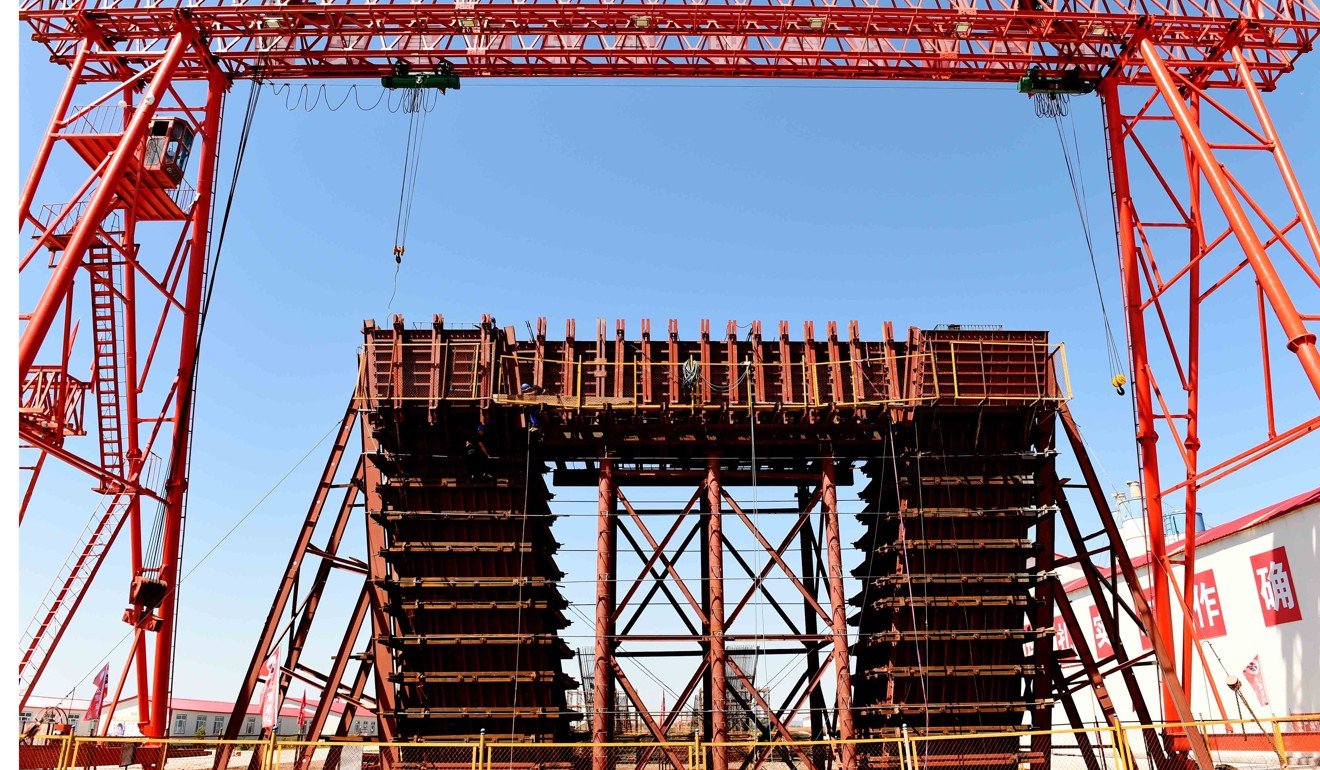
Builders work at the construction site of Heihe-Blagoveshchensk road bridge at the border of China and Russia. The 19.9km highway bridge stretches from Heihe, a border town in northeastern China's Heilongjiang Province, to the Russian city of Blagoveshchensk. The road bridge is scheduled to open to traffic in October 2019. 

In 2009, China and Russia launched a long-term programme of cooperation in the border regions. 
It includes 205 key projects: 94 on the Russian side and 111 on the Chinese side. 
The latter, however, are mostly stalled as Russian counterparts don’t provide enough financing to implement them. 
In contrast, projects started in Russia by the Chinese are extracting metallic ores and other natural resources, producing cement and modernising customs and border control facilities.
When implementing cooperation projects, the Chinese side, first and foremost, seeks to send in large numbers of labourers. 
More often than not, it appears to be a precondition for launching such projects.
In 2014, Russia enacted the Territories of Accelerated Development (TAD) law – special economic zones providing substantial tax and other benefits, including reduced mineral extraction fees. 
No permits are required for hiring foreign workers.
The territories are established initially for 70 years, but the term can be extended. 
They are managed not by local administrations but by Committees and Management Companies appointed by the government. 
Land or real estate there can be confiscated from Russian citizens at the request of the managing company.
Initially TAD will be created only in the RFE, starting from the Khabarovsk and Primorye provinces. The Chinese will be the major players and beneficiaries.
China may transfer more major enterprises to the RFE, from construction projects to shipbuilding to telecoms. 
The Russian side is willing to accept them, provided they meet environmental standards.
All this obviously sets the stage for a deeper involvement of the Chinese in the RFE economy and the rise in the number of Chinese residents. 
Yet, their numbers will not surge dramatically. 
Economic factors, limiting China’s presence are also at work.
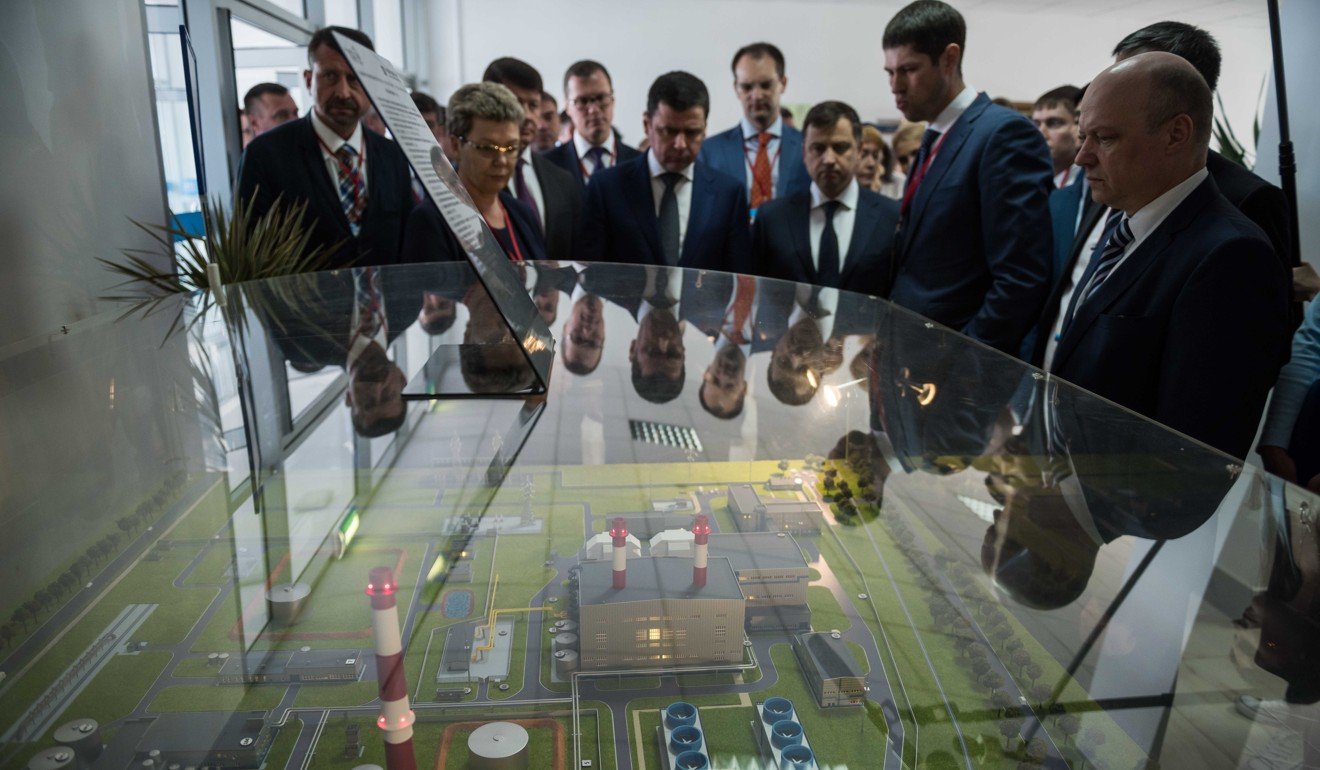
Guests view the sand table model of a heat and power plant in Yaroslavl Province, Russia. A gas-steam combined heat and power plant built by a China-Russia joint venture has been officially brought online.

First, China has vast underdeveloped areas of its own, especially in the west with a sparse population density comparable to the RFE. 
For Beijing, development of those areas appears to be a priority.
Second, Russia’s attractiveness as an employment destination is declining as wages in China are growing faster and may have already exceeded Russian levels.
Third, Russia’s economy has gone through a recession and very low growth rates are expected. Chinese investors’ enthusiasm is not increasing. 
They have many other attractive foreign investment destinations around the world to choose from.

Diagnosis and prospects

The scale of the Chinese presence in the RFE is still comparatively small. 
In the coming years it is likely to grow at a moderate pace.
Economic interests of both sides are complementary, not conflicting. 
The RFE needs Chinese labour resources, money and technologies. China needs RFE’s land, natural resources and markets. 
That said, there is a risk that those stronger links may also raise anxieties and tensions, especially on the Russian side, and may amplify xenophobic sentiments. 
Russia will have to accommodate more and more Chinese, providing a comfortable working and living environment, making them abide by their rules.
Interaction with the Chinese will be productive only if more Russians choose to live and work in the RFE, drawn in by improved infrastructure and new industries. 
Otherwise, as Vladimir Putin put it, the majority of Russia’s population there will speak Chinese, no doubt. 
The issue of the Chinese in the RFE is manageable only if Russia is able to attract more Russians to the region. 
If not, then the growing Chinese presence may become a geopolitical bomb. ■

dimanche 16 avril 2017

American students lose interest in China studies

Concerns about pollution, work opportunities take toll on enrollment
By PAUL MOONEY
Some observers say that study abroad programs in China need to address student demand for internships and work opportunities, not just focus on language and culture.

BERKELEY, U.S. -- Early in his presidency, Barack Obama set a goal to vastly increase the number of Americans studying Chinese and taking part in academic programs in China.
Eight years later, Obama is gone and so is much of the academic momentum. 
Though China looms ever larger in U.S. economic and security concerns, American universities are experiencing a decline in the enrollment in Chinese language courses and study abroad programs. The growing sense that work opportunities in China are harder to come by is compounding worries about pollution and other living conditions.
Stanford University announced in January it would indefinitely suspend its undergraduate program in Beijing as of May. 
The school's student newspaper reported that enrollment had fallen by around two-thirds from 2004 to just eight last year. 
The university had earlier merged its Chinese and Japanese language degree programs into a single East Asian studies course.
The number of U.S. students in language courses in China began to rise ahead of the 2008 Olympics in Beijing, when dozens of programs were started to meet increasing demand. 
Obama announced the 100,000 Strong Initiative in late 2009 to send over that number of students within five years.
Although that target was indeed met, enrollment has been dwindling since hitting an annual high of 14,887 in the 2011-2012 academic year. 
Within three years, the figure had dipped to 12,803, according to the Institute for International Education.
Said Victor Mair, professor of Chinese language and literature at the University of Pennsylvania: "There has been a marked decline in the number of students studying Chinese at UPenn and generally across the country, and also in the number of foreign students studying Chinese in China and elsewhere. The [100,000 Strong] project has had no positive, significant impact on increasing the number of Americans going to China to study Chinese.
"It was announced to great fanfare, but was not followed up by practical programs for encouraging and facilitating students to go to China," he said.
Enrollment in Chinese language programs at the University of Pennsylvania peaked at 1,229 in 2009-2010; the current figure is 725.

The 2008 Beijing Olympics, for which Beijing National Stadium, better known as the Bird's Nest, was built, spurred interest among American students in learning Chinese. 

It's a similar situation at Williams College in Massachusetts where enrollment in Chinese language classes dropped from 1.6% of all students in 2012 to 1% in 2016. 
Sam Crane, professor of political science, said that while his Chinese politics class once attracted 30-35 students, only 18 enrolled in the last semester. 
In recent years, China-funded fellowships for graduate studies have found no takers, he said.
Not all programs have seen a decline however. 
According to the New York-based Modern Language Association, Chinese language courses at U.S. universities recorded overall enrollment growth of 2% between 2009 and 2013. 
But this compared with the 50.4% growth seen in 2002-2006.

Souring views

A key factor in the disappearing momentum is a souring in American views of China in recent years. Nearly two-thirds of respondents in a January poll by Pew Research Center said they saw China as either an adversary or a serious problem. 
The researchers said negative views of China rose 21 percentage points between 2006 and 2016 among young Americans.
"There's a feeling of uneasiness about the deteriorating political situation in China and in East Asia and Southeast Asia generally," said Prof. Mair. 
"It's also students not wanting to spend time in the polluted environment of China, with their parents also having a big say in this."
The political standoff has spilled over directly into Chinese studies. 
With U.S. government funding for foreign language study declining, many American universities and lower level schools have joined a Chinese government program which supplies teachers and teaching materials, but concerns about political undercurrents have seen a number of universities drop out recently.
Other observers say that many China study programs haven't evolved with the changing needs of students, leaving too much focus on language and culture. 
Students from science, technology, engineering and math departments have been discouraged by parents and professors from studying in China out of concern that such courses would be difficult to find in English.
"I originally was planning to study abroad in China, but with an electrical engineering major, there were simply too many requirements," said a first-year graduate student at the University of California, San Diego.
With the cost of U.S. higher education rising dramatically, many students, worried about mounting educational debt, are rethinking overseas studies.
"We need to figure out how to restructure our programs to become more relevant and worthwhile for [students'] new realities," said David Moser, academic director of the CET Beijing Chinese Studies & Internship program at Beijing Capital Normal University. 
"Students now are strapped for cash, apprehensive about their futures, and very pragmatic and conservative. They want classes and experience that will translate into jobs and CV-building."
This has involved greater demand for internships and work opportunities. 
"Nearly every program in China [is] now focusing on providing internships," Moser said. 
At the same time, however, full-time job opportunities for foreigners are becoming scarcer in China with the economy slowing. 
In addition, some jobs that foreigners used to fill are now being taken by Chinese students returning from their own overseas studies.
"I have gotten the sense that [American students] perceive that economic opportunities in China for recent graduates are not as dynamic as was the case in 2009," said Williams' Crane. 
"Competition from Chinese students, many of whom now have attended high school as well as college in the U.S., and who are comfortably bi-cultural, has become more acute in the past few years."

lundi 23 janvier 2017

Plagues of China

Chinese human rights lawyers set their sights on smog
AFP

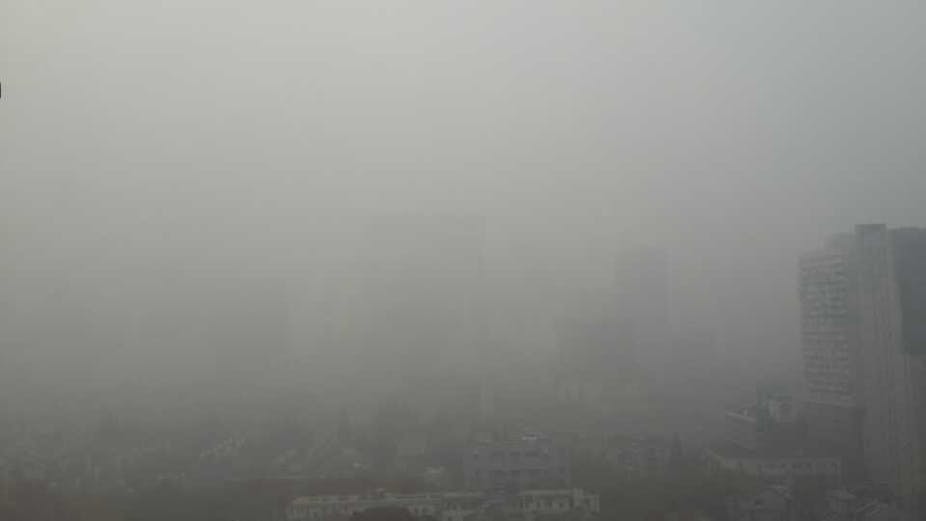
BEIJING -- Toxic smog has found itself in the dock in China, as the authorities are taken to court over a problem that has choked entire regions, put public health at risk and forced the closure of schools and roads.
At the helm is a group of human rights lawyers, who despite increasing government hostility to their work on some of China's most sensitive cases, say popular feeling is behind them when it comes to pollution that is literally off the charts.
"Chinese people aren't too concerned about societal problems and things that aren't happening to them personally, but this issue is different: everyone is a victim and is personally influenced by breathing polluted air," lawyer Yu Wensheng told AFP.
He is among a group of six lawyers who began filing their suits in December after a choking cloud of haze descended on China's northeast, affecting some 460 million people.
The campaign comes amid growing public anger over China's bad air, which has fuelled protests and spurred emigration among the wealthy.
Yu, who has defended prominent civil rights lawyers targeted by the government and people detained for supporting Hong Kong's pro-democracy movement, said the importance and impact of the pollution suit "far exceeds" his previous human rights cases.
Even acquaintances opposed to Yu's politics and police at a client's detention centre had expressed support, he said, noting it was "very unusual".
However, authorities are trying to muzzle online discussion on the issue and quell discontent by suppressing information on air quality.
In December, a week of thick haze forced cities across the northeast to go on "red alert" for nearly a week, closing schools, factories and construction sites and taking around half of vehicles off the roads.
As visibility dropped and airports cancelled hundreds of flights, people took to social media to vent their rage against a government that had long promised to solve the problem.
But comments about the heavy smog quickly began disappearing from the web.
On Wednesday, the Meteorological Administration also ordered local weather bureaus to stop issuing smog alerts, which authorities said was intended to improve coordination.
A document submitted by Yu's associate to the Beijing Second Intermediate People's Court accused the government of "severe dereliction of duty" in pollution management and sacrificing human health in pursuit of "toxic GDP growth" by turning a blind eye to the excessive emissions of local companies.
The lawyers have little hope of winning or even successfully filing their cases and are viewing the suits as "mostly symbolic", Yu said.
The document asked for authorities to publish an apology online and in the local state-run newspaper for a week, and hand over compensation of 65 yuan (S$13.50) for the price of his smog mask and 9,999 yuan for emotional damages.
He hopes the suits will help keep the issue in the public eye, adding he wants to inspire others to file complaints.
"Our main goal is to raise people's awareness of pollution and wake them up to how the government should bear responsibility for its inaction and ineffectual response," he said.
Notably, China can clear the skies for important occasions such as the 2014 APEC summit or the 2008 Olympics, but does so selectively due to the high economic cost.
"They can do it, but they do not," Yu said.
Another lawyer Ma Wei, who is suing the city of Tianjin, said he has received no official response even weeks after the court was legally required to issue one.
Instead, the public security bureau and other authorities have tried to pressure him to retract his suit.
"I refused and told them, 'I'm doing this so that you can breathe clean air, too,'" he said.
The lawyers are used to harassment. 
Since Xi Jinping came to power in 2012, the country has cracked down on civil rights defenders.
Though the government initially targeted political activists and human rights campaigners, it has increasingly turned its attention to the legal professionals who represent them.
In 2014, authorities imprisoned and tortured Yu for 99 days for allegedly "disturbing public order".
Still, he is not afraid.

"We are lawyers," he said, "but also first and foremost citizens and smog victims ourselves."
"If we do things according to the law and still get detained," he added, "it will be just the thing to show people the true nature of our so-called 'rule of law'."

jeudi 19 janvier 2017

China Dream: Information Manipulation

China is desperately trying to control what information the public can get about pollution
By Echo Huang

Keep your mouth shut.

After a toxic start to the year, China is taking measures that will make it harder for people to get information about pollution.
Notice on halting smog forecast, issued by China Meteorological Administration on Jan. 17, 2017.

On Jan. 17, China’s Meteorological Administration issued a notice (link in Chinese) requiring all local weather bureaus to stop issuing smog warnings. 
Instead, it will implement a unified system for future smog warnings.
Under this new system, the agency said it will issue warnings after discussions with the environmental bureau, weather forecast bureau, and other related departments, a staff member told Shanghai-based news agency the Paper (link in Chinese).
Local weather bureaus, however, will still be able to issue “fog” warnings. 
Fog has become a bit of a scapegoat for China when it comes to pollution. 
Earlier this month, Beijing blamed its poor visibility on fog, issuing its first-ever red “fog” alert while maintaining an orange smog alert—its second-highest pollution warning—even though independent pollution readings qualified it for a red smog alert.
Chinese citizens are livid about the changes. 
“As professional weather forecast departments, they should be well aware of the risks it bring if the smog isn’t alerted when it comes,” one user wrote on Weibo (link in Chinese).
The notice comes weeks after a Chinese app called Air Matters, which collects air quality information, was told by the government to stop releasing data exceeding official records. 
One of the app’s developers Wang Jun said a provincial environmental protection department ordered the app to cap its air quality index readings at 500, the current maximum (link in Chinese) recorded by officials.

Plagues of China

In China, Pollution Fears Are Both Literal And Metaphorical
JEFFREY WASSERSTROM, BENJAMIN VAN ROOIJ

Face masks were placed on stone monkeys at the Beijing Zoo on Dec. 19 to protest heavy air pollution in northeast China. A week earlier, riot police cracked down after artists put similar masks on human figures in Chengdu.

Last month, as China encountered some of its worst pollution yet, artists in Chengdu did something bold: They put smog-filtering cotton masks over the faces of statues representing ordinary urbanites that dot a centrally located shopping street.
This small-scale act of protest triggered a big response. 
Riot police moved in to prevent anti-pollution gatherings in this inland city, and stayed in place for days. 
Protesters were arrested. 
A man was detained for spreading rumors.
How different things were a decade ago, in the coastal city of Xiamen. 
Throngs of people blocked central streets in an organized protest against a proposed factory, which local residents feared would pose health risks. 
Back then, the government did not arrest the protesters and actually gave in to their main demand.
It re-evaluated the project after a period of public consultation and open debate. 
The plan to build the factory in Xiamen was scrapped.
The independent-minded Southern Weekly, China's prime intellectual newspaper, named Xiamen's citizens "person of the year" and praised the protests in a story headlined "With Courage and Ideals, They Light Up Our Future."
This was no isolated event. 
In other cities, similar big not-in-my-backyard struggles blocked development projects. 
In most cases, while movement leaders were eventually punished, the protests were allowed to run their course, local governments often acceded to participants' immediate demands and there were relatively few arrests.

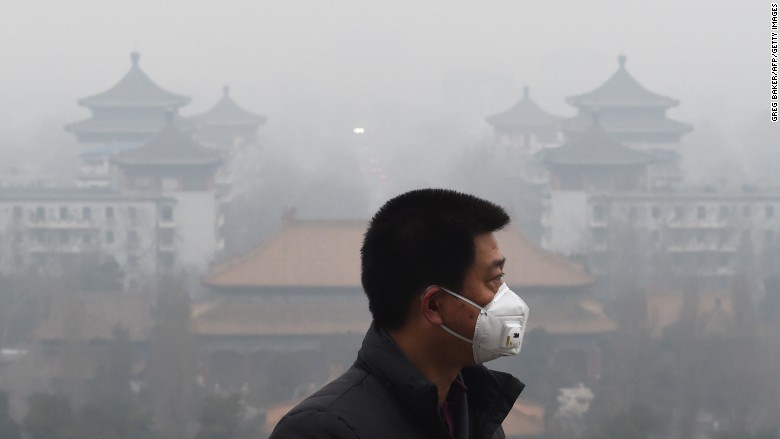
Chinese men wearing masks walk on a bridge near a building shrouded by fog and pollution in Beijing on Jan. 5. China has long faced some of the worst air pollution in the world, blamed on its reliance on coal and older, less efficient cars. Inadequate controls on industry and lax enforcement of standards have worsened the problem.

What made the authorities so worried about December's small-scale Chengdu event? 
Why the swifter, more draconian reaction than 10 years ago?
As China specialists who track environmental issues and protest, respectively, we see two things as particularly worth noting.
The first is simply the passage of time. 
At the start of 2007, the year of the Xiamen demonstrations, China was an authoritarian country but one that was moving, albeit very gradually and sometimes glacially, toward becoming more open.
As 2017 starts, by contrast, China is a country heading the other way — especially since Xi Jinping's rise.
From year to year, rights lawyers in China have less room to maneuver, not more. 
The authorities have been ramping up censorship and tightening the reins on envelope-pushing publications, including Southern Weekly. 
Some infractions that vexed authorities in the past but were allowed to go on can no longer occur.
The authorities have also been issuing more warnings lately about the need to protect the Chinese body politic from destabilizing political ideas, which a Communist Youth League website likened to a "zombie virus" of the sort portrayed in horror films, delivering "chaos" to the "infected" society. 
This brings to mind official drives decades ago against what was tellingly described in China as "spiritual pollution."

Contagion fears

The other thing to keep in mind when considering the protest and response in Chengdu is the way both top-down and bottom-up fears of contagion shape politics in today's China. 
Despite — and sometimes because of — how China has been rising, the country has stayed a jittery place due to anxieties about the potential damage that can be done by the spread of things seen as dangerous.
Top-down contagion fears stem from the leadership's sense, initially triggered by events such as the 1989 collapse of communist governments in Eastern Europe and the Soviet Union's implosion, that the party-state's endurance is precarious. 
As striking as its longevity is, those in charge feel that constant vigilance is necessary to guard against two possibilities.
One top-down contagion scenario is of a fast-spreading domestic movement, similar to those that have upended governments at various points in China's past. 
The other, which undergirds the effort to stem the flow of imported ideas, is of a Chinese counterpart to a "color revolution" like those seen in some post-Soviet states.
Bottom-up contagion fears can drive very different sorts of protests, whose common denominator is anxiety about dangerous substances — like air pollution — moving from one place to another. 
When the focus is on a limited geographical area, the government often lets things run their course. When the potential reach of a struggle is broader, this bottom-up contagion fear links to the top-down worry about movements that spread widely. 
And the result is more likely to be swift repression.
This brings us back to Chengdu. 
A seemingly mild expression of discontent, the artists' action nevertheless tapped into widespread anxieties. 
The masking of statues had a much more encompassing — and thus threatening — implication than the single location-focused NIMBY marches of the past: that no one is safe from toxic air. 
It had the potential to resonate with just about everyone in China.

The spread of viral tactics

The simplicity of using smog masks to express this point was also important, especially in a country where cotton face filters are cheap and sold everywhere. 
It was easy for officials to imagine — especially with memories fresh of how powerful the ubiquitous umbrella became as a symbol of protest in Hong Kong in 2014 — the Chengdu act stimulating copycat actions across China.
Far from Chengdu, people could soon use smog masks to signal that they've had enough of the polluted air and have lost patience with the leadership for failing over decades to tackle it. 
Memes and symbolically charged poems about pollution can go viral — so why not tactics?
Mao Zedong famously wrote of the ease with which a "single spark" can start a wildfire. 
In more recent memory, the student protest wave of 1989 started on campuses in Beijing, spread throughout the city and encompassed workers and intellectuals alike. 
It culminated in a movement that rocked scores of urban areas.
And in 1999, Chinese leaders were completely surprised when they discovered that a religious sect called Falun Gong had been able to amass supporters completely under their radar. 
The extent of the spread of what the authorities saw as a particularly dangerous sort of contagion — due partly to the group's admiration for a charismatic leader — surfaced when Falun Gong organized a blockade with 10,000 followers right in the center of Beijing, where all top-level leaders live.
These are instances of contagious activism that China's leaders dread. 
The lesson is clear in the minds of those on top: Keep discontent at bay; keep it centered on local issues; keep it from spreading.

Xi's risky strategy

And so we have a party-state that fears artists placing smog masks on statues. 
It is a party-state that has been trying to address pollution, knowing this a major source of public discontent. 
And it is a party-state that understands it needs the public to help its regulation of polluting factories, especially to help put pressure on local governments who have protected smog-producing industry.
The party-state walks a tightrope, balancing the need to give sufficient space to citizens to help counter pollution with the compulsion to tightly control any sort of activism that could undermine its power.
As Xi has squeezed the space for public expressions of discontent and participation, pollution continues to worsen. 
Rather than courageously waging a real war on smog, enlisting all citizens in the fight, Xi is betting on the risky strategy of restricting even the smallest-scale actions — even, ironically, as he takes a higher profile symbolic role in the global climate change fight.
If, in the end, his administration fails to reduce pollution, Chinese citizens will rightly be angry about their situation at home, no matter what China's leaders are saying and doing in the global arena. These citizens may get bolder and bolder in pushing back against restrictions that keep them in dangerously polluted villages and cities without any effective means of resistance.

jeudi 12 janvier 2017

China Dream

The filth they breathe in China
By Michael Auslin

Winter has returned to northern China.
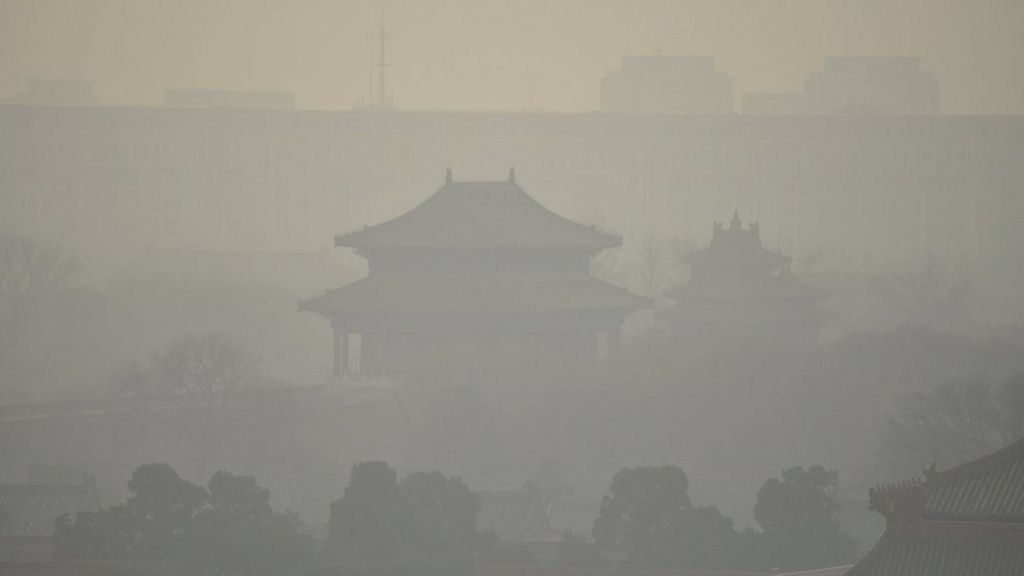
And so has the country's trademark, deadly smog.
The central government recently declared its first-ever national red alert for air quality, with pollution levels hovering over 12 times the level recommended by the World Health Organization.
Indeed, China's unprecedented growth has come at a horrific social cost that is just beginning to get serious attention.
The political leadership of China put economic growth far above environmental protection or health concerns, and the country now faces a catastrophically polluted countryside.
Nearly all aspects of China's environment are affected, and the true economic and health effects are only now becoming apparent.
Pollution in China is at an unsustainable level.
The cost in lives and the cost of cleaning up China's ruined rivers, lakes, skies, and soil are staggering.
Just as significant will be the economic cost of changing the way business is done in China to prevent further environmental destruction.
The lack of industrial regulation, the burning of dirty coal, and the rapid growth in private ownership of cars have combined to create one of the world's worst air pollution problems.
On one of my first trips to Beijing, as our plane touched down in the early afternoon, the sky looked as though it was dusk, a phenomenon universally noted by visitors.
The rarity of sunny and blue sky is avidly remarked on by everyone from shopkeepers to government officials — the latter, of course, off the record.
By some estimates, only 1 percent of China's urban dwellers breathe safe air. 
During the winter of 2012–13, levels of the most dangerous type of particulate matter in Beijing's air were over 20 times the amount recommended by the World Health Organization.
Midday in Beijing looked like late evening, and residents were urged to stay inside.
The massive scale of China's air pollution problem was dramatically exposed when Beijing was cleared of over one million automobiles for nearly a month before the start of the 2008 Olympic Games, creating a stretch of clear weather not seen in over a decade.
In October 2013, the city of Harbin in northeastern China, home to 11 million people, was essentially shut down for over a day because of smog that measured 50 times worse than the daily limit set by the World Health Organization.
China's dark skies impose staggering demographic costs.
As early as the 1990s, respiratory disease was identified as one of the country's leading causes of death.
Chinese environmental activists claim that in the most polluted cities, such as Guangzhou, residents' lungs turn black by the time they are in their forties.
A 2007 World Bank study claimed that outdoor air pollution causes up to 400,000 premature deaths each year, and polluted air inside homes and factories causes another 300,000. 
A more recent study put the total number of deaths caused by air pollution at 1.2 million annually. 
A 2013 study estimated that people in northern China have a nearly six-year drop in life expectancy due to pollution.
Nor do China's citizens find much help in the ground.
The water may be even worse than the air.
Most of the country's water sources, from lakes to rivers, streams, and catch basins, are hazardous to human health. 
Industrial runoff, poor sewage treatment, and lack of adequate waste disposal locations, particularly throughout China's interior, have poisoned the country's water sources.
Environmental groups such as Greenpeace accuse industrial concerns of dumping poisonous chemicals and other waste into rivers and lakes in and near cities. 
In March 2013, over 3,000 dead pigs floated down a major river through Shanghai, leading to widespread fears of waterborne contamination from the carcasses.
Some rivers are so polluted that the fish in them have died, yet local populations still use them for washing clothes.
The World Bank concluded in 2007 that 60,000 deaths occur each year from diarrhea, cancer, and other diseases caused by waterborne pollution.
One nonprofit environmental group claimed in a 2011 study that 39 percent of China's seven main river basins were too polluted for general use, including 14 percent that were unfit even for industrial use.
In 26 key lakes and reservoirs, only 42 percent of the total water was deemed fit for swimming and fishing, while 8 percent was unfit even for industrial use.
The World Bank estimates that the groundwater in half of China's cities is dangerously polluted. 
That means that at least half of China's population lacks access to safe drinking water.
In all, a quarter of China's water sources are too polluted for human use.
The problem is growing despite government attempts to improve water quality.
All this pollution is taking an enormous toll on China's citizens and its economy.
The World Bank estimated that the health effects of pollution cost China's economy upward of $100 billion per year, or 3 percent of GDP.
Overall, as millions of Chinese continue to move to the cities, air quality worsens and local sanitation systems get overwhelmed, while back in the hinterlands, factories go on destroying lakes and rivers. Modernization clearly does not mean wealth for everyone in China, nor, despite the trappings of middle-income lifestyles, does it necessarily mean a healthier standard of living.


samedi 31 décembre 2016

Poisoning the World

Your Garlic is Being Imported From China, Filled With Bleach And Chemicals. Here’s How To Spot It
By Healty Happy

China is putting California garlic growers out of business.
Less than ten years ago, all of our garlic was grown in this country, primarily in CA. 
Now less than 40% is grown here and most of it (60%) is coming from China.
You can tell the difference by looking at the bottom. 
If the roots are all removed, leaving a concave, clean spot, it is Chinese. 
This is required by the Ag Dept. to prevent soil-borne plant diseases from entering our country. 
If the roots are still there, it is California garlic. 
The Garlic Growers Assoc. says not one single US grower cleans out the root end.

Poison sellers

In China, quality control is a huge issue. 
Many Chinese farmers are using illegal and harmful pesticides to grow their crops.
“An undercover magazine reporter investigating in the area found that many vegetable farmers used phorate and parathion, two pesticides banned by the government, to irrigate the crops to save time and effort” (Epoch Times).
Parathion and phorate have been labeled Highly Toxic Poisons for some time – and for good reason.
Another major factor in the quality of the garlic in China is from the major pollution problem. 
The soil itself is toxic and is also a major health concern.
“An official government report in 2014 showed that nearly a fifth of China’s soil is contaminated by heavy metals like cadmium and arsenic as well as unhealthy amounts of pesticides and fertilizers. Severe pollution has tainted all of China’s major rivers with large amounts of industrial chemicals and household waste” (Epoch Times).

HOW TO SPOT GARLIC FROM CHINA

Everyone should make sure that they are not eating ANY garlic from China. 
They have bleach and other harmful chemicals in them and are dangerous to your health.
Next time you go shopping, look out for these signs:
  1. If there are roots or a stem then it is safe. China makes sure to cut off the roots and stems so that they weigh less when shipped over the sea.
  2. Garlic that is heavy and more bulbous is safer. Imported garlic is smaller and lighter.
  3. Healthy homegrown garlic tastes richer and is most likely from California. On the big flavor measurement scale, homegrown garlic measures 40 out of 40, whereas garlic from China only measures a 28 out of 40.
  4. The number one BEST way to make sure you are not getting garlic from China is to get it from a local farmer or to grow it yourself at home. 

lundi 26 décembre 2016

Poisoning the World

“Organic” Food from China Highly Contaminated

As people get informed about how important the organic food is so does the world’s demand of such products. 
Only in the USA, every year organic food sales increase at least by 20%. 
The domestic supplies could not satisfy such enormous demand so in order to keep the market in stock, the vendors should look internationally.
A great part of the imports come from the European Union, but their organic standards differ from those in America. 
Also, a significant part of them are from China, which provides low quality and low food safety standards.
Much of the organic production that comes from China is unsafe, even the Chinese farmers won’t consume it themselves. 
Then, what’s the point of organic food if it is not safe?
This implies that some of the food labelled as “organic” was never intended to be organic. 
It was simply a result of the substandard Chinese production. 
The US Customs tends to reject entire imports of food from China because of the presence of dangerous additives, drug residues, poor hygiene and mislabeling. 
In order, not to be rejected, the Chinese exporters labelled their products as organic, especially the unusual and dirty ones.
The Chinese government hasn’t established a system of labelling the truly organic products and those that are not. 
So, the result is a complete mislabeling of the food by the Chinese producers.
Even the “truly organic” food from China is in fact produced in totally contaminated conditions, that people could not handle. 
Most of the Chinese agricultural lands are located along the Yangtze and Yellow Rivers, the most polluted rivers in China.
Their pollution is a result of the thousands of factories that are located along these rivers, which infuse their chemicals into the water that in fact irrigate the crops. 
Once, a chemical fertilizer discarded so much ammonia into the Fu river, a tributary of the Yangtze river that immediately killed 110 tons of fish. 
However, this river was still used for agricultural and industrial purposes.
These rivers are also loaded with great amounts of many heavy metals and harmful chemicals as well as the food irrigated with this water. 
The Chinese sewage, bottled drinking water, rice and milk have indicated the presence of perchlorate, the precursor of rocket fuel. 
So, how such food can be organic?
Perchlorate is a toxic substance and an endocrine disruptor. 
Its presence can lead to destabilization of the metabolism, problems in the development of children and thyroid problems.
What a healthy and organic food. 
Definitely not. 
However, some Chinese products tend to more contaminated than others. 
For example, mushrooms, rice, green peas, apples, chicken, fish, garlic and black pepper belong to the most contaminated group of Chinese products that should be avoided.
However, the only way to eat completely organic food is to grow it yourself. 
Such gardens will occupy a small place, improve the local insects especially bees, look attractive and what’s most important, they will provide a completely safe and delicious food.