As China's plan to spread itself across the South Pacific grew, one Australian spy took matters into his own hands.
By Matt Young


Australia to build comms cable for Solomons and PNG: Bishop
By Matt Young
Australia to build comms cable for Solomons and PNG: Bishop
AN AUSTRALIAN spy is being hailed after intervening in a major deal that would have seen a surge in China’s influence in the South Pacific.
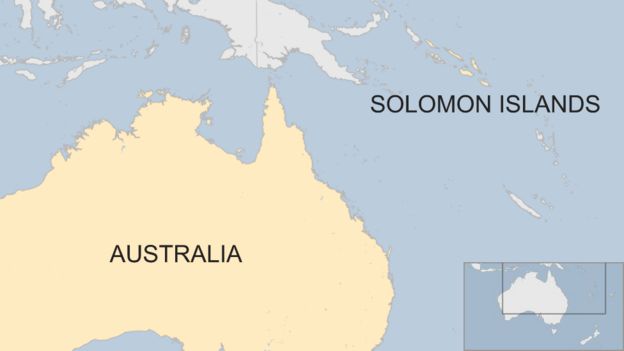
Today Australia and its neighbour, the Solomon Islands, will sign off on the first stage of a 4000km high-speed undersea internet cable in a deal that has swiped China off the map.
The multimillion-dollar deal will provide a high speed internet link between Australia and the fifth-largest Oceanian country by population which struggles with unreliable and ineffective internet services.
The multimillion-dollar deal will provide a high speed internet link between Australia and the fifth-largest Oceanian country by population which struggles with unreliable and ineffective internet services.
It will also connect Papua New Guinea to Australia.
SBS described it as a “significant leap forward for communications” for the impoverished country, which currently relies on satellite networks.
The Solomon Islands had originally awarded the contract to Chinese telecommunications giant Huawei in 2016 but it was “diplomatic pressure and rare intervention” from a top Australian spy that saw the deal take a change of course, according to the ABC.
“Australian intelligence agencies never wanted the Solomon Islands to allow Chinese company Huawei to build the link, and were keen to prevent it happening,” journalist Matthew Doran reported.
Huawei has become the world’s third largest smartphone maker in recent years but the company faces headwinds in its expansion plans due to its close links with the Chinese communist party.
Australia halved the cost of the project for the island nation and refused to allow a “landing point” for the cable on Australian territory if China took control.

Nick Warner, director-general of the Australian Secret Intelligence Service at the launch of the Foreign Policy White paper at DFAT in Canberra.
SBS described it as a “significant leap forward for communications” for the impoverished country, which currently relies on satellite networks.
The Solomon Islands had originally awarded the contract to Chinese telecommunications giant Huawei in 2016 but it was “diplomatic pressure and rare intervention” from a top Australian spy that saw the deal take a change of course, according to the ABC.
“Australian intelligence agencies never wanted the Solomon Islands to allow Chinese company Huawei to build the link, and were keen to prevent it happening,” journalist Matthew Doran reported.
Huawei has become the world’s third largest smartphone maker in recent years but the company faces headwinds in its expansion plans due to its close links with the Chinese communist party.
Australia halved the cost of the project for the island nation and refused to allow a “landing point” for the cable on Australian territory if China took control.
Nick Warner, director-general of the Australian Secret Intelligence Service at the launch of the Foreign Policy White paper at DFAT in Canberra.

A map of submarine cable systems and their landing stations around Australia.
Julie Bishop this morning defended the decision, saying Australia’s neighbours needed other options than simply China.
“What we have offered the Solomon Islands, and they have accepted, is an alternative to the offer, and ours is cheaper. It’s likely to be faster results for them, and technically superior. And also more resilient,” she said.
“We put up an alternative, and that’s what I believe Australia should continue to do. We are the largest aid donor in the Pacific.
“We are a longstanding partner of Solomon Islands, and I want to ensure that countries in the Pacific have alternatives, that they don’t only have one option and no others, and so in this case we are in a position to be able to offer a more attractive deal for Solomon Islands and PNG, and they accepted it.”
Prime Minister @TurnbullMalcolm welcomes the Prime Minister of #SolomonIslands Rick Houenipwela and Madam Rachel Houenipwela to @Aust_Parliament with a Ceremonial Welcome today, including a 19 gun salute and an inspection of Australia's Federation Guard. pic.twitter.com/HJh9mM5n80— PM&C (@pmc_gov_au) June 13, 2018
Jonathan Pryke, director of the Pacific Islands Program at the Lowy Institute, warned in November last year that if Beijing had its way, it would result in some “really significant national security issues for Australia.
“Having a Chinese state-owned enterprise connecting up to a piece of critical domestic infrastructure is pretty unpalatable for the Australian Government.”
The contract change was only after Nick Warner, the head of Australia’s foreign spy agency, ASIS, intervened in July 2017.
He warned the Solomon Island’s former Prime Minister that allowing the Chinese such measures would create a cybersecurity risk for Australia and its allies by giving the Chinese access to the “back end” of the Australian network.

President Rodrigo Roa Duterte discusses matters with Australian Secret Intelligence Service Director General Nicolas Peter 'Nick' Warner who paid a courtesy call on the President at the Malaca — an Palace on August 22, 2017.
Today Solomon Islands’ current Prime Minister, Rick Houenipwela, and Australian Prime Minister Malcolm Turnbull will cement the deal in Canberra.
“We have had some concerns raised with us by Australia, and I guess that was the trigger for us to change from Huawei to now the arrangements we are now working with Australia on,” Mr Houenipwela told Sky News in New Zealand last week.
Taxpayers will be slugged for about two-thirds of the price, the government revealed in the 2018 Budget.
President Rodrigo Roa Duterte discusses matters with Australian Secret Intelligence Service Director General Nicolas Peter 'Nick' Warner who paid a courtesy call on the President at the Malaca — an Palace on August 22, 2017.
Today Solomon Islands’ current Prime Minister, Rick Houenipwela, and Australian Prime Minister Malcolm Turnbull will cement the deal in Canberra.
“We have had some concerns raised with us by Australia, and I guess that was the trigger for us to change from Huawei to now the arrangements we are now working with Australia on,” Mr Houenipwela told Sky News in New Zealand last week.
Taxpayers will be slugged for about two-thirds of the price, the government revealed in the 2018 Budget.
The exact price of the deal, though, is unknown, despite reports it could cost more than $100 million from the aid budget.
Last month, the Pentagon ordered U.S. military bases worldwide to ban mobile phones and other telecommunications equipment made by the Chinese company Huawei after senior U.S. intelligence officials warned the phones could be used to spy on Americans and U.S. service members.
Although there has been steadfast denials from Huawei, that the Chinese tech company eavesdrops on behalf of Beijing, for a number of years the US has prohibited Huawei from bidding for government contracts out of fears for national security
Both Labor and Liberal government blocked Huawei from tendering for the National Broadband Network in 2012 and 2013.
Last month, the Pentagon ordered U.S. military bases worldwide to ban mobile phones and other telecommunications equipment made by the Chinese company Huawei after senior U.S. intelligence officials warned the phones could be used to spy on Americans and U.S. service members.
Although there has been steadfast denials from Huawei, that the Chinese tech company eavesdrops on behalf of Beijing, for a number of years the US has prohibited Huawei from bidding for government contracts out of fears for national security
Both Labor and Liberal government blocked Huawei from tendering for the National Broadband Network in 2012 and 2013.


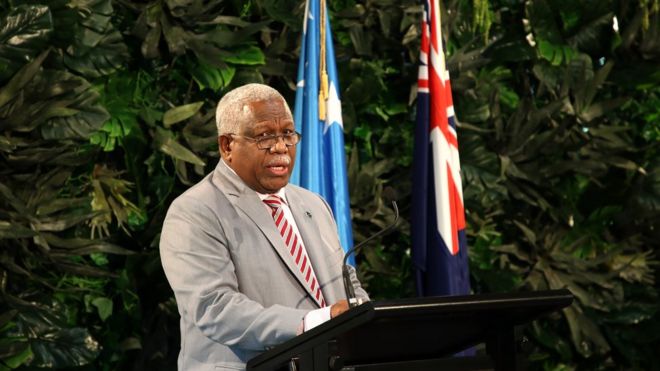 Solomon Islands PM Rick Houenipwela says Australia raised concerns about a previous deal