Affichage des articles dont le libellé est Labor Party. Afficher tous les articles

samedi 2 juin 2018

Australia's Quislings

The Labor Party's China problem
By Nick O'Malley

When Australia’s chief spy, ASIO boss Duncan Lewis, told a Senate estimates hearing last week that Australia faced a greater threat from espionage today than at any time since the Cold War he was careful not to specify which countries might be targeting us.
No one doubts that he was talking about China. 
The senators who were questioning him were undoubtedly talking about China.

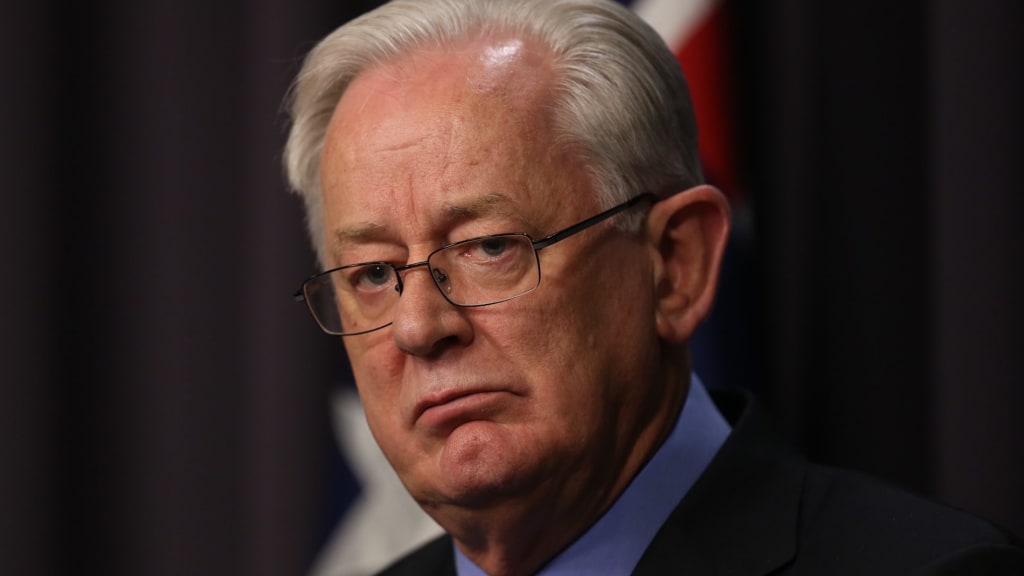
Andrew Robb was one of the first Beijing henchmen in Australia

As evidence of Chinese efforts to influence Australian institutions mounts, both major parties have reason for self-reflection.
When he quit his role as an elected representative of the Australian people the Liberal trade minister Andrew Robb walked into an $880,000-a-year job with a billionaire closely aligned to the Chinese Communist Party.
Robb was the architect of the China-Australia Free Trade Agreement.
Tony Abbott was among a handful Liberal heavy weights who were embarrassed after they had to return a fistfull of designer watches worth around $250,000 to a visiting Chinese billionaire. 
They thought they were fake, they explained when the story went public.
An ABC investigation last year found that Chinese individuals and companies were the largest foreign donors to the two parties, pouring more than $5.5 million into Labor and Liberal coffers between 2013 and 2015.

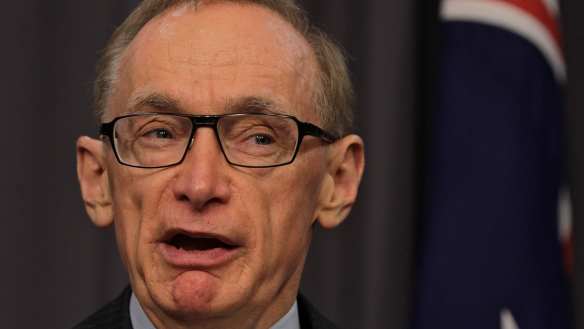
Australia's Quisling: Bob Carr, aka Beijing Bob, is a pro-Beijing extremist paid by the pro-Beijing think tank, Australia China Relations Institute

But one faction of one party appears to be more conflicted than sections of Australian politics, the Sussex Street machine of the powerful NSW Right.
Sam Dastyari, who quit politics when it was revealed he had taken donations from Chinese businesses and then echoed Chinese government talking points, was a rising star of the faction.
Its most dominant figure is Bob Carr, aka Beijing Bob, the former foreign affairs minister and NSW premier now at the centre of the China influence controversy
Carr is the director of the Australia-China Relations Institute, which was established by Chinese-Australian businessman Huang Xiangmo, the prolific political donor (and a controversial source of funds to Dastyari).
The NSW Labor right’s ties to Chinese businessmen, some of whom have links to the Chinese Communist Party and its arm of international influence, the United Front Work Department, is causing increasing disquiet in the broader party, particularly members from Victoria, South Australia and Western Australia.
In writing this story Fairfax Media spoke to party members as well as figures in national security and intelligence circles who did not want to go on record for political and legal reasons.
But a common view is that the Chinese Communist Party did not specifically target the NSW Labor right -- indeed they have sought to influence both parties and other major Australian institutions -- but that the NSW faction proved to be an unusually fertile ground to seek influence.
Michael Danby, a Victorian Labor right figure said the NSW right was without political ideology and driven by a fierce sense of “whatever it takes” in the accumulation of power and the funds needed secure power.
Similarly Rory Medcalf, the head of the National Security College, Australian National University, says the NSW right has been “unusually comfortable” with donors in the business community, and in particular those in development circles.
Another security figure noted that the NSW right been a particularly fruitful target for those seeking influence because of the sheer power it wields within the party.
Medcalf believes there is now a background battle going on within Labor over Chinese influence and the NSW right’s ties to figures believed to be involved. 
Danby and Carr have gone public, trading blows over the issue in Fairfax Media this week, with Danby declaring that “Bob Carr is a pro-Beijing extremist paid by the pro-Beijing think tank, Australia China Relations Institute.”
Labor leader Bill Shorten’s Victorian background has so far inoculated him from the controversy, along with other key members of his team, such as foreign affairs spokeswoman Penny Wong.
Medcalf believes that members of the Labor left who might once have had a sentimental sympathy for the CCP are now concerned by China’s increasing authoritarianism. 
Some have resisted criticising the party’s ties with Chinese figures because they fear being labelled as racist. 
This, he says, is an unfair allegation and a propaganda victory for the CCP.
Medcalf believes not only that the threat is real, but the leadership of both parties are well aware that there are more revelations to come.
He believes that a mixture of cynicism and naivety on behalf of some Australian politicians -- particularly in NSW -- gave Chinese government access to levers of power in Australia.
Given the current public debate, he says, none can claim naivety any more.

vendredi 23 février 2018

Australia's Quislings

Labor has a cancer growing in it that must be cut out
By Clive Hamilton

Canberra is finally beginning to push back against Beijing’s long-running campaign to seduce our elites so completely that the nation kow-tows before China’s wishes.
The first phase of the pushback culminated in December with the Turnbull government introducing legislation to outlaw foreign interference operations and novel forms of espionage. 
Afraid that its well-made plans will be thwarted, Beijing has been making panicky claims that it’s all motivated by “anti-Chinese racism”.
The Sam Dastyari affair was one clumsy instance of a more insidious problem for Labor. 

Led by shadow attorney-general Mark Dreyfus, the Labor Party is gearing up to oppose the legislation. 
Dreyfus says his concern is to protect press freedom, but that is being used to undermine the rationale of the laws themselves.
Amending the legislation to protect democratic freedoms is easy.  
The harder task is undoing the deep penetration of the Labor Party by proxies for and agents of the Chinese Communist Party. 
The spectacular downfall of Sam Dastyari was one clumsy instance of a more insidious problem for Labor.
Paul Keating has praised China's government as the best government in the world in the last 30 years. 

The Liberal Party has been subject to the same kind of influence operations and the party undoubtedly has a problem. 
Yet, going by the Turnbull government’s determination to enact the foreign interference legislation, the Liberals still remain willing to put basic Australian democratic freedoms before Chinese money.

Apologists for China in the Labor Party have been working, wittingly or otherwise, to entrench China’s structure of influence. 
Last week, Kevin Rudd played perfectly into the hands of Beijing by lambasting the Turnbull government’s proposed laws as an “anti-China jihad”.
The Mandarin-speaking former prime minister said that current laws are perfectly adequate. 
If that’s true, why have there been no prosecutions? 
And why are several Western nations watching events here so intently, expecting to follow the trail being blazed in Australia?
The Rudd government’s approach to China was weak and indecisive, perhaps best represented by Rudd’s disastrous decision in 2008 to wreck the emerging Quadrilateral Security Dialogue with India, Japan and the United States. 
His pull-out, under Chinese pressure, soured relations with India and delayed for a decade cooperation between the four democratic powers to begin acting jointly to resist Beijing’s aggression.
Rudd believes what he put in place is enough to protect Australia. 
Anyone who has tracked China’s growing influence over the last several years, including our intelligence agencies, knows that is laughable.
It’s to be expected that a former leader will attempt to burnish his legacy, but when he uses his residual influence to expose the nation to foreign domination he needs to be called out. 
Rudd’s Labor predecessor Paul Keating retains much greater influence in the Labor Party and beyond. 
He regularly praises the Communist Party bosses for their brilliant achievements—“the best government in the world for the last 30 years”—and calls for Australia to loosen our ties with the United States.
Keating is the godfather of the powerful NSW right faction of the ALP that has been so corrupted by Chinese influence.
Dastyari may have gone because of his unseemly relationship
with Chinese billionaire Huang Xiangmo, but plenty of powerful Beijing sympathisers remain.
Former NSW premier and foreign minister Bob Carr has been castigated for agreeing to run a “think tank” established with a large donation from Huang Xiangmo. 
Carr proudly proclaimed that the Australia-China Relations Institute would adopt a “positive and optimistic” view of China.
Tony Burke, a federal leadership aspirant, is also a beneficiary of Chinese money. 
His election campaign was boosted by a $30,000 donation from a source flagged by ASIO as connected to the CCP.
When asked on radio about the $30,000 donation, Burke said it was donated by a family friend, whom he holds in the “highest regard”.
There are current and former Labor politicians who understand fully the danger posed by the Chinese Communist Party to our democratic freedoms and support measures to protect our sovereignty. 
They include Richard Marles, Kim Beazley, John Faulkner, Michael Danby, Stephen Conroy and Anthony Byrne. 
But the party has a cancer growing in it, and it must cut it out.

mardi 12 décembre 2017

Beijing Stooge: The Price of Treason

Sam Dastyari Quits Amid Questions Over China Ties
By JACQUELINE WILLIAMS

Senator Sam Dastyari of the Australian Labor Party resigned after taking money to support pro-China policies. 

SYDNEY, Australia — A prominent Australian lawmaker at the center of intensifying concerns about Chinese interference in Australian politics said Tuesday he would resign because his “ongoing presence” detracts from his party’s mission.
The senator, Sam Dastyari, of the opposition Labor Party, said on Tuesday he would not return to Parliament next year. 
His announcement follows months of intense media scrutiny in which he has fended off accusations that he pushed China’s foreign policy interests after taking money from Chinese-born political donors.
“I’ve been guided by my Labor values, which tell me that I should leave if my ongoing presence detracts from the pursuit of Labor’s mission,” Dastyari, 34, said at a morning news conference. 
“It is evident to me we are at that point, so I will spare the party any further distraction.”
The lawmaker had been in the Senate for four years and had been considered by some a rising star in Australian politics.
He had been under pressure to resign since allegations first emerged last year that a company owned by a Chinese billionaire paid a legal bill for him. 
This year, a recording emerged in which Dastyari made comments at a Chinese media conference defending China’s aggressive military posture in the South China Sea despite his own party’s opposition to China’s actions there.
He came under fire most recently after reports emerged that he had pressured his party’s deputy leader not to meet a Chinese political activist while visiting Hong Kong in 2015.
“He’s made mistakes of judgment,” said Bill Shorten, the Labor Party leader, after Dastyari’s resignation. 
“But he’s paid the heaviest of prices — his career in federal politics is over.”
“It’s a tough decision — I think it’s the right decision,” Mr. Shorten said of the resignation.
On Tuesday, Mr. Shorten also became ensnared in the controversy when it was revealed that a Chinese billionaire had paid 55,000 Australian dollars, or $41,000, to have lunch with him.
Relations between Australia and China have become strained since the Australian government last week unveiled a series of proposed laws to crack down on Chinese influence in Australian politics.
The new legislation, which would ban Chinese political donations, among other proposals, has long been expected after a series of revelations in the Australian news media about Chinese meddling in the country’s politics.
“We have recently seen disturbing reports about Chinese influence,” Prime Minister Malcolm Turnbull said last week after announcing the proposed laws.
News reports this year about the issue have prompted a growing debate in Australia over how vulnerable its democratic political system is to Chinese influence.
The question of Chinese interference is a delicate one for Australia, an American ally that has embraced Beijing as its largest trade partner and welcomed Chinese investors, immigrants and students in large numbers.
“The suggestion that I or my government or Australia generally is anti-Chinese is outrageous,” Mr. Turnbull said on Monday after being accused of overreaching in his criticism of China and Chinese influence in Australia.
“This is a question about our national interest and ensuring that our leaders, our senators, our members of the House, put Australia first,” the prime minister said.
Politicians from the governing Liberal Party have been calling for Dastyari’s dismissal for weeks, with some critics of the center-right party saying its members are exploiting the controversy to bolster their own weak hold on government.
Some say Dastyari resigned this week because his presence was damaging the Labor Party’s broader political interests.
“We’ve had about a 15-month drumbeat of attention to this issue,” said Rory Medcalf, head of the National Security College at Australian National University. 
“And it became very clear in the last few weeks that the political heat was only going to be taken out of the issue with Dastyari out of politics.”
Dastyari’s seat won’t be filled until next year; Mr. Shorten said it would be up to the New South Wales Labor Party to pick a successor to fill the seat.

mercredi 14 juin 2017

The never ending saga of Chinese fifth column in Australia

ALP reels after resignation and calls for China donations inquiry
New South Wales Labor Party advisor Simon Zhou has stood down following a Fairfax Media investigation into his ties to Chinese Communist Party-aligned figures in Australia and his political fundraising activities.
By Nick McKenzie, Chris Vedelago, Sean Nicholls, Richard Baker
Beijing stooges

Labor is reeling after an adviser resigned amid revelations that the party bankrolled its 2016 federal election campaign with the help of up to $140,000 in donations from gold dealers linked to a multimillion-dollar tax scam.
The resignation from NSW Labor of rising star, 2016 Senate candidate and gold trader Simon Zhou, comes as ALP MP Anthony Byrne called for a full parliamentary inquiry into Chinese interference and donations, with public hearings by the joint parliamentary intelligence committee, of which he is deputy chair.
"This has to be done, even if it involves our own side," Mr Byrne said.
Meanwhile, Foreign Minister Julie Bishop has savaged NSW Labor senator Sam Dastyari in Parliament over his June 17, 2016, press conference appearance alongside major political donor Huang Xiangmo
At the press conference, Dastyari contradicted the ALP's position on Beijing's activities in the South China Sea.
"We now know that Dastyari's about-face on the South China Sea had a price tag attached to it, indeed a reported $400,000 was all it took for Dastyari to trash Labor's official foreign policy position," Ms Bishop said in Parliament on Tuesday.
Last week, Fairfax Media and Four Corners revealed Huang had threatened to withdraw $400,000 from the ALP after its defence spokesman Stephen Conroy attacked Beijing's South China Sea activities.
Zhou's ties to a Chinese Communist Party lobby group headed by Huang were detailed last week in the Fairfax Media and Four Corners investigation.
ALP candidate and donor Simon Zhou with Chinese agent Huang Xiangmo. 

Zhou's resignation was announced by the ALP after it was sent questions by Fairfax Media about his connection to a long-running tax scam involving gold dealers. 
Fairfax Media and Four Corners first sought to question Zhou several weeks ago.
Zhou said he had resigned to "focus on other priorities" and that he could not comment on his "ongoing dialogue with the ATO" because it involved "very complex" gold business dealings.
Simon Zhou (left) with former Chinese consul-general in Sydney, Li Huaxin (second from left) and two others. 

Zhou co-ordinated up to $140,000 in ALP donations from several gold dealers in May and June, 2016, and was given a job as the NSW ALP's multicultural officer, as well as a place on Labor's NSW Senate ticket for the July, 2016 federal election.
Zhou is a key figure in a gold-trading operation being investigated by the Australian Tax Office and which includes collapsed companies, massive tax debts and a shelf company in the British Virgin Islands.
The perfect fifth column: Simon Zhou with Labor NSW upper house member Ernest Wong. 

The ALP donations linked to Zhou include a $29,000 donation declared by one of Zhou's business associates, who was accused by Australia's tax commissioner of lying about trading gold bars in Sydney car parks at night as part of a scheme designed to avoid paying $13 million in tax.
A second gold dealer linked to Zhou has been accused by the Administrative Appeals Tribunal of falsifying invoices linked to this same gold-trading scheme. 
This businessman, a Chinese national, declared a $35,000 donation to the NSW ALP via a gold-trading company owned by Zhou.
These donations, along with a further $56,000 in contributions from related gold businesses, were collected by the NSW ALP on May 15 and 16, 2016 – seven weeks before the federal election.
Five weeks later, Zhou, whose former company contributed another $25,000 to the party in late June, was announced as an ALP senate candidate.
Zhou, who worked at the NSW ALP's Sussex Street headquarters, is a close political ally of Mr Huang, a Chinese Communist Party aligned billionaire, who is a major donor to both the ALP and the Liberals.
Huang was a VIP guest at Zhou's Senate ticket announcement and told China's state broadcaster at the event that it reflected the rising status of "overseas Chinese" and the desire "to safeguard Chinese interests and let Australian ­society pay more ­attention to the Chinese". 
Huang also asked the NSW ALP to give Zhou a job as an adviser, although the party insists he was appointed on "merit".
Zhou and Huang entertained China's consul-general in Sydney, Li Huaxin, on a boat cruise prior to Li leaving Australia to take up a senior government post in China in April, 2016.
ASIO has confidentially expressed its concern to the major parties about donations from some Chinese Communist Party-aligned sources, including Huang.
Meanwhile, in comments likely to infuriate some within the Labor Party, MP Anthony Byrne said public hearings by the joint parliamentary intelligence committee were needed to examine the past conduct of figures from both sides of politics.
"We have to have public hearings. I don't care if it is uncomfortable for any party," Mr Byrne said.
His call raises the prospect that Senator Dastyari – who has regularly used parliamentary committees to grill business figures about alleged impropriety – may endure a hearing about his relationship with donors, including Huang.
Fairfax Media revealed last week that Dastyari or his office called the immigration department four times to quiz it about the progress of Huang's citizenship application, which has stalled while it is scrutinised by ASIO.
Federal Opposition Leader Bill Shorten last week wrote to Prime Minister Malcolm Turnbull seeking his support for a joint parliamentary committee on intelligence to examine Chinese interference on political campaigns.
Zhou could also likely face questioning in any parliamentary committee hearings.
The ATO suspects gold traders such as Zhou and his associates have exploited a loophole by which GST is charged on gold ore, but not on higher-grade gold bullion. 
The loophole has created a sham industry in which circular or carousel-style arrangements "recycle" gold through syndicates of people, who keep the GST as well as claiming tax credits, leaving the ATO millions of dollars out of pocket.
One of Zhou's gold-trading companies, Australian Coin Exchange, collapsed this year owing the Australian tax office $2.54 million, with liquidators now examining the firm's operation.
Zhou is closely linked to several companies involved in suspected GST rorts. 
Two of these firms' directors or managers, Chinese national Chris Wang and his business associate Leo Yang, filled out Australian Electoral Commission forms last year to declare donations to the NSW ALP.
A gold trading company owned by Leo Yang was declared insolvent by the Federal Court when it couldn't pay a tax bill of $8 million following an ATO audit.
Chris Wang has been labelled a tax fraud by the ATO in the Administrative Appeals Tribunal, which in February ordered he pay the tax office more than $20 million. 
The AAT has labelled some of Chris Wang's evidence, which included a claim about buying $143 million worth of gold ore at night in Sydney car parks, as "fanciful ... inconsistent and unpersuasive".
The Tribunal said Chris Wang's evidence was "not reliable" about his "rather unusual business" as a "one-man company with no gold industry experience" which was "the sole customer of an unidentified entity able to supply tonnes of gold".
Leo Yang was similarly criticised by the Tribunal for his "apparent role ... directly" facilitating Mr Wang's alleged fraud by providing allegedly doctored invoices.
The donations declared by Leo Yang and Chris Wang, and the other funds raised by Zhou, raise serious questions around whether the ALP has accepted tainted money and is trading political access for donations.
When Leo Yang and Chris Wang were separately quizzed last week by Fairfax Media, they said they could not remember the date or size of the donations they declared.
Huang has no connection to the approximately $140,000 Mr Zhou raised for the ALP in May 2016.
But a few years earlier, in November 2012, Huang and two other members of the Australian Council for the Promotion of Peaceful Reunification of China gave the NSW ALP $500,000 in donations. 
The council is a branch of a Beijing lobby group operated by the Chinese Communist Party.
Six months after these donations, peaceful reunification council adviser and Huang's political ally Ernest Wong was parachuted by the NSW ALP into a state upper house vacancy created by ex-NSW ALP kingmaker Eric Roozendaal. 
Roozendaal was subsequently employed by Huang.
Huang has appointed Zhou as an executive of the peaceful reunification council, although his name was recently removed from the website.
Zhou confirmed the council had part-funded two of his trips to China.

Something is rotten in the state of Australia

Sam Dastyari trashed Labor policy on South China Sea for $400k donation
  • Sam Dastyari told Chinese media Australia should not meddle in China's activities in South China Sea
  • Julie Bishop attacked Bill Shorten for promoting Dastyari to deputy Opposition whip
  • Coalition also faces questions about Chinese donations
By Louise Yaxley
Sam Dastyari resigned from the frontbench because a Chinese donor paid a travel bill for him.

Foreign Minister Julie Bishop has accused Labor senator Sam Dastyari of trashing the ALP's foreign policy for a $400,000 donation.
Four Corners has reported that Chinese donor Huang Xiangmo withdrew a promise to donate $400,000 last year because Labor's then-defence spokesman, Stephen Conroy, supported freedom of movement in the South China Sea.
The program pointed out that the day after the offer was withdrawn, Dastyari contradicted Labor policy by telling Chinese media that Australia should not meddle with China's activities in the South China Sea.
Dastyari later said he supported Labor Party policy on freedom of movement in the South China Sea.
He resigned from his frontbench position last year because a Chinese donor paid a travel bill for him.
Ms Bishop has lashed out at Dastyari and attacked Labor leader Bill Shorten for giving the senator a promotion to deputy Opposition whip.
"We now know that Dastyari's about-face on the South China Sea had a price tag attached to it — indeed a reported $400,000 was all it took for Dastyari to trash Labor's official foreign policy position," Ms Bishop said.
"What did the Leader of the Opposition do?
"In the face of the most extraordinary public admission of foreign interference and influence, he slapped him on the wrist, sent him to the backbench for a couple of months and Sam Dastyari is now back in a leadership position in the Labor Party.
"This Leader of the Opposition sold out our national interest."
The Coalition also faces questions about Chinese donations.
Greens leader Richard di Natale raised a Four Corners report that Huang Xiangmo also donated $100,000 to then-trade minister Andrew Robb's personal campaign fund on the day the free trade deal was signed with China.
Huang Xiangmo poses with Bob Carr at the University of Technology Sydney.
Chinese fifth column's Gang of Four -- An ASIO investigation sparks fears the Chinese Communist Party is influencing the Australian political system as questions are raised over foreign political donations. 

Attorney-General George Brandis refused to say whether a conflict of interest was raised in Cabinet, saying he could not reveal Cabinet discussions.
Senator Brandis said he was aware of the reports and allegations but did not know if they are accurate.
Andrew Robb now works for the Chinese-owned company the Landbridge Group, which has a 99-year lease over the Port of Darwin.
He began working for Landbridge the day before the election last July, but Senator Brandis said Robb had left Parliament when the election was called in May.
Senator di Natale said it was critical for the Greens to shine a spotlight on the issue because both major parties had connections to Chinese donors.
"You have got Labor and Liberal members of this Parliament implicated for their links to high-profile Chinese businessmen connected to the Communist regime in China," he said.