Affichage des articles dont le libellé est Security Intelligence Service. Afficher tous les articles

mercredi 13 septembre 2017

New Zealand's Top Chinese Mole

China-born New Zealand MP probed by spy agency
By Jamil Anderlini in Hong Kong
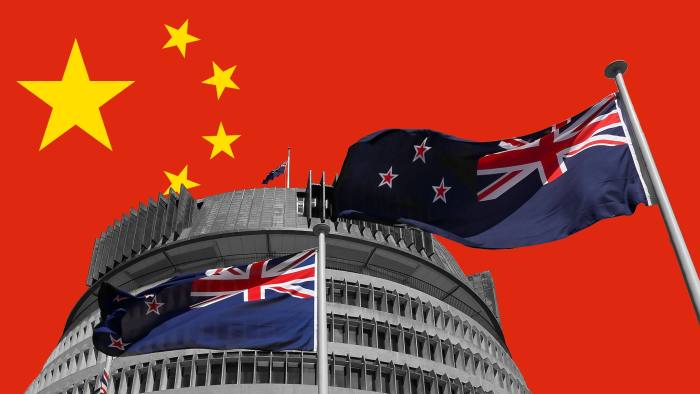
Chinese mole Jian Yang spent decade at elite Chinese military academies. The Beehive, part of New Zealand's parliament buildings, where Jian Yang has served as an MP since 2011.
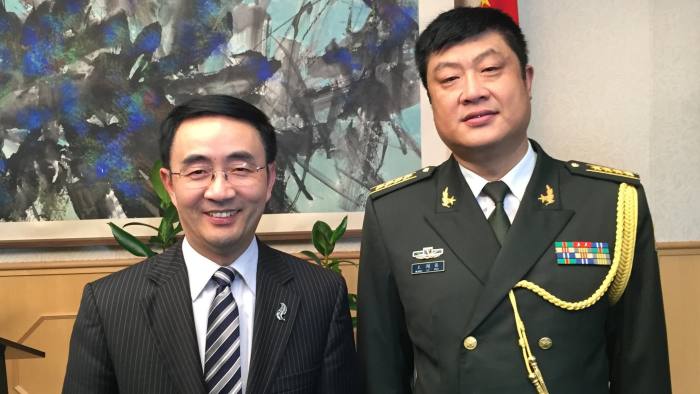
Jian Yang, left, with Senior Colonel Wang Liwei, defence attaché, at an event held at the Chinese embassy in Wellington to mark the 88th anniversary of the founding of the People's Liberation Army in 2015.
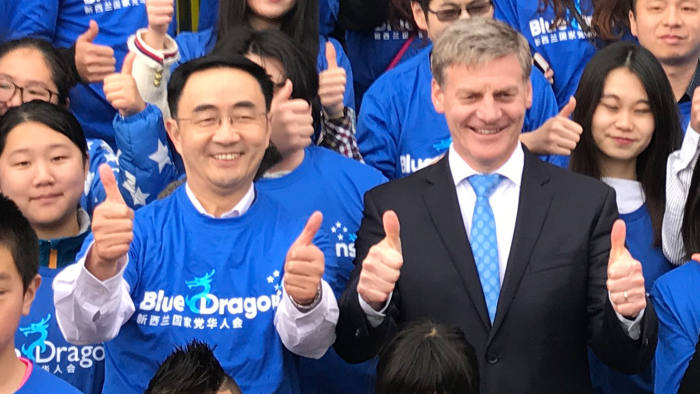
The mole and New Zealand Prime Minister Bill English give the thumbs up at a campaign event.

New Zealand’s national intelligence agency has investigated a China-born sitting member of parliament in connection with the decade he spent at leading Chinese military colleges.
Jian Yang, an MP for New Zealand’s ruling National Party, spent more than 10 years training and teaching at elite facilities including China’s top linguistics academy for military intelligence officers, the Financial Times has learnt.
Since being elected in 2011, Yang has been a big fundraiser for the National Party.
He has consistently pushed for closer ties with Beijing and for international policies and positions echoing those of China’s Communist party.
The fact he has served for six years in the governing party of a member country of the “five eyes” intelligence alliance raises questions about western preparedness to deal with China’s increasingly aggressive efforts to influence foreign governments and spy on them.
 “China has been very active in recent years placing and cultivating people at the grassroots political levels of western democracies and helping them to reach positions of influence,” said Christopher Johnson, a former senior China analyst at the US Central Intelligence Agency now at the Center for Strategic and International Studies in Washington.
Mr Johnson warned that while Beijing appeared to see New Zealand as a softer target than countries such as the US and UK, “it is using it as a testing ground for future operations in other countries”.
Yang, 55, lived in China until he was 32.
No information about his Chinese education or military background is included in his official biographies in New Zealand or those published when he was an academic at Auckland university.
He served on New Zealand’s parliamentary select committee for foreign affairs, defence and trade from October 2014 until he was replaced in March 2016.
As number 33 on the National Party list for the September 23 general election he is very likely to be returned to parliament for a third term under the country’s mixed member proportional electoral system.
Yang on Wednesday insisted he was "loyal" to New Zealand, said the reports about his background were a “smear campaign” and suggested that anti-Chinese racism was the motive.
After the FT published its investigation, at a press conference in Auckland he said he had never been a spy but acknowledged training people who went on to be intelligence officers.
“If you define those cadets or students as spies, yes, then I was teaching spies,” he told reporters.
“I don’t think so. I just think they are collecting information through communication in China.”

The National Fifth Column
Peter Goodfellow, president of the National Party and the person who recruited Yang, said his background was “public knowledge” in New Zealand and he had “no idea” about an investigation by the country’s Security Intelligence Service (SIS).
“He certainly gave us his full résumé with the two universities — an air force academy and the other one,” Mr Goodfellow said.
He also said Yang’s background was “covered in a review of candidates” by a government relations consultancy, Saunders Unsworth.
Prime Minister Bill English told New Zealand media on Wednesday that he had been aware “from early on” of Yang’s “military training, including military intelligence”.
Someone with Yang’s background would not normally gain security clearance to work on foreign affairs in New Zealand but elected MPs are exempt from such requirements.
Yang has represented New Zealand on numerous official trips to China and been present at many high-level meetings between the two countries’ leaders.
Several New Zealand politicians have been briefed by the SIS on its interest in Yang, a naturalised New Zealand citizen.
SIS agents also conducted interviews with people familiar with Yang’s background as recently as last year, according to people with direct knowledge of the matter.
The SIS told the Financial Times it did not comment on operational matters, especially investigations involving individuals.
A spokesperson for China’s foreign ministry said on Wednesday it did not comment on the internal affairs of other countries but nevertheless rejected what it said were “groundless, false accusations”. In 2010 the director of Canada’s Security Intelligence Service warned that several Canadian provincial cabinet ministers and government employees were “agents of influence” under the control of China. 
In recent months Australia has also indicated it is concerned about Chinese intelligence operations and covert campaigns influencing the country’s politics.
But no other western country is known to have a sitting member of parliament with such extensive training in China’s military intelligence apparatus. 
“In the last five to 10 years, Chinese intelligence agencies have moved heaven and earth to recruit anyone in public life anywhere in the world who they think might work for them,” said one person familiar with Yang who is an expert in China’s global intelligence efforts.
“With his education background [Yang] would be a prime target if he was not already an active agent.”
Yang entered the People’s Liberation Army Air Force Engineering Academy as an undergraduate majoring in English language in 1978 and later taught at the academy after graduation.
“Someone who taught at that institute would have to be an officer in the PLA as well as a member of the Communist party,” said Peter Mattis, an expert on China’s military and intelligence at the Jamestown Foundation in Washington.
After teaching at the air force academy, Mr Yang went on to the Luoyang Foreign Languages Institute, an elite facility for China’s military intelligence officers. 
It is attached to the third department of the PLA general staff headquarters — equivalent to the US National Security Agency or the UK’s Government Communications Headquarters — and specialises in training both openly acknowledged military intelligence officers and “secret line” deep cover agents. 
“Everyone I know who’s attended the Luoyang Foreign Language Institute has been in Chinese military intelligence or at least linked to that system,” Mr Mattis said.
In a Chinese-language interview with the FT, Yang acknowledged he had attended the PLA Air Force Engineering Academy and the Luoyang Foreign Languages Institute but repeatedly requested that this information not be included in any article about him, saying “there’s no need to write too much about my personal situation”. 
He declined numerous subsequent interview requests over several days.
Interviewed on Wednesday by Newsroom, a New Zealand-based independent media group, Yang refused to comment, saying repeatedly on camera: “Ask my boss” and “I have nothing to hide”.
He then drove away, but after publication of the story on Wednesday he issued a statement calling the news a “smear campaign” and suggesting racism as the motive.
He said: “I refute any allegations that question my loyalty to New Zealand.
“I have been nothing but upfront and transparent about my education and employment. Although I was not born here, I am proud to call myself a New Zealander, obey our laws, and contribute to this country.”
He added: “This is a smear campaign by nameless people who are out to damage me and the National party 10 days from an election, just because I am Chinese.”
A former senior British intelligence official said someone with Yang’s educational background would usually go on to a career in military intelligence.
After graduating from Luoyang, Yang studied between 1988 and 1989 at the Hopkins-Nanjing Center for Chinese and American Studies.
At that time the majority of Chinese students attending were either military intelligence officers or Chinese state security agents, according to three former senior western intelligence officials.
One of Yang’s classmates was Xu Meihong, a famous Chinese military intelligence officer who was assigned in 1988 to spy on a visiting US history professor but was subsequently arrested on suspicion of betraying her country. 
Ms Xu later married the professor, Larry Engelmann, became a venture capitalist in Silicon Valley and wrote a book about her experience entitled Daughter of China: A True Story of Love and Betrayal. 
It is unclear what Yang did between 1989 and 1994, the year he was granted an “AusAID” scholarship to study at the Australian National University in Canberra.
Given his background, Yang would have needed permission from the Chinese government and military to leave China.
At ANU he completed a masters degree and PhD focused on US Congressional policy towards China and in 1999 he moved to New Zealand to teach international relations at Auckland university.
Yang has been a big National party fundraiser among New Zealand’s large Chinese community, including from big-spending anonymous donors, according to local media reports.

New Zealand's Chinese Moles

Sino-Kiwi MP trained by Chinese spies
By Mark Jennings and Melanie Reid

Chinese mole Jian Yang

A National Party MP who studied at an elite Chinese spy school before moving to New Zealand has attracted the interest of our Security Intelligence Service.
The list MP Jian Yang did not mention in his work or political CVs a decade he spent in the People's Liberation Army-Air Force Engineering College or the Luoyang language institute run by China's equivalent of the United States National Security Agency.
That agency, the Third Department, conducts spying activities for China.
Newsroom has been told that to have taught at the Air Force Engineering College, Yang would have been an officer in Chinese military intelligence and a member of the Communist Party, as other students and staff have been.
Yang studied and then taught there before moving to Australia where he attended the Australian National University in Canberra. 
He migrated to this country to teach international relations in the politics department at the University of Auckland.
He was hand-picked by National Party president Peter Goodfellow to become an MP on its list in 2011, wooed directly by the former Prime Minister John Key and has been a key fundraiser for National among the Chinese community in Auckland.
As an MP he variously served on Parliament's Foreign Affairs, Defence and Trade (from 2014 until last year), Commerce, Transport and Industrial Relations and Health and Science select committees and is prominent in New Zealand's interactions with the Chinese community and diplomatic and consular missions in Wellington and Auckland. 
He remains a Parliamentary Private Secretary for ethnic affairs.

Chinese mole
Newsroom has worked with the Financial Times in Hong Kong to investigate Yang's background.
We can reveal Yang confirmed in a recorded interview in Chinese with the Financial Times that he attended both military institutions.
In his comments to the FT researcher, Yang twice urged her to concentrate on the New Zealand election. 
"You don't need to write too much about myself," he said, adding later: "As for me myself, actually I don't feel it's necessary to include so many detailed things."
Interviewed today, by Newsroom, Yang refused to comment, saying repeatedly on camera: "Talk to my boss" and "I have nothing to hide". 
He then drove away.
Yang later released a statement saying he refuted "any allegations that question my loyalty to New Zealand".
The statement said he had been "nothing but upfront and transparent" about his education and employment.
Yang challenged those who were "propagating these defamatory statements" to front up and prove them.
"This is a smear campaign by nameless people who are out to damage me and the National Party 10 days from an election, just because I am Chinese."
An expert in Chinese intelligence -- Peter Mattis -- told Newsroom from the US that someone who attended and then taught at the Air Force Engineering College and attended the language institute would almost certainly have been an officer in China's PLA and member of the Communist Party.

SIS interest
New Zealand's Security Intelligence Service has scrutinised him at times over three years, including interviewing one person about him last year.
The SIS said today it would not comment on operational matters, especially investigations involving individuals.
A hearing of Parliament's Privileges Committee into intelligence surveillance protocols for MPs occurred in late 2013. 
If an intelligence agency has cause to monitor an MP, the SIS director or Inspector-General of Intelligence is to brief the Speaker of the House. 
The Privileges Committee, chaired at the time by Attorney-General Chris Finlayson, polices contempts, which can include anything that could impede or restrict the rights of MPs to conduct their business unimpeded.
A Memorandum of Understanding between the SIS and Parliament's Speaker from 2010 says: "The only circumstances in which collection may be directed against a sitting MP is where a particular MP is suspected of undertaking activities relevant to security."
It is not known if the Speaker, David Carter, or Prime Ministers John Key or Bill English, who were the ministers in charge of the SIS, have been briefed on Yang's background or the SIS interest. Comment is being sought from Bill English.
National Party President Peter Goodfellow claimed in an interview with the Financial Times this morning that Yang's education in China was widely known in New Zealand.
Goodfellow said he had “no idea” about any SIS investigation into Yang.
“He certainly gave us his full resume with the two universities – an air force academy and the other one,” Goodfellow said. 
“You’re making a number of assumptions based on his background and I’d be careful unless you have proof of what you’re saying.”
He also said Yang’s background was “covered in a review of candidates” by a government relations consultancy, Saunders Unsworth.
Interest in Yang's background precedes his moving to New Zealand. 
Officials at ANU were suspicious of his close ties to China when he worked there.
China-watchers suggest someone educated at an elite PLA Air Force Engineering College and then at the Luoyang Foreign Languages Institute would have had to be a member of the Chinese Communist Party to be allowed to stay on and teach. 
It was considered unusual for someone with intelligence connections to be allowed to leave China for Australia to study, or to have done so without the backing of the party or PLA.Jian Yang beside National leader Bill English and with 'Blue Dragons' supporters at a party policy launch. 

Hidden decade

Yang's maiden speech to Parliament did not mention his education at the military establishments, although he noted that in 1978, the year Deng Xiaoping began China's economic reforms, "I passed the newly-restored higher education examination and became part of the small group of high school graduates who went on to university".
The missing decade in Yang's CV is reflected in that speech. 
After saying he entered university in 1978, the next date he gives is: "In April 1989, a great opportunity was opened up for me when I received a scholarship to Johns Hopkins University in the United States."
The Tiananmen massacre and global controversy in June that year prevented him from leaving for that study. 
Chinese sources do not discuss where he worked for the next five years but he did attend the Johns Hopkins centre for American-Chinese study in Nanjing for one year.

Active politics

In 1994 Yang began postgraduate studies at the ANU, achieving a doctorate and then taking the job in Auckland. 
He credits professors Barry Gustafson and Raymond Miller with helping him in his political education in New Zealand and colleagues for encouraging the move from political theory to professional politics.
In his maiden speech Yang outlined the failure of socialist economic policies in China before 1978 and its success in introducing capitalism with socialist characteristics, lifting millions from poverty, encouraging entrepreneurialism, personal responsibility, and reward for achievement.
"Reflecting on the way in which China has achieved its positive change and development gives me a firm belief that the policies of the National Party are in the best interests of New Zealand," he said.
Yang's involvement in the foreign affairs and trade select committee at Parliament did not require security clearances because elected MPs are not subject to the normal public service requirements. 
He is said to be a central figure promoting and helping shape the National government's China strategy and responsible for its engagement with the New Zealand Chinese community.
In 2014, former Prime Minister John Key attended a fundraising dinner organised by Yang for wealthy ethnic Chinese voters, which the New Zealand Herald and Stuff websites reported raised $200,000 for the party's election campaign.

Studying intrigue

The emergence of Yang's study and work at the military intelligence institutions in China has intrigued China-watchers in both Australia and this country. 
The engineering college is reputedly one of China's 10 top military academies. 
The 'Luoyang Foreign Language Institute' is part of the Third Department of the Joint Staff Headquarters of the PLA -- one of two main military intelligence agencies. 
The institute, in Henan province in central China, has around 500 teaching staff for 29 languages and has had 50,000 graduates including 100 generals.
The Third Department is responsible for China's signals intelligence operations and for providing intelligence assessments based on information gathered. 
According to author Mark Stokes in his 2015 The PLA General Staff Department, Third Department, Second Bureau, linguists assigned to that section are sent to Luoyang for language training "then assigned to a Third Department bureau for mission specific technical training".
Yang is understood to have met his wife, Jane, an IT specialist, at Luoyang.
The China expert Mattis, author of the book Analysing the Chinese Military and a former staffer of the US National Bureau for Asian Research told Newsroom the Third Department covered all forms of signals intelligence.
"It could be direction finding for signals, it could be encryption, it could be trying to break the codes of other countries, other militaries -- and today that involves computer network exploitation."
Asked if it was conducting spying, he said: "Yes. This is the national signals intelligence authority that pretty much every country has. In the US it is the NSA, in the UK it is GCHQ and in Australia the National Signals Directorate."
Yang's time at Johns Hopkins Nanjing was a strong indicator of his intelligence involvement as in the era he attended many of the Chinese students were from military intelligence.
"It is certainly a signal indicator that when combined with others will cleanly identify someone as being a part of Ministry of State Security or military intelligence."

Australia and New Zealand

He said there was a plausible scenario for Yang leaving China for Australia: he is working for military intelligence, most likely China's Second Department, dealing in human intelligence.
Since coming to New Zealand in 1999, Yang had been active in semi-official New Zealand discussions and events with China, Japan and Southeast Asian countries.
In the National Party, Yang is prominent with a large group of Chinese members calling themselves the Blue Dragons and campaigning enthusiastically at events during this campaign, including National's launch at the Trusts Stadium in Henderson on August 27.
Asked if it was unusual internationally for someone with a military intelligence background in one country to be an MP in another, Mattis said: "It is something I would have hoped that his colleagues in the National Party would have put to him in the vetting process ... because certainly on its face, it would be quite disconcerting."
"There are countries with whom we are friendly, but there are no friendly intelligence services."