Affichage des articles dont le libellé est Teng Biao. Afficher tous les articles

samedi 16 juin 2018

Exiled in the U.S., a Lawyer Warns of ‘China’s Long Arm’


China’s rising threat to international freedom and democracy has become a hot topic
By Edward Wong
 
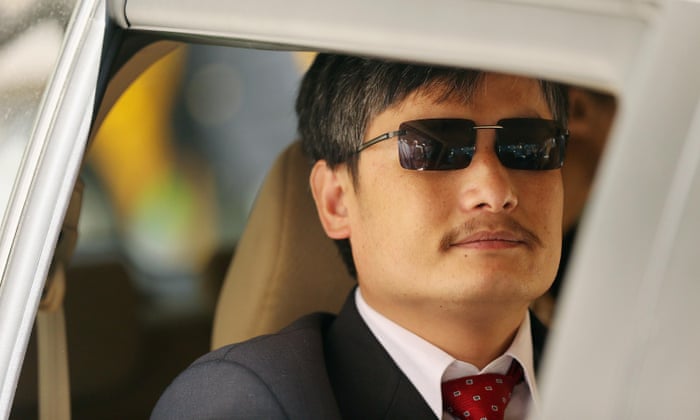
Teng Biao, a Chinese human rights lawyer who moved to the United States after being harassed by the Chinese authorities, has criticized China’s coercion of foreigners to bend to its point of view.

From his suburban home in New Jersey, Teng Biao has watched in frustration as what he sees as the apologies to China from Western companies have come fast and furious this year.
First, there was the hotel chain Marriott International, which apologized to the Chinese government in January for having sent out a customer survey listing Tibet, Hong Kong, Macau and the self-governing island of Taiwan as separate territories, a violation of the Communist Party canon that raised the ire of some Chinese citizens.
Then there was Gap Inc., which posted a message to the Chinese apologizing for a T-shirt with a map of China that ignited similar criticism. 
And in May, Air Canada on its website began listing Taipei, the capital of Taiwan, as a part of Communist-ruled China, which the Taiwanese reject.
For Mr. Teng, one of China’s pre-eminent civil rights lawyers, it all amounted to craven behavior from Western companies trying to stay in the good graces of Chinese officials to maintain access to the enormous consumer market in China.
“For the past two or three years, I’ve been paying attention to self-censorship by Western scholars, institutions and companies,” Mr. Teng, 44, said one recent afternoon in a cafe in Midtown Manhattan. 
“It’s urgent. China’s rising threat to international freedom and democracy has become a hot topic.”
Officials and political analysts in Western nations have indeed spoken up in the past year about what they call China’s “influence operations” or “sharp power,” how it coerces foreigners to bend to its point of view, or to self-censor in return for favors or access to the Chinese market.
Since 2013, Mr. Teng has spoken about these concerns four times to groups in the United States Congress and he has given lectures on university campuses on the same topic. 
He said he plans to write a book on it.
“I felt it’s high time to change the West’s policy toward China,” he said.
Mr. Teng has embraced this new role partly out of necessity. 
Under increasing harassment by the Chinese authorities, he left China in 2012 to spend time in Hong Kong and the United States. 
He does not dare return because of an official crackdown in recent years on rights lawyers that has landed many of his friends in prison
He now lives with his wife, Lynn Wang, and two daughters, ages 10 and 12, in West Windsor, N.J.
Mr. Teng’s interest in putting the spotlight on what he calls “China’s long arm” comes from personal experience. 
In 2016, he clashed publicly with the American Bar Association over its decision to rescind an offer to publish a book by Mr. Teng on the history of the lawyer-led rights movement in China. 
Mr. Teng said the group did this because it did not want to jeopardize its operations in Beijing. 
The Bar Association denied his accusation, saying the offer was withdrawn for economic reasons.
“The cross-border repression of which Teng Biao himself has become a victim has become this whole new complex set of issues,” said Eva Pils, a scholar at King’s College London, who once directed a center at the Chinese University of Hong Kong that hosted Mr. Teng. 
“I’m wary of how repression crosses borders, and I’m wary of how China is changing norms.”
Mr. Teng and his family also ran into financial difficulties in the United States after his wife was dismissed from her job as an international representative for a Chinese technology parts company — a move that he said had been forced by Chinese officials. 
His wife had worked for the company for 17 years.
“The Chinese government put pressure on that company,” Mr. Teng said. 
“The company said that because of me, they couldn’t sell their products to Chinese agencies and the military.”
Mr. Teng grew up in a village in the northeastern province of Jilin. 
His father was a painter and held a low-level official post related to education and culture, while his mother worked as a farmer. 
He received a slot at prestigious Peking University and decided to study law, eventually earning a doctorate in law in 2002.
While teaching at the China University of Political Science and Law, he became involved in the case of Sun Zhigang, a migrant worker killed by the police while in detention in the south. 
This started Mr. Teng and other lawyers on the road to activism, leading to their harassment by officials.
Mr. Teng and his wife watched with growing anxiety as Xi Jinping tightened control over civil society after taking power in 2012. 
Mr. Teng already had been detained repeatedly and beaten by police officers, with his family illegally kept in the dark as to his whereabouts for weeks at a stretch.
He went to the Chinese University of Hong Kong as a visiting scholar in 2012, then flew to the United States with his younger daughter two years later after getting an invitation from Harvard. 
By then, his wife and elder daughter had been barred from leaving the mainland, but they fled through Southeast Asia in 2015 with the help of smugglers, at one point riding on the backs of motorbikes through the hills of Thailand.
After Harvard, Mr. Teng was able to establish affiliations with New York University and Princeton University’s Institute for Advanced Study.
At Princeton in 2017, he collaborated with two other liberal Chinese to found a nonprofit group that aims to promote democracy in China by holding local gatherings, publishing books in Chinese and running online courses. 
Mr. Teng said the site for those courses is largely blocked in China.
Mr. Teng helped organize a march in Washington last July to call attention to China’s crackdown on rights lawyers, which officials began in earnest on July 9, 2015. 
About 50 people took part in the march, and Mr. Teng plans to hold another one next month.
This April, Mr. Teng wrote an essay for ChinaFile, a website run by the Asia Society in New York, arguing that “Xi Jinping’s new totalitarianism and Mao’s old style of totalitarianism don’t differ by all that much.”
“I think there must be some leaders, even top leaders of the Chinese Communist Party, who have ideas of liberal democracy,” he said in the interview. 
“But they don’t promote democracy. The first thing is they’re too scared. The second thing is they don’t want to lose the benefits they get from the system.”
One afternoon in March 2017, at a student-organized gathering at Princeton, Mr. Teng debated China’s future with Sida Liu, a professor from the University of Toronto who was also a visiting scholar at Princeton that academic year. 
Mr. Teng took a harsh view of the party, saying it would never change, while Mr. Liu was more circumspect.
In an interview this week, Mr. Liu said exiles like Mr. Teng have had to take a new approach to activism because of the crackdowns under Xi and the constant detentions.
“When I was in Princeton, Teng Biao was busy helping victims and families of the crackdown get out of China — to flee rather than to put in resources into China or support the next waves of activists,” Mr. Liu said.
Mr. Teng has warned that Chinese nationals in the United States try to monitor the dissenters in exile and report back to Chinese officials. 
He pointed to the 150 or so campus chapters of the Chinese Students and Scholars Association, where members maintain contact with Chinese diplomats and try to quash talks at universities that clash with the official Chinese view.

vendredi 21 juillet 2017

The death of Liu Xiaobo marks dark times for dissent in China

By Ishaan Tharoor 

It has been a week since the death of Liu Xiaobo, the famed Chinese dissident who was awarded the 2010 Nobel Prize for Peace while imprisoned.
Late last month, Chinese officials announced that the prominent writer, who had been detained since 2009, was being moved to a hospital to receive treatment for late-stage liver cancer. 
Despite the entreaties of his family, friends and foreign governments, Beijing refused to release him to seek care overseas. 
He died July 13, becoming only the second Nobel laureate to perish in custody (Carl von Ossietzky, an anti-Nazi pacifist, died in 1938).
In a move that sparked the ire of Chinese activists, authorities apparently ensured that his ashes were buried at sea and not on Chinese soil. 
Acclaimed artist Ai Weiwei, who lives in Germany, said the move was aimed at denying Liu’s supporters “a physical memorial site” and that it “showed brutal society can be.”
“It is a play,” said Ai. 
“Sad but real.”

Liu Xiaobo’s wife, Liu Xia, prays as his ashes are buried at sea off the coast of Dalian, China, on July 15.

Indeed, for China’s authoritarian leadership, what Liu represents is all too real. 
The poet and essayist was admired by many among the Chinese diaspora and the international community. 
“He fought for freedom and democracy for more than 30 years, becoming a monument to morality and justice and a source of inspiration,” Wen Kejian, a fellow writer, told my colleague Emily Rauhala.
“Liu Xiaobo was a representative of ideas that resonate with millions of people all over the world, even in China. These ideas cannot be imprisoned and will never die,” said Berit Reiss-Andersen, chair of the Norwegian Nobel Committee, in a statement.
Ironically Liu’s legacy and oeuvre are more visible abroad than at home, where even Internet searches of his name are censored and tributes to his life were hurriedly erased from social media.
But what further underscores the tragedy of his life was the nature of his politics. 
Liu was not calling for radical change or an overthrow of the regime. 
The putative reason for his 2009 imprisonment was his co-authorship of “Charter 08,” a manifesto calling for reform and greater freedom of expression within the Chinese system.
“Inevitably, some in the West will think that honoring Liu Xiaobo is an act of offense against China (or, more practically, a potential risk to relationships with the government). That’s a mistake,” wrote Evan Osnos, author of the National Book Award-winning “Age of Ambition: Chasing Fortune, Truth, and Faith in the New China.” 
“Honoring Liu is an act of dedication to China at its best. He was, to the end, unwilling to renounce his principled commitment to China’s constitution — to the freedoms enshrined in law but unprotected in practice.”
Osnos also offered an anecdote from when he met Liu: “If you never had a chance to meet him, it was easy to misread him as a cynic. On the contrary, in person, Liu could be unnervingly optimistic. On that day when I met him, in 2007, at a teahouse near his apartment, he told me that as China became stronger and more connected to the world, he imagined that the ‘current regime might become more confident.’ He went on, ‘It might become milder, more flexible, more open.’ In that prediction, he was, for now, wrong, and he paid with his life.”

People sign their names at a memorial event for late Chinese Nobel laureate Liu Xiaobo in Hong Kong on July 19. 

“Although the regime of the post-Mao era is still a dictatorship, it is no longer fanatical but rather a rational dictatorship that has become increasingly adept at calculating its interests,” Liu once said in 2006, in another illustration of his optimism about the capacity for change.
“In calculating those interests, the regime has decided that it was safer to turn Liu into a dead martyr than to allow his ideas to spread unchallenged,” wrote Jamil Anderlini of the Financial Times
“This conclusion is probably correct in the short term. Thanks to the party’s efforts, the vast majority of Chinese people have never heard of Liu and most of those who have heard of him think he was a hopeless troublemaker. His death will not spark a revolution.”
Under Xi Jinping, the invasive, authoritarian control of the ruling government has expanded, while the space for civil society has contracted. 
Dissent and critical expression have been chilled, and it seems increasingly clear that Chinese officials aren’t bothered by censure from abroad.
“What is really important isn’t so much that the party is tightening its control — that is happening anyway,” noted Steve Tsang of the Chatham House think tank in London. 
“What is more important is that the party is not that worried about how the Liu Xiaobo case affects international opinion.” 
A budding global hegemon, China can withstand the clucking of outside powers over its human rights record.
It also doesn’t help that there is an American president who has explicitly argued against fighting for universal values and rights elsewhere. 
On the day of Liu’s death, Trump happened to hail Xi as a “terrific” and “talented” leader.
“It is especially shameful that Donald Trump praised Xi Jinping at the moment when Liu Xiaobo was dying,” said Teng Biao, a Chinese human rights lawyer living in exile in the United States. 
“Xi Jinping is not a respectable leader. He is a brutal dictator.”
Western countries have adopted a policy of appeasement,” said Hu Jia, a prominent dissident who served more than three years in prison, to the New York Times. 
“The Communist Party has the resources to whip whomever they want.”
Hu, who still faces regular surveillance from police, offered an ominous warning: “Some have turned to believe in violent revolution. It makes people feel the door to a peaceful transition has closed.”

vendredi 14 juillet 2017

World's Stupidest President

Trump’s praise for China’s leader was ‘shameful’ coming after the death of the Nobel-winning political prisoner
By Tom Phillips in Beijing

Human rights activists have poured scorn on Donald Trump for showering China’s “terrific” president Xi Jinping with praise just hours after one of the world’s most famous political prisoners died in the custody of Chinese security services.
Speaking in Paris shortly after it was announced that the democracy champion and Nobel laureate Liu Xiaobo had died, the US president said nothing of the activist’s plight.
Instead, when asked for his personal thoughts on Xi by a Chinese television journalist, Trump replied: “He’s a friend of mine. I have great respect for him … a great leader.
“He’s a very talented man. I think he’s a very good man,” Trump continued at a joint press conference with French president, Emmanuel Macron
“He loves China, I can tell you ... He wants to do what’s right for China.”
“President Xi is a terrific guy. I like being with him a lot, and he’s a very special person,” added the US president, who has been trying to forge a partnership with China to tackle North Korea.
Friends of Liu Xiaobo and campaigners slammed the timing and nature of Trump’s comments about Xi, who observers say has overseen the most dramatic crackdown on civil society in decades in a bid to shore up the Communist party’s monopoly on power.
Hu Jia, a veteran activist, said: “I feel so disappointed. Trump has shown so little interest in human rights since he came to power, and sometimes he even shows contempt for human rights issues.”
“Trump did nothing during the G20 summit and now makes these comments in Paris. Is he trying to encourage the dictator? Is his message: ‘What you’ve done can be ignored?’”
“The remarks I’ve heard from Trump leave me feeling cold, even in such a hot, damp summer,” Hu added.
Teng Biao, a human rights lawyer who was forced into exile in the US by Xi’s crackdown, said the west as a whole had failed to stand up to Beijing over Liu Xiaobo’s case and the wider human rights crisis.
“And it is especially shameful that Donald Trump praised Xi Jinping at the moment when Liu Xiaobo was dying,” Teng added. 
“Xi Jinping is so brutal … Xi Jinping is not a respectable leader. He is a brutal dictator.”
Rose Tang, another exiled human rights activist, said Trump’s comments were “incredibly horrific and infuriating”.
He has no human decency … let alone the tiniest bit of courage to stand up to China, a dictatorship that’s been growing stronger by the day because of appeasement from the west.”
The White House later issued a brief statement which said Trump had been “deeply saddened” by the death of the “courageous advocate” Liu Xiaobo.
However, that statement contained no criticism of the role China’s leaders played in Liu Xiaobo’s ordeal and was far shorter and more restrained than those of other prominent Republicans, including former president George W Bush.
In a statement, Bush said Liu Xiaobo had “dared to dream of a China that respected human rights”. 
“For that he spent much of his life as a political prisoner of conscience. But he never wavered in his quest to advance freedom and democracy.”
Senator John McCain said Liu’s treatment represented “an egregious violation of the fundamental human rights” for which he had battled. 
“Unfortunately ... this is only the latest example of Communist China’s assault on human rights, democracy and freedom,” McCain added.
Senator Marco Rubio also slammed China’s “shameful treatment of this peaceful hero, who championed the very ideals that are at the foundation of America’s own experiment in self-government”.
Terry Branstad, the new US ambassador to Beijing, also went beyond Trump’s comments, calling on China “to release all prisoners of conscience and to respect the fundamental freedoms of all”.
Teng, the exiled lawyer, said Trump’s fawning over Xi underlined how the world was turning its back on Chinese human rights defenders as they put their country’s economies ahead of their values.
“Western governments feel that for them it is more important to talk [with China] about North Korea or counter-terrorism, or climate change or international business, than human rights,” he said.

lundi 23 janvier 2017

The Magnitsky Act : Trump has the power to fight China on human rights. Will he use it?

President Trump inherits law originally aimed at Russia that allows him to sanction any official involved in violations – and China activists have put forward a list.
By Benjamin Haas in Hong Kong
The human rights lawyer Chen Guangcheng was one of the Chinese government’s high-profile targets. 

As Donald Trump enters the White House, human rights campaigners around the world fear his administration will drop support for global struggles for democracy and freedom. 
But his administration is armed with a new law unprecedented in US history: the ability to sanction any individual involved in human rights abuses.
Now a newly formed NGO is hoping to push the US to sanction a slew of Chinese names, focusing on prosecutors and police who handle cases of prominent human rights activists. 
Potential punishments including travel bans, freezing assets and seizing property.
“There is well documented evidence that Chinese officials routinely commit gross violations of human rights against dissidents and human rights defenders,” said Senator Benjamin Cardin, the sponsor of the law. 
“Those officials responsible for such violations should be investigated under the act.”
The Magnitsky Act was first passed in 2012 but until December 2016 it only applied to Russia. 
It is named after the Russian lawyer Sergei Magnitsky, who was accused officials of stealing state funds and subsequently died in custody.
It was used this month to blacklist five Russian officials including Alexander Bastrykin, the powerful head of Russia’s investigative committee who reports directly to Vladimir Putin.
With its global expansion in December a group of veteran China activists established the China Human Rights Accountability Center with the singular goal of collecting evidence to mount cases under the Magnitsky Act.
“China’s human rights record is the worst in the world, surely in terms of scale, and this law sends a strong and clear message to Chinese officials,” said Teng Biao, one of the founders and a visiting fellow at New York University. 
“Being sanctioned would be a huge embarrassment and a confirmation of the suffering inflicted by so many.”
While convincing the US government to publicly sanction Chinese officials may be an uphill battle, the law specifically says the president will consider “information obtained by … nongovernmental organisations”.
The state department will submit a report to Congress sometime in April with a list of names. 
Even if the activists fail in having all of them sanctioned, they plan to put the detailed evidence on their website for the public to see.
“The name of the game is to scare, shame and embarrass officials who violate human rights,” said Yaxue Cao, another founder and editor of the human rights website ChinaChange.org.
The group is preparing to submit evidence for at least three names so far, including Jia Lianchun, a judge who presided over the trials of three prominent human rights activists including the Nobel Peace Prize laureate Liu Xiaobo
Liu was jailed for 11 years.
The others are Xia Baolong, who led a campaign against Christian groups as the Communist party boss of Zhejiang province; and Li Qun, who put the blind human rights lawyer Chen Guangcheng under house arrest. 
Chen is also a founding member of the accountability centre.
Other potential targets for the NGO are the police and prosecutors who handled the case of Cao Shunli, a rights lawyer who died in 2014 – like Magnitsky, in police custody. 
The centre also plans to investigate the officials who prosecuted Ilham Tohti, an economics professor and member of the Uighur minority who was jailed for life and later given the prestigious Martin Ennals award.
“In the past the US criticised and we expressed our values but we really haven’t had any very effective tools to influence China,” said Susan Shirk, a former US deputy assistant secretary of state. “It was a very frustrating situation to feel that we don’t have the tools to really have much impact in these types of cases.”
Shirk, who is now the chair of the 21st Century China Centre at the University of California San Diego, pointed to US citizens held in China and often denied due process as a group that could benefit from the Magnitsky Act.
One prominent case is that of Sandy Phan-Gillis, an American who was charged with spying after being held for over a year and is believed to have been tortured, with the UN saying her detention is a violation of international law.
Many human rights activists in China and around the world are worried that Trump’s presidency will mean less focus on human rights but members of Congress have made clear it is still a foreign policy priority.
“We look forward to working with the new administration to make sure that the law is carried out in full, and without fear or favour,” Cardin said.
“We expect that the administration will take the necessary actions to implement the law and we in Congress will do our job of oversight to make sure that that is the case.”
Members of the centre say they hope professional diplomats will still push these causes, with Cao saying: “Trump can’t control everyone and there are many in the state department passionate about human rights.
“Trump has said he wants to restart, rethink and remap China-US relations, and he will put human rights into play because that’s something he can use in negotiations.
“Considering how bad China’s human rights record is, if no Chinese officials are on the list then that will stink for Trump’s administration.”
While most of the NGO’s founding members are based in the US, Hu Jia, having been denied a passport for years, remains in Beijing and could bear the brunt of any government reprisals.
“This is very dangerous work, but ever since I started doing human rights work I was more concerned for my family’s wellbeing than my own,” Hu said. 
“I’m the man of action on the ground and I hope I can help bring this law to life, give it power and have it make an impact.”
Police have been stationed outside Hu’s home for more than a decade beginning in 2004, even keeping watch over his wife and daughter while he was in prison for three and a half years. 
But Hu feels more at ease that only he will bear the brunt of any government reprisal now that his ex-wife and daughter are living in Hong Kong.
Hu said Australia, Canada and European countries should follow America’s lead and enact similar legislation, grasping a unique opportunity to make an impact.
“On the surface all these officials are very patriotic but in reality they’ve all stashed their money in the US,” Hu said.

mercredi 12 octobre 2016

Ilham Tohti, Uighur imprisoned for life by China, wins the “human rights Nobel”

The man known as ‘China’s Mandela’ announced as the winner of the annual Martin Ennals award for human rights defenders.
By Tom Phillips In Beijing
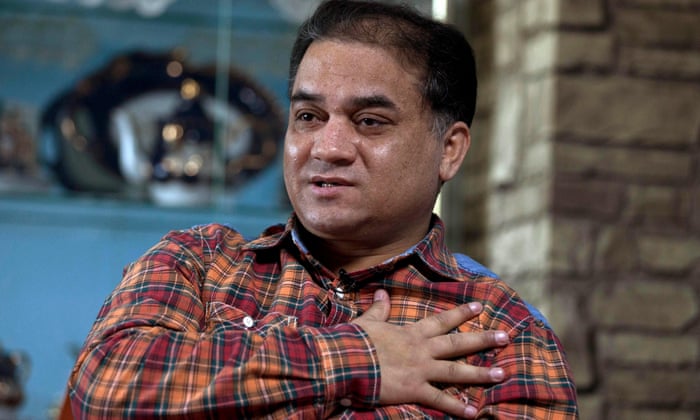
Ilham Tohti was convicted of separatism and condemned to a life behind bars by a court in Xinjiang in 2014. 

A moderate Uighur intellectual, who was jailed for life after opposing China’s draconian policies in its violence-stricken west, has been named the winner of a prestigious award known as the “human rights Nobel” in a move likely to infuriate Beijing.
Ilham Tohti, who has been called China’s Mandela, was announced as the winner of the annual Martin Ennals award for human rights defenders on Tuesday.
The honour comes two years after the 46-year-old scholar was convicted of separatism and condemned to a life behind bars by a court in Xinjiang, a vast region of western China where there have been repeated outbreaks of ethnic unrest and violence.
In a statement, the Martin Ennals foundation said Ilham Tohti had spent two decades trying “to foster dialogue and understanding” between China’s Han majority and members of Xinjiang’s largely Muslim Uighur ethnic minority, of which he is a member.
“He has rejected separatism and violence, and sought reconciliation based on a respect for Uighur culture, which has been subject to religious, cultural and political repression,” it added.
Beijing has painted Ilham Tohti – whom western governments and rights groups universally view as a voice of moderation – as a dangerous separatist and “scholar-turned-criminal” who preached “hatred and killing”.
But Dick Oosting, the chair of the Martin Ennals foundation, rejected that depiction and accused Beijing of silencing a peaceful advocate of Uighur rights.
“The real shame of this situation is that by eliminating the moderate voice of Ilham Tohti the Chinese government is in fact laying the groundwork for the very extremism it says it wants to prevent.”
Teng Biao, an exiled human rights lawyer and friend of the jailed scholar, welcomed the award.
“It is definitely good news,” he said. 
“It won’t necessarily lead to an early release or have direct consequences but at least this kind of prize will make the international community more aware of Ilham Tohti. Every award is helpful to Chinese political prisoners and human rights defenders.
Nicholas Bequelin, Amnesty International’s east Asia director, said: “The prize is a much needed recognition of the admirable work that Ilham Tohti has made to the cause of addressing ethnic tensions in Xinjiang, a topic that he knew well would one day lead the government to jail him.”
Also shortlisted for the high-profile award – which is named after the British activist who was one of Amnesty International’s first secretary generals – were Razan Zaitouneh, a Syrian campaigner who went missing in Damascus in 2013, and a group of Ethiopian activists known as the Zone 9 bloggers.
Ilham Tohti was born in Artush, a city in Xinjiang near China’s borders with Kyrgyzstan, Tajikistan and Pakistan, in October 1969.
Aged 16 he made the 2,700-mile journey to Beijing to continue his studies, eventually becoming an economics professor at the Minzu University of China, a institution geared towards the country’s ethnic minorities.
As an academic he began writing about the political and ethnic tensions that continued to blight Xinjiang in the mid-1990s and in 2006 launched a bilingual website called uyghurbiz.net to debate such issues.
Scrutiny of his work intensified following deadly 2009 ethnic riots in Xinjiang’s capital and again after Beijing declared a “people’s war on terror” in 2014 after a spate of attacks linked to the region.
Teng said his friend had attempted to address the causes of the bloodshed by serving as a “bridge to connect Uighurs and Han Chinese”.
“He was never a radical. He never resorted to violence or extreme ideas.”
Even so, the lawyer said his friend’s criticisms of Beijing’s ethnic policies saw him “severely monitored by the secret police”. 
In early 2014 the scholar was detained at his home in Beijing and taken to Xinjiang, where western diplomats were barred from attending his two-day trial, in September that year.
Teng said Ilham Tohti’s “very inhumane” life sentence – harsh, even by Chinese standards – showed how fearful the Communist party had become of his influence. 
“That’s the reason the Chinese government ... hated him so much.”
Teng said the wife and children of the academic – whose financial assets were also confiscated following his trial – were now “facing difficult times”. 
Relatives were only permitted to see the jailed scholar for 20 minutes every three months, with discussion of political issues and prison conditions forbidden.
Bequelin said: “By sentencing to life-imprisonment such a moderate and constructive critic who had never advocated either violence or separatism, Beijing betrayed its fear that discussions of any kind about the situation of Uighurs in China would inevitably bring attention to the extraordinarily repressive policies under which Uighurs live.
“These policies have produced disastrous results including increasing ethnic polarisation and a spike in violence in recent years – the very peril that Ilham Tohti was trying to address. It is time for Beijing to recognise that Ilham Tohti should never have been jailed in the first place and release him immediately.”
The decision to honour Ilham Tohti is likely to spark an angry response from Beijing. 
The Swiss government and donors of the Martin Ennals foundation reportedly faced pressure from Chinese officials after the activist Cao Shunli was shortlisted for the same award just days before she died in custody in 2014.
Teng, who fled China two years ago fearing he too would be imprisoned, said he hoped such awards meant the international community would not “gradually forget” human rights defenders such as Ilham Tohti.
But the severity of the crackdown that has rolled out under Xi Jinping meant keeping track of all its victims was increasingly difficult.
“The Chinese government has arrested a lot of human rights activists and scholars and lawyers,” Teng said. 
“It is very hard to remember all these people.”