By MARIA CHEUNG
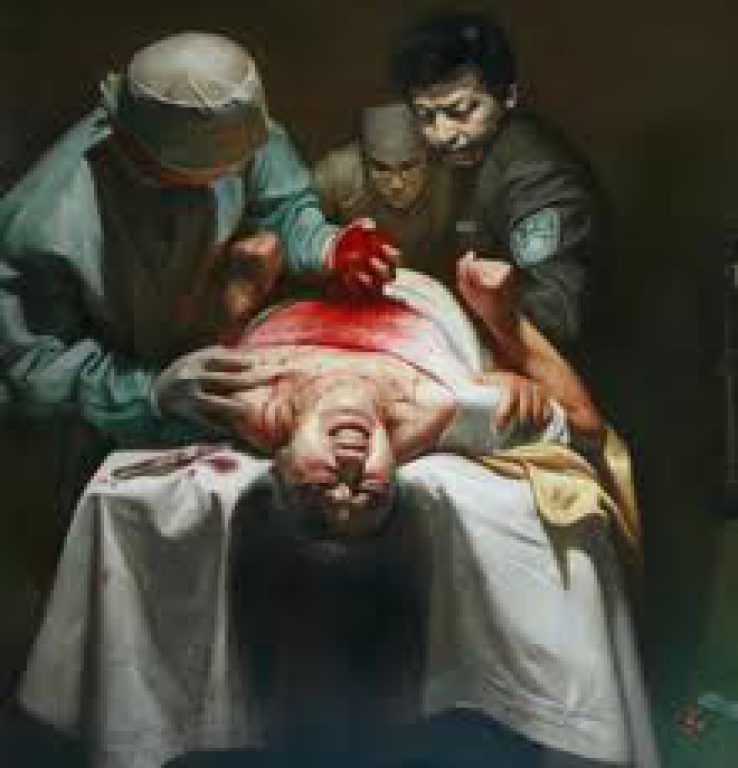
A photo from the documentary Human Harvest, by Vancouver director Leon Lee. The film explores China's organ harvesting industry, and won the prestigious Peabody Award.
The clock is ticking on Canada’s chance to enact important measures against organ trafficking.
For the past two decades, the Chinese regime has been killing prisoners of conscience for their organs.
The purchase and sale of human lives has become an industry, and Canada, among other developed countries, has been supporting it.
Bill S-240 seeks to put a stop to Canadian complicity by criminalizing organ tourism.
Bill S-240 seeks to put a stop to Canadian complicity by criminalizing organ tourism.
The bill has received unanimous consent from both the Senate and the House of Commons, and is awaiting final Senate approval before the end of the parliamentary session before it can be passed.
This is a critical moment of decision for Canada.
As a member of the Canadian Committee of the International Coalition To End Transplant Abuse In China, I have been among those advocating for Bill S-240, an act that brings important changes to the Criminal Code and the Immigration and Refugee Protection Act in order to combat organ tourism.
Live organs on demand
Organ trafficking is a global phenomenon.
However, forced organ harvesting deserves special attention in the context of the Chinese.
In China, this practice is driven by the state.
It’s directed at prisoners of conscience to advance policies of genocide.
It’s directed at prisoners of conscience to advance policies of genocide.
Forced organ harvesting in China is carried out at such scale that it constitutes an industry.
Since the early 2000s, Chinese hospitals have been providing live organs on demand.
Since the early 2000s, Chinese hospitals have been providing live organs on demand.
Perfectly matched organs can be obtained in weeks or even days.
With an estimate of 60,000 to 100,000 major organ transplant cases per year in China, the availability of organs cannot be accounted for by the number of death-row executions and voluntary organ donations.
With an estimate of 60,000 to 100,000 major organ transplant cases per year in China, the availability of organs cannot be accounted for by the number of death-row executions and voluntary organ donations.
Falun Gong, Uyghurs, Tibetans targeted
The sudden boom in organ transplantation in China coincides with the start of the eradication campaign against Falun Gong.
Since July 1999, Falun Gong practitioners have been incarcerated and tortured in massive numbers. During captivity, Falun Gong adherents have been singled out for organ examinations and blood tests.
As well as the Falun Gong, Uyghurs, Tibetans and some Christian sects are also being targeted. Forced organ harvesting is continuing despite China’s announcement that it’s going to stop the illicit practice.
Human Rights Watch reported in December 2017 that the Chinese government forcibly collected biodata, including DNA and blood samples, from 19 million Uyghurs that year under the guise of a free public health program in which all citizens are given physical examinations.
At the same time, the Chinese regime began mass arrest and incarceration of Uyghurs, with a million Uyghurs imprisoned in concentration camps.
Meanwhile, a priority lane labelled as “special passengers/human organs transport lane” appeared in the Kashgar airport of East Turkestan.
Canadians travel to China for illicit organs
For the past two decades, Canada, among other developed countries, has been a participant in this abuse.
Dr. Jeff Zaltzman, the head of renal transplants at St. Michael’s Hospital in Toronto, revealed in 2014 that he alone had at least 50 patients who had gone to China for transplants.
Zaltzman has since advocated for changing legislation to address the issue of forced organ harvesting.
Canada has, in fact, been identified as one of the seven major organ-importing countries, alongside the United States, Australia, Israel, Japan, Oman and Saudi Arabia.
Barring a few exceptions, the Canadian Criminal Code only criminalizes acts committed in Canada. As such, it is currently legal for Canadians to travel abroad and obtain organs from illicit sources, because such acts do not take place on Canadian soil.
A scene from the documentary Human Harvest, by Vancouver director Leon Lee. The film explores China’s organ harvesting industry.
An extraterritorial offence
Bill S-240 recognizes the extraterritorial nature of organ transplant abuse.
By making the purchase of organs, and obtaining organs without donors’ informed consent an extraterritorial offence, the bill creates important measures to stem the flow of organ tourism to countries such as China.
The proposed legislation would also bring Canada into further conformity with emerging international legal norms, such as the principle against transplant commercialism enshrined in The Declaration of Istanbul on Organ Trafficking and Transplant Tourism.
Countries like Israel, Spain, Taiwan, Italy and Norway have already enacted similar legislation.
The European Union and United States have issued a declaration and resolution respectively condemning the crime of forced organ harvesting.
On Dec. 11, 2018, the China Tribunal — an independent people’s tribunal chaired by Sir Geoffrey Nice, former deputy prosecutor who led the prosecution of Slobodan Milosevic at the International Criminal Tribunal for the former Yugoslavia — stated the following in its interim judgment:
“The Tribunal’s members are all certain — unanimously, and sure beyond reasonable doubt — that in China forced organ harvesting from prisoners of conscience has been practised for a substantial period of time involving a very substantial number of victims.”
The final judgement is due to be released on June 17.
It’s vital that Canada ensures Bill S-240 is passed.
China plans globalization of mass murder
China has further ambitions to develop organ transplantation into an export industry as part of China’s “Belt and Road” initiative.
The industrialization and globalization of organ transplantation is the industrialization and globalization of mass murder.
If this practice is allowed to take root in human societies, ever more vulnerable populations would be sacrificed in the pursuit of a healthy life by the powerful and the rich.
The cost of inaction means a continuation of Canadian complicity in one of the worst crimes of our times.
The cost of inaction means a continuation of Canadian complicity in one of the worst crimes of our times.
It is vital that Canada passes this legislation before the end of this parliamentary session, bringing this complicity to an end.


