lundi 23 décembre 2019

Hong Kong protesters rally in support of minority Uighurs

Largely peaceful rally descended into chaos after protesters grabbed a Chinese flag and tried to burn it.
hwww.aljazeera.com
Hong Kong protesters held a rally in support of the Uighurs on Sunday.

Riot police in Hong Kong broke up a rally in support of China's Uighurs on Sunday -- with one officer drawing a pistol -- after the initially peaceful protest descended into chaos when protesters removed a Chinese flag from a nearby government building and tried to burn it.
Organisers stopped the flag being burned, but riot police swooped in with pepper spray, sparking anger from the crowd who threw water bottles.
One officer drew his gun and pointed it at the crowd, but did not fire.
At least two protesters were arrested.
Several hundred people joined the rally, with some holding signs emblazoned with the blue and white flag of the independence movement in China's northwestern colony of East Turkestan.
China has faced international condemnation for detaining an estimated one million Uighurs and other mostly Muslim ethnic minorities in massive concentration camps.
The emergence of a huge surveillance and prison system that now blankets much of East Turkestan has been watched closely in Hong Kong, which has been convulsed by six months of huge and sometimes violent protests against Beijing's rule.
Pro-Uighur chants and flags have become commonplace in Hong Kong's marches, but Sunday's rally was the first to be specifically dedicated to Uighurs.
The crowd gathered in a square close to the city's harbourfront listening to speeches warning that the Chinese Communist Party's crackdown in East Turkestan could one day be replicated in Hong Kong.
"We shall not forget those who share a common goal with us, our struggle for freedom and democracy and the rage against the Chinese Communist Party," one speaker shouted through a loudspeaker to cheers.

'Control Freaks'
Many of those attending were waving the flag of East Turkestan, which has a white crescent moon on a blue background.

A man holds a flag during a rally to show support for Uighurs and their fight for human rights in Hong Kong. The characters read "Liberate Hong Kong. Revolution of our times." 

Others wore blue face masks displaying the East Turkestan flag.
People also carried flags for Tibet -- another restless region of China - and the self-ruled island of Taiwan that China claims as its own.
China runs Hong Kong on a "one country, two systems" model which allows the city key freedoms that are denied people on the authoritarian mainland.
The framework will end in 2047, 50 years after the handover.
Many people in Hong Kong fear an increasingly assertive China is already eroding those freedoms.
Many at Sunday's rally said they felt a mainland-style government was around the corner.
"The Chinese government are control freaks, they can't stand any opinions they disagree with," Katherine, a protester in her late twenties and a civil servant, told AFP before police moved in.
"In East Turkestan they are doing what they are doing because they have the power to do so. When they take over Hong Kong they will do the same," she added.
China cracked down on Uighurs and other Muslim minorities after a series of deadly attacks in the area.
It bristles at any criticism of its policies in East Turkestan.


Sonny Bill Williams follows Mesut Özil in support of Uighur ethnic group

‘Sad time when we choose cupidity over humanity’
Australian Associated Press

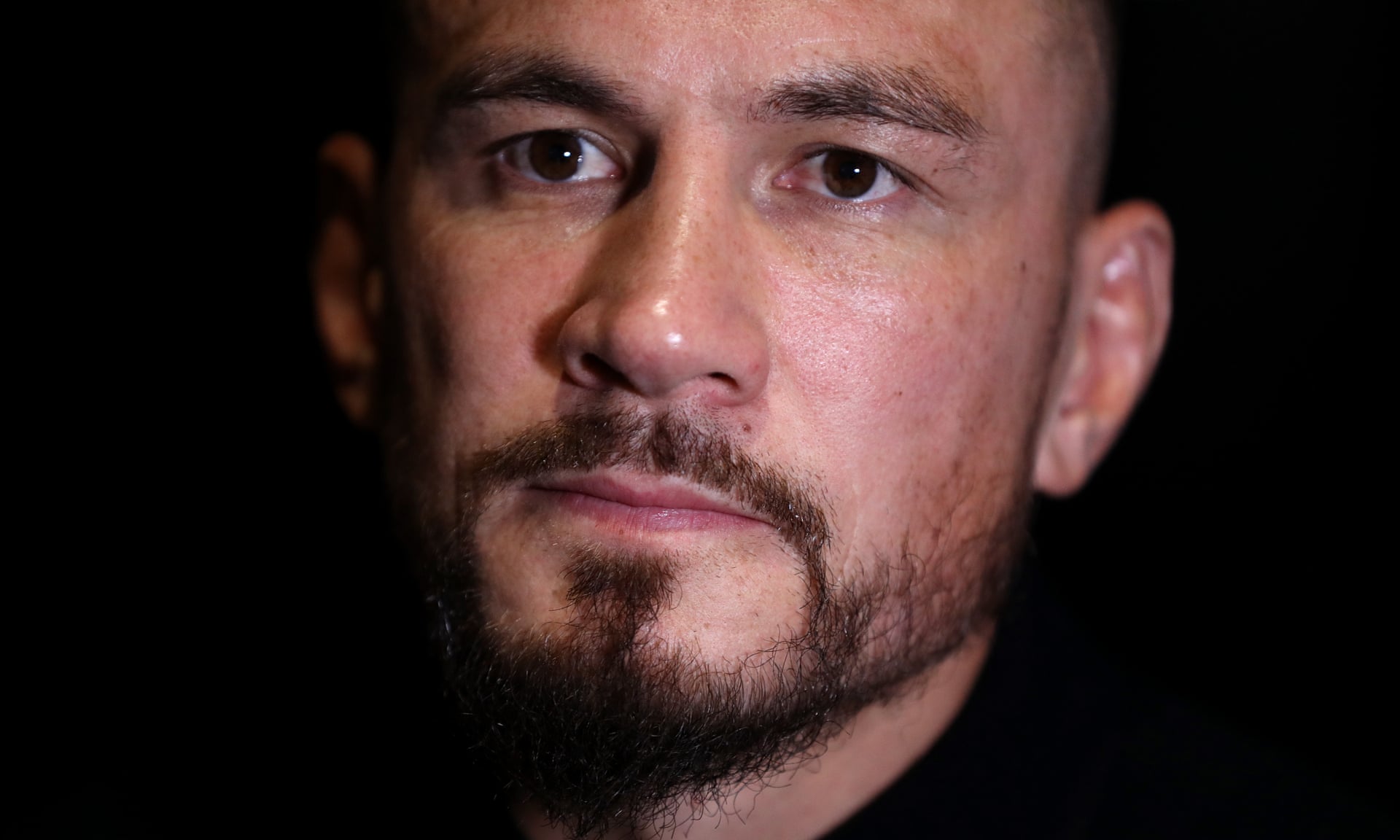
This is the first time Sonny Bill Williams has publicly voiced his opposition to China’s treatment of the Uyghur people.

Sonny Bill Williams has tweeted his support of the minority Uighur ethnic group, mirroring the stance of football star Mesut Özil.
Cross-code star Williams may further provoke Chinese officialdom with his social media post, which denounces the treatment of Uighurs.
In his tweet on Monday, Williams echoed the belief of Arsenal playmaker Özil, who is also a practising Muslim, that more countries should speak out against China’s reported actions of detaining Uighur people in concentration camps.


Former Germany midfielder Mesut Özil has criticized Muslim countries for not speaking up for minorities subjected to abuse in China. More than 1 million people have been sent to concentration camps in the East Turkestan colony.

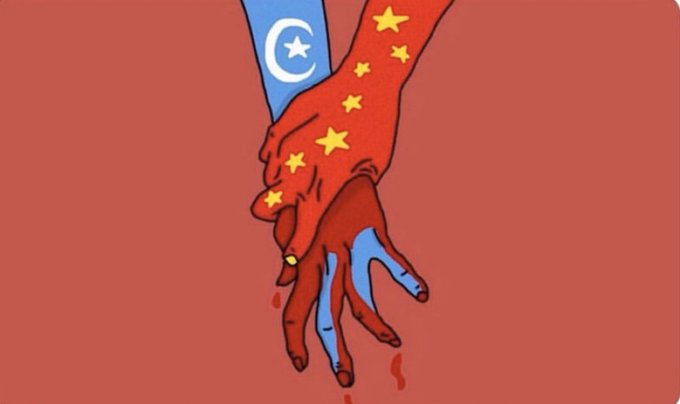
“It’s a sad time when we choose economic benefits over humanity #Uyghurs,” Williams wrote, accompanied by an image illustrating oppression against the Muslim minority group.


Sonny Bill Williams
✔@SonnyBWilliams
It’s a sad time when we choose economic benefits over humanity#Uyghurs

17K
9:02 PM - Dec 22, 2019


Greedy Arsenal distance themselves from Mesut Özil comments on Uighurs’ plight

Williams’ tweet comes a month after he signed a lucrative deal with Canada-based Super League club, Toronto Wolfpack, having ended a lengthy and successful career with the All Blacks.
It remains to be seen if there is a backlash from China against the 34-year-old New Zealander, who hasn’t previously voiced his opinion on such a sensitive international topic.
China’s state broadcaster removed the English Premier League match between Arsenal and Manchester City from its programming in response to Özil’s actions.
The German midfielder was also removed from a Chinese-produced football computer game.
Rugby league doesn’t have the same presence in China as football or basketball’s NBA, which paid a heavy financial price when an official criticised the Chinese government in October.
Houston Rockets general manager Daryl Morey tweeted support of protesters in Hong Kong, sparking Chinese demands that he be fired, which were rejected by the NBA.

vendredi 20 décembre 2019

Hong Kong protesters seek international support on rights

By Felix Tam

HONG KONG -- Hong Kong protesters rallied outside diplomatic missions on Thursday to urge foreign governments to follow the United States and pass human rights bills to raise pressure on Beijing and support their pro-democracy campaign.
Hong Kong protesters march to foreign consulates in Hong Kong, China, December 19, 2019. 

U.S. President Donald Trump signed legislation last month requiring the State Department to certify, at least once a year, that Hong Kong retains enough autonomy from Beijing to justify favorable U.S. trading terms.
About 1,000 people, most of them dressed in black and wearing face masks, marched on a route that took them by the consulates of Australia, Britain, the European Union, the United States, Japan and Canada, to drop off a petition.
British, EU and U.S. diplomats came out to receive it and took photographs with the protesters.
“What happens in Hong Kong is not just a local issue, it is about human rights and democracy. Foreign governments should understand how this city is being suppressed,” said Suki Chan, who participated in the protest.
“We need to continue to seek international attention and let them know this movement is not losing momentum.”
Hong Kong has been rattled for more than six months by anti-government protests amid growing anger over Chinese meddling in the freedoms promised to the former British colony when it returned to Chinese rule in 1997.
Beijing has denied such meddling, blaming the unrest on “foreign forces” and saying attempts to interfere in the city are doomed to fail.
The U.S. legislation, which also threatens sanctions for human rights violations, followed similar “citizen diplomacy” petitions in Hong Kong this year and has been cheered by protesters.
Beijing denounced the U.S. legislation and Hong Kong’s government said it sent the wrong signal to the demonstrators and increased economic uncertainty in Hong Kong, a major financial hub.
The marchers’ petition condemned police brutality and urged governments to pass legislation to punish Chinese and Hong Kong officials by denying them visas and freezing their assets.
Police said separately on Thursday they had arrested four people suspected of "money laundering" in relation to the protests and had frozen HK$70 million ($9 million) in bank deposits.
Chan Wai Kei, from the police’s financial investigation and narcotics bureau, told reporters the four were part of a group that had asked for donations for arrested and injured protesters but used some of the money for personal investments.
At the U.S. consulate in Hong Kong, protesters called for U.S. Congress to pass a “Be Water Act”, legislation championed by Missouri Senator Josh Hawley and named after a protest slogan borrowed from martial arts legend Bruce Lee.
The bill would freeze assets of Chinese nationals and state-owned enterprises believed to have contributed to suppressing freedom of speech in Hong Kong.
Thursday also marked the 35th anniversary of a treaty between China and Britain on Hong Kong’s future, which set the stage for its handover.
British Foreign secretary Dominic Raab urged China in a statement to open dialogue with the protesters and respect the commitments in the treaty.
Hong Kong’s special status, which helped it grow into a global financial center and avoid U.S. tariffs on Chinese imports, is important to Beijing, which uses the city as its main gateway to global capital.

Chinese Peril

The Chinese threat to U.S. research institutions is real
By Josh Rogin
Sen. Rick Scott questions Department of Justice Inspector General Michael Horowitz during a Senate Committee On Homeland Security And Governmental Affairs.

The Chinese communists are pursuing a comprehensive, well-organized and well-funded strategy to abuse the open and collaborative research environment in the United States to advance their economic and military expansion at our expense.
But now U.S. research institutions are finally waking up to Beijing’s efforts to recruit American scientists for China’s benefit.
On Wednesday, H. Lee Moffitt Cancer Center & Research Institute announced the forced resignations of its chief executive and president, Alan List, Vice President Thomas Sellers and four researchers.
In a news release, the center said the employees committed compliance and conflict-of-interest violations. 
Specifically, the researchers didn’t reveal they had been recruited and paid by the Chinese government under its “Thousand Talents” program, a massive effort controlled by the Chinese Communist Party to recruit foreign scientists for its own purposes.
The Moffitt Center, located in Tampa, essentially fired its leaders after an investigation prompted by the National Institutes of Health, which had warned them “of foreign efforts to influence or compromise U.S. researchers,” the center said. 
The NIH, which is funded by U.S. taxpayers, is the source of more than half of the center’s $71 million in annual grant funding.
Although the center claims it found no evidence its research was compromised, the details of the relationships between its employees and the Chinese government are unknown.
The center is now working with federal officials on the case.
The FBI has been warning research institutions across the country that Chinese talent-recruitment programs are not only a threat to the integrity of the U.S. research environment but also a real national security concern.
In July, FBI Director Christopher A. Wray testified that the Chinese government and the Chinese Communist Party have many “so-called talent plans” that are not illegal but are routinely abused to steal intellectual property and take it back to China to advance Beijing’s various strategic and economic plans. 
The irony is that the U.S. taxpayer is essentially funding China’s economic resurgence, Wray said.
“The Chinese government knows that economic strength and scientific innovation are the keys to global influence and military power, so Beijing aims to acquire our technology — often in the early stages of development — as well as our expertise, to erode our competitive advantage and supplant the United States as a global superpower,” John Brown, the FBI’s assistant director for counterintelligence, testified in November.
FBI investigations have found that the Chinese recruitment programs — and there are more than 200 of them — have been connected to violations of U.S. laws, including economic espionage, theft of trade secrets, circumvention of export controls and grant fraud, according to Brown.
A 2019 report by the Senate Homeland Security and Governmental Affairs Committee outlined several examples of related abuses by Chinese employees at national labs, the Energy Department and graduate schools across the country.
Beijing, in response to new U.S. government and congressional scrutiny, decided to take the Thousand Talents program underground by deleting news articles and other online references to the program and its members, according to the committee’s report
Thousand Talents contracts even require the participants to keep their involvement secret.
Congress is pressing for more investigation, more transparency and more compliance in universities and research institutions across the country. 
Sen. Rick Scott (R-Fla.) sent a letter this month to all Florida universities calling on them to investigate and then reveal their researchers’ relationships with Chinese government programs.
“Everyone needs to be incredibly vigilant about Communist China’s growing influence,” Scott told me. “The situation at Moffitt just shows how far China will go to infiltrate American industries and institutions. I think every elected official needs to be sounding this alarm in their states.”
The Moffitt Center case is important also because it dispels the notion that any scrutiny of these programs represents anti-Chinese bias.
After the MD Anderson Cancer Center in Houston ousted three scientists in April over similar failures to disclose relationships with Chinese institutions, some speculated they were targeted due to their Chinese ethnicity.
U.S. research institutions have been asleep to Beijing’s efforts for a long time because they think of themselves as practicing “open science” — rather than “strategic science,” as the Chinese government does. 
Some believe that because the research will eventually be published, the China threat is overblown. But that ignores the huge body of evidence that the Chinese government is using talent programs not for mutually beneficial collaboration but as vehicles to steal non-public research to feed their own national ambitions.
The U.S. government and the U.S. research community must speed up efforts to work together to determine the extent of Chinese government infiltration into the U.S. research environment and neutralize the threat.
Then we need a national strategy for managing international scientific collaboration in a way that preserves the openness that characterizes our system while also protecting our national security.

Like rats deserting a sinking ship

Money has been leaving China at a record rate. Beijing is battling to stem the tide
By Laura He

Hong Kong -- Beijing is stepping up the battle to stop money flowing out of China as the country contends with economic woes and trade war tensions that have eased but show no sign of ending altogether.
Money was leaving the country at a record clip earlier this year through unauthorized channels, according to analysts.
That's bad news for China, which needs to keep financial reserves high to maintain confidence in its markets.
Now Chinese officials are trying harder than ever to avoid a repeat of the financial scare four years ago that sapped its money reserves by hundreds of billions of dollars.
The State Administration of Foreign Exchange, a key government regulator, said Sunday that its most important job next year is to prevent major financial risks, avoid "abnormal" capital flows across its borders and crack down on illegal trading activities.
"We need to fight a critical battle" to defuse financial risks and maintain market stability, SAFE said in an statement.
The pledge was an unusually strong one for the agency, which deployed the kind of military language more often used by top leaders in China.

Cracking down
The agency has already started cracking down on capital flight.
In November, it fined Chinabank Payments $4.2 million — one of the largest-ever fines SAFE has imposed — for moving money overseas.
The regulator didn't say how much had been transferred, but it could have been tens of millions of yuan because China calculates fines based on the amount of money in question.
The online payments firm, a subsidiary of billionaire Richard Liu's JD.com, told CNN Business that the transfers were made by "external merchants" who had taken advantage of loopholes.
But it said it felt "deeply sorry" and would reflect on its management.
Major corporations aren't the only ones linked to the flight of money out of China.
Earlier this month, a Bank of China customer took out $50,000 in cash from his bank account over the course of a week.
SAFE fined the bank nearly $6,000 for breaking a government rule limiting how much foreign currency people can take out of their accounts within a short period of time.
While the amount was small, it still symbolizes how far the government is willing to go to crack down on such withdrawals.
"Controls on outflows are increasingly tight," said Alicia Garcia Herrero, chief economist for Asia Pacific at Natixis Bank.

Fleeing money
The threat of fleeing capital stems from concerns about the country's economy, which has been hurt by cooling domestic demand and a prolonged trade war with the United States.
The People's Bank of China also allowed the yuan to weaken, a way to help the country to counter the impact of higher US tariffs on its exports.
Since the trade war began last year, the currency has depreciated by around 12% against the US dollar.
A weaker currency, though, raises the risk that people will try to move money out of the country, which in turn threatens to drive the yuan's value even lower.
The Chinese government has been able to stop some money from leaving.
About $74 billion left China through regulated channels in the first half of this year — the smallest amount in a decade, wrote Gene Ma, head of China research for the Institute of International Finance, in an October report.
Even so, a record amount of funds have left China through "unrecorded transactions" during that time, he said.
The Washington-based trade group estimates that $131 billion left China in the first six months of 2019 — the most recent data available — through "hidden capital outflows." (People can move money through such means, for example, by asking friends and family to pool the annual limit on foreign currency they are allowed to withdraw from Chinese banks, or by claiming to make investments overseas that don't really exist.)
Ma wrote that the surge was triggered by "intensifying trade tensions."
China has also been trying to help its economy by cutting benchmark interest rates, which will likely increase the amount of money leaving China, said Herrero, the Natixis Bank economist.
And while China and the United States recently agreed to a "phase one" trade agreement that could cool tensions between the two countries, Herrero said that deal isn't likely to alleviate the pressure on China entirely.
She said the yuan's respite might be "temporary," adding that China's central bank will likely let the currency depreciate again if the deal is not signed, or is eventually watered down.

Lessons learned
China has good reason to keep its money in the country.
The last time China experienced this kind of capital flight was in 2015 and 2016, when the economy faltered and the People's Bank of China suddenly devalued the yuan, roiling global financial markets.
On average, the amount of money leaving China was equivalent to 6% of the country's GDP in each of those two years, according to an estimate by the Chinese Academy of Social Sciences, a government think tank.
In total, China lost $1.28 trillion, and it was forced to tap into its foreign exchange reserves to prevent its currency from rapidly depreciating even further.
China's foreign reserves shrank by more than $800 billion in those two years before recovering some losses in 2017.
Since then, Beijing has significantly tightened control of capital and made it more difficult for people to exchange money for foreign currency or transfer funds abroad.
"Chinese regulators have learned their lessons during the frightening period of 2015-16," analysts from Bank of America wrote in November.
Analysts at UBS also pointed out that China has taken steps to offset capital flight.
They noted earlier this month that the country recently opened up its financial markets further to attract foreign investors and companies.
Those kind of measures can boost interest from foreign investors in the Chinese market and attract more money within the country's borders.

The age of football moral pygmies

China's Arsenal blackout highlights Premier League's ethics problem
Amnesty International praise Arsenal midfielder Mesut Özil for speaking out against Chinese crimes but the world’s most famous league has remained tight-lipped so far
By Lily Kuo in Beijing and Paul MacInnes in London


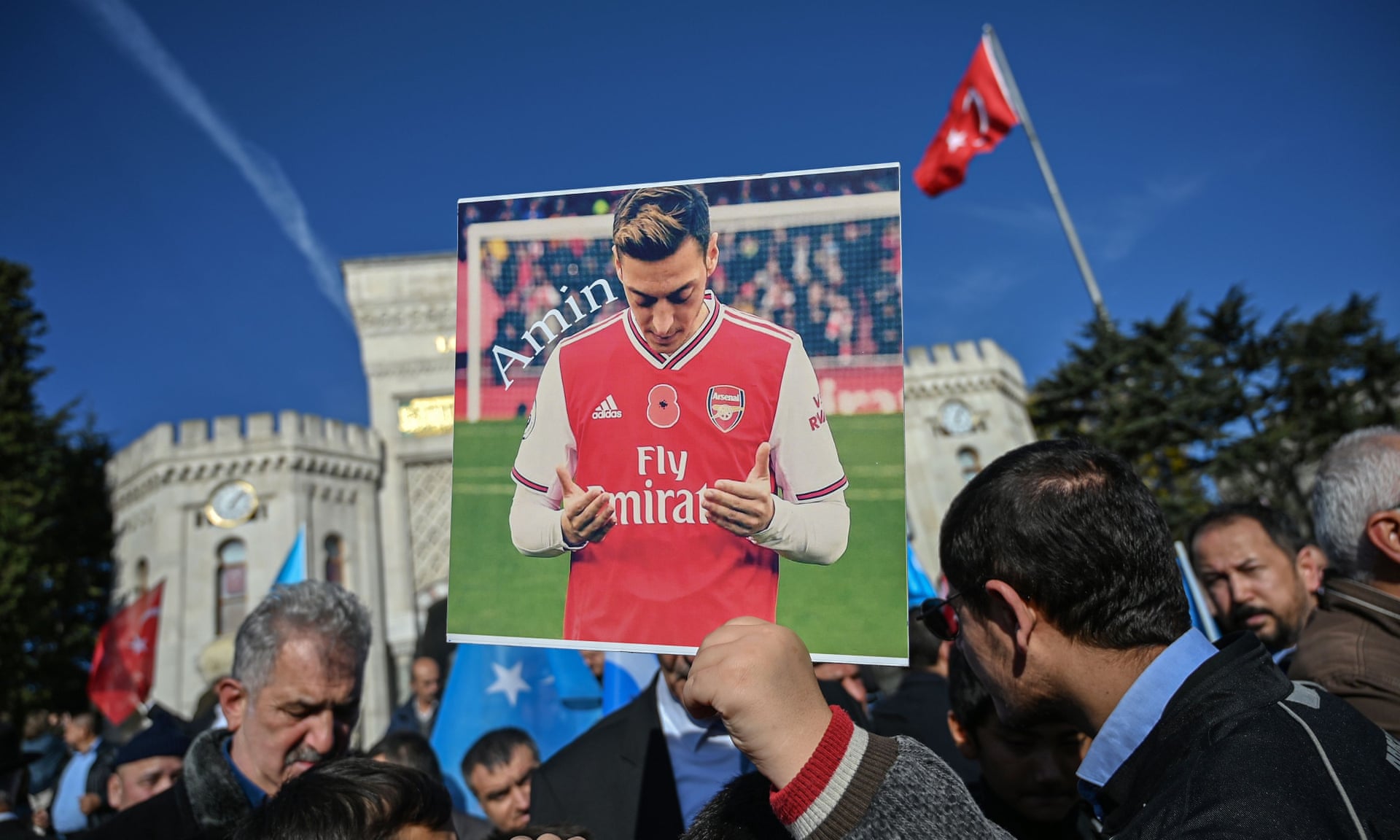
A supporter of China’s Muslim Uighur minority holds a placard Mesut Ozil during a demonstration at Beyazid square in Istanbul.

Across the street from the Workers’ Stadium in Beijing, the venue of Arsenal’s first ever match in China in 1995, shoppers at an Adidas store ignore a rack of puffer jackets, football shirts and backpacks bearing the football club’s name.
One, inspecting a range of Adidas clothing released for Chinese New Year, says he had once been a fan of Arsenal’s Mesut Özil, but since the star midfielder had condemned China’s treatment of the country’s Uighur people, he has changed his mind.
The man then goes on to admit that he is, in fact, a Manchester United supporter.
Controversy over Özil’s remarks this week has shone a light on the challenges – and compromises – foreign organisations face in trying to do business in China.
But it also draws attention to the unique role played by sport, both in contemporary China and in exerting soft power for western countries abroad.
Eight days ago, Özil, a practising Muslim of Turkish descent, posted a message on Instagram urging support for the Uighur Muslim population in the north-western Chinese colony of East Turkestan, more than a million of whom are interned in concentration camps
In response, Arsenal distanced themselves from their own player.
Hastily issuing a statement via Chinese social network Weibo, the club said: “The content published is Özil’s personal opinion. As a football club, Arsenal has always adhered to the principle of not involving itself in politics.”
A week of controversy followed, with the debate reaching diplomatic circles.
Arsenal were widely criticised in British media for washing their hands of Özil, and accused of only having eyes for their bottom line. 
The German found one unlikely ally, meanwhile, in the shape of the US secretary of state, Mike Pompeo, who tweeted: “China’s Communist party propaganda outlets can censor Mesut Özil … but the truth will prevail.”
In China, there was an immediate response too, with Arsenal’s fixture against Manchester City pulled from the TV schedules by state broadcaster CCTV.
Özil was also the subject of individual sanctions when his social media accounts were blocked on the Chinese internet and his likeness removed from the Chinese version of the video game Pro Evolution Soccer.
In this way, the Özil affair echoed actions taken earlier in the year by the Chinese against NBA team the Houston Rockets, who found themselves persona non grata after their general manager, Daryl Morey, expressed support for Hong Kong’s pro-democracy movement.
Two months after Morey’s post, Rockets games are still not being shown on CCTV or the service provided by digital rights holder Tencent.
Back in England and, a week after the incident, the Premier League has yet to make any public comment on the affair.
For Simon Chadwick, professor of sport enterprise at Salford Business School, this is not surprising. “I cannot imagine any scenario in which the Premier League would publicly speak out in support of Özil,” he says.
“One suspects that financially it would likely be disastrous for the Premier League to make any explicit statement questioning, criticising or undermining Chinese state policy.“
Of the 20 clubs in English football’s top flight, one, Wolverhampton Wanderers, is fully Chinese owned while another, champions Manchester City, have Chinese investors who hold a 12% stake in the club. 
Other teams, such as Bournemouth and Crystal Palace, have sponsorship deals with Chinese companies.
Perhaps most important of all to the Premier League’s financial success, however, is the TV deal struck with the company PP Sports for rights to broadcast live matches in China.
The three-year agreement that runs until 2022 is believed to be worth £500m.
The Premier League has seen the value of its TV rights fall domestically of late and in several other markets, while China remains one source of real growth.
The growth reflects increased demand for top-flight English football among Chinese fans and the government.
“This is really the horns of the dilemma for the PRC (Communist party)”, says Dr J Simon Rofe, a reader in diplomatic and international studies at SOAS.
“They’ve actively encouraged the engagement with sport, particularly the NBA through [Chinese basketball player] Yao Ming in the noughties and then the Premier League, through Xi Jinping himself. Think back to the image Sergio Agüero tweeted of Xi and David Cameron. The Premier League does have an influence and it has been cultivated by the PRC.”
In 2016, Xi is believed to have had personal involvement in the drafting of a national blueprint for the game aimed at transforming China into a “soccer powerhouse” capable of winning the World Cup by 2050.
Part of that plan involved gaining access to and learning from elite football in Europe.
As a result, a number of English clubs, including Manchester City, have opened football academies in China.
The ability for football and the Premier League specifically to open doors has not been missed by the UK government.
Alongside the Queen and the BBC, the competition is seen as one of the most effective mechanisms for exercising soft power on the international stage.
“Soft power is about getting people elsewhere in the world to see things the way that you do,” says Chadwick.
“Football is part of Brand Britain, it is part of Britain’s soft-power strategy, and it helps sell who we are and what we do.”

Moral Pygmies
Attempting to balance the interests of its stakeholders, the clubs, its sponsors and media partners, alongside its quasi-diplomatic responsibilities, means that the Premier League is unlikely to ever speak about politically matters.
There will be disappointment among many who feel the organisation could use its clout to serve a greater good.
Chinese authorities have not reacted as strongly to Özil’s remarks as they did to Morey’s.
There is an expectation that any uproar may soon disappear.
In a country with an increasing appetite for televised sport, to damage one competition might seem unfortunate, to damage a second could seem like carelessness.

jeudi 19 décembre 2019

Arbeit macht frei

China adds a sickening new dimension to its treatment of Uighurs
The Washington Post
An ethnic Uighur demonstrator attends a protest against China in front of the Chinese Consulate in Istanbul on Oct. 1. 

AT A news conference in Beijing recently, the head of China’s East Turkestan colony in the far northwest, Shohrat Zakir, said that “trainees” in a notorious archipelago of reeducation camps had all “graduated,” and “with the help of the government, stable employment has been achieved and their quality of life has been improved.”
In reality, China has corralled more than 1 million ethnic Uighurs and other Turkic Muslims into concentration camps in East Turkestan in order to wipe out their language, religion and culture. 
So what did they graduate to?
Many are being sent to factories no freer than the camps, in some cases located on the camp grounds or adjacent to them. 
If true, the creation of a chain gang of Uighur workers is yet another sickening dimension to one of the world’s most serious human rights crises. 
It should be the subject of a credible international investigation, with consequences.
Adrian Zenz, a senior fellow in China studies at the Victims of Communism Memorial Foundation, who has published pioneering work on the East Turkestan concentration camps, has now unearthed evidence that points to forced labor.
Writing in the Journal of Political Risk, he says, “Since the second half of 2018, limited but apparently growing numbers of detainees have been released into different forms of forced labor.” 
Mr. Zenz argues that the involuntary labor is one part of a “grand scheme that penetrates every corner of ethnic minority society with unprecedented pervasiveness,” sending a whole population into a state-controlled environment of political indoctrination, social control, extrajudicial internment and massive surveillance with the effect of breaking up traditional, religious and family life. 
It amounts to “targeted cultural genocide.”
Mr. Zenz bases his conclusions in part on Chinese government documents that point toward factories and workshops staffed by the internees from the concentration camps.
In the Xinhe County Industrial Park, he found, a garment company set up a work base to provide employment for 500 internees from the Xinhe County camp, and “the government provides police forces and special instructors so that the factory is run in a ‘semi-military style management’ fashion.”
What factory needs police, except to keep people from escaping?
In Yarkand County, Mr. Zenz found spreadsheets produced by local government authorities listing the employment situation of thousands of Uighur residents, and he noticed that 148 stood out as specially designated people who had been in detention, including in the camps.
Mr. Zenz points out in an essay in Foreign Policy the irony of placing the interned Uighurs into sweatshops: Many were once skilled businessmen, intellectuals and scientists. 
Mr. Zenz’s information is powerful but fragmentary; more needs to be uncovered about the patterns of forced labor he has begun to expose.
China is to host the Winter Olympics in February 2022.
Should such an event of global significance be held in a country that maintains concentration camps and coerced labor? 
It is not too early to begin raising the question.