jeudi 12 juillet 2018

China's Digital Silk Road Benefits Chinese Espionage

Cross-border communications networks and e-commerce links built by Chinese tech companies are used for Beijing's intelligence operations
By Nyshka Chandran

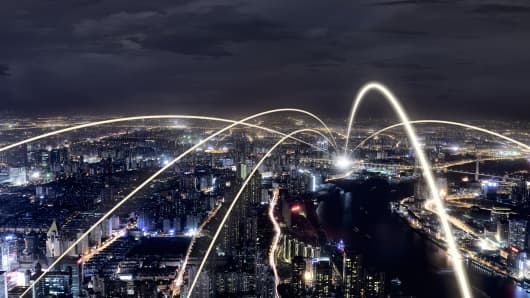
A major element of China's continent-spanning Belt and Road Initiative has nothing to do with roads, ports or power plants. 
Rather, the "Digital Silk Road" aims to construct communications networks across the developing world.
Many fear Beijing could use those tools for electronic surveillance.
The world's second-largest economy wants to build fiber optic cables, international trunk passageways, mobile structures and e-commerce links in countries tied to its investment initiative. These technologies are designed to supplement the Belt and Road's physical infrastructure while introducing common technical standards in participating nations, most of which are emerging economies and lack rudimentary internet facilities.
Boosting connectivity can enable information exchanges, bringing about "mutual benefit and win-win cooperation," according to a 2015 white paper jointly released by various Chinese government bodies. 
But there are geopolitical implications if foreign governments allow Chinese technology companies — believed to carry close ties with the state — to install complex data communications systems.
A big fear is that Chinese players insert "backdoor mechanisms that increase [Beijing's] intelligence and propaganda operations in BRI partner countries," researchers at the Council on Foreign Relations said in a note last week.
State-owned China Mobile, the world's biggest telecom carrier by subscriber count, is currently building optical fiber cable projects linking Beijing to Myanmar, Nepal and Kyrgyzstan. 
Meanwhile, "private" player Huawei signed a deal last year to build a cable system linking Pakistan to Kenya via Djibouti. 
Talks are also underway for state-owned China Telecom to help build fiber-optic links in the Arctic Circle.
Cables, which transfer massive amounts of personal, government and financial data, are controlled by telecommunications firms. 
So, when it comes to enforcing security, regulatory grey areas emerge.
That infrastructure can be used to help Beijing gain information, according to the Council on Foreign Relations. 
For example, technicians can bend or clamp the fibers to allow data to leak out or bypass encryption, the note explained: "Prior actions taken by the Chinese government, such as installing backdoors in encryption technology, suggest that it will take similar actions when laying down fiber optic cables in other countries."
China Mobile, Huawei and China Telecom didn't respond to CNBC's requests for comment.
While these projects may benefit developing economies, "they have raised concerns that Beijing uses these networks to exert pressure on other states or engage in electronic surveillance," The Economist Intelligence Unit said in a recent report. 
"BRI countries will need to enhance regulatory frameworks and oversight of projects to mitigate financial risks and political dependence," it added.
Heavyweights such as Huawei are also involved in deploying 5G mobile technology — a central component of China's digital economy — worldwide under the Digital Silk Road. 
But there are worries those firms could use their influence to promote Beijing's preferred standards.
"In 5G, China’s commercial and geopolitical objectives are closely aligned," said Elsa Kania, a Fulbright specialist at the Australian Strategic Policy Institute. 
Beijing "views the nascent and emerging technical standards in new technologies as a 'golden opportunity’ that Chinese national champions are poised to take advantage of," she said.
At the heart of the matter is deep-rooted suspicion about the data-sharing practices of Chinese firms.
Corporates could be legally required or co-opted to support and participate in Chinese intelligence, according to Kania. 
"That raises concerns about the implications for China’s future espionage capabilities, while also creating leverage that could be exercised for coercive purposes," she explained.
In 2012, U.S. intelligence chiefs deemed Huawei and ZTE products a risk to national security, claiming the companies collaborate with China's government to spy, steal trade secrets and cast cyberattacks.

President Trump’s Tariffs Hit China Where It Hurts

By targeting manufacturers, the new measures mark a serious escalation.
By Christopher Balding
Bread and butter. 

How serious are President Donald Trump's latest trade threats against China? 
The scale of the new measures -- 10 percent tariffs on an additional $200 billion of Chinese products -- will certainly get Beijing's attention. 
But the headline figure matters less than the industries being targeted and their relative importance to China's economy. 
By that metric, this latest attack is a serious escalation.
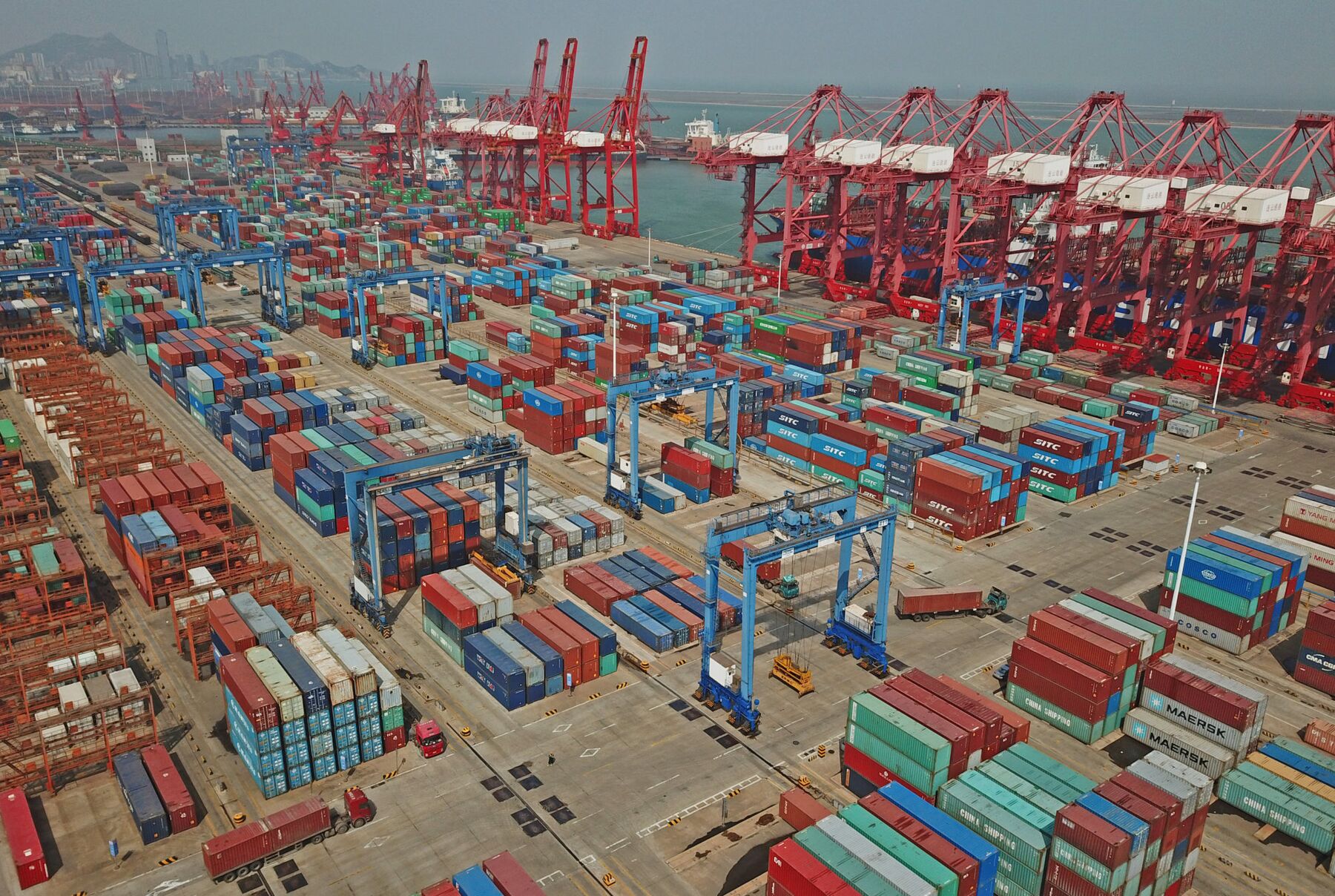
Most consequentially, the tariff list targets basic manufactured goods such as furniture, electronics, machinery, textiles and fibers. 
Together, these broad categories make up roughly 67 percent of total Chinese exports, which in turn account for 18 percent of gross domestic product. 
That means the potential for significant economic harm is high, all the more so given that manufacturing is the largest individual employment sector in China.
The new tariffs will also put pressure on China's trade surplus with the U.S. 
In principle, this imbalance doesn't much bother economists. 
The problem is that China depends on savings, investment, and capital accumulation to drive its economy. 
Historically, it would print money to buy surplus U.S. dollars, build up reserves, flood the domestic market with money, and thus encourage investment. 
Beginning around 2012, however, this strategy started breaking down as gray-market capital outflows rose and surplus dollars dwindled.
After years of increasingly stringent capital controls, China has only recently returned to a small surplus in total capital flow.
Tariffs on major export industries will threaten its primary source of hard currency and place substantial strain on the capital-control system. 
That, in turn, will jeopardize China's dreams of signature international investment and potentially destabilize its finances as it becomes harder to balance capital flows. 
Unless it can generate more U.S. dollars, this could place serious pressure on the yuan.
Making matters worse, the new tariffs will likely accelerate the migration of low-wage manufacturing from China to frontier markets such as Vietnam and Bangladesh. 
Even without tariffs, many export-focused firms in industries such as garments and textiles were eyeing the exits after years of double-digit wage growth in China.
Tariffs will only exacerbate this shift, for which China was ill-prepared to begin with.
All this, moreover, comes at a bad time.
With economic strain rising, Chinese officials were already resorting to risky measures to boost growth.
The China Banking and Insurance Regulatory Commission recently advised banks to reduce interest rates on loans to small and medium-sized enterprises, while state-owned banks have increased lending for real-estate investment to ensure the economy continues to grow, even as stocks and key commodities have been plummeting.
Against this backdrop, the prospect of a prolonged trade war is causing growing alarm within China. Academics and key officials have been quietly wondering if the ruling party has made a significant miscalculation.
The Commerce Ministry has vowed to retaliate against Trump's latest measures, but it has little room to maneuver given China's relative lack of imports from the U.S. 
The government has even agreed to reimburse some importers for the cost of its retaliatory soybean tariff, which is hardly the sign of a strong hand.
Exactly how China will respond, then, is anyone's guess.
But make no mistake: Trump is attacking the foundations of the modern Chinese economy. 
And the trade war he initiated is escalating faster than either side seems to appreciate.

mercredi 11 juillet 2018

‘It is about Xi as the leader of the world’: Former detainees recount abuse in Chinese re-education centres

Many of those detained are Muslim Uyghurs and Kazakhs accused of ‘incorrect thinking’ in the midst of a campaign that has treated what authorities consider ‘radical tendencies’ as a public-health crisis that must be expunged
By NATHAN VANDERKLIPPE
Police patrol on a scooter as an ethnic Uyghur boy stands in his doorway on June 27, 2017 in the old town of Kashgar, East Turkestan.

Authorities in East Turkestan have made loyalty to Xi Jinping a central part of an extensive political re-education campaign that requires detainees to swear allegiance to the Communist Party while forswearing a Muslim faith that they are told to repeat is “stupid.”
Large numbers – researchers estimate the total in the hundreds of thousands – of people have been placed in Chinese facilities known as re-education centres, where they are forcibly indoctrinated. Many of those detained are Muslim Uyghurs and Kazakhs accused of “incorrect thinking” in the midst of a campaign that has treated what authorities consider “radical tendencies” as a public-health crisis that must be expunged.
Now, interviews with people who have been in those centres show that China’s current leader, who has orchestrated a personalization of power not seen in China since the days of Mao Zedong, occupies a place of singular importance in China’s efforts to rectify what it deems errant thinking.
“Xi Jinping is great! The Communist Party is great! I deserve punishment for not understanding that only President Xi Jinping and the Communist Party can help me,” was one of the refrains that a Uyghur woman who was in a centre last fall, was forced to regularly repeat.
The woman, whose name is not being used by The Globe and Mail for her protection, was put through regular self-criticism sessions. 
Part of the content was cultural. 
“My soul is infected with serious diseases,” she would repeat. 
“There is no God. I don’t believe in God. I believe in the Communist Party.”
Other content was more explicitly political. 
Day after day she would say out loud that she was a traitor, a separatist and a terrorist.
“I am so blind not to see the greatness of our strong country’s laws. I am so stupid that I was not thankful for our President Xi Jinping,” she would be told to recite.
Her recollections add to the growing number of accounts from people who have been inside the re-education centres that have proliferated in East Turkestan since 2017. 
Chinese officials have denied their existence, and refused to accept diplomatic entreaties from foreign countries, including Canada, expressing concern over human-rights violations. 
But a growing body of evidence shows that such centres are widespread and being used for practices that critics call abusive violations of human rights.
The Globe and Mail interviewed several people who have been in the centres. 
They described intense attempts to indoctrinate large numbers of people in settings that resembled military prisons, with armed guards and tight security. 
Cameras followed every move, even into toilets. 
Some detainees received unknown medicines; others attempted suicide.
The long days were filled with instruction “about Xi Jinping, no one else,” said Kayrat Samarkan, 30, who was in a re-education camp last year before being allowed to go back to Kazakhstan, after diplomatic pressure for the release of detained Kazakhs. 
“It is about Xi as the leader of the world. The new China is best. All other countries, especially the U.S., are evil. Capitalism is evil, wrong and failed. Socialism with Chinese characteristics is the best.”
The inculcation extended to mealtimes.
“Before breakfast we had to say repeatedly: ‘Long live Xi Jinping! May he live for 10,000 years!’” Mr. Samarkan said.
“After eating, we had to say the same thing.”
Every day began at 6 a.m., with time allotted to cleaning up sleeping quarters – little more than blankets on cement floors – before breakfast. 
From 8 a.m. to 10 a.m. detainees memorized red songs and slogans, some of them dating to the era of the Communist Revolution. 
From 10 a.m. to noon, they wrote down the texts they had just memorized.
Afternoons were devoted to studying Communist Party propaganda and policies, as well as lessons about the dangers of being “infected” by going abroad. 
They wrote self-criticism late into the night, noting “anything we did wrong, or any negative thoughts about China or the Chinese people,” Mr. Samarkan said.
The personalization of political indoctrination in re-education centres comes amid a broader effort that, according to former detainees, includes attempts to weed out religious observance.

Xi Jinping is great! The Communist Party is great! I deserve punishment for not understanding that only President Xi Jinping and the Communist Party can help me.
— One of the refrains that a Uyghur woman who was in a centre last fall, was forced to regularly repeat.

Occasionally, authorities would appear to test those being held, Mr. Samarkan said.
In the middle of one night, the centre was filled with the sound of the morning call to prayer. 
People who woke up were taken away, Mr. Samarkan said. 
Authorities appeared to think that being roused by the call was evidence of persistent religious tendencies.
At one point, Mr. Samarkan smashed his head against the wall in an attempt to kill himself. 
Instead, he fainted. 
He was taken to hospital and threatened with eight years in prison if he tried again.
“I didn’t do anything,” he told the people at the hospital. 
“Just kill me. I don’t want to be alive.”
In the re-education centre, he saw another person rip up pieces of towel and eat them, another attempt at suicide. 
That person was discovered by authorities and punished. 
“If they find out, they won’t let you commit suicide,” Mr. Samarkan said. 
The Globe spoke with him from Kazakhstan, where he is living after being released.
Detainees were divided into three groups, he said: religious people; those who have either travelled overseas or had overseas contacts; and those who broke rules, which could include failing to respect Beijing time (East Turkestan is far west, and Uyghurs commonly set clocks back two hours), missing compulsory flag-raising ceremonies or failing to speak Chinese.
Some people were given pharmaceutical injections and pills, Mr. Samarkan said, describing the marks on the arms of those who had been given unknown medicines. 
“They forgot things, couldn’t focus, looked numb.”
His account was confirmed by two other former detainees in re-education centres.
Reports on the use of medicine for psychological purposes in Chinese detention are less common, although enough exist “to indicate a systematic abusive practice by the police,” said Michael Caster, who works with Safeguard Defenders, an international human-rights group.
In recent years, at least five human rights defenders, including detained lawyers, said they were forced to take medicine.
In East Turkestan, re-education activities are being conducted in a variety of settings and centres, some less formal – operating as schools, with students in class either during the day or at night – while others are sprawling complexes with high walls that resemble prisons.
Authorities call them centres for “vocational training” or “transformation through education.” Scholars have called it “co-ercive isolated detoxification.” 
A report earlier this year from East Turkestan scholar Adrian Zenz estimated that, at a minimum, several hundred thousand people have been placed in re-education.

A security guard stands watch in a Uyghur neighbourhood in Aksu, in East Turkestan, in April, 2015.

The Uyghur woman who was held in the centre last fall had a foreign passport. 
She was brought to a smaller re-education camp after landing at the airport in East Turkestan. 
She says she was taken away at gunpoint with other relatives and placed first in a local re-education centre, then transferred to another such place in the East Turkestan town where she grew up. 
The Globe is not disclosing its location, or other details relevant to her case, because her other relatives have not yet been released. 
The woman, who was allowed to leave less than two weeks after her husband persuaded foreign authorities to intervene, does not know where those relatives are today.
She was placed in re-education with her baby, not yet a year old. 
They were watched by surveillance cameras and workers took her baby when it cried. 
Other mothers also had young babies, she said.
In re-education, she was not allowed to wear underwear or a bra and her hair was completely shaved off, as was that of other women. 
She was not told why, although it may have been to prevent lice, since the women were sleeping in crowded conditions.
Elsewhere, detainees have said authorities appear to have cut the hair of women in re-education as a reprimand to the traditional long hair they maintained, a message that “now you are going to have a modern hair style,” said Maya Wang, senior China researcher at Human Rights Watch.
In some ways, the forced praise for Xi Jinping inside re-education centres is being done in a similar vein – taught as the modern political fashion in China.
“Many aspects of East Turkestan today bear a resemblance to the Cultural Revolution,” Ms. Wang said. 
“So some kind of worshipping of Xi would be the expected conduct of a loyal subject of the Chinese Communist Party, which is what these political education facilities are supposed to cultivate.”
Re-education is being used “to create loyal subjects by force,” said Rian Thum, a historian at Loyola University in New Orleans who has frequently visited East Turkestan since 1999, most recently last year.
“The minorities of East Turkestan are just a group of people that the authorities think are in need of a stronger dose of indoctrination in an outlook that the party is deploying more gradually elsewhere,” Mr. Thum said.
Indeed, the push to inculcate Xi Jinping thought is taking place across China. 
High-school textbooks have been edited to include lengthy explanations of a philosophy credited to Xi, and dozens of universities across China have opened centres devoted to its study.
In East Turkestan, meanwhile, authorities have inaugurated a Xi Jinping thought lecture campaign in early June, under the banner of “10 million teachers and students having the same class to study new thoughts.” 
Instruction will take place at colleges and universities across the region. 
The lectures will also be aired on television and streamed online.
“Especially in East Turkestan, people need to learn the new thoughts and Party’s strategy on governing East Turkestan,“ Xiong Kunxin, a professor at Tibet University, told the Global Times, a nationalist tabloid published by the Communist Party.
Darren Byler, an anthropologist at the University of Washington, has collected videos that have been circulating online showing demonstrations of fealty to Xi outside of re-education camps. 
In one, a woman speaks in Uyghur to a toddler: “My child, go and kiss your grandfather Xi Jinping.” The toddler runs and kisses an image of Xi on a large framed poster.
In another, a man changes the lyrics of a popular Uyghur folk song to say “Xi Jinping is my father, the Party is my mother. We are so safe under the shadow of the party. We are against evil forces. We burn religious people in fire.” 
The man is surrounded by others who appear to be drinking beer and baijiu, a Chinese-made hard liquor. 
It is an image at odds with Muslim dietary practices, “everyone is now drinking and smoking as a way of proving they do not need re-education,” said Mr. Byler, who has done extensive study of the re-education system.
Xi, meanwhile, “has become an open symbol of Chinese national sovereignty,” Mr. Byler said.
“When Uyghur children are taught to treat his image as the image of the grandfather, they are being trained to attribute benevolence and respect to Chinese national sovereignty,” he said. 
That political ideology is reshaping everyday speech. 
Instead of “inshallah,” or “God willing” as a reference to future plans, Mr. Byler said, many Uyghurs “now say ‘Party willing.’”

China’s Marxist Tyranny Shouldn’t Be Ignored

It’s time the West stopped treating Beijing with kid gloves.
By J. J. MCCULLOUGH
A Chinese soldier outside the Tiananmen Gate in Beijing.
It is a curious and depressing thing that in this age of hyperactive vigilance against creeping tyranny, the regime running China sits mostly in afterthought. 
Amid an expansion of dictatorship’s definition to include everything from border enforcement in Texas to court reform in Poland, China’s Xi Jinping — who has made strengthening totalitarianism the explicit purpose of his rule — receives analysis that’s calm and nuanced.
The unjustified moderation through which we conceptualize China’s leaders is a destructive legacy of the 1990s and early 2000s, when Western politicians, intellectuals, journalists, and businessmen chose to believe a string of fantasies about just how much reform the Chinese regime had undergone. 
A string of truisms became popular to mindlessly spout — China was not really Communist anymore, it was basically an American ally, daily life had become modern and Westernized, and the country was on track to become more prosperous than anyone dared imagine. 
These conclusions helped rationalize the integration of the West’s commercial economy into the Chinese manufacturing sector, with Congress’s 2000 decision to bestow the country with “permanent normal trade relations” status representing a critical moment of normalization, as Reihan Salam recently noted.
Today, our culture of Chinese normalization has become so smothering that encountering unvarnished information about how the regime actually works can be a jarring experience.
Canada’s Globe and Mail recently published a horrifying exposé on the persecution of China’s Uyghur minority. 
As Jay Nordlinger summarized for National Review last May, the Uyghur are a Muslim ethnic minority who constitute a plurality in China’s enormous eastern province of Xinjiang. 
Beijing considers them an Islamist menace waiting to happen, and perhaps those Westerners who worry about Islamism will be inclined to sympathize. 
Yet the Stalinist measures employed in response make even the most hardened American Islamophobe look tame.
Citing exceedingly dubious suspicions, the Chinese state has detained, by some estimates, hundreds of thousands of Uyghur for forced indoctrination. 
The Globe described the testimony of a typical victim:
The woman, whose name is not being used by The Globe and Mail for her protection, was put through regular self-criticism sessions. 
Part of the content was cultural. 
“My soul is infected with serious diseases,” she would repeat. 
“There is no God. I don’t believe in God. I believe in the Communist Party.”
Other content was more explicitly political. 
Day after day she would say out loud that she was a traitor, a separatist and a terrorist.
“I am so blind not to see the greatness of our strong country’s laws. I am so stupid that I was not thankful for our President Xi Jinping,” she would be told to recite.
The piece describes Beijing’s brainwashing techniques in lurid detail. 
In cult-like fashion, prisoners are housed in barren conditions and forced to perform grueling, repetitive tasks from morning till night. 
Surveillance is constant, with the smallest disobedience viciously punished. 
Sometimes the detainees are drugged into submission.
Anything distinctive about the inmates — which is to say, anything making them more identifiably Uyghur than Chinese — is forcibly sacrificed. 
Women tell of getting their long hair cut short (“now you are going to have a modern hairstyle,” one recounts being told) or shaved off entirely. 
Speaking the Uyghur language is forbidden, as is the practice of Islam. 
Round-the-clock exaltation of the Chinese system and denunciation of its enemies — “Capitalism is evil, wrong, and failed. Socialism with Chinese characteristics is the best” — is the only acceptable pastime. 
Eventually, people are supposed to break.
Assimilating pious Uyghurs into obedient, atheist automatons is but an especially grotesque manifestation of a Chinese political system that remains like nothing else on Earth. 
Nearly three decades after the fall of the Soviet Union, Beijing still believes deeply in totalitarianism as a workable philosophy of government, in which the state can and must assert crushing power over the individual to mold his mind and micromanage his life. 
Theirs is not an incidental dictatorship, but rather one forged in the context of a Marxist revolution that continues to chase the dream of a centrally planned paradise.
Xi Jinping pursues this dogma with a zealousness his recent predecessors lacked. 
In 2013, his administration explicitly identified seven sinister ideas it was most eager to crush. 
There was no subtlety. 
Basically everything Westerners take for granted as an essential component of their liberty was framed as a demon to be slain: universalist philosophy, constitutional democracy, independent media, civil society, free markets. 
All, in turn, are subject to their own targeted campaigns of suppression and destruction, from word bans on state-run social media to tearing crosses off church steeples. 
A command economy, we were told, was bound to soon resemble our own remains in the bottom tier of global economic freedom.
Because totalitarianism is often imagined as a decidedly 20th-century phenomenon, the notion that it can exist in a place as outwardly modern as China — with its skyscrapers and flat-screen TVs and high-speed rail lines — is sometimes hard to process. 
Yet the great totalitarian regimes of the past existed in what once seemed impressively futuristic societies, too. 
Indeed, this was a key element of their appeal.
America’s conservative movement has been historically skilled at articulating its values through contrast with totalitarian alternatives, particularly the Soviet Union and radical Islam. 
In doing so, it has helped give a sense of purpose not only to U.S. foreign policy, but their own desired form of an ideal society.
The fashionable storyline that our once-dominant liberal-democratic ideals face unprecedented danger today from alternative doctrines is not wrong, but the threat must not be misidentified. 
It is the powerful Chinese regime governing a billion people, not populist movements in the West, that should serve as a contrast with all who value freedom in the current era.
That Beijing is protected by a powerful coalition of apologists and disinformation only emphasizes the importance of fighting to make this truth prominent in our political conversation.

Was This Powerful Chinese Empress a Feminist Trailblazer?

By Jane Perlez
The Hall of Dispelling Clouds at Empress Cixi’s Summer Palace in Beijing. It was renovated in 1895 for her 60th birthday extravaganza.
BEIJING — She entered the world of an ancient empire as a teenage concubine, chosen by the emperor to share his bed for her good looks, immaculate comportment and, above all, her ability to sing.
The male-dominated court was a swirl of intrigue, forced suicides and poisonings. 
Eunuchs assigned to the emperor prepared her for sex with the ruler, undressing her and carrying her to his bed. 
After the Emperor Xianfeng’s death, she governed in the name of young male heirs — from behind a screen.
Perhaps as an escape from these oppressive restrictions, Empress Dowager Cixi (pronounced TSIH-shee), the de facto ruler of China in the final decades of the imperial dynasty, rebuilt a fantastic wonderland, the Summer Palace. 
It’s an extended estate of glittery lakes, luxurious gardens and elaborate wooden pavilions on the edge of the nation’s capital, attracting up to 100,000 visitors a day.
Most of them are curious Chinese from across the country who read in their Communist Party-authorized school books that Cixi was a harridan who stole the nation’s wealth and was responsible for China’s humiliating defeat by the Japanese in 1895.
But was she? 
Cixi, a peer of Queen Victoria’s and apparently iron-willed, has invited revisionist interpretations that view her as a feminist, at least in the context of the late 19th century, when women in China were treated little better than spittoons.
The view from the Tower of Buddhist Incense.
Strong women in China are often portrayed as power-hungry, and sometimes irrational, and are notably absent from the highest ranks of government. 
There is no Hillary Clinton figure in contemporary China (the real Mrs. Clinton is vilified by the government for talking about human rights in the country), or an Angela Merkel, who has stood up to China on trade.
When Bo Xilai, a rival to the current ruler, Xi Jinping, was put on trial for corruption, he described his wife as “insane” in an effort to lessen his sentence.
So harking back to the pre-communist era for a feminist trailblazer makes sense. 
And to search for feminist ideals in a woman who ruled for nearly 50 years, from 1861 until her death in 1908, is understandable.
But the case of Cixi — who was isolated, undereducated and never made a break for personal freedom — is a hard argument to make.
A Chinese historian, Jung Chang, began the re-evaluation of Cixi with her biography, “Empress Dowager Cixi.” 
Ms. Chang, who lives in exile, argues the empress brought medieval China into the modern age, calling her an “amazing stateswoman.”
But Ms. Chang’s damn-the-man portrait of Cixi is a tad too generous even for some sympathizers. How could the empress dowager have ushered in groundbreaking innovation when much of her career was devoted to her drive to preserve the imperial family that crumbled three years after her death?
Empress Cixi, center, at the Wenchang Gallery of the Summer Palace. She was the last adult ruler of China’s imperial dynasty.

And Cixi did undermine a bold reform program begun by her adopted son, Emperor Guangxu, who favored a constitutional monarchy, not an absolute one. 
She then supported the Boxer rebellion, an anti-foreign, anti-Christian uprising that cost China dearly, a move she later blamed on her bossy male advisers.
A Chinese scholar, Zhang Hongjie, recently took up the cause of the empress in a sympathetic essay, “Woman Cixi,” featured in an anthology about Chinese women and men who have struggled against the odds.
He argued that she was held back by her lack of education, a given at the time because she was a woman, and that she should be given credit for trying to make amends for her mistakes at the end of her rule. 
But Mr. Zhang said his positive portrait made little impact.
“Cixi is still a negative character,” he said.
Her endeavors to preserve the imperial family above all else make for comparisons with Michael Corleone, the fictional Mafia boss.
“She had one of the most ruthless, savvy political minds, she was like a gangster,” said Jeremiah Jenne, a historian who leads visitors on walking tours around the Summer Palace, where he points out 500-year-old juniper and cypress trees, and paint-faded pavilions like the Hall of Dispelling Clouds, which was renovated in 1895 for her 60th birthday extravaganza.
Cixi had the Summer Palace rebuilt after an invading European army looted and burned the original, which, with its jewel-encrusted furniture and over-the-top silks, was said to be on par with Versailles.
Chinese children have been taught that Empress Cixi stole money from the imperial navy to renovate the “marble boat” just two years before a war with the Japanese, which China lost.

Her reconstruction was not quite as opulent, but it was a sumptuous personal pleasure ground, intended to signify the strength of the family and its immense retinue of courtiers.
Despite the scholarly ruminations about Cixi, many Chinese tourists seem more interested in her extravagant lifestyle and come to see what is left of the loot, much faded because of neglect by the Communist Party’s cultural administrators.
A favorite is the “marble boat,” officially known as the Boat of Purity and Ease, a two-story wooden pavilion with wide verandas built into the side of the lakeshore and painted to resemble pale marble.
The official school curriculum says Cixi stole funds from the imperial navy to renovate the boat just two years before the outbreak of war with the Japanese. 
Because of her thievery, the textbooks say, China lost the naval battles against Japan in 1894.
Crowds, shoulder-to-shoulder on a recent spring day, pressed against the lakeside rail, taking selfies framed by the newly green willow trees that dipped into the water.
“She had an expensive lifestyle, and China had one disaster after another,” said a middle-aged primary-school teacher, who identified herself as Ms. Ye. 
She said she had no sympathy for Cixi.
Inside the Hall of Dispelling Clouds, where Empress Cixi celebrated her birthdays.
“When you are backward as China was then, people will take advantage of you,” she said.
In the gift shops, there are no images of Cixi, just a few pieces of pink silk emblazoned with her calligraphy, sold as wall hangings. 
Commemorative coins with the portrait of Mao Zedong, cheap bangles, tea sets and hand fans do a brisker trade.
“No one likes her,” one of the young saleswomen said. 
“In history she is bad. Who would buy souvenirs of Cixi?”
Young Chinese tourists showed more sympathy.
“As a woman, she couldn’t make decisions in politics like the men,” said Xiao Yangchuan, 18, a first-year university student. 
“I think we should see her as a real person. She has her own flaws, and we should understand her era,” she said.
In the last decade of her life, the empress dowager tried to polish her image by making herself more accessible, especially to Western diplomats. 
But in the end, she could barely overcome the impression that, like many royals in the West, she was most interested in her dogs, gardening and fancy clothing, wrote Sterling Seagrave in his empathetic biography, “Dragon Lady.”
Pictures of her are banished to a pavilion near the exit of the palace grounds, where a large sepia photo shows her, surrounded by ladies in waiting, dressed in an embroidered gown with pearls said to be the size of canary eggs, and long, talon-like fingernails.
The day before she died, the young emperor, Guangxu, was found dead — of natural causes, imperial records show. 
In 2008, Chinese medical investigators found extraordinarily high levels of arsenic in his remains, leading to a popular conclusion that the empress had killed him to try to stop him from introducing political reforms after her own death.
Did she do it? 
“I am going with Cixi,” said Mr. Jenne, the historian.
In her final years, she was known as the “old Buddha,” a term that friendly biographers say was a term of endearment. 
Others see it as an appropriately scornful term for a woman who was barely literate, left little for other women to emulate and led the bankrupt Qing dynasty to its downfall in a country whose government remains as male-dominated as ever.

Qin Yongmin: Prominent Chinese dissident jailed for 13 years

BBC News
Chinese dissident Qin Yongmin, who is now 64, pictured in 1993
One of China's highest-profile democracy campaigners has been sentenced to 13 years in prison for "subversion of state power".
Qin Yongmin, 64, has already spent a total of 22 years behind bars.
Qin had "refused to cooperate with the court" and stayed silent throughout his trial, human rights lawyer Lin Qilei earlier told the AFP news agency.
The guilty verdict was confirmed online by the Wuhan City Intermediate People's Court, in central China.
Frances Eve, a researcher at the NGO Chinese Human Rights Defenders, said Mr Qin had been "prosecuted for his belief in a democratic China as well as his actions in advocating for human rights".
"Authorities have been unable to build a case against him despite three years of investigation," she added.
Qin is a co-founder of the China Democracy Party, and was handed a 12-year prison term in 1998 after trying to register it officially. 
A year later, while still in prison, he was nominated for the Nobel Peace Prize.
Qin was leading a pro-democracy group called China Human Rights Watch when he was arrested in January 2015. 
Its activities included organising discussion groups and criticising the government's policies online.
The verdict against Qin emerged a day after the widow of a dissident Nobel Peace Prize winner left Beijing for Germany.
Liu Xia, 57, had been held under effective house arrest in the Chinese capital since her husband Liu Xiaobo won the prize in 2010. 
There were no criminal charges against her.
Liu Xiaobo, a university professor turned human rights campaigner, was jailed in 2009 for inciting subversion. 
He died of liver cancer last year.

Tech Quisling

Chinese engineer arrested on his way to China, charged with stealing Apple’s autonomous car secrets
By Allyson Chiu

The Apple Inc. logo is shown outside the company’s Worldwide Developers Conference in San Francisco on June 13, 2016. 

For about two years, Xiaolang Zhang was privy to information to which many in the tech world can only dream of having access: the inner workings of Apple’s secretive autonomous car research.
Over the weekend, the former Apple engineer was arrested by U.S. authorities at San Jose International Airport while preparing to board a flight to China and charged with stealing proprietary information related to Apple’s self-driving car project. 
At the time of his arrest, he said he was working for a Chinese start-up that is also developing autonomous vehicles, according to a criminal complaint filed in federal court in San Jose on Monday by the FBI and the U.S. attorney’s office.
Zhang, who started working at Apple in December 2015, was accused of downloading files that included engineering schematics and technical reports before leaving to work for Xiaopeng Motors, a Guangzhou-based company also known as XMotors, documents said. 
XMotors could not be reached for comment.
As a hardware engineer on Apple’s autonomous vehicle development team, Zhang’s position granted him “broad access to secure and confidential internal databases containing trade secrets and intellectual property,” according to the complaint.
Aside from making general comments about their interest in developing self-driving technology, Apple has not openly discussed its research, leaving many to wonder what exactly the company is working on. 
Information is even kept from a majority of the company’s employees. 
About 5,000 employees out of more than 135,000 are “disclosed” on the project, meaning they are working on the project or know details about it, the complaint said. 
Even fewer people, about 2,700 “core employees,” have access to the project’s databases.
According to the complaint, information about the project “is a closely guarded secret that has never been publicly revealed.”
“Apple takes confidentiality and the protection of our intellectual property very seriously,” company spokesman Tom Neumayr told Bloomberg in an email. 
“We’re working with authorities on this matter and will do everything possible to make sure this individual and any other individuals involved are held accountable for their actions.”
Zhang appeared in court Monday and was remanded to custody, according to court documents. 
A plea has not yet been filed. 
Tamara Crepet, a federal public defender provisionally appointed to represent Zhang, could not be reached for comment.
The complaint states that Apple first became suspicious of Zhang in late April. 
Zhang had just returned to the company after taking paternity leave when he informed his supervisor on April 30 that he would be resigning, according to the complaint. 
He said he wanted to move back to China, citing his mother’s poor health as the reason, but later disclosed that he intended to work for XMotors, the FBI complaint said. 
Shortly before this meeting and while on leave, authorities say Zhang had taken a trip to China with his family.
An internal investigation revealed that in the days before Zhang’s resignation, his Apple network activity “increased exponentially,” the complaint said. 
Authorities allege that Zhang had downloaded “copious pages of information” from various confidential databases. 
Records and closed-circuit TV footage also showed Zhang entering the autonomous car software and hardware labs on April 28, documents state. 
He was seen leaving less than an hour later carrying a computer keyboard, some cables and a large box.
Armed with that evidence, Apple called Zhang in for a second interview on May 2.
He initially denied going to Apple’s labs to take anything. 
But Zhang later admitted taking two circuit boards and a server, according to documents. 
He also admitted to using Airdrop, a file transferring system for Apple devices, to upload company data to his wife’s personal laptop, the complaint said. 
Zhang explained that he had taken the hardware because he thought it would be useful to him on another project. 
As for the files, he said he had wanted to study the data on his own time. 
Additionally, Zhang revealed that he had been working to secure a job with XMotors while still employed by Apple.
After examining his wife’s laptop, Apple’s digital forensic investigations team discovered that more than half the data on the computer was “‘highly-problematic,'” the complaint said. 
A complete evaluation of the files is still ongoing.
Effective May 5, Zhang was “voluntarily terminated,” and according to the complaint, said he is now employed by XMotors at their Mountain View, Calif. office. 
He also told Apple investigators he plans to move his family to Guangzhou, China “in the near future,” the complaint said.
On July 7, authorities learned that Zhang had bought “a last-minute round-trip airline ticket” for himself to Beijing, with the final destination of Hangzhou, China. 
The flight was scheduled to depart that same day. 
At the airport, Zhang was intercepted by federal agents and “arrested without incident.”
Zhang is scheduled to be arraigned July 27, according to court documents. 
If found guilty, he could face 10 years in prison along with a $250,000 fine.