vendredi 6 avril 2018

The Necessary War

The interests of the U.S. and China are set to collide, for the simple reason that the Chinese recognize that they find themselves in a profoundly unfavorable position.
By REIHAN SALAM
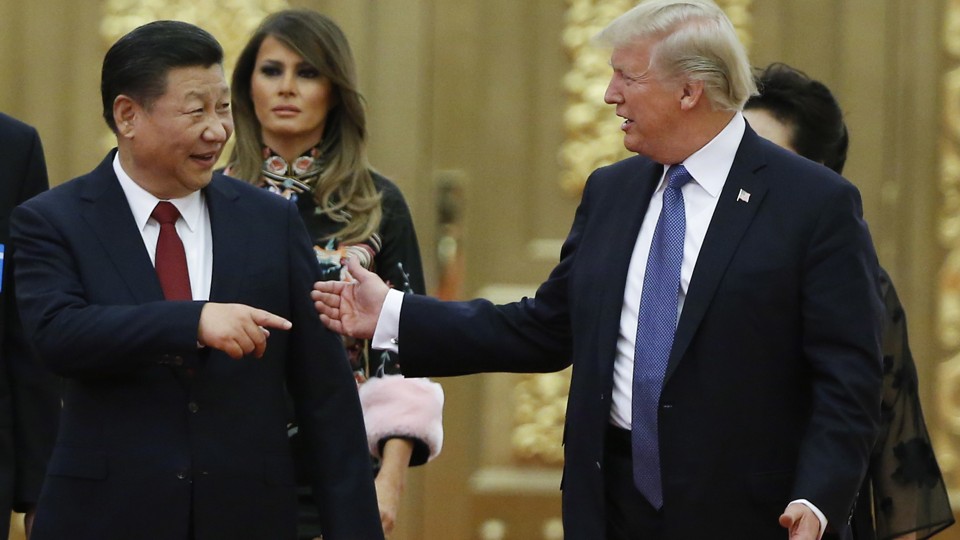
President Trump and Xi Jinping arrive for the state dinner with the first ladies in Beijing, China, on November 9, 2017.

Despite the heated rhetoric of the past few days, a trade war between the U.S. and China does not seem imminent. 
But it may be inevitable.
Almost immediately after the Trump administration announced its plans to impose tariffs on a broad array of Chinese imports, with an eye towards compelling the Chinese government to address intellectual-property theft and other trade abuses, Chinese officials responded by threatening tariffs of their own, shrewdly training their fire on U.S. imports from constituencies crucial to Republican political fortunes. 
Many observers have thus concluded that we’re on the cusp of a devastating economic confrontation.
Of course, nothing is set in stone. 
Just as President Trump dialed back his steel and aluminum tariffs, to unruffle the feathers of various allies, it is likely that something similar will happen this time around, particularly if the Chinese make concessions, as I expect they will. 
Beijing recognizes that they are more vulnerable to a disruption in trade flows than their U.S. counterparts, thus giving them a strong incentive to moderate their stance. 
In this instance, the U.S. and China will likely step back from the brink.
In the longer term, though, the interests of the two countries are set to collide, for the simple reason that the Chinese recognize that they find themselves in a profoundly unfavorable position. 
While Xi Jinping is quite willing to deploy cosmopolitan rhetoric—witness his many paeans to global free trade—it is always in service to Chinese national interests as understood by the leadership of the Chinese Communist Party, which maintains, correctly, that we live in a rivalrous world. 
Given America’s naval dominance, it would be foolish of Beijing to rule out the possibility that the U.S. might one day subject them to an economic blockade, or worse. 
This would be true even if the current occupant of the White House communicated in dulcet tones rather than in bellicose late-night tweets. 
To preserve their autonomy, the Chinese believe it necessary to do everything in their power to substitute for sophisticated imports, whether the world’s already-rich market democracies scream bloody murder about it or not.
U.S. politicians portray the Chinese as unscrupulous economic predators, who have managed to game the rules of international trade to grow at America’s expense, usually in connivance with feckless U.S. elites. 
Trump in particular placed this narrative at the heart of his presidential campaign, as have countless others. 
And I don’t doubt that there is some truth to it. 
It helps to look to the origins of China’s economic opening. 
Ultimately, the wrenching decision to surrender centralized control of many aspects of Chinese society was rooted in the fear that as neighboring states grew wealthier, they’d gain in relative power. China would grow more vulnerable to foreign coercion, of the sort seen during the country’s “century of humiliation.” 
Throughout the 1960s and ‘70s, companies in Japan, South Korea, and Taiwan learned how to sell their wares in the U.S. and other faraway markets. 
By the time China opened its economy in the late 1970s, containerized shipping was a more mature technology and China was desperately poor. 
Moreover, the international trading system had evolved, thus giving Beijing less room to maneuver. The Chinese didn’t really have the option of simply mimicking what their neighbors did, at least not at first. 
Instead of building its own champion exporters, China cautiously opened itself up to foreign companies that wanted to offshore low-level production. 
And then mid-level production. 
And then, eventually, pretty much all production, from soup to nuts.
In Playing Our Game, political scientist Edward Steinfeld lucidly describes how offshoring was a two-way street. 
One of his central observations is that “in the networked world of global production, there inevitably arise lead firms and follower firms, rule makers and rule takers.” 
In short, multinationals were the rule makers and Chinese firms were, by and large, the rule takers. 
While multinational firms offshored elements of production to their Chinese counterparts, the Chinese in effect offshored governance of the production process to foreigners—a marked departure from the autarkic ethic of Maoism.
How did offshoring work in practice? 
Whereas a factory in the U.S. or Germany might have built products using a similar mix of labor and capital, factories in low-wage countries, China very much included, would have done things quite differently. 
Milton Ezrati offers a useful illustration in his book Thirty Tomorrows
Say a piece of production equipment has been shipped from Germany to China to be used in a Chinese factory. 
Once assembled in China, the equipment would be “de-engineered” in various ways to disable some of its higher-end automated functions, because an abundance of low-wage labor meant that you could do more things by hand, and to make it easier to use, because low-skill workers would generally be better suited to using a simpler process.
Unlike the world-class Japanese companies that duked it out with American corporate dinosaurs in the 1970s and ‘80s, Chinese companies didn’t really compete with U.S. companies, or not until recently. 
They’ve been more like sidekicks that help U.S. companies earn higher profits by lowering their costs. 
By liberating U.S. companies willing to offshore their production from their near-total dependence on the U.S. workforce, Chinese workers helped supercharge the growth of U.S. multinationals, sending their value skyrocketing. 
Though the U.S. represents a shrinking share of global GDP, globalization has helped U.S. multinationals grow even more dominant than in decades past.
At the same time, however, the Chinese have sought to rise from their subordinate position, and to foster formidable multinationals of their own, with increasing success. 
The fruit of these efforts can be seen in the rise of China’s consumer internet giants, which have flourished behind the country’s so-called “Great Firewall,” an instrument of mass surveillance and repression that has also proven an effective tool of industrial policy
It has become routine for U.S. technology firms to cede the Chinese market outright to local firms, so cognizant are they of the unlevel playing field. 
Viewed from Beijing’s perspective, however, allowing the Alphabets and the Facebooks of the world to operate without constraint would be sheer madness: They’d expose their citizenry to external influences, which in turn would threaten the stability of the regime. 
Having closely studied the collapse of the Soviet bloc, and of various other one-party states around the world, the Chinese government has no intention of surrendering control. 
Thus far, expectations that rising affluence would lead to calls for liberalization, let alone competitive multiparty politics, have not been borne out, to the surprise and dismay of the U.S. foreign-policy community. 
Even if the Chinese government were to become more responsive to the mass public, it is not at all obvious that this would entail dismantling its distinctive brand of innovation mercantilism: Indeed, it might lead to its reinforcement, as ordinary Chinese citizens rally around the flag.
China’s desire to strengthen its indigenous enterprises is not limited to the consumer internet sector. The “Made in China 2025” initiative, for example, is all about establishing Chinese dominance in a number of emerging industrial technologies. 
The country’s “one belt, one road” (OBOR) effort can be understood in a similar light: as a means of shifting Chinese private investment from the U.S. to various Eurasian states that are more susceptible to Chinese influence, and that will evolve into receptive markets for Chinese goods and service. 
It is a very 19th-century vision, and there is no guarantee that it will succeed. 
But there is also no denying its logic. 
If China sees the U.S. as its most formidable rival, why exactly would it continue to rely on Boeing when it has the scale to manufacture its own sophisticated aircraft, which might one day be deployed against the U.S. and its allies?
I take no pleasure in the thought of a more confrontational relationship between the U.S. and China, and I certainly hope it can be avoided. 
The only way to do that, I suspect, would be for the Chinese government to drastically change its policies by promoting increased consumption among Chinese consumers, thus reducing its domestic savings and easing global imbalances, a prescription championed by the veteran China analyst Michael Pettis
Under the current dispensation, state-owned enterprises and the export sector are heavily subsidized at the expense of Chinese consumers. 
By cutting taxes on Chinese households, and strengthening the country’s threadbare safety net, the government would greatly improve living standards among ordinary Chinese. 
And indirectly, a consumption-led approach would increase China’s appetite for imported goods and services, thus addressing some of the grievances of its trading partners. 
At times, Beijing seems to be moving in this direction, albeit in fits and starts. 
Yet moving too quickly might cause fissures within the Chinese Communist Party, as the economic interests that benefit from the status quo remain inordinately powerful. 
Don’t expect an economic perestroika anytime soon.
It’s more likely that the symbiotic relationship between the U.S. and China, in which U.S. firms rely heavily on Chinese intermediate inputs and vice versa, will unravel in slow motion. 
Automation will, over time, offer U.S. multinationals an alternative to China-centric global production networks. 
And perhaps Trump’s America First agenda will give way to an Americas First agenda, in which U.S. dependence on Chinese manufacturing prowess is supplanted by deeper integration with neighboring economies, not unlike the way German industrial firms are enmeshed with suppliers in central and eastern Europe. 
All this may sound fanciful. 
But China only entered the World Trade Organization in 2001; our mutual entanglement is not quite old enough to vote. 
The forces pulling the U.S. and China apart are more powerful than those keeping them together.

Rogue Nation

China’s a trade cheat
By Fareed Zakaria

Employees work inside an LCD factory in Wuhan, China. 

Ever since the resignation of top advisers Gary Cohn and H.R. McMaster, it does seem as if the Trump White House has gotten more chaotic, if that is possible. 
But amid the noise and tumult, including the alarming tweets about Amazon and Mexico, let’s be honest — on one big, fundamental point, President Trump is right: China is a trade cheat.
Many of the Trump administration’s economic documents have been laughably sketchy and amateurish. 
But the Office of the U.S. Trade Representative’s report to Congress on China’s compliance with global trading rules is an exception worth reading. 
In measured prose and great detail, it lays out the many ways that China has failed to enact promised economic reforms and backtracked on others, and uses formal and informal means to block foreign firms from competing in China’s market. 
It points out correctly that in recent years, the Chinese government has increased its intervention in the economy, particularly taking aim at foreign companies. 
All of this directly contradicts Beijing’s commitments when it joined the World Trade Organization in 2001.
Whether one accepts the trade representative’s conclusion that “the United States erred in supporting China’s entry into the WTO,” it is clear that the expectation that China would continue to liberalize its markets after its entry has proved to be mistaken.
Washington approached China’s entry into the world trading system no differently from that of other countries that joined in the mid-20th century. 
As countries were admitted, the free world (especially the United States) opened its markets to the new entrants, and those countries in turn lowered barriers to their markets. 
That’s how it went with such nations as Japan, South Korea and Singapore. 
But there were two notable factors about these countries: They were relatively small compared with the size of the global economy, and they also lived under the American security umbrella. 
Both factors meant that Washington and the West had considerable leverage over these new entrants. Singapore had 2.2 million people and a gross domestic product of $19 billion when it joined the GATT (the precursor to the WTO), while South Korea had 30 million people and a GDP of $41 billion. 
Japan was larger, with 90 million people and a GDP of under $800 billion. (All GDP figures are adjusted for inflation.)
And then came China, with 1.3 billion people and a GDP of $2.4 trillion when it joined the WTO in 2001. 
The Chinese seemed to recognize that once they were in the system, the size of their market would ensure that every country would vie for access, and this would give them the ability to cheat without much fear of reprisal. 
Moreover, Beijing was never dependent on Washington for its security. 
It had fought a war against American troops in the 1950s with some success and had grown into a great power in its own right.
The scale and speed of China’s integration into the world trading system made it a seismic event. 
The distinguished economist David Autor, along with two colleagues, has published study after study on the impact of the so-called China Shock
They conclude that about a quarter of all manufacturing jobs lost in the United States between 1990 and 2007 could be explained by the deluge of Chinese imports. 
Nothing on this scale had happened before.
Look at the Chinese economy today. 
It has managed to block or curb the world’s most advanced and successful technology companies, from Google to Facebook to Amazon. 
Foreign banks often have to operate with local partners who add zero value — essentially a tax on foreign companies. 
Foreign manufacturers are forced to share their technology with local partners who then systematically reverse engineer some of the same products and compete against their partners. 
And then there is cybertheft
The most extensive cyberwarfare waged by a foreign power against the United States is done not by Russia but by China. 
The targets are American companies, whose secrets and intellectual property are then shared with Chinese competitors.
China is not alone. 
Countries such as India and Brazil are also trade cheats. 
In fact, the last series of world trade talks, the Doha Round, was killed by obstructionism from Brazil and India, in tandem with China. 
Today the greatest threat to the open world economy comes from these large countries that have chosen to maintain mixed economies, refuse to liberalize much more and have enough power to hold firm.
The Trump administration may not have chosen the wisest course forward — focusing on steel, slapping on tariffs, alienating key allies, working outside the WTO — but its frustration is understandable. 
Previous administrations exerted pressure privately, worked within the system and tried to get allies on board, with limited results. 
Getting tough on China is a case where I am willing to give Trump’s unconventional methods a try. Nothing else has worked.

Sina Delenda Est

President Trump Doubles Down on Trade War With China
By ANA SWANSON and KEITH BRADSHER

President Trump said Thursday that he would consider adding tariffs on an additional $100 billion in Chinese goods. 

WASHINGTON — President Trump said Thursday that the United States would consider slapping tariffs on an additional $100 billion in Chinese goods, escalating the trade dispute with Beijing.
Mr. Trump said in a statement that he was responding to “unfair retaliation” by China, which published a list on Wednesday of $50 billion in American products that would be hit by tariffs, including soybeans and pork. 
That move was a direct reaction to the tariffs on $50 billion in Chinese goods that the White House detailed on Tuesday.
“Rather than remedy its misconduct, China has chosen to harm our farmers and manufacturers,” Mr. Trump said, adding that he had instructed the United States trade representative to determine whether tariffs on an additional $100 billion in goods were warranted and, “if so, to identify the products upon which to impose such tariffs.”
The announcement came one day after some of Mr. Trump’s advisers tried to calm markets and tamp down fears of a trade war between the world’s two largest economies, saying that the tariff threats were the first step in a negotiation process. 
Mr. Trump said in his statement that the potential for new tariffs would not preclude discussions with the Chinese “to protect the technology and intellectual property of American companies and American people.”
The move is a high-stakes gamble aimed at cowing China into backing down and forcing it to make the kinds of changes that the United States is seeking — namely reducing the coercive tactics Beijing uses to try to dominate leading-edge industries like artificial intelligence, robotics and autonomous vehicles. 
But the move could ultimately bring about the kind of retaliation from Beijing that has spooked stock markets.
It also means that the United States would be somewhat more likely to place levies on Chinese products that American households routinely purchase, like furniture, clothing or shoes — an outcome the Trump administration said it sought to avoid with its initial round of tariffs.
The president’s announcement was immediately criticized by manufacturers, retailers and politicians from states whose economies depend on agriculture.
Senator Ben Sasse, Republican of Nebraska, said Mr. Trump was “threatening to light American agriculture on fire.”
“Hopefully the president is just blowing off steam again, but if he’s even half-serious, this is nuts,” Mr. Sasse said. 
“Let’s absolutely take on Chinese bad behavior, but with a plan that punishes them instead of us. This is the dumbest possible way to do this.”
A trade war could cripple American businesses that depend on business with China. 
In a statement, Robert Lighthizer, the trade adviser who is carrying out an investigation into Chinese practices, described the president’s threat as “an appropriate response,” saying China should have responded to the initial tariffs levied by the United States by changing its behavior.
Mr. Trump’s effort to raise the stakes on Thursday seemed poised to send financial markets spinning, with futures on the Standard & Poor’s 500-index down and the yen climbing against the dollar. Markets were tame in Asia midday on Friday, which was a holiday in China.
China experts have questioned whether Mr. Trump’s aggressive negotiating style will leave Chinese leaders with enough political room to make concessions to the Americans. 
Bowing to the president’s demands could be seen internally as weakness, and the changes that the administration wants — reducing China’s dominance in cutting-edge manufacturing and technology — is not something Beijing is likely to agree to.
Wang Shouwen, China’s vice minister of commerce, has repeatedly refused to discuss curbing the Made in China 2025 industrial plan
The Trump administration contends that the program violates international trade rules that prohibit countries from using subsidies to help exporters and discourage imports.
Wang and other officials deny that the program is in violation, but have provided few details on how it might comply.
Including this most recent action, the United States would be placing tariffs on a total of $153 billion of Chinese products. 
The $100 billion threat came on top of the tariffs on $3 billion in Chinese steel and aluminum that he imposed last month and the tariffs on a further $50 billion in Chinese goods that he has threatened to impose in recent days.
The total is now so large that China would have trouble finding enough American goods to penalize if it sought to impose a proportional retaliation. 
China bought only $130.4 billion worth of American goods last year, while the United States bought $505.6 billion worth of Chinese goods.
The Chinese have tools other than tariffs at their disposal, including limiting the operations of American banks and other service providers in China. 
The government could also urge the Chinese public not to buy American-brand cars like Chevrolets and Fords, even though those are built almost entirely from Chinese-made parts and assembled in factories in China.
The biggest question would be whether China would start retaliating not commercially but through geopolitical actions. 
While Trump administration trade officials appear to have been operating with considerable autonomy from those responsible for issues like North Korea and Taiwan, policymaking is much more unified in China.
That means China could try to raise the temperature in the dispute by installing more military equipment on the artificial islands that it has recently built across the South China Sea, almost to the shores of Indonesia, Malaysia and the Philippines.
China could also step up pressure on Taiwan. 
Beijing leaders are already deeply upset about recent congressional approval of the Taiwan Travel Act, which urged Mr. Trump to send administration officials to the self-governing island. 
Beijing regards Taiwan as a breakaway province, and has threatened to use force to reunite it.
Chinese experts have made clear that they perceive the ever-larger rounds of American tariffs as part of a broad American challenge that goes beyond dollars and cents. 
“It is more than just a trade issue: It involves geopolitical reasons,” Wu Xinbo, the chief of the Center for American Studies at Fudan University in Shanghai, said in an interview this week. 
“Trump has mentioned before, if China doesn’t agree on economy and trade, the U.S. will reconsider China issues — that includes the South China Sea and Taiwan.”
Xi Jinping is scheduled to give a major speech on Tuesday at the Bo’ao Forum on the Chinese island of Hainan, which may give more clues to China’s response. 

jeudi 5 avril 2018

Rogue Nation

Wife marches for 'vanished' husband
BBC News

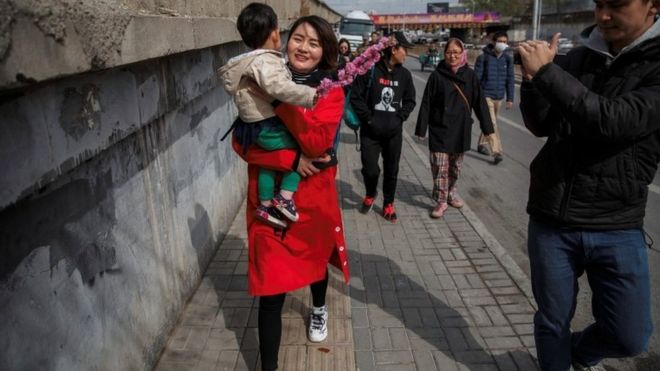
Li Wenzu is walking from Beijing to Tianjin

The wife of a detained Chinese lawyer has begun a march of more than 100km (62 miles) to try to find answers about his fate.
Li Wenzu is walking from Beijing to Tianjin, where she thinks Wang Quanzhang may be being held.
She told the BBC she had heard nothing since his arrest 1,000 days ago and did not even know if he was still alive.
Mr Wang was held in August 2015 during a nationwide crackdown that detained more than 200 rights activists.
Activists say the "709" crackdown as it is now known -- a reference to 9 July, the date it began -- was a sign of the growing intolerance of dissent under Xi Jinping.

Li Wenzu, speaking last year about her husband's disappearance

The state-run People's Daily at the time called some of the leading detainees "a major criminal gang that has seriously damaged social order".
Ms Li is doing the 12-day walk to try to force the authorities to tell her what has happened to her husband. 
All she knows is that he was detained.
She asked whether China was following its policy of "ruling the country according to the law" if her husband's lawyer was not allowed to see him.
She also said she suspected her husband had been tortured.
Ms Li does not even know if her husband is still alive

Ms Li told Reuters: "[They have] abused all of our rights. Arresting an innocent person like this, locking him up for almost 1,000 days, I think this is cruel. It's heartless."
Mr Wang handled cases of complaints of police torture, and defended members of the banned Falun Gong spiritual movement, which China calls an evil cult.
In this interview from 2015, he recounted being beaten in the basement of a court building for challenging the order of a judge.
Ms Li is being accompanied on her walk by Wang Qiaoling, wife of rights lawyer, Li Heping, who was given a suspended sentence for subversion last April.
Many of those held in the "709" crackdown were given jail terms, suspended sentences or house arrest.

mercredi 4 avril 2018

Chinese Colonialism

China’s Campaign Against Uighur Diaspora Ramps Up
In its attempts to control Uighurs abroad, the Chinese government is holding families hostage.
BY MARTIN DE BOURMONT
People hold placards and flags during a demonstration of France's exiled Uyghur community on July 4, 2010 in Paris.

Mahmut, a Uighur living in a Scandinavian country, describes 2017 as the “saddest” year for his family.
Born to secular Muslim parents, Mahmut, who asked to be identified by a pseudonym, says his family’s troubles began in late 2016 when the Chinese government pressured a cousin and his wife to return to East Turkestan from Egypt.
Local authorities threatened to imprison his parents and confiscate their property if his cousin, who was studying theology, did not return. 
When Mahmut’s cousin arrived in East Turkestan, the authorities jailed him and his wife.
Then, in early summer 2017, Mahmut tried to call his mother, who was recovering from a recent hospitalization. 
No one picked up, and Mahmut feared for the worst.
Communication with his parents was already sporadic, and when his father finally picked up the phone, Mahmut could sense fear in his voice. 
“Your mother went to study,” he told Mahmut, saying that community service officials had instructed her to go.
As Beijing continues its clampdown on East Turkestan, the state is using overseas Uighurs’ families in China as a way to pressure them.
And over the past year, the Chinese government has intensified its campaign to surveil and intimidate the diaspora, according to Uighurs and outside experts following the issue.
“This is clearly part of the determined push to silence overseas critics,” says Kevin Carrico, a lecturer in Chinese studies at Macquarie University in Sydney. 
“Whether Uighurs, Tibetan, Han, Australian, or American, anyone who is outspokenly critical of the party-state’s increasingly ridiculous policies is going to eventually feel pressure.”
A Turkic-speaking minority, Uighurs in China and abroad have faced increasing repression from the state over the past few years in response to a low-level insurgency in East Turkestan, a reaction rights advocates argue is vastly disproportionate.
In East Turkestan, the government has established a sophisticated surveillance network that mixes informers, guards, and high-tech measures such as a DNA database, and thousands of Uighurs — potentially up to 10 percent of the ethno-national group — now languish in re-education camps.
With East Turkestan locked down, China is now looking to rein in the Uighur diaspora, often outspoken in its opposition to Beijing’s rule. 
Last year, China ordered some Uighurs studying abroad to return home or risk having their families punished. 
In Europe, Chinese police contacted Uighurs in France demanding personal information, and China also detained relatives of six U.S.-based reporters working for Radio Free Asia’s Uighur service.
Parhat, an American citizen — who also asked not to be identified by his real name — faced problems similar to Mahmut. 
In October 2016, police arrested Parhat’s niece under the pretext that her laptop contained copies of forbidden Islamic texts.
She was released after a month, only to be arrested again in June 2017.
Parhat decided to return, in part to arrange new care for his sister, who was ill and had been cared for by his niece. 
Landing at a major airport in eastern China, security personnel detained him for more than three hours with no explanation.
When he finally arrived at the small city in East Turkestan where most of his family lives, Parhat’s older brother told him that police officers had paid him a visit a few days before his arrival. 
The police had asked Parhat’s brother to “take him to us.”
Two days later, Parhat was detained by public security officials, who took him to a squalid hotel room, where they confiscated his phone and personal documents, including his passport. 
Holding a packet of what seemed like hundreds of names, the officials began reading them out loud and asking if he knew people who worked at the Uyghur American Association.
“The guy was telling me how big a crime I committed because I helped those people to escape and join ISIS,” Parhat says.
Parhat was released later that evening on the condition that he agree to continue talking to security officials. 
Instead, he fled East Turkestan, intending to book an earlier return flight to the United States from a city in eastern China. 
As Parhat waited to go through security at the airport, officials began to pull Uighurs out of the line. Terrified, Parhat pretended not to speak Chinese and showed his American passport.
After passing for a foreigner, Parhat got through the checkpoint.
Parhat’s brother-in-law was not so lucky. 
Following Parhat’s escape from East Turkestan, his brother-in-law was arrested. 
“Nobody knows where he is,” Parhat says.
Alongside the surveillance and detention system, the Chinese government applies another tactic that seeks to turn loved ones and trusted confidants against one another, says James Millward, a professor at Georgetown University and the author of Eurasian Crossroads: A History of East Turkestan. 
“There are cases of Uighurs communicating, clearly under duress, and saying scripted things to deliver a message to relatives or friends abroad,” Millward says.
According to Ilshat Hassan, a prominent Uighur activist in the United States, this practice goes back many years.
In 2009, Hassan — who left East Turkestan in 2003 — received word from his now ex-wife that he would be offered a good job with a high salary, among other benefits, if he returned home.
Later, a former university classmate of Hassan’s, now working as a police officer, called him in 2012 and said he would be reunited with his wife and son if he behaved well.
The pressure campaign may not be entirely new, but technology has made it more powerful.
“It’s the technological element that was not there before,” Millward says. 
“So many people communicate via WeChat and phones and Skype, [and] because the internet is so controlled now, the Chinese state can know of all communications like that. They know and can visit a family within hours or minutes even of a contact from abroad. Many families have had to delete contact information from their phones.”
For those like Parhat, the consequences of the Chinese government’s policies in East Turkestan reverberate far beyond its borders. 
“The whole of East Turkestan was like a prison,” Parhat says. 
“Once you get in, it’s very hard to go out.”
“Relatively few people who have made it through these [re-education camps] and made it out have felt it wise to share that information internationally,” says Sophie Richardson, Human Rights Watch’s China director. 
“Most of what we know about, from a small handful of sources, really, is people being obliged to sit for hours at a time and listen to lectures about the merits of Xi Jinping thought, for example.”
For those abroad, such as Mahmut, answers about what has become of their relatives sent to the camps are hard to come by.
Sending coded messages to a cousin outside of East Turkestan, Mahmut learned that his mother had been placed in a re-education camp.
Mahmut began to call relatives in East Turkestan, only to find they were too afraid to speak to him. “They don’t answer,” Mahmut says. 
“Or they hear my voice and don’t talk and cut the connection.”
The cousin also told Mahmut that the Chinese government had recently recalled a distant relative from Turkey, only for the relative to die under mysterious circumstances in a East Turkestan prison.
Then, in January, Mahmut lost contact with his father. 
Neighbors reported that he, too, was in re-education.

mardi 3 avril 2018

Chinese Aggressions

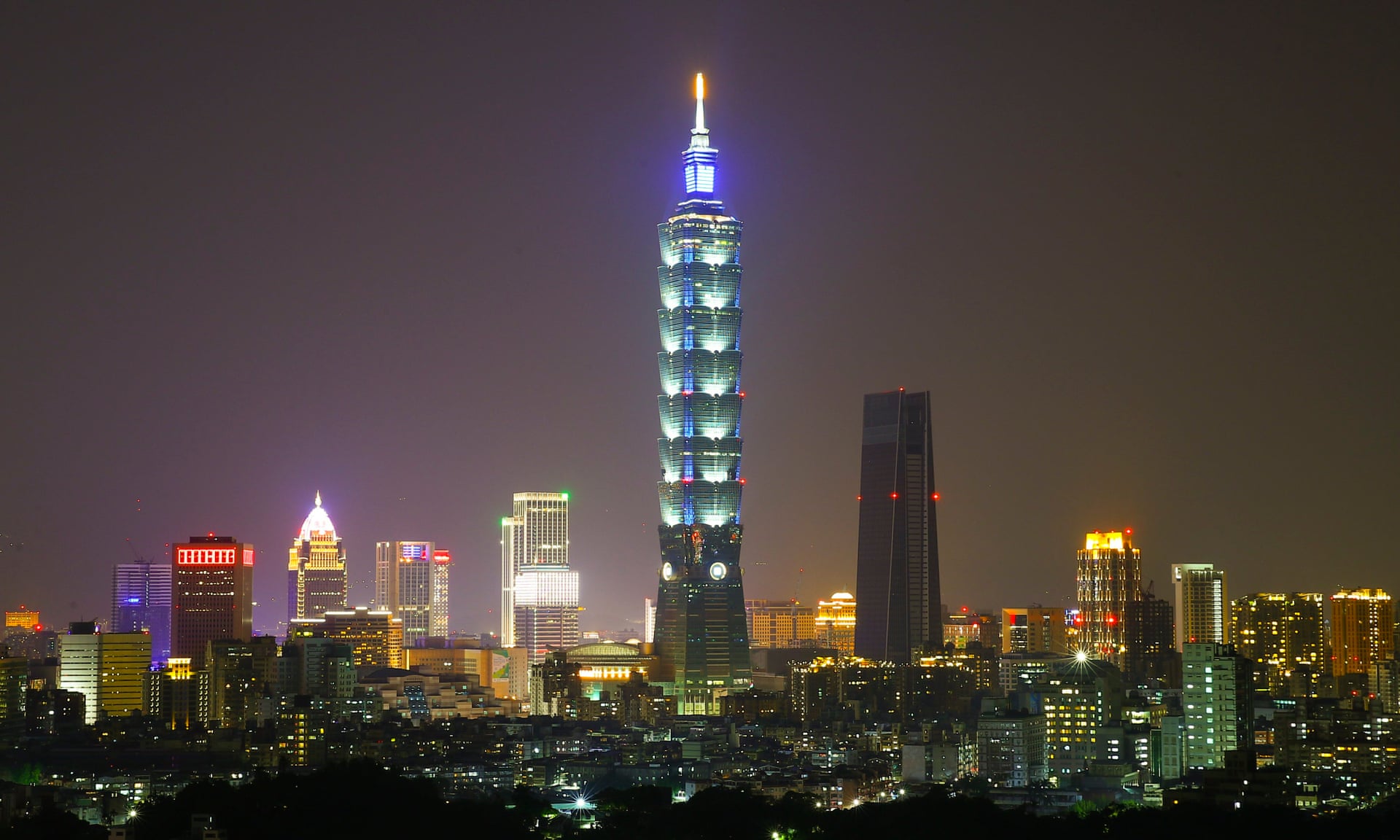
Will China turn Taiwan into the next Crimea?
By Simon Tisdall

China could do to Taiwan what Russia did to Crimea if Beijing’s relations with Washington, strained by an expanding trade war and military rivalry in the East and South China seas, deteriorate further.
The warning from maritime security experts follows a series of recent Chinese moves to put pressure on Taiwan’s pro-independence government. 
These include a vow last month by China’s dictator that Taiwan would face the “punishment of history” if it pursued a separatist course. 
The latest rupture came at the weekend after Taiwan’s premier, William Lai, told parliament in Taipei he was a “Taiwan independence worker” and that Taiwan was a sovereign, independent country. 
China, which calls Taiwan a renegade province, quickly condemned his comments as “dangerous and presumptuous”. 
The Chinese Communist party-published Global Times said an international warrant could be issued for Lai’s arrest under the 2005 anti-secession law. 
“If evidence of his crimes is cast-iron, then a global ‘wanted’ notice can be issued for him,” it said.
China has accelerated efforts to isolate Taiwan diplomatically in recent months, using its economic clout to pressure countries and international institutions into breaking ties with the island. 
It has curbed bilateral trade, cultural exchanges and tourism. 
Beijing has also increased naval exercises and fighter-bomber sorties over the strategically important Taiwan Strait. 
China’s raised military profile includes escorted bomber “encirclement flights” and the recent deployment of an aircraft carrier off Taiwan.
Discussing possible Chinese moves to seize Taiwan by force, a panel of maritime security experts convened by the Atlantic Council thinktank in Washington noted that by controlling Taiwan, China would gain direct access to the western Pacific and extend its influence in disputed areas of the East and South China seas, where it is establishing military bases on reclaimed land.
Sarah Kirchberger of the Institute for Security Policy at the University of Kiel in Germany suggested the US, which is bound, de facto, to uphold Taiwan’s peace and security under the 1979 Taiwan Relations Act, should compare the present situation to that existing before Russia’s forcible annexation of Crimea in 2014. 
Kirchberger quoted a senior Chinese naval official as saying: “We should do what Putin did in Crimea to Taiwan”.
The increased pressure on Taipei is in line with the politically dominant Xi’s pursuit of a more hardline, nationalist approach towards international and domestic affairs, exemplified by the harsh treatment of pro-democracy activists in Hong Kong.
The situation poses a particular challenge for the US, which remains Taiwan’s principal foreign ally and arms supplier. 
Since taking office, Donald Trump has assiduously courted Xi, inviting him to Florida, visiting Beijing, and frankly admitting he needs China’s help in pressurising North Korea to halt its nuclear weapons programmes. 
But Trump has also launched a fight with China on tariffs, sparking Chinese retaliation in what could yet become an all-out trade war.
Meanwhile, Trump last month signed into law the Taiwan Travel Act, whose express purpose is to encourage bilateral official exchanges with Taiwan “at all levels”. 
During a weekend meeting in Taipei with Tsai Ing-wen, Taiwan’s pro-independence president, Ileana Ros-Lehtinen, a senior member of the US Congress, declared the US-Taiwan relationship was stronger than ever.
The worry now is that China, aware of Trump’s vulnerability over North Korea, angry at his tariff war and sensing his lack of interest in the western Pacific’s military balance may be tempted to test US resolve over Taiwan. 
Inviting the Russian president, Vladimir Putin, to the White House in a phone call last week, Trump appeared to have forgiven and forgotten all about Crimea. 
So how safe, really, is Taiwan?

Nation of Thieves

The lie behind the ‘Made in China’ claim
By Dinny McMahon

CHINA makes 80 per cent of the world’s pens, producing about 38 billion a year, yet, according to Premier Li Keqiang, none of them are up to snuff.
While attending the 2015 World Economic Forum in Davos, Switzerland, Li purportedly enjoyed using Swiss ballpoint pens so much that, when he returned to China, he went looking for an explanation as to “why China can’t produce a pen that writes as smoothly and easily”.
The key to producing a quality ballpoint pen is the tiny ball bearing fitted into the pen’s nib. 
It spins as it rolls across the paper, picking up ink that’s distributed from the cartridge via tiny grooves carved into the nib.
Interviewed on state television in a soul-searching program into China’s pen-quality deficit, Qiu Zhiming, the chief executive of Beifa Group, China’s biggest pen maker, explained that not only do the balls require high-quality steel but also producing them requires state-of-the-art machinery and computerised measuring equipment that leaves no space for error.
If the ball is too big, it won’t spin in the nib. 
One that’s too small will allow the ink to leak. 
One that’s not perfectly round won’t write smoothly. 
One that’s too smooth won’t turn as it runs along the paper. 
And the bottom line was that China was incapable of producing the balls.
“Even though we’re suffering from overcapacity in the steel industry ... we still don’t possess the ability to produce the type of steel used in the ball bearings that go into ball-point pens. We still need to import them,” an exasperated Premier Li said early in 2016.
China’s 3000 pen manufacturers import almost all of the ball bearings they need from Germany and Japan. 
Moreover, much of the ink used in pens is imported as well.
In fact, China doesn’t make pens so much as merely assemble them. 
That was once done by hand, but with the cost of labour rising, it’s now done by machines that are typically made in Switzerland.
In fact, much of what we think of as being “Made in China” is only assembled there.
While hundreds of thousands of people are employed to “make” iPhones in China, they contribute only a sliver to the overall value of the end product.
According to a 2010 paper from the Asian Development Bank Institute, 34 per cent of the value of an iPhone came from Japan, which supplied the screen and flash memory; 17 per cent from Germany, which made the camera and power-management integrated circuitry; and 13 per cent from South Korea, which made the SDRAM.
China contributed only 3.6 per cent — primarily the labour. 
The ratio has gone up since then, but it’s still less than 10 per cent.
Enter supply-side structural reform. 
At its heart, it is an import-substitution scheme. 
The aim is for China to make a significantly larger share of the components that go into products like iPhones, which are assembled in China.
By 2025, Beijing wants Chinese companies to produce 70 per cent of basic core components and basic materials used in goods manufactured locally. 
(By way of comparison, in 2015, China was still importing about 80 per cent of the chips that were used in locally assembled mobile phones.)
If China is to reach its targets, then its success must come at the expense of those countries which currently produce the guts of an iPhone or the more technologically advanced parts of a pen.

While your iPhone was probably assembled in China, most of the parts weren’t made there. 

However, there’s a major reason why China doesn’t already make those components.
Like China, Switzerland also has a thriving disposable-pen industry, but while China’s pens are typically produced in packs to be sold in stationery stores, the biggest Swiss companies focus on making promotional pens — the sort that the World Economic Forum can put its logo on. 
Moreover, Swiss pens are typically made entirely in Switzerland — “from cap to nib,” in the words of one company — using the companies’ own proprietary technology, which the Chinese can’t buy.
****
So, rather than rely solely on the creativity of its indigenous innovators, Beijing is taking a few shortcuts.
There are two kinds of big companies in the United States. There are those who’ve been hacked by the Chinese and those who don’t know they’ve been hacked by the Chinese,” said James Comey, then-director of the FBI, in a 2014 interview on 60 Minutes. 
They’re looking for “information that’s useful to them so [Chinese firms] don’t have to invent” it.
China engages in industrial espionage on a vast scale. 
But stealing cutting-edge research from foreign firms before they’ve had a chance to commercialise it is just a small part of a broader campaign to acquire intellectual property developed overseas.
China has long required that foreign companies wanting to sell their products in China must share their proprietary technology with local firms by setting up joint ventures. 
Cars sold in China under GM’s brand, for example, are produced by a company owned half by GM and half by a Shanghai-based state-owned firm.
Such has been the price of admission to the world’s most populous market. 
Foreign companies have tried to hand over only old technology, but Beijing has been raising the price of admission.
“It is now an increasing requirement for more advanced technologies to be shared,” the European Union Chamber of Commerce in China (EUCCC) said in a 2017 paper on China’s industrial policy.
“In the past, some foreign companies managed to at least partially limit transfers ... and therefore did not compromise their long-term competitiveness. But this has become increasingly difficult.”
Chinese firms have also been going out and acquiring foreign companies that have the technology they want.
According to the EUCCC paper, Chinese companies invested €35 billion ($AU56 billion) in Europe in 2016, up 77 per cent from the year before, and more than four times the amount of European investment going into China.
Much of that money has gone into areas like high-end robotics, which the Chinese government had ruled off-limits to foreign companies looking to buy Chinese firms.
Making such acquisitions possible is a massive war chest of state-sponsored funding.
“China’s strategy relies in particular on large-scale spending, including $US150 billion in public and state influenced private funds over a 10-year period, aimed at subsidising investment and acquisitions as well as purchasing technology,” the Obama White house said in a 2017 report on China’s strategy to become a world leader in semiconductors.
“China also places conditions on access to its market to drive localisation and technology transfer.”
Of course, once you have the technology, you then need to build a competitive business around it. 
On the face of it, it would seem that China has no natural advantage over the Japanese, or Koreans, or Germans, or even Americans when it comes to building a world-class robotics or semiconductor industry.
What is making foreign companies and governments so nervous is that China has a disconcerting track record of becoming globally dominant in industries in which it has no natural advantage.

China's Great Wall of Debt is out now