Affichage des articles dont le libellé est MI6. Afficher tous les articles

vendredi 17 mai 2019

National Security

Huawei is a risk so Britain must change course on 5G, ex-MI6 spymaster says
By Guy Faulconbridge, Paul Sandle
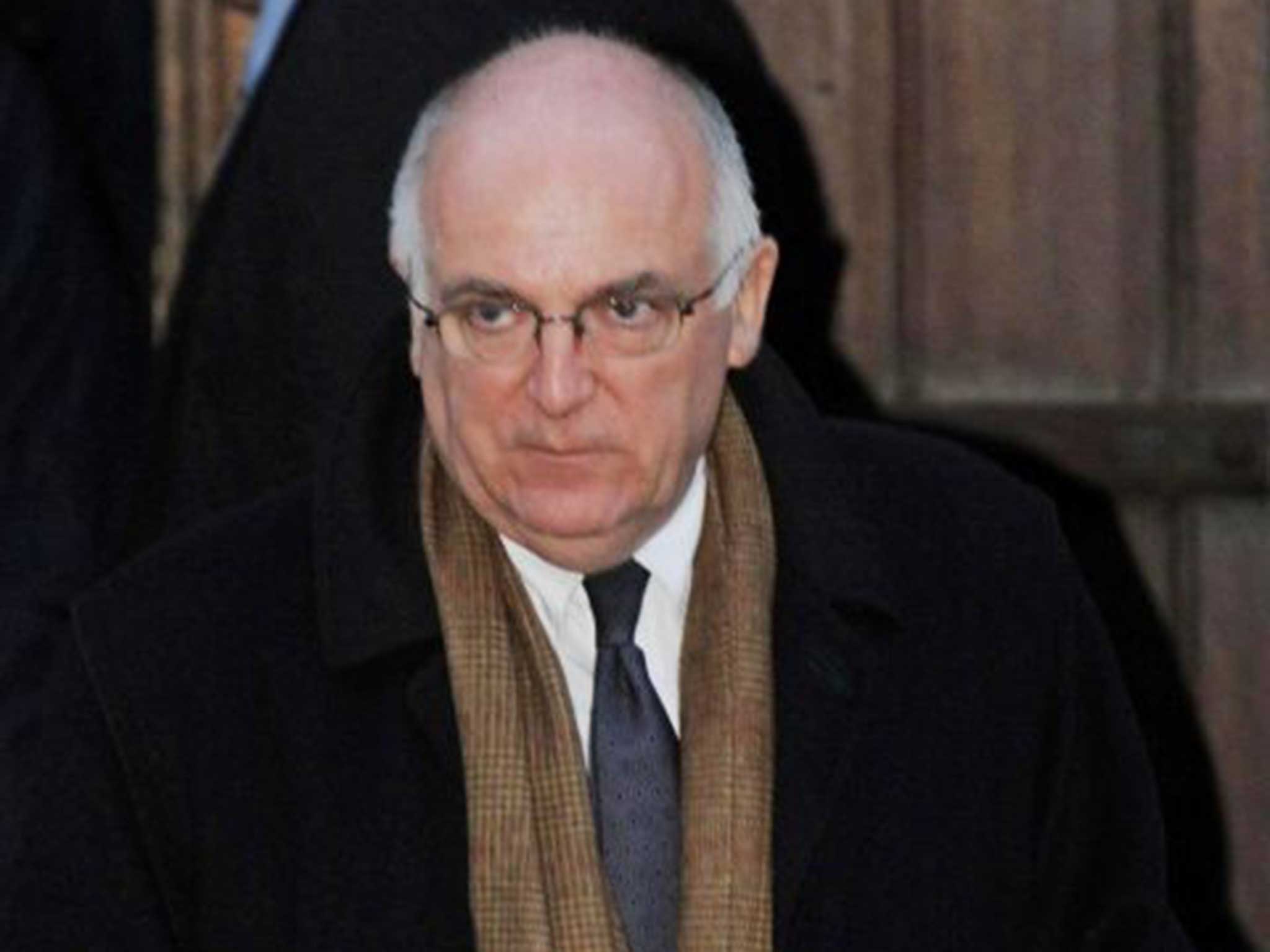
Richard Dearlove was chief of the Secret Intelligence Service from 1996 to 2004.

LONDON -- China’s Huawei poses such a grave security risk to the United Kingdom that the government must not allow it to have even a limited role in building 5G networks, a former head of Britain’s MI6 foreign spy service said on Thursday.
The United States is worried that 5G dominance would give China an advantage Washington is not ready to accept.
The Trump administration, which hit Huawei with severe sanctions on Wednesday, has told allies not to use its technology because of fears it could be a vehicle for Chinese spying.
But British ministers have discussed allowing Huawei a restricted role in building parts of its 5G network. 
The final decision has not yet been published.
“I very much hope there is time for the UK government, and the probability as I write of a new prime minister, to reconsider the Huawei decision,” said Richard Dearlove, who was chief of the Secret Intelligence Service from 1996 to 2004.
“The ability to control communications and the data that flows through its channels will be the route to exercise power over societies and other nations,” Dearlove wrote in the foreword to a report on Huawei by the Henry Jackson Society.
U.S. Secretary of State Mike Pompeo told Britain on a visit this month that it needed to change its attitude toward China and Huawei, casting the world’s second largest economy as a threat to the West similar to that once posed by the Soviet Union.
Asked whether the government would reconsider its stance on Huawei, Prime Minister Theresa May’s spokesman said: “As you know, in relation to Huawei, we are reviewing the right policy approach for 5G and when an announcement is ready the culture secretary will update parliament.”
Dearlove, who spent 38 years in British intelligence, said it was deeply worrying that the British government “appears to have decided to place the development of some its most sensitive critical infrastructure” in the hands of a Chinese company.
“No part of the Communist Chinese state is ultimately able to operate free of the control exercised by its Communist Party leadership,” said Dearlove.
“We should also not be influenced by the threat of the economic cost of either delaying 5G or having to settle for a less capable and more expensive provider,” he said.

mardi 4 décembre 2018

Chinese Espionage

MI6 chief questions China's role in UK tech sector
By Gordon Corera
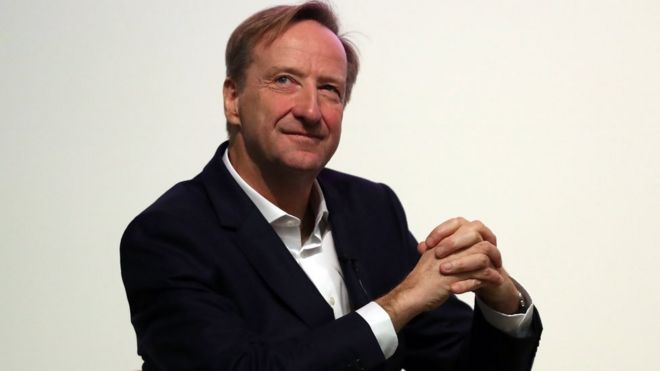
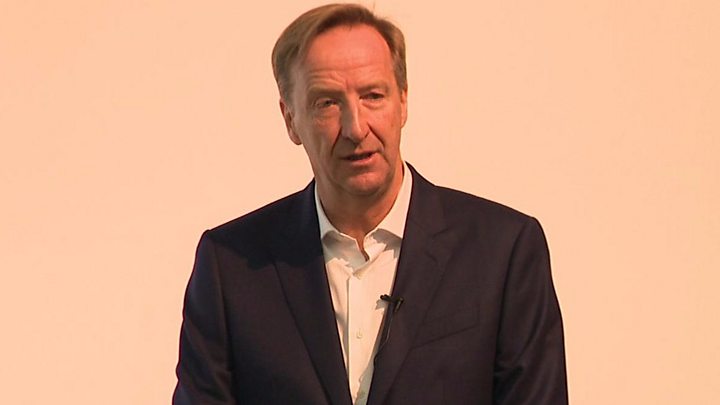
Alex Younger returned to St Andrews University - where he studied - for his second public speech in his four years as MI6 chief
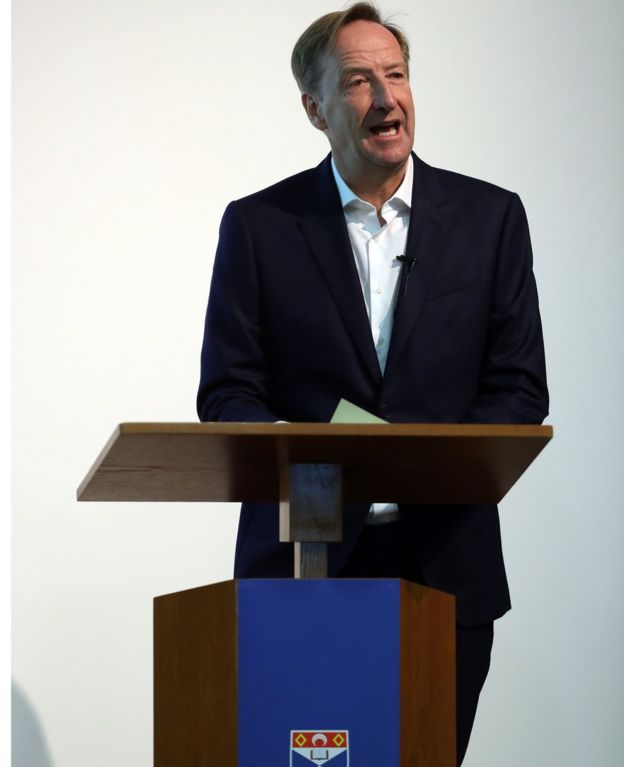
The chief of MI6 has raised questions over Chinese technology companies being involved in the UK's communications infrastructure.
Australia has already blocked Chinese company Huawei from supplying equipment for its 5G mobile network, and New Zealand has said it will consult before a final decision.
MI6 boss Alex Younger said Britain needs to decide how comfortable it is "with Chinese ownership of these technologies".
In a rare speech, he also said British intelligence needs to innovate faster than its adversaries to cope with threats the country faces.
Russia posed a threat through hybrid warfare -- including cyber attacks, he said, but warned that Moscow should not underestimate the UK's capabilities.
MI6 will continue to strengthen ties in Europe, he said, and it had been involved in disrupting terrorist attacks against France and Germany.
In a wide-ranging speech and discussion, Mr Younger said the UK's adversaries had been probing its institutions and defences in ways that fall short of traditional warfare.
These adversaries regarded themselves as in "a state of perpetual confrontation" with the UK.

Russia 'must not underestimate us'
Russia's actions included the poisoning of Sergei Skripal with a nerve agent in Salisbury in March this year.
The former Russian spy had come to the UK in a spy swap after being pardoned by Russia. 
"To the extent that we assumed that had meaning, that is not an assumption we will make again," Mr Younger said.
The aim of the UK's response to that poisoning had been to make the Russian state conclude its activities were not worth the risk.

Alex Younger warned Russia "not to underestimate our determination and our capabilities"

The expulsion of Russian intelligence officers by the UK and allies had significantly degraded Russian intelligence capability, he said.
He urged Russia "not to underestimate our determination or capabilities, or those of our allies. We can do this to any opponent at any time."
He said that even though the Russian state sought to destabilise the UK, 'we do not seek to destabilise Russia.' 
If that country responds positively, then so would the UK. 
"We do not seek an escalation," he said.
Since his last speech two years ago, Mr Young said MI6 and its sister agencies disrupted multiple attack plans linked to so-called Islamic State (ISIS).
MI6 "will always work with our sister agencies to strengthen our indispensable security ties with Europe".
UK intelligence agencies, he said, have played "an important contribution" in helping European countries, particularly France and Germany, prevent terrorist attacks in their countries or against their citizens.
On the killing of Jamal Khashoggi Mr Younger said: "It was an appalling attack -- shocking.
"We have made it very clear to the Saudis that we expect to see a transparent effective investigation. And much will hang on the results of that investigation."
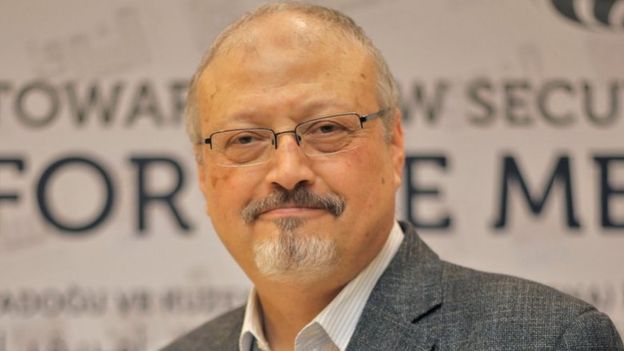
Jamal Khashoggi had gone to Istanbul to obtain a marriage document

The MI6 chief -- known as "C" -- was speaking at St Andrews University, where he studied economics and computer science as an undergraduate. 
It was only his second public lecture since he arrived.
In the speech, Mr Younger revealed details of his own career and background that had not been publicly known before.
After graduating from St Andrews he said he joined the Scots Guards Regiment and then MI6.
His first job was penetrating an organisation "intent on genocide" in the Balkans in the mid-1990s.
He said carrying out that mission involved traveling under a false identity and "many nights drinking obscure homemade alcohol" to create the relationships needed to provide intelligence.
Certain aspects of the intelligence world had not changed and would not change, he said, with MI6 still trying to understand the motivations, intentions and aspiration of people in other countries.
"Even in the era of artificial intelligence you need human intelligence," he said. 
But there had been significant changes.
Mr Younger is "perplexed" over why the UAE jailed British academic Matthew Hedges

The impact of technology was a major focus of his remarks. 
MI6 was "pioneering a fourth generation of espionage" to make sure technology worked to its advantage.
Data analytics has made the world more transparent with implications for spies. 
That was evident by the way that a non-governmental investigative group -- Bellingcat -- was able to expose the Russian military intelligence officers involved in the Salisbury attack.
That was a sign that the traditional "cover" used by spies -- traveling around the world under false identities -- does not stand up to scrutiny in a way it did in the past.
The data age posed a potentially "existential challenge" to traditional ways of operating. 
"Our task now is to master covert action in the data age," he said.

China's role in 5G

Mr Younger was asked about the role of China in building new 5G communications networks.
There have been concerns that this could open the way for intercepting of communications and sabotage.
New Zealand has just announced it would not allow the Chinese company Huawei to be involved.
Huawei has been involved in previous UK communications infrastructure projects.
"We have got some decisions to take here," Mr Younger said.
"We need to decide the extent to which we are going to be comfortable with Chinese ownership of these technologies and these platforms in an environment where some of our allies have taken a quite definite position.
"We need to have a conversation. It's not wholly straightforward."
Cyber was now the fastest growing directorate of MI6, he said, and the service was increasingly working with the private sector tech community.
Mr Younger stressed that a priority was ensuring the broadest possible range of people considered coming to work for MI6 including those who had never thought about it in the past.
"If you think you can spot an MI6 officer, you are mistaken".