vendredi 11 mai 2018

Chinese Homophobia


China censors Ireland's gay-themed Eurovision performance
By Andrea Park

Ryan O'Shaughnessy performs during the Eurovision Song Contest semifinals.

Chinese broadcaster Mango TV, one of China's most popular channels, pulled Ireland's performance during the semifinals of the Eurovision Song Contest, because of its depiction of a gay romance.
Representing Ireland, Ryan O'Shaughnessy performed on Tuesday, backed by two male dancers who depicted a romance on stage.
O'Shaughnessy performed his single "Together." 
The original music video showed dancers Alan McGrath and Kevin O'Dwyer dancing through the streets of Dublin while on a date. 
During O'Shaughnessy's Eurovision performance, McGrath and O'Dwyer surprised the audience by reprising their music video choreography. 
The two held hands at times during their performance.
Mango TV pulled the act completely and blurred rainbow flags in the audience during other acts. 
The Chinese broadcaster also pulled Albania's act, possibly because Eurovision's Albanian performers are heavily tattooed. 
In January, the Chinese government recently banned visible tattoos on TV.
Users on Weibo, the largest Chinese social media network, complained about the censorship. 
The Voice of Homosexuality, a verified Weibo account, shared a number of photos from the censored performances and called the censorship a "major step backward," BBC News reports.
Though there were rumors that Russia might censor the Irish performance as well, it was broadcast in full. 
But the Irish Independent reports that the Russian commentator claimed the song was about "male friendship."
O'Shaughnessy is set to perform at the Eurovision finals on Saturday.

jeudi 10 mai 2018

Dura lex, sed lex

ZTE main business operations cease due to U.S. ban
By Sijia Jiang

HONG KONG -- ZTE Corp’s main business operations have ceased due to a ban imposed by the U.S. government, but China’s second biggest telecom equipment maker is trying to have the ban modified or reversed, it said on Wednesday.
ZTE was hit by a ban last month from Washington, forbidding U.S. firms from supplying it with components and technology after it was found to have violated U.S. export restrictions by illegally shipping goods to Iran.
“As a result of the Denial Order, the major operating activities of the company have ceased,” ZTE said in the exchange filings late on Wednesday.
“As of now, the company maintains sufficient cash and strictly adheres to its commercial obligations subject in compliance with laws and regulations,” it said.
The U.S. action, first reported by Reuters, could be devastating to ZTE.
As one of the world’s largest telecom equipment makers alongside Huawei, Ericsson and Nokia, ZTE relies on U.S. companies such as Qualcomm and Intel for up to a third of its components.
Analysts have said it will be hard for ZTE to stay competitive even if it could find non-American suppliers.
Taiwanese semiconductor company Mediatek said last week it had received a permit from the Taiwanese government to continue to supply ZTE.
ZTE said it was actively communicating with the U.S. government “in order to facilitate the modification or reversal of the Denial Order by the U.S. government and forge a positive outcome in the development of matters.”
The ban that threatens to cut off ZTE’s supply chain came amid heightened tension over a U.S.-China trade war. 
The Chinese government raised the issue of ZTE last week with a visiting U.S. trade delegation.
ZTE said on Sunday it had submitted a request to the U.S. Commerce Department for the suspension of the ban.
ZTE appears to have suspended its online stores on its own website as well as on Alibaba Group’s e-commerce platform Taobao over the past few days, which display a “page being updated” message with no products to order.
The Chinese firm did not respond to calls and messages from Reuters seeking comment.
Consumer Cellular Inc, a U.S. wireless operator, said ZTE was unable to continue supplying phones after the sanctions, but had asked the company to hold inventory spots open as it worked to resolve the export ban, said Consumer Cellular Chief Executive John Marick in an interview.
Marick said ZTE has not given guidance on whether its phones can continue receiving software updates from Android, and discussions between the companies have been about ensuring ZTE can supply parts and service to honor phone warranties.
A ZTE employee told Reuters that staff had been reporting to work as normal but “with not much to do”. 
The employee, who declined to be named, said business trips had been halted.
Employees at ZTE’s headquarters in the southern Chinese technology hub of Shenzhen were cagey about speaking to reporters after the ban was announced, but some voiced concerns.
One employee said this was the “the biggest challenge” for ZTE since he joined 10 years ago. Another said he hoped the Chinese government would help, saying he was confident Xi Jinping would “sort out this trouble”.
ZTE settled the sanction case with the U.S. government last March after admitting to illegally shipping products with U.S. technology to countries including Iran and paying a record fine of nearly $900 million.
Last month, the U.S. government reactivated the ban after ZTE violated terms of the settlement and made repeated false statements.

The Malaysian election result could hit Chinese investments

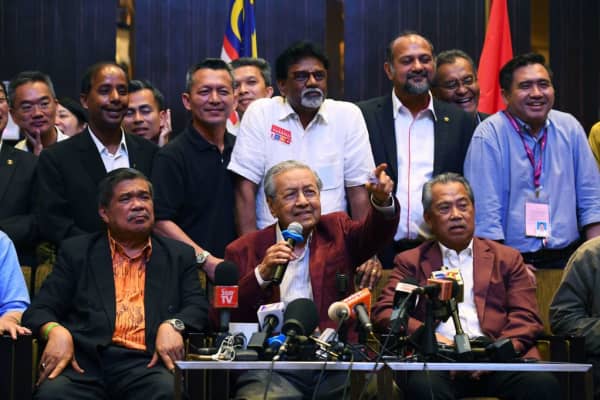
  • A stunning win by the opposition bloc in Malaysia's general election on Wednesday could have implications for the nation's ties with China.
  • Mahathir Mohamad said the country could renegotiate several agreements that had been struck with China.
  • Mahathir criticized the previous administration for selling out to China.
By Cheang Ming | Huileng Tan

A stunning win by the opposition bloc in Malaysia's general election on Wednesday could have implications for the Southeast Asian nation's ties with China, a major invsetor.
Mahathir Mohamad, a former Malaysian prime minister who led his opposition alliance to victory over the ruling coalition, said Thursday the country could renegotiate several agreements that had been struck with China.
Mahathir said he had no problem with China's Belt and Road Initiative (BRI), a wide-reaching infrastructure investment program, but added that "we would not like to see too many warships in this area, because [a] warship attracts other warships," Reuters said on Thursday.
Those comments come on the back of warmer ties between Malaysia and China in recent years under the administration of Prime Minister Najib Razak.
Malaysia was the fourth-largest recipient of China's overseas direct investment last year, a 2017 report from the Economist Intelligence Unit said. 
That compared to the country's position of 20th place in the 2015 ranking.
That came as China seeks to expand its influence overseas, spurring concerns internationally about the reach of the Chinese Communist Party.
Mahathir took issue with vast mainland Chinese investments under Najib's administration during his campaign, arguing that his country has been selling out to Beijing.
In Malaysia, a number of major port and rail projects have been scheduled for development. 
A Citi report estimated they would receive as much as 400 billion ringgit ($101 billion) in Chinese investments over the next two decades.
The Alibaba-led Digital Free Trade Zone, also regarded as part of the BRI, was established in Kuala Lumpur earlier this year in a bid to improve trade between China and the Southeast Asian region.
A project that has been singled out by Mahathir in the lead up to the general election for being wasteful is the East Coast Rail Link in peninsular Malaysia. 
A 688-kilometer (430-mile) rail project costing $13 billion, it is being built by China Communications Construction and is also considered part of the Belt and Road Initiative.
The necessity of that project would be reviewed and its development halted if it is found inessential, Mahathir was quoted as saying by the state-run Bernama news agency in April.
"It wouldn't be particularly surprising if this is the first project they review," Brian Tan, Southeast Asia economist at Nomura, told CNBC.
While there will be greater uncertainty over Mahathir's coalition's targeting of Chinese infrastructure projects, Tan said the alliance had been careful to emphasize that it was reviewing, rather than immediately calling off, those projects.
Fidelity International said in a note that the new government was likely to go back to the drawing board over large-scale infrastructure projects: "Mahathir in the past has said he will scrap the large 'unnecessary' mega projects such as the [high speed rail] as he disagreed with the large debt taken to fund these projects."
Mahathir has also taken issue with a massive private residential project from a Chinese company in the state of Johor, just north of Singapore. 
Most Malaysian's, he has said, cannot afford the apartments there.
Responding to the election results in Malaysia, Chinese international real estate website Juwai.com was upbeat about opportunities under the incoming government, but acknowledged that some Chinese buyers may hold back if there are uncertainties.
However, current policies regarding visa, home-buying and education remain "very appealing," said Juwai.com CEO, Carrie Law said an email.
Law said Chinese buyer inquiries on Malaysian properties in the first three months of 2018 were up 103 percent from the same time a year ago. 
Inquiries in April rose 120 percent from a year ago, she added.
"If there is no change, we expect Chinese investment in Malaysian property to continue to grow in the months and years to come. Chinese acquisitions could at least double by 2025," she added.

China Deploys Military Plane to Third South China Sea Airstrip

  • Landing follows deplopment of missile systems in Spratlys
  • Vietnam, Australia protest militarization of structures
By David Tweed
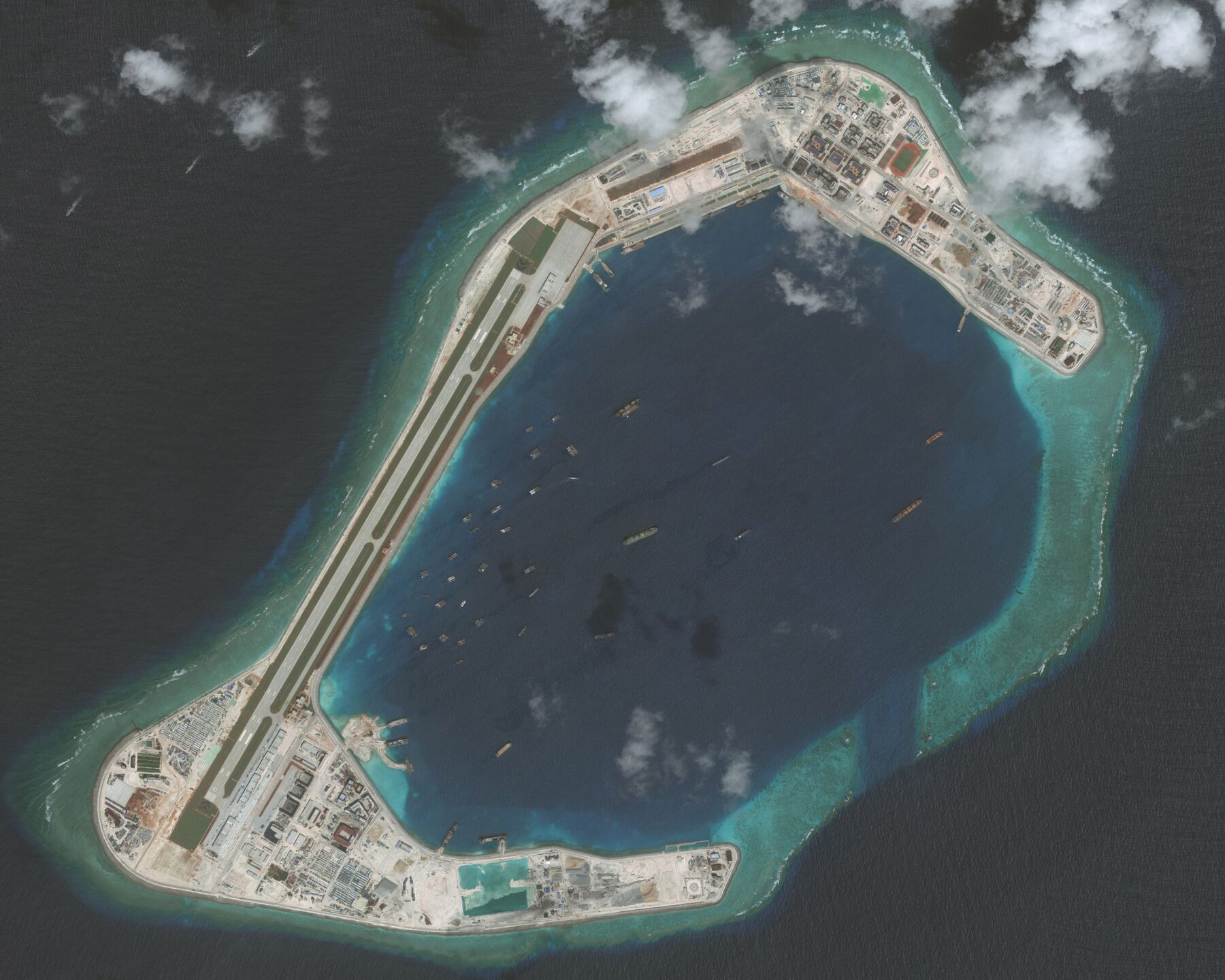
Subi Reef in the South China Sea. 

China has landed a military plane on the last of its three airstrips in the disputed South China Sea, a Washington-based research institution said, amid renewed complaints about the country expanding its military presence in the busy shipping lane.
The Asia Maritime Transparency Initiative said satellite images from April 28 showed the first confirmed deployment of a military aircraft -- a Shaanxi Y-8 transport plane -- on Subi Reef. 
The structure hosts one of three runways China has built as part of a massive dredging and reclamation operation in the Spratlys chain since 2013, and was the last of three where military aircraft had been observed.
“This should be particularly concerning to the Philippines,” AMTI, a unit of the Center for Strategic and International Studies, said on its website. 
About 100 Philippine civilians and a small military garrison are stationed on the Thitu islet, about 12 nautical miles away from Subi.
The Chinese Ministry of Foreign Affairs didn’t immediately respond Thursday to a faxed request for comment.
China claims more than 80 percent of the South China Sea, a $5 trillion-a-year shipping route where five other countries including the Philippines and Vietnam also have claims. 
Regional concerns about China’s presence in the area reemerged earlier this month after the foreign ministry confirmed reports that the People’s Liberation Army had installed missile systems on Subi, Mischief Reef and Fiery Cross, where it has military-grade airstrips.

U.S. Warning

Chinese military aircraft have previously landed on other Chinese structures in the Spratlys, AMTI said. 
The first was a naval patrol aircraft -- possibly a Y-8 -- that landed on Fiery Cross in April 2016 to evacuate three people who had fallen ill. 
The Philippine Daily Inquirer last month published an aerial photo dated Jan. 6 showing two Xian Y-7 military transport aircraft on Mischief Reef.
China has installed anti-ship cruise missiles and surface-to-air missile systems on Subi Reef, Mischief Reef and Fiery Cross, CNBC reported earlier this month. 
Chinese foreign ministry spokeswoman Hua Chunying defended the move, saying the deployment was necessary to protect China’s sovereignty.
White House Press Secretary Sarah Huckabee Sanders warned that there would be “near-term and long-term consequences” of China’s militarization of the waters. 
Australia’s Foreign Minister Julie Bishop said any military build-up would run counter to China’s commitments, in an apparent reference to Chinese dictator Xi Jinping’s pledge not to militarize the structures.
Vietnam asked China to remove the military equipment deployed on its features in the Spratly Islands, Vietnam News reported Wednesday, citing Le Thi Thu Hang, spokeswoman for its foreign ministry. 
Hang said the placement of the missiles violated Vietnam’s sovereignty.
“If not already clear, China’s installation of anti-ship cruise missiles, surface-to-air missiles, and electronic jamming equipment in the Spratly Islands is indication that it has every intent of enforcing its maritime claims,” said Felix Chang, a senior fellow at the Foreign Policy Research Institute in Philadelphia.
Last month, Xi showed off his growing South China Sea military might, presiding over a the country’s largest-ever fleet review. 
Xi observed 48 vessels, 76 aircraft and more than 10,000 service personnel at the naval hub of Sanya.

Death of a Gangster

Rogue Company ZTE is First Victim of the China-U.S. Trade War
By Raymond Zhong
ZTE's logo on a building in Shanghai. The firm said it had ceased “major operating activities” after the Trump administration banned it from using components made in the United States.

SHENZHEN, China — Not Apple. Not Huawei. 
The first casualty of the high-tech cold war between the United States and China might be the biggest electronics maker you’ve never heard of.
The Chinese firm ZTE said on Wednesday it had ceased “major operating activities” after the Trump administration banned the company last month from using components made in the United States. With manufacturing halted at the ZTE plant in Shenzhen, factory workers have been getting called in for training sessions every other day or so — a snooze, they say. 
The rest of the time, they loaf around in nearby dorms.
Trading in the company’s shares has been suspended for weeks. 
Staff members have been instructed, in new guidelines reviewed by The New York Times, to reassure anxious clients, while being sure to avoid discussing with them the American technology from which the firm is cut off for the next seven years.
One of China’s most internationally successful technology suppliers, with about $17 billion in annual revenue, ZTE is facing a death sentence. 
The Commerce Department has blocked its access to American-made components until 2025, the company failing to punish employees who violated trade controls against Iran and North Korea.
American microchips power ZTE’s wireless stations. 
American optical components go into its optical fiber networks. 
Google’s Android operating system runs its smartphones. 
ZTE’s moment of crisis, if it leads to the company’s collapse, could also show how the tech war might ripple around the world.
The company has 75,000 employees and does business in more than 160 countries. 
It is the No. 4 smartphone vendor in the United States. 
And its telecommunications gear supports the digital backbone of a great swath of the developing world.
The wireless carrier MTN, which serves 220 million people in 22 nations in Africa and the Middle East, said last week that it was assessing contingency plans, “given our exposure to ZTE in our networks.” 
The chief executive of the Norwegian carrier Telenor, which has large operations in Asia, said the company was “following the situation closely.”
Several employees described the situation inside ZTE on condition of anonymity, fearing reprisals from their employer. 
A company spokeswoman declined to comment.
The United States has for years deemed ZTE and Huawei, its much larger rival in network gear, to be national security threats. 
Large American mobile carriers already shun the companies’ telecom equipment. 
The White House is mulling an executive order that would make it harder for government agencies to buy from them.
In response to the sanctions issued last month, ZTE said it had worked to improve its compliance practices. 
It has requested a stay on the export ban and has sent additional information to the Commerce Department in support of its argument.
Zhongxing Telecommunications Equipment’s corporate predecessor was established in 1985, as a joint venture between a state-owned aerospace factory and two other firms. 
Within a few years, the company was producing equipment for phone operators in the Chinese countryside, before expanding into cities and then overseas.
“Zhongxing” means “China Prospers.” 
The company’s controlling shareholder is Shenzhen Zhongxingxin Telecommunications Equipment, which is nearly half-owned by two Chinese state entities. 
Several members of the firm’s board also have leadership roles at Zhongxingxin. 
ZTE says Zhongxingxin does not interfere in its business decisions. 
Working on a circuit board at a ZTE plant in Shenzhen, China.

The electronics maker released its first smartphone for the American market in 2011. 
Within two years, it was a top-five vendor in the United States, largely targeting people who wanted a phone but not a long contract with a cell carrier. 
Even in China, the company has not had great success selling smartphones.
“It’s extraordinarily impressive, what they’ve done in the U.S.,” said Avi Greengart, a consumer tech analyst with the research firm GlobalData. 
“So many Asian companies either said they would come to the U.S. and then had to pull back — like Xiaomi, like Huawei. Or they invested in the U.S. and weren’t able to make it work.”
ZTE’s secret, Mr. Greengart said, was a light touch. 
The company’s American managers have had significant leeway in tailoring their products to the local market. 
“That’s not the way many of its competitors work,” he said.
The company was, for instance, quick to spot that Americans were gravitating toward larger phones. It offered inexpensive devices with big screens — if not those with the highest resolution — and fingerprint readers at a time when such features were considered premium.
To build its brand, ZTE has sponsored several National Basketball Association teams. 
In February, the company and the Cleveland Cavaliers celebrated Chinese New Year at a game against the Brooklyn Nets. 
The Quicken Loans Arena in Cleveland was decorated with Chinese lanterns. 
An acrobat rode around the court on a unicycle at halftime.
In Africa, ZTE and Huawei have helped connect many of the continent’s fast-growing economies, often with the help of generous export financing from Chinese state banks. 
ZTE has laid thousands of miles of fiber optic cable in Ethiopia and it recently signed an agreement with MTN of South Africa to test fifth-generation wireless, or 5G.
Some of the company’s deals with cash-stricken governments have attracted accusations of corruption and overbilling. 
On the whole, though, ZTE is known in Africa for good service, said Dobek Pater, a telecom expert at the research firm Africa Analysis.
“The initial perception — of Chinese companies coming in and being very secretive and not wanting to have much to do with the locals — has changed over the past decade,” he said.
In Iran, it was secrecy of another kind that got ZTE into trouble.
The company used an elaborate system to sell American-made goods there, and then lied and deleted emails when the Commerce Department began to investigate. 
It even made plans to resume shipments to Iran while the investigation was ongoing, according to the Commerce Department.
“At home, they might have been doing some things not according to standards, and then, when it came time to internationalize, they might not have done so entirely properly,” said Gu Wenjun, chief analyst at ICwise, a semiconductor market research firm in Shanghai.
“For other companies thinking about how to follow the rules and manage internal risks, I think this is going to serve as a wakeup call,” Mr. Gu said.
Late last Friday, ZTE management sent an email to staff members updating them on the company’s efforts to reconcile with Washington.
“Even the longest road has an end,” the email concluded. 
“Even the longest night ends in day. Let us stay resolute and confident, and, full of hope, greet the coming dawn!”

Sina Delenda Est

How China’s Laser Attacks on the U.S. Military Could Cause a Serious Conflict
By ANDREW SHEARER

Earlier this month, the Pentagon charged that Chinese nationals targeted U.S. Air Force pilots with military-grade lasers near Djibouti in the Horn of Africa, close to where China established its first overseas military base in 2017. 
Two American pilots sustained eye injuries, according to the Pentagon.
Apart from harming the health of American service personnel and posing a danger to aircraft safety, the use of lasers against U.S. military planes indicates two other major risks: It might trigger a conflict between the U.S. and China, and could be part of a larger Chinese strategy of building maritime bases worldwide that could be used to undermine U.S. security interests.
Djibouti is strategically located, controlling access to vital international waterways joining the Red Sea and the Indian Ocean. 
Since the 9/11 terror attacks, it has hosted Camp Lemonnier, the only permanent U.S. military base in Africa and a critical hub also supporting American operations across the Middle East, Europe, and the Indian Ocean.
The Chinese government has denied any responsibility for the incidents, but there are strong grounds for skepticism. 
The U.S. military notice issued to warn pilots of the hazard refers to a location only 750 meters offshore from the Chinese base—which itself is only a few miles from Camp Lemonnier. Chinese military doctrine includes the use of lasers to blind adversaries: In 2015, the People’s Daily, the official mouthpiece of the People’s Liberation Army, reported that the PLA had been updating its “blinding laser weapons.” 
And Beijing has a history of dissembling about its military moves: It recently installed sophisticated anti-ship and anti-aircraft missiles in the Spratly archipelago, in further breach of Xi Jinping’s public promise in 2015 not to militarize the South China Sea.
The first major risk of China’s use of laser weapons is that it could feed rising tensions between the U.S. and China and, in the worst case, lead to miscalculation and even conflict. 
In 2001, a reckless Chinese fighter pilot collided with a U.S. EP-3 surveillance plane conducting a routine patrol, forcing the U.S. aircraft to make an emergency landing in China. 
Diplomacy resolved the crisis, but only after a tense standoff.
There are no guarantees a future incident will end peacefully. 
Washington and Beijing are already at loggerheads over trade and intellectual property theft, and the Trump administration’s 2018 National Defense Strategy broke new ground by formally labeling China a “strategic competitor.” 
The American and Chinese militaries are yet to negotiate the robust “rules of the road” that minimized the risk of inadvertent clashes between U.S. and Soviet forces even at the height of the Cold War. 
And the PLA has become increasingly assertive since the EP‑3 incident, with its ships and aircraft engaging in frequent unsafe encounters with U.S. and Japanese vessels and planes.
The second, longer-term danger is that China’s activities in Djibouti form part of a much broader—and troubling—pattern. 
The commander of the U.S. African Command testified before the Senate Armed Services Committee in March that the U.S. is closely monitoring Chinese “encroachment” on the American military presence at Camp Lemonnier. 
China has been building a chain of “dual-use” maritime facilities throughout the Indo-Pacific—often in strategic locations and close to U.S. bases. 
In peacetime these can be used to support the PLA’s increasing projection of military power, build influence with governments in the neighborhood, monitor American forces, and obstruct U.S. military access in a crisis short of actual conflict. 
But at any time of Beijing’s choosing, these facilities could rapidly be dedicated to military use.
The U.S. and its allies need to push back calmly but firmly against activities that jeopardize not only the safety of their personnel, but peace and stability in the Indo-Pacific—and America’s longer-term strategic position.

How China Managed to Play Censor at a Conference on U.S. Soil

The Confucius Institute offers much-needed money to American universities — but with strings attached.
BY BETHANY ALLEN-EBRAHIMIAN

A Tibetan demonstrator flashes a V-Sign as he denounces the Olympic Games in Beijing on August 06, 2008 during a demonstration held in front of the Chinese embassy in Brussels. 

Taiwan was scrubbed from my biography.
I’d been invited to give a keynote speech and accept an award at Savannah State University’s Department of Journalism and Mass Communications.
In a description of my background, I’d listed the self-governing island as one of the places where I’d reported. 
But in the printed materials for the event, the reference to Taiwan had been removed.
The department had given the award annually since 1975.
But in the past few years, finances had dwindled and organizers struggled to find the resources to cover the expenses of bringing in a speaker from out of town.
Enter the Confucius Institute, a Chinese government-affiliated organization that teaches Chinese language and culture and sponsors educational exchanges, with more than 500 branches around the globe.
The branch at Savannah State, founded four years ago, agreed to sponsor the speech.
On campuses across the United States, funding gaps are leaving departments with little choice but to turn to those groups with the deepest pockets — and China is keen to offer money, especially through its global network of Confucius Institutes.
But when academic work touches on issues the Chinese Communist Party dislikes, things can get dicey.
The invitation came in part as a result of my work as the co-founder of an association for journalists who report on China.
I knew about the Confucius Institute’s underwriting.
Still, I didn’t want to prejudge, so I decided to attend, to focus my speech on China’s terrible human rights record, and to donate the honorarium to the Committee to Protect Journalists.
In a banquet hall full of journalism students, I spoke on issues I’d been writing about for years: the pro-democracy protests in Hong Kong, Chinese government repression of Uighurs and Tibetans, and Chinese dictator Xi Jinping’s crackdown on news outlets and the internet.
I could tell I was making at least one person uncomfortable — the Chinese co-director of the university’s Confucius Institute, Luo Qijuan.
When the event ended, Luo came over to scold me.
Speaking in Chinese, she asked why I had criticized China.
I should have given students a good impression of China, she said.
Didn’t I know that Xi had done so much for the country, that his anti-corruption campaign was working?
“You don’t know the situation now,” she told me.
“Things have gotten better.”
The opposite is true, of course.
Xi has overseen a sweeping crackdown across Chinese society. 
During his tenure, the Communist Party has jailed human rights lawyers, constructed a high-tech surveillance regime in the far west, implemented strict internet censorship, tightened media controls, denied Hong Kong the elections it had once promised, and crushed dissent.
As I later learned, it was Luo who insisted that the word “Taiwan” be deleted from my bio before the programs were printed. 
Luo told university administrators that its inclusion challenged Chinese sovereignty.
She threatened to boycott the event if it was not removed.
It wasn’t the first time Luo had tried to bring educational programs more in line with the Chinese Communist Party’s core interests. 
One administrator told me on the day of the event that Luo had tried, unsuccessfully, to block a teacher of Taiwanese heritage from participating in a Confucius Institute-affiliated program for local public school teachers.
Luo did not respond to a request for comment.
In 2009, North Carolina State University canceled a planned appearance by the Dalai Lama after its Confucius Institute director warned that the event might harm “strong relationships we were developing with China.”
At a China studies academic conference in Portugal in 2014, a Confucius Institute administrator objected to conference materials relating to Taiwan; the materials were confiscated, and Taiwan-related pages were ripped out of the conference programs.
At the University of Albany, the Chinese co-director took down posters related to Taiwan in advance of a visit by officials from Hanban, the office affiliated with the Chinese Ministry of Education that runs the Confucius Institute.
“Usually there aren’t explicit regulations about things that can’t be said. But there is a very strong understanding that certain topics are off limits,” says Rachelle Peterson, the author of a 2017 report about Confucius Institutes published by the National Association of Scholars, a conservative advocacy group.
“To speak about China in a Confucius Institute is to speak about the good things. The other things don’t exist as far as the Confucius Institute is concerned.”
Some universities are fighting back.
In 2013, McMaster University in Canada closed its Confucius Institute after one institute employee, who practiced Falun Gong, claimed she had faced pressure to hide her spiritual practice.
The University of Chicago closed its Confucius Institute in 2014, after a clash with a Hanban official.
Pennsylvania State University followed suit the same year.
Two Texas A&M branch campuses announced in April that they would close their institutes as well.
But it’s not always so simple.
Well-funded schools with established China studies programs have much more leverage over Confucius Institutes; the loss of a few hundred thousand dollars in programming can be replaced.
But for lower-profile schools with fewer resources, Hanban funding may be the only opportunity students and community members get to study Chinese or travel to China.
Those schools have a more difficult time pushing back against institute censorship.
Savannah State University does not have a well-funded Asian studies department, and as university administrators told me when I was there, its students and members of the surrounding community have few opportunities to travel abroad.
The young man working at the front desk of my hotel in Savannah told me he was going to China this summer with a dance troupe, on a trip sponsored by the Confucius Institute.
Without institute funding, the dancers would probably never see China.
And so, schools like Savannah State must walk a fine line.
“Often the American co-director is interested in supporting academic freedom and trying to manage the Confucius Institute in a way that is constructive,” says Peterson.
Each Confucius Institute has two co-directors, one American and one Chinese.
But that’s “really hard to do. And in some cases, well near impossible.”
Some U.S. lawmakers are now trying to make that balancing act easier.
The Foreign Influence Transparency Act, introduced this year by Sen. Marco Rubio, a Florida Republican, and Rep. Joe Wilson, a Republican from South Carolina, would require Confucius Institutes to register as foreign agents, which would force the institutes to disclose their funding and activities to the Justice Department. 
The bill would also require universities to disclose foreign funding in any amount over $50,000.
If passed, the bill would help university administrators compare their own agreements with Confucius Institutes to those at other universities, allowing them to make more informed decisions about the conditions, benefits, and risks of partnering with an institute on campus.
But some analysts argue that scrutiny and transparency aren’t enough; if Americans want students who are educated and knowledgeable on China, then the U.S. government has to start matching Chinese efforts with money of its own.
That’s because, as universities face budget cuts, language programs are often the first to go.
Between 2013 and 2016, the number of students at U.S. colleges and universities enrolled in Chinese language classes fell from about 61,000 to just over 53,000, a drop of 13.1 percent, according to studies by the Modern Language Association.
By contrast, enrollment at the University of Mississippi’s Chinese-language program remains steady. The university is home to a U.S. government-funded Chinese Language Flagship Program.
It’s natural for universities like Savannah State to want to maximize opportunities for their students. But as long as money is tight and the Chinese government is ready to fill the funding void, Confucius Institutes will continue to have leverage over U.S. campuses.