Affichage des articles dont le libellé est textiles. Afficher tous les articles

jeudi 12 juillet 2018

President Trump’s Tariffs Hit China Where It Hurts

By targeting manufacturers, the new measures mark a serious escalation.
By Christopher Balding
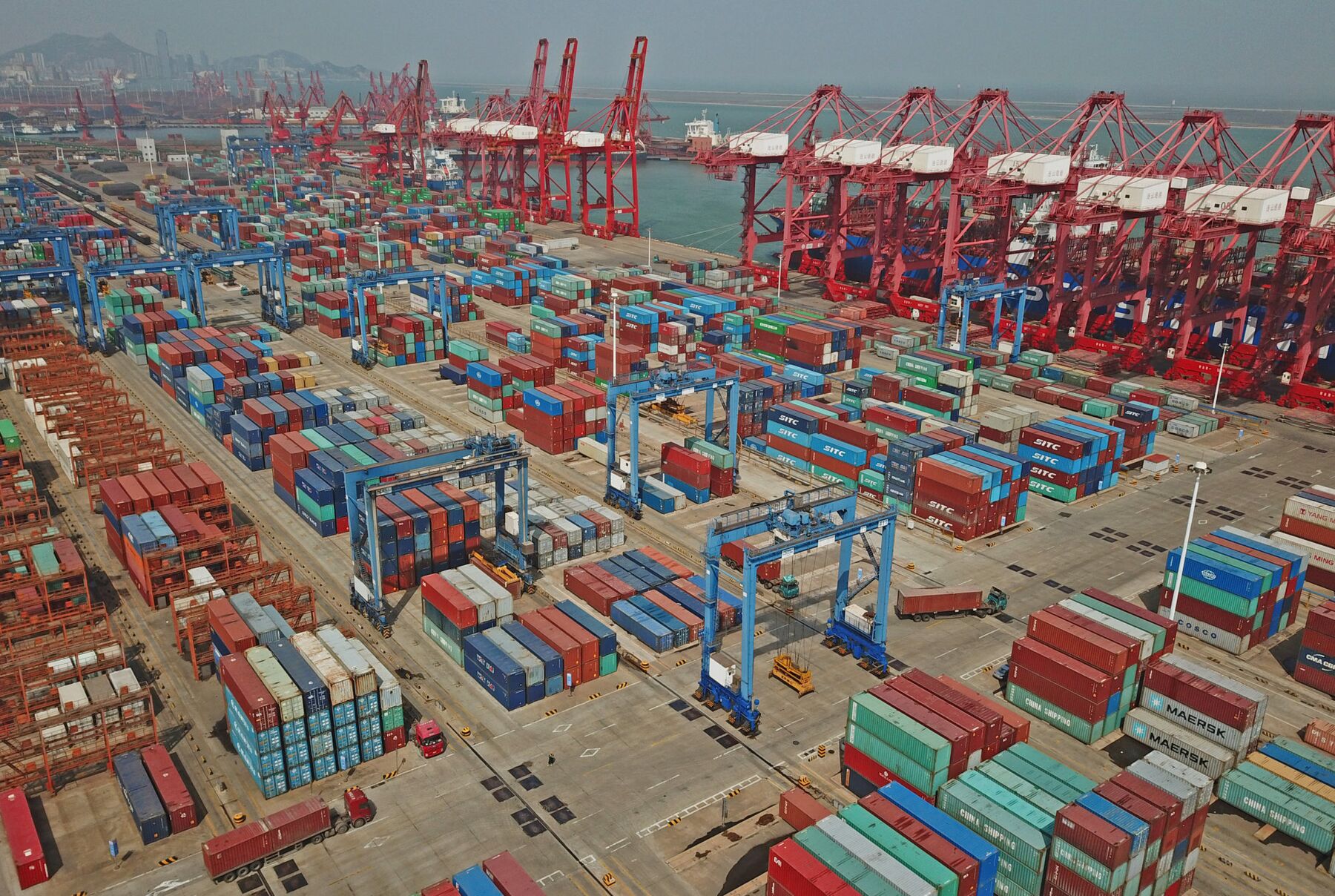
Bread and butter. 

How serious are President Donald Trump's latest trade threats against China? 
The scale of the new measures -- 10 percent tariffs on an additional $200 billion of Chinese products -- will certainly get Beijing's attention. 
But the headline figure matters less than the industries being targeted and their relative importance to China's economy. 
By that metric, this latest attack is a serious escalation.
Most consequentially, the tariff list targets basic manufactured goods such as furniture, electronics, machinery, textiles and fibers. 
Together, these broad categories make up roughly 67 percent of total Chinese exports, which in turn account for 18 percent of gross domestic product. 
That means the potential for significant economic harm is high, all the more so given that manufacturing is the largest individual employment sector in China.
The new tariffs will also put pressure on China's trade surplus with the U.S. 
In principle, this imbalance doesn't much bother economists. 
The problem is that China depends on savings, investment, and capital accumulation to drive its economy. 
Historically, it would print money to buy surplus U.S. dollars, build up reserves, flood the domestic market with money, and thus encourage investment. 
Beginning around 2012, however, this strategy started breaking down as gray-market capital outflows rose and surplus dollars dwindled.
After years of increasingly stringent capital controls, China has only recently returned to a small surplus in total capital flow.
Tariffs on major export industries will threaten its primary source of hard currency and place substantial strain on the capital-control system. 
That, in turn, will jeopardize China's dreams of signature international investment and potentially destabilize its finances as it becomes harder to balance capital flows. 
Unless it can generate more U.S. dollars, this could place serious pressure on the yuan.
Making matters worse, the new tariffs will likely accelerate the migration of low-wage manufacturing from China to frontier markets such as Vietnam and Bangladesh. 
Even without tariffs, many export-focused firms in industries such as garments and textiles were eyeing the exits after years of double-digit wage growth in China.
Tariffs will only exacerbate this shift, for which China was ill-prepared to begin with.
All this, moreover, comes at a bad time.
With economic strain rising, Chinese officials were already resorting to risky measures to boost growth.
The China Banking and Insurance Regulatory Commission recently advised banks to reduce interest rates on loans to small and medium-sized enterprises, while state-owned banks have increased lending for real-estate investment to ensure the economy continues to grow, even as stocks and key commodities have been plummeting.
Against this backdrop, the prospect of a prolonged trade war is causing growing alarm within China. Academics and key officials have been quietly wondering if the ruling party has made a significant miscalculation.
The Commerce Ministry has vowed to retaliate against Trump's latest measures, but it has little room to maneuver given China's relative lack of imports from the U.S. 
The government has even agreed to reimburse some importers for the cost of its retaliatory soybean tariff, which is hardly the sign of a strong hand.
Exactly how China will respond, then, is anyone's guess.
But make no mistake: Trump is attacking the foundations of the modern Chinese economy. 
And the trade war he initiated is escalating faster than either side seems to appreciate.

lundi 6 mars 2017

Here Are the Top China-U.S. Trade Flashpoints as Trump Readies Case

Wilbur Ross says more work needed before making announcement
Bloomberg News

With his commerce secretary sworn in, U.S. President Donald Trump is now in a position to carry out his trade threats against China -- should he decide to do so.
Specific measures against China will be announced “as soon as we have a proper case prepared,” Commerce Secretary Wilbur Ross said in a Bloomberg Television interview last week. 
The billionaire investor spoke just before Trump’s speech to Congress, which included promises to bring back "millions of jobs" and that "dying industries will come roaring back to life."
Since the election, Trump hasn’t specified his trade plans, but the U.S. Trade Representative has said the U.S. won’t be bound by World Trade Organization decisions, according to a document obtained by Bloomberg News that outlines the administration’s trade agenda.
For its part, China said it will "ensure foreign trade continues to pick up and register steady growth," in a government work report Li Keqiang delivered to the National People’s Congress on Sunday.

Here are five potential flashpoints should Trump’s team deliver on past threats to take on Chinese exports:

Steel and Aluminum
China produces about half the world’s steel and its exports have hit record levels in recent years. Ross, who amassed some of his wealth by buying and consolidating steel companies, said during confirmation testimony in January that the U.S. must focus on anti-dumping tariffs on Chinese steel and aluminum.
Chinese steel and aluminum represent a relatively small percentage of its shipments to the U.S. 
But Chinese exports have helped drive a global steel supply glut, fueling trade tensions and prompting dozens of its trading partners, including the U.S., to impose duties and other taxes on steel imports last year.
China will further reduce steel-production capacity by around 50 million metric tons this year, according to the work report delivered on Sunday.

Auto Parts
The U.S. has accused China of dumping cheap auto parts, and a trade spat over Chinese tires dates to 2009, when the Obama administration slapped a tariffs on them. 
But the U.S. International Trade Commission announced in February that U.S. competitors had not been hurt by imports of bus and truck tires from Chinese producers, which escaped anti-dumping duties of up to 23 percent.
The U.S. imported an estimated $1.07 billion of truck and bus tires from China in 2015, according to the commerce department.

Textiles and Apparel
No U.S. manufacturers have been hurt more by cheap imports in recent decades than producers of textiles, apparel and leather products, according to a Deutsche Bank report released in November. U.S. output met only just more than a third of domestic demand for these products in 2015, down from about two thirds in 1997, the bank said.
Growing dependence on imports could mean that shipments from China face restrictions rather than higher tariffs that would raise prices for U.S. consumers. 
If the U.S. restricted Chinese textile and apparel imports, other low-cost producers such as Vietnam and India could step in, Deutsche Bank said.
Furniture and toys
These two labor-intensive industries have also suffered significant job losses in the U.S., and Chinese producers make likely targets for import restrictions, according to a report last month from Goldman Sachs Group Inc.
About one-third of China’s exports of these products land in the U.S., Mizuho Securities Asia Ltd. said in February. 
But as with textiles, hitting China here likely won’t help the U.S. reduce its broader trade deficit, as other nations rich in cheap labor would step in to make up for lost Chinese supply.

Electronics, Electrical Equipment

Electronics, computers and electrical equipment account for a big chunk of the U.S. trade deficit with China. 
But electronic goods are often made in China for non-Chinese companies such as Apple Inc., and are merely the final products at the end of complex supply chains in which the U.S. is an important player, Oxford Economics Ltd. said in a February report.
In fact, China’s biggest imports from the U.S. are electrical machinery and equipment. 
So it could be a “lose-lose” if the White House decided to pursue aggressive action in this area.

Hitting Back
History shows that China is likely to retaliate in trade spats. 
It may choose to strike back at U.S. “soft spots” such as agricultural products, aircraft and cars, said Tu Xinquan, dean at the China Institute for WTO studies at the University of International Business and Economics in Beijing.
Beijing also may restrict U.S. companies operating in China and continue selling its holdings of U.S. Treasuries. 
But those steps would be costly for China as well, so would only be taken should Trump launch a full-on trade war, Shuang Ding, chief China economist at Standard Chartered Plc in Hong Kong, wrote in a recent note.

samedi 12 novembre 2016

EU nears potential breakthrough on tougher China tariffs

A volte-face by the Netherlands increases the chances of Europe imposing higher tariffs.
By HANS VON DER BURCHARD AND ALBERTO MUCCI
France and Germany are leading in pushing for the far higher levels of tariffs more typical of the U.S., as they seek to protect industries from a tide of cheap Chinese imports

EU countries are closing in on a deal that will enable them to slap higher tariffs on dumped Chinese goods.
Reforms to introduce higher duty levels have long been opposed by a British-led blocking minority of mainly northern European states including Ireland, Sweden, Finland and the Netherlands. 
They have argued against a stronger EU tariff system by saying that European manufacturers higher up the value chain will be harmed by more expensive raw materials.
France and Germany are leading a group of 14 countries in pushing for the far higher levels of tariffs more typical of the U.S., as they seek to protect industries such as steel, ceramics and textiles from a tide of cheap Chinese imports.
European Commission President Jean-Claude Juncker has complained that tariffs against dumped Chinese steel of more than 250 per cent are not uncommon, while the EU’s system often leads to duties less than a 10th of that level.
There was some unexpected movement on this long-frozen dossier on Friday at a meeting of trade ministers in Brussels after the Netherlands, previously a key country in opposing a toughening of trade defense legislation, hinted at willingness to switch sides.
“We will look into the proposals … with a positive frame of mind,” Dutch trade minister Lilianne Ploumen told reporters after the meeting.
A proposal for tariff reform has been stalled since 2013. 
But the debate has now gained additional urgency because China will style itself as a “market economy” from December 11, meaning that it will become even harder to prove dumping.
Diplomats added that Croatia had joined the Netherlands in now being open to consider to a change of EU trade defense strategy. 
This leaves the remaining ultra free-traders such as the U.K. and Sweden increasingly isolated.
“There is a clear recognition that we need to move forward,” said French Trade Minister Matthias Fekl. 
“We could not reach a clear majority [for the reform] today, but we will still get it this year. We have to.”
Peter Žiga, economy minister of the Slovak Republic that currently holds the EU presidency, said discussions will continue “at the technical and ambassador level and get to an agreement.”

Duty calls

The reform centers on a quirk of EU trade policy called the “lesser duty rule.” 
This means that the duty imposed rarely reflects the absolute difference between a dumped price and the cost of production. 
Instead, the tariff is pitched far lower and only aims to remove any actual harm to European businesses caused by the dumped good.
Ploumen, the Dutch minister, said that part of her government’s change of position was based on a demand from the Dutch parliament this week “that we need a real quick reform, including the lesser duty rule.”
The Slovak Presidency proposed this week a new compromise solution on the lesser duty rule that defined specific cases in which the rule could be waived.
However, Italy triggered debate at Friday’s meeting by raising objections to that proposal, diplomats said.
“Italy has reservation on the entire structure of how the lesser duty rule will be waived,” a source close to the discussions said, adding that the “watered down version [of the lesser-duty rule] does not give enough assurance to Italy,” a source close to the discussions said.
A reform of the lesser-duty rule is seen as crucial for the success of an additional trade defense proposal, which was made by the Commission on Wednesday to change the methodology for calculating anti-dumping tariffs.
Ministers also discussed this proposal during their meeting, but said it was to early to draw any conclusion.