Affichage des articles dont le libellé est forced confession. Afficher tous les articles

jeudi 12 avril 2018

Sweden charges Tibetan resident with spying on fellow exiles for China

Charge escalates row between the two countries following China’s detention of Swedish bookseller Gui Minhai
By Lily Kuo in Hong Kong
 
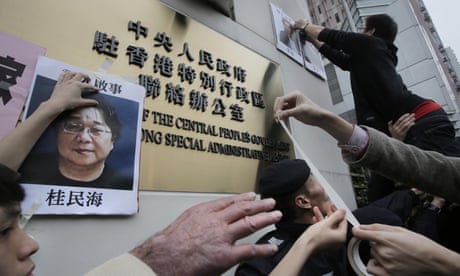
A picture of Swedish bookseller Gui Minhai, who remains in detention in China. 

Sweden has charged a 49-year-old Tibetan man living in the country for spying on his fellow exiles for the Chinese government, according to Swedish media.
State prosecutors said the man, who is Tibetan and was working for the newspaper Voice of Tibet, is suspected of supplying the Chinese government with information about the families, housing situations and travel plans of “certain people of importance to the Chinese regime”.
According to Swedish state prosecutor Mats Ljungqvist, the man had been in touch with Chinese officials in Poland and Finland. 
He had been paid 50,000 krona (£5,850) on one occasion. 
Ljungqvist said the man had been deeply embedded in the Tibetan community.
“This is a very serious crime,” he told reporters. 
The prosecutor did not give the suspect’s name.
The arrest comes about two months after Swedish bookseller Gui Minhai was taken from a train in China in the presence of Swedish consular officials. 
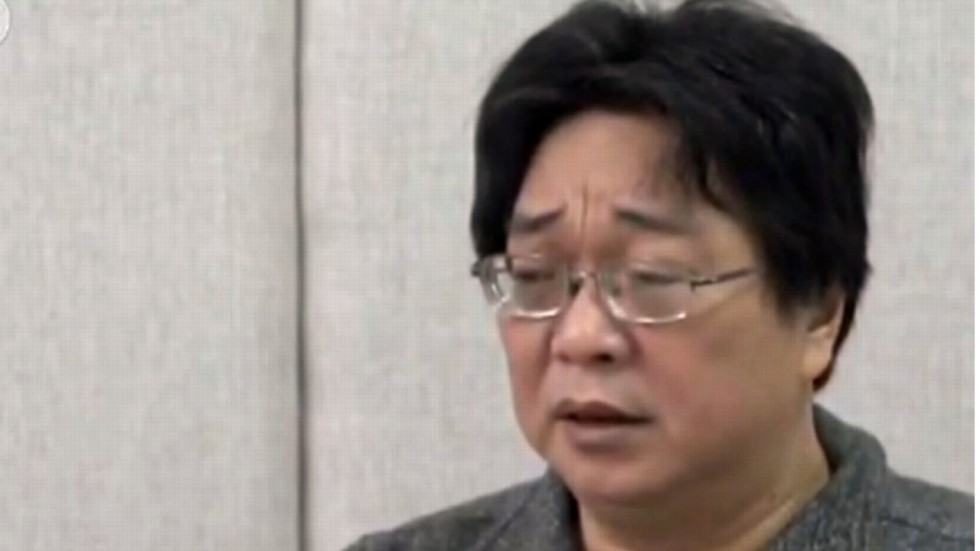
Three weeks later a video surfaced in which Gui expressed his guilt over unspecified offences, an admission that human rights activists said was a forced confession.

Sweden condemns China's 'brutal' detention of bookseller Gui Minhai

He remains in detention. 
Sweden’s foreign minister, Margot Wallström, has called China’s treatment of Gui “unacceptable”. Gui is reportedly suffered from a neurological disease, but has not been allowed to see a doctor.
Critics have said Sweden is not doing enough to stand up to Beijing over the Hong Kong-based publisher who released books on China’s political elite.
Sweden is home to about 140 Tibetan exiles, according to Tibetan Community in Sweden, an organisation for the group, which has come under increasing pressure. 
Last year, Sweden’s security service also arrested a man for spying on Tibetans in the country.
“It is clear that there are spies who are sent by China to Tibetan communities, but this is the first time it’s been officially investigated,” Jamyang Choedon of the Tibetan Community in Sweden told the Swedish paper, the Local.
Uighur exiles living in Sweden have previously described ways they have been pressured to spy on each other. 
A Uighur asylum seeker told Swedish radio in an interview in 2012 that Chinese police approached her family, still in East Turkestan, saying that she had been accused of leaking state secrets. 
If she assisted in providing information, her sentence would be lighter, she was told.
Tsering Tsomo, the executive director of the Tibetan Centre for Human Rights and Democracy in Dharamsala, India, said Chinese consular officials withhold visas for Tibetan exiles with family still in Tibet to persuade them to give information on others.
“They don’t want to provoke the Chinese government, so they do something they don’t like just to get the visa,” she said.
Tsomo said others are embedded by China’s United Front Work Department, the Chinese Communist party’s arm for issues related to overseas Chinese.
“It’s quite common knowledge in the Tibetan community the United Front is very active in planting spies within the Tibetan community. They could be Tibetan, Chinese ... it could be anyone,” she said.

jeudi 22 février 2018

China's State Terrorism

'A very scary movie': how China snatched Gui Minhai on the 11.10 train to Beijing
Details of the extraordinary detention of the Hong Kong bookseller as he sought help from Swedish diplomats

By Tom Phillips in Beijing

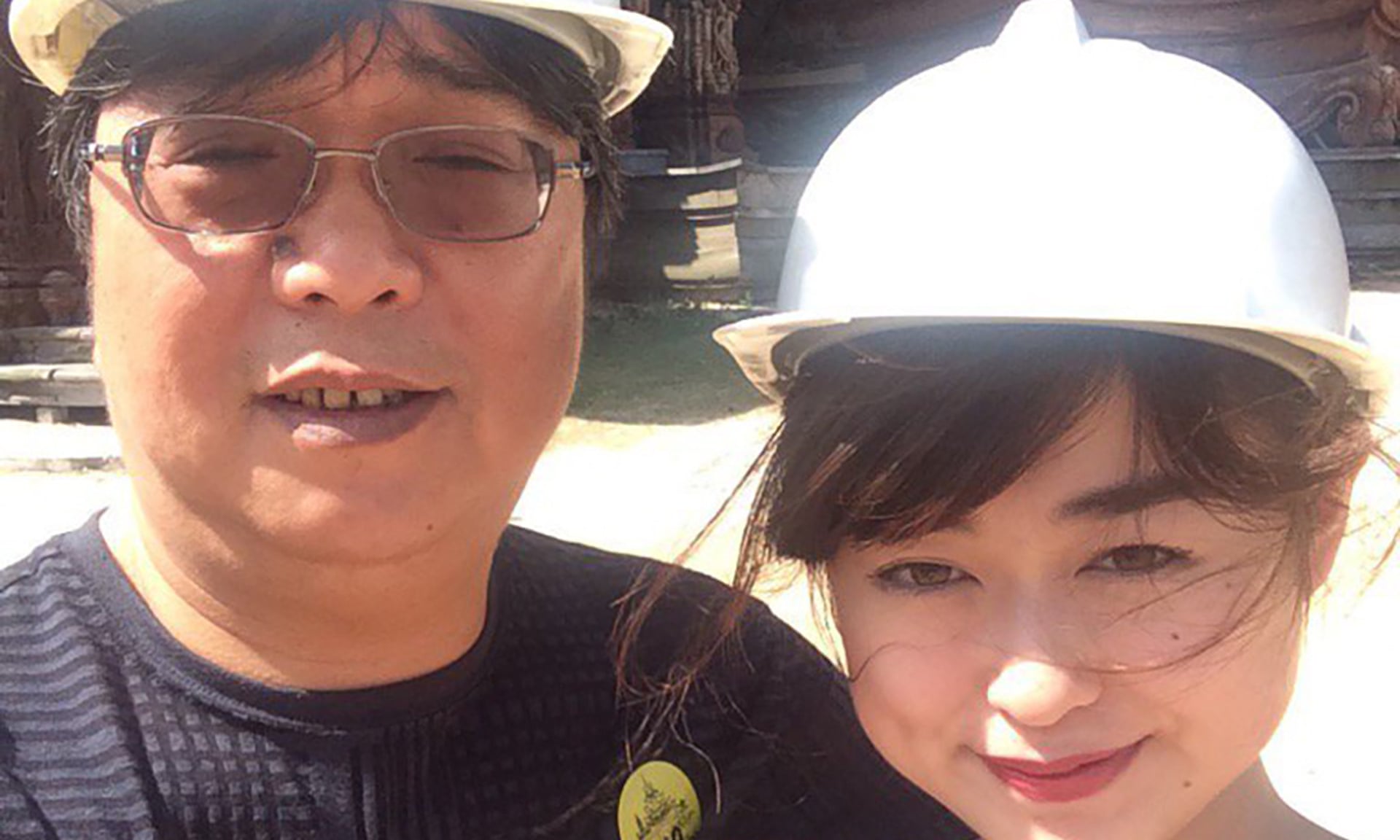
 The last picture that Angela Gui has of her father, the detained publisher Gui Minhai. 

The 11.10am to Beijing left on time, gliding out of Shanghai’s cavernous high-speed rail terminal and darting north through the cheerless suburban sprawl.
On board the sleek, white bullet train sat an unlikely trio of Europeans, one of whom held the key to a real-life political thriller so frightening and tangled it has left all those trying to decipher it both gripped and unnerved.
Only two of the trio would make it to their final destination.
As the G126 hurtled towards the Chinese capital on 20 January, at speeds of up to 350km an hour, the latest dramatic chapter in a surreal two-year saga was about to unfold.
For one of the passengers was Gui Minhai, a portly Swedish publisher once famed for his scandalous tomes about the leaders of the world’s second largest economy.
Just over two years earlier, in October 2015, Gui had vanished from his holiday home in Thailand, one of five Hong Kong booksellers snatched in still-unexplained circumstances during what many suspect was a political witch-hunt to silence or punish those who dared defame the Communist party’s great and good.
Now, the 53-year-old publisher – who had only recently emerged from Chinese custody and was travelling with Sweden’s consul general in Shanghai, Lisette Lindahl, and another Swedish diplomat – was about to disappear again.
At just after 3pm, the train pulled into Jinan West station in Shandong province, about 400km shy of its destination. 
The doors slid open and a gaggle of plainclothes agents pushed into the carriage. 
As they lifted the bookseller from his seat, an English-speaking female officer announced a police operation was underway. 
“They had no uniforms and no credentials,” said one source with knowledge of the day’s events. “They simply took him.”
Within seconds Gui Minhai was gone.
“Perhaps something like this was planned all along and there was no way of stopping it,” Gui’s daughter, Angela, reflects a fortnight later, as she considers the latest misfortune to befall her father.
‘China doesn’t mind how ridiculous it makes itself look’
Magnus Fiskesjö, who first met the bookseller in 1980s Beijing and has been a friend since, said he was stumped by Gui’s increasingly mysterious tale.
“It’s a very scary movie,” the Cornell University academic sighed. 
“It’s astounding, astounding … I find myself speculating quite wildly as to why they would do this.”
Fiskesjö is not alone.
China’s official explanation – made public on 9 February after the bookseller was paraded before a group of Beijing-friendly reporters at a facility in east China – is that Gui is suspected of leaking state secrets to “overseas groups” and trying to skip the country as part of a Swedish plot. (Supporters say Gui had been travelling to the Swedish embassy for a medical examination amid fears he was suffering from a rare neurological disease).
“I fell for it,” the bookseller claimed in a video activists rejected as a forced confession.
Few, perhaps not even within China’s corridors of power, believe that implausible narrative though.
“The thing that is so surprising is the failure of the Chinese government to put out a coherent explanation that does not subject them to ridicule,” says Jerome Cohen, a New York University expert in Chinese law and human rights.
The People’s Republic of China doesn’t mind how ridiculous it makes itself look. It’s like a second-rate comedy show – only the joke is on Gui.”

A new wave of oppression

The absence of hard facts or credible Chinese justifications has spawned a cottage industry of dark hypotheses and conspiracy theories about what has happened to Gui and, crucially, why.
From his desk in Ithaca, New York, where he tracks the ever more serpentine case, Fiskesjö reels off his theses – not one of them, he concedes, provable.
Had Gui been snatched by rogue agents or fallen victim to a botched handover between poorly coordinated security forces? 
Was he a pawn in a game of geopolitical chess that a newly assertive Beijing was using to humiliate and intimidate Sweden and the west?
Or was Gui simply another victim of an aggressive crackdown on dissent that followed Xi Jinping’s rise to power in 2012?
“We’ve seen a new wave of oppression and repression and unfortunately Gui Minhai’s case fits into that,” Fiskesjö says.
But Fiskesjö and others are haunted by another possibility: that Gui had either published or picked up some toxic nugget of information that had enraged one of China’s top leaders and made the bookseller the target of a vicious and unstoppable campaign of retribution.
“[In China] powerful bosses can just say something and have it happen,” Fiskesjö says. 
“My best guess,” speculated another source, “is that he either has – or the Chinese think he has – information which would be harmful to the reputation of someone in the leadership.”
One thing seems certain, says Fiskesjö. 
At some point after Gui’s detention a high-level decision was taken: “‘No, we cannot let him go ... we have to silence him.’ Why that would be?” the academic mused. 
“I don’t understand.”
Gui’s 23-year-old daughter has also been trying to decode his predicament since they last spoke, on the eve of his detention. 
She has another theory.
From October 2015, when the publisher disappeared from his beachfront holiday home, until his partial release in October 2017, virtually nothing is known about Gui’s plight, beyond that he was held for a time in the eastern port city of Ningbo.


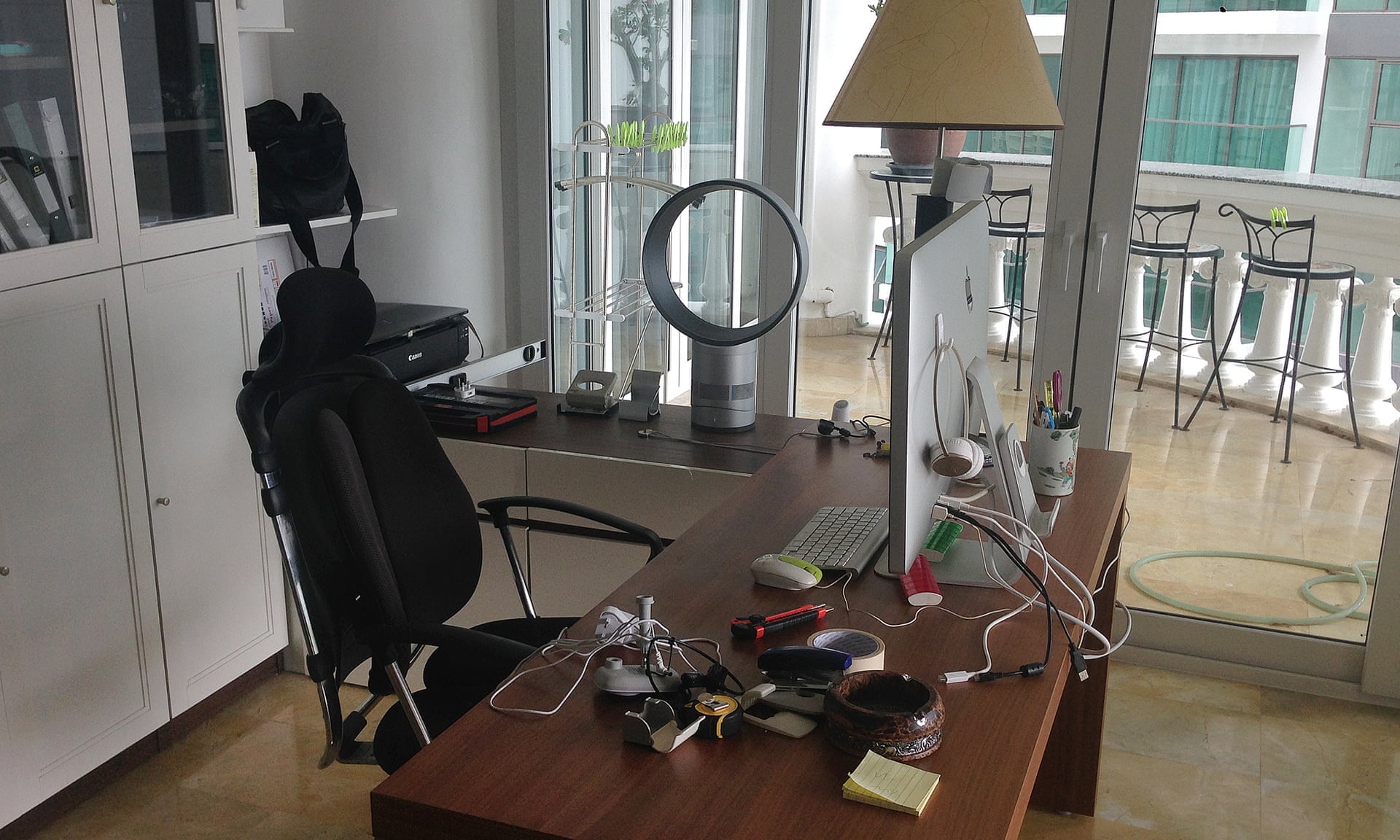
The scene at Gui Minhai’s Thai apartment after he ‘disappeared’ – as seen by The Guardian when it visited. 

Gui’s daughter suspects the “state secrets” he supposedly possesses actually relate to his own story, specifically his illegal rendition and subsequent mistreatment in Chinese custody.
During regular Skype conversations, permitted after he was placed under surveillance in a Ningbo flat in October last year, she said her father repeatedly hinted at such abuse. “For obvious reasons he wasn’t able to speak very freely about it ... So, I had to do a lot of guessing. But it is quite clear to me that he has been tortured.”
Cohen, who has spent decades studying China’s human rights landscape, finds the theory convincing.
“What secrets would this man have, other than what he learned through his own kidnapping and his own mistreatment once he got back to China?” he says.
“This fellow, if he wanted to tell the truth about being kidnapped from Thailand, could be a real embarrassment to China ... I think they don’t want him to talk … you get certain people they are afraid ever to let loose.”

The west pushes back
Gui’s detention has caused a serious diplomatic rupture, as well as a personal tragedy, pitting an increasingly feisty China against Sweden and other European Union nations who fear their citizens could be next.
“The handling of the case, including the forced TV confessions, is more reminiscent of Cultural Revolution tactics than rule of law,” complains one Beijing-based western diplomat. 
“The bullying of a smaller country like Sweden ... will not help to improve China’s image abroad.”
After initially struggling to explain Gui’s capture, Beijing has gone on the offensive, accusing Stockholm of “grossly” meddling and warning its protests could harm ties.
Western governments have pushed back, with Sweden condemning China’s “brutal intervention” and EU and US officials also demanding Gui’s release
But Stockholm, and the wider international community, are not doing enough.
Beijing acts towards human beings as a reckless tyrant – and increasingly as a bully to other countries,” the Dagens Nyheter, one of Sweden’s largest newspapers, warned in an editorial criticising Stockholm’s “cowardly and wrong” response. 
Europe needed to fight back “when China bares its fangs”.

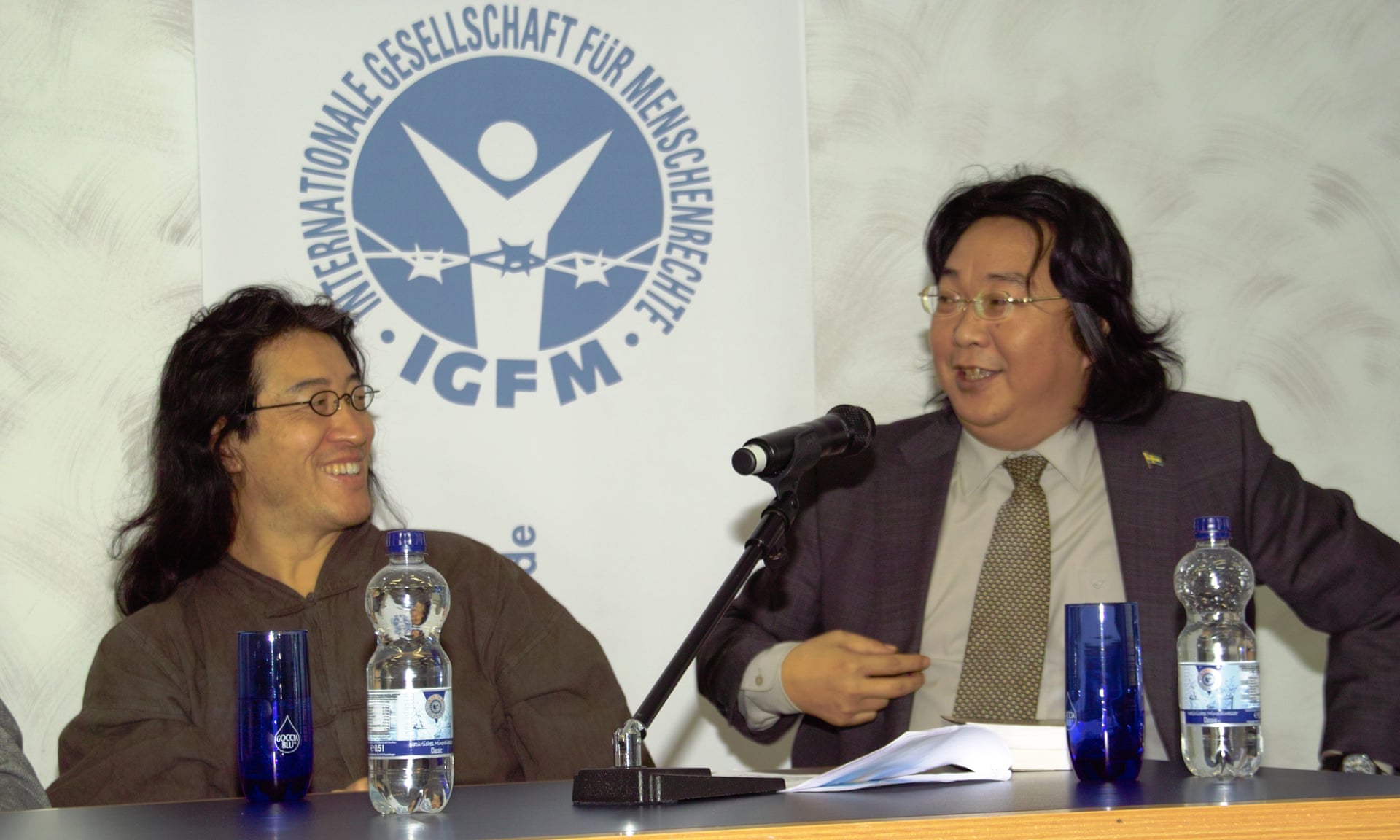
Gui Minhai, right, next to his university friend Bei Ling in 2008.

‘A jovial, funny guy’
The latest twist in Gui Minhai’s extraordinary publishing career would have been unthinkable when it began in 1980s Beijing.
Gui, then in his early 20s, was a budding poet whose verses appeared in the samizdat-style pamphlets that circulated during what was a rare period of political and intellectual freedom that ended abruptly with 1989’s Tiananmen massacre.
“He was always this jovial, funny guy,” recalls Fiskesjö, then the Swedish embassy’s cultural attaché.
Gui made his name – and fortune – with lewd tomes on the intrigues of Chinese leaders. 
But Fiskesjö says he was also a serious mind, who spent years studying Scandinavia after swapping Beijing for Gothenburg in 1988.
Gui’s PhD, completed in 1991, the year before he became a Swedish citizen, was called Feudalism in Chinese Marxist Historiography. 
Then came works on the Swedish East India Company and Norse mythology. 
“It’s a fascinating introduction for Chinese readers about Odin and Thor and all of those figures,” Fiskesjö says of the latter. 
“He definitely wasn’t confined to this ... political gossip genre.”
Fiskesjö remembers, too, the hope-infused verses of a gifted poet.
In one 1986 composition, Longing for Greece, Gui writes:
I will hitch a ride with a small fish,
And go to Greece.
To visit the cities that breathe through gills,
Cities carved out with a kitchen knife.
History rises above the horizon,
Rising, oval.
An inward olive,
Held in in my mouth.
Cannot be spoken.
Gui’s daughter, who lives in Britain and recently earned a master’s degree from the University of Warwick, says her father continued to compose and memorise poems – often focusing on his Swedish identity – while in custody. 
Before his latest detention, “he was in the process of writing them down and was hoping to publish them”.
That, though, was before he boarded the 11.10am to Beijing and before he was marched off, once again, towards a televised confession and an uncertain future. 


Angela Gui, whose father Gui Minhai disappeared on 17 October, 2015. 

In one of their final Skype chats, Angela Gui recalls joking and “talking shit” with her genial father, as was their norm.
“He hadn’t at all lost his personality,” she said. 
“And he also said, ‘You know what I think ... defines me, and what has defined me through this entire experience, is that I’ll always be an optimist.’
“He said he thought everything was going to be OK – in some way – and he had to keep working and he had to keep doing what he wanted to do and in some way things were going to be OK.”
Just over 24 hours after their last online encounter, on 19 January 2018, Gui was gone.
When he reappeared before the cameras three weeks later the bookseller delivered what some read as a farewell.
“My message to my family is that I hope that [they] will live a good life,” Gui said
“Don’t worry about me. I will solve my own problems.”
dimanche 11 février 2018

Chinese State Terrorism

Sweden will press China to release publisher despite video criticism
REUTERS

Gui Minhai's forced confession

STOCKHOLM/HONG KONG--Sweden said on Saturday it would keep pressing China to release Swedish citizen and publisher Gui Minhai, even after he was shown in a filmed interview criticizing Stockholm for "sensationalizing" his case.
Gui was shown in an interview with journalists posted online overnight, making a statement that Amnesty International and other campaign groups said could have been staged. 
There was no immediate reaction to the rights groups from Chinese authorities.
The former Hong Kong-based publisher of books critical of China's leaders, was abducted in Thailand in 2015. 
He was one of five people in the Hong Kong book trade who went missing that year and later appeared in mainland Chinese custody.
After being partially released from Chinese custody late last year, he was seized last month by 10 plainclothes Chinese agents onboard a Beijing-bound train while in the presence of two Swedish diplomats.
In the latest twist of the saga, Hong Kong's South China Morning Post posted clips of Gui speaking to journalists about his case.
Gui, who has a Swedish passport, appeared relaxed at times in the footage. 
But Amnesty International said the comments given to largely pro-establishment media outlets appeared to have been staged.
"It's certainly a forced confession," William Nee, a China researcher with Amnesty International, told Hong Kong's public broadcaster RTHK. 
"The fact that he's kind of repeating talking points that the (Chinese) government wants to put out ... and as far as we know he's in incommunicado detention. He doesn't have lawyers of his choice or consular access right now."
In the video Gui said that Sweden had tried to get him out of China to Sweden, under the pretext of seeking medical treatment.
"During the journey, they (the Swedish officials) asked me not to get off the train, for fear it would catch other people's attention," Gui said in the online footage.
"I regret this very much now.
"Looking back, I might have become Sweden's chess piece. I broke the law again under their instigation. My wonderful life has been ruined and I would never trust the Swedish ever again."
Swedish foreign ministry spokeswoman Katarina Byrenius Roslund, defended Stockholm's position.
"This video changes nothing. We continue to demand that our citizen be given the opportunity to meet with Swedish diplomatic staff and medical staff," she said in an email to Reuters.
Gui added he was still involved in an unspecified court case involving an "illegal business" and wasn't able to leave China. 
Other details of Gui's charges and detention weren't specified in the video clips.
Gui's daughter, Angela, who is now studying in England and has been highly critical of the Chinese government's handling of her father's case, wasn't immediately available for comment.
Amid reports that Gui's health has worsened, Gui said in the interview that he had spinal and muscle problems, but that this wasn't Amyotrophic lateral sclerosis (ALS), or Lou Gehrig's disease, as some had suggested.
China's foreign ministry did not respond to a request for comment on the interview and whether Gui had been forced into giving it.

vendredi 3 mars 2017

State hooliganism: BBC team forced to sign confession

By John Sudworth

The plan was a simple one.
We'd arranged to meet a woman in her village in China's central Hunan Province and to then travel with her by train to Beijing, filming as we went.
But we never did get to meet our interviewee.
The story we ended up with, however, reveals more about the exercise of power in China than any interview ever could.
It is one that involves violence, intimidation and a forced confession -- my first in my long reporting experience in China -- in which I found myself apologising for "behaviour causing a bad impact" and for trying to conduct an "illegal interview".
Thugs, sanctioned by the authorities, attacked us
Yang Linghua was planning to take the train to Beijing because she is what's known in China as a "petitioner".
Every year, many tens of thousands of Chinese people -- denied the possibility of obtaining any justice through the local Communist Party run courts -- head to the capital, taking their grievances to the "State Bureau of Letters and Calls".
Corruption cases, land-grabs, local government malfeasance, medical negligence, police brutality, unfair dismissal -- all are documented in the bundles of papers -- the petitions -- they carry with them.
The system is also Communist Party run, of course, and the chances of success are tiny.
But for many, it's the only chance they've got, and they often continue to petition, in vain, for years.
The BBC interviewed Yang Quinghua, sister of Yang Linghua, three years ago
Just like Yang Linghua's family.
The BBC interviewed her sister, Yang Qinghua, three years ago on a petitioning trip to Beijing.
The women allege that their land was stolen from them and their father, in the ensuing dispute, was beaten so badly he eventually died.
But there's a particular reason Ms Yang was trying to reach Beijing this week.
On Sunday, China begins its annual parliamentary session, The National People's Congress (NPC).
The National People's Congress is held, like the Committee of the Chinese People's Political Consultative Conference (depicted), in Beijing's Great Hall of the People

The event is like a magnet for petitioners who hope to use the grand occasion to promote their cause.
Beijing, though, has other ideas.
It would rather keep this ragged army of the dispossessed away from its carefully choreographed piece of political theatre and so provincial officials the length and breadth of the land, are tasked with stopping petitioners making the journey.
We knew that Ms Yang's sister and mother had already been placed under unofficial house arrest.
But as she herself had never been to Beijing to petition before, she felt she would be free from suspicion and, at the very least, able to board a train.
She was wrong.
As soon as we arrived in Yang Linghua's village it was clear they were expecting us.
The road to her house was blocked by a large group of people and, within a few minutes, they'd assaulted us and smashed all of our cameras.
Our equipment was smashed -- Ms Yang says her father received far worse when he objected to land theft

While such violence can be part of the risk faced by foreign reporters in China, what happened next is more unusual.
After we left the village, we were chased down and had our car surrounded by a group of about 20 thugs.
They were then joined by some uniformed police officers and two officials from the local foreign affairs office, and under the threat of further violence, we were made to delete some of our footage and forced to sign the confession.
It was a very one-sided negotiation, but it at least gave us a way out -- a luxury denied to the petitioners who find themselves on the receiving end of similar intimidation and abuse.
A video sent to us by Yang Linghua's sister shows her being detained by some of the same people who threatened us.

Warnings not to travel

In the course of researching this story we spoke to one woman, now in her seventies, who has been petitioning since 1988 for a longer prison sentence for her husband's murderer.
She told us that every year during the National People's Congress she is put under house arrest for 10 days.
A man we contacted, petitioning over the abduction of his son, had been warned not to travel this week.
He went ahead and booked his tickets anyway but was prevented from boarding the train in Guangdong Province.
Even for those who do make it to Beijing, the threat of being caught remains.
Outside the petitioning office this week, hundreds of "interceptors" have gathered, the squads of goons sent from each province to search out and cajole or coerce their petitioners to return home.
Official and volunteer security officers are everywhere during the Congress
Of course, many petitioners do still make it and are able to lodge their claims, particularly first-timers who are not yet known to the system.
But the irony is, the harder China works to stem the flow during its national parliament, the more incentive there is for people to come.
Most petitioners are not so naive as to believe they'll be able to get anywhere near the senior officials attending the parliament.
But the desperation of their own provincial governments to catch them gives those who make it to Beijing a certain leverage.
Ignored all year round, often by the same officials they're petitioning against, they suddenly find themselves on the receiving end of offers to negotiate.
One petitioner showed us the text message exchanges she has had with the interceptors trying to track her down, with one even offering to take her on holiday. 
Anything to get her out of Beijing.
We have heard nothing from Yang Linghua or her family since they disappeared.
We have asked government officials in Beijing whether they can provide an assurance that they are safe and well.
Meanwhile, on the eve of China's parliamentary gathering, many of its citizens -- often those, it could be argued, who are most in need of parliamentary representation -- face similar abuse.
And despite having signed that confession I make no apology for trying to interview them.