The company's reported data sharing arrangement with rogue Chinese company Huawei has got local politicians angry. By Josh Taylor
Zuckerberg is "like a Red Guard waving the White Book," says Hu Jia
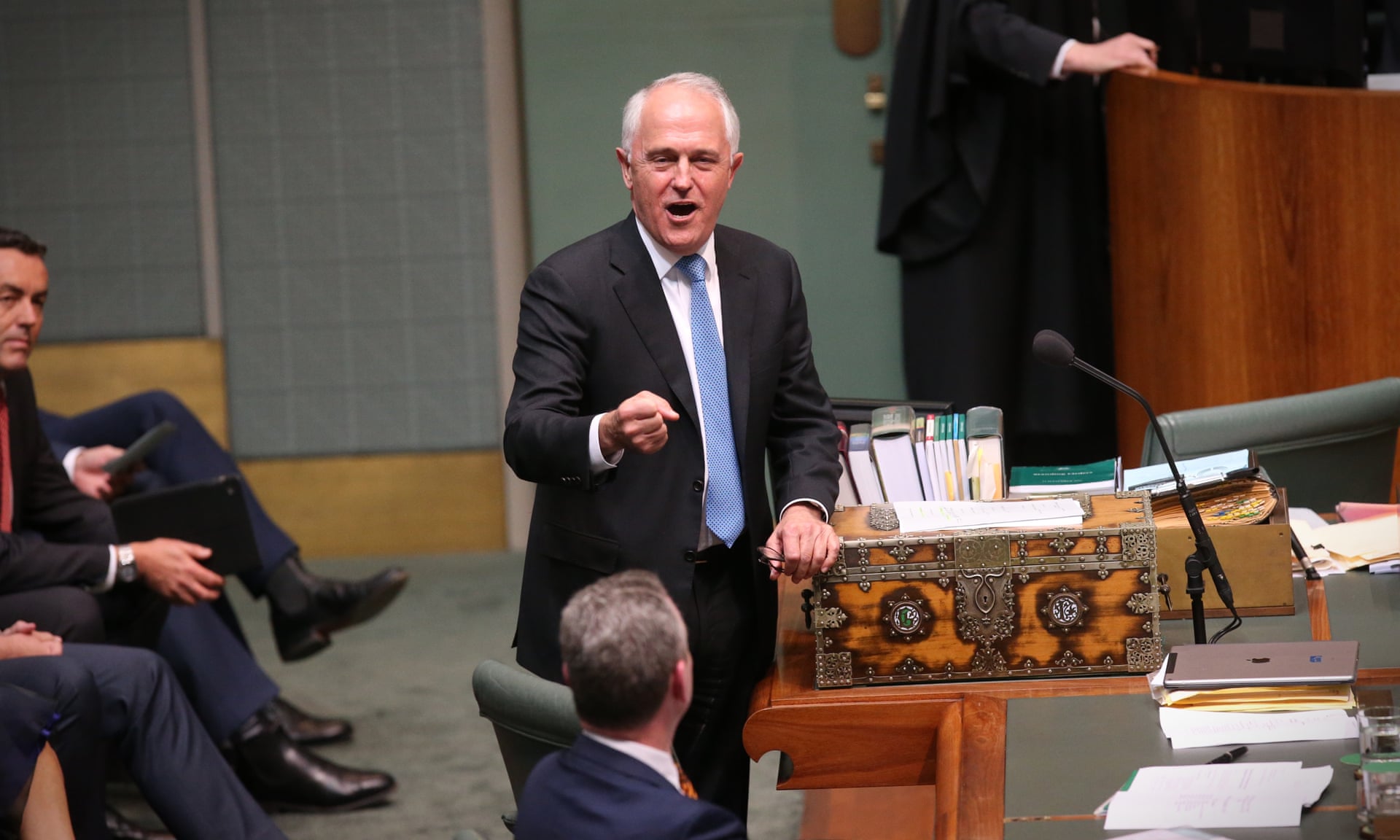
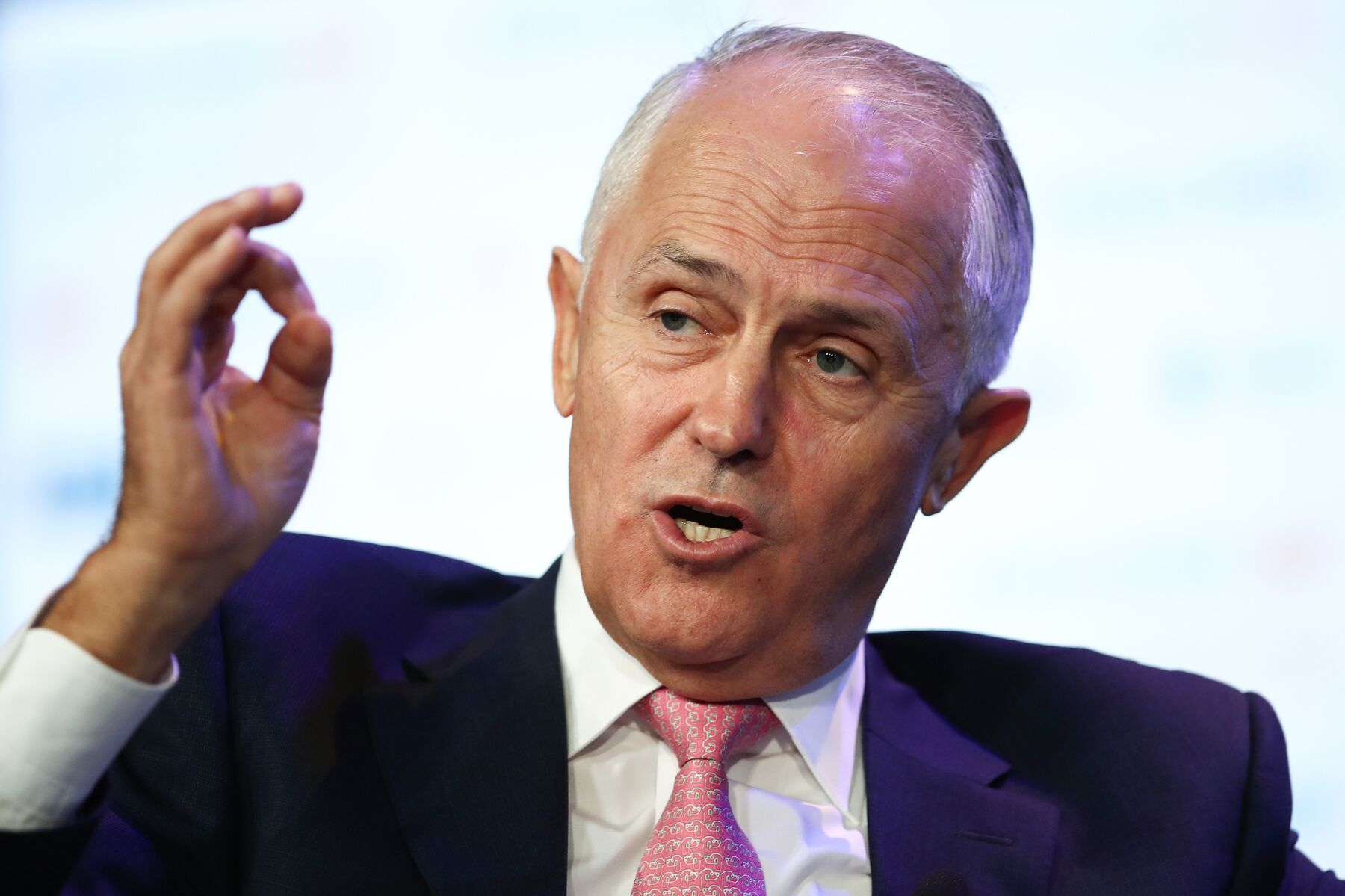
Prime minister Malcolm Turnbull has thrown his support behind a push to have Facebook founder Mark Zuckerberg appear before Australia's parliamentary committee on national security over news the company shared user data with Chinese telecommunications manufacturer Huawei.
It was reported yesterday that Facebook had entered into a data sharing arrangement with several Chinese manufacturers including Huawei, Lenovo, OPPO, and TCL, and allowed these companies to collect user data including address books, likes, and friendships. Facebook has these types of relationships with many companies, including Apple and Google, but politicians in the US, the UK, and Australia have raised concerns about the sharing of the data with Chinese companies, given the relationships between some Chinese-owned companies and the Chinese government. The deputy chair of the joint standing committee on intelligence and security, Labor MP Anthony Byrne, is so concerned over the data handed to Huawei that he has indicated that Zuckerberg would be invited to give evidence before the committee.
It is vital that Facebook explains its data sharing partnership with firms such as Huawei. We need to protect the data of over 15 million Facebook users in Australia. (1/2)
If need be Mr Zuckerberg will be invited to appear before the PJCIS in a public hearing to explain himself to our committee and the Australian people. (2/2).
This call was backed by PM Turnbull, who said he would welcome Zuckerberg giving evidence in Australia. "Well, certainly there are a lot of concerns about Facebook, about privacy ... And I would welcome Facebook coming and testifying before our parliamentary committees, yes," he said.
"We'd love to see the boss. But, naturally, he is the founder, but the important thing everyone is paying a lot of attention to [is] the issue of privacy. And, of course, the question of whether people really know what is being done with their personal data." Turnbull said Facebook had become dominant in people's lives, and it was important to keep a close eye on how data is being used, and ensure people consent to their data being used. Facebook has not yet indicated whether Zuckerberg would appear, but the Facebook founder did not turn up to face UK lawmakers in April, despite repeated requests. He did, however, front the European Parliament in May. The Australian parliamentary committee is due to hand down its report on Thursday on legislation aimed at cracking down on foreign interference in Australia from countries including China. Huawei is also under closer scrutiny in Australia at the moment as the government is considering whether to use new powers to veto mobile telecommunications companies such as Telstra, Optus and Vodafone from using Huawei technology in the construction of their 5G mobile networks. The company has already provided equipment for some of the nation's 4G mobile networks, but was banned from tendering for the National Broadband Network.
China furious, as Australians unite on barriers against its interference
By Michelle Grattan Given Bill Shorten's national security stance, and the usual bipartisan functioning of the intelligence and security committee, it is not surprising that agreement has been reached on the bill.
The Government couldn't have had a more appropriate week for the release of the report from the parliamentary joint committee on intelligence and security, which has examined its legislation to counter Chinese interference.
Bipartisan agreement in the report, tabled Thursday, on the 60 recommendations, covering minor and more substantive amendments, has paved the way for a bill that has infuriated Chinese authorities to clear Parliament within weeks.
A couple of current instances have highlighted how China engages in unsubtle pressure.
Qantas confirmed it would bow to China over how the carrier refers to Taiwan in its advertising and on its website.
This followed a demand to three dozen airlines that they make clear that Taiwan, Hong Kong and Macau are part of China.
The Government was understanding of Qantas's position, accepting it had little choice.
On a very different front, former foreign minister Bob Carr, aka Beijing Bob, an outspoken friend of China, who heads the Australia China Relations Institute at the University of Technology Sydney, was unable to get visas for journalists (including from Fairfax and News Corp) to go on one of the sponsored visits to China he hosts.
Bob says "the assumption is that [this] is part of the freeze China is applying to bilateral visits" — a freeze that has hit ministers.
Then there is the much-publicised controversy about Facebook sharing user data with, among many companies, several Chinese ones including Huawei, a telecommunications-equipment giant that the Australian Government has not permitted to tender for National Broadband Network contracts.
We're well past the optimistic days when we believed it could be all upside in our relationship with China, which has over the years delivered an economic bonanza for Australia.
Turnbull, like Rudd, tough-minded on China
Trade Minister Steve Ciobo tries to shrug off problems as minor irritants, but presumably that's just his job.
Others in the Government have become more forthright.
It's notable that of recent prime ministers, Kevin Rudd and Malcolm Turnbull, both very knowledgeable about China, have been the most openly tough-minded towards it.
Before becoming PM, each was regarded as China-friendly.
Of the various causes of current tensions in the relationship, the legislation against foreign interference is on the top shelf (together with Australia's stand on the South China Sea).
The purpose of the legislation, unveiled late last year, is to "comprehensively reform key offences dealing with threats to national security, particularly those posed by foreign principals".
Among its provisions, it "introduces new foreign interference offences targeting covert, deceptive or threatening actions by foreign actors who intend to influence Australia's democratic or government processes or to harm Australia". At its core, what this legislation does is to criminalise foreign interference that is one step below espionage.
ASIO has always been able to investigate such interference, but it hasn't actually been a criminal offence.
While the Government goes out of its way to say the legislation is not aimed at any individual country, everyone knows China is in its sights.
As is Russia, after the experience in the United States and elsewhere.
ASIO warned of 'unprecedented' foreign activity Duncan Lewis, head of ASIO, emphasised the foreign threat in evidence to Senate estimates last month, describing the current scale of foreign intelligence activity against Australian interests as "unprecedented".
"Foreign actors covertly attempt to influence and shape the views of members of the Australian public, the Australian media, officials in the Australian Government and members of the diaspora communities here in Australia," he told the hearing.
"Foreign states maintain an enduring interest in a range of strategically important commercial, political, economic, defence, security, foreign policy and diaspora issues," he said.
Clarity on 'espionage', 'sabotage' and 'interference'
Where possible, Opposition Leader Bill Shorten tries to stick like glue to the Government on national security issues, for reasons of politics as well as substance.
Given this, and the usual bipartisan functioning of the intelligence and security committee, it is not surprising that agreement has been reached on a refined version of the bill.
Many of the changes, as Attorney-General Christian Porter noted, are to definitions and drafting — which doesn't make them unimportant.
These include clarifying that "prejudice to national security" has to involve an element of harm, not just embarrassment.
There'll be clarification of "espionage", "sabotage", "political violence" and "foreign interference".
Changes will reduce the maximum penalties for the new secrecy offences, and require the attorney-general's consent for a prosecution under them.
An amendment will ensure the staff of the Inspector-General of Intelligence and Security are properly protected.
Journalism defence beefed up
The changes will give greater protection to the media, expanding the public interest defence for journalists, and making it clear that editors, legal advisers and administrative staff will all be covered by the journalism defence.
Before a journalist can be prosecuted over reporting classified documents, the head of the relevant agency will have to certify that they were properly classified, and the attorney-general must consent to the legal action.
The Government, accepting some criticisms of the legislation, itself put forward certain amendments.
The committee — which is still examining an accompanying bill to set up a register of those working on behalf of foreign governments and other interests — said that after three years there should be a review of the operation of key parts of the foreign influence legislation.
The agreed changes haven't satisfied critics such as the Law Council and Amnesty International.
But the political deal is now in place.
Meanwhile Mr Porter explicitly cast an eye to coming elections.
"Activity which is designed to interfere or influence our democratic processes is at its most acute when democratic processes are taking place and that means five by-elections in late July and then the full general election," he said.
The Government, saying it wants the legislation passed before the Parliament rises at the end of June for the winter recess, is preparing for more angry reaction from Beijing.
Beijing Bob enlists Labor in new China influence row
By Nick McKenzie & Nick O'Malley
Chinese agent Bob Carr, aka Beijing Bob
Former Labor Foreign Minister Bob Carr, aka Beijing Bob, is using ALP senator Kristina Keneally to quiz the prime minister and senior officials about Malcolm Turnbull’s key former adviser on Beijing’s espionage and interference operations in Australia.
Fairfax Media has confirmed that Carr, who heads a think tank created by a Chinese businessman closely connected to Beijing, has asked Senator Keneally to use parliament to find out details of the employment, job title, and contract of government adviser John Garnaut.
Mr Garnaut is a China expert and former Fairfax Media China correspondent who was tasked by the prime minister in August 2016 to conduct a highly classified inquiry with ASIO into Beijing’s clandestine activities in Australia.
China's fifth column: Beijing Bob (L) and Huang Xiangmo (R)
The inquiry, which has never been released, is understood to have examined the activities of Huang Xiangmo, the same Chinese businessman who created Carr’s Australian China Relations Institute, and who separately headed a Sydney lobbying organisation aligned with the Chinese Communist Party.
Carr first suggested in a phone call to Senator Keneally and her office on the evening of February 27 that she use the parliament to ask questions about Mr Garnaut, according to sources familiar with the matter.
He subsequently asked Ms Keneally on at least one other occasion to use parliament to scrutinise Mr Garnaut’s work.
ASIO chief Duncan Lewis sounds fresh alarm over Chinese interference threat
Carr’s role in pushing for questions to be asked was only disclosed to many in the ALP after Senator Kimberly Kitching quizzed senior bureaucrats on May 22 about Mr Garnaut, relying on questions scripted by Labor staffers.
Labor sources said that Senator Kitching, who could not be reached for comment, was later told by Senator Keneally that Carr had requested the questions be asked.
Two Labor sources who spoke to Senator Kitching said she was “furious”.
She also revealed to ALP colleagues that Senator Keneally had told her that Carr “will owe you a favour” for having asked the questions.
Carr and Ms Keneally told Fairfax Media that the questions about Mr Garnaut were not written by Carr, with Ms Keneally stating that it was "legitimate to ask questions on notice or in estimates about staffing and contractual arrangements to determine who is providing advice to government".
Carr said he had never met Senator Kitching.
After he was quizzed by Fairfax Media, Beijing Bob released a statement describing Mr Garnaut as one of ''the leaders of the recent anti-China panic in the Australian media" who should not be "carrying on the campaign" while on the Prime Minister's payroll.
Senator Keneally also placed questions on notice to Mr Turnbull on May 18 that mirror those suggested by Carr and later asked by Senator Kitching.
Ms Keneally has asked in what “capacity” Mr Garnaut worked for the government between September 2015 and June 2017.
“What was his job title, to whom did he report, and what were the dates of his employment,” Ms Keneally asked in her question on notice.
Fairfax Media has confirmed that between August 2016 and September 2017, Mr Garnaut was responsible for what is known in national security circles as the Garnaut-ASIO inquiry. The inquiry probed efforts by Beijing to influence Australian political parties, academia and the media.
It is understood to have examined the activities of, among others, Huang Xiangmo, the former financial backer of Carr’s think tank, a Chinese billionaire and big political donor. Huang previously provided generous funding to the Carr-led ACRI and has boasted about hiring Carr to head the pro-China think tank.
Huang’s relationship with NSW senator Sam Dastyari led to Dastyari’s resignation from parliament in December 2017, paving the way for Senator Keneally to take his spot.
The revelations about Carr come with Labor divided over whether to support reforms proposed by Mr Turnbull to counter what ASIO has described as "unprecedented" levels of Chinese interference in Australia.
Mr Garnaut helped shape the reforms.
Former Turnbull policy adviser John Garnaut.
Mr Garnaut's involvement in a classified inquiry has been well known in Canberra for 12 months, although the findings of the inquiry have never been released.
In March, Fairfax Media reported Mr Garnaut delivered incendiary testimony about clandestine Chinese government interference operations in Australia before a US Congress national security committee in Washington DC.
Mr Garnaut was described in this story as “Mr Turnbull’s China specialist in 2016 before shifting to the Department of Prime Minister and Cabinet to work on China-related policy."
The story also stated that Mr Garnaut was "a private consultant... assisting western government agencies, including in the US, to deal with influence operations.”
While denying he had any role in pushing Ms Keneally to ask questions about Mr Garnaut, Beijing Bob said on Monday night it was reasonable to scrutinise Mr Garnaut.
In response to the questions asked by Ms Kitching, the department of prime minister and cabinet said that he was currently contracted as a specialist speechwriter.
Beijing Bob said in his statement of Mr Garnaut: “Fuelling a campaign against a friendly foreign country is incompatible with an advisory and speech writing role on the Prime Minister’s staff.
"When the Prime Minister and Foreign Minister give the impression of reining in rhetoric on China, the revelation that Mr Garnaut has been on the Prime Minister’s payroll is decidedly unhelpful.”
Last week, the foreign interference laws were back at the centre of political debate after an explosive speech in federal parliament by Liberal MP Andrew Hastie and which explored allegations Beijing was interfering in Australian politics.
France, Australia call on China to observe rules By Trevor Marshallsea French President Emmanuel Macron, right, presents the Legion d’Honneur award to Australian war veteran William Mackay in Sydney, Wednesday, May 2, 2018. Macron is on a three-day visit to Australia.
SYDNEY — French President Emmanuel Macron and Australian Prime Minister Malcolm Turnbull on Wednesday issued a reminder to China to respect a rules-based order in the South Pacific amid concerns about Beijing’s growing influence in the region. Macron’s comments came during a three-day visit to Australia, during which the two nations signed a range of agreements, including a pact to strengthen defense ties. The two leaders were also expected to discuss China’s growing influence in the South Pacific. Australia has become concerned about increasing Chinese investment in infrastructure projects in the area, especially reports — denied by Beijing — that it wants establish a permanent military base in Vanuatu.
This follows China’s contentious claiming of islands in recent years in the South China Sea. Macron was scheduled to depart on Thursday for New Caledonia, a French-controlled island near Vanuatu, which will hold a referendum in November on breaking away from France’s protection and becoming a republic. While Macron and Turnbull did not specifically confirm they discussed China during their Sydney meetings.
But when asked about Beijing’s South Pacific push at a joint news conference, the two leaders were eager to stress the need for lawful development in the area. “China’s rise is very good news for everybody. It’s good for China itself, its middle classes, and it’s good for global growth, and regional growth,” Macron said.
“What’s important is to preserve a rules-based development in the region, especially in the Indo-Pacific region, and to preserve the necessary balances in the region.” “And it’s important not to have any hegemony in the region,” he said. Turnbull said the economic rise of China was made possible “by a ruled-based order in our region”. “We welcome further Chinese investment in our region. We welcome the benefits of the growth of China. But of course we are committed to the maintenance of the rules-based international order, to good governance, strong standards, that will enable us all to continue this remarkable arc of prosperity that has been enabled by that rule of law,” Turnbull said. Turnbull cited an oft-used quote from former Singaporean Prime Minister Lee Kwan Yew in pushing for mutual respect among nations in Asia, saying “big fish cannot eat little fish, and little fish cannot eat shrimps.”
Macron added: “And especially New Caledonian shrimps.” France is the only European nation with direct territorial links to Pacific region countries, which play a role in its defense building.
It has more than 1.5 million citizens and 8,000 military personnel spread across several territories in the Pacific and Indian oceans. Macron said he was keen for France to build a broader strategic relationship with Australia.
Already, a French company Naval Group is building Australia’s new fleet of 12 submarines at a facility in Adelaide, under a deal worth $36.3 billion. Also as part of Macron’s visit, France and Australia signed pacts to strengthen military ties, both through cooperation in maritime activities and the establishment of an annual Franco-Australian defense industry symposium. Macron also expressed a desire for France to be “at the heart” of the Indo-Pacific region. “I believe we have one shared goal, that is to turn our two countries to place them at the heart of a new axis, an Indo-Pacific axis,” Macron said. Asked about growing tensions about Iran’s nuclear weapons capabilities, Macron said that regardless of Trump’s May 12 decision a new agreement should be negotiated with Teheran. Macron, who told the United Nations last September that the current deal was not sufficient, said it should be broadened to address three new main areas — Iran’s nuclear activity after the current deal expires in 2025; improvements in the monitoring and controlling of Iran’s domestic nuclear activity, and to have better containment of Iranian activity in the Middle East, especially in Iraq, Syria, Lebanon and Yemen. Macron, who visited Washington last week, said Trump responded “positively” to his recent suggestion for a new agreement while he had also “exchanged about that” in the past few days with Iranian President Hassan Rouhani and Russian leader Vladimir Putin. Macron said whatever Trump’s coming decision, a broader deal was needed because “nobody wants a war in the region and nobody wants an escalation in terms of tension in the region.” With trade talks also a key part of the visit, Macron said France would support formal talks on a free trade deal between Australia and the European Union after it found solutions to concerns it had on agriculture. The countries also signed agreements to counter cyberwarfare and on committing to strategies addressing climate change, including working to make coral reefs in the Pacific more resilient. Macron also used a ceremony commemorating Australia’s wartime cooperation with France to highlight a global worldview as a counter to nationalism. A week after criticizing Trump’s “America first” policies on his trip to Washington, and hours after a May Day gathering of European anti-immigration populist leaders and violent right-wing protests in his home country, Macron said the Australia’s wartime sacrifice in Europe should serve as “a powerful message at a time when nationalism is looming, entrenched behind its borders and its hostility to the rest of the world.” “No great nation has ever been built by turning its back on the world,” he said.
China's Relationship With Australia Remains Tense, Turnbull Says
Foreign interference laws may pass parliament next month
Australian ministers have been refused China visas
By Jason Scott Malcolm Turnbull.
Australian leader Malcolm Turnbull said tensions with Beijing remained high four months after a spat over Chinese meddling in domestic political affairs prompted him to push for new legislation to curtail foreign interference. “There has been a degree of tension in the relationship that has arisen because of criticism in China of our foreign interference laws,” Prime Minister Turnbull said in a Melbourne radio interview on Thursday.
“But it is very important that the Australian government ensures that only Australians are influencing our political processes.” Australia’s ties with its biggest trading partner became strained in December when Turnbull cited China’s influence as a reason for new laws banning foreign political donations and toughening up definitions of treason and espionage.
Other Western nations, including Germany, the U.K. and the U.S., have also expressed concern about Chinese spying and propaganda activities. The Australian Financial Review reported Thursday that China had become “incensed” by the Turnbull government’s rhetoric, and was regularly refusing visas for Australian ministers.
An annual event in May designed to promote Australian trade in China is set to be abandoned and no high-level Australian officials were invited to the Bo'ao Forum for Asia as usually occurs, the newspaper said, without citing sources for the information. Asked whether he would confirm details in the article, Turnbull said: “I’ve seen the report and all I would say is that there’s clearly been some misunderstandings and mis-characterizations of our foreign-interference legislation in the Chinese media.” The laws may be voted on in parliament as early as next month.
China summoned Australia’s ambassador in Beijing in December after Turnbull’s accusations of political meddling. “Like every nation, we do everything we can to ensure that any foreign influence in our politics is open and declared,” Turnbull said in the interview.
“We don’t accept foreign interference in our political or governmental processes.”
The U.S., Japan, India and Australia could join forces to establish an alternative to China's Belt and Road Initiative
Australian Prime Minister Malcolm Turnbull would discuss the plan with President Donald Trump during his visit to the U.S. later this week
Yen Nee Lee
Four countries — the U.S., Japan, India and Australia — could join forces to set up an alternative to China's Belt and Road Initiative in an attempt to counter Beijing's growing influence, theAustralian Financial Review reported Sunday. The plan was on the agenda of Australian Prime Minister Malcolm Turnbull's meeting with President Donald Trumplater this week, according to the report, which cited one unnamed senior U.S. official. The source, however, added that the plan was still "nascent" and "won't be ripe enough" to be announced when the two leaders meet in the U.S. China's multibillion-dollar Belt and Road Initiative aims to connect Asia, Europe, the Middle East and Africa with a vast logistics and transport network, using roads, ports, railway tracks, pipelines, airports, transnational electric grids and even fiber optic lines. The project is widely seen as Beijing's push to increase global clout.
The plan at one point included 65 countries, which together accounted for one-third of global GDP and 60 percent of the world's population, or 4.5 billion people, according to Oxford Economics. Talks about an alternative infrastructure scheme have been brewing since last year.
Secretary of State Rex Tillerson pitched for greater cooperation between the U.S. and India to counter China's strategy during his official visit to New Delhi in October 2017, according to the Hindustan Times. The U.S. was also pushing to revive talks with Japan, India and Australia to deepen security cooperation and coordinate alternatives to China's Belt and Road project, Reuters reported, adding that the quartet held talks in Manila last November on the sidelines of the ASEAN and the East Asia summits.
There is growing concern about Beijing’s attempts to shape the thinking of politicians and the public overseas The Guardian The arrest of a former CIA agent this week is the stuff of a classic murky spy tale.
Though he is charged with unlawfully retaining national defence information, the US suspects that he leaked the names of informants.
An earlier report alleged that China imprisoned or killed multiple US sources between 2010 and 2012.
Both countries have plans for tackling espionage.
But analysts, intelligence agencies and politicians are now debating how to handle the subtler challenge of Chinese influence activities: a “magic weapon” neither cloak-and-dagger nor transparent. China says it does not interfere in other countries’ domestic affairs.
Yet all nations seek to sway foreign governments and citizens towards their own priorities, interests and perspectives.
The question is how they do so, and how far they go. China’s influence work is strategic and multifaceted.
Some of it is distinctive mainly for lavish resourcing.
The National Endowment for Democracy recently described other aspects as “sharp power”: the effort by authoritarian states not just to attract support but to determine and control attitudes abroad. It seeks to “guide” the diaspora and enlist it for political activity.
It embraces foreigners, appointing those with political influence to high-profile roles in Chinese companies.
Chinese-language media overseas have been bought by entrepreneurs with ties to Beijing. Partnerships with universities shape research and limit debate. Last month, Australia’s prime minister, Malcolm Turnbull, introduced a bill banning foreign donations as he warned of “unprecedented and increasingly sophisticated” attempts to influence politics.
In New Zealand, a Chinese-born MP denied being a spy after it emerged that he had spent years at top Chinese military colleges.
A leading scholar on China has alleged that its “covert, corrupting and coercive political influence activities in New Zealand are now at a critical level”.
Citizens have the right to listen to the views of a foreign government, be persuaded and share them. But to speak for them, on their order, is different.
Is someone acting spontaneously, or have they been prodded, coerced or bought? What links or leverage does Beijing enjoy?
Establishing the answers is hard – and proving self-censorship even tougher.
But it is essential to at least attempt to distinguish between legitimate, improper and illegal activities. Casting light on the issue is by far the most important step.
Democracies must delve into areas that may prove embarrassing.
They need the capability to do so – starting with language skills.
Working together would help.
In places, laws may need to be tightened, though with care: banning foreign political donations is a basic step.
For this issue says as much about the west as China.
Beijing’s keenness to control speech is manifest, while influential figures and institutions in democracies proclaim lofty ideals – then fall prey to gullibility or greed.
China’s influence would not go very far without the western hunger for its cash.
Canberra accuses Beijing of building roads to nowhere in developing nations
By Mark Wembridge
Chinese labourers work on a project in East Timor
Australia has launched a scathing attack on China’s efforts to build influence in the Pacific, accusing Beijing of currying favour with the region’s smaller nations by funnelling cash into little-used infrastructure projects.
“You’ve got the Pacific full of these useless buildings which nobody maintains, which are basically white elephants,” Concetta Fierravanti-Wells, Australia’s minister for international development and the Pacific, said on Wednesday.
“We just don’t want to build a road that doesn’t go anywhere,” she told reporters.
“We want to ensure that the infrastructure that you do build is actually productive and is actually going to give some economic benefit or some sort of health benefit.”
The comments threaten further strains in relations between the two countries, which deteriorated last month after Canberra proposed new laws designed to tackle growing espionage threats and Chinese interference in domestic politics.
The laws — prompted by allegations of Chinese influence over MPs and fears of spying — would ban foreign political donations and force lobbyists to reveal when they are working for overseas entities.
Ms Fierravanti-Wells, a Liberal party senator, on Wednesday also accused Beijing of providing loans to smaller Pacific countries on unfavourable terms.
“We encourage China to utilise its development assistance in a productive and effective manner. In other words, we just don’t want to build something for the heck of building it,” she said.
China transferred $1.8bn in aid and loans to South Pacific nations between 2006 and 2016, according to research by the Lowy Institute, a think-tank.
Papua New Guinea, which has seen its relations with Australia strained over the problem of asylum seeker camps on Manus Island, is one of the region’s countries that has been drawn into the Chinese sphere of influence.
In November the Pacific nation signed a series of infrastructure deals with China as part of Beijing’s Belt and Road initiative, covering agriculture, transport and the delivery of utilities to the mountainous country’s remote areas.
Fears of Chinese spying have also prompted Canberra to consider axing a deal under which China’s Huawei was to run a seabed cable 4,000km from Sydney to the Solomon Islands, instead proposing to bankroll the A$100m (US$78m) project itself.
Concerns over Chinese political meddling have been raised by Australian Prime Minister Malcolm Turnbull, who noted “disturbing reports about Chinese influence” in domestic politics.
Such fears prompted the resignation of Sam Dastyari, an opposition Labor senator who received Chinese cash and then called for Australia to respect Beijing’s territorial claims in the South China Sea — a position contrary to that of his party.
China’s fingerprints are everywhere By David Ignatius
A little-noticed passage in the Trump administration’s National Security Strategy released last month previewed a new push to combat Chinese influence operations that affect American universities, think tanks, movie studios and news organizations. The investigations by Congress and the FBI into Russian meddling in the 2016 presidential campaign won’t be affected by the added focus on China, officials say.
Instead, the aim is to highlight Chinese activities that often get a free pass but have a toxic long-term effect because of China’s growing wealth and power. A National Security Council interagency group is coordinating the administration’s study of Chinese activities that are “outside traditional espionage, in the gray area of covert influence operations,” a senior administration official said.
The rationale, noted in the 55-page strategy document, is that “America’s competitors weaponize information to attack the values and institutions that underpin free societies, while shielding themselves from outside information.” In targeting Chinese operations, the administration is walking a delicate line between helping American academics, think-tank experts and journalists resist pressure and fomenting mass public anxiety about Beijing’s activities.
Officials say they want to help American institutions push back against intimidation from a Chinese Communist Party that is rich, self-confident and seductive in a way that Russia has never been. The administration official said in an interview Tuesday that the target “is not Chinese soft power — the legitimate exchange of people and ideas, which is something we welcome. What we’re talking about are coercive and covert activities designed to influence elections, officials, policies, company decisions and public opinion.” Kurt Campbell, who oversaw Asia policy during the Obama administration and now runs an Asia consulting group, offered a measured endorsement: “The NSC-led inquiry about Chinese influence operations, if conducted dispassionately, could be useful. We focus mostly on Russian influence operations. But the Chinese have a much more subtle and complex agenda here.” A catalyst for the Trump administration’s probe was an investigation in Australia, which revealed what that country’s security chief called “unprecedented” Chinese meddling that could damage Australia’s sovereignty.
Prime Minister Malcolm Turnbullproposed new controls in December. The administration official offered examples of how American institutions can be pressured by China: ● Universities host more than 350,000 Chinese, who make up nearly a third of all foreign students here.
Beijing encourages students to join local branches of the Chinese Students and Scholars Association.
Sometimes students get squeezed.
The senior official cites the case of a Chinese student from a dissident family who was warned by a friend not to share personal details — because the friend would report them to Chinese intelligence. Students and university officials who resist Beijing can pay a price.
A Chinese graduating senior at the University of Maryland last year was shamed by social media into apologizing for a comment praising free speech.
At the University of California at San Diego, an invitation to the Dalai Lama brought a protest from the local students’ association and warnings that UCSD might not receive more Chinese students and that its graduates’ degrees might not be recognized back home. ● Think tanks are eager to study China, but often the money to support research comes from business executives with close relations with Beijing.
That can lead to pro-China bias.
In conversations with think-tank leaders, the senior official said, he has stressed “the need for think tanks to cast a brighter light in this area. We thinksunlight is the best disinfectant.” ● Hollywood studios face an especially delicate problem, because the Chinese box office is so important to their bottom line.
Ticket sales in China rose from $1.5 billion in 2010 to $8.6 billion last year, second only to America’s.
Inevitably, U.S. studios fear offending Chinese official "sensibilities". ● News organizations face pressure, too.
China restricts visas for journalists or publications it sees as too "aggressive".
After Bloomberg News published revelations in 2012 about the family wealth of Chinese political leaders, Beijing temporarily blocked sales of Bloomberg’s financial data terminals in China, a potentially crippling move. China’s glittering modern facade often convinces outsiders that it’s a country just like those in the West.
Not so, says Peter Mattis, a former CIA analyst who now studies Chinese influence activities for the Jamestown Foundation.
When American thought leaders interact with Chinese representatives, it’s not a free-flowing “conduit,” he says, but a controlled circuit. America has never faced a rival quite like China, which presents such a compelling, well-financed challenge to democratic values.
America certainly doesn’t want a new “Red Scare,” but maybe a wake-up call.
Malcolm Turnbull has spoken of China when introducing the foreign interference legislation to parliament.
The Australian prime minister has hit back at China over the issue of Chinese interference, speaking Mandarin and invoking a famous Chinese slogan to declare Australia will “stand up” against meddling in its national affairs.
Beijing issued a stinging rebuke of Turnbull on Friday, saying his allegations of Communist party interference had poisoned the atmosphere of bilateral relations and undermined mutual trust.
But Turnbull stood his ground on Saturday, using strong language to reject the criticism and maintain there was evidence of Chinese interference.
Turnbull said Labor senator Sam Dastyari – who has twice stepped down from the Senate over China-related controversies – was a “classic case”.
Switching between Mandarin and English, Turnbull then said: “Modern China was founded in 1949 with these words: ‘The Chinese people have stood up’. It was an assertion of sovereignty, it was an assertion of pride.”
“And we stand up and so we say, the Australian people stand up.”
Beijing has lodged a “serious complaint” with Australia over the allegations of Chinese interference.
During a regular briefing on Friday, China’s foreign ministry spokesman Geng Shuang expressed shock at Turnbull’s remarks during the parliamentary debate on Australia’s new Chinese interference laws this week. Coalition to ban Chinese donations to political parties and activist groups
The laws, among other things, ban foreign donations and require former politicians, executives, and lobbyists who work for foreign interests, to register if they intend to attempt to influence Australian politics.
Under the proposed legislation, it would become a crime for a person to act on behalf of a foreign principal to influence a political or governmental process in a manner that is either covert or involves deception.
Turnbull spoke of China while introducing the legislation to the lower house.
“Media reports have suggested that the Chinese Communist party has been working to covertly interfere with our media, our universities and even the decisions of elected representatives right here in this building,” he said.
"We take these reports very seriously."
China is Australia’s largest trading partner and its biggest source of foreign political funds. Australian law has never distinguished between donors from Australia and overseas.
Beijing’s emphatic push-back reflects an increasingly forceful – some say hectoring – posture from China and Chinese state media towards foreign governments or journalists who dare to question its actions or policies.
Foreign leaders, including former British prime minister David Cameron, who have met the Dalai Lama have been punished with lengthy diplomatic freezes.
The Norwegian government faced an almost complete suspension of diplomatic relations after the 2010 Nobel prize was handed to Liu Xiaobo, the Chinese dissident who recently became the first Nobel peace prize laureate to die in custody since German pacifist Carl von Ossietzkydied at the hands of the Nazis.
Experts say Chinese efforts to browbeat its international critics have become more aggressive in the wake of the 2008 financial crisis and Xi Jinping’s rise to power in 2012.
Last year Canada’s prime minister, Justin Trudeau, expressed “dissatisfaction” with China’s foreign minister, Wang Yi, after he launched an angry tirade against a Canadian journalist who had challenged him on human rights.
On Saturday, the Australian reported that Asio had identified about 10 political candidates at state and local government elections whom it believed had close ties to Chinese intelligence services.
Security officials were assessing this as a deliberate strategy by Beijing to wield influence through Australian politics.
Australia's Chinese fifth column: Bob Carr (L), Huang Xiangmo (R). Those whom security services identified as having close ties to Chinese intelligence services and the Communist party were candidates at local government elections, but concerns had been raised about state and federal figures as well, it said.
“The Weekend Australian understands that at least one of those candidates successfully obtained elected office, and remains there today,” it added.
On Saturday, the Labor MP Pat Conroy accused the government of leaking intelligence information about Chinese influence to damage the opposition.
“You just have to look at who leaked the supposed Asio briefing to the press,” Conroy told the ABC. “It has come from someone from the government – the intelligence agencies would never do that – someone from the government has leaked classified intelligence in an attempt to embarrass the Labor party.”
The Liberal MP Craig Kelly said foreign governments would not be able to trust Australia if Dastyari were part of the government.
“How can the US and how can the UK be prepared to share sensitive intelligence information if they think that Dastyari could potentially sit in the government?” he told the ABC.
Turnbull sticks up for smaller nations at security conference, seeks to reassure Asia about U.S. engagement under Trump
By David Tweed and Keith Zhai
Australian Prime Minister Malcolm Turnbull warned China against abusing its growing influence in Asia, while attempting to reassure the region’s leaders that the U.S. remained engaged under Donald Trump. Turnbull told dozens of defense officials and military leaders at the Shangri-La security forum in Singapore that China shouldn’t bully smaller states into taking its side as its growing might challenges decades of U.S. dominance.
The prime minister said China had gained the most from the region’s peace and stability and therefore had the most to lose if it were disrupted. Turnbull at the Shangri-La security forum in Singapore, on June 2. “A coercive China would find its neighbors resenting demands they cede their autonomy and strategic space, and look to counterweight Beijing’s power by bolstering alliances and partnerships, between themselves and especially with the United States,” Turnbull said in a keynote address Friday. He said a secure world was one in which “the big fish respect the little fish and shrimps.” Australia has for decades walked a fine line between preserving economic ties with China, its largest trading partner, and the U.S., its most important ally.
The speech -- Turnbull’s most high-profile foreign policy address since becoming prime minister in 2015 -- saw him advocating for smaller Asian countries that might be reluctant to openly criticize China. “This was a very good speech -- very realistic,” Malaysia Defense Minister Hishammuddin Hussein told Bloomberg as delegates filed out of the Shangri-La Hotel.
“This needed to be said. Very pragmatic. I told him that after the speech.” The Chinese sent only a low-level delegation to the event, the first time since 2012 the country hadn’t been represented by an officer of at least the rank of a four-star general.
Members of the delegation were observed gesticulating and complaining loudly outside the ballroom after the speech. One official member of the delegation expressed surprise at what they saw as Turnbull’s harsh remarks and “sucking up” to the U.S.
The official said the remarks were unfair coming so soon after Li Keqiang’s visit in March, during which the two sides announced several trade deals. Turnbull also sought to reassure regional leaders of the U.S.’s commitment to Asia in the “America First” era.
Trump’s decision to withdraw from the Trans-Pacific Partnership, which includes 11 Pacific Rim nations, and the Paris climate-change accord, had sown doubts among those who had invested in the U.S.-led world order. While Turnbull called the TPP and Paris decisions “disappointing,” he said nations “should take care not to rush to interpret an intent to engage on different terms as one not to engage at all.” “The United States’ own interests in the Indo-Pacific demand more U.S. engagement, not less,” he said.
Mattis Speech U.S. Defense Secretary James Mattis was set to address the Shangri-La Dialogue on Saturday, where he is expected to offer reassurance that the U.S. has no intention of giving up its role as a guarantor of regional peace and stability. “We have a good friend and partner in Beijing and a steadfast friend and ally in Washington,” Turnbull said, rejecting the view that Australia had to choose sides. +“Our foreign policy is determined in Australia’s national interest and Australia’s alone.” Turnbull’s relationship with Trump got off to a bad start in January, after Trump abruptly ended a phone call with the prime minister that he described as “the worst” among the five world leaders he spoke to that day.
They appeared to bury the hatchet last month when they dined aboard the USS Intrepid museum in New York, and Trump said they “would remain friends for a very long time.” Australia is concerned about Beijing’s military build-up in the South China Sea, one of the world’s busiest shipping lanes.
China, whose actions have also worried Southeast Asian nations with competing claims such as Vietnam and the Philippines, has ignored an international arbitration court ruling rejecting its claims to more than 80 percent of the waters. China should not try to take advantage of its growing economic and military might to attempt to marginalize the contribution of other nations in the region “particularly the United States,” Turnbull said.
‘Rules-Based Structure’ “If we are to maintain the dynamism of the region, then we must preserve the rules-based structure that has enabled it thus far,” Turnbull said.
“This means cooperation, not unilateral actions to seize or create territory or militarize disputed areas.” Turnbull said one way China could show its good intentions would be to curb North Korea’s pursuit of nuclear weapons.
“China has gained the most from the peace and harmony in our region, and consequently it has the most to lose if it is threatened.” For some, Turnbull’s criticism of China’s didn’t go far enough. “Very disappointing,” said Kishore Mahbubani, dean of the Lee Kuan Yew School of Public Policy at the National University of Singapore, and a former president of the United Nations Security Council.
“He was trying to be diplomatic towards the Chinese, but he should have been more direct.”
Protect us against China, WA Liberals demand of Malcolm Turnbull By Latika Bourke
The Western Australian Liberals have set out a hardline shopping list of demands they want from Prime Minister Malcolm Turnbull, including the immediate deployment of more troops to protect the west and north coasts of Australia against China. The WA division on Saturday night ratified four motions it wants debated at the Liberal Party's federal council, scheduled for June 23 and 24 in Sydney.
Fairfax Media has been provided with details of the four motions, which include:
Conducting a full review of how the GST is distributed, and provide Western Australia a bigger share;
Removing the great white shark as a vulnerable and threatened species, to permit killing of the species for better beach safety;
Commissioning an independent inquiry into the function and operation of the Fair Work Commission, the nation's industrial umpire established under Labor;
Increasing Australia's military presence on the western and northern coasts in light of heightened Chinese naval activity in the Indian Ocean.
The four motions were selected by the 30-person state executive which includes the Finance Minister Mathias Cormann.
The motions were then passed unanimously by state council, which comprises more than 100 Liberal Party delegates. The most radical proposal is the push to beef up Australia's military presence on the west coast as a hedge against China's increased activities in the South China Sea.
Fairfax Media understands this was at the urging of the former senator Alan Eggleston, who fears China could cripple Australia's economy within three weeks if it curbed key shipping routes.
The guest of honour at the federal council's June conference will be former US four-star general David Petraus, who quit his job as director of the CIA in 2012.
Australian government suspends extradition treaty with China By NATHAN VANDERKLIPPE BEIJING — Facing a revolt from members of his own party, Australian Prime Minister Malcolm Turnbull has shelved an extradition treaty with Beijing, in a major rebuke to the trustworthiness of China’s justice system. The decision will be closely watched in Ottawa, which agreed last fall to begin talks toward a similar deal with China, although officials have more recently cast doubt on the success of such talks so long as Beijing continues the extra-legal interrogation of corruption suspects. In Canberra, the Prime Minister’s Office pulled the treaty early Tuesday after it became clear it would not survive a vote in the country’s Senate.
A spokesman expressed disappointment, blaming opposition parties. The imminent ratification of the extradition pact, the first between China and a member of the Five Eyes intelligence alliance, had sparked new debate in Australia about the merits of closer ties with a Chinese judicial system the international community has condemned for its use of torture and susceptibility to political interference. Australian opposition to the extradition deal brought together a coalition of bitter political enemies, as well as some of Mr. Turnbull’s own backbench and former prime minister Tony Abbott. “In my judgment, China’s legal system has to evolve further before the Australian government and people could be confident that those before it would receive justice according to law,” Mr. Abbott told The Australian on Monday. Australia’s government introduced a legislative instrument to ratify the treaty on March 20, the final step before placing it into effect.
Such an instrument is not a bill and does not require a vote to pass – unless legislators vote to disallow it. But Mr. Turnbull’s Liberal government does not possess a majority in the Australian Senate and Cory Bernardi, a senator who recently defected from the Prime Minister’s party, led an effort to kill the treaty.
He put forward a motion to disallow that was scheduled for debate Wednesday. By Tuesday morning, however, it became clear that sufficient opposition had gathered to defeat the treaty, and the government backed down.
In a statement, Foreign Minister Julie Bishop said the government intends to “continue our discussions with the opposition,” citing “the importance of this treaty to Australia’s national interest.” Signed in 2007, the treaty contained provisions against extraditing people at risk of torture or execution.
ButMr. Bernardi, citing China’s 99.9 per cent conviction rate, raisedquestions about the fairness of Chinese courts and doubts about Australia’s ability to enforce promises not to mistreat suspects. “We Conservatives will remain vigilant that no such treaty should be ratified by the Australian Parliament until the rule of law improves in China,” he said Tuesday.
Australia’s “economic future is linked to China. But you don’t suspend your own internal judgment, or your own national sense of righteousness, simply for economic reasons,” he said in an interview Monday. In Australia’s fractured Senate, Mr. Bernardi was able to play to smaller parties and independent candidates to block the treaty, despite a last-minute attempt by the Prime Minister to defend it. It “needs to be ratified,” Mr. Turnbull said Monday, pointing to the recent interception of a Chinese shipment of more than $100-million worth of methamphetamine destined for Australia.
Without legal co-operation between the two countries, the Prime Minister said, those drugs “would have been on the streets in Australia destroying Australian lives.” But the international community has grown increasingly sharp in its condemnation of China’s exercise of justice. Reports from the U.S. State Department and the United Nations Committee on Torture have called torture a deeply entrenched feature of the Chinese system, in contravention of the country’s own laws. In February, the Canadian embassy in Beijing signed a letter to the Chinese government with representatives of 10 other countries to jointly express concern about what they called “credible claims of torture” of detained human-rights lawyers. China also maintains an extensive extra-legal system, known as shuanggui, which interrogates graft suspects without arresting them, and uses sleep deprivation and other tactics of psychological torment to extract confessions. In response to a Globe and Mail report detailing abuses in that system, a senior Canadian official said this weekend that a comprehensive extradition treaty with China is unlikely to succeed if those practices continue. In Australia, meanwhile, the extradition treaty is unlikely to be revived unless the government can respond to objections raised against it, “which in effect would require aspects of the treaty to be renegotiated,” said Donald Rothwell, a top Australian international law scholar at Australian National University. Renegotiation “is possible in theory, but I cannot speculate on whether the Turnbull government would seek to expend the political and diplomatic capital to do so,” he said. Ratifying the extradition treaty would have amounted to a show of faith in Chinese justice, said Stuart Clark, a litigator who was president of the Law Council of Australia last year when it published a 30-page report opposing the treaty. “Australia should not be endorsing, tacitly or otherwise, that system by allowing people to be returned in circumstances where they can’t be guaranteed a fair trial,” he said. Shelving the treaty, he said, is “the right decision. There were not appropriate protections. And what is meant to be offered up as a fair trial in China is inconsistent with the concept in Australia.”





 Malcolm Turnbull.