Affichage des articles dont le libellé est Huawei Technologies Co.. Afficher tous les articles

mardi 15 octobre 2019

Economic War

Hong Kong Protesters Attack Shops Affiliated with Communist China Enterprises
Chinese companies seen as symbols of Beijing evil
By Bruce Einhorn and Shirley Zhao

The black-clad protesters pushing back against China’s influence in Hong Kong aren’t just focusing on Carrie Lam and the police. 
They’re also targeting mainland-based brands such as Bank of China Ltd., China Mobile Ltd. and Huawei Technologies Co. with fire bombs, metal bars and spray paint.
A walk down the primary route used by Hong Kong’s anti-government marchers shows how big a chunk of the city China owns. 
Mainland-affiliated supermarkets, drugstores, hotels, Pacific Coffee stores and McDonald’s outlets -- both franchises are operated by state-owned firms -- pepper the vicinity of skyscraper-lined Hennessy Road, the downtown artery connecting the Causeway Bay shopping district with government headquarters in Admiralty. 
Some of the businesses also occupy property owned by Chinese developers.
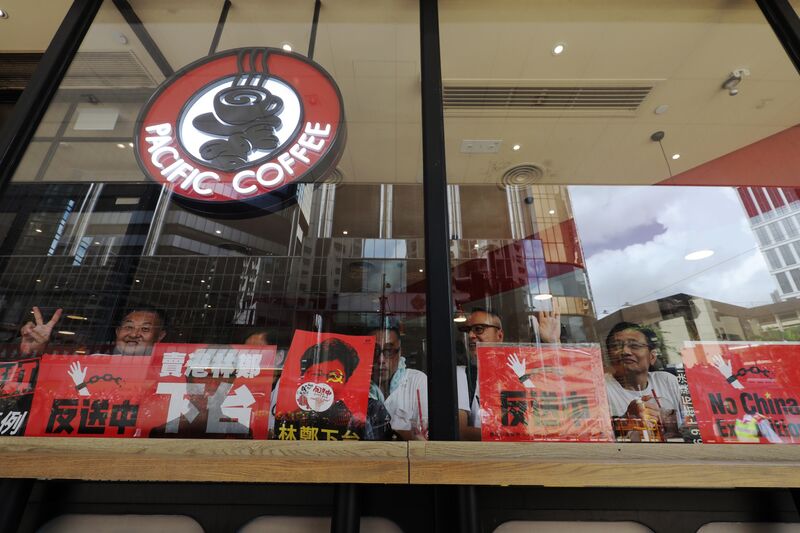
Protesters hold placards featuring images of Carrie Lam inside a Pacific Coffee store, June 9.

These outposts of Xi Jinping’s government expanded their operations after the former British colony returned to Chinese rule in 1997, adding heft to Beijing’s political goal of integrating the semi-autonomous territory with the motherland. 
Their deepening presence implies that Hong Kong soon will become just another Chinese city, deprived of the autonomy former Chinese leader Deng Xiaoping guaranteed until 2047.
“Mainland Chinese companies are forming a group of entities which is both economically and politically influential,” said Heidi Wang-Kaeding, who’s done research on mainland investment in Hong Kong and now teaches international relations at Keele University in Staffordshire, England. “That’s why this is shaking the local interest very much.”
Hong Kong police said Monday a radio-controlled improvised explosive device was detonated near a police car on Sunday evening, the first time the use of such a device has been reported during months of unrest.
The use of explosives marks a significant escalation in pro-democracy protests that started out peacefully in June, with hundreds of thousands of residents marching in the streets in opposition to a bill that would have allowed extraditions to mainland China.
In recent weeks, protesters have set fires near police stations, hurled makeshift petrol bombs at riot police, and bashed in glass kiosks at train stations and storefronts tied to mainland Chinese businesses.
As Chinese Communist Party leaders focus on solidifying control over the rebellious city, companies taking direction from the state likely will play an even bigger role in Hong Kong’s $363 billion economy. 
The city is sinking into a recession amid the riots, and Lam, the chief executive, may propose remedies during her annual policy address on Wednesday.
In the past decade, the total amount of loans given by the Hong Kong-based unit of state-owned Bank of China in the special administrative region has more than doubled to $175 billion, and so have deposits to $257 billion.
China Mobile, the world’s largest wireless carrier by subscribers, is among the four operators in the city, having cemented its position since buying a local provider more than a decade ago to gain entry into the market.
Mainland-based developers such as Poly Property Group Co. and China Overseas Land and Investment Ltd. successfully bid for 11% of the land for sale last year in the world’s most-expensive real estate market, compared with about 5% in 2013. 
They bought almost 60% of residential land sold by the local government in the first six months of this year.

A targeted China Mobile Ltd. store in Causeway Bay on Oct. 4.

In one high-profile deal, state-owned Poly Property and China Resources Land Ltd. successfully bid HK$12.9 billion ($1.6 billion) in June for a 9,500-square-meter parcel at Kai Tak, the former airport in the Kowloon district.
Beijing-based Citic Ltd., a state-owned conglomerate, is part of a consortium that runs McDonald’s outlets in the city, and unit Dah Chong Hong Holdings operates car dealerships and Food Mart stores.
With forays into retail, telecommunications and property development, mainland-based companies are also altering the city’s traditional business landscape. 
Homegrown tycoons such as Li Ka-shing and Lee Shau Kee, who built their empires by forging close ties with authorities in Beijing, may see that influence erode. 
Li, for instance, saw the writing on the wall some time ago and has been steadily reducing exposure to his home base.
Over time, the economic balance of power will tilt more in favor of state enterprises and away from the local billionaires, said Michael Tien, a pro-Beijing member of Hong Kong’s legislature and a deputy to China’s National People’s Congress.
“It will be very difficult for Hong Kong Chinese companies to fight mainland Chinese companies,” he said. 
“They are capital-rich and powerful.”

Graffiti on a shuttered McDonald’s Corp. store on Hennessy Road in Wan Chai on Oct. 7.

But it isn’t just state-owned companies that are building a bigger presence in Hong Kong. 
In 2015, billionaire Jack Ma’s e-commerce giant Alibaba Group Holding Ltd. agreed to buy the South China Morning Post newspaper and related assets for HK$2.06 billion. 
Prominent Chinese smart-phone makers such as Huawei, Lenovo, Xiaomi and electronics retailer Suning have retail stores in the city.
Mainland-based companies with consumer-facing businesses have been particular targets in the latest phase of the four-month-long protests, which were sparked by opposition to a proposed law allowing extraditions to China.
Bank of China branches and ATMs have been firebombed, including this past weekend and on the Oct. 1 anniversary of Communist Party rule in the mainland. 
Huawei and Lenovo stores also were ransacked during the weekend at a mall in suburban Sha Tin.
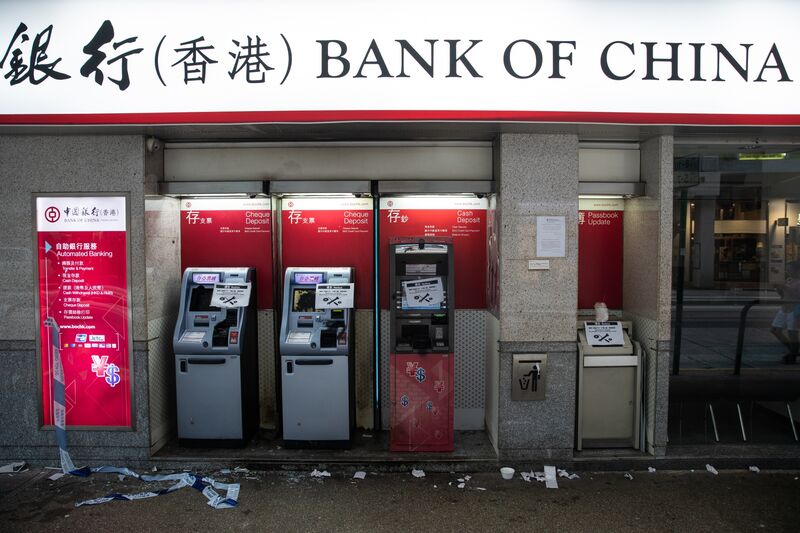
Bank of China’s ATMs in Wan Chai on Oct. 5.

At least two China Mobile stores were attacked Oct. 1 and 2, and a Xiaomi outlet had anti-China graffiti spray-painted on its walls. 
The local unit of China Construction Bank, which has more than 50 locations, suspended service at two branches because of protest-related damage, including smashed glass doors.
At least one local-run business has lost its immunity. 
Maxim’s Caterers Ltd., which operates bakeries and some Starbucks outlets, is seeing stores vandalized after the founder’s daughter called the protests “riots” and supported the Hong Kong government in comments at the U.N. Human Rights Council last month.
Maxim’s tried to distance itself from the comments and a spokeswoman said the group has never taken any political stance. 
Representatives for China Resources, Citic, the local units of Bank of China and China Construction Bank didn’t respond to requests seeking comments, while a spokesperson for China Mobile said the carrier is focusing on resuming services at the damaged stores.
“Anything with a star on it is vulnerable,” Gavin Greenwood, an analyst with A2 Global Risk, a Hong Kong-based political-risk consultancy, said of mainland-affiliated businesses. 
He was referring to the Chinese flag.
“They are extremely soft targets.”

lundi 20 août 2018

No Country for Predatory China

Doors Slam Shut for China Deals Around the World
Tighter rules for CFIUS are echoed in great scrutiny from Europe to Australia.

By Nisha Gopalan
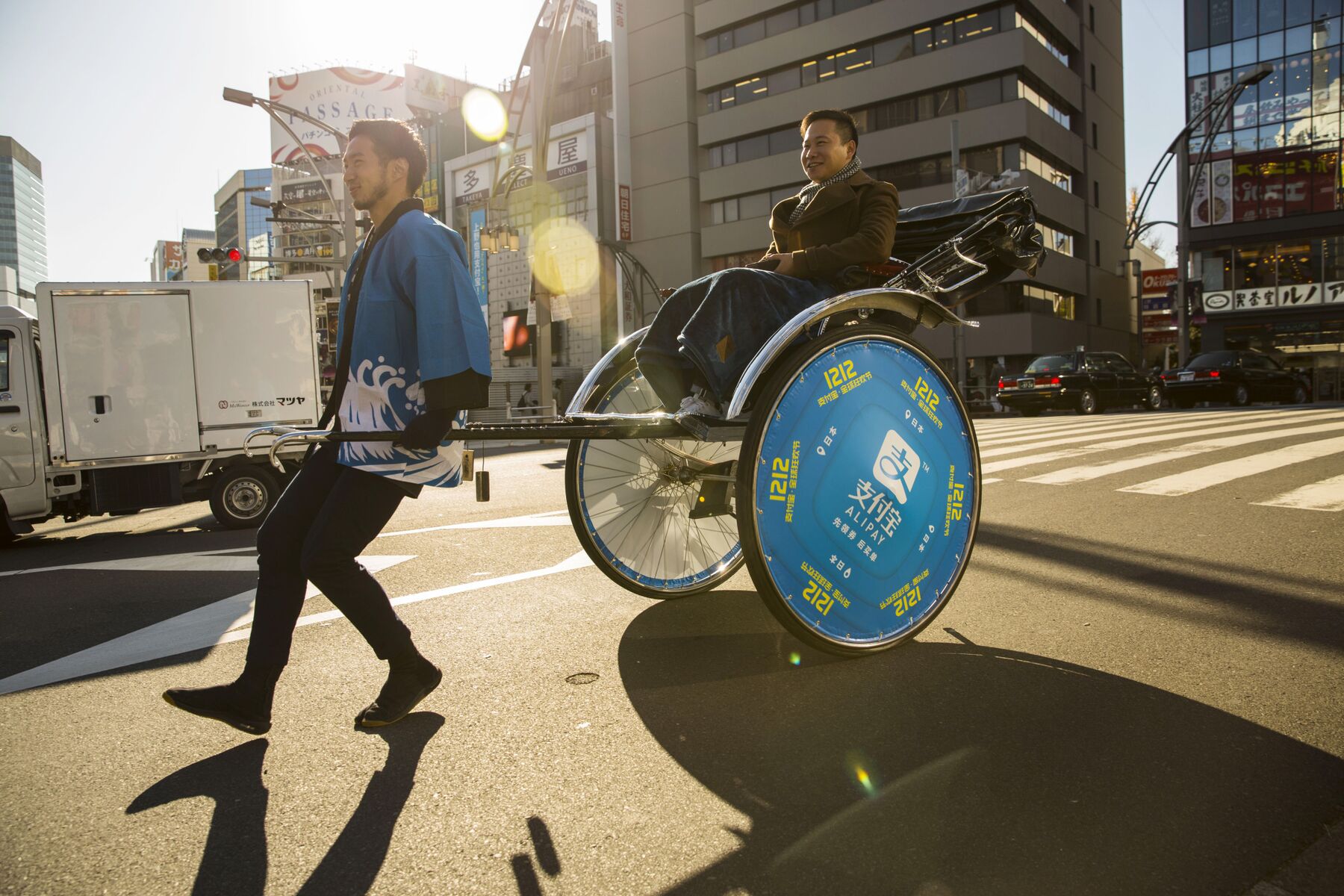
Ant Financial’s Alipay: Rolling in Japan, but MoneyGram was off limits.
Doors are slamming shut in the developed world not just to Chinese investment in technology but potentially to a wave of acquisitions with a tech element, as diverse as smart heaters and robotic lawnmowers.
President Donald Trump last week signed an update to legislation for the Committee on Foreign Investment in the U.S. that broadened the inter-agency vetting committee group’s scope to encompass even minority and passive investments in three areas: Critical technology, infrastructure, and businesses that handle personal data. 
This tightening of the rules has been happening for some time, but it’s now explicit.
Just ask Jack Ma, who earlier this year had to abandon Ant Financial’s bid for MoneyGram International Inc. amid CFIUS concerns that malicious China could obtain data on U.S. military personnel who use the payments service. 
Or Broadcom Ltd., whose $117 billion bid for Qualcomm Inc. was rejected by Trump after the committee worried that the deal, and the inevitable post-merger cost-cutting, would give China’s Huawei Technologies Co. a tech leg-up.
But there’s more to this CFIUS update.
In the past, “notifications to CFIUS were voluntary, at least until CFIUS came knocking,” said Rod Hunter, a Washington-based trade partner at Baker & McKenzie LLP. 
Now, an acquirer planning to invest in anything remotely “smart” in the U.S. stands to be investigated.
Ambiguity abounds: What kinds of “personal data” are vulnerable in a world where pretty much every company must seek to monetize such information to get ahead? 
If all information is critical infrastructure, can any Chinese incursion come in under the radar? 
Would Haier Group Corp.’s purchase of General Electric Co.’s home-appliance business a couple of years ago – partly to leverage the American company’s smart-home technology – get the green light now?
China’s challenges aren’t limited to U.S., or to similar stances in Australia and Canada. 
Europe, the favored destination of late, is getting a lot tougher.
This month, Chancellor Angela Merkel’s government vetoed for the first time a possible Chinese takeover of a German company, blocking the bid for a machine-tool manufacturer, Leifeld Metal Spinning AG
Berlin is still reeling from the outcry sparked two years ago by Midea Group Co.’s purchase of Kuka AG, a robotics firm, and wants to lower the threshold at which it screens non-European Union acquisitions from the current 25 percent. 
Even the U.K., keen to cultivate China as Brexit looms, is proposing removing thresholds for small takeover targets, minority stakes, or even the acquisition of intellectual property.
That's not to say Beijing will have to give up all of its Made in China 2025 ambitions. 
As my colleague Noah Smith has written, joint ventures are still a way to acquire coveted technology
And when all else fails, China can wave its own antitrust stick. 
You can blame the current trade spat, but it’s hard not to connect President Trump’s veto of Broadcom-Qualcomm with the U.S. chipmaker’s failure to win Chinese approval of its pursuit of NXP Semiconductors NV this summer.
The fact remains that China doesn’t have a lot of options for bringing in the technology it needs. 
That puts Beijing on the back foot, under pressure to play fair and open its market to the rest of the world.
China has already promised to permit investment its financial sector, after decades of complaints from Wall Street, and now is making it easier for foreign buyers to take strategic stakes in domestically listed companies in many industries. 
That may eventually be seen as the kind of reciprocal treatment Western governments want. 
For now, though, the world’s doors are shutting to Chinese investments.

mardi 13 mars 2018

Chinese Peril

How China's Huawei Killed $117 Billion Broadcom Deal
Bloomberg News
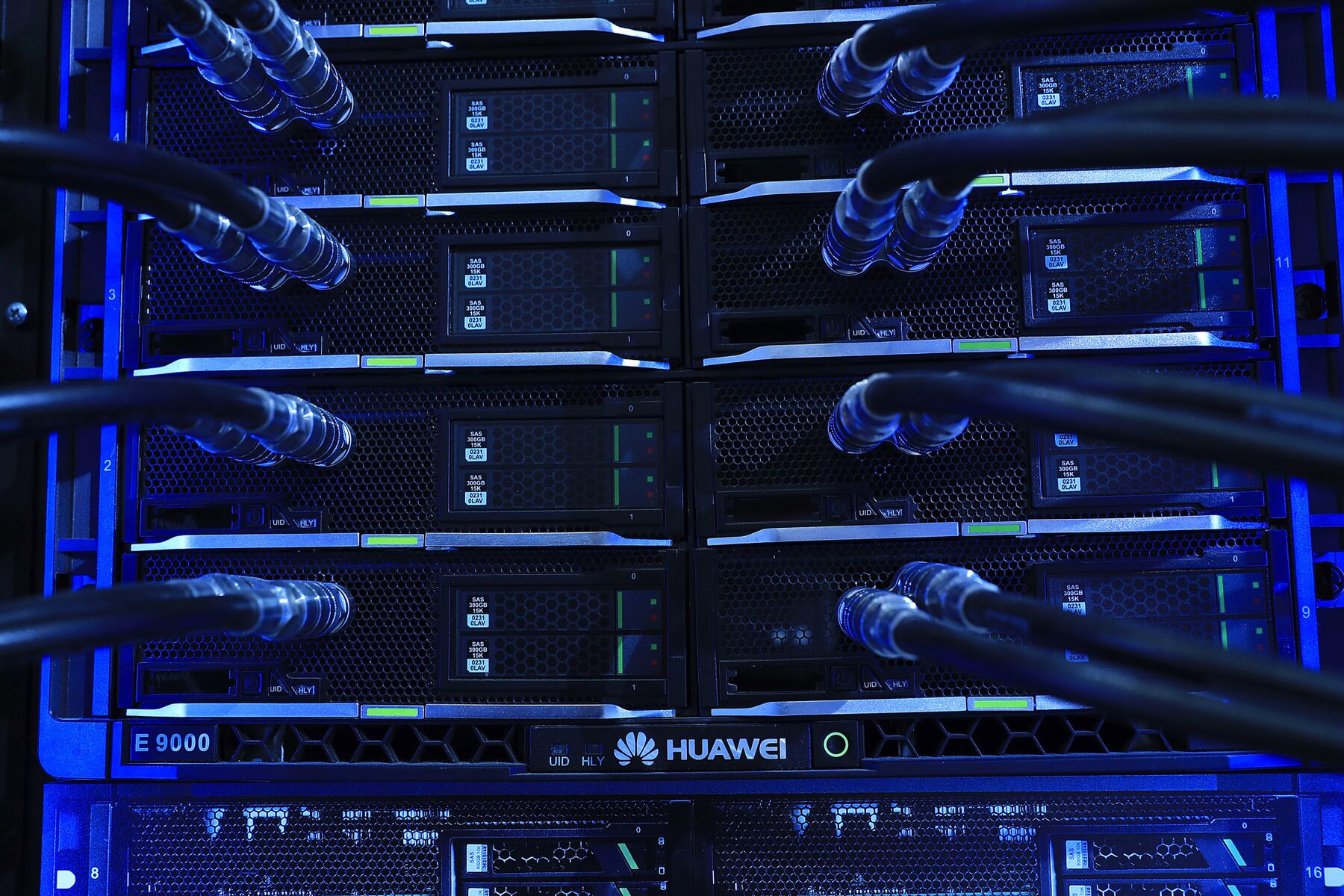
Blue light illuminates cables on an E9000 blade server rack, manufactured by Huawei Technologies Co.

U.S. President Donald Trump’s unprecedented move to block Broadcom Ltd.’s hostile takeover bid for Qualcomm Inc. reflects growing concern about China’s rising economic prowess.
At the heart of that decision to scupper what would’ve been the largest technology acquisition in history is Huawei Technologies Co., the world’s third-largest maker of smartphones and, by some reckonings, the biggest producer of telecommunications equipment.
Trump was acting on the recommendations of the Committee on Foreign Investment in the U.S., which vets deals for national security risks.
The agency suggested that the deal could curtail U.S. investments in chip and wireless technologies, handing leadership to an opaque Chinese company that’s funneling billions into developing next-generation wireless systems.

1. What is Huawei?
The Chinese company has in three decades grown from an electronics reseller into one of the world’s most important communications companies, with leading positions in telecoms gear, smartphones, cloud computing and cybersecurity.
With 2017 sales of about 600 billion yuan ($95 billion), Huawei generates more revenue than Home Depot or Boeing -- and twice as much as Broadcom and Qualcomm combined.

2. What role did Huawei have in the Broadcom/Qualcomm deal?
None.
Huawei -- never an aggressive acquirer -- had no direct role in the deal negotiations.
But it loomed over the talks because of its growing influence.

3. So why the worry about Huawei?
CFIUS is concerned that Broadcom would cut back on R&D funding at Qualcomm, strengthening Huawei at a time when rivals from Ericsson to Nokia are grappling with weak telecoms spending. That theoretically gives Chinese companies such as Huawei and closest rival ZTE Corp. the upper hand in steering the direction of wireless communications development, thereby -- so the argument goes -- jeopardizing U.S. national security.
CFIUS’s concerns over the deal are said also to stem from Broadcom’s ties to Huawei, which was blacklisted in 2012 along with ZTE when the U.S. House Intelligence Committee cited security risks posed by the companies.

4. What’s the link between Broadcom and Huawei?
Huawei uses Broadcom’s chips in networking products such as switches that direct data traffic between connected computers.
Qualcomm also works with Huawei.
The two said on Feb. 21 they completed testing on technology that advances faster 5G mobile services.
Under one envisioned scenario, wireless carriers may be forced to turn to Huawei or other Chinese companies for cutting-edge telecoms gear.
That’s unacceptable for a U.S. government that, concerned about the security of Huawei’s gear, has already blocked the sale of the Chinese company’s smartphones on American carriers’ networks.

5. Are there broader implications for Chinese companies?
The president’s order is the latest sign of Trump’s tough stance on foreign takeovers of U.S. technology, and dovetails with a broader move to contain China on trade and deal-making. Government officials and industry executives have long harbored suspicions that the closely held Huawei works for Chinese government interests, especially as it sells increasing amounts of critical telecoms infrastructure to Europe, Africa and the Middle East.

6. What exactly is Huawei’s connection with Beijing?
Founded in 1987 by Ren Zhengfei, a former People’s Liberation Army engineer, Huawei has always enjoyed favorable treatment from a government that -- like the U.S. -- remains wary of employing too much foreign technology for vital communications.
In a report released by the U.S. Permanent Select Committee on Intelligence report in 2012, Huawei and ZTE were tagged as threats to security interests. 
The report questioned Huawei’s ties with the Communist Party and -- after multiple interviews including a sit-down with Ren himself -- it concluded that Huawei failed to properly explain that relationship. 
Chinese government policies enacted in the past year seen as favoring local providers have only intensified suspicion.

7. Will Trump’s move give the U.S. a lead in 5G?
Nothing’s for certain.
Along with ZTE, Huawei began ploughing billions of dollars into the field from 2009 and is now among China’s top filers of patents both internationally and domestically, covering everything from data transmission to network security.
Huawei, which may own a 10th of essential patents on 5G, is angling for full-scale commercialization of 5G networks by 2020.
Its rise coincided with the decline of competitors like Ericsson and Nokia, often undercut by Huawei and ZTE even as global telecoms rollouts slowed.
Huawei is now not just the leading provider in the world’s largest telecommunications equipment, but also a dominant player across the planet.
In a direct threat to Qualcomm, Huawei’s now designing its own chips.
The Chinese company’s Kirin series mobile processors, made via subsidiary HiSilicon, compete with the Qualcomm Snapdragon chip employed extensive by Samsung Electronics Co. and other global smartphone names.

8. What about the longer term?
China aims to lead the world in 5G -- a next-generation standard that will enable richer and faster video and open a whole new playground for mobile apps.
In an interview with China Central Television last week, the country’s minister for information technology said China is already preparing for the development of 6G technologies.

The Reference Shelf

mercredi 7 mars 2018

Chinese Espionage

Washington Is Obsessed With Huawei
By Stu Woo

In intervening this week in the Broadcom-Qualcomm takeover battle, the U.S. government also had its eye on another company: China’s Huawei Technologies Co.
Huawei in the past three months has been the subject of a series of interventions by the Trump administration and Congress across the telecommunications industry.
The latest was Washington’s move this week to intervene in Singapore-based Broadcom Ltd.’s attempted hostile takeover of U.S.-based Qualcomm Inc. 
It ordered Qualcomm to delay a shareholder vote that Broadcom hoped would elevate directors friendly to its $117 billion bid.
In a letter explaining its interference, the Committee on Foreign Investment in the U.S., a panel that reviews foreign takeovers for national-security concerns, cited its worry that China, specifically Huawei, could gain the upper hand in the development of 5G technology.
Translation: Removing an able U.S. competitor to Huawei risks strengthening the Chinese company at the expense of the American wireless industry.
Broadcom on Tuesday tried to dispel those concerns. 
“We are fully cooperating with CFIUS, and are absolutely committed to making the combined company a global leader in critical 5G and other technologies,” a spokesman said in a statement.
5G is the next-generation mobile-network technology that the industry is preparing to roll out around the world. 
American officials and Western telecom companies worry that if China gains widespread 5G before the U.S. does, it could have a head start in technologies that the new networks’ speed and capacity are expected to kick-start, like self-driving cars.
Washington policy makers and industry executives have suggested a deeper worry that, with Huawei’s help, China could displace Silicon Valley as the world’s innovation center and lure top engineers there. 
Another concern: If Huawei extends its lead in the telecom-equipment industry, American wireless carriers might have no choice but to use Huawei gear in the future.
Major American wireless carriers, such as AT&T Inc. and Verizon Communications Inc.,have said they are initially focusing 5G coverage in a few cities. 
“What I see in the U.S. is wireless carriers choosing particular geographic markets for 5G,” said Gartner Inc. analyst Ian Keene
“The way the Chinese are going to approach it, it’s going to be blanketed.”
The extent to which the U.S. government shares that fear was laid bare in unusual clarity in the CFIUS letter
The committee said it would probe whether a Broadcom-Qualcomm tie-up would “leave an opening for China to expand its influence on the 5G standard setting process.” 
It cited specifically Huawei’s 5G “engagement.”
In the past decade, U.S. telecom companies such as Lucent and Motorola merged into foreign hands, leaving Qualcomm as one of the few American powerhouses in the industry. 
Huawei buys chips from and pays patent royalties to Qualcomm, and on Tuesday the two sides were close to an agreement to settle a patent-royalty dispute, according to people familiar with the matter. The two also fiercely compete for cellular patents. 
In that $14 billion a-year-industry, Qualcomm dominates. 
Both are leaders in the international consortium currently setting standards for 5G.
“When you look at the whole package—the standards innovations, the hardware innovation, the impact on the industry from a technology perspective – then yes, Qualcomm is the leader in 5G,” said Bob DiFazio, vice president at wireless-technology developer InterDigital.
Concern over Huawei isn’t new. 
Congress effectively barred major carriers from using the company, after a 2012 report concluded Huawei's equipment is designed to spy or disable telecom networks.
Late last year, congressional pressure mounted on AT&T to drop plans to sell Huawei smartphones in the U.S. 
In a surprise reversal, the company did just that in January; it declined to cite a reason.
Then, a National Security Council official cited Huawei’s telecom-equipment-industry dominance in a proposal to build a government-backed nationwide, 5G wireless network. 
After the proposal became public in January, drawing widespread criticism from other government officials and the wireless industry, a Trump administration spokeswoman said it was only an early stage idea.
And in December, President Donald Trump signed a defense-spending bill that will ban equipment from Huawei and China’s ZTE Corp. from the Defense Department’s nuclear-weapon infrastructure. Lawmakers in the House and Senate have also introduced separate bills to bar the U.S. government and its contractors from using Huawei and ZTE equipment.

https://www.phonearena.com/news/Former-CIA-chief-has-seen-hard-evidence-of-Huawei-spying-on-behalf-of-China_id45500

mercredi 12 avril 2017

Huawei Connection

U.S. Lawmakers Push to Widen Iran Sanctions Probe Beyond China's ZTE
By Saleha Mohsin and Andrew Mayeda

A group of Republican lawmakers is pushing the Trump administration to investigate and unmask a company that may have violated Iran sanctions laws in the same way as Chinese mobile-phone maker ZTE Corp.
ZTE agreed last month to pay as much as $1.2 billion after pleading guilty to shipping U.S.-origin products to Iran in violation of U.S. laws restricting the sale of American technology to the country. In a letter Tuesday, Republican Congressman Robert Pittenger of North Carolina, Alabama’s Mike Rogers and eight other lawmakers, called on Commerce Secretary Wilbur Ross to probe the actions of an "unidentified company" that ZTE has said also evaded U.S. export controls.
The rival is referred to only as “F7” in a ZTE document posted on the Commerce Department’s website. 
The lawmakers in their letter note that news reports have highlighted the similarities between the company described in the documents and Huawei Technologies Co., which is the largest Chinese networking equipment maker followed by ZTE.
“We strongly support holding F7 accountable should the government conclude that unlawful behavior occurred,” according to the letter. 
“We must publicly identify those who break the law so that their activities be taken into account when public procurement activities occur or where critical infrastructure vulnerabilities might arise.”

Smoother Relations

“We do not comment on any law enforcement matters that we may or may not be working on,” Commerce spokesman James Rockas said in an email.
ZTE declined to comment.
A deeper investigation may complicate Donald Trump’s efforts to smooth relations with China after accusing the nation during last year’s election of manipulating its currency and hurting American manufacturers. 
After meeting with Xi Jinping last week, Trump tweeted that it was a “tremendous” meeting.
As Commerce officials last year gathered evidence to add ZTE to its list of restricted companies, the department posted ZTE documents related to the case on its website
In a document dated August 2011, ZTE describes how it conducted business in Iran and other sanctioned countries, and cited F7 as a model for such activities.

Fraught Relations
The U.S. relationship with Huawei has been fraught. 
The government has suspicions about whether Huawei has been sending U.S. technology to rogue nations including Syria, Iran, North Korea and Cuba, people familiar with the matter have said. 
The Commerce Department sent an administrative subpoena to the company’s U.S. operations in Plano Texas, Bloomberg reported in June. 
The company said at the time it cooperates with U.S. export control laws.
In 2012, the House Intelligence Committee concluded that Huawei and ZTE represent national security risks. 
Two years earlier, former Commerce Secretary Gary Locke expressed concern about Huawei’s participation in bids for a network upgrade by Sprint Nextel Corp. 
The bids were awarded to companies from France, Sweden and South Korea.
In Tuesday’s letter, the lawmakers said F7 ’s business structure was similar to ZTE in creating a “cut-off” IT company “serving as its agent to sign contractors for projects in embargoed countries.” 
It adds that F7 hired export-control compliance specialists and expanded its export-control liaison offices.
Here are some of the similarities between F7 and Huawei as described in the ZTE document:
  • A U.S. government panel blocked F7’s bid to purchase server technology provider 3Leaf Co. due to national security risks. Huawei backed away from a deal to buy California-based 3Leaf due to pressure from the U.S.
  • F7 once had a joint venture with Symantec, a California-based digital security company. Huawei had a similar deal with Symantec, which was dismantled.